Imagine gliding through a bustling airport terminal with your suitcase trailing silently behind you like a loyal robotic companion, deftly weaving through crowds and avoiding obstacles with the same intelligent precision as a Roomba navigating your living room. This isn’t science fiction—it’s the reality of auto-follow suitcases, the most significant innovation in travel gear since wheels were added to luggage in the 1970s. These smart bags use a sophisticated array of cameras, sensors, and AI to track your movements, leaving your hands free for coffee, documents, or simply relaxing.
As airports grow more crowded and travel becomes increasingly complex, the promise of hands-free navigation has captured the imagination of frequent flyers and tech enthusiasts alike. But before you invest in this futuristic travel companion, understanding the technology, limitations, and real-world performance is crucial. This guide dives deep into everything you need to know about robotic luggage, from the mechanics of obstacle avoidance to navigating TSA regulations, ensuring you make an informed decision about whether this innovation deserves a spot in your travel arsenal.
Top 10 Auto-Follow Suitcases for Airports
Detailed Product Reviews
1. Space Suitcases Smart Auto Follow Rideable Suitcase 33L, Lightweight Electric Luggage Scooter For Travel With Digital Lock, Waterproof And Lightweight
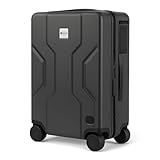
Overview: The Space Suitcase merges luggage with personal transportation and AI-powered following. This 33L carry-on functions as a 7 km/h electric scooter, autonomous robot, and mobile charging station in one sleek package for the modern nomad who demands maximum utility from every item they own. It represents the most feature-packed smart luggage on the market.
What Makes It Stand Out: Beyond standard auto-follow, this suitcase is fully rideable, supporting adult weight through airports. The quirky “dancing” feature, controlled via app, transforms it into entertainment. A 150W motor provides zippy performance, while dual USB ports ensure devices stay charged throughout your journey. Remote and app control offer multiple interaction methods.
Value for Money: At $1,299, it’s triple the price of standard smart luggage. The value hinges on rideability—if you frequently traverse massive airports, it could replace a separate travel scooter. Otherwise, you’re paying heavily for novelty that may see limited real-world application and potential airline restrictions.
Strengths and Weaknesses:
- Strengths: True multimodal travel, waterproof construction, digital security, device charging, lightweight frame, unique entertainment value, versatile control options
- Weaknesses: Premium pricing, limited 33L capacity, low 2500mAh battery life, questionable airline approval, dancing feature adds cost without utility
Bottom Line: A showstopping gadget for tech enthusiasts with deep pockets. Practical travelers should await regulatory clarity and price drops before investing in this ambitious all-in-one solution.
2. FORWARD X OVIS Auto-follow Suitcase, Side-follow Robot, 20 inch Carry-on, CES2020, Edison Award Winner (silver)

Overview: The OVIS represents mature auto-follow luggage technology, having earned both CES 2020 accolades and an Edison Award. This 20-inch carry-on deploys side-following navigation using self-driving algorithms, positioning itself as a professional travel companion rather than a novelty gadget for travelers who value innovation that simply works.
What Makes It Stand Out: Unlike rear-follow designs, OVIS travels beside you like a personal assistant, using stereoscopic cameras for 360-degree obstacle avoidance. The Makrolon polycarbonate construction provides exceptional impact resistance while remaining lighter than aluminum. Its algorithmic approach to navigation mimics autonomous vehicle technology, making it genuinely smart rather than just motorized.
Value for Money: At $799, OVIS sits in the premium tier but delivers focused functionality without gimmick inflation. It’s $500 less than rideable alternatives while offering superior follow performance. For business travelers who navigate airports weekly, the hands-free convenience justifies the cost over traditional luggage, though casual travelers may find it hard to rationalize the expense.
Strengths and Weaknesses:
- Strengths: Award-winning proven design, durable polycarbonate shell, intelligent side-follow system, airline-compliant detachable battery, TSA lock, USB charging, elegant minimalist aesthetic
- Weaknesses: Non-rideable, no entertainment features, requires app for optimal use, premium price point, limited to carry-on size
Bottom Line: Perfect for frequent flyers wanting dependable, regulation-safe auto-follow technology. It prioritizes substance over spectacle, making it the wise investment for serious travelers who need reliability.
How Auto-Follow Technology Actually Works
Auto-follow suitcases represent a fascinating convergence of robotics, computer vision, and mobile technology. Unlike simple Bluetooth trackers, these bags actively interpret their environment and make split-second decisions to maintain a safe following distance while avoiding collisions.
Camera-Based Vision Systems
Most premium auto-follow suitcases employ stereo camera arrays that create a 3D map of their surroundings. These systems function similarly to autonomous vehicle technology, capturing depth information to distinguish between stationary objects and moving pedestrians. The cameras lock onto the owner’s profile—typically their legs or lower body—using pattern recognition algorithms that can even identify you in moderately crowded spaces. Low-light performance varies significantly between models, with some struggling in dimly lit terminals or at night.
Ultrasonic and Infrared Sensors
Complementing visual systems, ultrasonic sensors emit high-frequency sound waves to detect close-range obstacles, much like a bat’s echolocation. These prove invaluable for detecting glass walls, sudden drop-offs on moving walkways, or low objects that cameras might miss. Infrared sensors add another layer of spatial awareness, measuring distance through light reflection and helping the suitcase maintain consistent spacing in dynamic environments.
Bluetooth Tethering vs GPS Tracking
Understanding connectivity differences is essential. Bluetooth tethering creates a localized connection between your smartphone and the suitcase, typically effective within 10-20 feet. This proximity-based system conserves battery but can lose signal in areas with heavy interference. GPS tracking, while less common due to power consumption and indoor accuracy limitations, offers longer-range location services but isn’t practical for real-time following. The most reliable systems use hybrid approaches, falling back to Bluetooth for following mode while offering GPS as a separate anti-loss feature.
AI and Machine Learning Algorithms
The “brains” of the operation, these algorithms process sensor data in milliseconds to predict movement patterns. Advanced systems learn your walking speed, stopping tendencies, and even recognize when you’re about to change direction based on body language cues. This predictive capability prevents the jerky, reactive movements of early prototypes, creating a smooth following experience that feels almost telepathic.
Key Benefits Beyond Hands-Free Convenience
While the novelty of a self-propelling suitcase is undeniable, the practical advantages extend far beyond the cool factor. These benefits address genuine pain points in modern travel.
Reduced Travel Fatigue
Business travelers navigating multiple connections know the cumulative exhaustion of dragging luggage through miles of terminal corridors. Auto-follow technology eliminates the constant arm strain and micro-adjustments required to maneuver traditional rolling bags, preserving energy for important meetings or adventures at your destination. For travelers with arthritis, shoulder injuries, or limited upper body strength, this technology isn’t just convenient—it’s transformative.
Enhanced Mobility for Special Needs
Travelers with disabilities, parents managing children, or anyone requiring mobility assistance find particular value in robotic luggage. The ability to have your belongings autonomously trail behind while you operate a wheelchair, hold a child’s hand, or use a cane represents true accessibility innovation. Some models even offer manual control modes through smartphone apps, allowing users to summon their bag from across a room.
Security Advantages
Auto-follow suitcases typically include integrated TSA-approved locks that can be controlled via smartphone, providing digital audit trails of when and where your bag was accessed. Proximity alerts notify you immediately if someone attempts to walk away with your luggage, and GPS tracking offers recovery options if separation occurs. The constant following mode also means you’re less likely to forget your bag at security checkpoints or coffee shops.
The Cool Factor and Professional Image
Let’s be honest—arriving at a client meeting with a suitcase that intelligently follows you creates a memorable impression. It signals tech-savviness and forward-thinking, valuable traits in many industries. For influencers and content creators, the visual appeal generates engaging travel content that stands out in crowded social feeds.
Critical Features to Evaluate Before Buying
Not all auto-follow suitcases are created equal. Understanding which features genuinely impact performance helps separate gimmicks from game-changers.
Obstacle Avoidance Capabilities
The difference between a smooth airport experience and a frustrating one often comes down to obstacle avoidance sophistication. Look for systems that specify 360-degree detection rather than just forward-facing sensors. The best models can navigate around pillars, pause for crossing pedestrians, and recover when temporarily blocked. Ask about obstacle height detection ranges—some systems miss low objects like curbs or high obstacles like hanging signs.
Battery Life and Power Management
Battery specifications are often misleading. A “6-hour battery life” might refer to standby time, not active following. Real-world usage typically ranges from 2-4 hours of continuous following, depending on terrain and crowd density. Crucially, investigate whether the battery can charge your devices via USB ports while still powering the following mechanism. Power management features that automatically switch to low-power mode when stationary can extend travel day usability significantly.
Weight and Maneuverability
The motors, sensors, and battery add considerable weight—typically 8-12 pounds for the technology alone. This matters when you must manually carry the bag up stairs or lift it into overhead bins. Check the total weight against airline carry-on limits, and consider whether the wheels can freewheel smoothly when auto-follow is disabled. Some models become cumbersome bricks when the battery dies.
Locking and Security Mechanisms
Beyond TSA locks, evaluate whether the suitcase secures its handle and wheels when in auto-follow mode to prevent tampering. Digital locks should offer backup physical keys or combination overrides in case of battery failure. The most secure designs integrate the locking mechanism with the proximity alert system, automatically securing when your phone moves out of range.
Water Resistance and Durability
Airport terminals aren’t the only environment your bag will face. Rainy curbside pickups, puddles, and spilled drinks test the IP (Ingress Protection) rating. Look for minimum IPX4 ratings for splash resistance, but understand that no auto-follow suitcase is truly waterproof due to sensor openings. The durability of the extending handle mechanism, which houses many electronic components, deserves particular scrutiny in reviews.
Airport Navigation: The Real-World Challenges
The controlled environment of a product demo rarely matches the chaotic reality of a major international airport. Understanding these challenges prepares you for actual travel scenarios.
TSA and Security Checkpoint Protocols
Transportation Security Administration guidelines require all electronic devices larger than a cell phone to be removed from carry-ons for screening. Auto-follow suitcases complicate this process. You must disable following mode before approaching the checkpoint, and most officers will require the bag to go through X-ray screening powered down. Some airports have begun training staff on these devices, but policies vary. Arrive early and be prepared to explain your bag’s functionality. The battery must be removable to comply with FAA regulations—non-removable batteries risk confiscation.
Crowded Terminal Performance
During peak travel times, even the best obstacle avoidance systems struggle. The suitcase’s AI must make ethical decisions: should it pause and wait for crowds to clear, or aggressively navigate through gaps? Most default to conservative behavior, meaning you’ll frequently need to wait for your bag to catch up. Narrow gate areas and boarding queues present particular challenges—auto-follow mode becomes more hindrance than help in these situations.
Escalators and Moving Walkways
No current auto-follow suitcase can safely navigate escalators or moving walkways autonomously. You must manually carry the bag or switch to traditional pulling mode. The transition between modes must be seamless; fumbling with app controls while managing an escalator is dangerous. Look for models with quick-disable physical buttons on the handle.
Airline Size and Weight Restrictions
The technology adds bulk, making many auto-follow suitcases slightly larger than standard carry-on dimensions. While some airlines may overlook minor overages, budget carriers strictly enforce limits. Weight is equally problematic—a 22-pound empty bag leaves little capacity for belongings under typical 40-pound checked bag limits. Always verify dimensions against your most frequently used airlines’ specifications.
Battery Regulations You Must Know
Lithium battery regulations represent the single most critical compliance issue for smart luggage owners. Ignorance can result in denied boarding or confiscation.
FAA and IATA Lithium Battery Rules
The FAA mandates that lithium batteries over 100 watt-hours (Wh) require airline approval, while those between 101-160Wh are restricted to two per passenger and require explicit permission. Most auto-follow suitcases use batteries in the 90-98Wh range to stay under the threshold, but you must verify your specific model. The battery must be removable, and you must be able to demonstrate removal to security personnel. Carry the battery in your personal item, not in the checked baggage compartment.
Removable vs Integrated Batteries
While integrated batteries offer sleeker designs and better water resistance, they violate most airline policies. Removable batteries should be accessible without tools and disconnect easily. Some manufacturers use magnetic connections that detach with a firm pull, preventing damage if the bag gets caught. Consider purchasing spare batteries for long travel days, but remember each spare must also comply with Wh limits and be protected from short-circuiting.
Charging Strategies for Long Travel Days
International travel often exceeds battery life. Strategic charging becomes essential. Many airports now feature charging stations, but competition for outlets is fierce. Invest in a high-capacity power bank (20,000mAh minimum) that can recharge your suitcase battery during layovers. Some premium models support USB-C Power Delivery for faster charging. Pro tip: charge while waiting at your gate rather than during security lines, as movement is required for optimal battery performance.
Durability and Build Quality Considerations
A $1,200 suitcase that breaks after three trips is a poor investment. Durability testing should be a primary research focus.
Shell Materials: Polycarbonate vs Aluminum
Polycarbonate offers better impact resistance and lighter weight, crucial for minimizing total baggage weight. It flexes rather than dents, protecting internal electronics from shock. Aluminum provides superior protection against crushing forces but transmits more impact to sensors and adds 3-5 pounds. For auto-follow functionality, polycarbonate generally proves more practical, though premium aluminum models exist for those prioritizing aesthetics over weight.
Wheel Engineering and Motor Systems
The wheels bear constant motorized stress unlike traditional luggage. Look for metal ball bearings rather than plastic bushings, and sealed designs that prevent debris ingestion. Motor torque specifications indicate climbing ability—can the bag handle carpeted terminals, slight inclines, or transitions between flooring types? Dual-motor systems (one per wheel) offer better traction and redundancy if one motor fails.
Weather Resistance for Outdoor Use
While airports are climate-controlled, curbside pickup and outdoor walkways expose your investment to elements. Sensor openings create vulnerability points. Quality models use hydrophobic coatings and internal seals to protect critical components. The charging port should have a robust rubber cover that stays securely closed. Avoid models with exposed USB ports that collect dust and moisture.
Smart Features That Actually Matter
Manufacturers pack these suitcases with features, but many are gimmicks. Focus on functionality that enhances core performance.
Integrated Scales
Built-in weight sensors that display total weight via LED or app help avoid overweight baggage fees. The most useful implementations automatically subtract the bag’s empty weight, showing only your contents. Some even sync with airline apps to warn you about specific carrier limits. Accuracy typically varies by ±0.5 pounds, sufficient for travel needs.
Proximity Alerts and Anti-Loss Features
Beyond simple following, advanced systems create geofences. If your bag moves beyond 15-20 feet, it stops automatically and sends an alert to your phone. Some models emit a loud alarm if someone attempts to move the bag while locked. The most sophisticated options use cellular connectivity for GPS tracking worldwide, though this requires subscription fees.
Mobile App Integration
The app experience critically impacts usability. Look for intuitive interfaces that don’t require constant interaction. Essential features include battery monitoring, manual control override, calibration tools, and travel log statistics. Avoid apps that demand unnecessary permissions or require constant internet connectivity. Offline functionality is crucial for international travel without data plans.
Remote Manual Control Modes
When auto-follow fails—whether due to crowds or complex navigation—you need reliable manual control. The best apps offer joystick-style control, allowing you to drive the bag like a remote-controlled car. This proves invaluable for loading into car trunks or positioning in tight overhead bins. Test the app’s responsiveness in demo modes; laggy controls render this feature useless.
Price vs. Performance: What to Expect
Auto-follow luggage represents a significant investment. Understanding what each price tier offers helps set realistic expectations.
Entry-Level Options ($500-$800)
This category includes first-generation models and crowdfunding successes. Expect basic camera-based following with limited obstacle avoidance. Battery life typically runs 2-3 hours, and build quality often uses lower-grade polycarbonate. These work adequately in uncrowded airports but struggle in complex environments. Warranty support can be inconsistent from newer companies. Consider these if you travel infrequently or primarily through smaller regional airports.
Mid-Range Smart Luggage ($800-$1,500)
The sweet spot for most travelers, these models offer robust obstacle avoidance, 3-4 hour battery life, and durable construction. You’ll find hybrid sensor systems, removable batteries, and polished app experiences. Customer support is generally reliable, and firmware updates continue improving performance post-purchase. These suitcases handle major international airports competently, though still requiring manual intervention in extreme crowds.
Premium Flagship Models ($1,500+)
Top-tier options rival the build quality of luxury traditional luggage while incorporating cutting-edge technology. Expect aluminum construction, 5+ hour battery life, advanced AI that learns your preferences, and white-glove customer service. Some include concierge features like automatic airline check-in notifications. The price is harder to justify for casual travelers but makes sense for road warriors who live in airports. These models often hold resale value better than cheaper alternatives.
Total Cost of Ownership
Factor in battery replacement costs ($80-$150 every 2-3 years), potential subscription fees for cellular tracking ($5-$15/month), and higher repair costs for electronic components. Travel insurance riders specifically covering smart luggage are advisable, adding $30-$50 annually. Compare this against the cumulative cost of baggage carts, porter tips, and potential chiropractic bills from traditional luggage strain.
Who Should (and Shouldn’t) Buy Auto-Follow Luggage
This technology isn’t universal solution. Honest self-assessment prevents expensive mistakes.
Business Travelers
For those taking 15+ trips annually, especially through large hub airports, the productivity gains are tangible. Time saved not wrestling with luggage can be used for calls, emails, or mental preparation. The professional impression matters in client-facing roles. However, if your travel involves mostly rental cars and direct flights from small airports, benefits diminish significantly.
Families with Children
Parents managing strollers, car seats, and restless children find auto-follow technology liberating. The bag becomes one less thing to physically manage. But consider whether your children might unpredictably run through the bag’s path, triggering emergency stops. Some families prefer assigning older children to manage traditional rolling bags as a responsibility lesson instead.
Solo Adventurers
Independent travelers navigating unfamiliar airports, public transit connections, and language barriers benefit from reduced cognitive load. Not constantly monitoring your luggage allows better situational awareness. However, solo travelers are also most vulnerable to theft—ensure your model has robust anti-theft features and never become so reliant on technology that you forget basic vigilance.
When Traditional Luggage Still Wins
If you typically pack heavy and maximize weight limits, the 8-12 pound technology penalty is prohibitive. Travelers to regions with poor infrastructure, dirt roads, or frequent staircases will find auto-follow more frustrating than helpful. Those who prefer simple, repairable gear should avoid the complexity. Budget travelers can achieve similar hands-free convenience with a quality backpack and packing light.
Airport-Specific Etiquette and Best Practices
Using auto-follow luggage responsibly ensures you don’t become “that person” creating hazards in busy terminals.
When to Disable Auto-Follow Mode
Always disable following when boarding elevators, navigating tight security queues, or in any situation where sudden stops could block foot traffic. Gate areas during boarding are particularly problematic—your bag might block the boarding lane while trying to follow you down the jet bridge. Develop the habit of grabbing the manual handle in congested areas; fellow passengers will appreciate your consideration.
Navigating Tight Spaces and Queues
In coffee shop lines or restroom entrances, even the best obstacle avoidance struggles. The bag’s sensors may interpret queue barriers as obstacles and refuse to enter. Manually guide your bag in these scenarios. Some models offer a “tether mode” that maintains a very short 2-3 foot distance for tight spaces—learn if your model includes this feature.
International Airport Considerations
Airports in Asia and Europe often have stricter policies on electronic devices. Heathrow and Charles de Gaulle have specific smart luggage screening procedures. Research your destination airports’ policies before departure. Language barriers complicate explaining your bag’s functionality to security staff. Carry a manufacturer-provided explanation card in multiple languages, or be prepared to demonstrate manual mode quickly.
Troubleshooting Common Issues
Even premium models encounter problems. Knowing quick fixes prevents travel disasters.
Connection Drops and Signal Interference
Bluetooth interference from hundreds of other devices in terminals can cause disconnections. If your bag stops following, first check if your phone’s Bluetooth is still enabled. Disable and re-enable it, then restart the suitcase (usually a long press on the power button). Standing still for 10 seconds often allows reconnection. As a last resort, use manual mode to reach a less congested area before recalibrating.
Motor Malfunctions
If one wheel stops turning, the bag will circle uncontrollably. This often indicates debris caught in the wheel housing. Turn the bag upside down and manually clear any obstructions. If the problem persists, the motor may have overheated—allow 15 minutes of cooling before retrying. Carry a small toolkit for emergency wheel removal on extended trips.
Calibration Problems
New environments with unusual lighting or reflective floors can confuse camera systems. Most apps include a “recalibrate” function that takes 30 seconds of walking in a clear area. Perform this after major location changes. If the bag consistently loses you in specific scenarios (e.g., bright sunlight through terminal windows), adjust the camera angle if your model allows, or wear clothing with stronger contrast to the background.
Maintenance and Longevity Tips
Proper care extends the life of your investment significantly beyond the standard warranty.
Firmware Updates
Manufacturers regularly release updates improving obstacle avoidance algorithms and battery management. Enable automatic updates in the app, but never install them the night before a major trip. Updates occasionally introduce bugs—install them at least a week before travel to allow time for troubleshooting. Join user forums to learn about problematic updates before installing.
Battery Care
Lithium batteries degrade fastest when kept at 100% charge. For storage between trips, maintain charge at 40-60%. Avoid extreme temperatures—don’t leave your bag in a hot car trunk or checked baggage hold. If you won’t travel for several months, remove the battery entirely and store it separately in a cool, dry place. Calibrate the battery every 6 months by fully discharging then charging to 100%.
Cleaning and Storage
Dust on camera lenses severely impairs performance. Clean lenses weekly with microfiber cloths during heavy travel periods. Use compressed air to clear sensor openings. Store the bag with wheels off the ground to prevent flat spots on tires. If possible, keep it powered on in storage mode, where it enters a deep sleep but maintains firmware health checks.
The Future of Robotic Luggage
The technology is evolving rapidly. Understanding trends helps time your purchase and anticipate obsolescence.
Emerging Technologies
Next-generation models are experimenting with LiDAR sensors for more precise mapping, similar to autonomous vehicles. 5G connectivity will enable cloud-based AI processing, reducing onboard computing requirements and battery drain. Some prototypes integrate with airport infrastructure, receiving real-time crowd density data to pre-plan optimal routes through terminals. Swarm technology could allow families to link multiple bags that follow a single leader.
Industry Predictions
Analysts predict the auto-follow luggage market will grow 35% annually through 2028, driving prices down as manufacturing scales. Standardization of battery protocols and security screening procedures will simplify travel. However, increased adoption may lead to airport congestion if dozens of robotic bags navigate simultaneously, potentially prompting speed limits or designated “smart luggage lanes.”
Integration with Smart Travel Ecosystems
Future models will likely sync with airline apps to automatically navigate to your correct gate, adjusting for delays or gate changes. Integration with rideshare services could have your bag autonomously load into the correct vehicle. Your suitcase might become another node in your personal IoT network, communicating with your smartwatch to adjust following distance based on your stress levels or heart rate.
Frequently Asked Questions
Can I take an auto-follow suitcase on any airline?
Most major airlines permit auto-follow suitcases as carry-ons if they meet size requirements and have removable batteries. However, budget carriers like Ryanair and Spirit enforce stricter dimensions, and many auto-follow models exceed their limits. Always verify both size and weight against your specific airline’s policies before traveling. The removable battery must be carried in the cabin, never checked.
What happens if the battery dies mid-trip?
The suitcase reverts to traditional manual pulling mode. High-quality models are designed to roll freely without motor resistance, though they weigh 8-12 pounds more than standard luggage. Always carry the charging cable and identify charging stations during layovers. Some travelers purchase a spare battery for extended journeys, treating it like a laptop power bank.
How does it perform on carpeted surfaces?
Performance varies significantly by model. Low-pile airport carpet generally poses no problem for models with adequate motor torque (specified in the product details). However, deep-pile hotel lobby carpet or thick rugs can drain battery life by 30-40% and reduce following accuracy. Premium models with dual-motor systems handle carpet better than single-motor designs. Test your bag on various surfaces before relying on it for important trips.
Will it follow me into the airplane bathroom?
No. The confined space and lack of clear line-of-sight will cause the bag to stop or lose connection. You should disable auto-follow and manually bring the bag inside if needed, though most travelers leave it with their travel companion or in their seat area. The proximity alerts will notify you if someone moves it while you’re away.
Can someone steal my suitcase by grabbing it and running?
Most models include anti-theft features that detect sudden acceleration or unauthorized movement. The wheels lock automatically, and an alarm sounds on both the bag and your phone. However, a determined thief could pick up the entire bag and carry it away. GPS tracking provides location data, but recovery depends on local law enforcement cooperation. No smart feature replaces basic vigilance.
How accurate is the obstacle avoidance with children or pets?
The AI is trained to recognize human legs and avoid collisions, but unpredictable movements from small children or animals can confuse the system. The bag typically stops and waits for a clear path rather than risk contact. In family travel scenarios, treat the suitcase as another member of your group that needs clear walking space. It works best when children understand not to dart in front of it.
Do I need to keep my phone out the entire time?
No, but the phone must remain powered on with Bluetooth enabled in your pocket or bag. The connection range is typically 10-20 feet. If you walk too far ahead, the bag stops and waits. Some models offer optional wristbands or key fobs that maintain the connection, freeing you from phone dependency. However, the phone app remains necessary for manual control and settings adjustments.
How long does it take to learn my walking pattern?
Most models require an initial 5-10 minute calibration walk in an open area to establish baseline tracking. After that, the AI continuously adapts throughout your first day of use. By day three, most bags reliably predict your stopping patterns and turning tendencies. Sudden changes—like switching from business attire to flowing travel clothes—may require brief recalibration.
Can I use it as a portable charger for my devices?
Yes, most auto-follow suitcases include USB-A and USB-C ports for device charging. However, this drains the main battery, reducing following time. Premium models have separate power banks for device charging, preserving following capability. Check the total power output—some only provide slow 5W charging insufficient for tablets or laptops. The charging ports should be accessible even when the bag is in auto-follow mode.
What maintenance costs should I expect? Beyond battery replacement every 2-3 years ($80-$150), expect to replace wheels annually if you travel frequently ($30-$60 per set). Firmware updates are free, but physical repairs to motors or sensors typically cost $150-$300 outside warranty. Consider purchasing extended warranty plans that specifically cover electronic components, as standard luggage warranties often exclude technology. Annual maintenance budgets should allocate $100-$200 for heavy users.'