Picture this: you’ve just invested several thousand dollars in a premium fishing kayak, carbon fiber paddles, high-end electronics, and enough gear to make any angler jealous. You’re halfway through an epic road trip to that remote lake you’ve dreamed about, but nature calls during a highway rest stop. You return to your vehicle to find your paddle gone and your fish finder missing. In under two minutes, your adventure has turned into an insurance nightmare. This scenario plays out daily at boat launches, hotel parking lots, and roadside pull-offs across the country. While no lock system is truly theft-proof, the right cable lock strategy transforms your kayak setup from an easy target into a fortress on wheels that demands serious tools and time—two things opportunistic thieves rarely have.
Top 10 Cable Lock Systems for Kayak Gear
Detailed Product Reviews
1. Master Lock Black Python Steel Cable Lock with Keys, Heavy Duty Anti-Theft Trail Camera and Kayak Locking Cable, 2 Pack, 8417T

Overview: The Master Lock Python 8417T two-pack delivers versatile keyed security for outdoor enthusiasts managing multiple pieces of equipment. These 6-foot adjustable cable locks target trail cameras, kayaks, bikes, and job site tools, offering a weather-resistant solution that prioritizes convenience and flexibility across two simultaneous applications.
What Makes It Stand Out: The twin-pack configuration provides immediate value for users needing to secure multiple items or locations. The patented adjustable locking mechanism is genuinely innovative—unlike fixed-length cables, you can cinch it tight at any position, eliminating slack that thieves exploit. This flexibility proves invaluable when securing oddly-shaped items like paddleboards or tethering several pieces of equipment together at a campsite.
Value for Money: While no MSRP is provided, two-pack cable locks typically retail for 30-40% less than purchasing individually. For anyone securing multiple items—like a trail camera and kayak simultaneously—the savings are substantial. The inclusion of four keys (two per lock) adds practical value, providing immediate backups that are often lost in outdoor environments. This bulk approach makes economic sense for property managers and serious outdoorsmen.
Strengths and Weaknesses: Strengths include the adjustable design, weather-resistant vinyl coating, rust-resistant lock body, and the practical two-pack configuration. The braided steel construction offers decent cut resistance against opportunistic theft. However, the 3/16-inch diameter presents minimal challenge to determined thieves with bolt cutters. Key management becomes problematic outdoors, and losing keys means cutting the lock. The thin profile may be inadequate for high-value equipment in urban settings.
Bottom Line: This two-pack excels for casual security needs across multiple items. It’s perfect for outdoor enthusiasts who prioritize convenience and versatility over maximum protection. Don’t rely on it for high-crime areas or extremely valuable equipment, but for general deterrence in rural or low-risk environments, it’s a smart, flexible choice that covers more ground for less money.
2. Master Lock Black Python Bike Lock with Key, Adjustable Metal Cable Lock has a Weather Resistant Vinyl Coating for Outdoor Equipment, Bicycles, 6 Feet Long, 8417D

Overview: The Master Lock Python 8417D is the solo sibling of the two-pack variant, delivering the same adjustable cable technology in a single-lock package. Designed for cyclists and outdoor enthusiasts, this 6-foot cable lock secures bikes, kayaks, and equipment with keyed convenience and weather-resistant construction at an accessible price point.
What Makes It Stand Out: The standout feature remains the patented adjustable locking mechanism that eliminates slack—a rarity in sub-$15 cable locks. This cinching ability transforms a standard cable into a custom-fit security solution, particularly valuable when securing gear to irregular anchor points or when you want to minimize vulnerable cable exposure. The weather-resistant design performs reliably in harsh outdoor conditions.
Value for Money: At $12.84, this lock positions itself as an accessible entry-level security solution. Comparable non-adjustable cables start around $10, making the Python’s premium feature set a bargain. For budget-conscious users needing basic deterrence rather than fortress-level security, the price-to-feature ratio is compelling. However, you’re still getting a 3/16-inch cable, so expectations should match the modest investment.
Strengths and Weaknesses: Strengths include the innovative adjustable design, superior weather resistance with vinyl coating and rust-resistant lock, and lightweight portability. The braided steel construction offers reasonable flexibility for various applications. Weaknesses center on the thin cable diameter, which presents minimal challenge to bolt cutters. The keyed system risks lockout if keys are lost in the field. The 6-foot length may create excessive slack for some bike-locking scenarios, reducing security.
Bottom Line: Ideal for low-risk environments where convenience and weather resistance matter more than maximum security. It’s a solid choice for securing gear at campsites or during quick stops, but supplement with a U-lock in urban settings. The adjustable feature alone justifies the modest price premium over basic cables, making it a practical everyday carry for casual users.
3. MARQUE Straight Combination Bike Lock Cable - 3/8 inch (5FT, 10FT, 15FT, 25FT) Resettable Combination Lock, Anti-Theft Security Cable for Bicycles, Kayaks, Paddle Boards and Outdoor Gear (10 FT)

Overview: The MARQUE Straight Combination Lock Cable departs from traditional keyed systems, offering a 10-foot, 3/8-inch diameter cable secured by a customizable combination mechanism. Targeting users who prioritize keyless convenience, it serves cyclists, kayakers, and outdoor enthusiasts seeking hassle-free security without the risk of lost keys in aquatic or active environments.
What Makes It Stand Out: The resettable combination eliminates key management entirely—a major advantage for water sports where keys are easily lost. The substantial 3/8-inch diameter, constructed from seven braided steel strands, provides noticeably better cut resistance than thinner cables. The straight cable design with a narrow male end excels at threading through tight kayak scupper holes or crowded bike racks where coiled cables struggle to fit.
Value for Money: At $23.99, this lock commands a premium over basic keyed cables but justifies it through enhanced security and convenience. The 3/8-inch thickness alone represents a significant upgrade from standard 3/16-inch options. When you factor in the keyless system and straight cable versatility, the price aligns well with mid-tier security solutions. For users securing $500+ equipment, the incremental cost is negligible insurance against theft.
Strengths and Weaknesses: Strengths include the convenient combination system, robust 3/8-inch seven-braided steel construction, protective vinyl coating, and versatile straight cable design. Multiple length options cater to diverse needs. Weaknesses involve combination vulnerability—forgetting your code renders the lock useless, and combination dials can be manipulated by determined thieves with patience. The mechanism may be slower to operate than key systems in cold weather while wearing gloves.
Bottom Line: An excellent choice for water sports enthusiasts and anyone tired of key management. The thicker cable provides meaningful security improvements over budget options. Just ensure you record your combination somewhere safe. Best suited for medium-risk areas and as a primary lock for mid-value equipment where keyless operation is paramount.
4. Master Lock Black and Yellow Python Cable Lock with Key, Outdoor Lock for Bikes, Trail Cameras, and Other Equipment, 6 Foot Long x 3/8-Inch Diameter, 8413DPF

Overview: The Master Lock Python 8413DPF represents the premium tier of the Python series, upgrading to a substantial 3/8-inch diameter cable while retaining the signature adjustable locking mechanism. The black and yellow color scheme signals its heavy-duty intentions for securing high-value bikes, trail cameras, and equipment in challenging outdoor environments where thinner cables prove inadequate.
What Makes It Stand Out: The re-keyable wafer cylinder sets this apart from standard cable locks, allowing locksmiths to change the keying for maximum pick resistance—an unusual feature in this category. Combined with the thicker 3/8-inch braided steel cable, it addresses the primary weakness of thinner Python models. The patented cinching mechanism remains, letting you eliminate dangerous slack that thieves exploit for leverage attacks.
Value for Money: At $32.60, this lock sits at the upper end of the cable lock spectrum. You’re paying a 150% premium over the 3/16-inch Python for the thicker cable and re-keyable cylinder. For equipment valued under $300, this may be overkill. However, for $1,000+ trail camera setups or premium kayaks, the enhanced cut resistance and pick protection justify the investment. It competes with entry-level U-locks while offering superior flexibility.
Strengths and Weaknesses: Strengths include the robust 3/8-inch braided steel construction, innovative adjustable design, superior weather resistance, and the re-keyable wafer cylinder for security customization. The vinyl coating protects equipment finishes. Weaknesses center on the premium price point and persistent key management challenges. The lock’s weight and bulk increase significantly over thinner models, and determined thieves with quality bolt cutters can still defeat any cable lock given time and privacy.
Bottom Line: The best choice in the Python lineup for those serious about security. Ideal for high-value equipment in moderate-risk areas. While expensive for a cable lock, the thicker construction and re-keyable feature provide meaningful upgrades. Pair with a secondary lock in urban environments, but for rural trail camera security or marina kayak storage, it’s an excellent standalone solution that balances flexibility with enhanced protection.
5. Decibel 3ft Anti Theft Cable Lock with 100dB Loud Alarm, Security Lock for Outdoor Gear, Power Tools, Kayaks, Generators

Overview: The Decibel Anti-Theft Cable Lock revolutionizes passive cable security by integrating a piercing 100dB alarm that activates upon tampering. This 3-foot cable lock targets users securing high-value generators, power tools, and outdoor gear in vulnerable locations where noise-based deterrence provides an additional security layer beyond silent physical resistance.
What Makes It Stand Out: The integrated alarm system fundamentally changes the security equation—most locks rely on silent resistance, while this one actively alerts you and scares off thieves. The anti-tamper technology detects cutting, striking, or manipulation attempts, sounding instantly. The interchangeable cable system offers flexibility to swap 3ft, 6ft, or 15ft lengths (sold separately) based on specific security scenarios, adapting to different equipment sizes.
Value for Money: At $67.74, this commands a premium price that might seem steep for a cable lock. However, traditional locks offer no active alert system. When securing $2,000+ generators or comprehensive tool collections, the alarm’s early warning capability justifies the cost. The base 3ft cable limits versatility, requiring additional purchases for larger items. Compared to standalone alarm systems plus separate locks, the integrated design offers savings and simplified deployment.
Strengths and Weaknesses: Strengths include the deafening 100dB alarm, intelligent tamper detection, weather-resistant design, and modular cable system. The quick-setup loop design is genuinely convenient for fast securing. Weaknesses involve dependence on battery power—dead batteries render the alarm useless without warning. The premium price point and need to purchase longer cables separately increase total cost. False alarms from accidental bumps could be problematic in shared spaces like marinas or construction sites.
Bottom Line: An innovative solution for high-risk storage areas where noise deterrence matters. Best suited for construction sites, rural properties, or temporary equipment storage where immediate alert is valuable. Don’t rely on it as the sole security measure for extremely valuable items, but as part of a layered security approach, it’s invaluable. The alarm feature justifies the premium for specific use cases, though budget-conscious buyers may prefer traditional options supplemented by separate alarms.
6. Decibel 6ft Cable Lock with 100dB Alarm, Theft Deterrent for Outdoor Gear, Tools, Kayaks & Generators
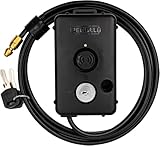
Overview: The Decibel 6ft Cable Lock represents a premium security solution that transcends traditional passive locking mechanisms. Designed for outdoor enthusiasts and contractors protecting high-value equipment, this lock integrates a thunderous 100-decibel alarm that activates instantly upon detecting cutting, impact, or tampering. The weatherproof construction ensures reliable performance in exposed environments, creating a dual-layered defense system that physically secures gear while psychologically deterring thieves through audible warnings.
What Makes It Stand Out: The integrated anti-tamper alarm system is the defining feature, transforming silent security into an active deterrent. At 100dB—comparable to a motorcycle horn—the siren startles intruders and alerts anyone within a substantial radius. The interchangeable cable system (3ft, 6ft, 15ft sold separately) provides future-proof flexibility, while Ideal Security’s key registration program offers free replacement keys, eliminating costly lockouts. Weather protection ensures functionality through rain, snow, and temperature extremes.
Value for Money: At $89.99, this commands a premium over standard cable locks ($15-30), but the alarm technology justifies the investment for protecting equipment worth hundreds or thousands. The modular cable system extends its useful lifespan as security needs evolve, while the key registration program saves replacement costs. For generators, construction equipment, or kayaks stored in vulnerable locations, the audible warning provides invaluable early detection that silent locks cannot match.
Strengths and Weaknesses: Strengths include the powerful 100dB alarm, robust weatherproofing, versatile gear compatibility, and exceptional key support program. The primary weaknesses are the high price point, battery dependency requiring periodic maintenance, and limited 6ft length for securing multiple large items. Alarm effectiveness also depends on proximity to potential responders.
Bottom Line: Highly recommended for securing high-value outdoor equipment in theft-prone or semi-public spaces. The audible alarm adds a critical security layer that justifies the premium price for serious protection needs.
7. Decibel 15ft Cable Lock with 100dB Alarm, Theft Deterrent for Outdoor Gear, Tools, Kayaks & Generators
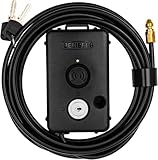
Overview: The Decibel 15ft Cable Lock extends the premium alarm-based security of its shorter counterpart, offering exceptional reach for securing multiple items or large equipment. Maintaining the same sophisticated 100dB anti-tamper alarm and weatherproof construction, this lock serves contractors, event organizers, and outdoor enthusiasts who need comprehensive coverage without compromising on active deterrent capabilities.
What Makes It Stand Out: The generous 15-foot cable length provides unmatched versatility, allowing users to chain together multiple generators, secure large kayaks and paddleboards, or protect several construction tools simultaneously. The alarm system remains the centerpiece—detecting interference instantly and emitting a piercing 100-decibel warning. The interchangeable cable design means you can switch to shorter lengths for different applications, while the key registration program ensures you’re never locked out of your own equipment.
Value for Money: At $110.12, this represents a modest $20 premium over the 6ft version. For users who would otherwise need two separate locks, this offers clear economic value. The cost-per-foot is competitive, and the alarm technology justifies the investment for high-value equipment protection. Eliminating the need for multiple locks or complex setups provides additional practical value that extends beyond simple cost calculations.
Strengths and Weaknesses: Strengths include extensive cable reach, powerful alarm deterrent, weather resistance, and versatile applications for complex setups. The extended length proves invaluable for securing multiple items. Weaknesses include the highest price point in its category, potential cable management challenges with excess length, battery dependency, and diminished alarm effectiveness in remote, unpopulated areas.
Bottom Line: Perfect for users requiring extended reach without sacrificing alarm-based security. The extra length justifies the modest price increase, making it superior for securing multiple items or large equipment configurations.
8. Febabilo Long Cable Lock, Extra Long Straight Bike Lock (5ft to 25ft) with Resettable Combination, Kayak Locks, Unique Thin end Cable Locks Suitable Kayak, Scooter, Paddle Boards, Canoe, Jet Ski
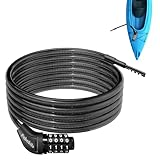
Overview: The Febabilo Long Cable Lock delivers budget-friendly versatility through an innovative thin-end design that solves access problems for watersports enthusiasts. This resettable combination lock features a tapered 10mm cable that narrows to 0.39 inches at the tip, threading through narrow kayak scupper holes and scooter spokes while maintaining robust thickness along its length. The straight cable design eliminates frustrating tangles, making it practical for securing multiple items.
What Makes It Stand Out: The distinctive thin-end design is the key differentiator, allowing access to tight spaces that standard 12mm cables cannot navigate. This specialized engineering makes it perfect for kayaks, paddleboards, electric scooters, and skateboards. The straight cable configuration is significantly easier to thread than coiled alternatives, while the resettable 4-digit combination eliminates key management concerns entirely. Available in lengths from 5ft to 25ft, it scales to any requirement.
Value for Money: At $17.99, this lock offers exceptional affordability while delivering specialized features typically found in premium products. The combination convenience saves replacement costs associated with lost keys, and the thin-end versatility eliminates the need for custom solutions. For securing multiple kayaks or outdoor equipment, it provides cost-effective protection that balances security with practical accessibility.
Strengths and Weaknesses: Strengths include the innovative thin-end design, affordable pricing, keyless operation, tangle-free straight cable, and weather-resistant construction. The zinc alloy cylinder provides adequate security for low-risk environments. Weaknesses include the lack of an alarm system, moderate security level unsuitable for high-crime areas, and thinner cable than heavy-duty alternatives. Combination locks may be easier to compromise than quality keyed versions.
Bottom Line: An excellent choice for watersports enthusiasts and those securing items with narrow access points. While not suitable for high-risk areas, its specialized design and unbeatable price make it perfect for casual use and low-risk environments.
9. MARQUE Bike Lock with Key – 7FT 3/8” Straight Cable Locks with Keys, Anti-Theft Security Cable for Bicycles, Scooters, Kayaks, Paddle Boards, Gates

Overview: The MARQUE Bike Lock with Key provides straightforward, dependable security through a 7-foot straight cable designed for versatile applications. This lock balances affordability with practical features, making it suitable for bicycles, kayaks, paddleboards, scooters, and gates. The 3/8-inch cable constructed from seven braided steel strands delivers solid cut resistance for everyday security needs in moderate-risk environments.
What Makes It Stand Out: The male-end cable design features a narrower tip that threads through tight spaces like kayak scupper holes and scooter spokes—similar to premium designs but at a mid-range price. The dustproof cap protecting the keyway is a thoughtful durability feature often overlooked in this category, extending the lock’s lifespan by preventing debris and moisture intrusion. Including two keys provides immediate backup, reducing lockout anxiety and replacement costs.
Value for Money: At $22.99, this lock occupies a sensible middle-ground position. It’s more affordable than alarm-equipped locks but offers superior build quality to budget combination locks. The seven braided steel construction matches more expensive competitors, while the dustproof design adds long-term durability value. For users preferring traditional keyed security over combinations, this represents a solid investment without premium pricing.
Strengths and Weaknesses: Strengths include the versatile narrow-tip design, dustproof protection, two included keys, straightforward operation, and seven braided steel construction. The 7ft length offers good flexibility for most applications. Weaknesses include the lack of alarm functionality, key management responsibility, and vinyl coating that may wear over time. Straight cables can be less compact for storage than coiled versions, and security level is moderate rather than high.
Bottom Line: A dependable, no-frills lock perfect for users who prefer keyed security and need to access narrow equipment holes. The dustproof feature and included spare key make it a practical choice for regular outdoor use in variable conditions.
10. MARQUE Combination Bike Lock Cable- 3/8 inch (5FT, 10FT, 15FT, 25FT) Resettable Combination Lock, Anti-Theft Coiled Secutiry Cable for Bicycles, Kayaks, Paddle Boards, Gates and Outdoor Gear (5 FT)
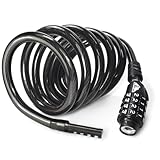
Overview: The MARQUE Combination Bike Lock Cable offers keyless convenience through a resettable combination mechanism while maintaining the security of a 3/8-inch seven-braided steel cable. Available in multiple lengths starting at 5ft, this coiled lock provides flexibility for securing bicycles, kayaks, paddleboards, gates, and outdoor gear without the hassle of key management or risk of lockouts.
What Makes It Stand Out: The combination mechanism eliminates the primary drawback of keyed locks—lost or forgotten keys. Users can set their own 4-digit code and change it as needed, which is ideal for families or groups requiring shared access. The coiled design is space-efficient, allowing unused cable sections to contract automatically, reducing bulk during transport and storage. Like its keyed sibling, the male-end design fits through narrow equipment openings, making it versatile for watersports applications.
Value for Money: At $17.99 for the 5ft model, this lock matches budget-friendly pricing while offering reputable brand quality. The combination convenience alone justifies the cost compared to replacing lost keys or entire locks. For users securing multiple items or sharing access among family members, the code-based system provides practical value that keyed locks cannot match. The coiled design’s storage benefits add further utility.
Strengths and Weaknesses: Strengths include keyless operation, customizable combination, space-saving coil design, narrow-tip compatibility, and seven braided steel construction. The ability to share codes without duplicating keys is practical for groups. Weaknesses include the risk of forgetting combinations, coiled cables being more difficult to stretch taut than straight versions, and combination mechanisms potentially being more vulnerable to determined thieves than quality keyed locks. The coil can also tangle if not stored properly.
Bottom Line: Ideal for users prioritizing convenience and keyless operation. The coiled design suits those with limited storage space, though straight cable enthusiasts may prefer the keyed version. Excellent value for low to moderate risk environments where convenience outweighs maximum security concerns.
Why Your Kayak Gear Needs Serious Protection on the Road
The Rising Tide of Kayak Gear Theft
Kayak gear theft has evolved from a rare nuisance into a sophisticated criminal enterprise. Organized theft rings specifically target traveling paddlers because they know you’re carrying thousands of dollars in easily resellable equipment. Unlike stationary boat owners who can install permanent security, travelers face unique vulnerabilities: unfamiliar locations, quick stops where gear is unattended, and the challenge of securing items to vehicles that weren’t designed as vaults. Your roof rack or trailer becomes a display case for criminals who can spot valuable gear from the highway. The portable nature of kayak accessories—paddles that detach, electronics that pop out, and rods that slide free—makes them particularly attractive to smash-and-grab thieves who can fence them online within hours.
What Makes Kayak Gear Vulnerable During Travel
Your gear faces threats from multiple angles during travel. At highway speeds, poorly secured items can become projectiles, but that’s just the beginning. When parked, a standard roof rack offers zero theft resistance—most accessories attach with simple thumb screws or quick-release levers. Fishing rods in rocket launchers, fish finders on RAM mounts, and paddles in bungee holders are essentially resting in unlocked display cases. Even locking tie-downs for the kayak itself often leave expensive accessories completely exposed. The real vulnerability lies in the “convenience factor” of modern kayak designs: everything is made to be quickly removable for your convenience, which means it’s also quickly removable for thieves.
Understanding Cable Lock System Fundamentals
Core Components of Effective Cable Locks
A robust cable lock system isn’t just a piece of steel wire with a padlock. The most effective systems comprise four critical elements: the cable core (typically braided steel), the protective sheath, the lock head integration, and the anchor point hardware. The core’s braid pattern determines cut resistance—tightly woven 7x19 or 7x7 aircraft-grade steel provides flexibility while maintaining strength. The sheath must be abrasion-resistant yet soft enough to prevent scratching your kayak’s finish. Lock heads should be either integrated into the cable with a swaged fitting or use a hardened steel eyelet that can’t be hammered off. Look for systems where the lock body itself is shrouded, preventing bolt cutter access to the shackle.
How Cable Locks Deter Opportunistic Thieves
The psychology of theft deterrence is your first line of defense. A visible, professional-looking cable lock system signals that you’ve thought about security, which immediately eliminates casual opportunists. Most kayak gear theft is performed by thieves carrying minimal tools—often just a pocket knife or small bolt cutters. A quality cable lock requires at least 36-inch bolt cutters or an angle grinder, tools that attract attention in public spaces. The time factor is crucial: a thief wants a 30-second grab, not a 5-minute struggle. When you route cables through multiple gear items and secure them to structural vehicle points, you create a “secure the herd” effect where stealing one item requires cutting several cables or removing everything at once.
Key Cable Lock Designs for Kayak Enthusiasts
Coiled vs. Straight Cable Configurations
Coiled cables offer incredible convenience for travel—they retract when not in use, preventing tangles and taking up minimal storage space. However, that convenience comes with security tradeoffs. Coils create natural gaps that can be exploited, and the spring tension can make tight routing difficult. Straight cables provide maximum versatility and can be cut to custom lengths, but they’re bulkier to store and more prone to kinking. For kayak travel, hybrid systems often work best: a primary straight cable securing the kayak to the roof rack, supplemented with shorter coiled cables for accessories. Consider how you’ll deploy the cable—coiled versions excel for quick convenience store stops, while straight cables are superior for overnight hotel security.
Integrated Lock Heads vs. Separate Padlocks
Integrated lock heads, where the locking mechanism is built directly into the cable’s end fitting, eliminate a major vulnerability: the shackle. Separate padlocks, even hardened models, expose a shackle that can be cut or pried. Integrated systems use a pin tumbler or disc detainer cylinder set directly into a hardened steel block that’s swaged onto the cable, creating a continuous security loop. The downside? If the lock mechanism fails due to corrosion or damage, you’re cutting the entire system off. Separate padlocks allow you to replace just the lock, and you can use a single heavy-duty padlock with multiple cables. For marine environments, integrated locks with marine-grade stainless steel cylinders and weather-sealed keyways offer superior long-term reliability.
Multi-Loop and Adjustable Cable Systems
Advanced cable systems feature multiple loops or adjustable eyes along their length, allowing you to create custom anchor points without separate hardware. These systems use a sliding jaw mechanism that lets you form loops at any point, perfect for securing awkwardly shaped items like kayak carts, crates, or multiple rods. Look for designs where the adjustment mechanism is itself protected by the lock—otherwise, you’ve created a vulnerable point. Some systems feature a “daisy chain” of loops, enabling you to thread the cable through several items and cinch them tight. This versatility is invaluable when you’re securing gear to unfamiliar anchor points at remote launches or rental properties.
Material Science: What Makes a Cable Truly Cut-Resistant
Steel Braiding Techniques and Their Impact
The difference between a cable that slows thieves and one that stops them lies in the braid architecture. Single-strand cables (monofilament) cut like butter under bolt cutters. 7x7 braid (seven strands of seven wires each) offers good flexibility and moderate security. 7x19 braid (seven strands of nineteen wires each) provides superior flexibility and better cut resistance because the tool must sever more individual wires. The ultimate protection comes from cables with a hardened steel core surrounded by braided layers—bolt cutters may crush the outer braid but can’t reach the hardened core. For kayak gear, 10mm diameter 7x19 braid with a hardened core hits the sweet spot of security without becoming too rigid to route through tight spaces.
Protective Coatings That Matter
That vinyl or rubber coating isn’t just for show—it prevents the cable from scratching your kayak and provides crucial corrosion protection. However, thick coatings can hide cable damage and add bulk. Look for UV-stabilized PVC or marine-grade thermoplastic elastomer (TPE) that won’t crack in cold weather or become sticky in heat. Some premium cables feature a clear coating that lets you inspect the steel for corrosion. Avoid cheap cables with spray-on coatings that peel, exposing bare steel to saltwater. The coating should extend fully into the lock head fitting with a proper strain relief boot to prevent moisture ingress at the most vulnerable point.
Locking Mechanisms Decoded
Combination vs. Keyed Systems
Combination locks eliminate key management headaches—no fumbling with keys while wearing paddling gloves, no lost keys at the bottom of a dry bag. However, most combination locks use cheaper zinc alloy bodies and have limited combination wheels that can be decoded through feel or shim attacks. High-quality four-wheel combinations with 10,000 possible codes offer reasonable security, but the mechanism itself is often less robust than keyed equivalents. Keyed locks, particularly those with disc detainer cylinders, provide superior physical security but require key management discipline. Consider a hybrid approach: keyed locks for overnight security, and a single combination lock for quick daytime stops where you need frequent access without key fumbling.
Smart Lock Technology for Modern Kayakers
Bluetooth-enabled cable locks are entering the kayak market, offering keyless entry through your smartphone. These systems provide audit trails (knowing when your lock was accessed), tamper alerts sent to your phone, and the ability to share digital keys with paddling partners. The downside? Battery life in extreme temperatures, vulnerability to electronic bypass attacks, and the nightmare of a dead phone battery when you need to access your gear. Look for smart locks with physical key backup and IP67 waterproof ratings. The real value lies in the deterrent effect—a thief seeing you unlock gear with your phone assumes you’re tech-savvy enough to have GPS trackers installed, making your setup seem riskier to target.
Critical Sizing and Portability Factors
Cable Length and Thickness Considerations
The ideal cable length depends on your setup complexity. A 6-foot cable secures a single kayak to a roof rack but won’t handle paddles and crates. 10-12 feet covers most roof rack configurations, while 15-20 feet allows securing multiple kayaks or gear to trailer frames. Thickness follows a clear security curve: 8mm cables deter casual thieves, 10mm stops most equipped criminals, and 12mm+ requires power tools. However, thicker cables become difficult to route through tight spaces and add significant weight. For travel, a 10mm diameter offers the best compromise—strong enough to resist 36-inch bolt cutters yet flexible enough to thread through scupper holes and around roof rack bars.
Weight and Packability for Travel
Every pound matters when you’re loading a roof rack or packing for a flight. Heavy-duty cable systems can weigh 3-5 pounds, becoming a liability for weight-conscious travelers. Look for cables with hollow-core hardened steel designs that reduce weight without sacrificing cut resistance. Some expedition-grade systems use titanium-reinforced cables that weigh 40% less than steel equivalents. Packability matters too—cables that come with dedicated storage bags prevent them from becoming tangled messes and protect your vehicle’s interior from grease and dirt. Consider how the cable stores when not in use; some systems double as kayak carrying slings, earning their weight by serving multiple purposes.
Weatherproofing for Marine Environments
Corrosion and UV Resistance Essentials
Saltwater is kryptonite to standard steel cables and locks. A single season of salt spray can render a cheap lock seized and useless. Marine-grade cable locks use 316 stainless steel components, nickel-plated lock cylinders, and internal grease chambers that expel moisture. The lock mechanism should have a rubber gasket sealing the keyway or combination wheels. UV resistance is equally critical—sunlight degrades coatings and embrittles nylon components. Look for UV-stabilized materials rated for 500+ hours of direct sun exposure. Some premium locks include sacrificial anodes (similar to boat hulls) that corrode before critical components, extending service life in harsh marine environments by years.
Security Ratings and Certifications
Understanding Industry Standards
Those “Sold Secure” or “ART” ratings aren’t marketing fluff—they’re the result of standardized attacks by professional locksmiths using timed tests. Sold Secure Gold means the lock resisted a 5-minute attack with high-quality tools, while Silver indicates 3 minutes of resistance. For kayak gear, Gold-rated locks are overkill for most situations; Silver provides adequate protection for travel stops. The ART rating system (used in Europe) grades locks 1-5 stars based on tool types and time. A 3-star ART rating means the lock survived attacks with bolt cutters and hacksaws. These ratings assume proper installation—your lock is only as strong as its anchor point, so a Gold-rated lock clipped to a plastic roof rack fairing provides minimal real-world security.
Insurance Implications
Your insurance policy likely has specific security requirements for gear coverage away from home. Many policies require “approved” locks meeting minimum Sold Secure or equivalent ratings, and failure to use them can void claims. Document your security setup with photos showing proper installation, and keep receipts for your lock systems. Some insurers offer premium discounts (5-15%) for using rated locks with GPS trackers. The fine print matters: policies often exclude coverage for gear left unattended for more than 24 hours, or require locks to be engaged any time the vehicle is unoccupied. Contact your insurer before your trip to understand specific requirements for kayak gear—assumptions can be expensive.
Mounting and Anchor Point Strategies
Vehicle-Based Solutions
Your vehicle’s roof rack is the primary anchor point, but not all racks are created equal. Factory crossbars often have hidden threaded inserts for eye bolts—check your owner’s manual. Aftermarket racks like Thule and Yakima sell lockable anchor points that replace end caps or bolt into track systems. For ultimate security, install a hidden hitch-mounted anchor point: a steel loop behind your license plate or inside the receiver tube that requires removing a locking pin to access. This creates a structural anchor point that thieves can’t easily reach. When using roof racks as anchors, always route cables through the crossbar itself, not just around it—crossbars can be unbolted in seconds if the thief can access the mounting feet.
Portable Options for Remote Locations
At remote launches without fixed anchor points, you need creative solutions. Ground anchors—spiral stakes designed for securing tents in high winds—can be screwed into soil or sand near your vehicle, providing a theft-deterrent anchor that can’t be easily uprooted. For beach launches, consider a sand anchor system: bury a specialized plate with an attached cable; the weight of the sand creates a 200+ pound anchor point. Some paddlers carry a short length of heavy chain to wrap around boulders or trees, creating an instant anchor. The key is having multiple options—rely on one method and you’ll eventually encounter a situation where it’s useless.
Securing Specific Kayak Gear
Paddles, Rods, and Accessories
Paddles and rods are the low-hanging fruit for thieves—lightweight, high-value, and easily concealed. Run a dedicated 6mm cable through the paddle shaft and secure it to your primary anchor. For fishing rods, thread a cable through the reel seat or guides, then loop it through a rod holder. Multiple rods can be secured with a single cable using a “caterpillar” technique: thread the cable through each reel seat in series, creating a locked bundle. Don’t forget accessories like anchors, drift socks, and landing nets—these add up quickly. Use small-diameter cables (4-6mm) for these items; they’re not primary theft targets but become tempting when everything else is locked down.
Electronics and Trailers
Fish finders and GPS units require special consideration. Most mounting systems use quick-release knobs—replace these with security screws that require special bits, then cable the unit itself to the kayak. For overnight security, remove electronics entirely and store them in a locked vehicle or portable safe cabled inside your kayak’s hull. Kayak trailers present a unique challenge: securing the trailer to your vehicle with a wheel lock is step one, but gear on the trailer needs individual cables. Run a primary cable through the trailer frame, then use secondary cables to secure each kayak and gear item to this backbone. Remember, a locked trailer with unlocked gear is just an organized shopping cart for thieves.
Common Security Mistakes to Avoid
Installation and Usage Errors
The most common error is “convenience locking”—securing gear to itself rather than to an immovable object. A cable through three paddles and a crate is useless if the whole bundle can be lifted off the roof rack. Always create a closed loop that includes a structural part of your vehicle. Another critical mistake is leaving slack in the cable; loose cables can be manipulated away from gear or positioned where bolt cutters get maximum leverage. Route cables tight against surfaces, using corners and edges to your advantage. Avoid running cables through plastic fairings, rubber trim, or non-structural components that can be cut or broken with minimal effort.
Maintenance and Longevity
Care Schedules and Replacement Guidelines
Marine environments demand monthly maintenance. Rinse locks with fresh water after saltwater exposure, then apply a marine-grade lock lubricant (not WD-40, which attracts grit). Work the mechanism 20-30 times to distribute lubricant. Inspect cables quarterly for kinks, frayed coating, or corrosion spots—any visible steel rust means immediate replacement. Combination locks should be cycled through all numbers monthly to prevent seizing. Most quality locks have a 3-5 year service life in marine environments; budget for replacement every three seasons. If a lock becomes difficult to operate, don’t force it—disassemble and clean or replace it. A seized lock when you’re trying to load up after a long paddle is a security system that has become a liability.
Cost vs. Security Tradeoffs
Finding Your Optimal Balance
Security exists on a sliding scale where diminishing returns hit hard around the $80-100 mark. A $30 cable lock stops casual theft but fails against determined attackers. A $60-80 system with 10mm hardened steel and a quality lock mechanism defeats most threats you’ll encounter on the road. Above $100, you’re paying for brand reputation, marginal weight savings, or smart features—not significantly more security. Consider your gear’s total value: spending 5-10% of your gear’s worth on security is reasonable. For a $3,000 setup, a $150-200 multi-cable system isn’t overkill. Remember, the cost of a lock is always less than your insurance deductible plus the hassle of replacing gear mid-trip.
Integrating With Comprehensive Security Plans
Layering Your Protection Strategy
Cable locks are just one layer of a complete security onion. Combine them with visual deterrents like security stickers and obvious cameras (even fake ones). Use GPS trackers hidden inside kayak hulls or gear crates—they won’t prevent theft but enable recovery. Park strategically: position your vehicle where it’s visible to you during restaurant stops, under lights at hotels, and away from exit points in parking lots. Remove quick-release knobs and replace them with security bolts. The goal is to make your setup so inconvenient that thieves move to easier targets. Document your gear with photos and serial numbers, and etch your driver’s license number into expensive items. A layered approach means that defeating one security measure still leaves multiple obstacles, and that’s often enough to save your gear.
Frequently Asked Questions
How thick does my kayak security cable really need to be?
For most travel situations, a 10mm diameter cable hits the sweet spot—it resists manual bolt cutters while remaining flexible enough to route through scupper holes and around roof rack components. Thinner 8mm cables work for quick daytime stops but won’t stand up to determined thieves with 36-inch cutters. Go thicker than 12mm and you’re adding weight and rigidity without meaningful security gains against power tools.
Can bolt cutters defeat all cable locks, or are some truly resistant?
Standard 18-24 inch bolt cutters will slice through 6mm cables and most 8mm versions. Quality 10mm hardened steel cables with 7x19 braid require 36-inch cutters and significant leverage—tools that are conspicuous in public spaces. No cable is truly “uncuttable,” but the goal is making it so difficult that thieves need power tools and several minutes of noisy work, which is usually enough deterrent.
Should I choose a combination lock or a keyed lock for kayak travel?
Keyed locks with disc detainer cylinders offer superior security and reliability in marine environments. Combination locks shine for quick access during frequent stops when you don’t want to fumble with keys while wearing gloves. Many serious paddlers use both: keyed locks for overnight security and a combination lock for daytime convenience. Whatever you choose, ensure it has a marine-grade rating and physical key backup if electronic.
How do I secure gear to a roof rack that doesn’t have obvious anchor points?
Get creative with your vehicle’s structural elements. Thread cables through the roof rack crossbar itself (not just around it), use the door frame by closing the cable inside the door, or install hidden eye bolts in factory mounting points. For permanent solutions, aftermarket crossbars from Thule or Yakima offer lockable end caps and track-mounted anchor points. In a pinch, a cable running through both rear doors (locked shut) creates a solid anchor.
Will saltwater destroy my cable lock system even if it’s “marine grade”?
Marine-grade significantly extends lifespan but doesn’t make locks immortal. Saltwater infiltrates lock cylinders, corrodes internal springs, and degrades coatings over time. Rinse locks with fresh water after every saltwater exposure, lubricate monthly with marine-grade lock lubricant, and inspect quarterly for corrosion. Even the best marine locks typically need replacement every 3-5 years of heavy use. Think of them as consumables, not lifetime purchases.
Are expensive cable locks worth the premium price, or am I paying for marketing?
Above $80-100, you’re paying for diminishing security returns but meaningful quality-of-life improvements. Premium locks offer smoother operation in harsh conditions, lighter weight materials like titanium reinforcement, better weather sealing, and longer service life. For occasional weekend warriors, a $50-70 system provides adequate protection. Expedition paddlers who depend on their locks daily will appreciate the reliability and lower maintenance of premium systems.
Can I repurpose a heavy-duty bike lock for my kayak gear?
Bike locks are designed for different threat models and often fail for kayak applications. U-locks are too short and rigid to route through multiple items. Most bike cable locks use 6-8mm steel optimized for weight savings, not maximum security. Additionally, bike lock coatings aren’t formulated for constant saltwater exposure. Dedicated kayak security systems feature marine-grade materials, adequate length for awkward gear, and anchor hardware designed for vehicle mounting.
How many separate cable locks do I need for a typical kayak setup?
A three-cable system covers most scenarios: one primary 10-12 foot, 10mm cable securing the kayak to your vehicle; one 6-foot, 8mm cable for paddles and rods; and one 4-foot, 6mm cable for accessories like crates and carts. This modular approach lets you secure gear appropriately based on risk level—use all three for overnight security, just the primary cable for quick stops. Avoid the temptation of one giant cable; smaller dedicated cables are easier to route and replace individually.
What should I do if my keyed lock seizes up or I lose my keys on a trip?
Always carry a spare key in your wallet or dry bag, separate from your main keyring. For combination locks, store the combination in a secure password manager you can access from your phone. If a lock seizes, don’t force it—spray with penetrating oil, wait 15 minutes, then gently work the mechanism. As a last resort, quality locks can be cut with an angle grinder, which many roadside assistance services carry. Some paddlers hide a small, cheap cable cutter inside their vehicle (secured itself with a combination lock) as an emergency backup.
Do cable locks provide real security for overnight hotel stays, or should I bring gear inside?
Cable locks provide adequate security for overnight stays at reputable hotels with good lighting and visible security cameras, especially when combined with parking strategy (well-lit areas, visible from your room). However, if you’re staying in high-crime areas or your room isn’t on the ground floor where you can monitor your vehicle, removing expensive electronics and rods is wise. Think of cable locks as “hotel security”—good enough for calculated risk, but not a substitute for bringing gear inside when feasible. Your insurance policy may have specific requirements for overnight coverage, so check before relying solely on locks.'