Everyounce matters when you’re counting grams for a thru-hike or optimizing your ultralight setup. Traditional rigid water bottles, while reliable, consume precious pack space even when empty and add unnecessary weight to your kit. Enter collapsible water bottles—the unsung heroes of ultralight packing that flatten, roll, or fold down to nearly nothing when not in use. These space-saving marvels have evolved from flimsy camping novelties into sophisticated pieces of gear that rival their hard-sided counterparts in durability and performance.
But not all collapsible bottles are created equal. The market is flooded with options that range from glorified plastic bags to engineering masterpieces worthy of your carefully curated kit. Understanding the nuances of materials, capacity, cap systems, and packability will make the difference between a bottle that becomes your favorite piece of gear and one that leaks all over your sleeping bag on day three. This guide dives deep into what transforms a simple collapsible container into a true ultralight game-changer.
Top 10 Collapsible Water Bottles for Ultralight Packing
Detailed Product Reviews
1. Platypus Platy 2-Liter Ultralight Collapsible Backpacking Water Bottle

Overview:
The Platypus Platy 2-Liter bottle is a backpacking essential for serious hikers who prioritize water capacity above all else. This ultralight reservoir holds an impressive 70 ounces while weighing a mere 1.3 ounces, making it ideal for thru-hikes and remote expeditions where water sources are scarce and every gram matters.
What Makes It Stand Out:
Its massive 2-liter capacity combined with featherlight weight is unmatched for bulk water transport. Unlike smaller flasks, it features a stable base that allows it to stand upright when filled—a practical detail for camp use. The compatibility with Platypus caps, drink tubes, and the GravityWorks filtration system transforms it from a simple bottle into a versatile hydration system component that integrates seamlessly into your existing setup.
Value for Money:
At $12.99, you’re paying just pennies per ounce of capacity. This represents exceptional value for backpackers who would otherwise need multiple smaller bottles. Compared to hard-sided bottles, it offers four times the capacity at a fraction of the weight and pack space, making it a budget-friendly choice for weight-conscious adventurers.
Strengths and Weaknesses:
Strengths include extraordinary capacity-to-weight ratio, stable base, filtration system integration, and true taste-free material that doesn’t retain flavors. Weaknesses are the basic screw-top design requiring separate purchase for a drink tube, large size being overkill for day hikes, and no integrated handle for comfortable carrying when full.
Bottom Line:
The Platypus Platy 2-Liter is the definitive choice for multi-day adventurers needing maximum water storage. For casual day hikes, it’s excessive, but for backcountry reliability and capacity, it’s unbeatable.
2. HydraPak Stow Collapsible Water Bottle – 500ml – Ultralight, Leak-Proof, BPA-Free, Filter Compatible Travel & Hiking Flask - Sutro Green

Overview:
The HydraPak Stow 500ml balances portability with practical capacity for everyday adventures. This mid-sized collapsible bottle is engineered for hikers, travelers, and urban explorers who need reliable hydration without the bulk of rigid containers, weighing under 2 ounces.
What Makes It Stand Out:
The self-sealing silicone nozzle with protective flip-top cap prevents spills and keeps the valve clean—features rarely found in collapsible bottles. The flexible bail handle offers versatile carrying options, while 28mm filter compatibility makes it trail-ready. Its ability to flatten and roll when empty provides true space savings in packed bags.
Value for Money:
Priced at $13.93, this bottle sits in the sweet spot for feature-rich collapsibles. You’re getting premium leak-proof technology and filter compatibility at a mid-range price point. While not the cheapest per-milliliter option, the drinking convenience justifies the cost over basic screw-top models that require stopping to unscrew.
Strengths and Weaknesses:
Strengths include excellent leak-proof nozzle design, versatile handle, dishwasher-safe construction, and true packability that fits in jacket pockets. Weaknesses are the 500ml capacity running out quickly on strenuous hikes, requiring frequent refills, and the price being higher than simpler alternatives with similar capacity.
Bottom Line:
The HydraPak Stow 500ml excels as a primary bottle for moderate activities or a backup for longer adventures. Its superior nozzle design and build quality make it worth the modest premium over basic collapsibles.
3. HydraPak Stow Collapsible Water Bottle – 350ml – Ultralight, Leak-Proof, BPA-Free, Filter Compatible Travel & Hiking Flask - MTN Mammoth Grey

Overview:
The HydraPak Stow 350ml is the minimalist’s answer to emergency hydration. This pocket-sized flask is designed for athletes and adventurers who need the absolute smallest water-carrying solution for short bursts of activity or as backup insurance when every cubic inch of pack space counts.
What Makes It Stand Out:
It packs the same premium features—self-sealing nozzle, protective cap, bail handle, and filter compatibility—as its larger siblings into an ultra-compact form. When empty, it virtually disappears in a pocket, making it ideal for trail running, skiing, or as a just-in-case backup that you’ll barely notice until needed.
Value for Money:
At $14.40 for just 350ml, this is the poorest value in the Stow lineup. You’re paying more for less, with a cost-per-milliliter significantly higher than the 500ml version. This premium only makes sense if you absolutely need the minimal size and are willing to sacrifice capacity and value for packability.
Strengths and Weaknesses:
Strengths include ultimate packability, same high-quality nozzle system, and versatility as a backup. Weaknesses are the tiny capacity requiring constant refills, highest price-per-ounce in its class, and limited practicality as a primary bottle for anything beyond short runs or emergency use.
Bottom Line:
Choose the 350ml Stow only if space is your absolute priority. For most users, the 500ml version offers far better value and usability. This is a specialized tool, not a general-purpose bottle.
4. HydraPak Stow Collapsible Water Bottle – 350ml – Ultralight, Leak-Proof, BPA-Free, Filter Compatible Travel & Hiking Flask - MTN Tahoe Blue

Overview:
The HydraPak Stow 350ml in Tahoe Blue offers identical performance to its Mammoth Grey counterpart with a more appealing colorway and slightly better pricing. This is the same ultra-compact flask designed for minimalists who prioritize packability over capacity in their hydration setup.
What Makes It Stand Out:
Beyond the attractive blue hue, it delivers the same premium self-sealing silicone nozzle and protective flip-top cap that distinguish the Stow series. The flexible bail handle and 28mm filter compatibility remain, making this a fully-featured bottle despite its diminutive size. It flattens to nearly nothing in a pack, making it perfect for trail runners and ultra-light hikers.
Value for Money:
At $13.93, it’s marginally better value than the grey version, but still expensive per milliliter. The pricing reflects the specialized nature of ultra-compact bottles rather than capacity. You’re paying for the convenience of near-invisibility in your pack and the premium nozzle system rather than raw volume.
Strengths and Weaknesses:
Strengths include ultimate portability, proven leak-proof design, and versatility as a secondary bottle. Weaknesses remain the limited 350ml capacity, requiring frequent refills, and poor cost-per-ounce compared to larger options in the same product line and competing brands.
Bottom Line:
Opt for the Tahoe Blue over the Mammoth Grey for the slight price savings and color preference. However, both 350ml versions serve the same niche purpose. Only purchase if you specifically need a tiny, feature-rich backup bottle rather than a primary hydration source.
5. Mazama Aqua Bend Collapsible Soft Sport Water Bottle/Flask/Canteen. Ultralight and Eco-Friendly. Ideal for Running, Hiking, Cycling, Climbing. Fits Most Hydration Vests. (Glacier, 750ml)

Overview:
The Mazama Aqua Bend 750ml collapsible bottle strikes an impressive balance between capacity, price, and eco-conscious design. With nearly double the volume of typical collapsibles, it serves runners, hikers, and cyclists who need substantial hydration without the weight penalty of hard bottles or the expense of premium brands.
What Makes It Stand Out:
The unique GYZR bite valve offers both bite-activated and streaming flow modes—superior to standard nozzles for active use. Made from USA-sourced PVC/BPA-free materials with robust 1cm welds, it promises durability backed by a one-year warranty. At 750ml, it fits most hydration vest pockets perfectly while providing significantly more water than typical flasks.
Value for Money:
At just $9.00, this is the best value in the collapsible bottle market. You’re getting more than twice the capacity of 350ml competitors at a lower price. The cost-per-milliliter is outstanding, making it accessible for budget-conscious adventurers who don’t want to compromise on features or environmental responsibility.
Strengths and Weaknesses:
Strengths include exceptional capacity-to-price ratio, innovative bite valve, eco-friendly materials, and strong warranty support. Weaknesses are the less established brand reputation compared to Platypus/HydraPak, potential durability concerns with extended heavy use, and the bite valve having a learning curve for new users.
Bottom Line:
The Mazama Aqua Bend 750ml is the smart choice for value-seekers needing serious capacity. It outperforms competitors on price and volume while delivering innovative features. Ideal for hydration vest users and eco-conscious adventurers who prioritize both performance and budget.
6. 33oz Collapsible Water Bottles, 3-Pack Reusable Travel Foldable Water Bottles for Hiking Camping Running Bike, BPA-Free Water Bottle
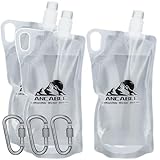
Overview:
The 33oz Collapsible Water Bottles 3-Pack delivers exceptional value for outdoor families and groups. Each 1L bottle features BPA-free construction with a 28mm threaded mouth for portable filter compatibility. The set includes carabiners for easy backpack attachment, making it ideal for shared adventures where staying hydrated is critical.
What Makes It Stand Out:
This product distinguishes itself through its family-oriented three-bottle configuration at an aggressive price point. The universal 28mm threading stands out, accepting most portable water filters for backcountry safety. The integrated handles and carabiners provide versatile carrying options that many competitors charge extra for.
Value for Money:
At $4.00 per bottle, this pack undercuts most single-bottle alternatives while delivering comparable quality. For families or groups, the bundled pricing eliminates the need for multiple purchases, offering savings of 30-50% versus buying individual collapsible bottles separately.
Strengths and Weaknesses:
Strengths include exceptional multi-unit value, filter compatibility, lightweight portability, and included accessories. The three-pack covers group needs efficiently. Weaknesses involve potential durability trade-offs at this price point and the possibility that users may not need all three bottles, though the per-unit cost remains low regardless.
Bottom Line:
An outstanding choice for families and adventure groups seeking affordable, functional hydration. The filter-ready design and thoughtful accessories make this 3-pack a practical, budget-conscious solution for multi-person outdoor excursions.
7. Burtrail Ultralight Collapsible Water Bottle, Compatible with 42mm BeFree Water Filter Cartridge, 1.0L Leakproof Foldable Water Bottle for Camping, Backpacking, Travel & Endurance Sports

Overview:
The Burtrail Ultralight Collapsible Water Bottle targets serious solo adventurers with its premium 1.0L capacity and 61-gram weight. Engineered for integration with 42mm filter cartridges, this BPA-free TPU bottle transforms into a personal filtration system for safe backcountry hydration from natural water sources.
What Makes It Stand Out:
The innovative twist-to-drink cap eliminates removal and reduces contamination risk—a genuine innovation. Dual-handle grips offer unmatched versatility for hand-carrying, carabiner attachment, or hanging. The 42mm threading specifically accommodates popular BeFree filters, creating a seamless squeeze-filtration experience competitors lack.
Value for Money:
At $16.99, this single bottle commands a premium but justifies it through specialized features. Comparable filter-ready bottles cost $20-25, making this a smart investment for frequent backpackers who prioritize weight savings and functional design over bulk quantity.
Strengths and Weaknesses:
Strengths include the revolutionary cap design, ultralight construction, robust TPU durability, and precise filter compatibility. The dual-handle system excels in versatility. Weaknesses center on the higher single-bottle price and lack of included filter, requiring additional investment. The 1L capacity may prove limiting for longer treks without refill sources.
Bottom Line:
Ideal for dedicated hikers and endurance athletes who demand premium performance. The clever engineering and filter integration make it worth the premium for those who prioritize efficiency and reliability in challenging environments.
8. 1L Collapsible Water Bottle, 6-Pack Ultralight - 32oz Large Capacity with Measurement Scale, BPA-Free, Ideal for Hiking and Travel, Durable and Leak-Proof Design for Easy Hydration Anywhere

Overview:
This 6-Pack of 1L Collapsible Water Bottles redefines value for pair and group adventurers. Each 32oz BPA-free TPU bottle features measurement scales for intake tracking and 28mm filter compatibility. The ultra-lightweight design compresses for minimal pack space, delivering institutional-level quantity without sacrificing individual quality.
What Makes It Stand Out:
The staggering $2.66 per-unit cost dominates the conversation—this is bulk pricing with premium features. The integrated measurement scales add health-conscious utility rarely seen in collapsible bottles. Six bottles provide comprehensive coverage for multi-day trips, basecamp setups, or rotating clean/dirty water systems.
Value for Money:
Unbeatable in the category, this pack costs less than two premium single bottles while delivering six. For couples or small groups, it eliminates the “whose bottle is whose” confusion and provides backups. The environmental impact reduction from reusable bulk purchasing adds intangible value.
Strengths and Weaknesses:
Strengths include market-leading price-per-bottle, quantity flexibility, measurement scales, and filter compatibility. The set enables creative water management strategies. Weaknesses involve potential over-purchase for solo users, though the value proposition remains strong. Individual bottles may lack the refined features of premium singles but deliver core functionality admirably.
Bottom Line:
The definitive choice for budget-conscious pairs and groups. If you need multiple bottles, this 6-pack’s combination of price, features, and quality makes individual alternatives seem fiscally irresponsible.
9. YCTMALL Collapsible Water Bottles Two Pack Travel Sports Portable Sport Water Bottle comes with mountaineering Buckle 500ml silicone Water-proof camping water bottle (Purple and Grey Color)

Overview:
The YCTMALL Two-Pack offers 500ml silicone collapsible bottles designed for casual outdoor enthusiasts and travelers. Each bottle withstands temperatures from -20℃ to 60℃ and collapses from 24cm to 13.5cm. The food-grade silicone construction with integrated carabiners targets light-duty hydration needs with emphasis on compact portability.
What Makes It Stand Out:
The temperature resilience distinguishes this from TPU competitors, handling hot and cold beverages safely. The dramatic size reduction when collapsed maximizes space savings. The silicone material provides a premium feel and durability advantage over thinner plastics, while the two-pack configuration suits couples or backup scenarios.
Value for Money:
At $13.62 for two, the per-bottle price competes well, though the 500ml capacity means you’re getting half the volume of 1L alternatives. Best value for users prioritizing compactness over capacity—urban travelers and gym-goers gain more than hardcore hikers.
Strengths and Weaknesses:
Strengths include superior temperature range, excellent collapse ratio, silicone durability, and leak-proof sealing. The compact size fits any bag. Weaknesses center on the insufficient 500ml capacity for serious outdoor use and lack of filter compatibility. The smaller opening may complicate cleaning compared to wide-mouth designs.
Bottom Line:
Perfect for commuters, travelers, and light activity. The temperature versatility and compact design excel in urban and travel contexts, but serious adventurers should seek larger, filter-compatible options for backcountry reliability.
10. LuLuya 4 Pack Collapsible Water Bottles for Travel – 24oz Foldable Water Bottle with Leakproof Lid, Food-Grade Silicone Portable Reusable BPA-Free Water Bottle for Hiking,Sports,Camping,Biking

Overview:
LuLuya’s 4-Pack provides 24oz collapsible water bottles using PET+PE material for environmentally conscious users. Each BPA-free bottle operates between -20°C and +50°C, flattening or rolling for storage. The four-bottle configuration balances quantity and cost for versatile family or group outdoor applications.
What Makes It Stand Out:
The PET+PE material composition offers a unique middle ground between rigid bottles and ultra-soft TPU, providing structure when filled while remaining collapsible. The four-pack hits a sweet spot—more than a couple but less than an overwhelming six-pack—perfect for small families or activity-specific rotation.
Value for Money:
At $3.25 per bottle, this pack delivers solid middle-tier value. The price positions between budget 6-packs and premium singles, offering quantity without extreme bulk. For families needing dedicated bottles without over-purchasing, this represents fiscal and practical balance.
Strengths and Weaknesses:
Strengths include balanced pack size, leak-proof reliability, good temperature range, and PET+PE durability. The 24oz capacity suits moderate activity. Weaknesses involve no filter compatibility mentioned and capacity smaller than 1L options. PET+PE may not compress as small as TPU, and material longevity in rugged use remains unproven.
Bottom Line:
A versatile middle-ground option for families and casual groups. The four-pack quantity and reliable performance make it ideal for those wanting dedicated bottles without committing to bulk sets or premium singles.
Why Collapsible Bottles Dominate Ultralight Kits
The philosophy of ultralight packing revolves around multi-use items that deliver maximum functionality with minimum weight and bulk. Collapsible water bottles epitomize this principle. When full, they provide essential hydration capacity; when empty, they virtually disappear into your pack. A quality 1-liter collapsible bottle weighs between 30-80 grams—less than a single Clif Bar—while rigid bottles of the same capacity typically tip the scales at 120-180 grams. The real magic happens in pack volume: a collapsed bottle occupies 80-90% less space than its rigid equivalent, freeing up room for food, gear, or simply allowing you to use a smaller, lighter pack.
Beyond the obvious weight and space savings, these bottles offer versatility that rigid containers can’t match. Need to squeeze water through a filter? The flexible body creates natural pressure. Want to stash a bottle in a hip belt pocket? They conform to irregular spaces. Running low on water and need to minimize sloshing? Simply collapse the bottle as you drink to eliminate dead air space. For section hikers tackling varied terrain or travelers navigating airport security, the ability to roll up your bottle and pocket it is revolutionary.
Understanding Collapsible Bottle Materials
Silicone Construction: The Gold Standard
Medical-grade silicone has become the premium material for high-end collapsible bottles, and for good reason. It withstands temperatures from -40°F to 450°F without degrading, making it safe for both freezing conditions and hot beverages. The material’s natural elasticity allows it to bounce back to shape thousands of times without developing stress cracks. Silicone is also inherently BPA-free and doesn’t leach chemicals into your water, even when exposed to UV radiation on exposed ridges. The downside? Premium silicone bottles command higher prices and can be slightly heavier than TPU alternatives, though the durability trade-off often justifies the extra grams for serious backpackers.
TPU (Thermoplastic Polyurethane) Options
TPU represents the middle ground in collapsible bottle construction. This material offers excellent flexibility and abrasion resistance at a lower weight than silicone. TPU bottles typically feature welded seams that create strong, leak-proof bonds. However, TPU is more susceptible to UV degradation over time and may develop a “plastic” taste in hot conditions. Most quality TPU bottles now feature taste-resistant inner coatings, but these can wear off after repeated use. For weekend warriors and three-season hikers, TPU offers compelling performance at a moderate price point.
Lightweight Plastic Film Variants
At the ultralight extreme, you’ll find bottles constructed from thin plastic films similar to hydration bladder material. These can weigh as little as 20 grams for a 1-liter capacity but sacrifice durability for weight savings. They’re best suited as backup bottles or for supported trips where failure isn’t catastrophic. The material is prone to punctures and doesn’t handle repeated collapsing cycles well. Think of these as disposable insurance rather than primary hydration vessels.
Capacity Considerations for Different Adventures
The 500-750ml Sweet Spot for Day Hikes
For ultralight day hikes and trail running, bottles in the 500-750ml range offer the best balance of capacity and packability. This size collapses small enough to fit in a running vest pocket while providing adequate hydration between water sources. Many hikers carry two 500ml bottles instead of one liter bottle for better weight distribution and redundancy. If one fails, you still have capacity to reach the next source.
1-Liter Bottles for Thru-Hiking
The 1-liter capacity has become the de facto standard for serious backpacking. It aligns perfectly with standard water treatment tablets, most gravity filter systems, and the typical distance between reliable water sources on major trails. When choosing a 1-liter bottle, consider whether you’ll carry one or two. Many ultralight hikers start with two bottles in dry sections, then mail one home once they reach areas with frequent water sources.
Multi-Liter Options for Dry Stretches
For desert sections of the PCT or long water carries on the Hayduke Trail, collapsible bottles shine in 2-3 liter capacities. These larger sizes let you haul water efficiently through dry stretches, then collapse down when not needed. The key is finding models that maintain stability when partially filled—a common weakness in oversized collapsible designs. Look for bottles with internal baffles or reinforced bases that prevent them from becoming unwieldy blobs of water.
Weight vs Durability Trade-offs
The ultralight mindset sometimes leads to choosing the absolute lightest option, but with collapsible bottles, this can be a costly mistake. A 30-gram bottle might save you 20 grams over a 50-gram alternative, but if it fails after two weeks, you’re either drinking untreated water or begging gear from other hikers. The durability sweet spot typically lies between 40-60 grams for a 1-liter bottle.
Examine the material thickness, often measured in millimeters or denier for fabric-like constructions. Thicker walls resist punctures from pack shifters and brush but add weight. Reinforced bottom panels and collar areas prevent the most common failure points. Some manufacturers use hybrid construction, with thicker material in high-stress areas and thinner walls elsewhere to optimize the weight-to-strength ratio.
Cap and Lid Systems Decoded
Screw-Top Designs: Reliable but Slow
Traditional screw caps offer the most reliable seal and are least likely to fail mechanically. Look for caps with lanyards or tethers that prevent loss in the field—a frustrating way to render your bottle useless. The threading should be coarse enough to engage easily with cold, gloved hands but fine enough to create a watertight seal. Some premium designs incorporate O-rings that can be replaced if they wear out, extending the bottle’s lifespan.
Flip-Top and Spout Caps: Convenience vs Complexity
Flip-top caps allow one-handed operation, perfect for drinking while hiking with poles. However, the mechanical hinge is a potential failure point, and the more complex seal design can leak if debris gets lodged in the mechanism. The best designs feature simple, robust hinges with minimal moving parts. Some spout caps include protective covers that prevent contamination—a valuable feature when your bottle spends time on dusty trails.
Push-Pull and Bite Valve Options
Borrowed from hydration pack technology, these caps offer the fastest access but require the most maintenance. Bite valves can harbor bacteria and may freeze in winter conditions. They’re excellent for high-intensity activities but less ideal for general backpacking where you might want to pour water for cooking or share with a hiking partner.
Mouth Opening Design: Wide vs Narrow
Wide-mouth bottles (typically 40-50mm openings) excel at filling from shallow water sources and make cleaning significantly easier. You can actually reach inside with a brush or cloth to scrub away biofilm. The trade-off is that they’re harder to drink from on the move without spilling. Narrow-mouth designs (28-32mm) offer better control while drinking but can be frustrating when trying to fill from a trickle of water or add drink mixes.
Some innovative designs feature dual-opening systems—a wide mouth for filling and cleaning, with a separate smaller spout for drinking. While this adds weight and complexity, the versatility can be worth it for hikers who prioritize both ease of use and maintenance.
Cleaning and Maintenance Challenges
The biggest drawback of collapsible bottles is their tendency to trap moisture in folds and crevices, creating perfect conditions for mold and bacteria growth. Unlike rigid bottles that can be thoroughly dried, collapsible designs require deliberate drying strategies. The best approach is to prop them open with a kitchen whisk or specialized drying rack that allows air circulation.
Cleaning requires more attention than rigid bottles. Soft materials can develop biofilm more readily, and the collapsing action can trap particles. A bottle brush is essential, but you’ll need one with a flexible handle that can navigate the collapsing sections. Some hikers swear by denture cleaning tablets for monthly deep cleans—the effervescent action reaches areas brushes can’t.
Temperature Resistance Reality Check
Cold Weather Performance
In freezing temperatures, collapsible bottles offer an unexpected advantage: you can squeeze them to break up forming ice. However, not all materials handle extreme cold equally. TPU becomes stiff and prone to cracking below 20°F, while silicone remains pliable to -40°F. If you plan to use your bottle as a hot water bottle in your sleeping bag, silicone is the only safe choice.
Hot Liquid Compatibility
Many hikers appreciate the ability to pour boiling water into their bottle for hot drinks or to use as a heat source. Silicone handles this effortlessly, while TPU bottles may have temperature limits around 140-160°F. Exceeding these limits can cause warping or chemical leaching. Always check manufacturer specifications, and when in doubt, let boiling water cool for a few minutes before pouring.
Taste and Odor Management
Nothing ruins the pleasure of backcountry water like a strong plastic taste. This issue stems from volatile organic compounds in the material and is exacerbated by heat and UV exposure. Premium bottles undergo “off-gassing” during manufacturing to minimize this, but even the best may have a slight taste when new.
The solution is pre-treatment: fill your new bottle with warm water and baking soda, let it sit overnight, then rinse thoroughly. Some hikers use a diluted vinegar solution, though this can leave its own residual taste. For persistent plastic flavors, storing the bottle with a few drops of lemon juice and water for 24 hours often helps. Avoid leaving water in your bottle for days at a time, especially in hot weather, as this accelerates taste transfer.
Packability and Shape Retention
The best collapsible bottles compress flat or roll into a cylinder small enough to fit in your pocket. However, packability shouldn’t come at the expense of usability. Some bottles collapse so aggressively that they become unstable when partially filled, flopping over at every opportunity. Look for designs with subtle reinforcements—a slightly thicker base ring or internal ribbing—that provide structure without adding significant weight.
Shape retention when partially collapsed is another key factor. As you drink, the bottle should compress evenly rather than developing weird bulges that make it hard to pack or hold. Top-tier designs collapse in a controlled, accordion-like fashion that maintains a stable form factor regardless of fill level.
Attachment Points and Carrying Solutions
A collapsible bottle without attachment options is a recipe for frustration. The best designs include at least one sturdy loop or eyelet at the neck for clipping to your pack with a carabiner. Some feature secondary loops at the base for securing when rolled up. These attachment points should be load-bearing enough to support a full bottle without tearing.
Consider how the bottle integrates with your pack system. Does it fit in your side pockets when full? Can you attach it to shoulder straps for easy access? Some ultralight packs have specialized shock cord systems designed specifically for collapsible bottles. The bottle’s collapsed dimensions should also fit inside your pack for storage when not needed, ideally in a hip belt pocket or the lid compartment.
Filtration System Compatibility
Your collapsible bottle needs to work seamlessly with your water treatment method. For squeeze filters like the Sawyer Squeeze or Katadyn BeFree, the bottle’s threading must match precisely. Most filter manufacturers use standard 28mm or 40mm threads, but always verify compatibility before committing to a system.
Gravity filter users should look for bottles with wide openings that accept filter output hoses and hang loops strong enough to support the weight of dirty water. Some bottles feature secondary caps designed specifically for direct filter attachment. If you use chemical treatment, ensure the material won’t react with iodine or chlorine—silicone is generally safe, while some plastics may degrade.
Price vs Performance: Making Smart Investments
Collapsible bottles span from $5 disposable options to $40+ premium designs. The cheapest bottles use thin plastic film and basic caps that fail quickly. Mid-range options ($15-25) typically offer TPU construction with decent caps and some reinforcement. Premium bottles ($25-40) justify their cost through superior materials, replaceable parts, and warranties that cover field failures.
Consider the cost-per-use calculation. A $35 bottle that lasts 500 trail miles costs $0.07 per mile—a worthwhile investment when compared to the weight and space savings. Budget bottles that fail after 50 miles actually cost more in the long run when you factor in replacement costs and potential gear damage from leaks. For thru-hikers, spending more upfront on a proven design is almost always the economical choice.
Environmental Impact and Sustainability
The irony of ultralight gear is that chasing weight savings sometimes creates more waste. Single-use collapsible bottles contribute to plastic pollution, while quality reusable bottles reduce your environmental footprint. Silicone bottles are more environmentally friendly than TPU—they’re longer-lasting and can be recycled at specialized facilities, though municipal recycling rarely accepts them.
Look for brands with take-back programs or clear recycling instructions. Some manufacturers now use recycled ocean plastics in their bottle construction. Consider the full lifecycle: a bottle that lasts five years and replaces dozens of disposable bottles is far more sustainable than repeatedly buying cheap replacements. The most sustainable bottle is the one you never have to replace.
Common Mistakes That Ruin Your Experience
Choosing Based on Weight Alone
The ultralight obsession with the lightest possible gear blinds many hikers to durability realities. That 25-gram bottle might seem perfect until it punctures on a sharp branch in the first week. Always prioritize proven durability within your weight budget.
Ignoring Cleaning Requirements
Collapsible bottles demand more maintenance than rigid ones. Failing to dry them properly between trips guarantees mold growth. The folds and creases that make them packable also create perfect habitats for bacteria. Commit to a cleaning routine or accept that you’ll replace bottles frequently.
Overlooking Thread Compatibility
Nothing’s more frustrating than discovering your new bottle doesn’t fit your trusted filter system in the field. Always test the threading at home, and consider carrying a small adapter if you use multiple treatment methods.
Buying Without a Return Policy
Collapsible bottles have a break-in period where material taste is strongest and potential defects reveal themselves. Purchase from retailers with generous return policies so you can test the bottle with your full system before committing to a long trip.
Care and Maintenance Best Practices
Extend your bottle’s life with proper care. After each trip, wash with warm soapy water and a dedicated brush. For deep cleaning, use a mixture of one tablespoon of bleach per liter of water, soak for five minutes, then rinse thoroughly and air dry. Never store bottles collapsed while damp—this guarantees mold in the creases.
Inspect seals and threads regularly. A light coating of silicone grease on O-rings prevents drying and cracking. Replace caps at the first sign of thread wear; most manufacturers sell replacement parts. Store bottles fully expanded in a cool, dark place between trips to prevent material memory from developing in the collapsed position.
Innovations Shaping the Future
The latest generation of collapsible bottles incorporates smart features that blur the line between bottle and hydration system. Hybrid designs combine rigid tops with collapsible bodies, offering the stability of a hard bottle with the packability of a soft one. Some now integrate hydration tubes that connect to the cap, converting your bottle into a reservoir without the cleaning nightmare of traditional bladders.
Material science continues advancing. Graphene-infused plastics promise puncture resistance at half the weight of current materials. Self-cleaning inner coatings using silver ion technology actively prevent bacterial growth. While these innovations command premium prices, they represent the direction the industry is heading—bottles that are lighter, stronger, and more hygienic than ever before.
Strategic Packing for Maximum Efficiency
Smart packing transforms collapsible bottles from simple containers into strategic gear components. Carry one full bottle in a side pocket for immediate access, with a second collapsed bottle inside your pack for dry stretches. In camp, use a collapsed bottle as a pillow by filling it with air and wrapping it in a fleece. For winter camping, fill a silicone bottle with hot water and place it in your sleeping bag—dual-purpose gear at its finest.
Consider your water carry strategy based on trail conditions. In areas with frequent sources, carry a single 500ml bottle and filter directly into it. For long dry stretches, expand your capacity with multiple 1-liter bottles that collapse as you drink, maintaining a balanced pack throughout the day. The ability to dynamically adjust your water capacity without carrying dead weight is perhaps the greatest advantage of collapsible bottles.
When to Stick With Rigid Bottles
Despite their advantages, collapsible bottles aren’t always the answer. Winter mountaineering often demands insulated rigid bottles that resist freezing. Technical climbing where a bottle might get crushed against rocks calls for hard-sided protection. Some hikers simply prefer the familiarity and absolute reliability of a simple Nalgene.
If your primary concern is durability above all else—think expedition travel or guiding—rigid bottles still reign supreme. The key is honest assessment of your priorities: if you’re willing to trade a few ounces for bombproof reliability and zero maintenance, rigid bottles remain a valid choice. Most ultralight hikers find the sweet spot is carrying one rigid bottle for daily use and a collapsible backup for long water carries.
Frequently Asked Questions
How long should I expect a quality collapsible bottle to last?
With proper care, premium silicone bottles typically last 2-3 years of regular use, while quality TPU bottles average 1-2 years. Heavy use, UV exposure, and improper cleaning significantly shorten lifespan. Many thru-hikers replace their bottles mid-trail as preventive maintenance.
Can I safely pour boiling water into any collapsible bottle?
No. Only silicone bottles are rated for boiling water. TPU and plastic film bottles will warp, potentially leach chemicals, and may fail completely. Always verify the temperature rating before use. When in doubt, let water cool to 160°F before pouring.
Are collapsible bottles completely leak-proof?
Quality bottles with screw caps are as leak-proof as rigid bottles when properly sealed. Flip-top and spout caps are more prone to leaks, especially if debris compromises the seal. Always test new bottles at home and carry bottles upright in your pack.
What’s the most effective way to prevent mold in collapsible bottles?
Complete drying is essential. Use a drying rack or kitchen whisk to hold the bottle open, then store it uncapped in a well-ventilated area. A final rinse with a diluted vinegar solution (1:10 ratio) before drying creates an acidic environment that inhibits mold growth.
How do I clean the bottle if I can’t reach inside?
Fill the bottle halfway with warm water and a few grains of rice, then shake vigorously. The rice acts as an abrasive scrubber. Specialized bottle cleaning tablets are also effective. For stubborn stains, denture cleaning tablets left overnight work wonders.
Will my water taste like plastic or silicone?
Premium bottles have minimal taste after a proper initial cleaning. If plastic taste persists, it’s often a sign of low-quality material. Silicone generally imparts less taste than TPU. Storing water for extended periods, especially in heat, increases taste transfer.
Can I freeze water in collapsible bottles?
Silicone bottles handle freezing well and can be squeezed to break up ice. TPU becomes brittle when frozen and may crack. Never fill bottles completely before freezing—leave 25% air space for expansion. For winter use, store bottles upside down so ice forms at the bottom, leaving liquid accessible at the top.
How much weight do collapsible bottles actually save over rigid ones?
A typical 1-liter collapsible bottle weighs 30-80 grams versus 120-180 grams for a rigid bottle. For a two-bottle system, that’s a savings of 100-200 grams (3.5-7 ounces). More importantly, collapsed bottles save 80-90% pack volume, often allowing you to downsize your pack itself.
Are they durable enough for bushwhacking and off-trail travel?
Premium silicone bottles withstand considerable abuse, but all collapsible bottles are more vulnerable to punctures than rigid ones. For off-trail travel, carry your bottle inside the pack or in a protective pocket. Consider a hybrid bottle with a protective exoskeleton for extreme conditions.
What should I do if my bottle develops a small leak in the field?
For pinhole leaks, a dab of silicone sealant or even duct tape on the exterior can provide a temporary fix. Leaks at the collar or seam usually mean the bottle is compromised and needs replacement. Always carry a backup water container—a spare collapsible bottle weighs little but provides essential redundancy.'