Stepping off a long-haul flight should feel like the beginning of an adventure, but for many travelers, it’s marked by heavy, aching legs and stubborn swelling that can linger for days. That cramped economy seat, combined with cabin pressure changes and prolonged immobility, creates a perfect storm for poor circulation. While traditional recovery methods like elevation and hydration help, they’re often not enough to combat the unique physiological stress of air travel. Enter the compact leg compression massager—a game-changing piece of recovery tech that’s revolutionizing how frequent flyers bounce back.
These travel-friendly devices have evolved from bulky medical equipment into sleek, portable powerhouses that fit neatly into carry-on luggage. Unlike static compression socks, dynamic massagers actively mimic the body’s natural muscle pumps, flushing out metabolic waste and encouraging fresh, oxygenated blood to flood tired tissues. But with countless options flooding the market, understanding what separates a truly effective travel companion from a glorified blood pressure cuff is crucial. This guide dives deep into the features, technologies, and considerations that matter most when selecting a compact compression system for your jet-setting lifestyle.
Top 10 Compact Leg Compression Massagers for Post-Flight Recovery
Detailed Product Reviews
1. Yopast Air Compression Leg Massager, Professional Sequential Foot & Full Leg Massager for Circulation and Pain Relief, Fast Recovery Compression Boots for Athletes, Gifts for Men Women

Overview: The Yopast Air Compression Leg Massager delivers professional-grade recovery therapy through its sequential compression system. With four independent airbags targeting feet, calves, knees, and thighs, this device mimics clinical massage techniques to enhance circulation and accelerate post-workout recovery. Designed for athletes, healthcare workers, and anyone standing for extended periods, it offers a comprehensive solution for muscle stiffness and fatigue.
What Makes It Stand Out: Intelligent pressure sensors automatically adapt to your unique leg shape, ensuring optimal comfort without excessive tightness—a feature rarely seen at this price point. The impressive 9 intensity levels (60-200 mmHg) and 6 massage modes provide exceptional customization, while the 30-second inflation time and quiet operation (≤55 decibels) make daily use effortless. Three timer settings (15/20/25 minutes) add convenience for personalized sessions.
Value for Money: At $99.97, this massager sits in the sweet spot between budget options and premium systems costing $200+. Considering professional compression therapy sessions run $50-$100 each, this device pays for itself after just 1-2 uses. The durable construction and portable design further enhance its long-term value.
Strengths and Weaknesses: Strengths include full-leg coverage, smart adaptive fit, rapid inflation, whisper-quiet operation, and extensive customization. The primary weakness is the lack of heat therapy, which some competitors offer. The wide pressure range may overwhelm sensitive users initially.
Bottom Line: This is an excellent investment for serious athletes and professionals seeking clinical-quality recovery at home. The intelligent features and robust performance make it a top contender in its price class.
2. CINCOM Leg Massager for Circulation and Pain Relief, Air Compression Calf Massager with 2 Modes 3 Intensities Helpful for RLS Edema and Muscles Relaxation Gifts

Overview: The CINCOM Leg Massager offers targeted air compression therapy for calves, thighs, and arms at an accessible price point. Featuring 2+2 enlarged airbags that simulate kneading and stroking motions, this device addresses circulation issues, restless leg syndrome, and edema. Its straightforward design prioritizes ease of use, making it ideal for seniors and those new to compression therapy.
What Makes It Stand Out: This massager distinguishes itself through focused simplicity and safety consciousness. The 7 distinct massage techniques derived from 2 modes and 3 intensities provide variety without overwhelming complexity. The 20-minute auto-shutoff feature ensures safe operation for elderly users, while the generous 21-inch maximum calf circumference accommodates most body types. Explicit medical guidance for users with blood clots demonstrates responsible manufacturing.
Value for Money: At $69.99, this represents exceptional entry-level value. While it lacks the advanced features of premium models, it delivers reliable compression therapy for less than the cost of a single professional treatment. The velcro-adjustable wraps offer versatility across multiple limb sizes, effectively multiplying its utility.
Strengths and Weaknesses: Strengths include affordability, user-friendly operation, safety features, and effective RLS/edema relief. Weaknesses are limited massage zones (no foot coverage), fewer intensity options, and absence of heat therapy. The basic controller feels dated compared to digital interfaces.
Bottom Line: Perfect for budget-conscious buyers seeking straightforward, effective compression therapy. It excels as an introductory device for managing circulation issues and minor muscle fatigue.
3. Musugy Sequential Air Compression Recovery System : Professional Full Leg Compression Boots for Circulation & Fast Recovery, Leg Recovery Boots for Muscle Relaxation - for Athletes, Runners, Gym
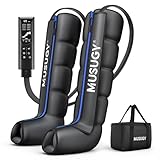
Overview: The Musugy Sequential Air Compression Recovery System represents professional-grade technology for serious athletes and fitness enthusiasts. Five independent air chambers deliver precise distal-to-proximal compression from foot to thigh, mimicking natural muscle contractions. This full-leg system targets every major muscle group with clinical precision, making it ideal for post-training recovery and chronic fatigue management.
What Makes It Stand Out: The built-in pressure sensor continuously monitors leg circumference and back-pressure, auto-balancing output across all five chambers for perfectly uniform compression. This adaptive technology prevents pinching and ensures consistent results regardless of body type. The memory function resumes your last settings, while reinforced nylon construction with double-stitched seams guarantees durability under heavy use.
Value for Money: At $203.99, this premium system justifies its price through professional features and build quality. Comparable clinical-grade devices cost $500-$1000, making this a cost-effective solution for daily athletes. The robust materials and advanced engineering ensure years of reliable performance.
Strengths and Weaknesses: Strengths include superior sequential compression, intelligent pressure balancing, durable construction, memory function, and comprehensive full-leg coverage. The primary weakness is the higher price point, which may exceed casual users’ needs. The 40-120 mmHg range, while adequate, is narrower than some competitors.
Bottom Line: An outstanding choice for dedicated athletes and professionals requiring hospital-grade recovery tools. The intelligent features and exceptional build quality make it worth the investment for serious training regimens.
4. Banspol Leg Massager with Heat and Compression, Foot and Calf Massager for Circulation and Pain Relief, Compression Boots with Handheld Controller, 6 Modes 3 Intensities, Gift for Mom Dad

Overview: The Banspol Leg Massager combines air compression with therapeutic heat for comprehensive foot and calf therapy. Three airbags deliver 360-degree pressure while integrated heating elements provide three temperature settings, creating a dual-action approach to pain relief. This system targets neuropathic pain, lymphedema, and general fatigue through its combined modalities.
What Makes It Stand Out: Heat therapy integration sets this apart from standard compression-only devices. The three heat settings allow customization from gentle warmth to intense therapeutic heat, enhancing circulation beyond compression alone. The touch-sensitive controller offers modern convenience, while the removable, washable lining maintains hygiene. The expansive size adjustment (calf length 11.8-27.6 inches) truly accommodates most users.
Value for Money: At $89.99, this massager delivers excellent value by combining two therapies for the price of one. Comparable heated compression systems typically cost $120-$150, making this a smart purchase for heat therapy enthusiasts. The versatile sizing eliminates the need for multiple family members to buy separate devices.
Strengths and Weaknesses: Strengths include effective heat therapy, vibration enhancement, easy-clean design, generous sizing, and intuitive controls. Weaknesses are limited coverage (foot and calf only, no thigh), lack of sequential compression technology, and shorter massage duration (20-minute auto-shutoff). The power adapter is less portable than battery options.
Bottom Line: Ideal for users prioritizing heat therapy alongside compression. This versatile, family-friendly device excels at foot and calf recovery, making it a thoughtful gift for parents or anyone with lower-leg discomfort.
5. FIT KING Cordless Calf Massager – Rechargeable Leg Compression Massager for Circulation, Edema, RLS, Pain Relief & Recovery, 6 Intensities, 3 Modes, Portable Gift for Mom, Dad, Athletes

Overview: The FIT KING Cordless Calf Massager revolutionizes portability in compression therapy. Dual 2500mAh rechargeable batteries provide 3-4 hours of cord-free operation, eliminating the tether of traditional systems. Designed specifically for calf muscles, this device delivers 360-degree dynamic compression through curved airbags that outperform flat designs, making it perfect for athletes, travelers, and office workers seeking on-demand relief.
What Makes It Stand Out: True cordless freedom combined with professional-grade performance. The compact, hose-free design allows use anywhere—during flights, at the gym, or while relaxing at home. The 2-year warranty and Type-C charging (usable while charging) demonstrate exceptional user consideration. Curved airbags provide superior muscle contact compared to competitors’ flat designs.
Value for Money: At $89.99, the premium for cordless convenience is minimal. Traditional massagers with similar power cost $70-$80, making the $10-$20 upgrade for portability worthwhile. The included carry bag and independent wrap operation maximize travel utility, while the 2-year warranty protects your investment.
Strengths and Weaknesses: Strengths include unmatched portability, cordless operation, quiet performance, adjustable fit, and comprehensive warranty. Weaknesses are limited to calves only (no foot/thigh coverage), requires regular charging, and battery life diminishes over time. The auto-shutoff may interrupt longer sessions.
Bottom Line: The ultimate choice for mobile users and frequent travelers. This massager delivers effective calf therapy without location constraints, making it indispensable for athletes and professionals constantly on the move.
6. JZBRAIN Leg Massager with Heat and Compression : Foot and Calf Massager for Circulation and Pain Relief, Sequential Compression Boots with 6 Modes, 9 Intensity, 3 Heat - Gifts for Mom, Dad, Him, Her

Overview: The JZBRAIN Leg Massager delivers clinical-style sequential compression therapy for home use, targeting feet, calves, and thighs with four distinct zones. Designed for anyone who spends long hours standing or sitting—office workers, teachers, drivers, and fitness enthusiasts—this device combines air compression with optional heat therapy to improve circulation and reduce fatigue. The split-design construction with zip-up sleeves and Velcro straps ensures a customizable fit for most leg sizes.
What Makes It Stand Out: Unlike basic vibration massagers, this unit uses sequential air compression that mimics natural muscle recovery rhythms. The three-zone heating system (soles, calves, knees) offers four temperature levels up to 131°F, while six specialized modes and nine intensity levels (60-140mmHg) provide tailored relief. Built-in pressure sensors automatically adjust to prevent over-inflation, and the tapered calf design creates a secure, comfortable fit that accommodates daily high-frequency use.
Value for Money: At $139.99, this massager occupies a sweet spot between budget calf-only devices and $300+ medical-grade systems. You get full-leg coverage, professional-grade pressure ranges, and comprehensive heat therapy typically found in premium models. For users needing daily relief from occupational fatigue or post-workout recovery, the durability and feature set justify the investment compared to cheaper alternatives lacking thigh compression or intelligent pressure adjustment.
Strengths and Weaknesses: Strengths include comprehensive four-zone coverage, intelligent pressure sensors, multiple heat zones, and durable construction with reinforced seams. The six modes effectively address different needs from daily fatigue to deep recovery. Weaknesses involve the moderate learning curve for optimal settings, potential sizing issues for those with very large calves despite adjustable straps, and the $140 price point may deter casual users. The knee-only heat feature (no compression) may disappoint those expecting full thigh compression.
Bottom Line: The JZBRAIN Leg Massager is an excellent choice for users seeking professional-grade sequential compression without the premium price tag. Its combination of full-leg coverage, intelligent pressure adjustment, and targeted heat therapy makes it ideal for daily occupational fatigue or athletic recovery. While not the cheapest option, the feature set and build quality offer strong value for serious users.
7. LINGTENG Leg Massager for Circulation and Pain Relief, Calf Air Compression Massager with Heat, Leg Massager with 3 Intensities, 3 Modes, Easy to use, Muscle Relaxation, Gifts (Pair)

Overview: The LINGTENG Leg Massager offers targeted calf and arm therapy in an ultra-portable, cordless design. Weighing just 0.9 pounds per unit, this pair of compression sleeves provides relief for stiff, fatigued muscles through air compression and constant-temperature heat therapy. With simple one-button control and a Type-C rechargeable battery, it’s designed for on-the-go use whether at home, the office, or traveling.
What Makes It Stand Out: True wireless freedom sets this apart from tethered competitors. The large-capacity battery eliminates cord clutter, while the high-viscosity Velcro accommodates leg circumferences up to 22.5 inches—impressive for such a compact device. Three intensity levels and three massage modes provide basic customization, and the 30-50°C heat range works even through clothing, offering flexibility that stationary units lack.
Value for Money: At $55.99, this is one of the most affordable compression massagers available. You’re getting a pair of cordless units for less than the price of many single, corded alternatives. While it lacks full-leg coverage and advanced modes, the portability and convenience factor deliver exceptional value for casual users or as a supplementary travel device. For those unsure about compression therapy, this low-risk entry point is ideal.
Strengths and Weaknesses: Strengths include exceptional portability, cordless operation, simple one-button control, and budget-friendly pricing. The adjustable sizing works for most users, and the lightweight design enables multi-position use. Weaknesses are significant: limited to calves/arms only, lower pressure range than premium units, basic 3-mode functionality, and the 15-minute auto-shutoff may interrupt longer sessions. The temperature range is modest compared to heated competitors, and durability concerns may arise with frequent use.
Bottom Line: The LINGTENG massager excels as an entry-level, portable solution for occasional calf relief. Its cordless convenience and attractive price make it perfect for travel or office use, but serious users requiring full-leg therapy or higher compression will need to invest more. Consider this a competent supplemental device rather than a primary recovery tool.
8. Musugy Leg Massager with Heat and Compression : Sequential Compression Boots with 6 Modes,9 Intensity and 3 Heat for Circulation and Pain Relief - Christmas Birthday for Mom, Dad, Athletes, Gym

Overview: The Musugy Leg Massager brings full-leg sequential compression therapy to the home environment with FSA/HSA eligibility, making it an accessible health investment. Covering feet, calves, and thighs through a two-part wrap system, this device targets daily leg fatigue with six specialized modes and nine intensity levels. The design prioritizes everyday users—teachers, drivers, office workers—who need practical recovery solutions without medical-grade complexity.
What Makes It Stand Out: FSA/HSA eligibility immediately distinguishes this from competitors, allowing many users to purchase with pre-tax dollars. The sensor-guided pressure adjustment automatically adapts air volume to your leg shape, preventing uncomfortable over-inflation—a feature rarely seen at this price point. The tapered calf design with zip-up sleeves and adjustable thigh straps provides a more anatomical fit than uniform wraps, while the six modes offer targeted relief from circulation boosts to pre-bed relaxation.
Value for Money: Priced at $117.27, the Musugy hits a compelling value proposition. You’re getting full-leg coverage, intelligent pressure sensing, and FSA/HSA eligibility typically reserved for $150+ units. While it lacks the quad-zone heat system of premium competitors, the core compression functionality matches devices costing significantly more. For eligible buyers, the effective price drops further, making this a smart financial choice for daily recovery needs.
Strengths and Weaknesses: Strengths include intelligent pressure sensors, FSA/HSA eligibility, comprehensive six-mode programming, and the anatomically-tapered fit. The two-part wrap system balances convenience with coverage. Weaknesses include limited heat functionality (only mentioned as “wide-zone” without specific temperature controls), potential sizing challenges for muscular calves despite the fit guide, and fewer intensity levels than premium alternatives. The lack of detailed heat specifications may disappoint those wanting precise thermal therapy.
Bottom Line: The Musugy Leg Massager offers outstanding value for eligible FSA/HSA users seeking full-leg compression. Its intelligent pressure adjustment and practical mode selection make it ideal for daily occupational fatigue. While heat therapy is less robust than some competitors, the core compression performance and financial accessibility make this a top contender in the sub-$120 category.
9. QUINEAR Air Compression Leg Massager for Circulation & Pain Relief, Calf Massagers with 2 Modes & 3 Intensities, Sequential Compression Device (SCD) for RLS, Edema, FSA-HSA - Ideal Gift

Overview: The QUINEAR Air Compression Leg Massager delivers targeted calf and arm therapy at an entry-level price point while maintaining FSA/HSA eligibility. Featuring four oversized air chambers in a 2+2 design, this device provides sequential compression to improve circulation and reduce swelling. The wired handheld controller simplifies operation to one-thumb control, making it particularly suitable for older adults or those preferring straightforward functionality without complex programming.
What Makes It Stand Out: At $49.99, it’s one of the few FSA/HSA-eligible compression devices under $50, removing financial barriers for many users. The oversized chamber design creates a deeper, more kneading squeeze than typical budget units, while the 20-minute auto-shutoff provides safety for users who may fall asleep. The breathable, double-stitched fabric maintains comfort during extended sessions, and the Velcro system accommodates calves up to 21 inches—competitive for this price tier.
Value for Money: This represents exceptional value for money. You’re getting FSA/HSA eligibility, sequential compression technology, and safety features at a price point where most competitors offer only basic vibration. While limited to calves/arms and offering just two modes, the quality of compression and medical billing eligibility make it a financially smart choice for addressing RLS, edema, or travel swelling without investing in professional-grade equipment.
Strengths and Weaknesses: Strengths include unbeatable price with FSA/HSA eligibility, simple one-thumb operation, oversized chambers for effective compression, and thoughtful safety auto-shutoff. The breathable fabric enhances comfort. Weaknesses are substantial: limited to calf/arm coverage only, only two massage modes, three intensity levels provide less customization than premium units, and the wired controller restricts mobility. The 21-inch calf limit may exclude larger users, and the basic feature set won’t satisfy athletes needing advanced recovery protocols.
Bottom Line: The QUINEAR massager is the ideal budget entry point for compression therapy. Its FSA/HSA eligibility and simple operation make it perfect for seniors or casual users addressing specific circulation issues. Serious athletes or those needing full-leg therapy should look elsewhere, but for targeted calf relief at minimal cost, this delivers surprising quality and value.
10. CINCOM Cordless Leg Recovery System with Dynamic Compression Massage Technology - 3 Different Sizes for Everyone(Medium)

Overview: The CINCOM Cordless Leg Recovery System positions itself as a professional-grade compression solution with premium pricing to match. This device employs 360° dynamic air compression through an enlarged pump, delivering targeted relief to feet, lower calf, upper calf, and thigh with unprecedented customization. The cordless design with 3-4 hour battery life and included carrying bag enables true portable recovery for athletes and professionals demanding clinical-quality results anywhere.
What Makes It Stand Out: Zone control technology allows independent pressure and duration adjustment for each leg segment—feet, lower calf, upper calf, thigh—enabling personalized treatment protocols impossible with standard sequential devices. With 12 intensity levels (40-150 mmHg), three modes, and ten timer settings (15-60 minutes), this system rivals clinical equipment. The cordless operation combined with professional-grade pressure ranges creates a unique mobility-meets-performance proposition.
Value for Money: At $499.99, this is a significant investment. However, for serious athletes, physical therapy patients, or professionals requiring daily recovery, it costs less than a handful of professional massage sessions. The zone control technology and cordless convenience justify the premium over $150-300 consumer units. While overkill for casual users, those needing specific, reproducible recovery protocols will find long-term value in its precision and portability.
Strengths and Weaknesses: Strengths include professional-grade pressure range, revolutionary zone control technology, exceptional cordless battery life, comprehensive customization (12 intensities, 10 timers), and three available sizes for optimal fit. The carrying bag enhances portability. Weaknesses center on the high price point, which is prohibitive for average consumers. The complexity may overwhelm casual users, and the investment is unnecessary for those with occasional leg fatigue. Some may find the 3-4 hour battery limiting for multi-day travel without charging.
Bottom Line: The CINCOM system is a professional-caliber recovery tool for serious athletes, frequent travelers, and therapy patients requiring customized compression protocols. Its zone control technology and cordless design set it apart from all consumer-grade competitors. If you demand precise, reproducible recovery and can leverage the advanced features, the investment is justified. For occasional users, significantly cheaper alternatives suffice.
Why Your Legs Deserve Special Attention After Flying
The Science Behind Post-Flight Leg Discomfort
When you’re cruising at 35,000 feet, your body undergoes subtle but significant changes. Cabin pressure drops to the equivalent of 8,000 feet above sea level, lowering oxygen saturation and causing blood vessels to dilate. Meanwhile, you’re likely seated in a hip-flexed position for hours, which compresses the popliteal vein behind your knees and slows venous return. This combination reduces circulation efficiency by up to 50%, allowing fluid to pool in your lower extremities. The result? That familiar puffiness and fatigue isn’t just in your head—it’s measurable edema caused by hydrostatic pressure changes and lymphatic stagnation.
How Compression Therapy Counteracts Travel’s Toll
Compression therapy works by applying graduated external pressure that’s strongest at the ankles and gradually decreases up the leg. This gradient opposes the force of gravity and assists your venous valves in pushing deoxygenated blood back toward your heart. Dynamic compression takes this a step further by sequentially inflating chambers along the limb, creating a peristaltic wave that actively milks fluid out of interstitial spaces. For post-flight recovery, this means accelerated clearance of inflammatory mediators, reduced risk of deep vein thrombosis (DVT), and a faster return to baseline leg volume—often within 20-30 minutes of treatment.
What Makes a Leg Compression Massager “Travel-Friendly”
Size and Portability Metrics That Matter
A truly compact unit should weigh under 3 pounds and occupy less space than a pair of running shoes when packed. Look for controllers that detach from the garment and sleeves that fold flat rather than retaining bulky shapes. The gold standard is a system where the pump unit is smaller than a paperback book and the tubing disconnects cleanly without leaking air. Some advanced models feature integrated pumps built directly into the sleeve, eliminating external components entirely—though these often trade power for portability.
Power Options for Global Travelers
Universal voltage compatibility (100-240V) is non-negotiable for international travel, but the real differentiator is battery operation. Premium compact massagers offer lithium-ion batteries providing 2-3 hours of cordless use—enough for multiple sessions between charges. USB-C charging is increasingly common, letting you power up from a laptop or portable battery bank. Consider models with airplane-safe battery capacities (under 100Wh) and quick-charge features that reach 80% power in under an hour. For true peace of mind, some devices even offer manual pump options as a backup.
Understanding Compression Technology: Air vs. Static
Dynamic Air Compression: The Gold Standard for Recovery
Pneumatic compression devices use air bladders segmented into multiple chambers—typically 4 to 6 per leg—that inflate in precise sequences. The best systems offer customizable pressure ranges from 20-200 mmHg, mimicking clinical-grade systems. Chamber isolation is key: each segment should inflate independently to create that crucial proximal-to-distal gradient. Look for units with cycle times between 30-90 seconds, as this range optimally stimulates lymphatic flow without causing discomfort. The most sophisticated models use biomimetic algorithms that vary inflation patterns to prevent neural adaptation.
Static Compression Sleeves: A Lightweight Alternative
While not true “massagers,” static sleeves with built-in compression zones deserve mention for ultralight travelers. These garments use graduated elastic fabrics (typically 15-30 mmHg) and may incorporate vibration motors for mild stimulation. They weigh mere ounces and require no power, making them ideal for wearing during the flight itself. However, they lack the active pumping action of dynamic systems and provide passive support rather than active recovery. For severe swelling or post-flight DVT prevention, they’re supplementary at best.
Key Features That Define Premium Compact Models
Pressure Range and Customization Options
Effective post-flight recovery typically requires 30-100 mmHg of pressure, but the ability to fine-tune in 5-10 mmHg increments separates the best from the rest. Avoid units with preset “low-medium-high” settings—they’re often calibrated for average body types and may be ineffective for your specific needs. Advanced models offer independent pressure control for each leg, crucial if you’ve had previous injuries or asymmetric swelling. Some even include “spot therapy” modes that target just the foot/calf or thigh region for localized treatment.
Battery Life and Charging Considerations
A 2,500-3,000 mAh battery generally provides 120-180 minutes of operation at moderate pressure settings. However, battery life degrades significantly at maximum pressure—some units lose 40% runtime when pushed to 150+ mmHg. Check whether the device can operate while charging; this “pass-through” power is invaluable in hotel rooms with limited outlets. Solar charging sounds appealing but remains impractical for most travel scenarios due to slow charge rates and panel fragility.
Noise Levels: Finding Whisper-Quiet Operation
The pneumatic pump is inherently noisy, but quality engineering makes a huge difference. Premium models operate at 45-55 decibels—roughly the volume of a quiet conversation—while budget options can exceed 70 dB, making them unusable in shared accommodations. Listen for motor whine and valve clicking; these high-frequency sounds are more disruptive than low-frequency hums. Some manufacturers use sound-dampening chambers and brushless motors to minimize disruption during early morning or late-night recovery sessions.
Material Quality and Breathability
Travel means sweat, sunscreen, and varying climates, so sleeve materials matter. Medical-grade TPU (thermoplastic polyurethane) bladders offer durability without the latex allergy risk of cheaper PVC versions. Outer fabrics should be moisture-wicking nylon-spandex blends with antimicrobial treatments like silver ion or bamboo charcoal infusion. Flat-seam construction prevents chafing during extended wear, and zipperless designs reduce failure points. The best sleeves are machine-washable; hand-washing only becomes tedious after the third consecutive day of use.
Smart Features Worth the Investment
App Integration and Personalized Programs
Bluetooth connectivity transforms basic massagers into intelligent recovery tools. Companion apps can guide you through post-flight protocols, track session history, and adjust pressure based on real-time feedback. Some leverage your phone’s accelerometer to detect activity levels and auto-suggest treatment timing. Look for apps with offline functionality—Wi-Fi isn’t guaranteed in every hotel. Data export features are valuable if you’re working with a physical therapist or sports medicine doctor who wants to monitor your recovery metrics.
Heat Therapy: A Game-Changer for Circulation
Integrated heating elements in the foot or calf region can boost efficacy by 30-40% according to some studies. Heat vasodilates blood vessels before compression begins, making the subsequent pressure wave more effective at moving fluid. The best systems offer adjustable temperatures from 100-130°F with safety cutoffs at 140°F to prevent burns. This feature does increase power consumption—expect battery life to drop by 25-35% when heat is activated. For travel, consider whether the added weight and complexity justify the benefits for your personal recovery needs.
Safety First: Contraindications and Best Practices
Who Should Avoid Compression Therapy
Despite benefits, compression isn’t universal. Absolute contraindications include active DVT, severe arterial disease (ABI < 0.8), and unmanaged heart failure. Relative contraindications encompass recent skin grafts, severe neuropathy, and certain malignancies. Pregnant travelers should consult their OB-GYN, as pressure requirements change during gestation. If you experience pain, numbness, or color changes during use, stop immediately. A good rule: if you’re unsure, get a venous ultrasound before using high-pressure settings after long flights.
Proper Usage Guidelines for Maximum Benefit
Timing is everything. Use your device within 2-4 hours of landing for optimal results, when inflammatory markers are peaking but before fluid becomes entrenched. Sessions of 15-20 minutes are sufficient; longer durations don’t improve outcomes and may cause discomfort. Always start at the lowest pressure and increase gradually. Position yourself with legs slightly elevated (15-20 degrees) to enhance venous return. Avoid using immediately before strenuous activity, as compression can temporarily reduce muscle perfusion.
Packing Strategies: Maximizing Carry-On Space
Roll sleeves rather than folding to prevent creases in air bladders that could cause weak points. Store the controller in a padded electronics pouch to protect against impact. Use compression cubes to keep the system contained with other recovery gear like foam rollers or massage balls. If traveling with a partner, consider a dual-leg system where one controller powers two sets of sleeves—halving your electronics bulk. Some travelers wear the sleeves during the flight (unpowered) to save packing space, then power them up in the arrival lounge.
Price vs. Performance: Finding Your Sweet Spot
Entry-level compact units ($80-150) typically offer basic inflation with 2-3 chambers and limited pressure range. Mid-tier options ($150-300) add better battery life, more chambers, and improved materials. Premium models ($300-500) deliver app integration, heat therapy, and medical-grade pressure accuracy. For occasional vacationers, mid-range suffices. Road warriors who fly weekly will see ROI from premium features like rapid inflation cycles and durability. Avoid sub-$70 units—these often lack proper pressure sensors and can provide dangerously inconsistent compression.
Maintenance and Hygiene on the Road
Daily wipe-downs with alcohol-free disinfectant wipes prevent bacterial buildup, especially in humid climates. Most quality sleeves detach from electronics for hand-washing in hotel sinks; use mild soap and air-dry completely before storage. Pack a small repair kit with TPU patches and adhesive for emergency bladder leaks. For extended trips, consider a portable UV-C sanitizing bag that eliminates microbes in 3-5 minutes without moisture. Always fully deflate and disconnect tubing after use to prevent mold growth in humid environments.
Frequently Asked Questions
How soon after landing should I use my compression massager for best results?
Aim for a session within 2-4 hours of deplaning. This window captures the peak of inflammatory response while preventing fluid from becoming stagnant in tissues. If you have a short layover, even a quick 10-minute treatment in an airport lounge can make a difference. For red-eye flights, using the device after a brief nap and shower works well.
Can I wear compression sleeves during the flight instead of using them after?
Static compression sleeves are safe and beneficial to wear during flight, but dynamic massagers should not be used in-flight due to safety regulations and space constraints. Wearing your powered-off dynamic sleeves during travel saves packing space and provides mild passive compression. Just ensure they’re not so tight they restrict movement or circulation while seated.
What’s the ideal pressure setting for post-flight swelling?
Most travelers find 40-80 mmHg effective for recovery. Start at 30 mmHg for your first session and increase in 10 mmHg increments until you feel a firm but comfortable squeeze. Settings above 100 mmHg are rarely necessary for recovery and may cause discomfort. Listen to your body—pain means you’ve gone too high.
Are battery-powered models as effective as plug-in versions?
Modern lithium-ion systems deliver identical pressure and cycle performance to AC-powered units. The trade-off is session length: battery models typically run 2-3 hours versus unlimited plug-in time. For travel, the portability far outweighs this limitation. Just ensure you recharge after each use.
How do I clean my device when traveling without access to laundry facilities?
Disconnect the sleeves and wipe them with fragrance-free, alcohol-based wipes (70% isopropyl). Focus on the interior lining where sweat accumulates. Let them air-dry completely before repacking. For longer trips, pack a small bottle of gentle detergent for sink washing—just never submerge the pump unit or connectors.
Can compression therapy replace walking or stretching after flights?
No, it complements them. Compression excels at moving pooled fluid but doesn’t provide the muscular activation or joint mobility benefits of movement. The ideal recovery protocol includes 5-10 minutes of walking, gentle calf raises, a 15-minute compression session, and hydration. Think of compression as turbocharging your body’s natural recovery processes.
What’s the risk of deep vein thrombosis on long flights, and how much does compression help?
Economy-class syndrome increases DVT risk 2-4x on flights over 6 hours. Compression therapy reduces this risk by up to 90% when combined with movement. However, it’s preventive, not curative. If you experience unilateral swelling, warmth, or chest pain after travel, seek immediate medical attention—compression is not a treatment for active clots.
Should I use the device on both legs even if only one feels swollen?
Always use bilateral treatment. The lymphatic and venous systems are interconnected, and treating one limb while ignoring the other creates circulatory imbalances. Your “good” leg has also endured the same flight conditions and will benefit from proactive recovery. Symmetrical treatment ensures balanced fluid return.
How long do compact compression massagers typically last with frequent travel?
Quality units last 3-5 years with proper care. The first components to fail are usually the air bladders (after 500-800 cycles) or the internal valves. Premium models offer replaceable sleeve components, extending the controller’s lifespan indefinitely. Budget options may last only 12-18 months before pressure consistency degrades.
Is it worth paying extra for app connectivity and smart features?
For data-driven travelers or those working with healthcare providers, yes. Apps provide usage tracking, pressure calibration, and protocol guidance that can optimize recovery. For casual users, manual controls are sufficient. The core therapy—sequential compression—remains identical. Smart features are convenience enhancements, not therapeutic necessities.'