Packing for your next content creation adventure? The difference between a streamlined travel kit and a back-breaking burden often comes down to a few hundred grams. As a travel influencer, every piece of gear you carry needs to justify its existence through a perfect balance of capability and portability. Mirrorless cameras have revolutionized the travel photography landscape, but not all models are created equal when it comes to weight—and your shoulders will definitely notice the difference after a 12-hour shooting day through Tokyo’s neon-lit streets or along Costa Rica’s cloud forest trails.
The sweet spot for travel influencers lies in camera bodies that tip the scales under 500 grams. This magical threshold allows you to build an entire shooting system—body, lenses, batteries, and accessories—that fits in a compact daypack without compromising the image quality your audience expects. But finding the right lightweight mirrorless camera involves far more than just checking the spec sheet’s weight column. Let’s dive into what truly matters when selecting your next travel companion.
Top 10 Compact Mirrorless Cameras for Travel
Detailed Product Reviews
1. Canon EOS R100 Mirrorless Camera RF-S18-45mm F4.5-6.3 is STM Lens Kit, 24.1 Megapixel CMOS (APS-C) Sensor, 4K Video, RF Mount, Black

Overview: The Canon EOS R100 represents Canon’s most accessible entry into the RF mount ecosystem, delivering a 24.1-megapixel APS-C sensor in the smallest and lightest body in the series. This kit includes the versatile RF-S18-45mm lens, making it an ideal starting point for photography enthusiasts transitioning from smartphones or DSLRs. With 4K video capability and Canon’s proven Dual Pixel CMOS AF system, it covers the essentials without overwhelming beginners.
What Makes It Stand Out: The R100’s primary distinction is its ultra-compact form factor combined with genuine RF mount compatibility, future-proofing your lens investment. The DIGIC 8 processor enables reliable face and eye detection across 143 AF zones, while high-speed shooting at 6.5 fps ensures you won’t miss decisive moments. Its ability to capture HD video at 120fps offers creative slow-motion options rarely seen at this price point.
Value for Money: At $499, the R100 undercuts most mirrorless competitors while delivering authentic Canon color science and ergonomics. It’s significantly more capable than similarly priced point-and-shoots and provides a clear upgrade path through Canon’s expanding RF lens lineup. The kit lens covers essential focal lengths, eliminating immediate additional purchases.
Strengths and Weaknesses: Strengths include exceptional portability, intuitive operation, reliable autofocus, and Canon’s excellent JPEG processing. Weaknesses involve cropped 4K video with no Dual Pixel AF in that mode, limited battery life, a fixed non-touchscreen, and minimal physical controls that may frustrate advanced users.
Bottom Line: Perfect for beginners prioritizing simplicity and brand reliability. The EOS R100 offers genuine photographic capability in a pocketable form factor, though video shooters should consider alternatives. It’s the ultimate “gateway” camera into serious photography without financial commitment.
2. Canon EOS RP Full-Frame Mirrorless Interchangeable Lens Camera + RF24-105mm Lens F4-7.1 is STM Lens Kit- Compact and Lightweight for Traveling and Vlogging, Black (3380C132)

Overview: The Canon EOS RP brings full-frame photography to the masses as one of the most affordable ways to access Canon’s RF mount system. Paired with the RF24-105mm F4-7.1 IS STM lens, this kit offers remarkable versatility for travel, vlogging, and everyday photography. Its compact design belies serious imaging potential, featuring a 26.2MP full-frame sensor that delivers superior low-light performance and dynamic range compared to APS-C alternatives.
What Makes It Stand Out: Full-frame sensor at this price point is revolutionary, providing genuine professional-grade image quality for enthusiasts. The lens’s 5-stop optical stabilization enables sharp handheld shots in challenging conditions, while its macro capability (0.5x magnification) adds creative flexibility. Canon’s EOS Utility Webcam Beta transforms it into a high-quality streaming camera—a feature increasingly valuable for content creators.
Value for Money: At $1,099, the RP delivers full-frame credentials that typically cost $500-800 more. The included 24-105mm lens covers an exceptional range, eliminating immediate additional lens purchases. While battery life and burst shooting lag behind competitors, the image quality per dollar is unmatched in the full-frame mirrorless category.
Strengths and Weaknesses: Strengths include full-frame sensor quality, intuitive touchscreen interface, excellent lens stabilization, and versatile focal range. Weaknesses involve mediocre battery life (250 shots), sluggish 5fps continuous shooting, 1.6x crop in 4K video, and limited dynamic range compared to newer sensors.
Bottom Line: An exceptional value for still photographers wanting full-frame quality without premium pricing. The EOS RP compromises on speed and video features but delivers where it matters most—image quality. Ideal for landscape, portrait, and travel photography on a budget.
3. Nikon Z 30 with Wide-Angle Zoom Lens | Our most compact, lightweight mirrorless stills/video camera with 16-50mm zoom lens | Nikon USA Model

Overview: The Nikon Z 30 is purpose-built for content creators, vloggers, and streamers seeking professional results without complexity. This kit pairs the compact Z 30 body with a 16-50mm wide-angle zoom lens, delivering 4K video with eye-tracking autofocus for both people and pets. Its streamlined design prioritizes video functionality while maintaining capable stills performance, representing Nikon’s focused approach to the creator economy.
What Makes It Stand Out: The Z 30 excels with vlogger-centric features: a fully articulating touchscreen, built-in stereo microphone with adjustable sensitivity, and a prominent red REC indicator. Rock-steady image stabilization combines with outstanding low-light performance for professional-looking footage. The camera’s plug-and-play webcam functionality via USB-C and constant power delivery solves streaming challenges without additional hardware.
Value for Money: At $696.95, it competes directly with Sony’s vlogging lineup while offering superior ergonomics and Nikon color science. The included lens covers ideal vlogging focal lengths, and USB-C streaming eliminates capture card costs. For dedicated video creators, it undercuts the a6400 while delivering comparable quality and better audio solutions.
Strengths and Weaknesses: Strengths include creator-focused design, reliable eye-tracking, excellent stabilization, clean HDMI output, and intuitive smartphone app control. Weaknesses involve lack of viewfinder, limited stills resolution for large prints, no in-body stabilization (relying on lens VR), and fewer native Z DX lenses than competitors.
Bottom Line: The ultimate vlogging-first camera that doesn’t neglect stills. The Z 30 is perfect for creators who prioritize video quality, audio control, and streaming capability. If your primary goal is content creation rather than pure photography, this is Nikon’s most compelling offering.
4. Sony Alpha a6400 Mirrorless Camera: Compact APS-C Interchangeable Lens Digital Camera with Real-Time Eye Auto Focus, 4K Video, Flip Screen & 16-50mm Lens - E Mount Compatible - ILCE-6400L/B, Black

Overview: The Sony a6400 remains a benchmark for APS-C mirrorless cameras, combining professional-grade autofocus with compact versatility. This kit includes the 16-50mm lens and Sony’s revolutionary Real-Time Eye AF technology. With a 24.2MP sensor capable of 11fps continuous shooting, it serves both photographers and videographers demanding speed and precision. The tilting LCD facilitates creative compositions from any angle.
What Makes It Stand Out: The a6400’s autofocus system is class-leading, with 425 phase/contrast detection points covering 84% of the sensor. Real-Time Eye AF tracks subjects with uncanny accuracy, making it ideal for portraits, events, and wildlife. The camera’s ability to create time-lapse and slow/quick motion videos in-camera without post-processing streamlines workflow for content creators who need efficiency.
Value for Money: At $998, it positions itself as a premium APS-C option. While pricier than the Canon R100 or Nikon Z30, it justifies the cost with superior autofocus performance, higher burst rates, and a more robust feature set. The extensive E-mount lens ecosystem provides unmatched upgrade flexibility compared to newer mounts.
Strengths and Weaknesses: Strengths include best-in-class autofocus, high-speed shooting, excellent video quality, comprehensive lens selection, and professional-grade customization. Weaknesses involve Sony’s complex menu system, no in-body stabilization (relying on lens OSS), limited touchscreen functionality, and mediocre battery life.
Bottom Line: A powerhouse for action photographers and serious hybrid shooters. The a6400 demands a learning curve but rewards users with unmatched autofocus performance and shooting speed. If capturing fast-moving subjects is your priority, this remains the APS-C champion despite newer competition.
5. Nikon Z50 II with Two Lenses | Compact mirrorless Stills/Video Camera with Easy Color presets and Wireless Photo Sharing | Nikon USA Model

Overview: The Nikon Z50 II is a sophisticated dual-lens kit designed for photographers ready to move beyond smartphone limitations. Featuring a 20.9MP DX-format sensor and two VR lenses (16-50mm and 50-250mm), it covers an extraordinary focal range from wide-angle to telephoto. The camera emphasizes creative expression through 31 built-in Picture Control presets and advanced subject detection for people, animals, and vehicles.
What Makes It Stand Out: The two-lens kit provides exceptional versatility out of the box, eliminating immediate lens purchases. The Z50 II’s subject detection system recognizes nine subject types, including dedicated bird and airplane modes—features typically reserved for professional bodies. Built-in flash with Night Portrait mode and wireless photo sharing via SnapBridge distinguish it from competitors requiring external accessories.
Value for Money: At $1,396.95, the dual-lens kit represents significant savings compared to purchasing body and lenses separately. The telephoto reach alone would cost $300-400 as a separate purchase. While pricier than single-lens kits, it delivers a complete system for travel, wildlife, and event photography without additional investment.
Strengths and Weaknesses: Strengths include comprehensive lens coverage, advanced subject detection, 4K/60p video, built-in flash, and seamless smartphone integration. Weaknesses involve lower resolution than some competitors, no in-body stabilization, limited Z DX lens selection, and a smaller sensor than full-frame alternatives at similar prices.
Bottom Line: The ultimate ready-to-shoot package for aspiring enthusiasts. The Z50 II dual-lens kit removes guesswork and additional expenses, delivering professional features in a travel-friendly system. If you want one purchase that covers virtually all shooting scenarios, this is Nikon’s most complete APS-C offering.
6. Canon EOS R10 Mirrorless Camera 24.2MP APS-C Sensor 4K Video Dual Pixel AF Compact Lightweight Vlogging Travel Camera (5331C002) + Canon RF 75-300mm Lens + 64GB Card + Bag
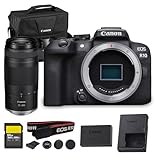
Overview: The Canon EOS R10 bundle positions itself as a versatile mid-range mirrorless system for enthusiasts seeking professional features without the full-frame price tag. This comprehensive kit pairs the capable R10 body with a telephoto zoom lens, professional-grade memory card, and carrying solution—everything needed for serious photography and videography.
What Makes It Stand Out: The R10’s 24.2MP APS-C sensor delivers exceptional image quality with impressive low-light performance, while Dual Pixel CMOS AF II provides intelligent subject tracking for people, animals, and vehicles. The 4K 60p video oversampled from 6K offers cinema-quality footage. The included RF 75-300mm lens extends reach for wildlife and sports, while the SF-G TOUGH Series card ensures reliable high-speed data capture.
Value for Money: At $1,238, this bundle offers significant savings over purchasing components separately. The R10 body alone typically retails for $879, making the lens, premium memory card, and bag valuable additions. Compared to Sony’s a6400 or Fujifilm’s X-S10, Canon’s bundle provides better out-of-the-box versatility for telephoto work, though competitors may offer superior lens ecosystems.
Strengths and Weaknesses: Strengths include class-leading autofocus, uncropped 4K 60p video, and a complete telephoto setup. The lightweight construction suits travel perfectly. Weaknesses include the 75-300mm lens’s variable aperture limiting low-light performance, and the absence of in-body stabilization. The APS-C format means a 1.6x crop factor that may disappoint those seeking true wide-angle perspectives.
Bottom Line: This bundle excels for enthusiasts wanting a capable hybrid camera with telephoto reach. It’s ideal for wildlife, sports, and travel vlogging, offering professional-grade autofocus and video in a compact package. Serious shooters should consider upgrading the lens eventually, but as a starter kit, it’s hard to beat.
7. Canon EOS R100 Mirrorless Camera Kit – APS-C RF Camera with 18-45mm & 55-210mm Lenses, 24MP Sensor, 4K Video & Dual Pixel AF (6052C022) + Canon Shoulder Bag + 64GB Memory Card

Overview: Canon’s EOS R100 kit serves as the perfect gateway into interchangeable lens photography for smartphone upgraders and beginners. This all-inclusive package provides two lenses covering wide-angle to telephoto perspectives, eliminating the immediate need for additional purchases and simplifying the learning curve for new photographers.
What Makes It Stand Out: The dual-lens configuration is the star here—18-45mm for landscapes and group shots, 55-210mm for portraits and distant subjects. The 24MP sensor produces excellent stills, while Dual Pixel AF ensures reliable focus in most shooting scenarios. At just 356 grams, the R100 is remarkably portable, and the included accessories mean you can start shooting immediately.
Value for Money: At $774.95, this represents exceptional entry-level value. Similar Sony or Nikon starter kits often cost more while including inferior lenses. The two-lens setup alone would cost nearly $400 separately, making the camera body effectively priced under $400. For beginners, this eliminates decision paralysis while providing room to grow.
Strengths and Weaknesses: Strengths include unbeatable price-to-performance ratio, comprehensive focal range, and Canon’s intuitive menu system. The lightweight design encourages daily carry. Weaknesses include cropped 4K video with significant rolling shutter, no Dual Pixel AF in 4K mode, and a relatively basic feature set compared to the R10. The plastic construction feels less premium, and low-light performance lags behind larger sensors.
Bottom Line: This is the ideal starter kit for families, travelers, and content creators prioritizing simplicity and value. While serious enthusiasts will quickly outgrow its limitations, it delivers smartphone-beating quality and versatility at an accessible price point. Perfect for learning the basics without breaking the bank.
8. Besnfoto Camera Bag Small Crossbody Camera Shoulder Bag Purse Waterproof Canvas Cute Compact Camera Messenger Bag Case for Mirrorless DSLR SLR Women and Men
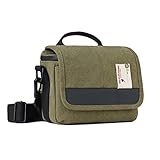
Overview: Besnfoto’s compact messenger bag addresses the need for stylish, everyday camera protection without the bulk of traditional cases. Designed for minimalist shooters, this crossbody bag accommodates a single mirrorless camera with an attached lens, making it perfect for street photography and casual outings where discretion is key.
What Makes It Stand Out: The 16A waterproof canvas construction delivers vintage aesthetics while providing practical weather resistance. Its versatility shines through multiple carrying options—shoulder, crossbody, waist bag, or backpack insert. The flip-top design adds security, while the fully padded interior with closed PE foam offers genuine protection despite the bag’s diminutive size.
Value for Money: At $21.99, this bag is remarkably affordable, costing a fraction of premium alternatives like Peak Design’s $90+ slings. For photographers needing basic protection and portability, it delivers 80% of the functionality at 25% of the price. The multi-use design effectively replaces several specialized bags.
Strengths and Weaknesses: Strengths include exceptional affordability, versatile carry options, waterproof canvas material, and adequate padding for casual use. The compact size encourages bringing your camera everywhere. Weaknesses include limited capacity (one body and lens only), basic build quality that may not withstand heavy professional use, and canvas that can show wear over time. The strap hardware, while functional, lacks the refinement of premium brands.
Bottom Line: This bag excels as a secondary or travel-specific carrier for minimal gear setups. It’s perfect for mirrorless users wanting light protection without bulk, though professionals should consider it a supplement rather than a primary bag. For under $22, it’s an easy recommendation for hobbyists and street photographers.
9. K&F CONCEPT 64 inch/163 cm Camera Tripod,Lightweight Travel Outdoor DSLR Tripods with 360 Degree Ball Head Load Capacity 17.6 lbs/8 kg,Cellphone Clip for Smartphone Live Streaming Vlog O234A1+BH-36

Overview: K&F Concept’s 64-inch tripod targets traveling photographers seeking professional features at a budget-conscious price point. This aluminum tripod balances portability with functionality, supporting up to 17.6 pounds while folding down to a manageable 15.5 inches—making it suitable for both mirrorless and lightweight DSLR setups.
What Makes It Stand Out: The quick flip leg locks enable rapid deployment with one hand, a feature typically found on more expensive models. The 36mm ball head provides smooth 360-degree panning, while the inverted center column allows for macro and low-angle shooting. Weighing just 2.53 pounds, it’s remarkably light for its height and capacity.
Value for Money: At $49.99, this tripod significantly undercuts competitors like Manfrotto’s Element series ($99+) while offering similar specifications. The included cellphone clip adds vlogging versatility, essentially providing two products for the price of one. For amateur and enthusiast photographers, it delivers professional workflow features without the premium tax.
Strengths and Weaknesses: Strengths include excellent height-to-weight ratio, quick operation, versatile ball head, and macro capabilities. The price point is unbeatable for the feature set. Weaknesses include aluminum construction that transmits more vibration than carbon fiber, moderate load capacity that may struggle with heavy telephoto lenses, and flip locks that can loosen over time and require periodic adjustment. The leg angle adjustments lack the precision of higher-end models.
Bottom Line: This tripod is ideal for travel photographers, vloggers, and landscape enthusiasts prioritizing portability and value. While it won’t replace a heavy-duty studio tripod, it handles most shooting scenarios competently. For under $50, it’s a smart investment for anyone upgrading from a basic entry-level tripod.
10. K&F CONCEPT 63" Aluminum Travel Tripod for Camera w Phone Holder, Non-Reversible Lightweight Compact Tripod Weighs 2.6lb, Max Load 22lb for Camera DSLR Mirrorless Spotting Scope Camcorders Phone

Overview: K&F Concept’s 63-inch travel tripod emphasizes extreme portability without sacrificing stability. With a folded length of just 18 inches and a unique compact central column design, this tripod is engineered for photographers who refuse to compromise on image quality while traveling light. The 22-pound load capacity is impressive for its 2.6-pound weight.
What Makes It Stand Out: The bottle-sized central column (2.4" diameter) is brilliantly designed for backpack storage, while the 5-section legs collapse shorter than most competitors. The 40mm ball head offers superior control with 90-degree tilting for vertical shots and 360-degree panning. The included phone holder and reversible center column for low-angle work add unexpected versatility.
Value for Money: At $45.89, this is one of the most capable travel tripods under $50. It matches or exceeds specifications of $80-$120 competitors from Vanguard or MeFOTO. The higher load capacity compared to Product 9 makes it suitable for heavier camera setups, offering better long-term versatility as your gear collection grows.
Strengths and Weaknesses: Strengths include exceptional compactness, high load capacity, smooth ball head operation, and comprehensive accessory inclusion. The 5-section design achieves remarkable portability. Weaknesses include potential stability concerns with five leg sections fully extended, aluminum build that adds weight compared to carbon fiber alternatives, and the non-reversible design (though the column is removable for low-angle shots). The leg locks, while secure, require more twists than flip locks.
Bottom Line: This tripod is perfect for travelers and hikers needing maximum portability with professional capacity. It handles full-frame mirrorless and even medium telephoto lenses confidently. For those prioritizing packability and future-proofing their support system, this offers unbeatable value. A top choice for adventure photographers on a budget.
Why Every Gram Matters in Your Travel Kit
Your camera’s weight directly impacts your creative stamina and shooting opportunities. A 750g body might not sound excessive in the store, but add a quality lens and you’re lugging over a kilogram around your neck. That physical burden translates into mental fatigue, making you less likely to climb that extra viewpoint for the golden hour shot or explore a hidden alleyway for authentic local content. Under 500g, cameras become practically invisible in your bag, allowing you to maintain energy for those spontaneous moments that define exceptional travel content.
The psychological aspect is equally crucial. Lightweight gear removes the barrier between seeing a shot and capturing it. When your camera feels like an extension of your vision rather than a piece of equipment you’re consciously carrying, your content becomes more fluid, natural, and frequent. This agility is what separates travel influencers who post consistently compelling content from those who burn out after a few weeks on the road.
Understanding the 500g Threshold
The 500-gram benchmark isn’t arbitrary—it’s the point where camera manufacturers make serious engineering compromises to shave off additional weight. Understanding what gets sacrificed helps you make informed decisions about which features matter most for your specific content style. Cameras in this category typically achieve their featherweight status through materials like magnesium alloy, simplified body designs, and smaller battery capacities.
The Real-World Impact on Packing Strategies
A sub-500g body opens up entirely new packing methodologies. You can slip your camera into a crossbody sling bag alongside a water bottle and passport, or nestle it in a padded insert within your regular backpack without needing a dedicated camera bag. This flexibility proves invaluable when airlines enforce strict carry-on weight limits or when you’re transitioning from a sunrise shoot to a café work session. The ability to pack light while maintaining professional-grade output directly influences your travel efficiency and content production workflow.
Sensor Size: The Heart of Your Image Quality
Sensor dimensions fundamentally shape your creative possibilities and directly correlate with camera weight. In the sub-500g category, you’ll primarily encounter APS-C and Micro Four Thirds sensors, with occasional full-frame options pushing the boundaries of lightweight design. Each format presents distinct advantages for travel influencers juggling photo and video requirements.
APS-C sensors strike an appealing balance, offering superior low-light performance and dynamic range compared to smaller sensors while keeping bodies compact. The 1.5x crop factor actually benefits travel photographers by providing extra reach with shorter, lighter lenses—your 50mm lens effectively becomes a 75mm portrait lens, perfect for isolating architectural details or candid street scenes without carrying a dedicated telephoto.
Micro Four Thirds systems take weight savings further through their 2x crop factor and smaller lens diameters. This ecosystem excels for influencers prioritizing video work, as the sensor size naturally provides deeper depth of field at equivalent apertures—keeping more of your scene in focus during vlogging or walk-and-talk sequences. The format’s maturity means extensive native lens options, many weighing under 200g, allowing you to build a versatile kit without exceeding your total weight budget.
Full-Frame Compromises in Lightweight Bodies
Some manufacturers now produce full-frame bodies under 500g, achieved through radical miniaturization and simplified feature sets. While the image quality and low-light performance are undeniably superior, these cameras often lack in-body stabilization, feature smaller batteries, and have limited port selection. For travel influencers, the real question becomes whether the sensor advantage outweighs the typically higher cost and reduced battery life during full travel days.
Lens Ecosystem: Your Creative Flexibility
The camera body is only half the equation—your lens selection determines your visual storytelling range. A 400g body paired with a 600g lens defeats the purpose of lightweight travel. Smart influencers evaluate entire system weight, not just the camera specification.
Native vs Adapted Lenses for Weight Savings
Native lenses designed specifically for your camera’s mount almost always provide the best weight-to-performance ratio. They’re engineered for the flange distance and electronic communication protocols of your body, allowing for simpler optical designs and lighter constructions. Adapting DSLR lenses might save money initially, but the adapter adds bulk and the older lens designs typically carry unnecessary weight from their film-era heritage.
Prime lenses deserve special consideration for travel influencers. A 24mm or 35mm equivalent prime often weighs 50-70% less than its zoom counterpart while offering superior low-light performance and sharper optics. The constraint of a fixed focal length can actually enhance your creative eye, forcing you to physically engage with your environment rather than lazily zooming from a distance.
The Kit Lens Dilemma for Influencers
Manufacturers’ kit lenses have evolved significantly, with many modern versions offering surprising optical quality in featherweight packages. However, the typical 14-42mm or 16-50mm kit lens often features slow variable apertures that limit your ability to create subject separation or shoot in dim conditions. Consider whether the kit lens aligns with your content aesthetic—vloggers might prioritize the wide end, while photographers focused on portraits and details need faster apertures.
Video Capabilities: Beyond Static Photography
Your audience expects video content, making video specs non-negotiable even for primarily photo-focused influencers. The sub-500g category has seen remarkable video feature proliferation, but understanding the nuances prevents disappointment when you hit record in that perfect Icelandic waterfall location.
Resolution Requirements for Modern Platforms
4K video is essentially mandatory in 2024, but not all 4K is equal. Look beyond the resolution number to bit depth and color sampling—8-bit 4:2:0 footage grades poorly and shows banding in skies, while 10-bit 4:2:2 provides professional flexibility. Frame rates matter too; 4K at 60fps enables smooth slow-motion in post-production, crucial for dynamic travel B-roll. Some lightweight cameras achieve 4K through sensor cropping, which effectively changes your lens focal length—knowing whether you’re getting full-sensor readout or a crop prevents framing surprises.
Stabilization Systems for Run-and-Gun Shooting
In-body image stabilization (IBIS) adds weight but transforms handheld footage from unusable to professional. The best sub-500g cameras implement 5-axis stabilization that compensates for walking movement and breathing. Without IBIS, you’ll rely on lens-based stabilization (if available) or electronic stabilization that crops your frame. For influencers who shoot extensively while moving, IBIS isn’t a luxury—it’s a requirement that directly impacts your content quality and reduces post-production headaches.
Connectivity: From Capture to Post in Minutes
Travel influencers operate on compressed timelines—shooting golden hour, editing on a train, posting before dinner. Your camera’s connectivity infrastructure determines how efficiently you can move from capture to published content.
Wi-Fi, Bluetooth, and App Ecosystems
Generic Wi-Fi transfers waste precious minutes when you could be scouting the next location. Evaluate cameras based on their companion app sophistication—can you perform RAW transfers, or are you limited to JPEGs? Does the app support background transfers while you continue shooting? Can you use your smartphone as a remote viewfinder for self-portraits or difficult angles? The best implementations create seamless workflows where photos appear on your editing device before you’ve packed your tripod.
Some advanced systems offer automatic image transfer during shooting, tagging files with GPS data from your phone, and even cloud backup capabilities. These features prove invaluable when shooting in challenging environments where manually managing files risks data loss or missed opportunities.
Battery Life Realities in the Field
Lightweight cameras achieve their weight partly through smaller batteries, creating a critical trade-off between portability and shooting endurance. A sub-500g body might only deliver 300-350 shots per charge compared to 600+ from heavier alternatives.
Power Management Strategies for Long Travel Days
Smart power management separates successful travel influencers from those constantly hunting for outlets. Disable features you don’t need—touchscreen operation, constant Bluetooth, and image review can drain 20-30% of your battery. Carry two spare batteries rather than one; the weight penalty is minimal but the security is invaluable. Some influencers use portable power banks with USB charging capabilities, allowing midday top-ups without removing batteries, though this requires cameras with USB power delivery support.
Consider your shooting patterns. If you capture video extensively, battery life drops dramatically—often to 60-90 minutes of continuous shooting. Cold weather saps battery performance further, reducing capacity by 40% in freezing conditions. Your power strategy must account for these variables based on your typical destinations and content mix.
Durability Without the Bulk
Travel inevitably involves dust, humidity, unexpected rain, and the occasional bump against ancient stone walls. Lightweight construction shouldn’t mean fragile construction, but the reality is that extreme ruggedness adds weight through reinforced chassis and weather sealing.
Weather Sealing vs Weight Trade-offs
Full weather sealing with gaskets and o-rings adds approximately 50-80g to a camera body—significant when you’re fighting for every gram. Partial sealing of critical joints offers a practical middle ground, protecting against light rain and dust without the weight penalty of professional-grade sealing. For influencers primarily shooting in urban environments or fair weather, this compromise makes sense. Adventure-focused creators might need to accept slightly heavier bodies for true weather resistance.
Material choice affects both weight and durability. Magnesium alloy provides excellent strength-to-weight ratio but feels cold and can dent on hard impacts. Polycarbonate composites absorb shock better and resist corrosion but may flex slightly and feel less premium. Your travel style should dictate which material properties you prioritize.
Ergonomics and Intuitive Controls
A camera’s weight matters little if its controls frustrate you during decisive moments. Sub-500g bodies often feature simplified button layouts and smaller grips, which can hinder operation when shooting rapidly changing scenes.
One-Handed Operation for Spontaneous Moments
The ability to adjust aperture, ISO, or exposure compensation with your eye to the viewfinder separates good travel cameras from great ones. Look for dedicated dials rather than menu-based controls—each menu dive is a missed shot. The grip should allow secure one-handed shooting even with slightly larger lenses, preventing fatigue during all-day carry. Some ultra-light cameras sacrifice viewfinders entirely, forcing reliance on the rear screen, which drains batteries faster and struggles in bright sunlight.
Consider how easily you can operate the camera with gloves in cold climates. Small, flush-mounted buttons become unusable with winter gloves, while larger, protruding controls maintain functionality. Touchscreen interfaces offer intuitive operation but fail when wet or gloved—a critical consideration for adventure travel influencers.
The Price-to-Performance Equation
Budget constraints shape every gear decision, but the sub-500g category spans a surprisingly wide price range. Understanding where your money goes helps allocate budget effectively between body and lenses.
Where to Invest Your Budget
Camera bodies depreciate rapidly—new models appear every 12-18 months with incremental improvements. Lenses, however, hold value for years and fundamentally shape your image character. Consider spending 60% of your budget on quality lenses and 40% on the body. A mid-range camera paired with excellent glass produces better content than a flagship body with mediocre lenses.
Entry-level sub-500g cameras often share sensors with their more expensive siblings, differing primarily in build quality, autofocus systems, and video features. If your content style doesn’t demand cutting-edge subject tracking or 4K at 120fps, these budget options deliver exceptional value. The money saved could fund a compact drone or gimbal that expands your creative toolkit more than a premium camera body would.
Brand Ecosystem Lock-In
Once you invest in lenses and accessories, switching brands becomes prohibitively expensive. Your initial choice creates a path dependency that influences your gear options for years.
Long-Term Considerations for Lens Collections
Evaluate each brand’s roadmap for compact, lightweight lenses. Some manufacturers prioritize professional f/2.8 zooms that weigh over 800g, while others focus on f/4 or variable aperture designs that travel influencers prefer. Third-party lens manufacturers increasingly support mirrorless mounts, offering affordable, lightweight alternatives to native glass—check compatibility and autofocus performance before committing.
Consider resale value and community support. Popular brands command higher used prices and boast larger online communities for troubleshooting and inspiration. Smaller, niche manufacturers might offer unique features but limited lens selection and slower repair services—problematic when you’re in Bali and need a quick turnaround.
Essential Accessories That Won’t Weigh You Down
Accessories can quickly negate your camera’s weight advantage. A minimalist approach focuses on multi-purpose tools that enhance capability without adding bulk.
Memory Cards, Filters, and Cleaning Kits
Invest in two high-capacity cards rather than multiple smaller ones—fewer cards mean less weight and lower risk of losing one. UHS-II cards enable faster buffer clearing for action sequences and quicker file transfers. For filters, a single variable ND filter replaces a stack of fixed-density filters, saving space and weight while enabling video shooting at wide apertures in bright conditions.
Cleaning kits should be travel-specific: lens pens weigh grams compared to liquid solutions and cloths, and rocket blowers with removable brushes handle dust without adding bulk. A microfiber cloth tucked in your pocket serves double-duty for screens and lenses. Avoid dedicated camera straps—opt for a lightweight climbing sling that works across multiple bags and cameras.
Common Mistakes Travel Influencers Make
Rushing to buy the lightest camera often leads to regrettable compromises. Many influencers purchase ultra-compact bodies only to discover the battery dies mid-vlog or the lack of a viewfinder makes bright beach shooting impossible. Others fixate on video specs while neglecting still image quality, forgetting that Instagram grids and blog posts rely heavily on strong photography.
Another frequent error is buying based on specifications rather than ergonomics. A camera that feels awkward in your hand won’t get used, regardless of its impressive feature list. Always handle potential purchases extensively before committing. Finally, influencers often underestimate storage needs—4K video consumes gigabytes rapidly, and running out of space during a once-in-a-lifetime experience is a content disaster.
Future-Proofing Your Lightweight Setup
Camera technology evolves rapidly, but smart purchasing decisions can extend your gear’s relevance for years. Understanding emerging trends helps you invest in features that will age gracefully.
Emerging Technologies Worth Waiting For
Global shutter sensors are entering the consumer market, eliminating rolling shutter distortion in video and enabling silent flash sync. While currently limited to premium models, this technology will eventually trickle down to lightweight bodies. AI-powered autofocus that recognizes and tracks specific subjects (not just faces) is becoming standard, dramatically improving hit rates for street photography and dynamic travel scenes.
Consider cameras with firmware update histories—manufacturers that consistently add features post-purchase provide better long-term value. Some brands have added significant video capabilities, autofocus improvements, and even new file formats years after release, effectively giving you a new camera without the weight or cost increase.
Frequently Asked Questions
Can I really get professional-quality content from a camera under 500g?
Absolutely. Modern sensor technology and image processing have narrowed the quality gap between lightweight and professional bodies significantly. The key is pairing the camera with quality lenses and understanding its limitations—shoot within its optimal ISO range, leverage its strengths in good lighting, and master its specific workflow. Many successful travel influencers built their followings using cameras in this weight class.
How many batteries should I carry for a full day of travel shooting?
Plan for three batteries total—one in the camera, two spares. This typically provides 900-1,200 shots or 3-4 hours of mixed video shooting. If you’re exclusively filming video, consider four batteries or a power bank with USB charging capability. Always rotate batteries rather than draining them completely; lithium-ion cells last longer with partial discharge cycles.
Will a sub-500g camera feel too small with larger lenses?
This is a valid concern. Many ultra-light bodies become front-heavy with premium zooms or fast primes. Look for cameras with optional grip extensions that add minimal weight but improve balance. Alternatively, prioritize native lenses designed for the system’s compact philosophy. A well-balanced 800g total setup handles better than a 500g body with a 600g lens that constantly tips forward.
Is in-body stabilization necessary for travel content?
For video-centric creators, IBIS is nearly essential. It transforms handheld footage from shaky and amateur to smooth and professional, reducing post-production time and the need for gimbals. For primarily stills-focused influencers, lens-based stabilization or higher ISO capabilities might suffice. Consider your content split: if video exceeds 30% of your output, prioritize IBIS.
How do I protect a lightweight camera from travel damage without adding bulk?
Use a padded camera insert rather than a dedicated bag—the insert moves between your daypack, backpack, or tote as needed. A simple neoprene sleeve adds minimal weight while protecting against scratches and minor bumps. For weather protection, carry a shower cap or small dry bag that weighs virtually nothing but provides emergency rain coverage. Insurance is lighter than any physical protection and more effective against theft or catastrophic damage.
Can I vlog effectively with these smaller cameras?
Yes, but prioritize specific features: a fully articulating screen for framing yourself, reliable face/eye detection autofocus, and a microphone input for better audio. The lightweight nature actually benefits vlogging by reducing arm fatigue during extended handheld recording. Some sub-500g cameras include digital image stabilization for video that, when combined with IBIS, creates remarkably stable footage without a gimbal.
What’s the best sensor size for low-light travel photography?
Full-frame sensors excel in low light but rarely appear under 500g without serious compromises. APS-C sensors in this weight class offer the best practical low-light performance, typically usable up to ISO 6400 with minimal noise reduction. Micro Four Thirds sensors perform well up to ISO 3200, which suffices for most urban night scenes, especially when paired with fast prime lenses. The real solution is often a compact tripod for long exposures rather than pushing sensor sensitivity.
Should I wait for next year’s models before buying?
The camera industry releases incremental updates annually, but revolutionary changes occur every 3-4 years. If current models meet your needs and budget, buy now and start creating. Content you produce today builds your audience faster than waiting for marginally better specs. Focus on mastering your gear rather than chasing specifications—technique trumps technology in travel photography.
How important is weather sealing for travel influencers?
It depends entirely on your destinations and shooting style. Urban explorers and desert travelers can often manage without sealing by using common-sense protection. Mountain, jungle, or coastal creators face constant moisture and dust threats where sealing becomes invaluable. Consider your primary travel regions: if you regularly shoot in challenging conditions, accept the 50-80g weight penalty for proper sealing. Otherwise, invest in a lightweight rain cover and call it good.
Can I use these cameras for professional client work while traveling?
Many commercial clients now accept content from high-end sub-500g cameras, especially for social media campaigns where mobility and speed matter. The key is delivering consistent, technical quality—proper exposure, sharp focus, and clean audio. Provide sample work shot on your lightweight system when pitching to clients. Some photographers even market the “stealth factor” as a benefit, capturing more authentic moments without intimidating subjects with massive professional gear.'