Picture this: You’re halfway through your Caribbean cruise, and your phone, tablet, camera, and Kindle are all gasping for power. You reach for your trusty surge protector—the same one that works perfectly in your hotel rooms—only to have it confiscated at embarkation. Welcome to one of cruising’s most frustrating paradoxes: you need power, but the very devices designed to protect your electronics are forbidden at sea.
Cruise ship cabins are notoriously outlet-starved, often featuring just one or two plugs for everything you need to charge. While modern ships are slowly adapting to our device-dependent lives, most cabins still feel like they’re stuck in the 1990s electrically. This guide cuts through the confusion, explaining exactly what makes a surge protector “cruise-approved,” why USB-C capability matters more than ever, and how to keep your gadgets powered without running afoul of maritime safety regulations.
Top 10 Cruise-Line-Approved Surge Protectors with USB-C for Cabin Outlets
Detailed Product Reviews
1. Cruise Approved Power Strip Non Surge Protector for Cruise Ship Multi Plug, 6 Outlets, 2 USB-A, 1 USB-C, & 3 AC Outlet for Carnival, Celebrity, Princess, Norwegian & Major Lines in 2026 & 2027

Overview: This compact power cube from Cruise On delivers six charging options in a remarkably small footprint, making it a smart addition to any cruise packing list. Designed specifically for major cruise lines through 2027, it provides three AC outlets alongside two USB-A ports and a single USB-C connection. The unit’s cruise-compliant non-surge design meets strict shipboard safety requirements, though it’s notably prohibited on Royal Caribbean vessels.
What Makes It Stand Out: At just $17.99, this claims the title of smallest cruise power strip available, saving precious luggage space. The US-based company’s cruise-focused expertise shows in the thoughtful port selection and guaranteed compliance with Carnival, Celebrity, Princess, Norwegian, Holland America, MSC, and Virgin Voyages. The cube configuration keeps cables organized without the bulk of an extension cord.
Value for Money: Priced competitively under $18, you’re paying roughly $3 per charging point—a solid deal for a specialized travel accessory. Comparable non-cruise power strips with similar port counts typically run $15-25, but lack the verified compliance that prevents confiscation at embarkation.
Strengths and Weaknesses: Strengths include its ultra-compact size, cruise-specific design, versatile port mix, and domestic customer support. The cube shape prevents outlet blocking. Weaknesses are the single USB-C port limiting newer device charging, lack of extension cord restricting placement options, and the Royal Caribbean ban. The 3.1A total USB output may slow when charging multiple devices simultaneously.
Bottom Line: Perfect for cruisers prioritizing packing efficiency and guaranteed compliance across most major lines. The compact design and cruise-specific certification justify the investment, though tech-heavy travelers might want more USB-C ports.
2. Cruise Approved Power Strip Non Surge Protector with 3.3 ft Travel Extension Cord and USB Ports [2 USB, 2 USB-C, 3 AC] Cruise Ship Essentials for Carnival, Princess, & Major Cruise Lines 2026 & 2027
![Cruise Approved Power Strip Non Surge Protector with 3.3 ft Travel Extension Cord and USB Ports [2 USB, 2 USB-C, 3 AC] Cruise Ship Essentials for Carnival, Princess, & Major Cruise Lines 2026 & 2027](https://m.media-amazon.com/images/I/41c4m-ERRJL._SL160_.jpg)
Overview: This power strip solves cabin outlet accessibility with its 3.3-foot extension cord while maintaining cruise compliance. Offering three AC outlets, two USB-A ports, and two USB-C connections, it supports up to six devices simultaneously. The non-surge design meets requirements for Carnival, Princess, Norwegian, and other major lines through 2027, though Royal Caribbean remains off-limits.
What Makes It Stand Out: The flexible extension cable distinguishes this from competitors, allowing you to position the strip conveniently without moving furniture. The ultra-slim 0.5-inch flat wall plug fits behind beds and dressers where standard plugs won’t. Quick-charge technology delivers 5V 3.1A/15.5W across USB ports for faster device top-ups compared to basic strips.
Value for Money: At $19.99, you’re paying a modest $2 premium for the extension cord feature versus corded alternatives. This proves worthwhile when cabin outlets are inconveniently located—a common issue in older ships. The ability to reach nightstands or desks without daisy-chaining cords adds genuine utility.
Strengths and Weaknesses: Strengths include the extension cord’s flexibility, flat plug design, dual USB-C ports, and compact 4.4" x 2.5" footprint. Weaknesses involve the cord adding slight packing bulk, no folding mechanism for prong protection, and the persistent Royal Caribbean restriction. Some users may find the cord length insufficient for very large suites.
Bottom Line: Ideal for cruisers who’ve experienced poorly placed cabin outlets. The extension cord and flat plug solve real shipboard problems, making the small price premium worthwhile for most travelers.
3. Cruise Approved Power Strip Foldable, Non Surge Protector Travel Power Strip, 2 USB-C, 2 USB, 3 AC Outlet Plugs - Cruise Essentials for Carnival, Celebrity, Princess & Major Lines in 2026 & 2027

Overview: Cruise On’s foldable power strip represents the premium tier of cruise-compliant charging solutions. This device accommodates seven simultaneous connections through three AC outlets, two USB-A ports, and two USB-C ports. Its non-surge design ensures acceptance across Carnival, Celebrity, Princess, Norwegian, Holland America, MSC, and Virgin Voyages through 2027, excluding Royal Caribbean.
What Makes It Stand Out: The innovative 90-degree folding mechanism protects prongs during transit and creates an even smaller packed profile. This engineering feat makes it genuinely pocketable while maintaining full functionality. The dual USB-C ports future-proof the device for newer smartphones and tablets, while the 3.1A rapid charging minimizes device downtime between ports of call.
Value for Money: At $20.99, this commands the highest price in the category, translating to $3 per charging point. The premium reflects the patented folding design and enhanced durability. Frequent cruisers will justify the cost through repeated use and protected investment, while occasional travelers may find cheaper alternatives sufficient.
Strengths and Weaknesses: Strengths include the unique foldable design, dual USB-C ports, ultra-compact size, and cruise-specific engineering. The US-based guarantee provides purchase confidence. Weaknesses are the premium pricing, absence of extension cord flexibility, and Royal Caribbean incompatibility. The folding mechanism, while protective, adds a potential failure point with heavy use.
Bottom Line: The ultimate choice for dedicated cruisers who value innovation and maximum portability. The foldable design justifies the extra cost if you cruise annually or prioritize packing minimalism above all else.
4. Cruise Ship Essentials, Cruise Power Strip with Foldable Plug, Travel Essentials with USB C, Outlet Extender No Surge Protector, Multi Plug Wall Outlet with 3 Outlets,Outlet Adapter Japan Plug Adapter

Overview: This budget-friendly outlet extender strips away frills to deliver essential cruise compliance at an unbeatable price point. With three AC outlets, one USB-A port, and one USB-C connection, it covers basic charging needs for couples or light packers. The non-surge design aligns with cruise line policies, and a clever folding plug mechanism enhances portability for major lines excluding Royal Caribbean.
What Makes It Stand Out: The remarkable $7.59 price makes this the most accessible cruise power solution available. Its dual-functionality as a Japan/Type A travel adapter adds versatility for international land travel. Multiple built-in protections—including short-circuit, over-heating, and over-current safeguards—provide surprising safety depth for the cost.
Value for Money: At under $8, this costs less than a single shore excursion cocktail while delivering three AC outlets and two USB ports. No competitor approaches this price-performance ratio. The compromise comes in build quality and brand recognition, but the functional value remains undeniable for budget-conscious travelers.
Strengths and Weaknesses: Strengths include exceptional affordability, foldable plug, multi-protection safety features, and bonus adapter functionality. The compact 2.75" x 3.42" size fits anywhere. Weaknesses involve only two total USB ports limiting modern device charging, unknown manufacturer longevity, and no rapid-charge capability. The 1875W rating requires careful power management with high-draw devices.
Bottom Line: An excellent entry-level option for infrequent cruisers or minimalists. The price is irresistible for basic needs, though tech-savvy travelers should invest in more USB ports and faster charging.
5. Cruise Ship Essentials - Cruise Approved Power Strip Non Surge Protector, Travel Plug Adapter with 3 Outlets 4 USB (2 USB-C), Foldable Outlet Extender for Travel Cruise Must Have

Overview: This mid-range power strip balances comprehensive features with sensible pricing, offering three AC outlets and four USB ports (two USB-A, two USB-C) in a cruise-compliant package. The non-surge design meets requirements for Carnival, Celebrity, Princess, Norwegian, Holland America, MSC, and Virgin Voyages, with a foldable plug that protects prongs and saves space. ETL and FCC certifications provide verified safety assurance.
What Makes It Stand Out: The four USB ports—including two USB-C connections—outmatch most competitors in this price range. Smart charging technology automatically optimizes output for connected devices, eliminating guesswork. The ability to function as a Japan/Type A adapter extends utility beyond cruise ships, while the 1382°F fire-resistant ABS shell exceeds typical build standards.
Value for Money: At $12.99, this hits the sweet spot between budget and premium options. You’re getting $2.60 per charging point with superior safety credentials and modern port selection. The certifications alone justify the small premium over bargain alternatives, while the feature set nearly matches strips costing $8-10 more.
Strengths and Weaknesses: Strengths include excellent USB port count, dual USB-C support, robust safety certifications, foldable design, and multi-region adapter functionality. The 1875W/15A rating handles most devices confidently. Weaknesses include the persistent Royal Caribbean/some Disney restrictions, lack of extension cord flexibility, and moderate brand recognition. The warning about confirming with specific ships adds slight uncertainty.
Bottom Line: The best overall value for most cruisers. The modern port selection, certified safety, and reasonable price make this the smart default choice unless you specifically need an extension cord.
6. Travel Cruise Ship Essentials, Multi Plug Wall Outlet Extender with 4 Outlets 4 USB (2 USB-C), Cruise Approved Power Strip Non Surge Protector, Plug Adapter, Travel Cruise Must Have Accessories

Overview: This 8-in-1 wall outlet extender transforms a single outlet into a charging powerhouse with four AC outlets and four USB ports (including two USB-C). Designed specifically for cruise ships, it meets compliance requirements for most major lines while eliminating the need for multiple adapters. The compact cube design measures just 2.6×2.4×1.8 inches, making it ideal for tight cabin spaces and travel bags.
What Makes It Stand Out: The four-sided design prevents outlet blocking, a common frustration with standard adapters. Two USB-C ports deliver 3A charging—30% faster than standard 2.4A ports—while the ETL and FCC certifications ensure safety. The fire-resistant ABS shell withstands temperatures up to 1382℉, providing peace of mind in confined cruise quarters.
Value for Money: At $12.99, this adapter strikes an excellent balance between functionality and affordability. You’re getting eight charging options in one device, eliminating the need to purchase separate USB chargers. Compared to cruise ship charging packages or buying multiple adapters onboard, this represents significant savings.
Strengths and Weaknesses: Strengths: Cruise-compliant design; compact footprint; fast USB-C charging; prevents outlet blocking; robust safety certifications Weaknesses: Some Disney and Royal Caribbean ships may not allow it; no extension cord limits placement flexibility; USB ports share 3.1A total output
Bottom Line: An excellent investment for frequent cruisers seeking a versatile, space-saving charging solution. Just verify your specific cruise line’s policy before sailing.
7. Cruise Essentials, NUOZHI 6 Ft Power Strip with 3 Outlets and 4 USB Ports(1 USB C), Non Surge Protector for Cruise Ship, Travel, Home Office, ETL Listed, White
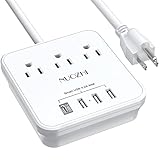
Overview: The NUOZHI power strip offers a practical blend of AC and USB charging with a generous 6-foot extension cord, making it versatile for both cruise ships and home office use. With three AC outlets and four USB ports (one USB-C), it supports up to seven devices simultaneously while maintaining cruise compliance through its non-surge design.
What Makes It Stand Out: The integrated cable ties and lengthy cord provide exceptional flexibility in cramped cruise cabins where outlets are often inconveniently placed. Smart charging technology automatically detects devices and optimizes charging speed, with the USB-C port delivering up to 3A. The ETL listing and 12-month warranty demonstrate manufacturer confidence.
Value for Money: Priced at $11.99, this is one of the most cost-effective options for cruisers wanting both AC expansion and USB charging. The included extension cord eliminates the need to purchase a separate cord, and the build quality exceeds expectations for this price point. It essentially replaces three separate products.
Strengths and Weaknesses: Strengths: 6ft extension cord with cable management; cruise-compliant; smart charging technology; excellent warranty; supports 7 devices Weaknesses: Bulkier than wall-mounted options; only one USB-C port; cord may be overkill for some cabins; less portable for minimalist packers
Bottom Line: Ideal for travelers who prioritize outlet placement flexibility and want a dual-purpose solution for home and cruise use. The cord length is a major advantage.
8. Cruise Ship Essentials, Travel Power Strip - No Surge Protector Cruise Approved, Outlet Extender Multi Plug Outlet with 4 AC Outlets 3 USB (2 USB C), 3 Sides Plug Adapter for Travel Cruise Essentials

Overview: This ultra-compact 7-in-1 outlet extender delivers four AC outlets and three USB ports (two USB-C) in a palm-sized unit weighing just 0.41 pounds. Designed as a cruise essential, it adheres to strict no-surge, no-cord policies while providing ample charging capacity for modern travelers who need to power multiple devices simultaneously in cramped cabin conditions.
What Makes It Stand Out: The three-sided outlet design accommodates bulky plugs without blocking adjacent ports—a thoughtful engineering choice that maximizes utility. The 3A USB charging capability and ETL/FCC certifications match premium competitors, while the sub-$7 price point makes it remarkably accessible. Its weight-to-functionality ratio is exceptional for space-conscious travelers counting every ounce.
Value for Money: At $6.99, this is the budget champion of cruise charging solutions. You’re getting seven charging ports with fast USB-C support and comprehensive safety features for less than the cost of a single airport adapter. The value proposition is undeniable, especially for families needing multiple units or travelers wanting backup options.
Strengths and Weaknesses: Strengths: Unbeatable price; ultra-lightweight; cruise-compliant; three-sided design prevents blocking; dual USB-C ports; robust safety features Weaknesses: No extension cord limits placement; lower total USB output than some rivals; basic aesthetic; indicator light may be bright in dark cabins
Bottom Line: An outstanding choice for budget-savvy cruisers who refuse to compromise on functionality. Perfect as a primary or backup charging solution that won’t strain your wallet.
9. Cruise Approved Power Strip (incl Royal Caribbean, Disney, MSC, Celebrity) - Non Surge USB Charger [2 USB, 2 USB-C] 4 Port Charging, 3.8ft Cord for iPhone, iPad, Laptops, More - Cruise Ship Essentials
![Cruise Approved Power Strip (incl Royal Caribbean, Disney, MSC, Celebrity) - Non Surge USB Charger [2 USB, 2 USB-C] 4 Port Charging, 3.8ft Cord for iPhone, iPad, Laptops, More - Cruise Ship Essentials](https://m.media-amazon.com/images/I/41QoHdR7jnL._SL160_.jpg)
Overview: This premium cruise-approved power strip from Cruise On targets travelers needing maximum flexibility with a 3.8-foot extension cord and four dedicated USB ports (two USB-A, two USB-C). Explicitly approved for Royal Caribbean, Disney, MSC, and other major lines, it eliminates policy guesswork while delivering rapid charging for phones, tablets, and laptops.
What Makes It Stand Out: The removable extension cord adapts to different scenarios—use it extended for hard-to-reach outlets or detach for direct wall mounting. The 5V 3.1A total USB output ensures speedy charging, and the company’s 2026 Royal Caribbean policy compliance guarantee provides rare confidence. The compact 1.2" x 4.5" x 5.8" form factor balances portability with functionality.
Value for Money: At $24.99, this is a premium investment, but the universal cruise line approval and detachable cord justify the cost for frequent cruisers. You’re paying for guaranteed compliance and versatility that cheaper alternatives can’t match. For those sailing Disney or Royal Caribbean specifically, the peace of mind alone warrants the price premium.
Strengths and Weaknesses: Strengths: Approved for all major lines including Disney/RC; detachable extension cord; dual USB-C; Cruise On guarantee; compact design Weaknesses: Highest price in category; only three AC outlets; cord may be unnecessary for some cabins; limited to 3.1A total USB output
Bottom Line: The definitive choice for cruisers prioritizing guaranteed compliance and flexibility. Worth the premium if you sail Disney or Royal Caribbean regularly.
10. Cruise Approved Non Surge Power Strip [2 USBC, 2 USB, 3 AC] - Cruise Essentials for Carnival, Celebrity, Princess, Norwegian, MSC & Major Cruise Lines
![Cruise Approved Non Surge Power Strip [2 USBC, 2 USB, 3 AC] - Cruise Essentials for Carnival, Celebrity, Princess, Norwegian, MSC & Major Cruise Lines](https://m.media-amazon.com/images/I/313zIgAWdfL._SL160_.jpg)
Overview: Manufactured by Cruise On, this 7-device charging station combines three AC outlets with four USB ports (two USB-C, two USB-A) in an ultra-compact 3.5" x 2.9" x 1.1" package. Explicitly designed for major cruise lines, it meets stringent no-surge, no-cord requirements while delivering robust charging capacity for tech-laden travelers who need to power phones, tablets, cameras, and more simultaneously.
What Makes It Stand Out: The Cruise On brand carries significant weight in the cruise community, with explicit approval for Carnival, Celebrity, Princess, Norwegian, and MSC through 2027. The 5V 3.1A USB output provides consistent fast charging across all ports, and the US-based company offers reliable customer support. The seven-device capacity is impressive for such a small footprint, making it a true space-saver.
Value for Money: At $18.99, this mid-range option delivers brand reliability and future-proof compliance. While pricier than budget alternatives, the Cruise On reputation and extended approval timeline through 2027 justify the cost for frequent cruisers. It’s a professional-grade solution that replaces multiple chargers and adapters in one sleek unit.
Strengths and Weaknesses: Strengths: Cruise On brand reliability; approved through 2027; seven-device capacity; dual USB-C; compact design; US-based support Weaknesses: No extension cord; some Disney/RC ships may not allow; fewer AC outlets than some competitors; premium over generic brands
Bottom Line: A solid mid-range choice for cruisers valuing brand reputation and long-term compliance. The Cruise On name provides assurance that budget options can’t match.
Why Standard Surge Protectors Are Forbidden on Cruise Ships
The moment you step into a cruise terminal, your luggage enters a unique legal and safety zone where maritime law trumps your typical travel expectations. Cruise lines maintain a strict ban on standard surge protectors for reasons that have nothing to do with being difficult and everything to do with preventing fires at sea.
The Fire Hazard You Can’t See
Ship electrical systems operate on a principle called “floating ground,” which differs dramatically from the grounded systems in your home. When a surge protector detects a voltage spike, it’s designed to divert excess electricity to the ground wire. On a ship, this action can create a dangerous loop that trips breakers—or worse, generates enough heat to ignite surrounding materials. The result isn’t just a blown fuse; it’s a potential cabin fire hundreds of miles from the nearest fire department.
Maritime Electrical Systems vs. Land-Based Power
Cruise ships generate their own power through massive diesel-electric systems that produce electricity at frequencies and with load characteristics unique to marine environments. These systems are incredibly sensitive to devices that create harmonic distortion or feedback loops. Standard surge protectors contain metal oxide varistors (MOVs) and other components that can interact unpredictably with shipboard circuits, causing cascading failures that affect entire sections of the vessel.
Real Consequences Beyond Confiscation
Getting your device seized isn’t the worst outcome. Passengers who attempt to circumvent these rules by hiding banned devices in luggage can face escalated penalties, including disembarkation at the next port. More importantly, using a prohibited device that causes an electrical incident could make you liable for damages under maritime law. The cruise line’s insurance doesn’t cover incidents caused by prohibited items, potentially leaving you with a five-figure bill for emergency electrical repairs.
Understanding Cruise Line Electrical Policies
Every major cruise line maintains a detailed list of prohibited items buried deep in their ticket contract—the document most passengers never read. These policies aren’t uniform across the industry, creating a confusing patchwork of rules that vary by company, ship age, and even itinerary.
The Policy Variations You Need to Know
Carnival Corporation brands (Carnival, Princess, Holland America) generally maintain the strictest policies, explicitly banning any device with surge suppression capabilities. Royal Caribbean Group (Royal Caribbean, Celebrity, Silversea) follows similar guidelines but may allow basic power strips on newer ships. Norwegian Cruise Line occupies a middle ground, sometimes permitting non-surge power strips while maintaining a firm stance against surge protectors.
Finding Official Information Before You Sail
Never rely on third-party forums or social media posts for policy updates. Always check the “Prohibited Items” section of your cruise line’s website, specifically searching for terms like “electrical,” “power strips,” and “surge protectors.” For the most accurate information, call the cruise line’s special needs department—even if you don’t have a disability, these representatives have the most detailed knowledge of electrical policies and can provide written confirmation you can bring to the terminal.
The Role of the Chief Electrical Officer
Here’s something most passengers don’t realize: each ship has a Chief Electrical Officer who has final authority over what devices are allowed onboard. This officer can override corporate policy in either direction. During peak boarding times, they often delegate screening decisions to security staff using basic visual inspections, which is why design matters as much as technical specifications.
Surge Protectors vs. Power Strips: The Critical Distinction
The terminology confusion ends up costing passengers their devices every single sailing day. Understanding the technical difference isn’t just academic—it’s the key to keeping your electronics powered.
What Actually Makes a Device a Surge Protector
A true surge protector contains components designed to clamp down on voltage spikes, typically MOVs, gas discharge tubes, or silicon avalanche diodes. These components are connected between the hot, neutral, and ground wires. You can’t identify them by looking at the exterior, which is why cruise lines err on the side of caution. If a device advertises “surge protection,” “joules rating,” or “EMI/RFI filtering,” it contains these components and will be confiscated.
The Anatomy of a Basic Power Strip
A basic power strip is simply an extension cord with multiple outlets—nothing more than conductors and a mechanical on/off switch. Some include a basic circuit breaker, which is a resettable fuse that interrupts power if you draw too much current. This is different from surge protection and is typically allowed. The key is that it responds to overcurrent, not overvoltage.
Visual Identification at a Glance
Cruise security staff are trained to spot telltale signs: indicator lights labeled “protected” or “grounded,” ratings in joules printed on the device, or marketing language about surge suppression. Even if you tape over these labels, the physical design often gives it away. Surge protectors tend to be bulkier due to internal components and often have a slight delay when powering up as they test the line.
What “Cruise-Approved” Really Means
The term “cruise-approved” has no official certification or regulatory definition. It’s marketing language that may or may not align with actual cruise line policies, creating a dangerous gap between consumer expectations and reality.
The Zero-Joule Requirement
For a device to be truly cruise-compliant, it must have a joules rating of zero—meaning it offers no surge suppression whatsoever. Some manufacturers produce “cruise-ready” power strips that omit MOVs but retain other features like USB charging ports. These are your safest bet, but you must verify they don’t include any surge protection circuitry.
Circuit Breakers Are Your Friend
A basic circuit breaker is a mechanical device that trips when current exceeds a safe level. This is fundamentally different from electronic surge suppression and is generally permitted. Look for devices with resettable buttons, typically rated at 15 amps. This feature protects the ship’s circuits from your devices, not the other way around, which is exactly what cruise lines want.
Marketing Claims vs. Reality
Manufacturers increasingly use vague terms like “travel power adapter” or “mobile charging station” to avoid the surge protector label. However, if the technical specifications mention clamping voltage, response time, or surge protection, the device will be confiscated regardless of its marketing name. Always check the product specifications PDF, not just the Amazon listing.
The USB-C Revolution: Why Modern Cruisers Demand It
The charging landscape has transformed dramatically since most cruise ships were built. USB-C isn’t just a new connector—it’s a fundamental shift in power delivery that changes what you need in a cabin power solution.
Power Delivery Standards Explained
USB-C Power Delivery (PD) can negotiate voltage and current between charger and device, delivering up to 100 watts over a single cable. This means one port can fast-charge your laptop, tablet, and phone sequentially. When evaluating cruise-approved devices, look for USB-C ports that explicitly support PD 3.0 or higher. Older USB-C ports without PD are limited to 15 watts, barely faster than traditional USB-A.
Why Your Old USB-A Ports Are Obsolete
Most new devices, from iPhones to Samsung Galaxy phones to Nintendo Switch, charge significantly faster via USB-C PD. A USB-A port maxes out at 12 watts, while USB-C PD can deliver 25 watts to a phone or 65 watts to a laptop. On a cruise where you’re constantly moving between ports, shows, and meals, those faster charging speeds aren’t just convenient—they’re essential.
Multi-Device Charging Strategies
The ideal cruise power solution includes a mix of USB-C PD ports and traditional AC outlets. This lets you charge high-power devices like laptops directly while using the USB ports for phones, watches, and earbuds. Some advanced devices offer dynamic power allocation, intelligently distributing available wattage among connected devices—look for this feature if you’re traveling with multiple power-hungry gadgets.
Essential Features to Look for in Cruise-Approved Power Solutions
Not all permitted power devices are created equal. The right combination of features can mean the difference between a seamlessly powered vacation and a daily battle over the single available outlet.
Outlet Count and Configuration
Most cruise cabins have two outlets if you’re lucky. A device with three AC outlets gives you a net gain of one additional plug, which might be sufficient for a couple. Families should target four to six outlets, but be warned: devices with more than six outlets often face additional scrutiny at security. The configuration matters too—widely spaced outlets accommodate bulky adapters without blocking adjacent plugs.
USB Port Quantity and Type
Look for at least two USB-C ports with Power Delivery, supplemented by two USB-A ports for older devices. This 2+2 configuration covers most modern travel scenarios. Avoid devices with only USB-A ports—they’re already outdated and won’t serve you well beyond this single trip.
Cord Length Considerations
A 4-foot cord offers the best balance of reach and portability. Shorter cords force you to work within inches of the outlet, which might be behind the bed or under the desk. Longer cords create tripping hazards and take up precious luggage space. Some cruise-approved devices feature retractable cords, which are brilliant for travel but rare in non-surge models.
Build Quality and Durability
Your device will be shoved in luggage, dropped on cabin floors, and possibly yanked from outlets by tripping over cords. Look for robust housing materials—polycarbonate is better than cheap ABS plastic. Reinforced cord strain reliefs prevent internal wire breakage. Some premium models include braided cords that resist tangling and damage, though these are harder to find in cruise-compliant designs.
Decoding Technical Specifications: What the Numbers Mean
Understanding the electrical ratings on your device isn’t just for engineers—it’s your best defense against buying something that won’t work or will get confiscated.
Amperage Ratings and Circuit Capacity
Most cruise cabin circuits are rated for 15 amps at 110 volts. Your power device should match this rating. If it’s rated for less (common in ultra-compact models), you risk tripping the breaker with just a laptop and phone charger. If it’s rated for more, it might not trip when it should, creating a fire hazard. The sweet spot is exactly 15 amps.
Wattage Capacity Calculations
Multiply amps by volts to get watts. A 15-amp device on a 110-volt circuit provides 1,650 watts of capacity. Your laptop might draw 65 watts, phone charger 25 watts, camera battery 10 watts. Quick mental math tells you that you can run multiple devices simultaneously without issues. Always leave a 20% safety margin—continuous loads shouldn’t exceed 1,300 watts.
The Joules Rating Red Flag
This is the single most important number for cruise compliance. Joules measure surge protection capacity. Any number above zero means the device will be confiscated. Don’t be fooled by “low joule” ratings—even 100 joules is enough to trigger a ban. The ideal cruise-compliant device either lists “0 joules” or omits any joules rating entirely from its specifications.
Voltage Compatibility for International Cruising
Many cruise ships operate on 220 volts in European markets and 110 volts in North American markets. Some newer ships have dual-voltage outlets. A cruise-approved device should work on both 110-120V and 220-240V systems. Check for “100-240V~ 50/60Hz” in the specifications. This not only ensures it works onboard but also in foreign ports.
The Non-Surge Alternative: Basic Power Strips
Sometimes the simplest solution is the best. Basic power strips without any fancy features often sail through security screening with the least hassle, but they come with trade-offs you need to understand.
What You’re Giving Up
Without surge protection, your devices are vulnerable to the same voltage fluctuations that cruise lines fear. While ship power is generally stable, generators can produce brief spikes during load switching. You’re also missing EMI/RFI filtering, which can reduce interference in audio and video equipment. For most modern electronics with built-in power regulation, this risk is minimal but not zero.
When Basic Strips Make Sense
If you’re traveling with older devices that aren’t sensitive to minor voltage fluctuations, a basic power strip is perfectly adequate. They’re also ideal if you’re primarily charging low-power devices like phones, tablets, and e-readers rather than expensive laptops or camera equipment. The cost savings can be significant—basic strips cost half as much as USB-C equipped models.
Safety Features to Demand
Even basic strips should include a 15-amp circuit breaker and a lighted on/off switch. The breaker protects the ship’s circuits from your mistakes, while the indicator light confirms the strip is receiving power—crucial when you’re plugging into awkwardly placed outlets. Avoid the cheapest models that lack these basic safety features.
Cabin Outlet Realities: What to Expect Onboard
Walking into your cruise cabin with realistic expectations about the electrical situation prevents frustration and helps you plan your power strategy effectively.
Typical Outlet Placement and Quantity
Most standard cabins (interior, oceanview, balcony) feature one or two 110V North American outlets, often located at the vanity/desk area. One outlet is frequently occupied by the cabin’s TV or refrigerator. Some older ships hide an outlet behind the bed for reading lamps, accessible only by moving the mattress. Suites might offer two to three outlets but rarely more.
The Bathroom Outlet Trap
That GFCI outlet in your bathroom? It’s typically rated for low-power devices only (shavers, electric toothbrushes) and is explicitly prohibited for hair dryers, straighteners, or chargers. The circuit is often shared across multiple cabins, so overloading it can affect your neighbors. Always use main cabin outlets for serious charging.
European vs. American Outlet Configurations
Ships sailing European itineraries often have a mix of 220V European-style outlets and 110V American outlets. The European outlets typically deliver more power and are less likely to be in use by cabin fixtures. If you have a dual-voltage device with interchangeable plugs, these can be a secret weapon—though you’ll need a simple adapter, not a converter.
Hidden Power Sources
Savvy cruisers know to check behind the TV for a USB port (usually low-power, 5W only) and under the desk for additional outlets. Some cabins have a single outlet inside the closet, intended for ironing but perfect for overnight charging. Newer ships increasingly include USB-A ports built into bedside lamps or desk areas, though these charge slowly.
Safety Certifications That Cruise Lines Trust
When security staff examine your power device, they’re looking for visual shorthand that indicates safety and compliance. The right certifications can make the difference between smooth sailing and confiscation.
UL Listing: The Gold Standard
Underwriters Laboratories (UL) testing is the most recognized safety certification in North America. A genuine UL listing means the device has been tested for fire, shock, and mechanical hazards. Look for the UL mark with a control number—fake UL marks are common on cheap imports. The specific standard for power strips is UL 1363, while USB chargers fall under UL 62368.
ETL Certification: The Acceptable Alternative
ETL (originally Edison Testing Laboratories) performs similar testing to UL and is equally valid. Many manufacturers choose ETL because it’s faster and less expensive, but the safety rigor is identical. Cruise security staff are trained to accept both UL and ETL marks. The key is that the certification must be listed for the specific device type—not just the USB ports or the power cord, but the entire unit.
CE Marking and Maritime Approvals
The CE mark on its own means little for cruise compliance—it’s a self-declaration by the manufacturer, not independent testing. However, some devices carry additional maritime-specific approvals like DNV GL or ABS certification. While rare in consumer products, these indicate the device has been tested for marine environments and will be viewed very favorably by ship’s engineers.
Smart Packing Strategies for Your Cruise
How you pack your power solution can be as important as which device you choose. Smart packing prevents damage, speeds up security screening, and ensures you have backup options.
Carry-On vs. Checked Luggage
Always pack your power device in your carry-on bag. Not only does this prevent damage from rough baggage handling, but it also allows you to present it voluntarily at security if questioned. Placing it in checked luggage risks it being flagged during X-ray screening, which can delay your luggage delivery to your cabin—sometimes until the second day of your cruise.
Documentation to Bring
Print out the product specifications page from the manufacturer’s website, highlighting the zero-joule rating and lack of surge protection language. Bring the original packaging if possible, as it often includes compliance statements. Some experienced cruisers even bring a copy of the cruise line’s prohibited items policy, though this can come across as confrontational if presented aggressively.
Backup Power Strategies
Pack a small, basic two-outlet power strip as a backup in your travel companion’s luggage. If your primary device is confiscated, you still have an option. Consider bringing a high-capacity power bank (20,000mAh or higher) that can charge your phone multiple times. These are always permitted and provide power during shore excursions when you might not have outlet access.
Weight and Space Optimization
Every ounce counts when you’re flying to your cruise port. Modern cruise-compliant power strips weigh between 8 and 16 ounces. Choose the lightest model that meets your needs. Some travelers prefer modular solutions—a basic power strip plus separate USB wall chargers—which offers flexibility but takes up more space. For most, an integrated solution with 3-4 AC outlets and 2-4 USB ports hits the optimal balance.
Common Mistakes That Get Power Strips Confiscated
Even with the right device, passengers make avoidable errors that result in confiscation. Understanding these pitfalls helps you navigate security screening successfully.
The Indicator Light Misinterpretation
That helpful “protected” LED that gives you peace of mind at home? It’s a red flag to security staff. Any indicator light suggesting surge protection capabilities will result in immediate confiscation, no matter what the specifications say. If your device has such a light, cover it with black electrical tape before packing—but be prepared to remove the tape if security wants to inspect it more closely.
Overly Complicated Designs
Devices with digital displays, voltage meters, or “smart” features like Wi-Fi connectivity raise suspicion. Security staff are not electrical engineers; they operate on a “when in doubt, confiscate” principle. A simple, clean design without extra features sails through screening. That fancy power strip with individual outlet switches and a digital ammeter? Leave it at home.
Mixed Messaging in Product Names
Products marketed as “surge protector power strips” create confusion even if they lack actual surge components. The name alone can trigger confiscation. Choose devices explicitly labeled as “power strips” or “outlet expanders” without any surge protection language. When in doubt, contact the manufacturer for a written statement of compliance you can show security.
Packing with Prohibited Items
If your power strip is packed in the same bag as other restricted items like irons or candles, security may flag the entire bag for manual inspection. This increases scrutiny on everything inside, including your power device. Keep your power strip in a bag with only permitted items to minimize the chances of secondary screening.
How to Test Your Device Before Embarking
Don’t wait until you’re at the cruise terminal to discover your “cruise-approved” device fails inspection. A simple pre-cruise testing protocol saves you stress and ensures you have time to purchase an alternative.
The Visual Inspection Checklist
Examine every surface of your device for the words “surge,” “protected,” “joules,” or “MOV.” Check for indicator lights with protection-related labels. Look at the packaging and any included manuals for surge protection claims. If you find any of these, the device will likely be confiscated. Even if you purchased it from a “cruise essentials” store, verify yourself—retailers often mislabel products.
At-Home Electrical Testing
Plug the device into a wall outlet and connect a simple lamp. The lamp should work normally. Now, plug a high-draw appliance like a hair dryer into the same device. If the device’s breaker trips before the house breaker, it’s working correctly. This confirms it has overcurrent protection (good) but doesn’t prove it’s surge-free. For that, you’d need an oscilloscope to look for clamping behavior—impractical for most travelers.
The Manufacturer Verification Process
Email the manufacturer’s customer service department with a specific question: “Does this device contain any surge suppression components such as MOVs, and is it approved for cruise ship use?” Save their written response. Some manufacturers provide compliance letters specifically for cruise passengers. This documentation, while not legally binding, often persuades skeptical security staff.
Creating Your “Proof Packet”
Assemble a folder with the device’s specifications sheet, your email correspondence with the manufacturer, and a printout of your cruise line’s policy. Highlight the relevant sections. Keep this in your carry-on, separate from the device itself. When you reach security, have it ready but don’t volunteer it unless questioned. Presenting it proactively can sometimes create suspicion where none existed.
Emerging Trends in Cruise Ship Power Solutions
The cruise industry is slowly awakening to the modern traveler’s power needs. Understanding these trends helps you anticipate what might be available on your next sailing and how policies may evolve.
USB-C Outlets in New Ship Builds
Royal Caribbean’s Icon-class ships and Carnival’s Excel-class vessels now include USB-A and USB-C ports built directly into cabin walls, often by the bedside and desk. These ports typically support 15-30 watt charging—not full Power Delivery speeds, but sufficient for overnight phone charging. This reduces your need for external devices but hasn’t eliminated outlet scarcity entirely.
Wireless Charging Integration
Some premium cruise lines are experimenting with wireless charging pads integrated into nightstands and desks. While convenient, these are universally limited to 7.5-10 watts, making them suitable only for phones and not tablets or other devices. They also lack the versatility of bringing your own solution.
Smart Cabin Technology
Holland America’s “MedallionClass” and MSC’s “Zoe” systems are transforming cabins into smart rooms, but ironically, this increases power demand as passengers bring more devices to interface with these systems. The cruise lines recognize this contradiction, and industry insiders suggest standardized power solutions may be offered as add-on packages in the future.
Potential Policy Modernization
The Cruise Lines International Association (CLIA) has discussed creating a standardized certification for cruise-safe power devices, similar to TSA PreCheck for electronics. This would involve manufacturers submitting devices for maritime-specific testing, with approved models receiving a recognizable mark. Until this happens, passengers remain stuck in the current confusing system.
Frequently Asked Questions
Will my surge protector definitely be confiscated if I try to bring it?
Yes, almost certainly. Cruise terminal security uses X-ray machines trained to identify surge suppression components. Even if your device makes it through, cabin stewards are trained to spot prohibited items during daily service and will report them. The risk isn’t worth it, especially when compliant alternatives exist that meet your needs.
Can I hide my surge protector in my luggage to sneak it onboard?
This is a terrible idea for multiple reasons. Checked luggage is X-rayed just like carry-ons, and prohibited items found there can result in your bags being delayed or held until you claim them, potentially missing the sailing. More importantly, using a hidden surge protector that causes an electrical incident could make you liable for damages under maritime law, which is far more serious than simple confiscation.
What’s the real difference between a power strip and surge protector?
A power strip is simply an extension cord with multiple outlets—it just splits one plug into several. A surge protector contains additional components (MOVs, etc.) that monitor voltage and divert excess electricity away from your devices. The key visual difference is that surge protectors have joules ratings and often indicator lights; basic power strips do not.
How many devices can I safely charge simultaneously in a cruise cabin?
Most cruise cabin circuits are rated for 15 amps (1,650 watts). You can safely charge 2-3 phones, a tablet, a camera battery, and a laptop simultaneously without approaching this limit. High-draw devices like hair dryers, straighteners, and clothing steamers should be used alone on a circuit. When in doubt, calculate your total wattage and stay under 1,300 watts for continuous loads.
Are there USB-C charging ports already installed in cruise ship cabins?
Some newer ships (launched 2021 or later) include USB-A and USB-C ports, but they’re typically limited to 15-30 watts—not the full Power Delivery speeds your laptop needs. Older ships have no built-in USB charging. Even on new ships, outlet scarcity remains a problem, making a cruise-approved power device essential for families or tech-heavy travelers.
What if I need to power medical devices that require surge protection?
Contact your cruise line’s Special Needs department at least 30 days before sailing. They can provide written permission for specific medical-grade surge protectors used with CPAP machines, oxygen concentrators, or other critical devices. You’ll need a doctor’s note and documentation of the device’s medical necessity. Never assume medical devices are exempt—always get pre-approval in writing.
Do European cruise lines have different rules about power strips?
European-flagged cruise lines often follow similar policies due to international maritime safety regulations (SOLAS). However, they may be more familiar with 220V devices and European-style outlets. The underlying electrical safety concerns are universal across maritime law, so don’t assume European lines are more lenient—always verify specific policies before sailing.
Can I use my cruise-approved power strip in ports of call?
Yes, and this is where dual-voltage capability becomes crucial. Many Caribbean and Mediterranean ports use 220V systems. Your cruise-approved strip should work fine as a simple outlet splitter, but verify your USB chargers can handle the voltage. Most modern USB chargers are dual-voltage, but older devices may only work on 110V and could be damaged on 220V.
What should I do if security confiscates my device despite my documentation?
Remain calm and polite. Ask to speak with a supervisor or the Chief Electrical Officer, who has final authority. Present your documentation respectfully. If they still refuse, you have two options: surrender the device (you’ll get a receipt and can claim it after the cruise) or have someone onshore take it home if you haven’t boarded yet. Arguing aggressively will not help and could delay your embarkation.
Are there any cruise lines that actually allow surge protectors?
No major cruise line currently permits standard surge protectors with MOV components. Some luxury lines like Silversea or Regent may provide in-room surge-protected outlets as part of their premium experience, but they still prohibit passengers from bringing their own. The policy is driven by maritime insurance requirements and SOLAS regulations, not individual cruise line preferences, making it effectively universal across the industry.'