Transporting musical equipment demands more than your average luggage cart. Between the delicate nature of instruments, the substantial weight of amplifiers and speakers, and the unpredictable environments musicians navigate—from dimly lit club stairwells to sprawling festival grounds—your gear deserves a transport solution built for the unique challenges of the music world. A standard cart from the local hardware store might collapse under the weight of a flight case loaded with a vintage synthesizer, or rattle your drum hardware loose with inadequate wheels and flimsy construction.
Investing in a durable, professional-grade luggage cart specifically designed for musical equipment isn’t just about convenience—it’s about protecting thousands of dollars worth of gear and preserving your peace of mind on gig nights. This comprehensive guide will walk you through the critical features, materials, and design considerations that separate road-worthy carts from the pretenders, ensuring you make an informed decision that keeps your instruments safe and your load light.
Top 10 Musical Equipment Transport Carts
Detailed Product Reviews
1. Rockville Rock Cart Pro 700 LB Capacity DJ Equipment Transport Roller Cart, Expandable Design, Smooth-Rolling Wheels, Folds Flat, for Mobile DJs and Event Professionals
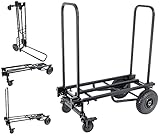
Overview: The Rockville Rock Cart Pro is a heavy-duty transport solution engineered for mobile DJs and event professionals who regularly haul substantial equipment. With a 700-pound weight capacity and expandable frame, this cart transforms from a compact hand truck to a full-length platform cart, accommodating everything from subwoofers to lighting trusses. The powder-coated steel construction ensures durability while the folding design maximizes vehicle storage space.
What Makes It Stand Out: The cart’s transformative capability sets it apart—expanding from 35.4" to 55.1" in seconds using quick-release pins. Custom-tooled Rockville rims with solid rubber tires deliver exceptional performance across grass, concrete, and uneven venue floors, while integrated front wheel brakes provide stability during loading. The accessory ecosystem (CART-SHELF, CART-FLOOR) addresses the common problem of small items falling through the frame, creating a truly professional-grade system.
Value for Money: At $174.95, the Rock Cart Pro sits in the mid-premium range, yet justifies its price through versatility that eliminates the need for multiple carts. Comparable single-purpose dollies cost $80-120, while competing convertible carts exceed $200. For professionals making 50+ gigs annually, the durability and time saved on fewer trips between van and stage delivers strong ROI.
Strengths and Weaknesses: Strengths include exceptional 700lb capacity, smooth all-terrain wheels, compact folded storage (19.6" x 12" x 35.4"), and rust-resistant powder coating. The expandable design handles diverse load sizes brilliantly. Weaknesses: accessories cost extra, the 37-pound weight may challenge some users when loading into vehicles, and the steel frame shows scratches over time despite powder coating.
Bottom Line: The Rock Cart Pro is an indispensable workhorse for serious mobile DJs and production crews. Its blend of capacity, adaptability, and terrain versatility makes it worth every penny for professionals, though casual users might find it overbuilt for lighter needs.
2. On-Stage UTC5500 All-Terrain Utility Cart (Rolling Dolly Handcart, Heavy-Duty Transportation, Load in and Load Out Equipment, Adjustable Length, Treaded Wheels and Locking Casters, Black Finish)

Overview: The On-Stage UTC5500 positions itself as a premium all-terrain solution for professionals who refuse to let venue conditions dictate their setup. Supporting 550 pounds across an adjustable 30" to 52" bed, this cart tackles loading challenges with aggressive treaded wheels and 360° rotating front casters. Dual ergonomic handles provide superior control whether pushing or pulling through challenging environments.
What Makes It Stand Out: The UTC5500’s terrain-conquering capability is its hallmark. Deep-treaded pneumatic-style wheels grip gravel, grass, and cracked pavement where standard casters fail. The 360° front casters offer unmatched maneuverability in tight backstage areas, while the dual-handle design eliminates the awkward twisting common with single-handle carts. The black powder-coated finish maintains a professional appearance gig after gig.
Value for Money: Priced at $257.95, this is a premium investment. However, for professionals working outdoor festivals, historic venues with challenging access, or film locations, the reliability and reduced physical strain justify the cost. Cheaper carts cost less upfront but risk equipment damage and worker fatigue when wheels jam or tip on rough terrain.
Strengths and Weaknesses: Strengths include superior terrain handling, excellent maneuverability, comfortable dual-handle operation, and robust construction. The adjustable bed accommodates both compact and oversized loads effectively. Weaknesses: it’s the most expensive option in its class, heavier than aluminum alternatives, and the 550lb capacity, while substantial, falls short of some competitors. The treaded wheels can mark delicate indoor flooring.
Bottom Line: For professionals prioritizing reliability over budget, the UTC5500 is the gold standard. It’s purpose-built for challenging environments where lesser carts fail, making it essential for outdoor event specialists and venue technicians who demand flawless performance.
3. Rockville GigMate Pro Audio/DJ Equipment Transport Trolley Cart - Folds Flat

Overview: The GigMate Pro offers a featherweight transport solution for musicians and DJs with lighter equipment loads. Weighing significantly less than steel alternatives, this aluminum trolley supports up to 154 pounds while folding completely flat for trunk storage. Its instant-setup design requires zero assembly, making it ideal for quick load-ins where time matters more than massive capacity.
What Makes It Stand Out: Portability defines the GigMate Pro. At folded dimensions of just 15.35" x 2.16" x 24", it disappears behind a car seat or in a equipment closet. The all-black aesthetic, including black screws and rims, provides a professional appearance uncommon in budget carts. Large rubber wheels navigate curbs and uneven sidewalks better than small casters, while the included bungee cord secures loads without additional purchases.
Value for Money: At $48.95, this represents exceptional value for solo artists, coffeehouse DJs, and mobile musicians. It costs less than a single quality microphone cable yet handles keyboards, powered speakers, and mixer cases with ease. While not suited for subwoofers or lighting rigs, it eliminates the need for multiple trips with smaller gear, paying for itself in saved time and back strain.
Strengths and Weaknesses: Strengths include incredible lightness, instant folding mechanism, affordable price point, and smooth-rolling wheels. The aluminum construction resists corrosion without adding weight. Weaknesses: 154lb capacity limits its use for heavy equipment, the narrow wheelbase can feel tippy with tall loads, and there’s no brake system. The thin base plate may flex under maximum weight.
Bottom Line: The GigMate Pro is perfect for light-duty users who prioritize portability over brute strength. Every working musician should own one for small gigs, but serious DJs with substantial rigs will need a higher-capacity solution.
4. Rolling DJ Cable File Bag, DJ Gig Bag Padded Case with Detachable Trolley & Dividers, Cable Organizer with Multi-pocket & Compartment for 15.6’’ Laptop, DJ Gear, Musical Instrument, Sound Equipment

Overview: This specialized rolling bag addresses a DJ’s cable management nightmare with methodical organization and transport convenience. Designed specifically for audio cables, adapters, and small equipment, it features customizable dividers, multiple pockets, and a dedicated 15.6-inch laptop compartment. The detachable trolley system converts from rolling case to shoulder bag, adapting to different venue access situations.
What Makes It Stand Out: The bag’s interior flexibility shines—fixed and removable dividers create a personalized layout for XLRs, power cables, and interface boxes. The 1680D Oxford fabric withstands tour life abuse while thick padding protects sensitive gear. Unlike generic tool bags, the multi-pocket design includes mesh compartments for visibility and a large front pocket for frequently accessed items, eliminating the black-hole effect common in single-compartment bags.
Value for Money: At $89.99, it occupies a sweet spot between cheap duffels and premium flight cases. For DJs spending 15 minutes untangling cables per gig, the organization alone justifies the price. The included trolley eliminates a $30-50 separate purchase, while the laptop protection saves potential $500+ replacement costs. It’s an insurance policy against gig-day chaos.
Strengths and Weaknesses: Strengths include exceptional organization, versatile carrying options, durable fabric, and laptop protection. The detachable trolley is practical for stairs and tight spaces. Weaknesses: wheels struggle on grass or gravel, capacity is limited to cables and small gear (not speakers or mixers), and the trolley handle can feel flimsy when fully extended with heavy loads. Zippers may wear with daily professional use.
Bottom Line: This is an essential specialized tool for DJs drowning in cable clutter. It won’t replace your equipment cart but will revolutionize your setup efficiency. Ideal for mobile DJs who need their cables perfectly organized and easily accessible.
5. Hombetta Collapsible Wagon Cart with Wheels, 150L Lightweight Foldable Utility Cart, Portable Rolling Wagon for Garden, Shopping, Sports, Camping, Transport, Black

Overview: The Hombetta Wagon targets general-purpose utility rather than professional audio transport, offering a 150-liter capacity in an ultra-lightweight 9.93-pound package. Its collapsible design and removable fabric bag make it versatile for errands, sports, and light hauling. While not DJ-specific, its affordability and compact storage appeal to budget-conscious users with modest equipment needs.
What Makes It Stand Out: Remarkable lightness combined with surprising capacity defines this cart. The washable fabric liner addresses dirt and spill concerns—simply machine wash after muddy festival gigs. DIY accessory mounting points allow customization with cup holders or extra bags, while the three-section telescopic handle rotates 90° for comfortable pulling at any height. The sub-$30 price point makes it an impulse purchase rather than capital investment.
Value for Money: At $29.99, it’s the market’s value leader. For DJs transporting lightweight LED fixtures, cable bags, and personal items, it performs adequately at a fraction of professional cart costs. However, the lack of dedicated equipment features means accepting compromises. It’s essentially a consumer wagon repurposed for occasional gig work, not a professional tool designed for daily abuse.
Strengths and Weaknesses: Strengths include unbeatable price, extreme lightness, compact folding, washable fabric, and smooth all-terrain wheels. The open-frame mode handles oversized items. Weaknesses: unspecified weight capacity (150L volume doesn’t guarantee heavy load capability), no brakes, frame flex under substantial weight, and wheels may not withstand daily professional use. Not designed for valuable equipment protection.
Bottom Line: The Hombetta works for hobbyist DJs or as a secondary cart for non-essential items. Professionals should invest in purpose-built audio transport, but budget users will find surprising utility here for light-duty applications. Perfect for festival-goers and occasional gig helpers, not frontline professional use.
6. Rockville Rock Cart Off-Road Utility Roller, 700 LB Capacity - Enhanced Caster Wheels, Foldable Design for DJ Equipment Transport

Overview: The Rockville Rock Cart is a beast of burden engineered specifically for professionals who navigate challenging terrain. With its 700-pound capacity and oversized off-road wheels, this utility roller tackles grass, gravel, and uneven surfaces that stop standard carts cold. DJs, event producers, and roadies will appreciate the rugged powder-coated steel construction and thoughtful design elements that prioritize both mobility and stability when transporting heavy equipment across unpredictable outdoor venues.
What Makes It Stand Out: The combination of 5.9-inch front rubber casters and 10-inch rear wheels creates genuine all-terrain capability rarely found in equipment carts. The adjustable frame extends to 55.1 inches, accommodating oversized speakers and staging gear while maintaining a compact folded profile for transport. The foot-locking caster system provides critical security on slopes, preventing runaway loads during loading operations. Its quick conversion between dolly, utility cart, and hand truck configurations eliminates the need for multiple specialized transport tools.
Value for Money: At $199.95, this cart sits in the professional-grade price tier, but delivers features that justify the investment. Comparable off-road carts with similar capacity typically run $250-350, making the Rock Cart competitively priced. The rust-proof steel construction ensures years of service, and the multi-functionality means you’re essentially getting three tools in one. For mobile professionals who regularly work outdoor events, the durability and terrain-handling capability translate to real value that cheaper, indoor-only carts cannot match.
Strengths and Weaknesses: Strengths include exceptional off-road performance, robust 700-pound capacity, versatile folding design, and lockable wheels for safety. The powder-coated steel frame resists corrosion while maintaining structural integrity under heavy loads. Weaknesses include significant weight from the steel construction, which may challenge some users when loading into vehicles. The rear plastic wheels, while large, may not offer the same durability as rubber alternatives over extreme long-term use. The price point exceeds casual users’ budgets.
Bottom Line: This cart earns its keep for professionals who regularly transport heavy equipment across challenging terrain. If your work involves outdoor festivals, remote venues, or construction sites, the Rockville Rock Cart is a worthwhile investment that will outlast and outperform standard utility carts. For indoor-only use or light-duty applications, more economical options exist.
7. 3 in1 Heavy Duty Convertible Hand Truck Dolly Cart, Folding Trolley Cart with Wheels, 600lbs Capacity for Transport Moving in Warehouse, Supermarket, Equipment (Blue)

Overview: This versatile 3-in-1 convertible cart offers impressive flexibility for warehouse, retail, and home use. With a 600-pound capacity and aluminum alloy construction, it balances strength with manageable weight. The cart transforms between upright hand truck, four-wheel dolly, and folding trolley configurations, adapting to various load types and environments. Its compact folding design makes it an excellent choice for users with limited storage space who need reliable transport capability.
What Makes It Stand Out: The dual-bearing silent rubber wheels provide smooth operation without the noise pollution common with metal or hard plastic wheels—ideal for indoor environments like supermarkets or quiet warehouses. The telescoping and folding handle system enables quick transformation without tools, while the aluminum square tube construction offers rust-proof durability at just 22.7 pounds. The ability to fold completely flat to 3.74 inches thin allows storage in car trunks, closets, or under beds.
Value for Money: At $99.99, this cart represents excellent mid-range value. It undercuts many aluminum convertible carts by $30-50 while maintaining comparable load capacity and features. The 600-pound rating exceeds most residential needs while satisfying light commercial requirements. While not as rugged as steel-framed alternatives, the aluminum construction provides adequate durability for most users at a weight and price point that enhances portability and accessibility.
Strengths and Weaknesses: Strengths include lightweight aluminum build, silent operation, three versatile configurations, and ultra-compact storage footprint. The double-bearing wheels roll smoothly even when fully loaded. Weaknesses include aluminum construction that may flex under maximum loads near capacity limits, and wheels that, while silent, may not handle rough outdoor terrain as well as pneumatic options. The 600-pound rating assumes ideal weight distribution, which isn’t always practical with real-world loads.
Bottom Line: This convertible cart delivers outstanding versatility and value for warehouse workers, delivery personnel, and homeowners. If you need a quiet, lightweight, multi-function cart for primarily indoor use or smooth surfaces, this is a smart purchase. For constant heavy loads exceeding 400 pounds or rough terrain, consider upgrading to steel construction.
8. Rockville GigMate Foldable Aluminum Trolley Equipment Transport Hand Truck Cart
Overview: The Rockville GigMate is a musician’s best friend, offering featherweight portability without sacrificing functionality. Weighing just a few pounds and folding completely flat, this aluminum trolley is designed for gigging professionals who need reliable equipment transport from car to venue. With a 154-pound capacity, it handles amplifiers, PA speakers, and instrument cases with ease, then disappears into your trunk until the next show.
What Makes It Stand Out: Instant fold-and-unfold mechanism requires no assembly or tools, saving precious time during load-in and load-out. The all-black aesthetic, including black screws and rims, provides a professional appearance that complements stage equipment. Large rubber wheels navigate cracked pavement, curbs, and venue terrain smoothly. The included bungee cord is a thoughtful addition that many competitors omit. Its ability to hold substantial gear while maintaining a folded profile of just 2.16 inches thin is remarkable.
Value for Money: At $48.95, the GigMate occupies the budget-friendly end of the equipment trolley spectrum while delivering features found on pricier models. Comparable musician-grade carts typically start at $70, making this an exceptional value for performers, photographers, and mobile professionals. The aluminum construction ensures it won’t rust, and the simple design minimizes failure points. While capacity is limited compared to heavy-duty options, it’s perfectly matched to its target users’ needs.
Strengths and Weaknesses: Strengths include extreme lightweight design, instant folding mechanism, smooth-rolling wheels, and included bungee cord. The aluminum base plate provides durability without weight penalty. Weaknesses include the 154-pound capacity limitation, which excludes heavier powered subwoofers and large speaker arrays. The narrow wheelbase can feel tippy with tall, narrow loads. The all-aluminum construction may dent if abused, though this is primarily cosmetic.
Bottom Line: For musicians, DJs, and mobile professionals transporting moderate-weight gear, this trolley is a no-brainer. It delivers essential functionality at an unbeatable price point. If your equipment stays under 150 pounds and you value portability above all, buy this cart. For heavier loads or commercial applications, look to more robust options.
9. Heavy Duty Platform Truck Cart with Brake Wheels & Foldable Fences 1300lbs Capacity Flatbed Cart for Moving and Transport 36"x24" Moving Dolly for Warehouse/Industrial/Home, Blue
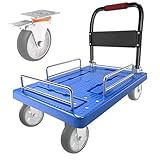
Overview: This industrial-grade platform truck brings heavy-duty capability to warehouse, industrial, and home environments with its impressive 1300-pound capacity. The 36"x24" deck provides ample space for bulky items, while the innovative three-sided folding fence system offers versatility between flatbed and contained cart configurations. Designed for serious moving tasks, this cart combines robust construction with practical features that enhance both safety and efficiency.
What Makes It Stand Out: The combination of extreme load capacity and convertible fence design is rare at this price point. The brake wheels provide essential safety when loading or on inclines—a feature often omitted on similarly priced competitors. The foldable fences transform the cart in seconds without tools, adapting to everything from stacked boxes to oversized furniture. The 5-inch wheels with dual swivel casters offer excellent maneuverability in tight warehouse aisles while maintaining stability under maximum loads.
Value for Money: At $155.99, this platform truck dramatically undercuts industrial competitors with similar capacity, which often exceed $200. The 1300-pound rating exceeds most homeowners’ needs while satisfying demanding warehouse applications. The brake system alone adds $20-30 of value compared to non-braking models. While the plastic deck may show wear over time under extreme loads, the steel frame and wheel assembly provide durable performance that justifies the investment for regular users.
Strengths and Weaknesses: Strengths include exceptional 1300-pound capacity, versatile folding fence design, brake wheels for safety, and large platform dimensions. The combination of swivel and fixed wheels provides both maneuverability and directional stability. Weaknesses include a plastic deck that may scratch or crack under point loads, and overall weight that makes it less portable than lighter-duty options. Assembly is required, and instructions may be unclear for some users.
Bottom Line: This platform cart is a workhorse for warehouses, workshops, and serious DIYers. If you routinely move heavy, bulky items and need maximum capacity with safety features, this offers outstanding value. For occasional light-duty use or prioritizing portability, consider a smaller convertible cart. The fence system makes it uniquely versatile for mixed loads.
10. Champion Sports Equipment Cart White

Overview: The Champion Sports Equipment Cart addresses the specific needs of gym teachers, coaches, and athletic directors with its specialized ball storage design. This lightweight plastic cart prioritizes capacity and floor protection over heavy-duty load ratings, making it ideal for transporting sports equipment across gymnasiums, courts, and indoor facilities. Its straightforward assembly and purpose-built configuration streamline equipment management for educational and recreational settings.
What Makes It Stand Out: The massive capacity for specific sports equipment—32 basketballs, 40 soccer balls, or 150 jump ropes—demonstrates thoughtful design for its target market. The non-marring wheels are essential for preserving expensive gym floors, a feature often overlooked on general-purpose carts. The lightweight plastic construction allows easy maneuvering by staff of all strength levels, while the open design provides instant visibility and access to contents during active practice sessions or class transitions.
Value for Money: At $299.99, this is a premium-priced specialized cart. While expensive compared to general utility carts, its purpose-built design for athletic equipment management justifies the cost for schools and recreation centers. Comparable sports equipment carts range from $250-400, placing this in the competitive mid-range. The floor-protecting wheels alone can save thousands in gym floor repairs, offering hidden value. For organizations needing organized, mobile sports storage, it’s a worthwhile investment that generic carts cannot replicate.
Strengths and Weaknesses: Strengths include specialized equipment organization, floor-protecting wheels, lightweight maneuverability, and high capacity for balls and ropes. The straightforward assembly saves setup time. Weaknesses include the premium price point, plastic construction that may crack under impact, and limited versatility beyond sports equipment transport. The 700-pound implied capacity isn’t suitable for dense, heavy items, and the open design offers no security for stored items.
Bottom Line: This cart excels for schools, gyms, and sports facilities needing organized equipment transport. If you manage large quantities of balls and ropes, the specialized design and floor protection justify the investment. For general-purpose moving or heavy equipment, choose a traditional utility cart. The Champion cart knows its niche and serves it well.
Why Standard Luggage Carts Fail Musicians
The fundamental difference between consumer luggage carts and professional-grade equipment transporters lies in their engineering philosophy. Standard carts are designed for occasional use with relatively light, soft-sided luggage in controlled environments like airports and hotel lobbies. They prioritize cost-cutting and compact storage over raw durability. When subjected to the rigors of musical equipment transport—irregularly shaped cases, concentrated weight distributions, and repetitive loading/unloading—these carts reveal their limitations quickly.
Musical gear presents unique challenges: a pedalboard case might be compact but dense, weighing 80 pounds in a footprint smaller than a carry-on suitcase. A keyboard flight case could be long and awkward, creating leverage stress on cart frames. Drum hardware bags have sharp edges and protruding parts that can catch on weak platforms. Professional carts address these issues through reinforced construction, strategic weight distribution, and specialized features that standard models simply don’t offer.
Understanding Weight Capacity Ratings
Weight capacity is the most critical specification, yet it’s also the most misunderstood. Manufacturers often advertise maximum load ratings that don’t reflect real-world usage scenarios. For musical equipment, you need to dig deeper than the headline number.
Static vs. Dynamic Load Capacity
Static capacity refers to weight supported when the cart is stationary. Dynamic capacity—what matters for musicians—measures performance while moving, turning, and navigating obstacles. A cart might hold 300 pounds sitting still but become unstable with half that weight in motion. Look for dynamic load ratings, and if only static capacity is listed, reduce that number by 40% for a realistic working estimate.
The 30% Safety Rule for Musical Gear
Always select a cart rated for at least 30% more than your heaviest typical load. This buffer accounts for sudden movements, uneven terrain, and the cumulative stress of daily use. If your largest amplifier and case combo weighs 150 pounds, target carts with a minimum dynamic capacity of 200 pounds. This margin prevents frame fatigue and extends the cart’s lifespan significantly.
Frame Materials: Strength-to-Weight Ratio Matters
The frame material determines everything from weight and portability to long-term durability and corrosion resistance. Each option presents distinct trade-offs that impact performance in musical settings.
Steel Frames: The Heavy-Duty Workhorse
Steel offers unmatched strength and rigidity, making it ideal for exceptionally heavy loads like large bass amplifiers, full drum kits, or multiple keyboard cases. Powder-coated steel resists rust better than bare metal, though chips in the coating can lead to corrosion over time. The primary drawback is weight—steel carts can be 15-25 pounds heavier than aluminum alternatives, which matters when you’re loading out at 2 AM after a four-set gig.
Aluminum Alloys: Lightweight Performance
Aircraft-grade aluminum provides an excellent balance of strength and portability, typically weighing 30-40% less than steel while maintaining impressive load capacities. Look for 6061-T6 or 7075-T6 alloys, which offer superior tensile strength. Aluminum naturally forms a protective oxide layer, making it inherently corrosion-resistant without coatings. The slight flex in aluminum frames can actually absorb shocks better than rigid steel, protecting delicate instruments from road vibrations.
Composite Materials: The Modern Alternative
High-tech polymer composites and carbon fiber reinforced plastics represent the cutting edge of cart design. These materials resist corrosion completely, weigh significantly less than metal, and offer excellent vibration dampening. However, they come at a premium price point and may have lower absolute weight capacities. For electronic musicians transporting sensitive synthesizers and rack-mounted gear, the shock absorption properties can be worth the investment.
Wheel Systems: Your Gear’s First Line of Defense
Wheels are where your cart meets the road, and they’re often the first component to fail on inferior models. A sophisticated wheel system transforms a good cart into an indispensable tool.
Fixed vs. Swivel Casters
Fixed wheels track straight and support heavier loads but make maneuvering in tight spaces challenging. Swivel casters offer superior navigation but can introduce wobble under heavy weights. The optimal configuration for most musicians is a combination: fixed rear wheels for stability and load-bearing, with swivel front casters for steering. Some premium carts feature lockable swivel casters, giving you the best of both worlds when needed.
Wheel Diameter and Terrain Compatibility
Larger wheels (8-10 inches) roll more easily over cracks, cables, and uneven surfaces common in venues and loading docks. They also reduce vibration transfer to your equipment. Small wheels (4-6 inches) work fine for smooth indoor surfaces but can catch on obstacles and transmit more shock. For festival musicians and those regularly navigating outdoor terrain, prioritize larger diameter wheels with robust bearings.
Pneumatic vs. Solid Tires
Pneumatic (air-filled) tires provide superior shock absorption for delicate instruments and smooth rolling over rough surfaces. However, they can go flat at the worst possible moment. Solid rubber or foam-filled tires eliminate flat risks while still offering decent cushioning. For maximum reliability, consider semi-pneumatic tires—solid core with pneumatic cushioning—that combine benefits of both designs.
Platform Design and Dimensions
The platform is where your gear rests, and its design significantly impacts stability and usability. A poorly designed platform can make even a strong frame feel unstable.
Expandable Platforms for Oversized Items
Many musical cases exceed standard platform dimensions. Look for carts with extendable platforms or flip-out extensions that increase surface area when needed. These systems should lock securely and support weight without sagging. Some designs feature modular platforms where you can add sections for specific tours or equipment changes.
Non-Slip Surface Technologies
A slick platform surface is an accident waiting to happen. High-quality carts feature textured rubber mats, diamond-plate patterns, or proprietary grip coatings that prevent cases from sliding during transport. Some advanced models include adjustable retention lips or side rails that flip up to contain smaller items or prevent cases from sliding off during inclined climbs.
Edge Retention Systems
Even with non-slip surfaces, cases can shift. Integrated retention systems—whether fixed lips, removable rails, or adjustable corner stops—provide an extra layer of security. For drum hardware bags and irregularly shaped cases, these features are non-negotiable. The best systems allow you to customize the retention configuration based on your specific load.
Handle Engineering and Ergonomics
A handle might seem simple, but its design affects control, comfort, and safety. Poor handle ergonomics lead to fatigue, loss of control, and potential equipment damage.
Telescoping Mechanisms That Last
Cheap telescoping handles develop play and wobble after minimal use. Look for multi-stage tubes with reinforced joints and positive-locking detents. The mechanism should extend and retract smoothly without binding, even when dirty. Some premium carts use aircraft-style locking pins instead of plastic detents for superior longevity.
Grip Materials and Hand Fatigue
Hard plastic grips concentrate pressure on your hands during long pushes. Contoured rubber or foam grips distribute force more evenly and reduce vibration transfer. For musicians who play load-in and load-out (often the same person), ergonomic grips can mean the difference between starting your set with fresh hands or already fatigued.
Height Adjustment for User Comfort
One-size-fits-all handles don’t account for different user heights or load types. Multiple height positions allow you to find the optimal leverage point for your body and the specific weight you’re moving. This reduces back strain and improves control, especially when navigating ramps or curbs.
Folding Mechanisms and Portability
The ability to collapse your cart for transport and storage is crucial, but folding mechanisms are common failure points. The design must balance convenience with structural integrity.
One-Hand Operation Systems
When you’re carrying a guitar case in one hand, you need to deploy your cart with the other. Quality one-hand folding systems use spring-assisted mechanisms and intuitive release triggers. Test the folding action—it should feel smooth and deliberate, not flimsy or overly stiff. The best systems lock automatically in both open and closed positions.
Folded Dimensions and Storage Considerations
A folded cart should be compact enough to fit in your vehicle’s trunk or backseat alongside your other gear. Measure your available storage space before purchasing. Some carts fold flat to less than 6 inches thick, while others remain relatively bulky. Consider whether the cart needs to fit in a specific case compartment or travel as checked luggage.
Locking Systems That Prevent Accidental Collapse
The nightmare scenario: your cart collapsing mid-transit with expensive gear onboard. Robust locking systems use multiple redundant catches or over-center locks that cannot release under load. Avoid carts that rely solely on spring-loaded buttons, as these can be triggered accidentally. Some professional models feature visual indicators that confirm the lock is engaged.
Security Features for Expensive Equipment
Your cart should do more than transport—it should protect. Security features prevent theft and keep your gear stable in unsecured environments.
Integrated Strap Systems
Built-in straps with cam-buckles or ratchet mechanisms secure loads far more effectively than bungee cords. Look for straps with reinforced stitching and metal hardware rather than plastic components. The anchor points should be welded or bolted through the frame, not merely screwed into the platform surface.
Anchor Points and Custom Rigging
D-rings, tie-down points, and threaded inserts allow you to create custom securing solutions for unusual equipment. This is particularly valuable for rack cases, keyboard stands, and stacked multiple items. The ability to add your own straps, nets, or custom brackets transforms a general-purpose cart into a specialized road case transporter.
Anti-Theft Considerations
While not common, some carts offer locking mechanisms that secure the cart itself to a fixed object, useful during load-in when you might leave gear temporarily unattended. More practically, a cart that folds compactly can be kept with you rather than left in a vulnerable equipment area.
Specialized Carts for Different Musical Roles
Different musical disciplines have unique transport requirements. Understanding these specializations helps you choose features that align with your specific needs.
The Gigging Musician’s Mobile Rig
For musicians playing multiple venues weekly, prioritize rapid deployment and compact storage. Quick-release wheels, one-hand folding, and lightweight materials matter more than maximum capacity. You’ll likely need to maneuver through crowded bars, up narrow staircases, and around cramped stages. A cart that deploys in seconds and navigates tight spaces will see more use than a heavy-duty model that’s cumbersome to operate.
Studio Technician’s Transport Solution
Studio work involves moving heavy, sensitive equipment between rooms or locations. Here, vibration dampening and platform stability trump portability. You might prioritize larger platforms, pneumatic tires, and enhanced retention systems. The cart may live in the studio rather than traveling, so folded size is less critical than load stability and floor protection.
Orchestra Pit Requirements
Orchestral musicians face unique challenges: navigating historic venues with no elevators, protecting delicate wooden instruments from temperature and humidity shocks, and often working alone. Carts must be extremely quiet (no rattling hardware), gentle on delicate flooring, and capable of handling oddly shaped cases for cellos, tubas, and percussion instruments.
DJ and Electronic Music Producer Needs
Electronic musicians transport dense, expensive gear: controllers, synthesizers, rack-mounted effects, and laptops. Their carts need excellent cable management features, static discharge considerations, and modular configurations for varying setups. The platform should accommodate both large flight cases and smaller, delicate items simultaneously.
Terrain-Specific Considerations
Where you roll matters as much as what you roll. Different performance environments present distinct challenges that influence cart design priorities.
Navigating Stairs and Curbs
No cart truly excels at stairs, but some designs mitigate the challenge. Tri-wheel cluster designs (three wheels arranged in a triangle) can “climb” stairs with less effort. Alternatively, look for carts with reinforced back frames that can be used as sleds for controlled sliding down stairs. For curbs, larger wheels and sturdy axle protection prevent hang-ups.
Outdoor Festival Challenges
Grass, gravel, mud, and uneven pavement require aggressive tread patterns and robust wheel bearings sealed against dust and moisture. Consider carts with quick-detach wheels for cleaning after muddy events. Powder-coated or anodized finishes resist corrosion from rain and humidity better than painted surfaces.
Indoor Venue Navigation
Carpeted surfaces increase rolling resistance dramatically. Larger wheels and high-quality bearings make a noticeable difference. For historic venues with delicate flooring, non-marking rubber wheels are essential. Narrow overall width helps navigate tight hallways and doorways common in older theaters and clubs.
Maintenance and Longevity
A professional-grade cart is an investment that should last years. Proper maintenance ensures reliability and protects your gear.
Daily Inspection Routines
Before each use, quickly check wheel tightness, platform integrity, and handle stability. Listen for unusual noises that might indicate loose hardware. A 30-second inspection can prevent catastrophic failure mid-gig. Pay special attention to the folding mechanism and any locking pins—these are high-stress areas that loosen over time.
Lubrication Schedules
Wheel bearings, telescoping handle tubes, and folding pivots need periodic lubrication. Use dry lubricants like PTFE spray on telescoping mechanisms to avoid attracting dust. For wheel bearings, a light grease applied every few months maintains smooth rolling and prevents rust. Keep a small maintenance kit in your vehicle with essential tools and lubricants.
Storage Best Practices
Store your cart clean and dry. Salt from winter roads or moisture from outdoor gigs accelerates corrosion. If the cart gets wet, wipe it down and allow it to dry fully before folding. Periodically tighten all bolts and fasteners, as vibration from transport loosens them over time. Consider keeping spare fasteners and a small tool kit with your cart.
Budget vs. Investment: Cost-Per-Use Analysis
A $150 cart that fails during a gig, potentially damaging a $3,000 amplifier, is far more expensive than a $400 cart that lasts a decade. Calculate cost-per-use based on your gig frequency. A working musician playing 100 shows annually will see a quality cart cost less than $0.50 per use over its lifetime. Factor in the value of your equipment and the cost of replacing inferior carts every year or two. Professional-grade carts often feature replaceable components—wheels, grips, straps—extending their lifespan and improving long-term value.
Red Flags: What to Avoid When Shopping
Be wary of carts with unspecified weight capacities or vague terms like “heavy-duty” without specific numbers. Plastic wheels, riveted construction (instead of bolts), and non-reinforced platforms are signs of consumer-grade quality. Avoid carts requiring tools for basic folding or adjustment—these will slow you down during load-in. Watch for excessive flex in the frame when tested in-store. If the display model already feels loose or wobbly, it won’t survive the road. Finally, be skeptical of carts marketed specifically as “musician carts” without explaining why—they’re often standard models with a markup and music-themed branding.
Frequently Asked Questions
How much weight capacity do I really need for a typical band setup?
Most gigging musicians should target a dynamic capacity of 200-250 pounds, even if their heaviest single load is less. This accounts for stacked cases, sudden movements, and future gear upgrades. Remember the 30% safety rule: if your amp weighs 100 pounds, choose a cart rated for at least 130 pounds dynamic capacity.
Are pneumatic tires worth the risk of flats?
For musicians regularly navigating outdoor festivals, cobblestone streets, or rough loading docks, pneumatic tires’ shock absorption benefits outweigh flat risks. Consider foam-filled pneumatic tires as a compromise. For primarily indoor use, high-quality solid rubber tires provide adequate performance with zero maintenance.
Can I use a standard appliance dolly for musical equipment?
While appliance dollies have high weight capacities, their vertical design and strap systems are optimized for rectangular appliances, not musical cases. They lack the platform stability for smaller, denser items and are often too tall to fit in standard vehicles when not in use. A purpose-built equipment cart offers better versatility.
How do I prevent my cart from damaging venue floors?
Choose non-marking rubber wheels and avoid metal wheel guards that can scrape floors. Keep wheels clean of debris that could scratch surfaces. For extremely delicate historic floors, consider adding temporary floor protection or using carts with wider, softer wheels that distribute weight more evenly.
What’s the best way to secure irregularly shaped items like drum hardware bags?
Use a cart with adjustable corner stops or removable side rails. Combine these with integrated straps, and consider adding a cargo net for smaller loose items. Some musicians create custom plywood decks with cutouts that fit their specific cases, which sit on the cart platform.
Should I prioritize weight or capacity when choosing a cart?
For solo musicians who handle their own gear, a lighter cart you’ll actually use beats a heavier cart that stays in the van. For bands with crew or multiple members sharing load duties, maximize capacity. Consider your typical load-in distance and whether stairs are involved—weight matters more when you’re carrying the cart itself.
How long should a professional equipment cart last?
With proper maintenance, a quality cart should last 5-10 years of regular gigging. The wheels and straps are wear items that may need replacement every 2-3 years. Signs it’s time to replace: persistent wobble that can’t be adjusted out, cracked welds, or wheels that won’t stay tight despite new bearings.
Are there airline-approved carts for flying with gear?
No cart is officially “airline-approved,” but compact folding models with folded dimensions under 62 linear inches can be checked as regular luggage. Remove any lithium batteries from electronic carts. Consider a padded travel bag for your cart to protect it and prevent it from damaging other luggage.
Can I modify my cart with aftermarket accessories?
Absolutely. Many professionals add custom brackets for cable reels, cup holders for hydration during load-in, or upgraded wheels for specific terrain. Just ensure modifications don’t compromise structural integrity. Avoid drilling into load-bearing tubes; instead, clamp accessories to existing frame members.
What’s the quietest cart option for orchestral pit work?
Look for carts with sealed bearing wheels (no rattling), rubber-coated platforms (prevents case sliding noise), and minimal loose hardware. Some manufacturers offer “silent” models with nylon bushings instead of metal-on-metal contact points. Test the cart by shaking it—any rattling in a quiet store will be amplified in a resonant performance space.'