Traveling with diabetes transforms ordinary journeys into carefully orchestrated missions where medication safety becomes your top priority. Whether you’re navigating airport security, embarking on a cross-country road trip, or exploring tropical destinations, your insulin must maintain its potency despite temperature fluctuations, physical jostling, and the unpredictability of travel. The difference between a stress-free vacation and a medical emergency often comes down to one critical piece of equipment: a reliable insulin travel organizer equipped with cooling gel packs. These specialized cases do far more than simply store your supplies—they create a microclimate that shields your life-saving medication from the very real dangers of heat exposure and freezing temperatures.
Understanding what makes an effective insulin travel organizer requires more than a quick online search. The market overflows with options promising “medical-grade cooling” and “TSA-approved designs,” but not all solutions deliver equal protection. This comprehensive guide cuts through marketing jargon to explore the science, features, and practical considerations that separate exceptional organizers from inadequate ones. We’ll examine everything from gel pack technology to airline regulations, helping you make an informed decision that aligns with your specific travel style, diabetes management routine, and peace of mind requirements.
Top 10 Insulin Travel Organizers with Cooling Gel Packs for Diabetics
Detailed Product Reviews
1. AUVON Insulin Cooler Travel Case with 2 x 90g TSA Approved Ice Packs, Diabetic Medication Insulated Cooling Bag for Insulin Pens and Diabetic Supplies Storage, Compact for Daily Life and Trips

Overview: The AUVON Insulin Cooler Travel Case delivers reliable temperature control for diabetics on the move. This compact solution combines a durable insulated bag with two TSA-approved 90g ice packs, designed specifically for short trips and daily commutes. Measuring just 7.7 x 3.15 x 1.38 inches, it discreetly fits into handbags or backpacks while keeping 2-3 insulin pens and essential supplies organized and cool for 4-8 hours.
What Makes It Stand Out: This case distinguishes itself with upgraded, heavier ice packs that outperform similar-sized competitors. The three-layer construction—Oxford fabric exterior, thickened pearl cotton, and aluminum interior—creates superior insulation. Its TSA-compliant design eliminates airport security stress, and the thoughtful interior layout accommodates pens, refills, syringes, and alcohol wipes in designated compartments. The compact one-handed carry design proves ideal for work, school, or outdoor activities.
Value for Money: At $9.99, this kit offers exceptional value by including both the insulated case and two reusable ice packs. Purchasing components separately would cost significantly more. The durable materials ensure longevity, while the dual-pack system provides a ready backup. For short-duration cooling needs, this represents one of the most cost-effective complete solutions available.
Strengths and Weaknesses:
- Strengths: TSA-approved ice packs included; compact and portable design; 4-8 hour cooling capacity; excellent organization; durable three-layer construction; affordable price point
- Weaknesses: Cooling time varies significantly with ambient temperature; limited to 2-3 pens; requires 3-hour pre-freezing; performance drops in extreme heat
Bottom Line: This AUVON case excels for daily use and short travel, offering reliable cooling and smart organization at an unbeatable price. Perfect for diabetics needing a dependable, TSA-friendly solution for commutes and brief trips.
2. AUVON Insulin Pen Cooler Travel Case with 2 * 90g TSA Approved Ice Packs, Diabetic Medication Insulated Cooling Bag for Insulin Pens and Diabetic Supplies Storage, Compact for Daily Life and Trips

Overview: Engineered for insulin pen users, this AUVON travel case prioritizes portability without sacrificing performance. The 7.68 x 3.15 x 1.38-inch profile slips effortlessly into daily carry bags, providing 4-8 hours of cooling protection after just three hours of freezer time. It targets commuters and weekend travelers who need a streamlined solution for managing diabetes supplies on tight schedules.
What Makes It Stand Out: The case’s standout feature is its market-leading ice pack weight—90g each—providing extended cooling in a small footprint. The precision-fit interior organizes 2-3 pens alongside needles and wipes without wasted space. Its Oxford fabric exterior resists wear while the aluminum interior reflects heat. The TSA-approved status means seamless airport experiences, and having two packs allows one to freeze while the other stays active.
Value for Money: Priced at $9.99, this complete system undercuts buying a generic cooler and medical-grade ice packs separately. The reusable design pays for itself within weeks compared to disposable options. For users seeking a dedicated insulin pen carrier with proven cooling performance, the cost-to-feature ratio is compelling.
Strengths and Weaknesses:
- Strengths: Heavier ice packs than competitors; slim one-handed carry design; TSA-compliant for hassle-free flights; smart interior organization; robust multi-layer insulation; includes backup ice pack
- Weaknesses: Ambient temperature dramatically affects duration; accommodates only 2-3 pens maximum; requires advance freezing preparation; not suitable for all-day outdoor events
Bottom Line: A superb choice for insulin pen users needing reliable, compact cooling for daily routines and short journeys. The thoughtful design and dual ice pack system make it a practical, affordable essential for active diabetics.
3. YOUSHARES Ice Packs for Insulin Travel Case - Reusable Cooler Ice Packs Suitable for Diabetic Insulin Cooler Pen Carry Case(4 Packs)

Overview: YOUSHARES offers a versatile ice pack refill set designed to integrate with most insulin travel cases. These slim 6.9 x 2.7 x 0.3-inch gel packs provide targeted cooling for temperature-sensitive medications without adding bulk. Sold as a four-pack bundle, they serve as reliable backups or replacements for existing cooler systems, extending travel flexibility for diabetics managing multiple day trips.
What Makes It Stand Out: The four-pack quantity stands out, providing exceptional backup coverage for extended travel or rotation systems. Constructed from durable nylon, these packs promise 2-3 years of reusable service—far exceeding typical gel pack lifespans. Their universal slim profile fits nearly any insulin pen case, and the TSA-approved design ensures airport compatibility. The ability to store multiple frozen spares eliminates last-minute freezing stress.
Value for Money: At $12.59 for four ($3.15 each), this set delivers significant savings over individual pack purchases. Considering the multi-year reusable lifespan, the cost-per-use drops to pennies. For users who already own a compatible case, this represents the most economical way to maintain a constant supply of ready-to-use ice packs.
Strengths and Weaknesses:
- Strengths: Four-pack provides excellent backup; reusable for 2-3 years; TSA-approved; universal slim fit; durable nylon construction; cost-effective per-unit price
- Weaknesses: Requires 8-10 hour freezing time—longer than some alternatives; no included carrying case; cooling duration depends on external bag insulation; must verify size compatibility with existing case
Bottom Line: An excellent investment for diabetics needing reliable, long-lasting ice pack refills. The four-pack bundle ensures you’re never caught without a frozen backup, making it ideal for frequent travelers with existing cases.
4. YOUSHARES Diabetes Ice Packs for Diabetic Travel Case - TSA Approved Ice Packs for Insulin Cooler Travel Case, Mini Ice Packs Suitable for Most Insulated Medication Travel Bag(2 Packs)

Overview: This budget-friendly two-pack from YOUSHARES provides essential cooling power for insulin travel cases without unnecessary frills. The mini 6.9 x 2.7 x 0.3-inch gel packs are engineered to maintain medication temperatures in most insulated bags. Designed as a starter set or backup solution, they offer TSA-compliant cooling for diabetics seeking simplicity and affordability.
What Makes It Stand Out: The two-pack configuration hits the sweet spot for minimalists or those needing emergency replacements. These packs share the same durable nylon construction and 2-3 year reusable lifespan as YOUSHARES’ larger sets, ensuring quality isn’t compromised for quantity. Their paper-thin 0.3-inch profile maximizes case storage space while delivering consistent cooling. The TSA approval removes travel anxiety.
Value for Money: At $6.99 for two, this is the most accessible entry point for quality medical ice packs. The price allows diabetics to test the system’s compatibility with their existing case before committing to larger quantities. For occasional travelers or as a backup set, the value proposition is undeniable—quality cooling at half the cost of competitor singles.
Strengths and Weaknesses:
- Strengths: Extremely affordable; TSA-compliant; slim space-saving design; reusable for 2-3 years; durable nylon material; perfect for testing compatibility
- Weaknesses: Extended 8-10 hour freezing requirement; only two packs limit rotation options; no carrying case included; cooling performance varies by bag quality; must confirm fit beforehand
Bottom Line: A smart, low-risk purchase for budget-conscious diabetics needing reliable ice packs. Perfect as a backup pair or for those new to medical travel cooling who want to trial the system before investing in larger sets.
5. AUVON Insulin Cooler Travel Case with 2 x 160g Ice Packs, 10–11 Hour Cooling, Compact Insulated Diabetic Medication Bag Fits 3–4 Insulin Pens & Diabetic Supplies, 8.27 x 4.33 x 2.56 in, TSA-Friendly

Overview: AUVON’s upgraded travel case addresses the need for extended cooling duration in a still-portable package. This larger 8.27 x 4.33 x 2.56-inch case houses two substantial 160g ice packs, delivering 10-11 hours of temperature control—ideal for long travel days or destinations without refrigeration. It accommodates 3-4 insulin pens plus supplies, bridging the gap between compact dailies and bulky medical coolers.
What Makes It Stand Out: The massive 160g ice packs provide nearly double the cooling duration of standard 90g versions, making this the longest-lasting option in AUVON’s lineup. Despite expanded capacity, it remains carry-on friendly and TSA-compliant when frozen solid. The upgraded storage fits 3-4 pens while maintaining organized compartments for needles and wipes. The four-layer construction adds a quality zipper for enhanced insulation integrity.
Value for Money: Priced at $17.99, the premium reflects genuine performance gains. For travelers needing all-day cooling without resorting to expensive electric coolers, this offers professional-grade duration at a fraction of the cost. The larger capacity reduces the need for multiple bags, consolidating supplies efficiently. The investment pays dividends on long-haul flights or remote excursions.
Strengths and Weaknesses:
- Strengths: Exceptional 10-11 hour cooling; larger 160g ice packs; holds 3-4 pens; TSA-friendly when frozen; robust four-layer insulation; quality zipper closure; ideal for extended travel
- Weaknesses: Higher price point; slightly larger size may not fit all handbags; requires ample freezer space for 160g packs; 3-4 hour pre-freeze recommended; overkill for short commutes
Bottom Line: The ultimate choice for diabetics requiring reliable, all-day cooling during extended travel. The superior ice pack weight and expanded capacity justify the premium, making it indispensable for long journeys and hot climates.
6. Ice Packs for Insulin Cooler Travel Case,Diabetes Ice Packs for Insulated Medication Bag,Reusable Ice Pack for Travel,Mini Packs Suitable for Most Medication Cooler Travel Case(2 Packs)

Overview: These specialized ice packs are purpose-built for insulin storage and medication cooling, offering a simple yet effective solution for diabetics on the move. Made from durable oxford cloth with a gel interior, they provide 2-8 hours of refrigeration when properly frozen. At just $6.49 for a two-pack, they represent an affordable entry point for maintaining medication temperature control during short trips, workdays, or outdoor activities. The packs are designed to fit most standard medication cooler cases and can double as emergency cold compresses.
What Makes It Stand Out: The multi-functionality sets these apart—they’re not just for insulin but can be used in lunch bags, cooler boxes, and other containers. The oxford cloth exterior provides durability while being waterproof, explosion-proof, and crack-proof, addressing common failure points of traditional ice packs. Clear safety instructions are printed directly on the product, emphasizing child safety and proper usage protocols. Their compact mini size makes them versatile for various cooling scenarios beyond just diabetic care.
Value for Money: At $3.24 per pack, these are exceptionally budget-friendly compared to replacement ice packs from premium cooler brands that often cost $5-8 each. The reusable design and robust construction promise extended lifespan, making them a cost-effective choice for users who already own a cooler case but need reliable ice packs. While they lack advanced features like temperature displays or extended cooling times, they deliver essential functionality at a fraction of the cost of complete cooling systems.
Strengths and Weaknesses: Pros: Extremely affordable; durable oxford cloth construction; waterproof and crack-proof design; versatile usage options; clear safety warnings; reusable; compact size fits most cases. Cons: Limited 2-8 hour cooling period; no included carrying case; requires separate insulated bag for optimal performance; safety warnings indicate potential hazard if damaged; not suitable for extended travel beyond half a day.
Bottom Line: These ice packs are an excellent budget supplement for diabetics who already own an insulated bag but need reliable, affordable cooling elements. They’re best suited for daily commutes, short outings, or as backup cooling solutions. While not a standalone solution for long-haul travel, their durability and versatility make them a smart, economical addition to any diabetic care kit.
7. Gelozid Insulin Pen Cooler Travel Case Diabetic Medication Insulated Cool Organizer with 2 Reusable Ice Packs for Insulin Pen and Other Diabetic Supplies, for the Daily Life and Trip(Black)

Overview: This all-in-one insulin pen cooler offers a complete portable solution for diabetic medication management at an impressively low price point. Measuring just 7.7" x 3.4" x 1.2" and weighing 6.4 ounces, it’s designed for discreet daily carry and short trips. The case features an aluminum foil interior with latex-free cooler bags and reinforced PVC Oxford tarp construction, providing 3-4 hours of temperature protection away from sunlight. It includes two reusable ice packs and a carabiner for convenient attachment to bags.
What Makes It Stand Out: The remarkable affordability combined with a complete system distinguishes this product. The elasticated loops inside keep insulin pens and vials securely positioned, preventing damage during transport. The manufacturer claims a 10-year durability for the premium nylon ice packs, which is exceptional for this price category. The waterproof, reinforced seam construction allows easy cleaning with just a damp cloth, while the included carabiner adds versatility for active users who need hands-free carrying options.
Value for Money: At $6.99 for a complete case with two ice packs, this represents one of the best values in diabetic travel accessories. Comparable basic cases alone typically cost $10-15, making this a budget-friendly entry point for new users or those needing a backup system. While the 3-4 hour cooling window is shorter than premium options, it’s sufficient for daily commutes, school, or short errands. The long claimed lifespan of the ice packs further enhances the overall value proposition.
Strengths and Weaknesses: Pros: Incredibly affordable complete system; ultra-compact and lightweight; elasticated loops for organization; waterproof PVC Oxford material; includes carabiner; easy to clean; 10-year ice pack durability claim. Cons: Short 3-4 hour cooling time; limited capacity for supplies; requires 12-hour freeze time; not ideal for extended travel; basic insulation compared to multi-layer designs; no temperature monitoring.
Bottom Line: The Gelozid cooler is perfect for budget-conscious users needing reliable short-term insulin protection. It’s ideal for daily commutes, school, work, or quick trips where extended cooling isn’t required. While it won’t replace a premium cooler for long-haul travel, its unbeatable price and thoughtful features make it an excellent primary case for everyday use or a dependable backup for any diabetic’s travel kit.
8. ALLCAMP Insulin Cooler Travel Case TSA Approved, Diabetic Medication Cooler Bag with 4 Ice Packs & Multi-Layer Storage, Portable Medical Cooler with Insulation Liner(Gray)

Overview: The ALLCAMP insulin cooler positions itself as a premium mid-range option with comprehensive features for serious travelers. Constructed from high-density 600D Oxford fabric, insulating cotton, and aluminum foil lining, it creates a robust thermal barrier for medications. The package includes four SGS-approved, non-toxic gel ice packs and measures 9 x 4.72 x 3.14 inches while weighing just 1.4 lbs. TSA approval ensures hassle-free air travel, and the multi-layer design provides superior temperature control for extended periods.
What Makes It Stand Out: Four included ice packs provide exceptional cooling redundancy and flexibility, allowing users to rotate packs for multi-day trips. The smart organizational design features elasticated loops and a dual zipper closure, creating a secure, structured environment for insulin pens, vials, and other diabetic supplies. The multi-layer insulation system—combining Oxford fabric, cotton, and aluminum foil—offers professional-grade thermal protection that adapts to both summer heat and winter cold, a feature rarely emphasized in competitors.
Value for Money: At $23.99, this cooler delivers premium features at a moderate price point. The inclusion of four high-quality ice packs alone would cost $15-20 separately, making the complete system a strong value. It competes favorably with $30-40 coolers while offering comparable insulation and better organizational features. For users traveling frequently or needing all-day protection, the investment pays dividends through medication safety and peace of mind.
Strengths and Weaknesses: Pros: TSA approved for air travel; four reusable ice packs included; multi-layer premium insulation; smart organizational design with elastic loops; durable 600D Oxford fabric; dual zipper closure; compact yet spacious; easy to clean. Cons: Higher price than basic models; 1.4 lbs may be heavy for minimalists; no temperature display; gray color shows dirt easily; ice packs require freezing time not specified.
Bottom Line: The ALLCAMP cooler is an excellent choice for frequent travelers and those needing reliable all-day cooling. Its TSA approval, superior insulation, and organizational features justify the moderate price premium over basic cases. The four ice packs provide flexibility for extended trips, making it a versatile investment for diabetics who prioritize medication safety during travel, work, or daily activities where longer cooling duration is essential.
9. AUVON Large Insulin Pen Cooler for 3-6 Pens with Medical Tag, TSA Approved Insulin Travel Cooler with Portable Handle, Diabetic Travel Case with Gel Ice Pack and Anti-freezing Drawstring Bag
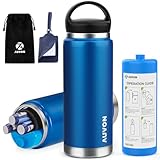
Overview: The AUVON Large Insulin Pen Cooler represents the high-end spectrum of diabetic travel solutions, featuring vacuum-insulated stainless steel construction that maintains 2-26℃ temperatures for up to 44 hours. With capacity for 3-7 insulin pens or 28 vials, it’s designed for extended travel and daily management. The external dimensions are 3.4" diameter × 10.4" height, featuring a portable handle, medical tag, and innovative anti-freezing drawstring velvet bag that prevents medications from freezing while cushioning against impact.
What Makes It Stand Out: The 44-hour cooling duration is exceptional, far exceeding standard gel-pack systems. The stainless steel vacuum insulation technology mirrors high-end thermos designs, providing consistent temperature control regardless of external conditions. The anti-freezing drawstring bag is a unique innovation that addresses a critical risk—medication freezing—in cold climates or over-cooled environments. The included medical tag streamlines TSA security checks, while the large capacity accommodates multiple medication types for users with complex regimens.
Value for Money: At $25.19, this premium cooler justifies its price through superior engineering and extended performance. While significantly more expensive than basic fabric cases, it eliminates the need for multiple ice packs and provides multi-day reliability that cheaper alternatives cannot match. For international travelers, outdoor enthusiasts, or those in extreme climates, the investment protects far more expensive medications. The durability of stainless steel construction ensures years of service, amortizing the cost over time.
Strengths and Weaknesses: Pros: Exceptional 44-hour cooling; stainless steel vacuum insulation; large capacity (3-7 pens); anti-freezing protection bag; TSA approved with medical tag; portable handle; protects against freezing and overheating; robust construction. Cons: Premium price point; cylindrical shape may not fit all bags; 3.4" diameter takes up space; overkill for short daily trips; requires 6-hour freeze time; heavier than fabric alternatives.
Bottom Line: The AUVON cooler is the ultimate solution for extended travel, extreme climates, and users needing maximum capacity and duration. Its vacuum insulation and anti-freezing features provide unparalleled medication protection. While excessive for casual daily use, it’s indispensable for international flights, camping, or situations where reliable multi-day cooling is non-negotiable. For serious travelers, the premium price is justified by medication safety and elimination of cooling anxiety.
10. YOUSHARES Insulin Cooler Travel Case with Temperature Display - Refrigerated Medicine Cooling Bag with 2 TSA Approved Ice Pack, Medication Pen Diabetic Supplies Organizer for Trip and Daily

Overview: The YOUSHARES insulin cooler distinguishes itself with a built-in Fahrenheit temperature display, offering real-time monitoring of internal conditions. Measuring 8.5 x 3.5 x 2.3 inches and weighing only 0.6 lbs, it balances portability with practical capacity. The case uses PU, EVA, and aluminum foil materials for insulation, maintaining optimal temperatures for 6-8 hours using two included TSA-approved ice packs. This mid-priced option targets users who want visibility into their medication’s environment without premium cooler costs.
What Makes It Stand Out: The temperature display eliminates guesswork and provides peace of mind—a feature typically found in $30+ coolers. This digital monitoring allows users to verify cooling performance and know precisely when ice packs need replacement. The compact 0.6 lb weight makes it one of the lightest full-featured cases available. The combination of PU and EVA materials offers robust impact protection alongside thermal insulation, addressing both physical and temperature-related risks during travel.
Value for Money: At $14.99, this cooler hits the sweet spot between basic cases and premium options. The temperature display alone adds significant value, preventing medication waste from uncertainty about cooling efficacy. Two TSA-approved ice packs and the display feature make it competitive with $20-25 alternatives. For users wanting monitoring capabilities without investing in stainless steel systems, it offers excellent feature-to-price ratio for daily commutes and moderate travel.
Strengths and Weaknesses: Pros: Real-time temperature display; lightweight (0.6 lbs); TSA-approved ice packs included; 6-8 hour cooling duration; compact yet spacious; PU/EVA impact protection; affordable monitoring solution; easy to pack. Cons: Temperature display requires battery; shorter duration than premium options; only two ice packs; display could malfunction; no anti-freezing protection; limited color options.
Bottom Line: The YOUSHARES cooler is ideal for users who prioritize temperature visibility and portability at a reasonable price. Its display feature provides confidence during travel and daily use, making it perfect for fly travel, road trips, and active lifestyles. While not designed for multi-day excursions, it excels at short-to-moderate duration cooling with the added benefit of monitoring. For diabetics wanting assurance without premium costs, this case delivers exceptional practical value.
Why Temperature Control Matters for Insulin Travel
Insulin isn’t just another medication—it’s a delicate protein hormone that begins degrading the moment it leaves its controlled manufacturing environment. Travel amplifies this vulnerability exponentially, exposing your supply to conditions that can render it ineffective within hours.
The Science Behind Insulin Degradation
Insulin molecules maintain their therapeutic structure only within specific temperature ranges, typically between 36°F and 46°F (2°C to 8°C) for unopened vials, and room temperature below 86°F (30°C) for in-use insulin. When temperatures exceed these thresholds, the protein chains begin breaking down, creating a gradual loss of potency that’s invisible to the naked eye. This degradation accelerates exponentially in hot environments—insulin left in a car on a sunny day can lose significant effectiveness within 30 minutes. The danger isn’t just warmth; freezing temperatures below 32°F (0°C) cause irreversible crystal formation that permanently damages the insulin structure. Travel organizers with cooling gel packs work by creating a thermal buffer, absorbing excess heat during warm periods and releasing stored coldness gradually to prevent temperature spikes.
Real-World Temperature Challenges During Travel
Consider the typical airport experience: you move from climate-controlled terminals to hot jet bridges, then into potentially unregulated cargo holds or overhead bins where temperatures can vary by 40°F within minutes. Road trips present their own challenges—your medication might sit in a hot glove compartment, a sunny dashboard, or a hotel room mini-fridge with unreliable cooling. Even train travel exposes supplies to inconsistent climate control between cars. These aren’t hypothetical scenarios; they’re everyday realities that can compromise your insulin without you realizing it until your blood glucose readings start climbing unexpectedly. A quality travel organizer acts as your personal pharmaceutical-grade environment, maintaining stability regardless of external chaos.
Understanding Cooling Gel Pack Technology
Cooling gel packs represent the heart of any effective insulin travel system, yet their technology remains misunderstood by many users. These aren’t simply frozen water bags; they’re engineered thermal management devices designed specifically for medical applications.
How Gel Packs Work for Medication Cooling
Medical-grade gel packs contain phase-change materials (PCMs) or specialized polymer gels that absorb and release thermal energy at specific temperatures. Unlike ice that melts at 32°F and risks freezing your insulin, these gel packs are formulated to maintain temperatures safely above freezing while staying cooler than ambient conditions. They work through latent heat absorption—pulling thermal energy from the surrounding environment as the gel transitions from solid to liquid state. The best packs maintain a stable temperature plateau for 12-24 hours, creating a consistent microclimate rather than a steadily warming environment. This technology ensures your insulin stays within its safe range without the freeze-thaw cycles that damage medication.
Reusable vs. Single-Use Gel Packs
Reusable gel packs dominate the insulin travel market for good reason. These durable pouches can be frozen hundreds of times without degrading, making them economical and environmentally responsible for frequent travelers. They typically require 8-12 hours of freezer time to reach optimal temperature and often feature leak-proof, puncture-resistant casings. Single-use packs, activated by squeezing an internal pouch to initiate a chemical cooling reaction, serve as emergency backups rather than primary solutions. While convenient for unexpected travel delays, they provide shorter cooling durations (4-6 hours) and generate more waste. Most seasoned travelers keep one reusable pack as their primary cooler and stash a single-use option in their luggage as insurance against unforeseen circumstances.
TSA and Airline Regulations for Gel Packs
Navigating airport security with cooling gel packs requires understanding specific regulations that differ from standard liquid restrictions. The TSA allows medically necessary gel packs in carry-on bags regardless of their frozen or liquid state, provided you declare them as medical supplies. However, individual agents may request additional screening, so always keep your insulin and supplies in their original pharmacy packaging with prescription labels. For international travel, carry a doctor’s note explaining your medical necessity in multiple languages. Some airlines have additional requirements—certain carriers require gel packs to be completely frozen at security, while others accept partially thawed packs. Always check your specific airline’s medical device policy 48 hours before departure and arrive at security with your supplies easily accessible for inspection.
Key Features to Look for in Insulin Travel Organizers
The difference between a basic cooler bag and a purpose-built insulin organizer lies in dozens of design details that directly impact medication safety and travel convenience.
Insulation Quality and Materials
Premium organizers utilize multi-layer insulation systems rather than single-layer foam. Look for reflective thermal barriers (similar to space blanket technology) that radiate heat away, combined with dense closed-cell foam that prevents thermal bridging. The interior should feature food-grade, antimicrobial linings that won’t absorb moisture or harbor bacteria. Avoid organizers with exposed metal zippers or hardware inside the compartment—these create cold bridges that transfer external temperatures directly to your medication. The best designs incorporate thermal breaks at all potential leakage points, essentially creating a miniature pharmaceutical-grade shipping container.
Capacity and Storage Configuration
Your organizer must accommodate not just insulin, but the entire ecosystem of diabetes management: pen needles, syringes, test strips, glucose meters, lancets, backup batteries, and emergency glucose sources. Effective organizers feature modular dividers that let you customize compartment sizes while preventing items from shifting during transit. Consider how many vials or pens you need for your trip duration plus a 50% safety margin. Some designs include dedicated slots for used needle disposal, keeping biohazards separate from clean supplies. The ideal configuration positions gel packs in separate sleeves away from direct medication contact, preventing accidental freezing while maximizing cooling efficiency.
Durability and Protective Design
Travel subjects your organizer to crushing forces in overhead bins, drops onto hard surfaces, and compression under heavy luggage. High-quality cases employ rigid panels in walls and lids that prevent collapse while remaining lightweight. Water-resistant or waterproof exteriors protect against spills and rain, while reinforced corners absorb impact. Examine the stitching—double-stitched seams with binding tape indicate professional construction that won’t split under stress. The closure system matters immensely; YKK zippers with lockable pulls offer security and reliability that cheap plastic zippers can’t match. Remember, this case protects medication worth hundreds of dollars and, more importantly, your health stability.
Portability and Size Considerations
The perfect organizer balances capacity with practical portability. A case that’s too large becomes a burden you’ll eventually leave behind; too small and you’ll cram supplies, potentially damaging them. Consider your typical travel mode: frequent flyers need compact cases that fit in personal items, while road warriors might prioritize larger kits that stay in vehicles. Weight distribution affects comfort—organizers with padded handles and adjustable shoulder straps reduce fatigue during long terminal walks. Some designs include trolley sleeves that slide over rolling luggage handles, freeing your hands for other tasks. Always measure your organizer against airline personal item dimensions to avoid gate-check surprises.
Temperature Monitoring Capabilities
Advanced organizers now integrate temperature sensors and data loggers that provide real-time feedback on internal conditions. These systems range from simple color-changing strips that indicate safe/unsafe conditions to Bluetooth-enabled monitors that send alerts to your smartphone if temperatures drift outside safe ranges. While not essential for everyone, these features prove invaluable for travel to extreme climates or when transporting large insulin supplies. Look for monitors with replaceable batteries and calibration certificates. Some premium systems even include backup power banks to ensure continuous monitoring during long journeys. At minimum, your organizer should have a transparent pocket where you can place a separate thermometer for visual checks.
Types of Insulin Travel Organizers
The market segments into distinct categories based on travel duration, capacity needs, and lifestyle integration. Understanding these categories helps narrow your search to options that genuinely fit your routine.
Compact Pen Cases for Daily Outings
These palm-sized organizers hold 1-2 insulin pens, a few needles, and a gel pack, designed for day trips, commutes, or restaurant dining. They slip easily into purses, backpacks, or briefcases without adding bulk. While insufficient for multi-day travel, they excel at protecting your current pen from temperature extremes during daily activities. Many feature quick-access designs that let you retrieve supplies without fully opening the case—ideal for discreet public use. The best models include a small mesh pocket for alcohol swabs and a secure elastic loop to prevent pen movement.
Medium Travel Kits for Weekend Trips
Sized for 2-5 days of supplies, these organizers strike the optimal balance for most travelers. They typically accommodate 2-4 insulin pens or vials, multiple gel packs, and a full complement of testing supplies. External pockets provide quick access to glucose tablets and emergency information, while internal organization keeps everything visible and secure. These kits fit comfortably in carry-on luggage, under airplane seats, or in hotel room mini-fridges. Look for models with removable inner pouches that let you grab just what you need for day excursions without repacking the entire kit.
Large Organizers for Extended Travel
Two-week vacations or international relocations demand substantial capacity without sacrificing portability. These organizers resemble small medical bags, featuring multiple compartments that separate insulin from other supplies and keep used sharps isolated. They often include 3-4 gel pack slots for extended cooling redundancy and may incorporate USB-powered cooling backups for locations with unreliable electricity. While bulkier, they should still qualify as personal items on most airlines. The best designs distribute weight evenly and include multiple carrying options—backpack straps, shoulder straps, and handles—to adapt to different travel scenarios.
All-in-One Diabetes Management Bags
For travelers who prefer a single bag for all diabetes and personal items, these hybrid organizers combine insulin cooling with laptop sleeves, document pockets, and general storage. They function as your primary carry-on, eliminating the need to juggle multiple bags. The diabetes section remains thermally isolated from the main compartment, protecting supplies from body heat and external temperatures. These work exceptionally well for business travelers who need professional appearance alongside medical functionality. However, their larger size means more thorough security screening, so choose models with clearly marked medical compartments and easy-access insulin sections.
Travel-Specific Considerations
Different travel modes introduce unique challenges that your organizer must address. A solution perfect for road trips might fail miserably during international flights.
Flying with Insulin and Cooling Gel Packs
Air travel presents the most complex scenario for insulin safety. Never check your insulin—cargo holds experience extreme temperatures and pressure changes that can destroy medication. Your organizer must fit under the seat in front of you, as overhead bin temperatures vary wildly during flight. Pack gel packs frozen solid, but be prepared for them to thaw partially during long flights—this is normal and still effective. Keep a copy of TSA guidelines printed and ready, along with your prescriptions. Consider packing a backup supply in a separate, smaller case that stays with you at all times, in case your main bag gets gate-checked. Some travelers pack a small, empty collapsible cooler to transfer supplies into upon arrival while leaving the main organizer in their hotel room.
Road Trip Strategies for Medication Safety
Vehicle travel offers more control but introduces its own hazards. Never leave your organizer in a parked car, even with gel packs—internal car temperatures can exceed 140°F within minutes. Instead, treat your organizer like a pet: take it with you whenever you exit the vehicle. For long drives, rotate gel packs between your organizer and a dedicated car cooler powered by the cigarette lighter. These electric coolers maintain consistent temperatures without relying solely on gel packs. Plan your route around pharmacy locations where you can purchase emergency supplies if needed. Keep digital and physical copies of your prescriptions accessible, and program your doctor’s contact information into your phone with international dialing codes if crossing borders.
International Travel and Climate Adaptations
Crossing time zones, climates, and regulatory boundaries demands extra preparation. Research your destination’s insulin availability—brand names and formulations differ globally. Pack a translation card explaining your medical condition and supplies in the local language. For tropical destinations, increase your gel pack count and consider organizers with reflective white exteriors that deflect solar radiation rather than absorbing it. In cold climates, keep your organizer inside your jacket when moving between locations to prevent freezing. Some countries have strict laws about importing medical supplies; carry documentation from your embassy and consider registering your supplies with customs before departure. Voltage differences affect charging capabilities for electronic monitors, so pack universal adapters and voltage converters.
Proper Usage and Maintenance
Even the most advanced organizer fails without proper preparation and care. Developing systematic routines ensures consistent protection across all your journeys.
Preparing Your Gel Packs for Travel
Freeze gel packs flat for at least 12 hours before departure—this ensures even cooling and prevents air pockets that reduce efficiency. Stack them with parchment paper between each pack to prevent sticking. Pre-cool your empty organizer in the refrigerator for 30 minutes before packing; this reduces initial thermal load on the gel packs. Wrap insulin pens or vials in a thin cloth before placing them near gel packs, creating a thermal buffer that prevents accidental freezing. Pack gel packs along the walls of the organizer rather than in direct contact with medication, allowing convection currents to distribute cool air evenly. For maximum duration, include one more gel pack than the manufacturer recommends—the slight overcapacity extends cooling time significantly.
Maximizing Cooling Duration
Your organizer’s performance depends heavily on how you manage it during travel. Keep it closed as much as possible—each opening releases cooled air and introduces warm air. When accessing supplies, plan ahead and retrieve everything you need in one quick motion. Store the organizer in the coolest available location: under airplane seats, in hotel room closets away from windows, or in the center of your suitcase surrounded by clothes for insulation. In extreme heat, wrap the exterior in a light-colored towel for additional reflectivity. If your organizer includes a temperature monitor, check it discreetly rather than opening the case. Some travelers place a small, sealed ice pack on top of their closed organizer during particularly hot days, providing supplemental cooling without direct contact.
Cleaning and Caring for Your Organizer
Post-travel maintenance extends your organizer’s lifespan and prevents contamination. Remove all supplies and gel packs, then wipe the interior with a solution of mild soap and water—avoid harsh disinfectants that can degrade insulation materials. Let it air dry completely with the lid open for 24 hours to prevent mold growth in seams. Clean gel packs with disinfectant wipes, checking for leaks or swelling that indicate replacement is needed. Store gel packs flat in your freezer, not crammed into corners where they can develop creases that reduce cooling efficiency. Inspect zippers monthly, applying a small amount of beeswax to keep them running smoothly. Replace your organizer every 2-3 years or immediately if the insulation becomes compressed or the exterior shows significant wear—compromised thermal protection often isn’t visible until it’s too late.
Troubleshooting Common Issues
Despite best preparations, problems arise. Knowing how to respond prevents minor issues from becoming medical crises.
What to Do If Your Gel Pack Fails
Discovering a leaking or non-functional gel pack mid-journey requires immediate action. First, assess your insulin—if it feels cool to the touch and hasn’t been exposed to extreme temperatures, it may still be viable. Transfer it to the hotel mini-fridge if available, or purchase a bag of ice to create a temporary cooling environment (keeping insulin in a sealed plastic bag to avoid water damage). Contact local pharmacies for replacement gel packs; many sell them for shipping medical specimens. In emergencies, ask restaurants or hotels for frozen peas or ice packs—these work temporarily but risk freezing, so monitor temperatures carefully. Always travel with a backup plan: keep one pen in your pocket for immediate use and know the location of the nearest pharmacy that stocks your insulin type.
Handling Unexpected Temperature Extremes
Sometimes travel throws curveballs—flight delays in hot terminals, hotel air conditioning failures, or transportation breakdowns in desert climates. When ambient temperatures soar above 95°F, your standard gel pack setup may struggle. Improvise additional insulation by wrapping your organizer in layers of clothing or towels, creating a thermal mass that slows heat transfer. Seek out air-conditioned spaces like airport lounges, shopping malls, or hospital waiting rooms where you can periodically cool down your supplies. If traveling by car in extreme heat, run the air conditioning at maximum for 15 minutes before placing your organizer inside, pre-cooling the vehicle’s interior. In freezing conditions, keep your organizer against your body warmth when possible, and never leave it in vehicles overnight. The human body provides remarkably stable temperature regulation in cold environments.
Cost vs. Value Analysis
Price points for insulin travel organizers span from budget-friendly pouches to premium systems costing hundreds of dollars. Understanding what you’re actually paying for helps allocate your budget effectively.
Budget-Friendly Options
Entry-level organizers ($20-40) typically feature basic insulation, single gel packs, and simple construction. While adequate for short trips in moderate climates, they often lack durability for frequent travel. Their foam insulation compresses over time, reducing effectiveness. However, they serve as excellent backup cases or for those new to diabetes travel who want to test systems before investing heavily. Look for budget options with replaceable gel packs and at least double-stitched seams. Avoid organizers with no stated R-value or thermal resistance rating—these are essentially lunch bags with medical branding. For occasional travelers in temperate regions, a well-chosen budget organizer plus careful planning can provide sufficient protection.
Premium Features Worth the Investment
High-end organizers ($80-200) justify their cost through superior materials, engineering, and longevity. They maintain consistent temperatures 2-3 times longer than budget options, use gel packs with certified PCM formulations, and include features like integrated monitoring and modular interiors. The durability means they last for years of heavy travel, spreading the cost over hundreds of trips. For frequent flyers, business travelers, or those visiting extreme climates, premium organizers offer peace of mind that directly impacts health outcomes. Consider the cost of replacing even one vial of insulin—often $300+ without insurance—and the investment in a premium organizer becomes financially sound insurance. Features like TSA-preapproved designs that speed through security and lifetime warranties add value that transcends the initial price tag.
Making Your Final Decision
With countless options available, narrowing down to the perfect organizer requires honest assessment of your specific needs rather than chasing the most expensive or popular model.
Assessing Your Personal Travel Profile
Create a travel log for one month, noting every trip duration, destination climate, transportation mode, and supply quantity needed. This data reveals patterns: perhaps you take mostly 3-day domestic flights, or monthly 8-hour road trips to visit family. Match organizer capacity to your 90th percentile trip—buying for your longest typical journey ensures you’re prepared without overbuying. Consider your dexterity needs; if you have neuropathy or vision issues, prioritize organizers with large, easy-grasp zippers and high-contrast interior colors. Evaluate your tech comfort level—Bluetooth monitors add complexity some travelers prefer to avoid. Your ideal organizer complements your existing routines rather than forcing behavioral changes.
Creating a Travel Checklist
Develop a standardized packing protocol that eliminates guesswork and reduces pre-travel anxiety. Your checklist should include: pre-freezing gel packs 12+ hours, pre-cooling the organizer, counting supplies with the 50% buffer rule, printing prescriptions and doctor’s notes, checking TSA/airline policies, charging temperature monitors, and packing backup single-use gel packs. Laminate a small copy of this checklist and keep it inside your organizer, using it every time you repack. This systematic approach ensures consistent preparation regardless of trip urgency or stress levels. Over time, this checklist becomes second nature, transforming travel from a source of worry into a manageable routine.
Frequently Asked Questions
How long do cooling gel packs actually keep insulin cold?
Quality medical-grade gel packs maintain safe temperatures for 12-24 hours depending on ambient conditions, organizer insulation, and how frequently you open the case. In moderate 70°F environments with minimal access, expect 18-20 hours of effective cooling. Extreme heat above 90°F reduces duration to 8-12 hours. Always pack extra gel packs for trips exceeding 12 hours or hot destinations.
Can I bring my insulin travel organizer through TSA security?
Yes, insulin and cooling gel packs are permitted in carry-on luggage under medical exemptions. Declare them to the TSA officer and keep insulin in original pharmacy packaging with prescription labels. Gel packs can be frozen, partially thawed, or liquid—medical necessity overrides standard liquid restrictions. A doctor’s note, while not legally required, significantly smooths the screening process.
What happens if my insulin freezes during travel?
Frozen insulin must be discarded. The freezing process creates ice crystals that permanently damage insulin’s molecular structure, rendering it ineffective. If you suspect freezing, examine the vial—cloudiness, clumping, or crystallization indicates damage. Never use insulin that has been frozen, even if it thaws and appears normal. This is why cooling gel packs are formulated to stay above freezing temperatures.
How many insulin pens or vials should I pack for a week-long trip?
Pack double what you normally use. For a week-long trip requiring one pen, bring two plus a third as emergency backup. This accounts for potential loss, damage, or unexpected travel delays. Store supplies in two separate locations—your primary organizer and a smaller backup case—to protect against theft or misplacement.
Are cooling gel packs reusable indefinitely?
Most medical-grade gel packs last 2-3 years or 200+ freeze-thaw cycles with proper care. Replace them when you notice swelling, leaks, or reduced cooling duration. Store flat in the freezer to prevent material fatigue. Mark the purchase date on each pack with permanent marker to track their lifespan.
Can I use regular ice packs instead of medical-grade gel packs?
Regular ice packs risk freezing insulin and create condensation that can damage supplies. Medical-grade gel packs are formulated to maintain specific temperature ranges safe for medication. In emergencies, ice packs work temporarily if you wrap insulin in multiple insulating layers and monitor temperatures closely, but they shouldn’t replace purpose-designed gel packs for regular travel.
Do I need a prescription to purchase insulin travel organizers?
No, insulin travel organizers and cooling gel packs are over-the-counter medical accessories available without prescriptions. However, carrying documentation of your diabetes diagnosis and insulin prescriptions helps when traveling internationally or dealing with security questions.
How do I handle insulin storage during multi-leg flights?
Keep your organizer with you at all times, never checking it. During layovers, find air-conditioned areas like airline lounges or restaurants to minimize heat exposure. If your layover exceeds 4 hours, consider asking flight attendants to store your organizer in the aircraft’s medical supply refrigerator during the next flight segment—many airlines accommodate this request.
What temperature should my hotel room mini-fridge be set to for insulin storage?
Set mini-fridges to the middle setting (typically 37-40°F) and verify with a thermometer after 2 hours. Many hotel fridges freeze at maximum settings. Never store insulin in the door where temperatures fluctuate. Place your organizer inside the fridge with the lid open to maintain consistent temperature while keeping supplies protected.
Can insulin travel organizers protect against heat and cold simultaneously?
Yes, quality organizers provide thermal buffering in both directions. The insulation prevents rapid temperature changes, while gel packs maintain a stable cool zone that protects against heat. In cold environments, the insulation prevents freezing by slowing heat loss from your supplies. However, in freezing conditions, keep your organizer close to your body or in heated areas, as prolonged extreme cold can overwhelm the insulation.'