When you’re staring down into the blue depths of a glacier crevasse, every gram on your rack transforms from a number on a spec sheet into a critical decision point. The difference between a swift, efficient rescue and an exhausting ordeal often comes down to the gear you’ve chosen to carry—and nowhere is this more evident than in your pulley selection. In the ultralight mountaineering world, where the 3-ounce mark represents a crucial threshold between “acceptable” and “exceptional,” understanding the nuances of lightweight rescue pulleys isn’t just gearhead trivia; it’s essential knowledge that could save a life.
The evolution of crevasse rescue rigging has pushed manufacturers to engineer miracles of strength-to-weight ratio, but not all ultralight pulleys are created equal. Some sacrifice efficiency for savings, while others hide their weight in ways that compromise real-world performance. This guide dives deep into what separates a true rescue-grade pulley from mere weight-saving gimmicks, exploring the materials, design philosophies, and performance characteristics that matter when you’re building a system 200 feet above your partner.
Top 10 Lightweight Pulleys for Crevasse Rescue
Detailed Product Reviews
1. SMC CRX 1" Crevasse Rescue Pulley, Orange - 157303

Overview: The SMC CRX is a purpose-built crevasse rescue pulley designed for alpine climbers and mountaineers who prioritize emergency preparedness. Weighing a mere 52 grams yet rated to 22kN breaking strength, this compact device balances minimal weight with reliable performance. Its 1-inch sheave and specialized design make it ideal for constructing 2:1 C-systems and 3:1 Z-systems when seconds count in glacier travel emergencies.
What Makes It Stand Out: The prusik-minding base plate is the standout feature, preventing knot jamming during hauling operations—a critical advantage under stress. Solid side plates block debris and rope snags while accommodating prusik cords up to 8mm and ropes up to 13mm. The vibrant orange anodizing ensures high visibility in snow conditions or when rummaging through a pack, making it instantly identifiable during crisis situations.
Value for Money: At $19.95, the CRX sits squarely in the standard range for specialized rescue pulleys. While generic pulleys cost less, they lack the prusik-minding geometry and compact profile essential for efficient crevasse extraction. For glacier travelers, this is insurance, not luxury—comparable rescue pulleys from competitors like Petzl or CAMP command similar premiums.
Strengths and Weaknesses: Strengths: Ultralight construction; purpose-built for rescue systems; prusik-minding design prevents failures; compact enough for harness carry; excellent strength-to-weight ratio; high-visibility color. Weaknesses: Single sheave offers less mechanical efficiency than double pulleys; limited to 13mm ropes may exclude some static lines; premium price over general-use pulleys; 1-inch sheave creates more rope bend than larger models.
Bottom Line: Essential gear for serious glacier travel. The specialized design justifies every penny and every gram for those who venture onto crevassed terrain. Not for general rigging, but unbeatable for its intended purpose.
2. SMC CRX 1" Crevasse Rescue Pulley, Black - 157307
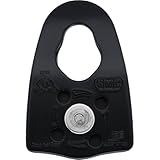
Overview: Identical in performance to its orange sibling, the black SMC CRX delivers the same 52-gram, 22kN-rated crevasse rescue capability in a stealthier package. Designed for mountaineers and alpine guides who prefer tactical minimalism, this pulley integrates seamlessly into any harness kit without visual distraction while maintaining the critical prusik-minding geometry that defines the CRX series.
What Makes It Stand Out: The anodized black finish appeals to military, law enforcement, and climbers who prioritize low-profile aesthetics. Functionally, it shares the same anti-jam base plate that keeps prusik knots from seizing during Z-system hauls, and solid side plates that protect against snow, ice, and equipment interference. The neutral color reduces glare in bright alpine environments.
Value for Money: Priced at $19.95, you’re paying for identical engineering as the orange version—color is purely preference. The value proposition remains strong for crevasse rescue applications, though budget-conscious buyers might question paying premium prices for aesthetics. For professionals requiring color-coded systems or discreet gear, the option is worthwhile.
Strengths and Weaknesses: Strengths: Same ultralight rescue-optimized design; prusik-minding functionality; compact harness-ready size; solid debris-blocking plates; accommodates 8mm prusik cord and 13mm ropes; professional appearance. Weaknesses: Lower visibility in snow or dim conditions; identical limitations to orange model (single sheave efficiency, rope diameter restrictions); no functional improvement for the color change; premium pricing versus utility pulleys.
Bottom Line: Choose black for preference, not performance. Ideal for users who value discretion or have color-coded rack systems. Functionally identical to the orange version—your decision should be based on visibility needs and personal style.
3. SMC CRX Crevase Rescue Pulley, Blue - Part 157300/157301

Overview: The blue SMC CRX variant completes the color trifecta of this specialized rescue line, offering the same 52-gram, 22kN performance benchmark. Explicitly detailing its stainless steel axle and lightweight nylon sheave construction, this version emphasizes the premium materials that deliver exceptional efficiency in mechanical advantage systems for glacier travel and technical rescue scenarios.
What Makes It Stand Out: The blue anodizing provides a middle-ground visibility option—more noticeable than black, less glaring than orange. The stainless steel axle ensures durability in corrosive alpine environments while the nylon sheave reduces weight without sacrificing strength. The prusik-minding side plates are specifically engineered for 3:1 Z-haul systems, making this a textbook companion for crevasse extraction protocols.
Value for Money: At $19.95, it matches its siblings in price while offering the same rescue-specific engineering. The explicit material specification confirms you’re getting professional-grade hardware. For glacier travelers building redundant systems, the color variety allows gear segregation (e.g., blue for main system, orange for backup) without mixing models.
Strengths and Weaknesses: Strengths: Premium stainless steel axle resists corrosion; lightweight nylon sheave optimizes efficiency; prusik-minding design for 3:1 systems; compact and pocketable; 22kN strength in 52g package; color option for system organization. Weaknesses: Single sheave limitations persist; 13mm max rope diameter; premium price for single-purpose tool; blue may fade with heavy UV exposure; no performance gain over other CRX colors.
Bottom Line: Perfect for glacier travelers wanting color-coded systems or those who prefer blue’s visibility balance. The confirmed material specs assure quality. Functionally interchangeable with other CRX models—buy for organizational strategy or color preference.
4. Azarxis Climbing Pulley 26kN Fixed Plate Aluminum Alloy Rope Pulley Small Micro for Rescue Climbing Hauling Zipline Rigging Rappelling Heavy Duty (Black - 26 kN)

Overview: The Azarxis micro pulley delivers impressive 26kN strength in a budget-friendly package for climbers and riggers. Machined from aerospace-grade 7075 aluminum with a 21mm sheave, this 3.17-ounce device offers versatility beyond rescue applications. Its fixed-plate design and anodized black finish make it suitable for hauling, rappel setups, zip lines, and even aerial yoga, broadening its appeal beyond technical mountaineering.
What Makes It Stand Out: The price-to-performance ratio is exceptional—delivering higher rated strength (26kN) than premium rescue pulleys at a fraction of the cost. CE certification provides legitimacy for safety-conscious users. The compact 1.73" x 3.2" profile fits anywhere, while the 7075 alloy construction ensures durability. Its versatility across multiple disciplines (rescue, tree work, cargo hauling) makes it a true multi-tool.
Value for Money: At $12.99, this is outstanding value—roughly 35% less than specialized rescue pulleys while offering greater rated strength. For recreational climbers, weekend warriors, or those building haul systems on a budget, it’s hard to justify spending more. However, the “generic” design lacks crevasse-specific optimizations.
Strengths and Weaknesses: Strengths: Exceptional price; 26kN rating exceeds many competitors; versatile multi-sport applications; lightweight 7075 construction; CE certified; smooth 21mm sheave; accommodates 12mm ropes. Weaknesses: No prusik-minding feature limits crevasse rescue efficiency; fixed plates complicate mid-line installation; brand lacks rescue-specific reputation; no mention of bearing type (likely bushing); 12mm max rope diameter slightly restrictive.
Bottom Line: Best budget option for general climbing and hauling. The strength rating and price are unbeatable for most applications. For dedicated glacier travel, spend more for prusik-minding design. For everything else, this is a smart buy.
5. GM CLIMBING Black Large Rescue Pulley 32kN Single Sheave with Swing Plate CE UIAA Certified

Overview: The GM CLIMBING rescue pulley is a professional-grade workhorse designed for serious rescue operations, tower work, and heavy-load hauling. With a massive 32kN rating and 2.28-inch sheave, this pulley prioritizes efficiency and ease of use over ultralight minimalism. The swing plate design allows rapid rope installation without detaching from the anchor—a crucial time-saver in technical rescue scenarios.
What Makes It Stand Out: The combination of ball bearings, swing side plate, and UIAA/CE certification places this in the professional tier. The large sheave dramatically reduces rope friction and wear during extended hauls, while multiple attachment points enable complex mechanical advantage systems. At 32kN, it handles loads that would destroy lesser pulleys, making it ideal for industrial applications, mountain rescue, and serious expedition use.
Value for Money: At $36.95, this is a premium investment, but justified for professional users. The efficiency gains from ball bearings and the large sheave translate to real energy savings during prolonged operations. For occasional recreational use, it’s overkill; for ski patrol, rescue teams, or expedition leaders, it’s cost-effective reliability.
Strengths and Weaknesses: Strengths: Highest-in-class 32kN rating; ball bearing efficiency; swing plate for rapid rigging; large 2.28" sheave reduces rope wear; UIAA/CE certified; accommodates 16mm ropes; multiple anchor points; professional durability. Weaknesses: Significantly heavier and bulkier than alpine pulleys; overkill for casual glacier travel; premium price; not optimized for prusik-minding; may be too large for some harness gear loops.
Bottom Line: Professional-grade excellence for rescue teams and heavy haulers. The efficiency and strength justify the weight and cost for frequent, critical use. Over-engineered for weekend warriors but indispensable for those who haul people, not just gear. Choose this when failure is not an option.
6. Fusion Climb Strux Aluminum Rescue Side Swing Pulley Matte Blue 34KN (FP-8152-BLU)

Overview: The Fusion Climb Strux Aluminum Rescue Pulley delivers solid performance for recreational climbers and rescue trainees seeking reliable rope management without premium pricing. This matte blue single sheave pulley boasts a 34kN rating and features side-swing cheeks that simplify rope installation mid-system. Constructed from aerospace aluminum alloy, it balances weight savings with durability for frequent use in top-rope setups, light hauling, and emergency scenarios.
What Makes It Stand Out: The side-swing cheek design is the star feature, allowing tool-free rope changes while maintaining secure dual-frame construction. Smooth rotating sheaves mounted on aluminum rivet pins minimize friction and rope wear, extending equipment lifespan. The generously sized eyelet accommodates multiple carabiners or anchor configurations, making it versatile for complex rigging situations where flexibility matters.
Value for Money: At $24.25, this pulley sits in the sweet spot between budget hardware store options and professional rescue gear. You get rescue-appropriate strength (34kN) and thoughtful design features typically found on more expensive models. While lacking formal certifications, the build quality exceeds what’s needed for most recreational applications, making it a smart investment for climbing clubs and outdoor programs.
Strengths and Weaknesses: Strengths include lightweight construction, innovative side-swing access, smooth operation, and excellent rope compatibility. The large eyelet enhances rigging versatility. Weaknesses include no mentioned CE/UIAA certification, limiting professional use, and the single sheave design requires additional pulleys for mechanical advantage systems.
Bottom Line: This pulley excels for climbers building their first rescue kit, instructors teaching rope systems, or anyone needing reliable performance on a budget. The side-swing feature alone justifies the price, though professionals should verify certification requirements.
7. GM CLIMBING 40kN Micro Double Pulley Prusik Minding Ball Bearing UIAA CE for Progress Capture System Rigging Hauling Rescue Arborist Tree Climbing (Pack of 2)

Overview: The GM CLIMBING 40kN Micro Double Pulley set represents professional-grade hardware for serious rescue technicians and mountaineers. This twin-pack enables construction of compact 4:1 or 5:1 mechanical advantage systems in a package smaller than many single pulleys. CE and UIAA certifications validate its 40kN breaking strength, making it suitable for the most demanding vertical environments where failure isn’t an option.
What Makes It Stand Out: The Prusik-minding side plates with flat bottoms automatically capture progress, eliminating manual rope grabs in hauling systems. Ball bearings deliver exceptional efficiency, reducing operator fatigue during extended rescues. The integrated becket simplifies 4:1 configurations by providing a dedicated attachment point, reducing hardware clutter. Swing-open side plates enable mid-line installation without threading rope ends—a critical time-saver in emergencies.
Value for Money: At $78.95 for two certified pulleys, this set offers outstanding value for professionals. Comparable certified double pulleys often exceed $50 each, making this package economically attractive for rescue teams and guides. The durability and certified safety margins justify the investment over uncertified alternatives, potentially reducing liability and ensuring compliance with industry standards.
Strengths and Weaknesses: Strengths include top-tier certifications, Prusik-minding functionality, ball bearing efficiency, compact design, and the integrated becket. The 12mm rope maximum covers most applications. Weaknesses include premium pricing that may deter casual users, and the micro size, while portable, offers less sheave diameter than full-sized rescue pulleys, slightly increasing rope bend friction.
Bottom Line: These pulleys are essential for rescue professionals, mountain guides, and serious climbers prioritizing certified safety and system efficiency. The price reflects professional-grade reliability that casual users may not need, but for critical applications, they’re worth every dollar.
8. GM CLIMBING Red Large Rescue Pulley 32kN Single Sheave with Swing Plate CE UIAA Certified

Overview: The GM CLIMBING Red Large Rescue Pulley combines professional certifications with a substantial 2.28-inch sheave for efficient heavy-load hauling. Rated at 32kN with CE/UIAA approval, this single sheave pulley targets mountain rescue teams, tower workers, and ski patrols requiring reliable block-and-tackle systems. The large diameter significantly reduces rope friction and wear compared to micro pulleys, making it ideal for repeated heavy lifting scenarios.
What Makes It Stand Out: The oversized sheave is the defining feature, creating less acute rope bends that preserve rope strength and reduce pulling effort. Ball bearings ensure smooth rotation under load, while swing plates facilitate rapid rope installation without disassembling anchor systems. The 32kN rating provides ample safety margin for rescue operations, and compatibility with ropes up to 16mm covers virtually all climbing and rescue lines.
Value for Money: Priced at $36.95, this pulley occupies the mid-range for certified rescue hardware. Single pulleys of similar certification and sheave size typically range $35-50, making this competitively positioned. The large sheave diameter adds value by extending rope life and reducing mechanical friction, translating to long-term savings for organizations running frequent training and operations.
Strengths and Weaknesses: Strengths include professional certification, large efficient sheave, ball bearing smoothness, wide rope compatibility, and robust construction. The swing plate design enhances field usability. Weaknesses include single sheave limitation requiring multiple units for mechanical advantage, and the 32kN rating, while adequate, trails some newer micro-pulley designs. It’s also heavier than compact alternatives.
Bottom Line: This pulley is a workhorse for professional rescue teams and industrial users needing certified, efficient load management. The large sheave makes it superior for heavy hauling, though system builders should purchase multiple units. It’s a reliable choice where certification and rope preservation are priorities.
9. NewDoar Micro Mobile Pulley 30KN/6746lb Mobile Single Pulley Cheek Shaped for Max Rope 12mm Rope for Climbing, Rescue Lifting,Hitch Tending (Blue-Pack of 2)
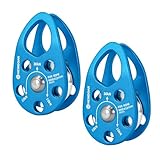
Overview: The NewDoar Micro Mobile Pulley twin-pack offers an ultra-lightweight solution for climbers and rescuers prioritizing weight savings without sacrificing basic functionality. Weighing just 75 grams each and rated to 30kN, these compact pulleys fit easily into emergency kits, harness gear loops, or backpacks. The pack-of-two configuration provides immediate capability for simple 2:1 mechanical advantage systems or backup components in critical situations.
What Makes It Stand Out: The feathery weight is remarkable—at 0.17lb, you’ll barely notice them until needed. Despite the minimal mass, the 30kN rating provides respectable strength for emergency applications. The cheek-shaped design allows quick mid-line installation, while the 26mm sheave handles ropes up to 12mm. Magnesium aluminum alloy construction delivers surprising durability for the weight class, making these ideal for alpine climbers and fast-and-light rescue technicians.
Value for Money: At $29.99 for two pulleys, the value proposition is compelling. This undercuts most competitors by 30-50%, making it accessible for budget-conscious users or those equipping entire teams. While lacking formal certifications mentioned in the listing, the strength-to-weight ratio exceeds many recreational needs. They’re perfect for backup roles or secondary systems where absolute certification isn’t mandatory.
Strengths and Weaknesses: Strengths include exceptional lightness, affordable twin-pack pricing, decent 30kN rating, and compact size. The mid-line installation feature enhances versatility. Weaknesses include no stated CE/UIAA certification, limiting professional deployment, smaller sheave diameter increasing rope friction, and potential durability concerns under heavy cyclic loading compared to certified alternatives.
Bottom Line: These pulleys excel as emergency backups, lightweight kit components, or budget-friendly options for recreational climbers. Professionals should verify certification compliance, but for secondary systems, training, or personal use, they offer outstanding functionality per ounce and dollar.
10. NewDoar 30KN CE Certified Large Rescue Pulley Single Sheave with Swing Plate for Outdoor Mountaineering Rock Climbing Rescue(Blue 2pcs)
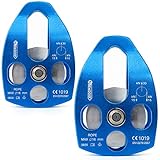
Overview: The NewDoar 30KN Large Rescue Pulley twin-pack delivers full-sized performance for users building comprehensive rescue or hauling systems without the premium price tag of top-tier brands. Each pulley features swing side plates, accommodates ropes up to 16mm, and handles loads up to 30kN. The hollow hanging design creates an oval rope contact surface that distributes force evenly while minimizing rope wear, a thoughtful engineering detail uncommon in this price range.
What Makes It Stand Out: Getting two large-format pulleys for $50.99 provides immediate 2:1 or 3:1 system capability out of the box. The swing plate design enables rapid reconfiguration in the field without breaking down entire anchor systems. The 16mm rope compatibility covers the full spectrum from static rescue lines to dynamic climbing ropes. Anodized light alloy construction resists corrosion while maintaining reasonable weight at 270 grams per unit.
Value for Money: This twin-pack undercuts most competitors’ single-pulley pricing, offering exceptional value for rescue teams, fire departments, and outdoor programs equipping multiple personnel. While CE certification is claimed, independent verification adds confidence. For the price of one premium pulley, you receive two capable units, enabling complex systems without incremental purchases.
Strengths and Weaknesses: Strengths include excellent twin-pack value, large sheave size, wide rope compatibility, swing plates for easy loading, and claimed CE certification. The hollow design reduces rope wear. Weaknesses include 30kN rating which is adequate but not class-leading, heavier weight than micro alternatives, and potential quality control variability sometimes associated with budget twin-packs.
Bottom Line: This set is ideal for rescue squads, climbing gyms, and outdoor educators needing certified hardware in quantity. The value proposition is hard to beat for building mechanical advantage systems. While ultra-light alpinists may prefer micro pulleys, these excel in base-rescue scenarios where weight is secondary to system capability and cost-effectiveness.
The Critical Role of Weight in Crevasse Rescue
Weight management in glacier travel operates on a different calculus than your typical backpacking trip. You’re not just carrying gear—you’re carrying insurance. When a teammate punches through a snow bridge, the pulleys you’ve been hauling across countless miles of ice suddenly become the centerpiece of a high-stakes mechanical advantage system. The challenge lies in balancing the statistical rarity of crevasse falls against the absolute necessity of having capable gear when that rare event occurs.
Understanding the 3-Ounce Threshold
The 3-ounce benchmark emerged from decades of field testing and guide feedback. Below this weight, pulleys can be carried as standard kit without meaningful penalty. Above it, climbers begin making compromises—leaving pulleys behind, carrying only one instead of two, or substituting less efficient alternatives like carabiners. Three ounces represents the sweet spot where rescue-grade functionality intersects with true ultralight philosophy. But achieving this weight while maintaining UIAA-certified strength and acceptable efficiency requires serious engineering.
The Physics of Every Ounce at Altitude
At 14,000 feet, your body operates with 40% less oxygen. The energy cost of hauling gear increases exponentially with altitude, and the psychological burden of heavy equipment compounds decision fatigue. A two-pulley Z-system with 3-ounce pulleys weighs 6 ounces; the same system with 6-ounce pulleys weighs 12 ounces. That half-pound difference, repeated across a 12-hour summit push at altitude, translates to measurable increases in exhaustion—and exhausted rescuers make mistakes. The math is simple: lighter gear means fresher rescuers, and fresher rescuers perform better under pressure.
Essential Design Features for Rescue Pulleys
When evaluating pulleys for crevasse rescue, certain design elements separate purpose-built rescue tools from general-purpose climbing hardware. The forces generated in a rescue scenario can exceed 2kN, and the repetitive hauling motion demands efficiency that recreational pulleys simply don’t deliver.
Sheave Diameter and Efficiency
Sheave diameter directly impacts both efficiency and rope wear. Larger sheaves (1.5 inches and above) reduce bending stress on ropes and maintain higher mechanical efficiency, especially under load. However, diameter adds weight. The best ultralight rescue pulleys achieve 1.25-1.5 inch sheaves through aggressive material removal and strategic reinforcement. Anything smaller creates unacceptable friction and rope deformation, which can reduce your effective mechanical advantage by 15-20% in a 3:1 system.
Bearing Systems: Bushings vs. Bearings
This is perhaps the most critical technical decision in ultralight pulley design. Sealed ball bearings offer the highest efficiency (often 90-95%) but add weight and can freeze in cold, wet conditions. Bushings (typically sintered bronze or self-lubricating polymers) are lighter and more reliable in harsh environments but sacrifice efficiency (75-85%). Top-tier ultralight rescue pulleys often use hybrid approaches: micro-ball bearings in optimized races or advanced polymer bushings that approach bearing efficiency without the weight penalty or cold-weather failure modes.
Side Plate Design and Rope Compatibility
Rescue scenarios involve dynamic loading, and side plates must prevent rope escape while allowing quick installation under stress. Look for pulleys with full-capture side plates that still permit mid-line attachment—this lets you thread the pulley onto a loaded rope without detaching your prusiks. The best designs use asymmetrical plate geometry, reinforcing high-stress areas while skeletonizing low-stress zones. Rope compatibility typically spans 7mm to 11mm, but pay attention to the sweet spot: 8-9mm glacier ropes perform optimally in these pulleys.
Material Science in Ultralight Pulleys
The material choices in sub-3-ounce pulleys reveal fascinating compromises between strength, weight, and manufacturability. Understanding these tradeoffs helps you evaluate whether a pulley prioritizes the right characteristics for your use case.
Aircraft-Grade Aluminum Alloys
7075-T6 aluminum remains the gold standard, offering tensile strength approaching steel at one-third the weight. Manufacturers machine these alloys using 5-axis CNC processes to create organic, stress-optimized shapes that would be impossible with casting. The best pulleys remove material from non-critical areas while maintaining I-beam cross-sections in load-bearing members. Some designs even vary wall thickness across a single component, thinning material where stresses are low and reinforcing where they’re high.
The Titanium Advantage
Titanium alloys (typically Ti-6Al-4V) offer 40% weight savings over aluminum at similar strength levels, but at quadruple the material cost. The machining is also more challenging, requiring specialized tooling and slower production rates. While titanium pulleys exist under the 3-ounce mark, they represent a niche choice for climbers who prioritize weight above all else. The real advantage isn’t just the weight savings—it’s titanium’s exceptional corrosion resistance, which matters when gear gets repeatedly soaked in glacial meltwater.
Composite Materials: Pros and Cons
Carbon fiber reinforced polymers (CFRP) and high-performance thermoplastics like PEEK appear in some experimental pulley designs. These materials offer incredible weight savings but raise durability concerns. A carbon fiber side plate can be incredibly strong in tension but vulnerable to impact damage—dropping a pulley onto rock could create invisible delaminations that compromise strength. For rescue gear, the consensus remains that metal provides better damage tolerance and inspection reliability. Composite pulleys belong in the “interesting but not ready” category for critical rescue applications.
Safety Standards and Certifications
Crevasse rescue pulleys operate in life-critical applications, yet many climbers don’t understand the certifications that should govern their selection. This isn’t gear where “good enough” is good enough.
UIAA vs. CE Ratings Explained
The UIAA (International Climbing and Mountaineering Federation) provides the most relevant standards for rescue gear. UIAA 127 covers pulleys specifically, requiring minimum breaking strengths of 15kN for general use and 22kN for rescue applications. The CE mark indicates conformity with European standards (EN 12278), which are similar but not identical. For crevasse rescue, insist on UIAA 127 certification—it’s the only standard that specifically addresses the dynamic loading scenarios common in rescue.
Working Load Limits vs. Minimum Breaking Strength
Here’s where many climbers get confused. A pulley rated to 22kN MBS (minimum breaking strength) might have a working load limit (WLL) of just 4kN—a 5.5:1 safety factor. In a rescue scenario with a 200-pound victim and friction, your system might see 3-4kN loads, putting you uncomfortably close to that WLL. The best ultralight rescue pulleys maintain high safety factors (8:1 or better) even at low weights, giving you headroom for the unexpected: a stuck victim, additional friction, or dynamic loading from hauling over an edge.
Integration with Your Crevasse Rescue Kit
A pulley doesn’t exist in isolation—it’s one node in a complex system. How it interfaces with your other gear determines real-world functionality as much as its individual specifications.
Carabiner Compatibility Considerations
The pulley-carabiner interface is a common failure point in improvised systems. Sub-3-ounce pulleys often have tight clearance between side plates, optimized for specific carabiner profiles. This prevents cross-loading but can make them incompatible with certain wide-gate or oddly-shaped carabiners. Look for pulleys with captured attachment points that keep carabiners properly oriented under load. The best designs accommodate standard D-shape carabiners while preventing the pulley from riding on the gate—a common cause of system failure.
Rope Diameter Optimization
Your glacier rope choice should inform your pulley selection. Many ultralight pulleys are optimized for 8mm ropes, which represent the sweet spot for glacier travel—light enough for long approaches, substantial enough for rescue loads. If you use a 7.7mm twin rope or a 9mm single, verify pulley compatibility. Sheave groove geometry affects how different diameters seat, and using a rope at the extreme of a pulley’s range can reduce efficiency by 10% or more. The best rescue pulleys maintain high efficiency across their entire rated range, not just at the midpoint.
Real-World Performance Factors
Laboratory specs tell only part of the story. Field performance reveals the practical differences between adequate and exceptional rescue pulleys.
Efficiency Ratings: What They Actually Mean
Manufacturers quote efficiency percentages, but these numbers come from idealized tests with static loads and clean ropes. In the field, efficiency drops due to rope drag, ice crystals in the sheath, and dynamic loading. A pulley rated at 90% efficiency might deliver only 75% in a real crevasse rescue. The key is relative performance: a pulley that tests at 95% in the lab will likely outperform an 85% pulley in the field by a similar margin. Look for efficiency ratings above 90% for rescue applications, and understand that every percentage point translates to reduced hauling effort.
Cold Weather Performance
Glacier environments present unique challenges: temperatures below -20°C, ice buildup, and meltwater that refreezes in mechanisms. Bushings outperform bearings in these conditions—they’re less susceptible to freezing and continue functioning even with ice contamination. Some ultralight pulleys incorporate drainage channels in the sheave to prevent water accumulation, and others use low-temperature greases that remain pliable at extreme cold. Test your pulleys in freezer conditions before trusting them in the field.
Durability in Harsh Environments
Crevasse rescue gear lives a hard life. It gets dropped on rock, dragged through snow, and exposed to UV radiation and freeze-thaw cycles. The best ultralight pulleys use hard-anodized finishes that resist abrasion and corrosion. Pay attention to axle design—shouldered bolts with thread-locking compound resist loosening better than riveted constructions. Some designs even allow user-serviceability, letting you clean and lubricate bearings in the field, though this is rare in sub-3-ounce designs due to weight constraints.
Common Rigging Configurations
Understanding how pulleys perform in standard rescue systems helps evaluate their practical utility. The physics of mechanical advantage amplifies both strengths and weaknesses in pulley design.
3:1 Z-Pulley System Setup
The workhorse of crevasse rescue, the Z-system uses two pulleys and two prusiks to create a 3:1 mechanical advantage. In this configuration, pulley efficiency compounds. If each pulley is 85% efficient, your system efficiency drops to roughly 72% (0.85 × 0.85). With 95% efficient pulleys, you maintain 90% system efficiency. This difference is profound when hauling a 200-pound victim plus rope drag—you’re looking at 30-40 pounds of additional force required with lower-efficiency pulleys. The best ultralight rescue pulleys maintain high efficiency specifically because they’re designed for this exact application.
5:1 and 6:1 Complex Systems
For single-person rescues or heavy victims, guides often deploy 5:1 or 6:1 systems. These require three pulleys and compound the efficiency problem further. With three pulleys at 85% efficiency, system efficiency plummets to 61%. The same setup with 95% pulleys maintains 86% efficiency—nearly a 40% reduction in hauling force. This is why guide services, despite their budget consciousness, invest in high-efficiency ultralight pulleys. The weight penalty of a third pulley is offset by the massive reduction in hauling effort, especially when the rescuer is lighter than the victim.
Maintenance and Inspection Protocols
Rescue gear demands rigorous inspection protocols. A pulley that looks fine might hide critical damage, and the ultralight designs that make these tools so attractive also make them more susceptible to certain failure modes.
After every trip, inspect side plates for cracks, especially around attachment points and axle holes. Check sheaves for wobble, which indicates bearing wear or axle deformation. Test the axle security—any loosening is unacceptable. Clean pulleys in warm, soapy water to remove abrasive snow and ice particles, then dry thoroughly. Lubricate only if the manufacturer specifies it; many ultralight bushings are self-lubricating and don’t require additional oil.
Annual professional inspection is recommended for gear used regularly. Many guide services retire pulleys after five years regardless of visible condition, as metal fatigue accumulates from repeated loading cycles. Keep a logbook of usage and inspections—when you need this gear, you need it to work perfectly.
Avoiding Common Selection Mistakes
The ultralight market is full of tempting options that look good on paper but fail in critical ways. Here are the pitfalls to avoid:
Don’t choose pulleys based solely on weight. A 2.8-ounce pulley with 75% efficiency is inferior to a 2.9-ounce pulley with 95% efficiency—the weight difference is negligible, but the performance gap is massive. Avoid pulleys without UIAA rescue certification, regardless of how light they are. Don’t assume that a general-purpose climbing pulley will work for rescue—the forces and repetition are fundamentally different. Finally, don’t overlook the human factor: practice with your actual gear. A pulley that’s fiddly to thread under stress can waste precious minutes when your partner is hanging in space.
Frequently Asked Questions
1. Can I use a regular climbing pulley for crevasse rescue if it’s under 3 ounces?
Regular climbing pulleys often lack the UIAA rescue certification and efficiency ratings needed for crevasse rescue. While they might work in a pinch, they typically have lower breaking strengths and reduced efficiency under repetitive hauling loads. Always choose pulleys specifically certified for rescue applications.
2. Why do some ultralight pulleys cost twice as much as heavier options?
The machining complexity and material costs for high-strength, low-weight designs are substantial. Titanium alloys and precision-machined 7075 aluminum require expensive tooling and production time. You’re paying for engineering that maintains rescue-grade performance while eliminating every possible gram.
3. How many pulleys should I carry for glacier travel?
Carry at least two UIAA-certified rescue pulleys. A 3:1 Z-system requires two pulleys, and having a third allows you to build a 5:1 or 6:1 system for single-rescuer scenarios. The weight penalty of a third sub-3-ounce pulley is minimal compared to the rescue capability it provides.
4. Do bushings really perform better than bearings in cold conditions?
Yes. Sealed ball bearings can freeze when water infiltrates and expands, and their grease stiffens at low temperatures. Bushings, especially self-lubricating polymer or sintered bronze designs, are more tolerant of ice contamination and maintain function across a wider temperature range.
5. What’s the minimum breaking strength I should accept in a rescue pulley?
Look for UIAA 127 rescue certification, which requires a minimum breaking strength of 22kN. This provides adequate safety margins for the dynamic loads and friction-generated forces common in crevasse rescue scenarios.
6. Can I use 6mm accessory cord with these pulleys for prusiks?
Most ultralight rescue pulleys are optimized for 7-11mm ropes. While 6mm cord might work, it can sit too low in the sheave groove, reducing efficiency and increasing wear. Stick to 7mm or larger cord for glacier travel prusiks.
7. How do I test pulley efficiency in the field?
Rig a simple 3:1 system and haul a known weight. Compare the force required with theoretical calculations. While not precise, this gives you a practical sense of whether your pulleys are performing as expected. Any grinding, sticking, or uneven rotation indicates problems.
8. Should I retire a pulley after dropping it on rock?
Any significant impact requires inspection. Check for cracks, especially around attachment points and the axle. If the pulley has sealed bearings, the impact may have damaged internal races that aren’t visible. When in doubt, retire it—this is life-critical gear.
9. Can I use these pulleys for other applications like big wall hauling or rescue work?
Yes, but understand the limitations. Crevasse rescue pulleys are optimized for 8-9mm ropes and moderate loads. For big wall hauling with 10-11mm ropes or heavy loads, you may want pulleys with larger sheaves and higher load ratings despite the weight penalty.
10. How do I clean and lubricate my pulleys after a trip?
Rinse with warm water to remove grit and salt, then air dry completely. For bushing pulleys, avoid lubrication unless specified by the manufacturer. For bearing pulleys, use only the recommended lubricant—often a lightweight synthetic grease. Over-lubrication attracts dirt and can cause more problems than it solves.'