Picture this: you’re in a bustling café in Bangkok, your iPhone’s at 3%, your Kindle’s dead, and your Bluetooth headphones just gave up—yet there’s only one available outlet. This modern travel nightmare plays out daily for millions of globetrotters who haven’t discovered the magic of a well-chosen multi-port USB charger with international plug adapters. The good news? You don’t need to splurge on premium brands to stay powered up across continents. For under $35, you can secure a versatile charging hub that keeps your entire digital arsenal alive, but only if you know what separates the gems from the junk.
Navigating the sea of budget-friendly charging solutions requires more than just comparing price tags. It demands an understanding of power distribution, international electrical standards, safety certifications, and the subtle engineering choices that determine whether your charger becomes a trusted travel companion or a fried-device waiting to happen. This guide cuts through marketing fluff to arm you with the expertise needed to make a confident, informed decision—no electrical engineering degree required.
Top 10 Multi-Port USB Chargers with International Plug Adapters
Detailed Product Reviews
1. LENCENT Multiple USB Wall Charger, [22W/4.4A] 4 Port USB Travel Power Adapter, All in One Worldwide Cell Phone Charger With UK US EU European Australia, International Block Cube Plug for iPhone & IPad
![LENCENT Multiple USB Wall Charger, [22W/4.4A] 4 Port USB Travel Power Adapter, All in One Worldwide Cell Phone Charger With UK US EU European Australia, International Block Cube Plug for iPhone & IPad](https://m.media-amazon.com/images/I/31RLkawq-cL._SL160_.jpg)
Overview: The LENCENT Multiple USB Wall Charger is a comprehensive travel solution combining a 4-port USB hub with interchangeable international plugs. Delivering 22W total power across four ports (5.5W each when fully loaded), it includes built-in US plugs plus UK, EU, and AU adapters for compatibility with over 200 countries. Weighing only 80 grams and measuring 2.57 x 2.23 x 1.2 inches, this compact charger uses Advanced Auto ID Technology to automatically detect optimal charging current for phones, tablets, headphones, and power banks.
What Makes It Stand Out: Its integrated plug system eliminates the hassle of carrying separate adapters. The smart charging technology adjusts power delivery for each device, while comprehensive safety features—including over-current, over-voltage, overheating, and short-circuit protection housed in a fireproof shell—provide peace of mind. The included carry bag keeps attachments organized, a thoughtful detail for frequent travelers.
Value for Money: At $13.99, this adapter offers solid mid-range value. Buying individual country adapters would cost more and create clutter. While 22W is modest by modern standards, the four-port design and universal plug system justify the price for multi-destination travelers.
Strengths and Weaknesses: Strengths include true worldwide compatibility, intelligent charging, robust safety protections, ultra-portable design, and simultaneous four-device charging. Weaknesses are the limited 22W total output restricting charging speed, lack of USB-C Power Delivery for fast charging modern devices, and insufficient power for tablets or laptops.
Bottom Line: An excellent choice for travelers prioritizing versatility and safety over raw power. Best suited for charging multiple smartphones and accessories across different countries, though power users with USB-C laptops should consider higher-wattage alternatives.
2. European Travel Plug Adapter USB C, 55W USB C European Charger 4-Port Fast Charger Type C Wall Charger USA to Europe Plug Adapter for iPhone 17 16 15 14 13 12 11 Pro Max X 8, Galaxy, Android

Overview: The CARZONJX European Travel Plug Adapter is a 55W fast-charging solution specifically designed for European outlets. Featuring one USB-C Power Delivery port (20W) and three USB-A ports, it enables simultaneous charging of four devices. This compact adapter supports both PD and Quick Charge 3.0 protocols, promising to charge an iPhone 15 from 0-60% in just 30 minutes. It’s compatible with most continental European countries but not the UK or Ireland.
What Makes It Stand Out: The 55W total output with PD and QC 3.0 support enables remarkably fast charging at a budget price. The USB-C port’s 20W capacity provides true fast charging for modern devices, while three USB-A ports accommodate legacy electronics. Smart IC chips automatically recognize device models and optimize power delivery while protecting against overcharging, overheating, and short circuits.
Value for Money: At $9.99, this adapter delivers exceptional value. Standalone 55W USB-C PD chargers typically cost $15-25, making this four-port unit a bargain. For travelers exclusively visiting Europe, it provides fast-charging capabilities at a price point that’s hard to beat.
Strengths and Weaknesses: Strengths include high 55W output, true USB-C Power Delivery, Quick Charge 3.0 support, compact size, and outstanding price-to-performance ratio. Weaknesses are its limitation to European outlets only, lack of universal plug options for multi-region trips, and potential durability concerns given the aggressive pricing.
Bottom Line: The best value for Europe-bound travelers with modern USB-C devices. If your itinerary stays within continental Europe, its fast-charging capability and affordability make it a no-brainer. For broader travel, consider a universal alternative.
3. USINFLY European Travel Plug Adapter, 40W 4-Port USB C Wall Charger Plug Type C Fast Charging Block International Power Adaptor US to Europe EU for iPhone 17 16 15 14 13 12 11 Pro Max XS, iPad, Galaxy

Overview: The USINFLY European Travel Plug Adapter is a 40W four-port charging block tailored for European outlets. It features dual USB-C ports and dual USB-A ports, delivering 20W through USB-C and 3.1A via USB-A. Compatible with most continental European countries, this compact adapter allows simultaneous charging of phones, tablets, and other USB devices. Built-in smart IC technology automatically recognizes device models and provides protection against overcharging, overheating, and short circuits.
What Makes It Stand Out: The balanced dual USB-C and dual USB-A configuration offers flexibility for mixed device ecosystems. Unlike adapters favoring one port type, this unit accommodates both modern USB-C gadgets and legacy USB-A electronics equally. The compact, lightweight design saves luggage space while eliminating the need for multiple chargers, making it practical for travelers with diverse device collections.
Value for Money: Priced at $9.99, this adapter competes directly with similar European-specific chargers. While its 40W output is lower than some 55W competitors at the same price, the dual USB-C ports add versatility that may justify the trade-off for users with multiple USB-C devices who value port balance over maximum wattage.
Strengths and Weaknesses: Strengths include versatile port configuration, intelligent charging technology, comprehensive safety protections, lightweight design, and affordable pricing. Weaknesses are the 40W total output (less than competing models), limitation to European outlets only, and lack of universal plug compatibility for broader travel needs.
Bottom Line: A capable and affordable choice for Europe travelers with a mix of USB-C and USB-A devices. While not the most powerful option available, its port versatility and safety features make it a dependable travel companion for charging smartphones, tablets, and accessories across continental Europe.
4. All in One Universal USB Travel Power Adapter with 3 USB Port and Type-C International Wall Charger Worldwide AC Power Plug 8 Pin AC Socket for Multi-Nation Travel UK, EU, AU, Asia
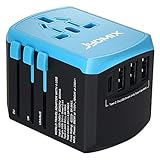
Overview: This universal travel adapter combines three USB ports and one USB-C port with an 8-pin AC socket, offering compatibility across more than 200 countries. With FCC and CE certifications, it supports 100-240VAC input and provides up to 8A (800W at 100V, 1900W at 240V) through its universal AC socket. The integrated design enables simultaneous USB charging and AC power delivery for laptops, cameras, and other appliances, making it a versatile travel companion.
What Makes It Stand Out: The AC socket distinguishes this from USB-only adapters, allowing travelers to power AC devices without separate converters. Safety features include a plug lock system, LED power indicator, surge protection, and over-current safeguards. Extensive country coverage spans Europe, USA, UK, Canada, Australia, Asia, and beyond, providing true worldwide utility in a single unit.
Value for Money: At $11.99, this adapter offers unique dual-function value. Purchasing separate universal plug adapters and USB chargers would cost significantly more. While USB charging speeds are modest, the versatility of simultaneous AC and USB power justifies the price for travelers with mixed power needs who want one device for everything.
Strengths and Weaknesses: Strengths include universal AC socket capability, extensive country compatibility, safety certifications, surge protection, and simultaneous multi-device charging. Weaknesses are unspecified USB power output (likely modest), no fast-charging protocols mentioned, potentially bulkier design than USB-only alternatives, and the 8A AC limit may not support high-power appliances like hair dryers.
Bottom Line: Best suited for travelers who need both AC outlet access and USB charging in one device. Perfect for powering laptops while charging phones simultaneously. However, those prioritizing fast USB charging should supplement this with a dedicated high-wattage USB charger for optimal performance.
5. EPICKA Universal Travel Adapter, European Travel Plug Adapter (Not a Voltage Converter) - International Power Adapter Worldwide Charger with USB-C & 4 USB-A Ports, Travel Essentials (TA-105, Grey)

Overview: The EPICKA TA-105 is a premium 6-in-1 universal travel adapter for serious globetrotters. It charges six devices simultaneously via four USB-A ports (2.4A each), one USB-C port (3A), and a universal AC socket. Covering over 200 countries with integrated plugs, it features a 10A fuse, safety shutters, plug lock system, and RoHS, CE, and FCC certifications for maximum protection and reliability.
What Makes It Stand Out: Unmatched capacity differentiates this adapter—charging six devices simultaneously eliminates the need for multiple chargers. Robust safety features include a replaceable 10A fuse and safety shutters, demonstrating EPICKA’s commitment to protection. The 2-year limited warranty and 30-day money-back guarantee provide exceptional confidence. Its ability to handle both USB and AC devices creates a true all-in-one solution for complex charging needs.
Value for Money: At $22.99, this premium adapter justifies its price for power users. The six-device capacity, superior safety certifications, and warranty exceed budget alternatives. For families or business travelers charging numerous devices, the cost per port is economical compared to buying separate high-quality chargers, making it a smart long-term investment.
Strengths and Weaknesses: Strengths include exceptional 6-device capacity, comprehensive worldwide coverage, premium safety features, warranty protection, and simultaneous USB/AC power. Weaknesses are the higher price point, USB-C limited to 15W (no PD), it’s not a voltage converter, and may be excessive for minimalist travelers with only one or two devices.
Bottom Line: The top choice for frequent travelers, families, or anyone needing to safely charge multiple devices worldwide. Worth the investment for its capacity, safety, and reliability. Not ideal for those seeking ultra-fast USB-C charging or traveling with minimal gear, but unbeatable for power users.
6. 2Pack USB C Fast Charger Block,60W 5-Port USB Wall Charger Brick,2 USB A & 3 USB C PD3.0 Power Adapter Multiport Type C Charging Plug for iPhone 17/16/15/14,Pad Mini/Pro,AirPods 4,GalaxyS25(White)

Overview: This 2-pack 60W charging kit delivers serious versatility for modern device ecosystems. Each brick features five ports—three USB-C and two USB-A—ideal for households juggling iPhones, iPads, Samsung devices, and accessories. PD3.0 technology enables 20W fast charging on two ports, reaching 58% battery in 30 minutes. At $21.99 for two units, it’s a budget-friendly multi-device solution that replaces multiple OEM chargers while saving outlet space.
What Makes It Stand Out: The intelligent power distribution across five simultaneous devices automatically optimizes output to minimize wait times. The dual 20W PD ports deliver genuinely fast charging, while the compact ABS+PC fireproof construction includes comprehensive safety protections against overheating, overcurrent, and short circuits. The white finish blends seamlessly with Apple-centric setups, and the cube design maximizes portability for home, office, or travel use.
Value for Money: At roughly $11 per unit, this 2-pack dramatically undercuts single-brand alternatives costing $20-30 each. The 3X faster charging claim holds true for PD-compatible devices versus standard 5W bricks. While the third USB-C port lacks fast charging, the overall port density and dual-pack configuration offer exceptional cost-effectiveness, essentially providing a primary charger plus backup at a fraction of retail cost.
Strengths and Weaknesses: Pros: Excellent port variety; true 20W PD on two ports; robust safety features; space-saving design; outstanding price-per-unit. Cons: Third USB-C port is standard speed only; no included cables; white color may show discoloration; simultaneous charging reduces individual port speeds.
Bottom Line: For multi-device households seeking affordable fast charging, this 2-pack delivers exceptional utility. The minor limitations are easily forgiven at this price point. Highly recommended for families, office setups, or as a primary-plus-backup solution.
7. USB Wall Charger Block, 2-Pack 40W 4-Port USB Cube Power Adapter Plug, Multiport Charging Blocks Box Brick for iPhone 16 15 14 13 12 11 Pro Max XR Xs Max 8 7 6 Plus, Samsung, LG, Moto, Android Phones

Overview: This 2-pack of 40W USB wall chargers offers straightforward multi-device charging for budget-conscious consumers. Each cube features four QC3.0 USB-A ports, allowing simultaneous charging of smartphones, tablets, and accessories. Compatible with iPhones, Samsung Galaxy, LG, and Motorola devices, these adapters prioritize simplicity. At just $7.59 for two units, it’s one of the most affordable multi-port solutions available.
What Makes It Stand Out: The pure focus on USB-A ports with QC3.0 support ensures broad compatibility without the premium cost of USB-C PD. Universal voltage support (100-240V) makes these travel-ready internationally, while CE/FCC certification provides peace of mind. Aioneus backs the product with an 18-month money-back guarantee and lifetime warranty—exceptional support at this price tier. The compact cube design minimizes wall outlet footprint.
Value for Money: At under $4 per charger, this 2-pack is virtually unbeatable. While lacking USB-C, the 40W total output and four ports per unit handle most charging needs efficiently. Compared to single-port OEM chargers costing $15-20, you’re getting eight charging ports for less than $8. The warranty adds tremendous value, essentially making this a risk-free purchase for users with primarily USB-A devices.
Strengths and Weaknesses: Pros: Unbeatable price; eight total ports; QC3.0 fast charging; international voltage support; excellent warranty; compact design. Cons: No USB-C ports; no cable included; white plastic feels less premium; 40W shared output limits simultaneous fast charging; not ideal for latest USB-C only devices.
Bottom Line: If your devices still use USB-A or you need affordable bulk charging, this 2-pack is a steal. The warranty and safety certifications make it reliable despite the low price. For modern USB-C device owners, however, consider alternatives. Perfect for guest rooms, offices, or as backup chargers.
8. Acer Universal Travel Plug Adapter - International Power Adapter with 5 USB Ports (3 USB C) 5.8A, Worldwide Outlet Charger for USA to European UK France Germany Spain, Type C/E/F/G/I/L/A, Black

Overview: The Acer Universal Travel Adapter is a 6-in-1 solution for globetrotters. It combines a universal AC outlet with five USB ports—three USB-C and two USB-A—covering over 150 countries including Europe, UK, Australia, and Asia. With 5.8A/29W total USB output, it charges multiple devices simultaneously. The compact, cord-free design is cruise ship approved, making it essential for charging phones, tablets, cameras, and power banks without bulk.
What Makes It Stand Out: This adapter’s versatility shines with multiple plug types (C/E/F/G/I/L/A) and intelligent USB distribution. Three USB-C ports deliver up to 3A/15W each, while USB-A ports provide 2.4A/12W. The universal AC outlet accepts US, EU, UK, and AU plugs, eliminating multiple adapters. Its compact 2×2.2×3.0-inch size and lack of surge protection make it cruise-friendly—a rare feature. The black finish resists travel wear effectively.
Value for Money: At $17.97, this adapter offers excellent value versus buying separate country-specific adapters and a USB hub. Charging six devices simultaneously saves money and luggage space. However, 29W total USB output gets divided among ports, slowing speeds with multiple high-draw devices. It’s ideal for phones and tablets, but laptops need their own adapters for optimal charging.
Strengths and Weaknesses: Pros: Covers 150+ countries; 6-in-1 functionality; cruise ship approved; compact; three USB-C ports. Cons: Not a voltage converter; limited 29W total USB power; no fast charging for laptops; no cables included; AC outlet placement can block other sockets.
Bottom Line: For international travelers charging multiple USB devices, this Acer adapter is a smart investment. Remember it’s not a voltage converter—perfect for smartphones, tablets, and accessories. Verify your electronics support 100-250V before use. A must-have for European river cruises and multi-country trips.
9. TESSAN Universal Travel Adapter, International Power Adapter with 4 USB Ports (1 USB C), Worldwide Plug Adaptor Wall Charger for USA to Europe UK France Germany Spain Ireland Australia(Type C/G/A/I)

Overview: The TESSAN Universal Travel Adapter is a 5-in-1 charging solution covering over 150 countries. It features one USB-C port and three USB-A ports alongside a universal AC outlet for international travel. With 17W total USB output and support for 2500W AC devices, it charges up to five devices simultaneously. The compact, surge-free design is cruise ship approved, and integrated security shutters provide additional safety.
What Makes It Stand Out: This adapter excels in simplicity and reliability. The USB-C port delivers up to 3A, while three USB-A ports provide 2.4A each—ideal for smartphones, tablets, and cameras. The double fuse system (250V 10A) offers enhanced protection rarely seen in travel adapters. It converts plugs from US, EU, AU, and UK to Type A for American outlets. The lightweight build fits easily into luggage without adding bulk.
Value for Money: Priced at $17.99, the TESSAN adapter competes directly with similar models. While it has fewer USB-C ports than rivals, the robust safety features and double fuse design justify the cost. The 17W USB output is modest but sufficient for overnight charging. It’s best viewed as a reliable travel adapter with USB bonus rather than a primary fast charger.
Strengths and Weaknesses: Pros: Covers 150+ countries; double fuse protection; security shutters; cruise ship approved; compact; bidirectional conversion. Cons: Only one USB-C port; limited 17W USB power; not a voltage converter; no fast charging for laptops; no cables included.
Bottom Line: The TESSAN adapter is a dependable choice for travelers prioritizing safety over speed. It’s perfect for charging phones, tablets, and cameras overnight. Just remember it’s not a voltage converter—verify your devices support 100-250V. The double fuse system provides welcome peace of mind for international adventures.
10. 100W USB C Travel Charger, 4-Ports Foldable Travel Adapter Plug Converter with UK/EU/AU Plugs, Fast Charging for MacBook Pro/Air, iPad Pro, iPhone 15/14 Pro Max, for 45w Samsung Galaxy, Black
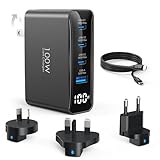
Overview: The Topadre 100W USB-C Travel Charger is a powerhouse for international travelers. This GaN-based adapter features three USB-C ports and one USB-A port, covering over 150 countries with included UK, EU, and AU plug converters. It delivers up to 100W total output, enough to fast-charge a MacBook Pro while simultaneously powering phones and tablets. The foldable design and included 5ft USB-C cable create a complete travel solution.
What Makes It Stand Out: Gallium Nitride (GaN) technology enables remarkable power density in a compact form factor, running cooler than traditional silicon chargers. Intelligent power allocation supports PD, QC, and PPS protocols, ensuring optimal charging for MacBooks, iPhones, iPads, Samsung Galaxy devices, and more. The modular plug system attaches securely, and the polycarbonate shell withstands travel abuse. Smart IC technology prevents overcharging by stopping at full battery.
Value for Money: At $29.99 including a 100W cable and three plug adapters, this charger undercuts many 100W GaN chargers sold without accessories. The 24-month warranty demonstrates manufacturer confidence. While pricier than basic adapters, replacing a laptop charger, phone charger, and travel adapter in one unit justifies the cost for frequent travelers. The cable alone is worth $10-15.
Strengths and Weaknesses: Pros: 100W GaN power; three USB-C ports; includes cable and converters; foldable design; comprehensive safety; 24-month warranty; covers 150+ countries. Cons: Higher price; single USB-A port limits legacy devices; slightly bulkier; no USB-A cable included.
Bottom Line: For travelers needing laptop-level power abroad, this 100W charger is an excellent all-in-one solution. The GaN efficiency, included accessories, and robust warranty make it worth the premium. Power users appreciate charging a MacBook, iPad, and iPhone simultaneously from one compact unit. A top-tier choice for business travelers and digital nomads.
Why Multi-Port USB Chargers Are Essential for Modern Travelers
The Rise of the Digital Nomad Lifestyle
The average traveler now carries 3.2 devices per person, according to recent travel tech surveys. Smartphones, tablets, e-readers, smartwatches, cameras, and wireless earbuds have transformed our luggage into mobile offices and entertainment centers. A single-port charger simply can’t keep pace with this reality. Multi-port chargers consolidate your charging infrastructure into one compact unit, reducing cable clutter, minimizing weight, and eliminating the need to prioritize which device gets precious outlet time. For remote workers hopping between coworking spaces, this isn’t just convenience—it’s a professional necessity that ensures you’re always reachable and productive.
Eliminating Outlet Anxiety Abroad
“Outlet anxiety”—that creeping dread of finding enough power sources—intensifies abroad where outlet availability varies wildly. European hotels notoriously offer a single outlet per room. Southeast Asian hostels might have one shared power strip for eight beds. A multi-port charger transforms one outlet into four, five, or even six charging opportunities. When paired with international plug adapters, it becomes a universal solution that works from the wall sockets of London to the power points of Sydney, turning potential charging crises into non-issues.
Understanding the $35 Price Point: What to Expect
How Manufacturers Balance Cost and Quality
Hitting the sub-$35 price point requires strategic engineering compromises. Manufacturers save costs by using plastic housings instead of aluminum, implementing shared power architectures rather than dedicated per-port converters, and limiting advanced features like OLED displays or app connectivity. However, this doesn’t inherently mean poor quality. Smart brands allocate budget to critical components: certified safety chips, quality capacitors, and robust adapter mechanisms, while trimming non-essential frills. Expect total power outputs between 30-65 watts, 4-6 ports, and basic fast-charging support—plenty for most travelers’ needs.
Red Flags That Indicate Subpar Components
Beware of chargers boasting unrealistic specs at impossibly low prices. A $15 unit claiming “100W total output” is either lying or dangerously under-engineered. Look for vague descriptions like “intelligent charging” without specifying protocols, missing certification logos, or seller pages that avoid mentioning specific safety standards. Excessive weight for the size often signals cheap, dense components rather than quality. Also, avoid chargers with permanently attached cables—if one fails, the entire unit becomes useless. The sweet spot under $35 exists, but it requires vigilance.
Decoding USB Charging Standards and Protocols
USB-A vs USB-C: Which Ports Do You Really Need?
USB-A ports use the classic rectangular connector and support charging up to 12W (5V/2.4A) without fast-charging protocols. USB-C ports, with their reversible oval design, are the modern standard, supporting Power Delivery (PD) up to 100W and virtually all fast-charging protocols. For under $35, prioritize chargers with at least two USB-C ports and 2-3 USB-A ports. This hybrid approach covers legacy devices while future-proofing for newer gear. Remember, a USB-C port doesn’t guarantee fast charging—it must explicitly support PD or QC protocols.
Fast Charging Technologies Explained
Fast charging isn’t universal. Qualcomm Quick Charge (QC) dominates Android devices, while Apple uses USB Power Delivery (PD). Samsung Adaptive Fast Charging and Huawei SuperCharge are proprietary variants. A quality budget charger will support multiple protocols through intelligent chipsets that auto-detect connected devices. Look for explicit mention of PD 3.0 and QC 3.0 or 4.0 support. Without these certifications, “fast charging” claims are meaningless marketing. Under $35, expect PD support up to 30W on at least one port—enough for iPhone fast charging and some tablets, but not laptops.
International Plug Adapters: More Than Just Shapes
Adapters vs. Converters: A Critical Distinction
This is where travelers get burned—literally. Plug adapters simply change the physical shape of your plug to fit foreign outlets. They do NOT convert voltage. Voltage converters actually transform 220-240V down to 110-120V. Modern USB chargers are almost universally rated for 100-240V input, meaning they only need adapters, not converters. Plugging a single-voltage device (like some hair dryers) into an adapter without a converter will destroy it. Always verify your charger’s input voltage range is printed on the device—“100-240V” is the magic specification.
Regional Plug Types You Must Know
The world uses 15 different plug types, but you’ll encounter four main ones: Type A/B (North America, Japan), Type C/E/F (Europe, most of Asia), Type G (UK, Hong Kong, UAE), and Type I (Australia, New Zealand, China). A quality travel charger under $35 will include either a universal slider-style adapter covering all four, or modular attachments that snap onto the charger base. Avoid loose adapter pieces—they’re easily lost. Look for integrated designs where adapters lock securely and include fuse protection. The best designs use a release button to prevent accidental detachment in tight outlets.
Power Output: The Math Behind Charging Multiple Devices
Calculating Total Wattage Requirements
Total wattage is your charger’s horsepower. A smartphone needs 10-18W for fast charging, a tablet 20-30W, and wireless earbuds 5W. Five devices charging simultaneously could demand 60-80W. Under $35, you’ll find 30W, 40W, and occasionally 60W total output options. A 40W charger can fast-charge two phones (18W + 18W) while trickle-charging two earbuds (2W each). Be realistic: you won’t fast-charge three tablets at once on a budget charger. Calculate your typical daily load: two phones (36W) + one tablet (30W) = 66W minimum for simultaneous fast charging, meaning you might need to stagger charging times.
Per-Port vs. Shared Power Distribution
Budget chargers almost always use shared power distribution. A 40W charger with four ports doesn’t provide 10W per port—it intelligently allocates power based on what’s plugged in. The first device might get 30W, the second 10W, and subsequent devices wait their turn. More advanced (and expensive) chargers have dedicated power per port. Under $35, expect shared architecture. This works fine if you charge devices sequentially overnight, but becomes problematic when everyone needs power before a morning tour. Understanding this limitation helps set realistic expectations and prevents frustration.
Safety Features That Should Be Non-Negotiable
Essential Protections: Overcurrent, Overvoltage, and Short Circuit
Inside every charger, a suite of protection chips monitors electrical flow. Overcurrent protection prevents too much amperage from frying your device. Overvoltage protection guards against power spikes common in developing countries’ grids. Short circuit protection instantly cuts power if moisture or debris creates a dangerous connection. These aren’t optional luxuries—they’re essential safeguards. Quality budget chargers prominently list these protections. If a product description doesn’t explicitly mention all three, keep scrolling. Your $800 smartphone deserves better than a $10 fire hazard.
Certifications to Look For
Certification logos aren’t decorative—they’re proof of third-party testing. UL (Underwriters Laboratories) is the gold standard for North American safety. CE indicates European conformity. FCC certification means electromagnetic interference won’t disrupt other devices. RoHS compliance guarantees hazardous materials aren’t used. Under $35, UL or CE certification is non-negotiable. Be wary of fake certifications—verify logos are authentic and not just printed on. Reputable manufacturers list certification numbers you can cross-reference online. This due diligence separates safe chargers from dangerous counterfeits.
Portability vs. Power: Finding Your Travel Sweet Spot
Size and Weight Considerations
Every ounce matters when you’re living out of a carry-on. A 60W charger with six ports sounds great until it’s weighing down your daypack. Budget chargers under $35 typically weigh 4-7 ounces and measure 2.5-3.5 inches square—roughly the size of a deck of cards. This hits the portability sweet spot. Anything heavier than 8 ounces or larger than 4 inches starts to feel burdensome. Check product dimensions and weight specifications. Remember, you’ll also carry the international adapters, which add 2-3 ounces. The total package should still be lighter than carrying three individual chargers.
Travel-Friendly Design Features
Look for foldable prongs that tuck flush against the body, preventing scratches on other gear. Flat, low-profile designs pack better than tall, narrow ones. Rubberized corners add drop protection without significant weight. Some units include cable management clips or built-in storage pouches—nice bonuses at this price point. Avoid chargers with protruding buttons or dials that can snag. The best travel chargers feel solid but not dense, with a matte finish that resists fingerprints and scratches from life on the road.
Build Quality Indicators on a Budget
Materials and Construction
Even under $35, quality materials are achievable. Polycarbonate plastic with a V0 fire rating (self-extinguishing) is the standard for safe chargers. Avoid glossy plastics that feel thin or flex when squeezed. Seams should be tight and uniform—gaps indicate poor assembly that lets dust and moisture infiltrate. The plug prongs should feel firmly mounted, not wobbly. Give the adapter attachments a firm tug; they shouldn’t separate easily. Quality budget chargers often use a slightly textured finish that improves grip and hides wear. These tactile details reveal manufacturing pride.
Heat Dissipation and Longevity
Heat kills chargers. Budget units lack expensive gallium nitride (GaN) technology found in premium models, so they rely on traditional silicon and passive cooling. Look for ventilation holes or heat-dissipating fins. The charger should get warm during use, but never hot enough to be uncomfortable to hold. If customer reviews mention excessive heat or melting, steer clear. Proper heat management extends lifespan from months to years. Under $35, expect a lifespan of 2-3 years with heavy travel use—acceptable for the price if safety isn’t compromised.
Smart Features That Add Real Value
Intelligent Power Allocation
The best budget chargers include auto-detect chipsets that identify connected devices and deliver optimal power. This means your iPhone gets 18W PD while your Bluetooth headphones receive just 5W—automatically. Without this feature, devices may charge slowly or receive inconsistent power. Look for terms like “smart IC,” “auto-detect,” or “intelligent power distribution” in specifications. This technology costs manufacturers only pennies but dramatically improves user experience. It’s a hallmark of thoughtful design even at low price points.
LED Indicators and User Feedback
Subtle LED indicators confirm the charger is receiving power and actively charging devices. Under $35, expect simple single-color LEDs—not the RGB displays of premium models. The key is placement: indicators should be visible but not illuminate an entire hotel room at night. Some chargers include separate LEDs per port, helping identify which cable or device has failed. Avoid overly bright blue LEDs; look for warm white or amber indicators that are less disruptive. A small detail that significantly impacts usability in dark rooms.
Compatibility Across Your Device Ecosystem
Smartphone and Tablet Requirements
Modern iPhones require USB PD for fast charging; Android devices typically use QC or PD. iPads charge fastest with 30W PD, while most Android tablets are happy with 18W. Under $35, you’ll find chargers that meet these needs on one or two ports simultaneously. The trick is ensuring your most important devices get priority. If you’re an Apple household, prioritize PD support. For Samsung users, verify QC 3.0 compatibility. Don’t assume universal compatibility—check your specific device requirements against the charger’s supported protocols list.
Laptop Charging Feasibility
Here’s the reality check: most sub-$35 chargers cannot reliably power laptops. A MacBook Air needs 30W minimum; a MacBook Pro requires 61W. While some 60W budget chargers exist, they typically can’t sustain that output across multiple ports. You might trickle-charge a laptop overnight if it’s powered off, but don’t expect to use it while charging. For true laptop charging, budget $50+ for a GaN-based charger. Under $35, focus on keeping your laptop’s primary charger as backup while using the multi-port unit for everything else—a practical compromise for budget-conscious travelers.
Real-World Performance Factors
Charging Speed Degradation with Multiple Devices
When you plug in that fourth device, charging speeds plummet. This isn’t a defect—it’s physics meeting budget engineering. A 40W charger delivering 30W to your iPhone only has 10W left to share. Add a second phone, and both may drop to 10W each—standard charging, not fast. The degradation curve is steeper on budget chargers. Test your charger’s performance: charge one device alone and time it, then add devices and retest. Understanding this pattern helps you strategize charging sessions—perhaps topping off phones overnight while charging tablets during breakfast when fewer ports are in use.
Voltage Environment Performance
Electrical grids vary in stability. European 230V is stable and clean, while Southeast Asian grids can fluctuate wildly. Quality budget chargers handle 100-240V input, but their internal voltage regulators work harder in unstable environments. This can cause slower charging or automatic shutdowns to protect devices. Look for chargers specifying “wide voltage input” or “100-240V ~ 50/60Hz” with a tilde (~) indicating tolerance for frequency variation. Reviews from travelers in developing countries provide invaluable real-world data on how chargers perform under electrical stress.
Environmental and Ethical Considerations
Energy Efficiency and E-Waste Reduction
Every charger draws phantom power when plugged in, even without devices connected. Efficient designs minimize this “vampire drain” to under 0.1W. While not a huge cost savings, it reflects quality engineering. More importantly, a versatile multi-port charger replaces 3-4 individual chargers, reducing e-waste significantly. Under $35, you’re not getting the most efficient GaN technology, but you’re still making an environmentally conscious choice by consolidating. Check for energy efficiency markings like Level VI compliance—the current US standard requiring minimal standby power consumption.
Troubleshooting Common Travel Charging Issues
When Chargers Work at Home But Not Abroad
This frustrating scenario usually stems from two issues. First, the adapter might not make proper contact with recessed foreign outlets—common with cheap universal adapters that don’t extend far enough. Second, some chargers’ safety circuits are more sensitive to voltage fluctuations and trip offline in unstable grids. Solutions include using a high-quality adapter with extended prongs and plugging into outlets away from high-draw appliances like air conditioners. If problems persist, try charging fewer devices simultaneously to reduce load on sensitive circuits.
Maximizing Your Charger’s Lifespan
Proper Care and Maintenance
Travel is brutal on electronics. Wrap cables loosely to avoid stressing ports. Store the charger in a padded pouch, not loose in your bag where impacts can damage internal components. Keep adapter attachments in a small ziplock bag so they don’t scatter. Avoid using the charger in direct sunlight or enclosed spaces where heat builds up. Unplug by gripping the body, not yanking the cable. These simple habits can double your charger’s lifespan. Clean port contacts monthly with compressed air to prevent dust buildup that causes intermittent connections.
Your Buyer’s Checklist: Making the Final Decision
How to Evaluate Product Reviews
Don’t just scan star ratings—read the 3-star reviews. These often contain balanced pros and cons from discerning users. Look for reviews mentioning specific travel destinations, device combinations, and longevity over months of use. Be skeptical of reviews posted within days of purchase; they can’t speak to durability. Search reviews for keywords like “heat,” “loose,” “stopped working,” or “worked in [country name]” to find relevant experiences. Cross-reference reviews across multiple retailers—Amazon, Best Buy, and specialty travel sites—to spot fake review patterns. A charger with 500 reviews averaging 4.3 stars is often more reliable than one with 50 perfect 5-star reviews.
Frequently Asked Questions
Can I charge my laptop with a sub-$35 multi-port charger?
Most laptops require 30-65W minimum, which budget chargers can only supply to one port with nothing else connected. You might maintain battery during light use or charge while powered off, but these chargers are optimized for phones, tablets, and accessories. For reliable laptop charging, budget $50+ for a GaN-based model with dedicated high-wattage output.
What’s the difference between a travel adapter and a voltage converter?
Adapters only change plug shape; converters actually transform voltage. Modern USB chargers are dual-voltage (100-240V), so they only need adapters. Plugging a single-voltage appliance like a hair dryer into an adapter without a converter will destroy it. Always check your device’s voltage rating before plugging in abroad.
How many devices can I realistically charge at once?
A 40W charger can fast-charge two phones (18W each) while trickle-charging two small devices. Adding a third phone drops all to standard charging speeds. For optimal performance, charge high-priority devices first, then add low-power accessories. Overnight charging of 4-5 devices works fine since speed matters less during sleep.
Will fast charging work in all countries?
Yes, if your charger supports the local voltage (100-240V). Fast charging protocols are device-dependent, not location-dependent. However, unstable electrical grids in some regions may cause chargers to default to slower speeds as a safety precaution. Using outlets in hotel lobbies or newer buildings often provides cleaner power.
Are budget chargers safe for my expensive devices?
Price doesn’t determine safety—certifications do. A $30 charger with UL, CE, and FCC certifications is safer than an uncertified $80 unit. Look for specific safety feature listings and certification numbers you can verify. Reputable budget brands invest in safety chips while saving on materials and packaging.
Why does my charger get hot when I use all ports?
Heat is normal during power conversion, especially with budget silicon-based chargers. It should feel warm, not burning hot. Excessive heat indicates poor efficiency or overload. Ensure adequate ventilation, don’t charge in enclosed spaces, and if it’s too hot to touch, unplug immediately and discontinue use. Quality chargers have thermal shutdown protection.
Can I use this in countries with 220-240V outlets?
Absolutely, if the charger is rated for 100-240V input (always verify this marking). This covers virtually every country. The adapter changes the plug shape; the charger’s internal circuitry automatically handles the voltage difference. No manual switching or settings required—just plug and play.
What’s the most important certification to look for?
UL (Underwriters Laboratories) certification is the strictest safety standard. For international travel, CE is equally important. Never buy a charger lacking at least one of these. FCC certification ensures it won’t interfere with other electronics. RoHS guarantees no hazardous materials. Think of UL/CE as your non-negotiable foundation.
How do I know if a charger supports my phone’s fast charging?
Check your phone’s specifications for its fast-charging protocol (iPhone: PD 18W+, Samsung: QC 2.0/3.0 or PD, Google Pixel: PD). Then verify the charger explicitly lists support for that protocol and wattage. Vague “fast charging” claims without specifics are red flags. Look for “PD 3.0” or “QC 4.0” in the product details.
Is it better to get a universal adapter or individual plug attachments?
Universal slider-style adapters are more convenient and harder to lose, but individual snap-on adapters often provide more secure connections in loose outlets. For under $35 chargers, integrated universal designs are common and perfectly adequate. If choosing modular attachments, ensure they lock firmly and store them in a dedicated pouch to prevent loss.'