The nocturnal world has always held an irresistible allure for wildlife enthusiasts, researchers, and nature photographers alike. While darkness once limited our ability to observe elusive creatures like owls, foxes, and big cats, modern thermal imaging technology has fundamentally transformed the game. Instead of relying on intrusive spotlights that disturb natural behaviors, today’s thermal cameras reveal animals through their own body heat, painting a vivid picture of life after sunset without disrupting the delicate balance of nature.
Whether you’re a conservation biologist tracking endangered species, a wildlife photographer seeking that perfect night shot, or simply a nature lover wanting to witness the hidden drama of your local ecosystem, understanding thermal imaging technology is crucial. This comprehensive guide dives deep into the features, specifications, and practical considerations that separate exceptional wildlife thermal cameras from disappointing gadgets, ensuring you make an informed investment that matches your specific needs.
Top 10 Thermal Imaging Cameras for Wildlife Spotting
Detailed Product Reviews
1. TOPDON TS004 Thermal Imaging Monocular, 320 x 240 TISR 256 x 192 IR Resolution, Supported Wireless Connection, 13mm 50Hz Thermal Night Vision with 11h Battery Life, IP67 Monocular for Hunting

Overview: The TOPDON TS004 positions itself as a premium thermal monocular designed for serious outdoor enthusiasts and hunters. With its 256x192 IR resolution and impressive 50Hz refresh rate, it delivers smooth, detailed thermal imaging in challenging conditions. The 13mm lens provides a 410-meter detection range, while the rugged IP67-rated construction ensures durability in harsh environments.
What Makes It Stand Out: The standout feature is undoubtedly the 50Hz refresh rate—significantly smoother than the standard 25Hz found in most competitors at this price point. The wireless connectivity via TopInfrared App enables real-time monitoring and media capture without internet, while the 11-hour battery life keeps you operational through extended wilderness excursions. The IP67 waterproof rating offers superior protection compared to typical IP54/IP65 ratings.
Value for Money: At $406.60, the TS004 sits in the mid-to-high range for consumer thermal monoculars. While not cheap, it undercuts premium brands like FLIR and Pulsar with similar specs. The combination of high refresh rate, robust battery, and superior waterproofing justifies the investment for dedicated users who prioritize performance over entry-level savings.
Strengths and Weaknesses: Strengths include exceptional 50Hz smoothness, excellent battery endurance, reliable wireless connectivity, and professional-grade waterproofing. Weaknesses include moderate 256x192 resolution when some competitors offer 384x288, and the 13mm lens limits long-range detail compared to larger optics.
Bottom Line: The TS004 is an excellent choice for hunters and outdoor professionals seeking fluid thermal imaging without breaking into four-figure price territory. The high refresh rate and rugged design make it a dependable field companion.
2. TOPDON TC004 Mini Handheld Thermal Imaging Camera, 240 x 240 TISR Resolution, -4°F to 842°F, 15-Hour Battery Life, 128 x 128 IR Resolution, 25Hz Infrared Camera, High/Low Temp Alerts, Auto Shutdown

Overview: The TOPDON TC004 Mini is a compact thermal imaging camera engineered for home inspectors, DIY enthusiasts, and professionals needing portable temperature diagnostics. Its 128x128 base resolution gets AI-enhanced to 240x240 via TISR technology, providing respectable detail for close-range applications. The pocket-friendly design houses a surprisingly capable feature set for its diminutive size.
What Makes It Stand Out: The intelligent temperature alert system automatically captures photos when exceeding preset thresholds—a game-changer for efficient inspections. With 15 hours of battery life and customizable auto-shutdown intervals, it maximizes field time. The wide 40°x30° field of view covers large areas quickly, while the 512MB internal storage holds up to 8,000 images.
Value for Money: At $199, the TC004 Mini delivers exceptional value. It competes directly with FLIR C3-X and Seek Thermal CompactPro at significantly lower cost. The smart alert functionality and extended battery life give it an edge over similarly priced alternatives, making professional thermal inspection accessible to budget-conscious buyers.
Strengths and Weaknesses: Strengths include outstanding battery life, intelligent auto-capture alerts, five color palettes, and true pocket portability. Weaknesses are the IP54 rating (merely splash-resistant), lack of wireless connectivity, and 128x128 native resolution that can’t match true 240x240 sensors in clarity.
Bottom Line: For homeowners, electricians, and maintenance workers needing reliable thermal diagnostics without professional-grade expense, the TC004 Mini is a smart buy. The automated features save time and the price point is hard to beat.
3. H128 Handheld Thermal Camera, 240 x 240 TISR Resolution, 24h Battery Life Thermal Imaging Camera, 25 Hz Infrared Camera with Temperature Alarm, -4℉~ 842℉ Temp Range, IP65 Protection Level

Overview: The H128 Handheld Thermal Camera targets budget-conscious buyers seeking maximum battery life for extended inspection tasks. This entry-level device transforms basic 128x128 thermal data into 240x240 TISR-enhanced images, offering adequate resolution for most diagnostic applications. Its ruggedized build and remarkable power efficiency make it ideal for all-day use in demanding environments.
What Makes It Stand Out: The staggering 24-hour battery life dwarfs virtually all competitors, including models costing three times as much. The IP65 protection rating and 6.56-foot drop survival exceed expectations for a sub-$140 device. A built-in temperature alarm with automatic max/min/center tracking provides professional-level situational awareness, while the tripod mount enables stable, hands-free operation.
Value for Money: At $139.99, the H128 represents one of the best value propositions in thermal imaging. It undercuts the TOPDON TC004 by $60 while offering 60% more battery life and better durability. While it lacks wireless features, the core thermal performance matches devices in the $200-250 range.
Strengths and Weaknesses: Strengths include industry-leading battery endurance, robust IP65 construction, precise ±3% temperature accuracy, and unbeatable price. Weaknesses include no wireless connectivity, basic 128x128 native resolution, and limited 512MB storage without expandable memory.
Bottom Line: The H128 is the perfect starter thermal camera for property managers, farmers, and DIYers prioritizing longevity and durability over advanced features. If you need all-day performance on a tight budget, this is your best option.
4. GOYOJO Thermal Monocular, 256x192 (25 Hz) Thermal Imaging Monoscope Camera for Adults, 10mm Focal Lens Vision Goggles Thermal Scopes for Night Hunting Camping

Overview: The GOYOJO Thermal Monocular bridges the gap between entry-level cameras and premium hunting optics. Featuring a 256x192 sensor with 12μm pixel pitch, it delivers solid thermal performance for outdoor recreation and security applications. The 25Hz refresh rate and 10mm focal length provide balanced versatility for varied scenarios, from wildlife observation to perimeter surveillance.
What Makes It Stand Out: Six color palettes offer more customization than typical four-palette systems, while the 4X digital zoom provides flexibility without sacrificing image quality. The dedicated app enables real-time sharing—valuable for team hunting or coordinated search operations. Replaceable batteries ensure over six hours of continuous use, and the 16GB internal storage captures plenty of footage.
Value for Money: Priced at $369, the GOYOJO competes directly with the TOPDON TS004 but trades the 50Hz refresh rate for replaceable batteries and additional color modes. It’s $200 less than the Klarvue while offering comparable base resolution. For users who don’t need ultra-smooth imaging, it delivers strong value.
Strengths and Weaknesses: Strengths include versatile color palettes, replaceable battery convenience, app connectivity, and 16GB storage. Weaknesses are the slower 25Hz refresh rate, shorter 6-hour battery life, and 10mm lens offering less range than the TS004’s 13mm optic.
Bottom Line: The GOYOJO is a solid mid-range choice for outdoor enthusiasts wanting flexibility and connectivity without premium pricing. It’s particularly well-suited for group activities where real-time sharing enhances coordination.
5. Klarvue Unveil AI Thermal Monocular 384×288 Super Resolution,12μm Infrared Sensor,8× Digital Zoom,WiFi & App Control, 32GB Storage,IP66 Waterproof Thermal Imaging Camera for Wildlife,Outdoor & Rescue

Overview: The Klarvue Unveil AI Thermal Monocular represents the pinnacle of consumer thermal imaging, leveraging artificial intelligence to achieve 384×288 super resolution from a 12μm sensor. This premium device targets professional users in wildlife research, search and rescue, and security who demand the clearest possible thermal imagery. With comprehensive connectivity and output options, it’s a complete field solution.
What Makes It Stand Out: AI Super Resolution technology dramatically enhances image clarity beyond native sensor capability, while six optimized viewing modes (Standard, Outline, City, Forest, Jungle, Birdwatch) tailor the display to specific environments. The Wi-Fi hotspot enables full remote control via the Klarvue Vision App, and multiple output interfaces (USB-C, HDMI, CVBS) allow direct connection to external displays.
Value for Money: At $569, the Klarvue commands a premium but delivers professional-grade features. It undercuts comparable Pulsar and FLIR models by hundreds while offering AI enhancement and superior connectivity. For commercial applications or serious enthusiasts, the investment pays dividends in operational effectiveness.
Strengths and Weaknesses: Strengths include best-in-class AI-enhanced resolution, versatile output options, 32GB storage, IP66 rating, and comprehensive app control. Weaknesses include highest price in this comparison, replaceable battery system requiring spare cells for all-day use, and complexity that may overwhelm casual users.
Bottom Line: If you need maximum thermal detail and professional connectivity, the Klarvue Unveil AI justifies its premium price. It’s overkill for basic home use but essential for demanding outdoor professionals and researchers.
6. M256 Thermal Camera, 512x384 TISR Resolution Thermal Imager, 256x192 IR Resolution, -4°F~842°F Temp Range, Thermal Imaging Camera for Android Smartphones and PC(Green)
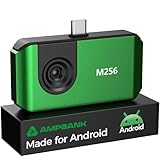
Overview: The M256 thermal camera transforms your Android device into a professional diagnostic tool with impressive 512x384 TISR resolution. Weighing only 30g, this pocket-sized imager connects via USB-C to deliver precise temperature measurements from -4°F to 842°F. Designed for home inspectors, HVAC technicians, and DIY enthusiasts, it offers 3D thermal analysis and multiple measurement modes in an ultra-portable package that runs efficiently for hours on your smartphone’s battery.
What Makes It Stand Out: The M256’s 3D thermal analysis capability sets it apart, allowing precise temperature readings from every angle rather than flat plane measurements alone. Its remarkably low 0.35W power consumption enables 4-7 hours of continuous operation, significantly outlasting competitors. The combination of Dot, Line, and Plane measurement modes with ten color palettes provides exceptional analytical flexibility for both professional inspections and casual troubleshooting.
Value for Money: At $192.49, the M256 offers compelling value with its high TISR resolution and extensive feature set. Competing devices with similar resolution typically cost $250-300, making this an attractive mid-range option. The included EVA anti-dust bag, cleaning cloth, and USB extension cable add practical value, while the Android/PC compatibility maximizes utility across devices without requiring proprietary software subscriptions.
Strengths and Weaknesses: Pros: Ultra-lightweight and portable design; Excellent battery efficiency; High TISR resolution for the price; Versatile measurement modes; 3D thermal analysis capability; Generous accessory package Cons: Limited to Android and PC (no iOS support); Lower brand recognition than FLIR/TOPDON; Requires OTG-enabled device; No mention of drop protection
Bottom Line: The M256 delivers professional-grade thermal imaging capabilities at a competitive price point, making it an excellent choice for Android users seeking advanced features without the premium cost. Its portability and power efficiency make it ideal for field work.
7. Flir One - Thermal Imaging Camera for iOS Smartphones (iPhone 15 and Newer w/USB-C), 240x180 Super Resolution (80x60 Native IR)

Overview: The FLIR One brings legendary thermal imaging technology to iPhone 15 and newer devices through a direct USB-C connection. This rugged accessory upgrades its 80x60 native sensor to 240x180 Super Resolution using proprietary Vivid IR technology. Built for demanding job sites, it features MSX image enhancement that overlays thermal data onto visual images, providing context-rich diagnostics for home inspections, energy audits, and maintenance tasks.
What Makes It Stand Out: FLIR’s MSX technology is a game-changer, merging thermal and visual spectra in real-time to reveal critical details that other imagers miss. The integrated inspection guides within the FLIR One app provide step-by-step assistance for common faults, making professional diagnostics accessible to novices. Its 1.5-meter drop rating demonstrates genuine job site durability, while the brand’s decades of thermal imaging expertise ensure reliable performance.
Value for Money: At $209.99, the FLIR One commands a premium over generic alternatives but justifies it through superior software, robust build quality, and trusted brand reputation. While the native 80x60 resolution is modest, the effective 240x180 output and MSX enhancement deliver results comparable to higher-resolution competitors. For iPhone users invested in the Apple ecosystem, this seamless integration offers better value than cross-platform alternatives.
Strengths and Weaknesses: Pros: Industry-leading MSX image enhancement; Rugged, drop-resistant construction; User-friendly inspection guides; Trusted FLIR brand reliability; Seamless iPhone integration Cons: Limited to newer iPhones with USB-C; Native resolution only 80x60; Narrower temperature range (5°C–120°C for accuracy); Highest price per pixel ratio
Bottom Line: The FLIR One is the premium choice for iPhone 15 users who prioritize durability, brand reliability, and intelligent software features over raw resolution. It’s ideal for professionals who need dependable thermal imaging on Apple devices.
8. TOPDON TC002C Duo Thermal Camera, Compatible with Any USB-C iPhone, iPad & Android Device, 512 x 384 Super Resolution, 256 x 192 IR Resolution Thermal Imager, -4°F~1022°F Temp Range

Overview: The TOPDON TC002C Duo breaks compatibility barriers by working seamlessly with USB-C iPhones, iPads, and Android devices through its universal design. Delivering 512x384 Super Resolution from a 256x192 sensor, this versatile imager covers an exceptional -4°F to 1022°F range. With a 25Hz refresh rate and 40mK sensitivity, it provides smooth, detailed thermal video for dynamic inspections up to 16.4 feet away, serving professionals across multiple platforms.
What Makes It Stand Out: True cross-platform compatibility is the TC002C Duo’s killer feature, eliminating the need for separate devices for iOS and Android users. Its extensive 1022°F temperature range surpasses most competitors, enabling industrial applications beyond typical building inspections. The 25Hz refresh rate combined with 40mK thermal sensitivity delivers fluid, accurate tracking of rapid temperature changes, while waveform temperature display offers advanced analytical capabilities.
Value for Money: Priced at $242.00, the TC002C Duo sits in the premium segment but delivers exceptional versatility. Competitors often require separate models for iOS and Android, effectively doubling costs for multi-platform users. The wider temperature range and higher refresh rate justify the price premium over entry-level models, making it cost-effective for professionals who service diverse equipment.
Strengths and Weaknesses: Pros: Universal USB-C compatibility across platforms; Industry-leading temperature range; High 25Hz refresh rate; Excellent thermal sensitivity; Waveform temperature display; Compact 30g design Cons: Temporarily incompatible with Android 16 and Mac; Requires third-party app; Higher price point; Brand less established than FLIR
Bottom Line: The TC002C Duo is the ultimate cross-platform thermal solution for professionals who need maximum compatibility and temperature range. Its versatility makes it worth the premium for multi-device users.
9. REVASRI Thermal Camera for iPhone and Android, 320×240 Super IR Resolution Thermal Imaging Camera, -4℉ to 842℉ Temp Range, Compatible with USB-C iOS & Android Device

Overview: The REVASRI thermal camera delivers impressive 320x240 Super IR resolution at a budget-friendly price point while maintaining broad compatibility with USB-C iOS, Android, and Windows devices. This lightweight imager covers a practical -4°F to 842°F range with ±2°C accuracy, featuring a 25Hz refresh rate and 40mk sensitivity. Multiple analysis tools including picture-in-picture, 15x digital zoom, and high/low temperature alarms make it a versatile choice for homeowners and entry-level professionals.
What Makes It Stand Out: The REVASRI’s aggressive pricing combined with true cross-platform support creates exceptional accessibility for thermal imaging newcomers. Its 15x electronic zoom and picture-in-picture function provide analytical capabilities typically found in premium models. Nine color palettes offer more customization than competitors, while temperature tracking and alarm functions help users quickly identify anomalies without constant monitoring.
Value for Money: At $119.98, the REVASRI significantly undercuts the competition while delivering higher effective resolution than many pricier alternatives. This represents outstanding value for DIY enthusiasts and occasional professional use. While lacking the brand prestige of FLIR or TOPDON, it provides 90% of the functionality at 50% of the cost, making thermal imaging accessible to budget-conscious buyers.
Strengths and Weaknesses: Pros: Exceptional price-to-performance ratio; True multi-platform compatibility; 15x digital zoom capability; Nine color palettes; Picture-in-picture function; High/low temperature alarms Cons: Lesser-known brand with unproven longevity; No mention of drop protection; Requires manual app download; Limited warranty information
Bottom Line: The REVASRI is the best value thermal camera for budget-minded users needing cross-platform compatibility. It’s perfect for homeowners and hobbyists who want advanced features without premium pricing.
10. TOPDON TC004 Thermal Imaging Camera, 320 x 240 TISR Resolution, 256 x 192 IR High Resolution, 12-Hour Battery Life Handheld Infrared Camera with PC Analysis and Video Recording Supported, 32GB SD Card

Overview: The TOPDON TC004 is a fully self-contained handheld thermal camera that eliminates smartphone dependency while delivering professional-grade 320x240 TISR resolution. With a built-in 5000mAh battery providing 12 hours of continuous operation, this rugged imager covers -4°F to 662°F with ±1°F accuracy. The package includes 32GB storage, PC analysis software, and video recording capability, making it a complete solution for extended inspections in industrial, electrical, and building maintenance applications.
What Makes It Stand Out: The TC004’s standalone design with exceptional 12-hour battery life liberates professionals from smartphone battery limitations and compatibility issues. The free PC software enables advanced 3D imaging and comprehensive data analysis without subscription fees. Its tripod mount and LED work light facilitate fixed-point measurements in dark enclosures, while the robust 2-meter drop resistance ensures durability in harsh environments.
Value for Money: At $284.04, the TC004 competes directly with entry-level professional handheld units costing $400+. The included 32GB card, PC software, and 12-hour battery eliminate hidden costs. For users requiring extended field operation and independent functionality, this represents superior value compared to smartphone-dependent alternatives that drain mobile batteries and require purchasing additional accessories.
Strengths and Weaknesses: Pros: All-day 12-hour battery life; Standalone operation (no phone needed); Free PC analysis software; Tripod mount for stable measurements; 2-meter drop resistance; 32GB included storage; LED work light Cons: Higher price than smartphone attachments; Not compatible with Mac; Bulkier than mobile solutions; Lower temperature range than some competitors
Bottom Line: The TC004 is the ideal choice for professionals who need reliable, all-day thermal imaging without smartphone dependency. Its standalone design and exceptional battery life justify the premium for serious field work.
Why Thermal Imaging Changes the Game for Nocturnal Wildlife Observation
Traditional night vision amplifies existing light, struggling in complete darkness and failing to penetrate fog, rain, or dense vegetation. Thermal imaging operates on an entirely different principle—it detects infrared radiation emitted by all warm-blooded animals, creating a clear contrast regardless of ambient light conditions. This means you can spot a deer bedded down in tall grass from hundreds of yards away, track a moving coyote through thick forest canopy, or identify roosting birds in complete darkness. The technology doesn’t just extend your vision; it reveals an entirely different dimension of the natural world, where every living creature becomes a beacon against the cooler background of its environment.
Understanding Thermal Imaging Technology Basics
How Thermal Cameras Detect Heat Signatures
At the core of every thermal camera lies a microbolometer sensor that detects temperature differences as small as 0.01°C. When photons of infrared radiation strike the sensor material, it heats up minutely, changing its electrical resistance. This change is measured and converted into a digital image where warmer objects appear brighter. Understanding this process helps you appreciate why sensor quality trumps marketing hype—it’s the precision of this temperature measurement that determines whether you’ll distinguish a rabbit from a rock at 200 yards.
Resolution Matters: What Those Numbers Actually Mean
Manufacturers advertise sensor resolution in terms like 160×120, 320×240, or 640×480 pixels. For wildlife spotting, resolution directly impacts your ability to identify species rather than just detect movement. A 160×120 sensor might reveal a hot spot in a tree, but a 640×480 sensor will show you the distinctive shape of a raccoon versus a possum. The sweet spot for serious wildlife enthusiasts typically starts at 320×240, though researchers working at greater distances should prioritize 640×480 or higher. Remember that display resolution can be higher than sensor resolution, but the sensor ultimately limits the detail captured.
Refresh Rate and Why It Matters for Moving Subjects
Refresh rate, measured in Hertz (Hz), determines how smoothly the image updates. A 9Hz refresh rate might suffice for stationary objects, but tracking a running fox or flying bat requires 30Hz or higher to avoid motion blur and image lag. For wildlife videography, 60Hz provides buttery-smooth footage that won’t make viewers nauseous. The trade-off? Higher refresh rates consume more power and generate more heat, which can affect sensor performance during extended sessions.
Key Specifications That Define Performance
NETD (Noise Equivalent Temperature Difference) Explained
NETD, expressed in millikelvins (mK), measures a sensor’s sensitivity to tiny temperature variations. A camera with 50mK NETD can distinguish smaller temperature differences than one with 70mK NETD. In practical terms, lower NETD values mean sharper contrast between an animal’s body and the surrounding environment, especially in warm conditions where temperature differentials are subtle. For wildlife work in temperate climates, aim for NETD values below 50mK.
Field of View vs. Magnification: Finding the Right Balance
A wide field of view (FOV) helps you scan large areas quickly—ideal for spotting animals in open meadows or scanning treelines. Narrow FOV provides greater magnification for detailed observation but makes initial detection harder. Many premium systems offer interchangeable lenses or digital zoom to provide flexibility. For general wildlife spotting, a 24° FOV hits the versatile middle ground, while dedicated bird watchers might prefer 12-14° for distance work.
Detection, Recognition, and Identification Ranges
Manufacturers love quoting maximum detection ranges—sometimes exceeding 2,000 meters. However, detection merely means seeing a hot spot. Recognition involves determining it’s an animal versus a rock. Identification means distinguishing a red fox from a gray fox. These ranges shrink dramatically, often to one-third of the detection distance. Always evaluate cameras based on identification range for your target species, not inflated detection claims.
Form Factors and Design Considerations
Handheld Scanners vs. Weapon-Mounted Systems for Wildlife Use
While some thermal optics are designed for hunting, wildlife observation demands different ergonomics. Handheld scanners with pistol-grip designs allow comfortable hours-long scanning sessions. Weapon-mounted systems, even when repurposed, often lack the intuitive controls and display positioning optimal for wildlife work. Dedicated spotting scopes with angled eyepieces reduce neck strain during extended sky-watching sessions.
Monoculars, Binoculars, or Camera Attachments?
Monoculars dominate the wildlife thermal market for good reason—they’re lighter, more affordable, and allow your other eye to maintain natural night vision. Thermal binoculars offer stereoscopic vision and reduced eye fatigue but cost significantly more and weigh heavily during long treks. Camera attachments for smartphones or DSLRs appeal to photographers but sacrifice real-time viewing comfort and often lack dedicated thermal imaging processors.
Weight, Ergonomics, and Extended Field Sessions
That 2-pound thermal scope might feel fine in the store, but after four hours of scanning, every ounce matters. Look for models under 1.5 pounds with balanced weight distribution. Rubberized armor provides secure grip in damp conditions, while button placement should allow intuitive operation without looking away from the display. Consider how the device hangs from a neck strap or fits in a chest harness—frequent removal and storage accelerate wear and increase drop risk.
Power Management in Remote Locations
Battery Types and Real-World Endurance
Most thermal cameras run on proprietary Li-ion battery packs or standard CR123A cells. Proprietary packs often deliver longer runtimes (5-8 hours) but leave you stranded if they die in the field. CR123A-powered units allow carrying spares, but runtime drops to 3-4 hours. Some innovative models accept both, offering flexibility. Always verify manufacturer runtime claims—real-world use with WiFi enabled and frequent zooming can cut stated times by 40%.
Cold Weather Performance and Power Conservation Tips
Lithium batteries lose capacity in freezing temperatures, sometimes delivering only 60% of their rated power. Store spare batteries in interior pockets close to your body heat. Enable power-saving modes that dim displays and reduce refresh rates when stationary. Disable non-essential features like GPS and WiFi until needed. External USB power banks can extend runtime indefinitely, though cables create snag hazards in dense brush.
Environmental Durability and Weather Resistance
IP Ratings and What They Mean for Fieldwork
IP67-rated devices withstand immersion in 1 meter of water for 30 minutes—essential for stream crossings or unexpected downpours. IP54 offers splash resistance but won’t survive heavy rain. The “X” in IPX7 indicates untested dust protection, problematic in desert environments. For serious wildlife work, IP67 provides peace of mind, but verify that lens coatings resist scratching from branches and sand particles.
Operating Temperature Ranges and Lens Protection
Quality thermal cameras operate from -20°C to +50°C, but image quality degrades at extremes. Germanium lenses, while excellent for infrared transmission, scratch easily and cost hundreds to replace. Always use lens caps and consider protective filters. Some manufacturers apply diamond-like carbon (DLC) coatings that dramatically improve scratch resistance—worth the premium for field biologists working in abrasive environments.
Image Enhancement Features Worth Paying For
Digital Zoom vs. Optical Zoom in Thermal Systems
Unlike visible-light optics, thermal “optical zoom” typically means swapping lenses rather than true variable magnification. Digital zoom interpolates pixels, creating blocky images that obscure detail. Premium systems use super-resolution algorithms that combine multiple frames to enhance digitally zoomed images. For wildlife work, prioritize native sensor resolution over digital zoom capabilities—cropping in post-processing often yields better results than in-camera digital zoom.
Color Palettes and Scene Optimization Modes
White-hot and black-hot palettes provide classic high-contrast views, but color palettes like “Iron Red” or “Rainbow” can highlight subtle temperature variations helpful for spotting camouflaged animals. Scene modes optimize processing for different environments—“Forest” mode might enhance contrast in cluttered backgrounds, while “Sky” mode reduces glare when scanning for bats. Experimentation reveals which settings work best for your target species and habitat.
Image Stabilization for Shaky Hands and Long Observations
Optical image stabilization mechanically shifts lens elements to counteract hand tremor, crucial when viewing at high magnification. Digital stabilization crops the image slightly to provide a buffer for electronic correction. For wildlife spotting, optical stabilization proves superior, especially when tracking moving animals from unstable positions like boats or tree stands. Some systems combine both for maximum steadiness.
Data Capture and Sharing Capabilities
Photo and Video Recording Essentials
Internal recording capability transforms your thermal camera from a spotting tool into a research instrument. Look for devices capturing native resolution video at 30fps minimum, with H.264 compression to manage file sizes. Burst photo modes help document brief behaviors. Verify that timestamps are accurate for behavioral studies—some budget models lack real-time clocks, requiring manual time-setting via companion apps.
GPS Tagging and Metadata for Research Purposes
Embedded GPS coordinates in image metadata prove invaluable for mapping animal territories and migration patterns. Bluetooth connectivity to your smartphone allows tagging photos with precise locations without adding GPS hardware cost to the camera itself. For citizen science projects, ensure your chosen system exports data in formats compatible with platforms like iNaturalist or eBird.
Connectivity Options: WiFi, Bluetooth, and USB-C
WiFi streaming to tablets enables group viewing during workshops or collaborative research. Bluetooth simplifies remote shutter control and GPS tagging. USB-C ports should support both data transfer and charging—proprietary connectors become nightmares when cables get lost in the field. Some cameras create their own WiFi hotspots, while others require joining existing networks; the former works better in remote locations without cellular service.
Legal and Ethical Considerations
Wildlife Protection Laws and Thermal Imaging
While thermal imaging itself is generally legal, some jurisdictions restrict its use during hunting seasons or in protected areas. The U.S. Migratory Bird Treaty Act prohibits disturbing nesting birds, and thermal detection could be considered harassment if used irresponsibly. Always check local regulations—national parks often ban electronic devices for wildlife viewing, and some states require permits for thermal imaging research.
Responsible Observation Practices
Thermal technology’s power demands ethical responsibility. Avoid approaching animals closely enough to cause stress, even when you can see them clearly from afar. Never share thermal locations of sensitive species like nesting owls or denning mammals on social media. Consider that constant thermal observation might alter natural behaviors—rotate observation sites and limit session lengths to minimize your impact on the ecosystem you’re studying.
Budget Tiers and What to Expect at Each Level
Entry-Level Options for Casual Enthusiasts
Sub-$1,000 thermal cameras typically offer 160×120 resolution with 9Hz refresh rates. They’re adequate for detecting large mammals within 100 yards but struggle with species identification. Expect plastic construction, limited battery life, and no recording capabilities. These serve as excellent introductory tools for backyard wildlife watchers but frustrate serious enthusiasts quickly.
Mid-Range Systems for Serious Hobbyists
The $1,500-$3,500 range delivers 320×240 resolution, 30Hz refresh rates, and robust aluminum housings. You’ll get 4-6 hours of battery life, basic video recording, and IP54 weather resistance. This tier satisfies most wildlife photographers and dedicated naturalists, offering reliable performance for species identification out to 300 yards under good conditions.
Professional-Grade Equipment for Researchers
Above $4,000, expect 640×480 sensors, 60Hz refresh rates, and NETD values below 40mK. These systems offer interchangeable lenses, GPS tagging, optical stabilization, and IP67 ratings. Researchers gain the ability to identify small mammals at 500+ yards, record broadcast-quality video, and withstand daily field use for years. The investment pays dividends when data quality impacts conservation decisions.
Accessories That Enhance Your Thermal Experience
Tripods, Mounts, and Stabilization Solutions
Carbon fiber tripods reduce vibration without adding weight. Ball heads with fluid panning bases allow smooth tracking of moving animals. Chest harnesses keep handheld units accessible while distributing weight across your torso. For vehicle-based surveys, window mounts with suction cups provide stable platforms, though engine heat can interfere with front-facing observations.
Protective Cases and Lens Cleaning Kits
Hard cases with foam inserts protect delicate germanium lenses during transport. Microfiber cloths designed specifically for infrared optics prevent scratching. Silica gel packets combat internal condensation when moving between temperature extremes. Some field biologists swear by rain covers that allow operating controls while shielding the unit from downpours.
External Power Banks and Solar Charging Options
High-capacity USB power banks (20,000mAh+) can run a thermal camera for 24+ hours. Solar panels with USB outputs provide indefinite off-grid operation, though direct sunlight overheats cameras. Battery grips that attach to the camera body offer integrated power extension without dangling cables. For extended expeditions, consider models that accept AA batteries via adapters—alkaline cells work in emergencies when rechargeables fail.
Calibration and Maintenance Best Practices
Non-Uniformity Correction (NUC) and Shutter Mechanisms
All thermal sensors require periodic calibration to correct for pixel drift. Manual NUC involves closing a shutter to create a uniform temperature reference—this causes a brief image freeze. Automatic NUC can trigger at inconvenient moments, causing you to lose sight of an animal. Premium cameras allow scheduling NUC intervals or triggering manually when opportune. Some advanced systems use shutterless NUC, maintaining continuous viewing—a game-changer for observing skittish species.
Storage and Transport Guidelines
Never leave thermal cameras in hot vehicles—sensor calibration drifts permanently above 60°C. Remove batteries during long-term storage to prevent corrosion. Store in climate-controlled environments with humidity below 60% to prevent lens fogging and electronic damage. Transport in padded cases with desiccant packs, and always cap lenses to protect germanium elements from scratches that permanently degrade image quality.
Training Your Eye: Interpreting Thermal Images
Understanding Heat Signatures of Different Species
Mammals typically appear 5-15°C warmer than their surroundings, but this varies with metabolic rate, fur density, and recent activity. A bat in flight shows a bright core body with cooler wing membranes. Reptiles barely contrast with ambient temperature, making them exceptionally challenging thermal targets. Practice by observing known animals at known distances to develop mental libraries of how different species appear under various conditions.
Environmental Factors That Affect Thermal Contrast
Wet ground after rain creates strong thermal contrast, making animals stand out dramatically. Direct sunlight heats rocks and logs, creating false positives that confuse beginners. Wind cools surface temperatures, reducing contrast but also reducing thermal clutter. Thermal inversion layers at dawn and dusk can cause animals to blend into background temperatures momentarily. Learning these patterns separates novices from expert thermal spotters.
Common Mistakes First-Time Buyers Make
Overspending on Unnecessary Features
Many buyers pay premiums for Bluetooth connectivity they never use or video recording capabilities when they only take still photos. Others buy 60Hz refresh rates when 30Hz suffices for their stationary observation style. Assess your actual use cases honestly—if you work alone in remote areas, WiFi streaming features offer little value. If you only observe during winter, extreme heat tolerance becomes irrelevant.
Underestimating the Learning Curve
Thermal imaging doesn’t create intuitive images—interpretation requires practice. New users often mistake sun-warmed rocks for animals or fail to spot real animals against complex thermal backgrounds. Budget time to practice in familiar areas during daylight, learning how known objects appear thermally. Join online communities where experienced users share interpretation tips. Consider that mastering thermal spotting takes months, not days.
Future Trends in Thermal Imaging for Wildlife
Artificial intelligence is beginning to appear in thermal systems, with algorithms that can automatically classify species based on heat signature and movement patterns. Sensor fusion technology overlays thermal data on visible-light images, providing context that pure thermal lacks. Smartphone integration continues advancing, with apps that log observations, create heat maps of animal activity, and share data with research databases in real-time. As sensor manufacturing costs drop, expect 640×480 resolution to become standard in mid-range models within five years.
Frequently Asked Questions
What’s the realistic battery life I can expect during an all-night wildlife survey?
Most mid-range thermal cameras deliver 4-5 hours of continuous use with default settings. However, enabling WiFi, using high refresh rates, and frequent zooming can reduce this to 2.5-3 hours. Carrying two spare batteries or a 10,000mAh power bank typically provides 12-15 hours of operation, sufficient for most night-long surveys. Cold weather can cut battery life by 30-40%, so keep spares warm in interior pockets.
Can thermal cameras see through trees and vegetation?
Thermal imaging cannot see through solid objects, but it can detect heat signatures through light foliage, tall grass, and sparse canopy. Dense forest blocks thermal radiation completely, though you might spot animals moving behind thin brush as ghostly shapes. The key is understanding that thermal shows heat differentials, not physical obstacles—interpretation requires practice to distinguish animals from sun-heated vegetation.
How far away can I actually identify a specific animal species?
In real-world conditions, expect to identify medium-sized mammals like foxes or coyotes at 150-200 yards with a 320×240 sensor, and 300-400 yards with a 640×480 sensor. Smaller animals like rabbits or birds might only be identifiable within 75-100 yards. These distances assume good thermal contrast and no atmospheric interference. Humidity, rain, and dust can reduce effective range by 20-30%.
Do I need a special license or permit to use thermal cameras for wildlife observation?
Generally, no license is required for personal wildlife observation. However, research permits are mandatory if you’re collecting data for scientific publication or conservation work. Some national parks and wildlife refuges prohibit electronic viewing devices entirely. Hunting regulations vary dramatically—many states ban thermal imaging for hunting certain species, even if you’re just observing. Always verify local regulations before heading into protected areas.
Why do thermal images look so much worse than regular camera photos?
Thermal resolution is inherently lower than visible-light cameras because detecting infrared radiation requires much larger sensor elements. A 640×480 thermal sensor represents high-end technology, while your phone has 12 million visible-light pixels. Additionally, thermal images lack the color and texture cues our brains use for recognition. The image quality is actually excellent for the technology—it simply serves a different purpose than photography.
Can I use my thermal camera during daylight hours, or is it only for night use?
Thermal cameras work 24/7 because they detect heat, not light. Daytime use can be challenging because sun-warmed objects create complex thermal backgrounds that obscure animals. However, this can be advantageous—animals seeking shade stand out against hot surroundings. Many researchers use thermal cameras dawn through dusk, when temperature differentials are most pronounced. Just avoid pointing them at the sun, which can damage the sensor.
What’s the difference between thermal imaging and night vision, and which is better for wildlife?
Night vision amplifies available light (moonlight, starlight) and requires some illumination to function. Thermal imaging detects heat signatures and works in complete darkness. For wildlife, thermal is superior because it reveals animals through fog, smoke, and vegetation, and doesn’t rely on potentially disturbing infrared illuminators. Night vision provides better detail and depth perception but fails on cloudy, moonless nights—precisely when many animals are most active.
How do I clean and maintain the germanium lens without damaging it?
Germanium is softer and more brittle than glass. Never use standard lens cleaners or tissues, which contain abrasives. Use only microfiber cloths specifically designed for IR optics, and blow off dust with compressed air before wiping. For smudges, apply a drop of isopropyl alcohol to the cloth, never directly to the lens. Store lenses capped and never stack equipment where weight presses on the lens element. Scratches cannot be polished out and permanently degrade performance.
Will using a thermal camera disturb the animals I’m trying to observe?
Thermal cameras themselves emit no light or sound that animals can detect. However, your presence and movement still disturb wildlife. The advantage is you can observe from much greater distances, reducing your impact. Some studies suggest animals may sense the slight warmth from the camera’s electronics at very close range (<10 yards), but this is negligible compared to human scent and sound. Ethical use means maintaining appropriate distances even when you can see animals clearly up close.
How quickly does thermal imaging technology become outdated, and should I wait for better models?
Sensor technology evolves slowly—top-tier thermal sensors from five years ago remain highly capable. The rapid advancement occurs in software, connectivity, and power management. A quality thermal camera purchased today will serve you well for 7-10 years. Rather than waiting, invest in the best sensor resolution you can afford now, as this is the component that matters most and changes least frequently. Software features can often be updated via firmware, but sensor hardware is fixed at purchase.'