The crystal-clear stream cascading through alpine meadows looks pristine, but looks deceive. That inviting water can harbor millions of microscopic threats per liter—bacteria like E. coli, Salmonella, and Campylobacter that turn a dream backcountry trip into a gastrointestinal nightmare. Modern portable water filters have revolutionized wilderness safety, offering 99.9% bacteria removal in packages lighter than your camp stove. Yet not all filters deliver on their promises, and choosing the right system requires understanding the delicate balance between filtration efficiency, flow rates, weight, and real-world durability.
Whether you’re a weekend warrior or a thru-hiking veteran, your water filter is arguably your most critical piece of safety equipment. This guide cuts through marketing jargon to explore the technologies, standards, and practical considerations that separate reliable filtration from dangerous false confidence in the backcountry.
Top 10 Portable Water Filters for Backcountry
Detailed Product Reviews
1. SimPure Gravity Water Filter, Portable Gravity-Fed Water Purifier with 3L Bag, Tree Strap, BPA Free Survival Gear and Equipment for Camping Hiking Emergency Preparedness

Overview:
The SimPure Gravity Water Filter is a versatile and lightweight water purification solution designed for outdoor enthusiasts and emergency preparedness. This system combines a 0.1-micron ultrafiltration membrane with activated carbon and PP fiber filters to remove over 99.99999% of contaminants including heavy metals, chlorine, and odors. Weighing just 2.8 ounces, it includes a 3L TPU gravity-fed bag and tree strap for hands-free operation.
What Makes It Stand Out:
Its exceptional versatility sets it apart—the filter can function as a personal straw, connect to bottles, or use the included 29.5-inch extension tube for distance drinking. The impressive 5,000-liter lifespan serves a family of four for up to 3.5 years, while the 27 liters per hour flow rate ensures minimal waiting. The complete roll-up design maximizes backpack space.
Value for Money:
At $29.99, this system delivers outstanding value. The multi-use filter essentially provides several products in one, and the 5,000-liter capacity translates to less than $0.006 per liter. Comparable systems often cost more while offering less versatility.
Strengths and Weaknesses:
Strengths include remarkable versatility, long lifespan, rapid filtration, ultralight design, and the convenient hands-free hanging setup. The 3L bag is adequate for solo or duo use but may require frequent refilling for larger groups. Gravity filtration requires planning ahead, and the filter needs protection from freezing.
Bottom Line:
The SimPure Gravity Water Filter is an excellent choice for backpackers and emergency kits. Its versatility, durability, and performance make it a top contender in its price range.
2. Sawyer Products SP129 Squeeze Water Filtration System w/ Two 32-Oz Squeeze Pouches, Straw, and Hydration Pack Adapter

Overview:
The Sawyer SP129 Squeeze Water Filtration System is a compact, field-proven solution from one of the most trusted names in water purification. Weighing a mere 2 ounces, this 0.1-micron absolute inline filter removes bacteria, protozoa, cysts, sediment, and 100% of microplastics. The system includes two 32-ounce squeeze pouches, a drinking straw, hydration pack adapter, and mesh storage bag.
What Makes It Stand Out:
Sawyer’s rigorous quality control—100% of units are individually tested three times—provides unmatched reliability. The system’s versatility allows use as a squeeze filter, gravity system, straw, or inline hydration filter. The filter fits standard 28mm water bottles, making it incredibly adaptable in the field.
Value for Money:
Priced at $33.00, this system offers solid value from a premium brand. While the initial capacity isn’t specified in gallons, Sawyer filters typically treat up to 100,000 gallons. The included accessories and proven durability justify the price over budget alternatives.
Strengths and Weaknesses:
Strengths include exceptional brand reputation, multiple configurations, proven reliability, and ultralight portability. The squeeze pouches are convenient but prone to wear and puncture over time. Flow rate decreases as the filter clogs, requiring regular backwashing. The 32-ounce pouches may be small for basecamp use.
Bottom Line:
For those prioritizing proven reliability and versatility, the Sawyer SP129 is a wise investment. It’s ideal for hikers, travelers, and emergency kits where performance is non-negotiable.
3. LifeStraw Peak Series Compact Gravity Water Filter System; 3L; Dark Mountain Gray

Overview:
The LifeStraw Peak Series Compact Gravity System represents the premium tier of portable water filtration. This 3-liter system employs advanced filtration to remove 99.999999% of bacteria, 99.999% of parasites and microplastics, plus silt, sand, and cloudiness. Engineered for durability, it functions as a gravity system, large squeeze bottle, straw, or bottle adapter.
What Makes It Stand Out:
LifeStraw’s re-engineered membrane and custom backwash accessory deliver superior performance against sediment while maintaining excellent flow rates. The “one purchase, one child, one year of safe water” social impact program adds meaningful purpose. Its ultra-leak-proof construction uses premium materials for extreme durability in harsh conditions.
Value for Money:
At $49.40, it’s the priciest option but justifies cost through superior filtration rates, enhanced durability, and social impact. For those seeking maximum protection and build quality, the premium is worthwhile. Casual users may find comparable performance in less expensive models.
Strengths and Weaknesses:
Strengths include best-in-class pathogen removal, rugged construction, versatile configurations, and the effective backwash system. The 3L capacity balances portability and group utility well. Weaknesses include the highest price point and slightly heavier weight than minimalist options. The gravity setup requires hanging time and stable conditions.
Bottom Line:
The LifeStraw Peak Series is the premium choice for serious adventurers and those wanting the highest safety margins. Its durability and filtration performance make it worth the investment for backcountry expeditions.
4. 5 High-Capacity Emergency Water Straws – Lightweight, Reusable, 1800-gallon Filters for Camping, Hiking, Travel, Biking, Survival, and Emergencies. No Expiration Date, Perfect for preparedness

Overview:
This five-pack of emergency water straws delivers comprehensive preparedness for families or groups. Each 2-ounce, 8-inch filter removes >99.99% of waterborne bacteria and parasites, plus microplastics down to 0.1 micron. With a potential lifespan of 1,800 gallons per filter, one unit could provide a decade of drinking water for an individual.
What Makes It Stand Out:
The bulk packaging provides exceptional value for group preparedness. Each filter includes its own backflushing plunger, ensuring maintenance is simple and individualized. The individually sealed packaging makes them perfect for distributing among family members, vehicles, and emergency kits. At just $16 per unit, it’s the most cost-effective multi-person solution.
Value for Money:
At $79.98 for five filters, the per-unit cost of $16 is unbeatable. For families or prepping groups, this represents massive savings compared to buying individually. The 1,800-gallon lifespan per filter offers long-term security and justifies the upfront investment.
Strengths and Weaknesses:
Strengths include exceptional bulk pricing, extreme individual filter lifespan, lightweight portability, and included maintenance tools. The five-pack configuration is ideal for comprehensive preparedness. Weaknesses include lack of included water bags or gravity system components—filters are straws only. The higher initial cost may deter solo users, and the brand lacks the recognition of industry leaders.
Bottom Line:
Perfect for families, prepping groups, or outfitting multiple vehicles, this five-pack offers unparalleled value and preparedness. It’s a smart bulk investment for long-term water security.
5. Waterdrop Gravity Water Filter Straw, Camping Water Filtration System, Water Purifier Survival for Travel, Backpacking and Emergency Preparedness, 1.5 gal Bag, 5 Stage Filtration, Pack of 1
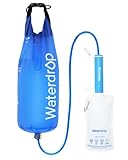
Overview:
The Waterdrop Gravity Water Filter Straw combines a 5-stage filtration system with a 1.5-gallon gravity-fed bag for comprehensive water purification. The filter uses coconut shell activated carbon, 0.1-micron ultrafiltration, and additional media to reduce chlorine, particulates, and unpleasant tastes. The system provides up to 1,400 gallons of safe water with a flow rate of 700ml/min.
What Makes It Stand Out:
The 5-stage filtration process addresses a broader range of contaminants than many competitors, including chemical tastes and odors. The innovative backwash purifier function allows easy cleaning without additional tools. The large 1.5-gallon bag holds the equivalent of eleven 500ml bottles, reducing refill frequency. Its versatile design connects to water bags or standard 27.5mm threaded bottles.
Value for Money:
At $31.99, this system positions itself as a feature-rich mid-range option. The 5-stage filtration and large capacity bag offer strong value, though the 1,400-gallon lifespan is shorter than some competitors. The included backwash capability and versatile connections enhance its worth.
Strengths and Weaknesses:
Strengths include comprehensive 5-stage filtration, large water bag capacity, effective backwash system, and versatile connectivity. The system balances capacity with portability reasonably well. Weaknesses include a less established brand reputation compared to Sawyer or LifeStraw, and the 1.5-gallon bag may be bulky for ultralight backpackers. Flow rate can decrease with sediment-heavy water.
Bottom Line:
The Waterdrop system is a solid choice for campers wanting chemical filtration alongside pathogen removal. Its large bag and backwash feature make it practical for basecamp use and emergency preparedness.
6. Membrane Solutions Personal Water Filter, Survival Filtration Straw Portable Gear, Emergency Preparedness, Supply for Drinking Hiking Camping Travel Hunting Fishing Team Family Outing (Blue, 4 Pack)
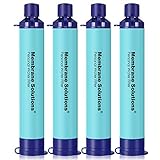
Overview: The Membrane Solutions 4-Pack delivers NSF-certified water filtration in an ultra-portable straw format designed for group adventures and emergency preparedness. Each unit measures 7.1 inches and weighs just 2 ounces, making them ideal for distributing among family members or stashing in multiple kits. The system filters up to 1,320 gallons per straw using a 5-stage process that includes hollow fiber ultrafiltration membranes with a 0.1-micron pore size.
What Makes It Stand Out: Triple NSF certification (42, 372, 401) sets this apart from budget competitors, verifying reduction of chlorine, lead-free construction, and microplastic filtration. The 5-stage system combines coarse screening, dual PP cotton layers, coconut shell activated carbon, and hollow fiber membranes—delivering comprehensive protection while preserving essential minerals. The 16.9 fl oz/min flow rate outperforms many straw filters, and the 28mm threading ensures compatibility with standard bottles.
Value for Money: At $38.98 for four units ($9.75 each), this package offers exceptional value for families or groups. Individual certified straws typically retail for $15-25, making this 40-60% cheaper per unit. The 1,320-gallon lifespan per straw provides years of use for occasional hikers or solid emergency backup for households.
Strengths and Weaknesses: Pros: Rigorous NSF triple certification; excellent flow rate; true 0.1-micron filtration; remarkable per-unit value; compact and lightweight; preserves beneficial minerals. Cons: Straw design requires direct suction or squeezing bottles; cannot filter for groups efficiently; manufacturer notes it doesn’t reduce TDS (though this preserves minerals); less versatile than pump or squeeze systems for collecting large water volumes.
Bottom Line: This 4-pack delivers laboratory-verified protection at an unbeatable group price point. Perfect for families, scout troops, or emergency kits where individual devices make sense. While not ideal for bulk water collection, the certifications and performance make it a trustworthy backup that punches well above its weight class.
7. Katadyn BeFree 1.0L Water Filter, Fast Flow, 0.1 Micron EZ Clean Membrane for Endurance Sports, Camping and Backpacking, One Size, 8018006

Overview: The Katadyn BeFree redefines portable filtration for fast-paced adventurers, integrating a 0.1-micron hollow fiber filter directly into a collapsible 1-liter Hydrapak SoftFlask. Weighing a mere 2.3 ounces, this system targets trail runners, ultralight backpackers, and endurance athletes who prioritize speed and minimalism. The filter removes 99.9999% of bacteria and 99.9% of protozoan cysts while delivering an impressive 2-liter-per-minute flow rate.
What Makes It Stand Out: The EZ-Clean membrane requires no backflushing or tools—simply shake or swish in water to clear debris. The Stay Clean drink nozzle prevents contamination between uses, a thoughtful detail for multi-day trips. The collapsible flask compresses as you drink, eliminating sloshing and reducing pack space. Swiss engineering ensures reliable performance in rugged conditions, backed by a two-year guarantee.
Value for Money: At $39.95, the BeFree sits in the premium category for personal filters. However, the integrated design eliminates separate bottles or hoses, justifying the cost for weight-conscious users. Competitors with similar flow rates and weights often cost $50-70, making this competitively priced for its performance class.
Strengths and Weaknesses: Pros: Exceptionally lightweight and compact; blazing 2 L/min flow rate; tool-free cleaning; collapsible flask saves space; proven Swiss quality; ergonomic for on-the-go drinking. Cons: 1,000-liter lifespan is shorter than some competitors; single-bottle capacity limits group use; soft flask durability concerns in abrasive environments; no virus protection; replacement filters are pricey.
Bottom Line: The BeFree is the ultimate filtration solution for solo ultralight adventurers and endurance athletes. If every ounce matters and you need rapid hydration on the move, this is your filter. The easy maintenance and fast flow outweigh the shorter lifespan for high-mileage users, though groups or basecampers should look elsewhere.
8. MSR MiniWorks EX Backpacking and Camping Water Filter

Overview: The MSR MiniWorks EX is a robust pump-style microfilter built for serious backpackers and expedition planners who demand reliable, high-volume water treatment. This field-maintainable unit combines ceramic and carbon filtration in a durable housing that pumps one liter per minute. Weighing one pound and measuring 7.5 x 2.75 inches, it balances portability with the convenience of pump-driven filtration for filling multiple containers.
What Makes It Stand Out: The replaceable carbon and ceramic filter cartridge meets NSF Protocol P231, removing bacteria (99.9999%), protozoa (99.9%), organic compounds, and particulates while improving taste and odor. Unlike disposable filters, the ceramic element can be cleaned repeatedly in the field to restore flow rates, extending practical lifespan up to 2,000 liters. The pump design allows direct filling of any wide-mouth bottle or hydration bladder without contorting with squeeze bags or lying prone at water sources.
Value for Money: At $124.95, the MiniWorks EX commands a premium price. However, the field-maintainable ceramic element and limited lifetime warranty offset replacement costs over years of use. Comparable pump filters range from $80-150, but MSR’s reputation for expedition-grade durability and the carbon core’s taste improvement justify the investment for frequent users.
Strengths and Weaknesses: Pros: Proven pump convenience for group use; field-cleanable ceramic extends life; carbon core improves taste; NSF P231 certified; reliable in silty water; limited lifetime warranty. Cons: One-pound weight is heavy for ultralight backpackers; 1 L/min flow rate lags behind squeeze systems; requires manual pumping effort; more complex than straw or squeeze filters; replacement cartridges are expensive.
Bottom Line: The MiniWorks EX excels for basecamping, group expeditions, and international travel where filling multiple bottles quickly matters. While too heavy for ultralight purists, its field-maintainability and proven durability make it a workhorse for regular adventurers and emergency kits. The premium price buys peace of mind and years of service.
9. Sawyer Squeeze Water Filtration System, Cnoc Premium 2 Liter Bladder

Overview: The Sawyer Squeeze paired with the Cnoc 2-liter bladder represents the gold standard for lightweight, high-capacity water treatment. This system centers on Sawyer’s 0.1-micron absolute hollow fiber filter, which delivers an astonishing 100,000-gallon lifespan—effectively a lifetime of use for most backpackers. The entire setup weighs under 6 ounces and includes the premium Cnoc Vecto bladder with a wide-mouth opening for easy filling from shallow sources.
What Makes It Stand Out: Sawyer’s individually tested filters feature thicker fiber walls than competitors, enabling aggressive backwashing without damage. The included cleaning coupling and plunger make maintenance simple in the field. The Cnoc bladder’s dual-threaded design works seamlessly with the Sawyer filter and standard bottles, while its durable TPU construction resists punctures better than typical mylar bags. The absolute 0.1-micron rating guarantees consistent performance.
Value for Money: At $63.80, this package offers extraordinary long-term value. The filter alone outlasts 50+ typical cartridges, and the premium Cnoc bladder (a $20-25 value) is included. While initial cost exceeds basic squeeze systems, the per-gallon cost is fractions of a penny—unmatched by any competitor. For serious backpackers, it’s a one-time investment.
Strengths and Weaknesses: Pros: Unparalleled 100,000-gallon lifespan; absolute filtration guarantee; lightweight system; versatile bladder included; easy field maintenance; individually tested; removes 100% of microplastics. Cons: Squeezing requires hand strength and effort; no virus protection; bladder can still puncture if abused; flow rate slows with dirty water; initial learning curve for new users.
Bottom Line: This is the smartest long-term investment for dedicated backpackers, preppers, and international travelers. The absurdly long filter life and included premium bladder justify every penny. While not the fastest or most effortless option, its reliability and economy over time are unbeatable. For those who prioritize durability and value over convenience, this system cannot be beat.
10. Katadyn Hiker Pro Hand Pump Water Filter for Backpacking, Camping, Emergency Survival

Overview: The Katadyn Hiker Pro hand pump filter bridges the gap between ultralight squeeze systems and heavy expedition pumps. Weighing 11 ounces, this unit features a 0.2-micron AntiClog glass fiber filter with an activated carbon core, delivering one liter per minute for 1-2 person use. The ergonomic handle and quick-connect hoses simplify operation, while the field-cleanable design ensures consistent performance across multi-day trips.
What Makes It Stand Out: The AntiClog pleated glass fiber filter provides 271 cm² of surface area—significantly more than typical cartridges—resisting clogging in turbid water. The active carbon core reduces unpleasant tastes and odors from stagnant sources, a feature many backpacking filters lack. The quick-connect system adapts to most hydration bladders and bottles without threading issues, and the filter can be cleaned in seconds by swishing in clean water, no tools required.
Value for Money: At $82.50, the Hiker Pro sits in the mid-range for pump filters. However, the 300-gallon lifespan is disappointing compared to competitors offering 1,000+ gallons. You’re paying for convenience and ergonomics rather than longevity. Similar-performing pumps cost $60-90, but Katadyn’s retail recognition and field-cleanable design add value for users prioritizing ease-of-use over filter economy.
Strengths and Weaknesses: Pros: Comfortable ergonomic pumping; large filter surface resists clogging; carbon core improves taste; quick-connect fittings; easy field maintenance; lightweight for a pump; trusted brand recognition. Cons: Short 300-gallon lifespan increases long-term costs; 0.2-micron rating is less stringent than 0.1-micron alternatives; flow rate slows as filter loads; pump mechanism adds complexity over squeeze filters; replacement cartridges are proprietary and expensive.
Bottom Line: The Hiker Pro suits casual backpackers and campers who value user-friendly design over maximum lifespan. Its comfortable pumping action and taste improvement make it pleasant for weekend warriors, but frequent users will find replacement costs add up quickly. For occasional use and emergency kits, it’s a reliable, easy-to-operate choice that won’t intimidate beginners.
Understanding the 99.9% Bacteria Removal Standard
What Does Log Reduction Mean?
When manufacturers claim 99.9% bacteria removal, they’re referencing a logarithmic reduction scale. A 3-log reduction eliminates 99.9% of microorganisms, leaving only 1 in 1,000 bacteria behind. A 4-log reduction achieves 99.99% removal, and a 6-log reduction reaches 99.9999%—the gold standard for many purification systems. This isn’t just statistical gymnastics; each additional “9” represents a tenfold improvement in safety. For backcountry use where water sources vary from mountain springs to cattle-contaminated ponds, that extra protection margin can be life-saving.
EPA Standards vs. Manufacturer Claims
The Environmental Protection Agency doesn’t certify portable filters like it does home systems, but it has established guidelines for microbiological water purifiers. Reputable manufacturers voluntarily test against NSF/ANSI protocols or EPA-established methods. Be wary of vague “removes 99.9% of bacteria” claims without independent lab verification. Trustworthy companies publish detailed test reports showing performance against specific organisms like Klebsiella terrigena or E. coli ATCC 11229. These reports should detail flow rates, water pressures, and lifespan testing conditions—not just a single pristine laboratory trial.
NSF/ANSI Certification Explained
NSF/ANSI Standard P231 and the newer Standard 244 provide rigorous testing frameworks for microbiological water purifiers. P231 requires filters to process three separate test waters—moderately hard, high pH, and high total organic carbon—each spiked with dangerous bacteria. The filter must process 1,000 liters while maintaining performance. Standard 244 adds freeze-thaw and drop testing for ruggedness. A filter claiming NSF/ANSI certification has undergone torture testing that simulates years of backcountry abuse. Look for certification numbers you can verify on the NSF website, not just logos slapped on packaging.
Why Backcountry Water Filtration Matters
The Hidden Dangers in Wilderness Water Sources
That remote lake might seem untouched, but wildlife feces, decaying carcasses upstream, and even other hikers’ poor hygiene create invisible contamination zones. Beavers, beloved ecosystem engineers, are notorious for spreading Giardia lamblia. A single deer dropping near a stream can release millions of bacteria per gram. Rain events wash surface contaminants into previously reliable springs. The wilderness isn’t sterile—it’s a thriving microbial ecosystem where human digestive systems are the vulnerable outsiders.
Common Waterborne Pathogens in Remote Areas
Bacteria represent just one threat category. E. coli and Salmonella cause severe dysentery within 24-72 hours. Campylobacter jejuni triggers Guillain-Barré syndrome in rare cases. Beyond bacteria, protozoa like Giardia and Cryptosporidium resist chlorine treatment and require filtration or UV purification. Viruses, though less common in North American backcountry, persist in areas with high human traffic. Your filter’s 99.9% bacteria rating doesn’t guarantee protection against these other threats unless it’s explicitly rated as a purifier.
Real-World Contamination Scenarios
Consider the popular alpine lake where everyone fills up—thousands of hikers annually introduce trace contamination. Or the desert pothole water source after a flash flood stirs up sediment and animal waste. Even deep wilderness isn’t immune; a marmot colony upstream can contaminate an entire watershed. Filters fail most often not from manufacturing defects but from user error in challenging conditions—forcing murky water through a clogged element or improper cleaning that damages delicate membranes.
Core Filtration Technologies Explained
Hollow Fiber Membrane Technology
Hundreds of tiny straws bundled together, each perforated with microscopic pores—that’s hollow fiber membrane technology. These U-shaped fibers, typically made of polyethersulfone or similar polymers, have pore sizes around 0.1-0.2 microns. Water flows through the fiber walls while bacteria, protozoa, and sediment get trapped outside. The beauty lies in surface area: a filter the size of a soda can contains hundreds of square feet of filtration media. Mechanical cleaning via backflushing reverses flow, flushing contaminants from the fiber surfaces and restoring flow rates without chemicals.
Ceramic Filter Elements
Ceramic filters use diatomaceous earth or other ceramic materials fired into porous elements with microscopic tunnels. These filters work through depth filtration—particles get trapped throughout the ceramic matrix, not just on the surface. Silver nanoparticles embedded in the ceramic provide secondary bacteriostatic action, preventing microbial growth on the filter itself. Ceramic shines in extremely turbid water; you can scrub the outer surface with an abrasive pad dozens of times before replacement. However, they’re heavier than hollow fiber and can crack if dropped on rock.
Glass Fiber Filters
Glass fiber elements pack extremely fine glass strands into a dense matrix, creating a tortuous path that traps microorganisms through mechanical and electrostatic attraction. These filters often achieve higher flow rates than ceramic but clog faster in silty water. They’re disposable rather than cleanable—once clogged, you replace the entire element. Glass fiber excels in pre-filtering roles or as primary filters in clear mountain streams where sediment load is minimal.
Activated Carbon’s Role
Activated carbon doesn’t remove bacteria—it adsorbs chemicals, improves taste, and removes odors. Many quality filters incorporate carbon either as a post-filter stage or impregnated into the main element. In backcountry contexts, carbon tackles pesticides, herbicides, and that swampy taste from stagnant water. However, carbon has limited capacity and requires periodic replacement. In bacteria-focused filters, treat carbon as a bonus feature, not the primary safety mechanism.
Flow Rate vs. Filtration Efficiency: The Trade-off
Understanding Liters Per Minute (LPM)
Flow rate directly impacts your camp routine. A filter pumping 1 liter per minute fills your bottle in 30 seconds; a 0.5 LPM filter doubles that time. High flow rates require larger pores or more surface area, increasing size and weight. Manufacturers optimize this balance differently—some prioritize speed for group use, others accept slower flow for ultralight solo designs. Real-world flow rates drop 30-50% from advertised specs as filters clog with use. Always consider the “day three” flow rate, not the pristine out-of-box performance.
When Speed Matters Most
During a thunderstorm at 11,000 feet, huddled under a tarp, you want water fast. Group cooking for five hungry hikers after a 15-mile day demands efficiency. Desert hiking where water sources are hours apart means quick turnarounds at precious springs. In these scenarios, a pump filter’s 1+ LPM output justifies its weight. Gravity systems excel here too—set up your “water station” and let it work while you set up camp, delivering liters with zero effort.
Why Slower Often Means Safer
Paradoxically, slower filtration can indicate better protection. Filters forcing water through tortuous paths or smaller pores naturally restrict flow. A squeeze filter that takes effort to push water through is likely providing thorough filtration. The key is finding your personal tolerance threshold—how much time are you willing to spend daily on water processing? Most solo hikers find 0.5 LPM acceptable; groups need 1 LPM minimum to avoid bottlenecks.
Micron Ratings: What You Need to Know
Absolute vs. Nominal Micron Ratings
Absolute micron rating guarantees 100% removal of particles at that size—every particle larger than 0.2 microns gets blocked. Nominal rating means “mostly” removed, typically 85-95% at that size. For backcountry safety, demand absolute ratings of 0.2 microns or smaller for bacteria. Anything larger lets through the smallest bacterial cells. Nominal ratings belong in swimming pool filters, not your hydration system.
Why 0.1-0.2 Microns is the Sweet Spot
E. coli measures about 0.5 x 2 microns. Campylobacter is roughly 0.2 x 2 microns. A 0.2-micron absolute filter catches these comfortably while maintaining reasonable flow. Go smaller to 0.1 microns and you gain virus removal (some viruses, not all) but sacrifice flow rate and increase clogging risk. Go larger to 0.3-0.4 microns and you risk letting the smallest bacteria through. This narrow window represents the engineering compromise between safety and practicality.
What Gets Through and What Doesn’t
A proper 0.2-micron filter blocks bacteria and protozoa cysts but allows dissolved minerals, salts, and viruses to pass. This is why “filter” differs from “purifier.” Purifiers add chemical, UV, or smaller pore sizes (often 0.02 microns) to tackle viruses. In North American backcountry, virus risk remains low except in high-human-traffic areas. International travel or post-disaster scenarios demand purification, not just filtration.
Pump Filters: The Classic Choice
How Manual Pump Systems Work
Pump filters use a hand-operated piston to create pressure, forcing water through the filter element and out a hose into your bottle. The physics is simple: mechanical advantage multiplies your arm strength into filtration pressure. Quality pumps feature dual-action pistons that filter on both up and down strokes, doubling efficiency. Most include pre-filters to remove large sediment before it reaches the delicate main element. The sealed system prevents recontamination during processing—water goes from source to bottle without touching potentially contaminated outer surfaces.
Best Use Cases for Pump Filters
Pump filters dominate in turbid water conditions. You can gently pump, letting the pre-filter catch silt, then increase pressure as water clears. They work in shallow puddles where gravity systems can’t function—just submerge the intake hose. For basecamp-style trips where you’re processing gallons daily, a pump’s speed and reliability shine. They also allow precise volume control; pump exactly what you need without waste. The mechanical simplicity means field repair is often possible with basic tools.
Maintenance Considerations
Pump filters demand regular cleaning to maintain flow. Most designs allow field backflushing without disassembly—just reverse the hoses and pump clean water backward. The O-rings and piston seals require periodic lubrication with food-grade silicone grease. Sand and grit can score the piston cylinder, causing pressure loss. After silty water sessions, always flush with clean water before storage. Replacement parts kits should include O-rings, piston seals, and any check valves—these small parts cause most failures.
Gravity Filters: Set It and Forget It
The Physics of Passive Filtration
Gravity systems harness elevation difference—hang a dirty water reservoir higher than a clean bag, and gravity does the work. Water flows through the filter element at low pressure (typically 1-2 psi), which paradoxically extends filter life by reducing compaction of trapped sediment. Most systems use hollow fiber filters that backflush simply by reversing the bags. The lack of moving parts eliminates mechanical failure points. However, low pressure means slower flow—expect 1-2 liters per hour depending on elevation difference and filter condition.
Group Camping Advantages
For groups of three or more, gravity filters revolutionize camp efficiency. While tents go up and dinner cooks, the filter silently processes 4-6 liters. No one stands around pumping while others wait. Many systems include 2-4 liter reservoirs, matching group cooking and hydration needs. The hands-free operation means you can start filtering before reaching camp—hang it from a tree while you scout the area. For families with children, gravity systems eliminate the “pump duty” complaints.
Limitations in Cold Weather
Gravity filters struggle in freezing conditions. The slow flow allows water to chill in the filter element, increasing freeze risk. The hanging reservoirs and multiple hoses create more opportunities for ice blockages. In sub-freezing temperatures, you must keep the filter in your sleeping bag or close to your body when not in use. The low pressure can’t push through partially frozen elements. For winter camping, pump filters or chemical treatments often prove more reliable.
Squeeze and Bottle Filters: Ultralight Solutions
On-the-Go Filtration Mechanics
Squeeze filters thread onto standard water bottles or soft flasks. You fill the bottle from the source, screw on the filter, then squeeze to drink. The pressure comes from your hand strength—simple but effective. Most use hollow fiber membranes in a compact housing weighing under 3 ounces. The direct-drink design eliminates separate clean and dirty containers, reducing contamination risk. However, squeezing becomes difficult as the filter clogs; you’ll need strong hands after a few days of silty water.
Personal vs. Group Use
These filters excel for solo hikers prioritizing weight savings. For two people, they’re manageable—each carries their own system. For groups larger than two, the constant squeezing and refilling becomes inefficient. The small capacity (typically 0.5-1 liter) means frequent trips to the water source. They’re perfect for trail runners, fastpackers, and anyone counting every ounce. The minimal size fits in a hip belt pocket for instant access.
Filter Lifespan in High-Frequency Use
Most squeeze filters last 1,000-2,000 liters before replacement. In practice, lifespan depends entirely on water clarity. Crystal-clear alpine streams might extend life beyond 2,000 liters; muddy desert potholes could clog it in 200 liters. Unlike pump filters, you can’t easily replace just the element—the entire unit gets swapped. At $25-40 per filter, the per-liter cost adds up quickly with heavy use. Consider them consumables rather than lifetime investments.
Straw-Style Filters: Emergency-Ready Options
Direct-From-Source Drinking
Straw filters let you drink directly from a stream or container like a giant straw. The filter sits inline, cleaning water as you sip. They weigh mere ounces and take up minimal pack space. In emergency kits, they provide peace-of-mind backup. However, they require you to be at the water source—no filling bottles for later. The suction required increases as filters clog, and you can’t share water easily with a partner. They’re best viewed as insurance, not primary filtration for extended trips.
Limitations for Cooking and Storage
You can’t filter water for cooking with a straw filter unless you sip-then-spit (impractical and unhygienic). You can’t fill a hydration bladder for a long waterless stretch. The design assumes you’ll have frequent water access and don’t need to carry clean water. For desert hiking or long ridge traverses, this limitation proves critical. Some hikers carry a straw filter as backup while using a primary system for bulk water processing.
Backup Filter Strategy
Smart backcountry travelers carry a straw filter as a “get-home” tool. If your primary filter fails or clogs irreparably, the straw ensures you can still drink. Store it in a waterproof bag with your first aid kit. Check it annually—some models develop internal mold if stored wet. The best backup strategy pairs a straw filter with chemical treatment tablets; you can drink immediately through the straw while waiting for chemicals to work on stored water.
Chemical Treatment Compatibility
When to Combine Methods
Chemical treatment complements filtration in high-risk scenarios. After filtering through a 0.2-micron element, adding chlorine dioxide tablets kills any viruses that slipped through. This “belt and suspenders” approach suits international travel or post-flood conditions where viral contamination is suspected. The sequence matters: filter first to remove sediment and protozoa cysts, then chemically treat. Doing it reverse wastes chemicals on organisms the filter would have caught anyway.
Iodine, Chlorine, and Chlorine Dioxide Interactions
Iodine and chlorine react with organic matter, creating disinfection byproducts. Filtering first removes most organic material, making the chemicals more effective. Chlorine dioxide (not the same as chlorine bleach) kills viruses, bacteria, and even Cryptosporidium with sufficient contact time. Iodine is less effective against Cryptosporidium and unsuitable for pregnant women or those with thyroid issues. Always check filter compatibility—some carbon elements absorb iodine, reducing its effectiveness.
The “Double-Tap” Approach
In extremely murky water, pre-filter through a bandana to remove sediment, then use your main filter, then chemically treat. This triple approach seems excessive but makes sense when sourcing water from stagnant cattle ponds or post-flood rivers. The bandana extends filter life, the filter removes pathogens, and chemicals provide viral insurance. For most mountain stream scenarios, this is overkill. But when you’re thirsty and the only water looks like chocolate milk, you’ll appreciate the redundancy.
Filter Longevity and Maintenance
Cleaning Methods That Preserve Filter Integrity
Backflushing—forcing clean water backward through the filter—dislodges trapped sediment without chemicals. For hollow fiber filters, this is the primary cleaning method. Use filtered water for backflushing to avoid introducing new contaminants. Ceramic filters require gentle scrubbing with an abrasive pad under running water. Never use soap, which can clog pores and leave residues. For glass fiber elements, tapping the filter gently on a rock can dislodge surface debris, but these filters are essentially disposable.
Backflushing Best Practices
Backflush immediately after each use, not at the end of the day. Fresh sediment releases easier than dried deposits. Use short, firm pulses rather than continuous pressure—this creates turbulence that dislodges particles. Collect backflush water in a separate container; you’ll be shocked at the brown sludge that emerges. In the field, backflush with the cleanest water available, even if it means filtering extra. Some systems include a dedicated syringe for powerful backflushing—carry it religiously.
Storage Between Adventures
Never store a filter wet. After your final trip flush, backflush thoroughly, then shake out excess water. Some hikers force air through the filter with a pump to dry internals. Store in a freezer if possible—freezing kills residual microbes and prevents mold. Otherwise, store in a dry place with good airflow. For long-term storage (months), soak the filter in a dilute bleach solution (follow manufacturer ratios), rinse thoroughly, then air dry. Always check for mold or mildew before first use each season.
Cold Weather Considerations
Freezing Risks to Filter Membranes
Water expands when freezing, rupturing delicate hollow fibers or cracking ceramic elements. A single freeze-thaw cycle can destroy a $100 filter. The damage isn’t always visible—microscopic cracks let bacteria through while the filter looks intact. Hollow fiber filters are most vulnerable; ceramic can survive occasional light freezing if completely dry. Always assume a wet filter is a destroyed filter if it froze.
Winter Storage Protocols
During winter day trips, carry the filter in an inside pocket, close to your body. In camp, sleep with it in your sleeping bag. Never leave it in a pack overnight. For multi-day winter trips, consider chemical treatment instead—filters become more trouble than they’re worth below 20°F. If you must use a filter, process water during the warmest part of the day, then immediately backflush and store it inside your jacket. Some adventurers fill a Nalgene with warm water and store the filter in it, creating a thermal buffer.
Pre-Trip Preparation for Sub-Zero Trips
Before heading out, test your filter at home in freezing conditions. Fill it, leave it outside overnight, then test flow rate and integrity with dyed water. Better to discover failure in your backyard than at a remote basecamp. Bring a backup—chemical tablets weigh nothing and work regardless of temperature. Consider melting snow instead of filtering liquid water; boiling simultaneously purifies and provides warm water. The weight of stove fuel often offsets filter hassle in deep winter.
Weight and Packability Factors
Ultralight Priorities for Solo Trekkers
Solo hikers face a stark choice: a 3-ounce squeeze filter or a 16-ounce pump system. The weight difference equals a day’s worth of food. For thru-hikers covering 20+ miles daily, every ounce matters. Ultralight filters sacrifice durability and flow rate for minimal weight. They become consumables, replaced every 500-1,000 miles. The math works out: carrying a lighter filter and replacing it twice on a 2,000-mile trail still saves pounds compared to a bombproof pump.
Group Size Impact on Filter Choice
Groups change the weight equation dramatically. A 1-pound gravity filter processing 6 liters per hour serves four people efficiently, while each carrying individual squeeze filters creates redundancy and wasted weight. For groups, calculate “weight per liter processed” rather than absolute filter weight. A shared system often proves lighter per person. Additionally, group members can share maintenance duties—one person backflushes while another cooks, distributing the workload.
Volume vs. Weight Trade-offs
Collapsible bottles and soft reservoirs pack smaller than rigid systems but require more careful handling. A gravity filter with 4-liter bags packs to the size of a softball but needs trees or rocks for hanging. Pump filters occupy consistent volume regardless of use. Consider your pack’s dead space—squeeze filters fit in hip belt pockets, while pump filters often end up buried in the main compartment. For travel and international trips, packability trumps minor weight differences when dealing with luggage restrictions.
Field Repair and Troubleshooting
Common Failure Points
O-rings fail first—cracking from dryness or tearing during assembly. Check valves stick from sediment, preventing priming. Filter elements crack from freezing or impact. Hoses kink and split, especially at connection points. Pump handles snap under excessive force. The most common user-induced failure? Forcing water through a severely clogged filter, rupturing internal membranes. Learn to recognize resistance changes—if pumping suddenly becomes easier, you’ve likely blown a seal or cracked the element.
Quick Fixes With Minimal Tools
Carry spare O-rings and a tiny tube of food-grade silicone grease. A pin can clear stuck check valves. Duct tape wraps split hoses temporarily. If a ceramic element cracks, you can sometimes continue using it—the crack might not span the entire element. With hollow fiber filters, a slow leak at a connection might be survivable if you can maintain pressure and collect most output. Always carry enough water to reach the next source if your filter fails completely.
When to Abort and Seek Alternative Water
If your filter fails 20 miles from the trailhead and you’re out of chemicals, you face hard choices. Boiling water for 1 minute (3 minutes above 6,500 feet) kills everything but requires fuel and time. Solar disinfection (SODIS) works in bright sun after 6+ hours but needs clear bottles. Improvised charcoal and sand filters remove sediment but not bacteria—use them only as pre-filters before boiling. The safest abort is to hike out using carried water, treating dehydration as the lesser risk compared to waterborne illness.
Cost vs. Value Analysis
Initial Investment vs. Per-Liter Cost
A $100 pump filter processing 2,000 liters costs $0.05 per liter. A $30 squeeze filter lasting 1,000 liters costs $0.03 per liter but requires more frequent replacement. Chemical tablets cost $0.10-$0.15 per liter but add no weight. Calculate your annual water consumption: a weekend warrior processing 10 liters per trip for 20 trips uses 200 liters yearly. A long-lasting filter makes economic sense. A thru-hiker processing 6 liters daily for 150 days needs 900 liters—disposable filters become expensive.
Replacement Cartridge Economics
Check cartridge availability before committing to a filter system. Some brands use proprietary elements costing $40-60 and available only through specialty retailers. Others use standard sizes shared across models. Ceramic elements cost more upfront but last indefinitely with cleaning. Hollow fiber cartridges are cheaper but disposable. Factor in shipping costs for replacement cartridges—buying two spares with your initial purchase often saves money and ensures you’re not caught short mid-season.
Warranty and Manufacturer Support
Reputable manufacturers offer multi-year warranties covering defects but not normal wear or freezing damage. Read warranty terms carefully—some require registration within 30 days. Customer support quality matters; a company that answers technical questions and ships replacement parts quickly is worth premium pricing. Check online forums for real-world warranty claim experiences. A filter is safety equipment—saving $20 on a no-name brand loses its appeal when you’re emailing China for a replacement O-ring that never arrives.
Frequently Asked Questions
How do I know if my filter is actually removing 99.9% of bacteria?
Independent lab testing is the only verification. Look for NSF/ANSI P231 or Standard 244 certification with published test reports. In the field, you can’t visually confirm bacterial removal. However, sudden flow rate increases or visible cracks indicate failure. Some hikers use TDS (total dissolved solids) meters to check for filter bypass, though this detects minerals, not microbes. The best approach: trust certified filters, maintain them properly, and replace cartridges per manufacturer guidelines.
Can I use these filters in extremely murky or silty water?
Yes, but with precautions. Always pre-filter through a bandana, coffee filter, or dedicated sediment filter to extend main filter life. Let silty water settle in a pot for 30 minutes, then decant the clearer top layer. Pump filters handle turbidity better than gravity or squeeze filters due to higher pressure. Expect drastically reduced lifespan in muddy water—what lasts 2,000 liters in clear streams might only process 200 liters in glacial melt. Backflush aggressively after each silty water session.
How often should I clean or backflush my filter on a multi-day trip?
Backflush after every use, period. It takes 30 seconds and prevents sediment from drying and compacting inside filter elements. On trips longer than a week, perform a deep clean mid-trip: backflush with the cleanest water available, then shake vigorously to dislodge internal debris. If flow rate drops noticeably, stop and clean immediately—forcing water through accelerates wear. Carry a small brush to clean pre-filters and intake screens daily.
What’s the difference between filtering and purifying water?
Filtering removes bacteria and protozoa via physical barriers (typically 0.1-0.2 microns). Purifying eliminates viruses, which are smaller than filter pores. Purification methods include chemical treatment, UV light, boiling, or filters with pores smaller than 0.02 microns. In North American backcountry, filtration suffices for most scenarios. International travel, areas with poor sanitation, or post-disaster situations require purification. Some systems combine both—filter first, then chemically treat.
Will freezing temperatures ruin my water filter?
Yes, if the filter is wet. Ice crystals rupture hollow fiber membranes and crack ceramic elements. A frozen filter must be considered compromised, even if it looks intact. To prevent freezing, store the filter in your sleeping bag at night and in an inside pocket during the day. Never leave it in a pack. For winter trips, consider switching to chemical treatment or boiling. Some filters can be stored dry between uses, but most are impractical to dry completely in the field.
How long do portable water filters typically last?
Lifespan ranges from 500 to 10,000+ liters depending on design and water quality. Hollow fiber filters typically last 1,000-2,000 liters. Ceramic filters last indefinitely with cleaning but may crack. Glass fiber filters are disposable after 500-1,000 liters. Real-world use often halves manufacturer claims. Track your usage in a trail journal. When flow rate becomes unacceptably slow even after aggressive cleaning, replace the element. Don’t risk pushing beyond recommended lifespan.
Can I filter saltwater or chemically contaminated water?
No. Standard portable filters remove bacteria and protozoa but cannot desalinate seawater or remove chemical pollutants like pesticides, heavy metals, or petroleum products. Some filters include activated carbon that reduces certain chemicals and improves taste, but this is not reliable for safety. For chemical contamination, you need distillation, reverse osmosis, or specialized carbon filters designed for specific contaminants. In areas with mining runoff or agricultural pollution, source water carefully upstream of contamination.
Are squeeze filters as effective as pump filters?
When both use 0.2-micron absolute filtration, they provide identical bacterial removal. The difference lies in application, not core technology. Pump filters handle turbid water better due to higher pressure and integrated pre-filters. Squeeze filters are lighter and simpler but clog faster and are harder to clean thoroughly. Effectiveness depends on proper use—squeezing too hard on a clogged filter can force contaminants through damaged membranes. For clear water sources, both perform equally well.
What should I do if my filter clogs in the backcountry?
First, stop forcing water through it—this risks membrane rupture. Backflush aggressively with the cleanest water available. Tap the filter gently against a rock to dislodge surface debris. Check and clean pre-filters and intake screens. If flow remains poor, let the filter soak in clean water for an hour to loosen internal sediment. As a last resort, you can carefully remove the element (if design allows) and rinse it in a stream, but this risks contamination—only do this if you can subsequently treat the water chemically.
Is it necessary to use chemical treatment after filtering?
Usually not in North American wilderness. A quality 0.2-micron filter removes bacteria and protozoa, the primary threats. Chemical treatment adds viral protection and guards against possible filter failure or post-filtration contamination. Some hikers add a chlorine dioxide tablet when filling from particularly suspect sources like beaver ponds or cattle tanks. The extra 30 minutes of wait time is cheap insurance. For most mountain streams, filtering alone suffices. Trust your filter’s certification, but understand its limitations.'