Traveling with odd-shaped items transforms an ordinary journey into a logistical puzzle. Whether you’re a musician protecting your instrument, an athlete transporting gear, or a collector bringing home an unconventional souvenir, standard luggage solutions rarely accommodate life’s irregular treasures. The frustration of watching a baggage handler struggle with your poorly secured package—or worse, discovering damage at baggage claim—can overshadow an otherwise perfect trip.
Adjustable luggage straps have evolved from simple accessories into essential travel engineering tools. These versatile workhorses don’t just keep your belongings intact; they provide peace of mind through intelligent design and materials science. Understanding what separates a reliable strap from a liability means the difference between your prized possessions arriving safely or becoming another cautionary tale. Let’s explore how to select and use these unsung heroes of the baggage claim carousel.
Top 10 Adjustable Luggage Straps for Odd-Shaped Items
Detailed Product Reviews
1. Luggage Straps 3 PCS for Suitcases TSA Approved 2 Short & 1 Long Adjustable Straps with Elastic Thick Rope for Connecting Suitcases and Bags Stably with Strap Buckle and Bottle Buckle Clip, Black

Overview: This comprehensive three-piece strap system offers a TSA-approved solution for travelers juggling multiple bags. The set includes one long strap (up to 109 inches), two short straps (up to 48 inches), a connecting buckle, and a water bottle clip—everything needed to secure up to three 24-30 inch suitcases simultaneously.
What Makes It Stand Out: The standout feature is the 5mm thick, 60-strand elastic rope that stretches to twice its original length while resisting stretch fatigue. Combined with 5cm-wide heavy-duty polyester webbing, this system prioritizes durability. The TSA-approved design allows agents to inspect luggage without cutting straps, and the included water bottle clip adds unexpected versatility for hands-free hydration access.
Value for Money: At $12.99 for a complete 4-item system, this package undercuts buying components separately. Competitors typically charge $8-10 for just two basic straps without TSA approval or the bottle accessory. For families or group travelers managing multiple suitcases, the bundled functionality justifies every penny.
Strengths and Weaknesses:
- Strengths: Exceptional versatility for securing multiple suitcases; TSA-approved construction prevents inspection damage; 5mm elastic rope offers superior strength; includes practical water bottle clip; wide adjustment range accommodates various luggage sizes.
- Weaknesses: Complex setup may overwhelm minimalists; 5cm width can be bulky for smaller carry-ons; elastic rope may be overkill for light packers who just need basic bag connection.
Bottom Line: Ideal for families and frequent flyers managing multiple large suitcases. The heavy-duty construction and TSA compliance make it a reliable travel investment, though casual travelers might prefer simpler options.
2. BILIONE Add a Bag Luggage Straps 2 Pack, Adjustable Bungee Elastic Belt to Connect Two Suitcases, Secure Carry On & Travel Essentials (Black)
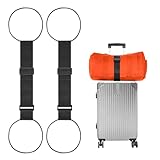
Overview: These minimalist bungee straps provide a lightweight solution for connecting a second bag to your primary luggage. Each strap extends from 10.2 to 15.74 inches and weighs a mere 1.27 ounces, making them virtually unnoticeable in your travel kit until needed.
What Makes It Stand Out: The precision quick-release clips enable instant length adjustment without wrestling with tangled cords. The heavy-duty polyester weave maintains tension through repeated stretching, while the 12-month durability promise demonstrates manufacturer confidence. At under 1.5 ounces total, these are among the lightest luggage connectors available.
Value for Money: Priced at $9.99 for two ($5 per strap), this offers solid mid-range value. You’re paying a slight premium over generic bungees for the quick-release hardware and warranty, but less than TSA-approved systems. For carry-on travelers needing occasional bag stacking, the cost-to-convenience ratio is excellent.
Strengths and Weaknesses:
- Strengths: Featherlight construction adds zero bulk; quick-release buckles enable one-handed adjustment; reinforced stitching prevents fraying; versatile for cruise, airport, or daily use; 12-month warranty provides peace of mind.
- Weaknesses: 15.74-inch maximum length limits compatibility with larger items; not TSA-approved for checked baggage; two-strap system can’t secure three+ suitcases like some competitors; elastic may lose tension over time.
Bottom Line: Perfect for minimalist travelers and carry-on enthusiasts who prioritize packability. The quick-release feature and warranty make it a smart choice for frequent flyers, though heavy packers should consider longer alternatives.
3. ECOSHIRE Carrying Strap with Handle, Handheld Belt for Safely Moving and Lifting Heavy Boxes, Adjustable Belt, H-Shaped Style Carry Straps, Suitable for Cylinder, Camping Mat(61 inch)

Overview: This H-shaped carrying strap transforms awkward box-lifting into a manageable task. The 61-inch nylon belt features a rubber-padded handle and quick-release buckles, designed to distribute weight evenly across your hand when moving heavy rectangular or cylindrical objects.
What Makes It Stand Out: The H-configuration creates superior weight balance compared to single-strap designs, preventing load shifting. Dense nylon construction with repeated reinforcement stitching ensures durability under substantial weight. The rubber-padded handle provides comfort during extended carries, while the foldable design allows compact storage when not in use.
Value for Money: At $14.20, this strap offers an affordable alternative to hand trucks or dollies for occasional heavy lifting. While pricier than basic luggage connectors, its specialized ergonomic design justifies the cost for anyone regularly moving bulky items. It essentially adds a portable handle to any object, eliminating the need for a second person.
Strengths and Weaknesses:
- Strengths: H-shape design evenly distributes weight; thick rubber-padded handle enhances grip comfort; high-density nylon resists wear; quick-release buckles simplify adjustment; versatile for boxes, cylinders, and camping mats.
- Weaknesses: Not designed for connecting rolling suitcases; 61-inch length may be insufficient for oversized items; single-purpose design lacks travel-specific features; requires proper positioning to avoid load imbalance.
Bottom Line: An excellent tool for movers, event organizers, or anyone frequently lifting heavy boxes solo. The ergonomic benefits outweigh the modest price, though it’s unsuitable for travelers seeking luggage connection solutions.
4. ECOSHIRE Carrying Strap with Handle, Handheld Belt for Safely Moving and Lifting Heavy Boxes, Adjustable Belt, H-Shaped Style Carry Straps, Suitable for Cylinder, Camping Mat(78.7 inch)
Overview: Identical to its 61-inch sibling, this extended 78.7-inch version accommodates larger boxes, bulky camping gear, and oversized cylinders. The H-shaped nylon strap system maintains the same rubber-padded handle and quick-release buckles, offering enhanced versatility for bigger loads.
What Makes It Stand Out: The extra 17.7 inches significantly expands carrying capacity without compromising the ergonomic H-design benefits. This length excels for moving large-screen TV boxes, stacked storage bins, or rolled camping mats that would overwhelm shorter straps. The same dense nylon construction and reinforced stitching ensure durability scales with size.
Value for Money: At $14.90—just $0.70 more than the 61-inch model—this represents exceptional incremental value. If you regularly handle items exceeding five feet in circumference, the minimal price difference makes this the obvious choice. For smaller loads, however, you’re paying slightly more for unused capacity.
Strengths and Weaknesses:
- Strengths: Extended length handles oversized items; maintains ergonomic H-shape weight distribution; same durable nylon and reinforced construction; rubber-padded handle comfort; quick-release convenience.
- Weaknesses: Excess length can be cumbersome for small boxes; same single-purpose limitation as shorter version; not suitable for airport luggage connection; requires more storage space when coiled.
Bottom Line: Choose this longer version if you routinely move large objects. The negligible price increase for substantial extra length makes it a smarter long-term investment than the 61-inch model, provided you have the storage space.
5. Chelmon 2 Pack Luggage Straps, Ajustable Elastic Bungee Belt for Suitcases, Add Extra Bag Easy and Securely for Travel
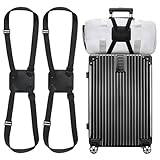
Overview: These sleek bungee straps offer a middle-ground solution for travelers wanting adjustable, washable connectors. The two-pack provides straps that extend from 23.6 to 39.4 inches, crafted from high-elastic rubber with PU leather accents for a polished look that functions as well as it appears.
What Makes It Stand Out: The machine-washable design sets these apart from most competitors, allowing easy cleaning after grimy airport handling. The 1-inch width strikes a balance between strength and packability, while PU leather reinforcement adds durability at connection points. The generous 39.4-inch maximum length accommodates larger personal items than many compact bungees.
Value for Money: At $9.99 for two, this matches the BILIONE price point while offering greater length adjustability and washable convenience. The PU leather detailing suggests better durability than bare elastic, making it a strong value for travelers prioritizing hygiene and flexibility over TSA certification.
Strengths and Weaknesses:
- Strengths: Impressive 23.6-39.4 inch adjustment range; machine-washable for easy maintenance; PU leather reinforcement enhances durability; lightweight and compact; sleek aesthetic; suitable for various bag sizes.
- Weaknesses: 1-inch width less robust than heavy-duty alternatives; no TSA approval for checked luggage; PU leather may crack with extreme temperature exposure; two-strap limit for multi-suitcase configurations.
Bottom Line: An excellent choice for hygiene-conscious travelers needing versatile bag connection. The washable feature and extended length range make it practical for frequent use, though heavy packers should verify width strength for substantial loads.
6. Luggage Straps for Suitcases TSA Approved, Travel Accessories to Connect Two Suitcase, Add Bag Luggage Straps for Carry On Your 3 Luggages Adjustable Buckle Belt, 2Pack Black

Overview: These TSA-approved luggage straps offer a straightforward solution for travelers needing to connect multiple bags. The two-pack set features adjustable polyester webbing with heavy-duty plastic buckles, designed to secure everything from carry-ons to larger checked luggage without triggering security concerns.
What Makes It Stand Out: The standout feature is the TSA-friendly quick-release buckle that eliminates the risk of screeners cutting your straps during inspections. The impressive length adjustability from 40 to 78.5 inches accommodates suitcases from 20" to 34", making it versatile for various luggage sizes. The cross-strap design distributes weight evenly, preventing twisting or slipping during transit.
Value for Money: At $6.25 for a two-pack, these straps deliver exceptional value. Comparable single straps often cost $4-5 each, so you’re essentially getting double the utility for the price of one. The durable polyester construction ensures multiple trips of reliable service, making this a budget-friendly investment for occasional and frequent travelers alike.
Strengths and Weaknesses: Strengths:
- TSA-safe buckle prevents airport security issues
- Extensive adjustability fits wide range of luggage sizes
- Two-pack provides backup or dual-bag connection
- Durable polyester webbing withstands travel stress Weaknesses:
- Plastic buckle may show wear after extensive use
- Non-elastic design lacks stretch for irregularly shaped items
- Basic black aesthetic lacks style variety
Bottom Line: A reliable, budget-conscious choice for travelers seeking TSA-compliant luggage connection without frills. Perfect for families and frequent flyers who prioritize function and value.
7. Luggage Backpack Conversion System Luggage Connector Straps – Cross Shaped External Frame Backpack with Handle, Quick-Release Lock, Backrest –Backpack Luggage Strap for Suitcase, Trolley, Handbag

Overview: This innovative system transforms any wheeled suitcase into a functional backpack, offering hands-free mobility for travelers facing stairs, cobblestones, or crowded spaces. The cross-shaped design features premium nylon construction with a padded sponge backrest and ergonomic support straps.
What Makes It Stand Out: The revolutionary conversion capability sets this apart from standard connection straps. It supports up to 150 pounds while distributing weight through adjustable chest and waist straps, reducing shoulder strain significantly. The quick-release buckles enable effortless installation and removal in seconds, and the entire system folds compactly into your luggage when not needed.
Value for Money: At $39.90, this represents a premium investment, but it effectively eliminates the need for a separate travel backpack. For frequent travelers, hikers, or commuters navigating challenging terrain, the ergonomic benefits and versatility justify the cost. It essentially provides two travel solutions in one package.
Strengths and Weaknesses: Strengths:
- Transforms suitcases into ergonomic backpacks
- High 150-pound weight capacity handles heavy loads
- Padded backrest and adjustable straps for comfort
- Compact foldable design for easy storage Weaknesses:
- Premium price point may deter casual travelers
- Adds bulk and complexity compared to simple straps
- Requires adjustment period for optimal fit
Bottom Line: An excellent investment for adventurous travelers and urban commuters who need maximum flexibility. Converts your existing luggage into a comfortable backpack system.
8. Luggage Straps Bag Bungees for Add a Bag Easy to Travel Suitcase Elastic Strap Belt (Black) …

Overview: These elastic bungee-style straps provide a flexible solution for securing additional bags to your wheeled luggage. Constructed from high-elastic rubber bands with PU leather accents, the cross-shaped design adapts to various bag sizes while maintaining a secure hold throughout your journey.
What Makes It Stand Out: The stretchable nature distinguishes this from rigid strap systems, allowing it to conform to irregularly shaped items like coats, pillows, or duty-free purchases. The adjustable buckle combined with inherent elasticity creates a self-tensioning system that prevents slipping without over-compressing your belongings. Its machine-washable construction simplifies maintenance after messy travels.
Value for Money: Priced at $6.69 for a single strap, it sits in the budget-friendly category while offering premium elastic functionality. The durability of the rubber band and PU leather components provides good longevity for the price, though frequent travelers might prefer a two-pack for connecting multiple items simultaneously.
Strengths and Weaknesses: Strengths:
- Elastic design accommodates irregular shapes and sizes
- Self-adjusting tension prevents bag deformation
- Machine washable for easy cleaning
- Lightweight and compact for storage Weaknesses:
- Single strap limits connection options
- Elastic may lose resilience over extended use
- Less formal appearance for business travel
Bottom Line: A versatile, stretchable option for travelers who frequently acquire extra items during trips. Ideal for securing jackets or shopping bags to existing luggage.
9. 2 Pack Luggage Straps Bag Bungee for Add a Bag Suitcase Adjustable Belt Travel Suitcase Elastic Strap Belt Travel Accessories Connecting Carry On Bags Add Bags

Overview: This two-pack of elastic bungee straps offers a practical solution for connecting multiple bags to your primary luggage. Made from durable PET polyester and latex, each strap features an adjustable cross-design that secures hand luggage, coats, or additional suitcases to wheeled bags without twisting or slipping.
What Makes It Stand Out: The inclusion of two straps in contrasting black and gray provides immediate versatility for different luggage pieces or travel companions. The PET polyester and latex blend offers superior durability compared to standard rubber bands, while maintaining gentle stretch that won’t deform bags. Machine-washability adds convenience for frequent travelers.
Value for Money: At $7.89 for two straps, this package delivers excellent value with premium materials and dual-color functionality. The cost per strap under $4 competes with basic non-elastic options, making it an economical choice for travelers wanting stretchable security without sacrificing quality.
Strengths and Weaknesses: Strengths:
- Two-pack provides backup or dual-connection capability
- Durable PET polyester and latex construction
- Machine washable for easy maintenance
- Versatile black and gray color options Weaknesses:
- Elastic tension may not suit extra-heavy items
- Buckle durability could be improved
- Limited length adjustability compared to non-elastic straps
Bottom Line: A smart, cost-effective choice for travelers wanting washable elastic straps in a convenient two-pack. Perfect for family trips or multi-bag journeys.
10. Vigorport Luggage Straps, Metal Luggage Connector Straps for Suitcases, Stretchable Add a Bag Adjustable Accessories Travel Belts (Black, Normal)

Overview: Vigorport’s luggage straps elevate the standard connection strap with metal hardware and innovative dual-design packaging. This set includes two distinct strap configurations—double-fixation and T-type—both featuring stretchable sections and reinforced nylon webbing for securing multiple bags or irregular items to your primary suitcase.
What Makes It Stand Out: The metal buckles provide superior durability and security compared to plastic alternatives, while the two different designs offer specialized functionality. The double-fixation strap includes a hook-and-loop handle attachment for added stability, while the T-type design offers dual adjustment points for precise tension control. Both incorporate stretchable sections to absorb shock and reduce strap stress.
Value for Money: At $9.98 for two specialized straps with metal hardware, this represents strong mid-range value. The durability upgrade justifies the modest price increase over plastic-buckle options, particularly for frequent travelers who prioritize longevity and versatile connection methods.
Strengths and Weaknesses: Strengths:
- Metal buckles ensure long-term durability
- Two distinct designs for different connection needs
- Stretchable sections reduce pressure and wear
- One-hand quick-release operation Weaknesses:
- Metal components may scratch delicate luggage surfaces
- Slightly heavier than all-plastic alternatives
- Higher price point than basic strap sets
Bottom Line: An excellent upgrade for frequent flyers seeking durable, versatile connection options. The metal hardware and dual-design approach justify the modest premium.
Why Odd-Shaped Items Create Unique Travel Challenges
Odd-shaped items defy the standardized dimensions that airlines and luggage manufacturers expect. Unlike rectangular suitcases that stack efficiently, irregular objects create pressure points, shift during transit, and expose vulnerable areas to impact. A surfboard’s nose, a guitar’s neck, or a bicycle wheel protrudes beyond protective cases, becoming impact magnets. These items often lack integrated attachment points, making them slippery candidates for conventional securing methods. The physics of baggage handling systems—conveyor belts, sorting chutes, and stacked cargo holds—punish anything that doesn’t conform to predictable geometry. Your odd-shaped item becomes the weak link in a chain of baggage, potentially damaging both itself and neighboring luggage.
What Are Adjustable Luggage Straps and How Do They Work
Adjustable luggage straps are engineered fastening systems designed to compress, secure, and stabilize items during transport. Unlike fixed-length straps or improvised rope solutions, they feature dynamic length adjustment mechanisms—typically cam buckles or side-release buckles paired with continuous webbing loops. This adjustability creates a mechanical advantage, allowing you to apply consistent tension across irregular surfaces. The working principle involves distributing load forces across multiple axes, converting the strap’s tensile strength into compression that immobilizes your item. Quality straps incorporate features like non-slip backing, reinforced stitching patterns, and quick-release mechanisms that balance security with accessibility.
The Physics of Strap Security
Understanding force distribution reveals why proper strapping technique matters more than brute strength. When you tighten a strap around an odd-shaped item, you create a hoop stress that compresses the load inward. This compression generates friction between the strap and item surface—your primary defense against movement. However, irregular shapes create uneven pressure zones. Sharp corners concentrate stress, potentially damaging both strap and item, while curved surfaces reduce contact area. High-quality straps mitigate this through strategic padding and optimal width-to-length ratios. The strap’s breaking strength, typically rated in pounds or kilograms, must exceed the dynamic loads generated during handling—impacts that can multiply static weight by factors of three to five.
Material Matters: Choosing the Right Webbing
The strap’s webbing material determines its durability, elasticity, and environmental resistance. Nylon 6,6 dominates premium straps, offering exceptional tensile strength (up to 2,200 pounds for one-inch width) and abrasion resistance. Its slight elasticity (3-4% stretch) provides shock absorption during sudden impacts but can loosen under sustained load. Polyester webbing sacrifices some strength for superior UV resistance and minimal stretch (<2%), making it ideal for outdoor gear exposed to sunlight. Polypropylene offers lightweight economy but degrades quickly under UV exposure and has lower abrasion resistance. Ballistic weave patterns, originally developed for military flak jackets, create interlocking structures that resist cutting and fraying. For odd-shaped items with sharp edges, look for edge-wrapped webbing that prevents unraveling.
Buckle Systems: The Heart of the Strap
The buckle transforms strap potential into practical security. Side-release buckles, common on backpack straps, offer one-handed operation but typically support only 100-200 pounds—adequate for light items but risky for heavy gear. Cam buckles use a toothed lever that bites into the webbing, creating mechanical advantage and supporting 300-600+ pounds, perfect for dense, odd-shaped items. Metal cam buckles outperform plastic in extreme temperatures and UV exposure but add weight and trigger TSA scrutiny. TSA-friendly designs feature non-locking mechanisms that inspectors can open without cutting tools. For maximum security, some straps incorporate double-buckle redundancy—two independent closure systems that ensure failsafe operation if one buckle fails during transit.
Length and Width Specifications
Selecting appropriate dimensions prevents both inadequate coverage and dangerous excess. Standard lengths range from four to eight feet, but odd-shaped items often require longer straps. Measure the item’s circumference at its widest point, then add 18-24 inches for routing and adjustment. For a guitar case measuring 48 inches around, a six-foot strap provides adequate working length. Width affects pressure distribution—one-inch straps concentrate force and suit smaller items, while two-inch straps distribute load across broader surfaces, essential for fragile or compressible gear. Wider straps also resist twisting on irregular shapes. Avoid straps longer than necessary; excess length becomes a snag hazard in conveyor systems and can wrap around machinery, causing catastrophic failure.
Understanding Weight Capacity and Load Ratings
Manufacturers advertise two critical numbers: breaking strength and working load limit (WLL). Breaking strength represents the force required to cause failure in laboratory conditions, typically 2,000-3,000 pounds for quality straps. WLL applies a safety factor—usually 1/3 to 1/5 of breaking strength—accounting for wear, knots, and dynamic loading. For a 50-pound bicycle, you need a strap with WLL exceeding 150 pounds to handle baggage system impacts safely. Never exceed the WLL; doing so risks sudden failure without warning. For odd-shaped items, calculate the “effective weight” by multiplying actual weight by 3-4x to account for leverage and impact forces generated by protruding components.
Color Coding and Identification Strategies
Beyond aesthetics, color serves functional purposes in travel logistics. Bright neon colors—orange, yellow, lime green—make your item instantly recognizable on crowded carousels, reducing the chance of someone else grabbing your gear. They also signal “handle with care” to baggage personnel. Some travelers use color-coded systems: red straps for fragile items, blue for waterproof gear, green for essential equipment. Custom printing options allow adding contact information, destination details, or “This Side Up” instructions directly on the strap. Reflective threads woven into webbing enhance visibility during early-morning flights or dimly lit loading areas, adding a safety dimension that standard luggage tags can’t match.
TSA Compliance and Airport Security Considerations
The Transportation Security Administration reserves the right to inspect any checked item, and non-compliant straps can delay your journey or result in destructive removal. TSA-friendly straps use non-locking buckles that inspectors can open quickly without tools. Avoid straps with integrated combination locks or padlock hasps on checked baggage—these will be cut. Metal buckles may trigger additional screening; while not prohibited, they can slow the process. Consider adding a small card to your item explaining the strap’s quick-release mechanism. During inspection, agents may remove straps entirely; pack a spare or learn to re-secure items quickly at the re-composure area. Straps with excessive length or dangling ends can jam in X-ray machines, so tuck or secure loose ends before check-in.
Securing Specific Odd-Shaped Items
Different challenges demand tailored approaches. For skis and snowboards, use two straps—one near the bindings, another at the tips—to prevent separation and twisting. Create a “sling” configuration for guitars by routing straps through the case handle and around the body, avoiding pressure on the neck joint. Bicycle wheels require radial strapping patterns that compress spokes evenly without bending them. For oddly-shaped souvenirs, identify the item’s center of gravity and create a “cradle” with crossed straps that prevents rotation. Protruding elements like tripod legs or fishing rod tips need additional padding before strapping; use pool noodles or pipe insulation as protective sleeves. Always strap items to their own cases first, then secure the combined unit to prevent internal movement.
Professional Strapping Techniques
Master these methods to transform amateur wrapping into professional-grade security. The “box cross” technique uses two straps forming an X pattern across the top and bottom of an item, creating four compression points that resist movement in any direction. For cylindrical items like telescope tubes, the “spiral wrap” involves winding the strap at a 45-degree angle, maximizing surface contact and preventing axial slip. When strapping multiple items together—say, a tent bag and backpack—use the “sandwich” method: place a strap under both items, cross over the top, and secure, creating a unified mass that resists separation. Always position buckles on flat surfaces, never on corners or curves where stress concentrates. After tightening, perform a “twist test”—if you can twist the strap more than 90 degrees, it’s too loose.
Common Mistakes That Compromise Security
Even quality straps fail when used improperly. Over-tightening ranks as the top error—excessive tension crushes cases, damages contents, and stresses buckle components to failure point. Using a single strap on long items creates a pivot point; the item rotates around the strap like a lever, generating destructive forces. Ignoring edge protection turns strap tension into a cutting action on cardboard boxes or soft cases. Failing to inspect straps before each use risks deploying damaged equipment—frayed webbing, cracked buckles, or UV-brittled material can fail catastrophically. Using straps on dirty or wet surfaces reduces friction, allowing slip; always clean and dry attachment points. Perhaps most critically, securing straps to handles instead of around the item’s body creates a single point of failure—handles tear off under dynamic loading.
Maintenance and Care for Longevity
Treat your straps as precision equipment requiring regular maintenance. After each trip, clean webbing with mild soap and water to remove abrasive grit and corrosive substances like salt from airport de-icing. Air-dry completely before storage—trapped moisture breeds mildew and weakens fibers. Inspect stitching patterns monthly, paying attention to bar-tack reinforcements at stress points; loose threads indicate imminent failure. Store straps loosely coiled in a cool, dark place; UV exposure degrades strength even through windows. Avoid storing near chemicals, especially chlorine or petroleum products, which accelerate material breakdown. Retire any strap showing fading (indicates UV damage), stiffness (suggests fiber breakdown), or buckle cracks. Most quality straps have a service life of 3-5 years with regular use; mark the purchase date with a permanent marker for reference.
Multi-Purpose Applications Beyond Travel
The investment pays dividends beyond airport terminals. At home, these straps organize garage storage by bundling ladders, securing seasonal decorations to rafters, or compressing bulky items like sleeping bags. During moves, they replace rope for securing furniture pads around odd-shaped antiques or keeping dresser drawers closed. Outdoor enthusiasts use them to strap gear to roof racks, create field repairs for broken backpack straps, or hang food away from wildlife. In emergency preparedness kits, they serve as tow straps, splint stabilizers, or emergency harnesses. Photographers mount them to light stands and sandbags for location shoots. The same properties that secure a surfboard to a luggage cart—adjustability, strength, and reliability—solve countless everyday challenges, making these straps genuine utility tools.
Sustainability and Environmental Impact
The travel accessory industry increasingly confronts environmental responsibility. Traditional nylon production consumes significant petroleum resources, but emerging options include recycled PET webbing made from post-consumer plastic bottles, offering comparable strength with 75% lower carbon footprint. Durability itself becomes an environmental factor—a strap lasting ten years replaces three or four cheaper alternatives, reducing landfill waste. Some manufacturers now offer repair programs, replacing buckles or re-stitching webbing rather than discarding entire units. When evaluating eco-friendly claims, look for Bluesign certification (ensuring sustainable textile production) and specific recycled content percentages rather than vague “green” marketing. Consider the entire lifecycle: a slightly more expensive, repairable strap with replaceable components often proves more sustainable than a “recycled” strap designed for disposal after one season.
Cost-Benefit Analysis: Investment vs. False Economy
Price ranges from $5 economy straps to $40+ premium models, but the true cost extends beyond purchase price. Budget straps typically use single-layer polypropylene webbing and plastic buckles rated for 100-150 pounds WLL—adequate for light items but catastrophic for heavy gear. Mid-range options ($15-25) offer double-layer nylon webbing, metal cam buckles, and reinforced stitching, providing the sweet spot for most travelers. Premium straps justify their cost through features like integrated contact information windows, reflective threading, and lifetime warranties that cover airline damage. Calculate cost-per-use: a $25 strap used on 20 trips costs $1.25 per journey. Compare that to the $50-200 cost of replacing a damaged item, and the investment equation becomes clear. False economy occurs when travelers buy cheap straps for expensive gear, risking thousands in equipment to save fifteen dollars.
Future Innovations in Strap Design
The humble luggage strap enters the smart technology era. Emerging designs integrate Bluetooth trackers into buckle housings, allowing you to locate strapped items via smartphone apps—particularly valuable for odd-shaped items that don’t fit standard AirTag pockets. Material science advances include UHMWPE (Ultra-High-Molecular-Weight Polyethylene) webbing offering strength-to-weight ratios superior to steel, though currently cost-prohibitive for consumer use. Some manufacturers experiment with shape-memory alloys in buckles that maintain constant tension, automatically adjusting for temperature-related webbing expansion. Quick-release mechanisms evolve to include one-touch emergency disconnects for safety-critical applications. While these innovations promise enhanced functionality, the fundamental principles—strength, reliability, and adjustability—remain unchanged. The future strap will likely blend traditional durability with discreet technology, enhancing rather than replacing proven mechanical designs.
Frequently Asked Questions
1. Can I use adjustable luggage straps on carry-on items, or are they only for checked baggage?
You can absolutely use them on carry-ons, but with considerations. For items like guitar cases or oversized equipment that qualify as carry-ons, straps provide extra security and identification. However, ensure buckles are TSA-friendly and can be removed quickly for security screening. Avoid straps with metal components that might not fit through X-ray machines. For standard carry-on suitcases, straps are generally unnecessary and can snag in overhead bins.
2. How do I determine the correct strap length for my oddly-shaped item?
Measure the item’s circumference at its widest point using a flexible tape measure. Add 18-24 inches to this measurement for routing, buckling, and adjustment slack. For items under four feet in circumference, a six-foot strap typically suffices. For larger items like surfboards or multiple bundled pieces, consider eight-foot or longer straps. When in doubt, choose slightly longer—you can always adjust down, but you can’t extend a short strap.
3. Will TSA cut my straps during inspection, and how can I prevent this?
TSA cuts straps only when they can’t be quickly removed or if they obstruct X-ray imaging. Prevent this by using TSA-friendly, non-locking buckles that open with a simple squeeze or lever action. Avoid combination locks or padlock attachments. Add a small laminated card explaining the release mechanism. Pack a spare strap in your carry-on in case agents remove them and don’t replace them properly. Proactively inform check-in agents that your item has removable straps.
4. What’s the difference between a cam buckle and a side-release buckle for travel?
Cam buckles use a toothed lever that grips webbing under tension, supporting 300-600+ pounds with mechanical advantage ideal for heavy, odd-shaped items. They require two hands to adjust but hold tension securely. Side-release buckles (like backpack clips) snap together and support 100-200 pounds, better for light items needing frequent access. For checked baggage with valuable gear, cam buckles provide superior security. For carry-on items you open frequently, side-release offers convenience.
5. Can adjustable straps damage my luggage or equipment?
Yes, if used improperly. Over-tightening can crush soft cases, damage zippers, or deform rigid cases. Straps without edge protection can cut into cardboard or fabric over time. Always use corner protectors or padding on sharp edges. Distribute pressure across multiple straps rather than relying on one. Check manufacturer guidelines for your luggage—some warranties void if straps cause damage. The strap should be snug, not straining.
6. How many straps should I use for a single odd-shaped item?
Use at least two straps for any item over three feet long, positioning them at the balance points (roughly one-third and two-thirds along the length). This prevents pivoting and torque. For items with protruding components, add a third strap specifically securing those extensions. Heavy items (over 50 pounds) benefit from four straps in a box-cross pattern. More straps distribute force and provide redundancy—if one fails, others maintain security.
7. Are there weight limits for straps on commercial flights?
Airlines don’t regulate strap weight limits directly, but they enforce overall baggage weight limits (typically 50 pounds for standard checked bags). Straps themselves weigh 4-8 ounces each, negligible in most cases. More importantly, ensure your strapped item’s total weight doesn’t exceed the airline’s maximum for oversized items (often 70-100 pounds). Exceeding these limits incurs heavy fees and may require freight shipping. The strap’s working load limit should exceed your item’s weight by at least 3x.
8. How do I clean and maintain my adjustable straps after a trip?
Rinse straps in warm water with mild dish soap to remove salt, dirt, and chemicals. Use a soft brush on stubborn grime. Air-dry completely before storage—never machine dry, as heat degrades fibers. Inspect stitching and buckles for damage monthly. Store loosely coiled in a dark, dry place away from UV light and chemicals. Lubricate metal buckles occasionally with silicone spray. Replace any strap showing fading, stiffness, fraying, or buckle cracks. With proper care, quality straps last 3-5 years of regular use.
9. Can I use luggage straps to secure multiple items together?
Yes, and this is often more effective than securing each separately. The “bundle” technique straps items of similar size together, creating a single mass that’s easier to handle and less likely to shift. Use the “sandwich” method: place straps underneath both items, cross over the top, and secure. Ensure items are compatible—don’t strap a hard case to a soft bag where pressure points can cause damage. The combined weight must not exceed strap capacity, and the bundle should have a stable base to prevent rolling.
10. What should I do if my strap breaks during travel?
Immediately alert airline staff and document the damage with photos before leaving the airport. Most airlines cover strap damage under their baggage liability, though limits apply (typically $3,500 domestically). If the broken strap compromised item security, inspect your gear for damage and file a claim promptly—most airlines require reports within 24 hours. Carry a spare strap in your luggage for emergency re-securing. For critical items, consider travel insurance that specifically covers sporting equipment or musical instruments, as airline liability rarely covers full replacement value of specialized gear.'