You’ve just spent twenty minutes frantically digging through your meticulously packed 40L backpack, searching for that one pair of socks you swore you placed on top. Everything else is now strewn across the hostel floor, your minimalist travel principles laughing at you from the corner. This is the moment where intention meets chaos—and where compact packing cubes transform from “unnecessary weight” to “essential gear” in the mind of a true minimalist backpacker.
The paradox of minimalist travel is that strategic organization isn’t antithetical to simplicity; it’s the very foundation of it. Packing cubes don’t add bulk—they reveal space you never knew existed while preserving your sanity on month-long adventures. For the backpacker counting every gram but refusing to sacrifice efficiency, the right organizer system becomes an extension of your philosophy: intentional, purposeful, and quietly revolutionary.
Top 10 Packing Cubes for Minimalist Backpackers
Detailed Product Reviews
1. TravelWise Luggage Packing Organization Cubes 5 Pack, Blue, 2 Small, 2 Medium, 1 Large

Overview:
The TravelWise 5-piece packing cube set delivers a versatile organization system for travelers seeking compartmentalized storage without premium pricing. This blue set includes two small, two medium, and one large cube, allowing you to categorize everything from undergarments to outerwear. Constructed from lightweight yet durable nylon, the cubes feature breathable mesh tops for quick content identification and dual-direction zippers for flexible access from any angle.
What Makes It Stand Out:
The size variety distinguishes this set—having two small and medium cubes plus one large provides more customization than typical 3-piece sets. The 2-way zippers reduce seam stress and allow partial opening, while the nesting design means they collapse into each other for compact storage between trips. The mesh panels aren’t just for visibility; they promote airflow to keep clothes fresh during extended travel.
Value for Money:
At $28.10 for five pieces ($5.62 per cube), this set sits comfortably in the mid-range category. You’re getting more organizational flexibility than budget single-size packs without approaching Eagle Creek’s premium pricing. The durable nylon construction ensures multiple trips of use, making it a smarter long-term investment than cheaper polyester alternatives that fray after one season.
Strengths and Weaknesses:
Strengths: Excellent size variety for different clothing types; lightweight construction doesn’t eat into luggage weight allowances; mesh tops enable quick identification; nesting storage saves closet space.
Weaknesses: Blue colorway may not suit all aesthetic preferences; lacks the eco-friendly materials of premium brands; zippers, while smooth, aren’t YKK-grade for extreme durability.
Bottom Line:
This TravelWise set hits the sweet spot for practical travelers wanting genuine organization options without overspending. The thoughtful size distribution and durable build make it ideal for frequent flyers and road trippers alike.
2. eagle creek Pack-It Reveal Slim Cube M/M/M Set - Minimalist Compact Travel Organizer for Hair Styling Tools, Belts & Small Items - Travel Accessories - Storm Grey

Overview:
Eagle Creek’s Reveal Slim Cube set targets the eco-conscious minimalist with three medium-sized organizers designed specifically for narrow spaces between luggage handle tubes. Storm grey cubes are crafted from 100% ocean-recycled fabrics with water-resistant treatment, making them ideal for toiletries, belts, hair tools, and small accessories. The brand’s 45+ years of travel expertise shows in details like the quick-grab top handle and easy-access zipper pulls.
What Makes It Stand Out:
The slim profile maximizes dead space in modern roller bags that standard cubes waste. Ocean-recycled materials deliver genuine sustainability credentials, not greenwashing. The translucent mesh panels provide visibility while maintaining structure, and the reinforced quick-grab handle doubles as a hanging loop. This set represents thoughtful design for travelers who pack efficiently and care about environmental impact.
Value for Money:
At $54 for three cubes ($18 each), you’re paying premium pricing justified by sustainable materials and intelligent engineering. While significantly more expensive than generic sets, the durability and space optimization features pay dividends on frequent business trips where every inch counts. Comparable eco-friendly organizers from Patagonia cost even more, making this relatively competitive.
Strengths and Weaknesses:
Strengths: Genuine ocean-recycled construction; slim design recovers wasted luggage space; water-resistant fabric protects against spills; top handle enables easy extraction; lifetime warranty backing.
Weaknesses: Single size limits versatility; premium price excludes budget travelers; storm grey shows scuffs more than darker colors; only three pieces versus five-plus in value sets.
Bottom Line:
Recommended for environmentally aware travelers prioritizing quality over quantity. The space-saving design and sustainable materials justify the investment for frequent flyers who value purposeful, durable gear.
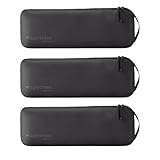
3. Eagle Creek Pack-It Isolate Slim Cube M/M/M Set - Minimalist Compact Travel Organizer for Hair Styling Tools, Belts & Small Items - Travel Accessories
Overview:
The Isolate Slim Cube set represents Eagle Creek’s streamlined approach to sustainable travel organization, offering three medium cubes engineered for tight spaces between luggage handle tubes. Like its Reveal sibling, this set uses 100% ocean-recycled fabrics with water-resistant coating, targeting underwear, socks, belts, and styling tools. The minimalist design emphasizes grab-and-go functionality with easy-grip zippers and reinforced top handles built for quick extraction from packed bags.
What Makes It Stand Out:
The “Isolate” line features a slightly lighter fabric weight than the Reveal series, reducing pack weight without sacrificing durability. The translucent material provides subtle privacy while maintaining content visibility. Designed for adventure travelers, these cubes withstand compression and resist abrasion better than standard nylon options. The slim profile essentially creates usable space where rigid luggage frames normally waste it.
Value for Money:
Priced at $47.73 ($15.91 per cube), this set offers a modest savings over the Reveal line while maintaining core eco-friendly benefits. You’re still in premium territory, but the per-unit cost aligns better with Patagonia and REI’s sustainable offerings. For three cubes, the price reflects genuine recycled material costs and ethical manufacturing, not just brand markup.
Strengths and Weaknesses:
Strengths: Lighter weight than Reveal series; ocean-recycled materials with water resistance; smart slim profile; top handle durability; lifetime warranty coverage.
Weaknesses: Only medium sizes limit packing flexibility; premium pricing remains high for budget shoppers; translucent fabric less breathable than mesh; limited color options.
Bottom Line:
A strong choice for travelers wanting Eagle Creek’s sustainable engineering at a slightly lower price point than the Reveal series. Ideal for carry-on-only trips where weight and space optimization matter most.
4. eagle creek Pack-It Isolate Slim Cube - Compact Travel Organizer for Versatile Packing of Small Items - Angled Zipper Opening - Eco-Friendly - Convenient Top Handle - Medium - Storm Grey

Overview:
This single medium Isolate Slim Cube provides modular organization for travelers building a custom system piece-by-piece. The storm grey cube features Eagle Creek’s signature ocean-recycled, water-resistant fabric with an innovative angled zipper that enables easier stacking and rolling in tight spaces. At 20 dollars, it serves as an entry point into premium sustainable organization or as a specialized add-on for specific items like belts, electronics, or toiletries that need isolation from clothing.
What Makes It Stand Out:
The angled zipper is genuinely innovative—allowing diagonal access that reduces fabric stress and enables more efficient packing in curved bag corners. The translucent fabric provides a modern aesthetic while letting you spot contents without full exposure. As a single unit, it offers complete flexibility to expand your system gradually rather than committing to a fixed set. The quick-grab handle is bar-tacked for security under heavy loads.
Value for Money:
At $20 for one cube, the per-unit cost is high, but it allows strategic purchasing. Buying three individually costs more than the M/M/M set, making this ideal for supplementing existing organizers or testing Eagle Creek quality before investing in a full set. Compared to buying a cheap set you’ll replace, this single durable cube offers better long-term value for specific needs.
Strengths and Weaknesses:
Strengths: Angled zipper enables superior space utilization; premium ocean-recycled materials; modular purchase flexibility; water-resistant protection; lifetime warranty even on single purchase.
Weaknesses: Poor value compared to multi-piece sets; single size limits versatility; premium price for budget buyers; storm grey shows wear; minimal cost savings versus full set.
Bottom Line:
Perfect as a targeted add-on for travelers who already own cubes but need one premium, space-optimized piece. Not recommended as a starter purchase—opt for the 3-piece set instead unless you specifically need just one.
5. Woanger 12 Pcs Small Packing Cubes for Travel, Light Packing Cubes for Suitcases Mesh Luggage Organizer Bags Travel Accessories Essentials 12 x 8 x 5 Inch(Grey)

Overview:
Woanger’s 12-piece set delivers extreme quantity for budget-conscious organizers, providing a dozen identical small cubes measuring 11.8 x 7.9 x 4.7 inches. Constructed from durable Oxford cloth with mesh panels, these cubes target underwear, socks, and accessories for both travel and home wardrobe storage. The grey colorway and foldable design emphasize practical function over premium aesthetics, making this set ideal for families or travelers wanting maximum compartmentalization without financial strain.
What Makes It Stand Out:
The sheer quantity—12 cubes for under $26—enables hyper-organization that pricier sets can’t match. You could pack each day’s underwear and socks in separate cubes, or organize an entire family’s accessories. The Oxford cloth offers better abrasion resistance than standard polyester, while the mesh provides ventilation. Their dual-purpose design for closet organization extends value beyond travel, essentially giving you drawer dividers and luggage organizers in one purchase.
Value for Money:
At $25.99 ($2.17 per cube), this represents exceptional value. No premium brand offers comparable quantity at this price point. While lacking eco-credentials and advanced features, the cost-per-use is negligible even for occasional travelers. The durability exceeds dollar-store alternatives, making this smarter than buying multiple cheap sets that fail quickly.
Strengths and Weaknesses:
Strengths: Unbeatable quantity for the price; Oxford cloth durability; versatile travel and home use; mesh ventilation prevents mildew; uniform size simplifies stacking.
Weaknesses: All small cubes limit large-item storage; no larger sizes for shirts/pants; basic zipper quality; lacks premium features like water resistance; minimal brand reputation for warranty support.
Bottom Line:
An outstanding bulk solution for families, group travel, or organizing enthusiasts. The value proposition is undeniable, though size limitations mean you’ll need larger cubes for comprehensive packing. Pair with one or two big cubes for a complete, budget-friendly system.
6. TravelWise Luggage Packing Organization Cubes 3 Pack, Silver, Large, Medium and Small (TWPC-03)
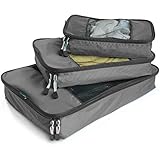
Overview: The TravelWise 3-Pack delivers essential organization for travelers seeking simplicity and value. This set includes small, medium, and large cubes in silver nylon, designed to compartmentalize clothing and accessories within your luggage. The lightweight construction ensures you won’t sacrifice precious weight allowance while keeping items neatly separated and easily accessible throughout your journey.
What Makes It Stand Out: This set distinguishes itself through exceptional affordability and a no-frills approach that just works. The breathable mesh panels provide visibility into each cube’s contents, eliminating frantic searching. The 100% satisfaction guarantee demonstrates manufacturer confidence, offering peace of mind rarely found at this price point. Two-way zippers ensure reliable access from any angle, making packing and unpacking effortless.
Value for Money: At $12.99 for three cubes, you’re paying approximately $4.33 per piece—significantly less than premium alternatives. While lacking advanced features, the durable nylon construction delivers reliable performance for occasional travelers. This represents one of the best entry-level values in the packing cube market, perfect for testing the concept without financial commitment or for equipping family members on a budget.
Strengths and Weaknesses: Strengths:
- Unbeatable price point for budget-conscious travelers
- Lightweight yet durable nylon construction
- Mesh panels enable quick content identification
- 100% satisfaction guarantee provides purchase security
- Simple, effective design without learning curve
Weaknesses:
- Limited to three basic sizes, no specialty pieces
- No water-resistant coating or laundry bag
- Silver color may show dirt more easily than darker options
- Basic hardware may wear with heavy, frequent use
Bottom Line: Ideal for occasional travelers or packing cube newcomers, the TravelWise set delivers core functionality at an accessible price. While it won’t impress luxury seekers, it efficiently solves basic organization needs without breaking the bank.
7. Eddie Bauer 5 Set Packing Organizer Cubes for Suitcases, Travel Essentials for Carry on, Lugagge Oganizer Bags Set Accessories, Black

Overview: Eddie Bauer’s 5-piece organizer set elevates travel preparation with a comprehensive system designed for serious travelers. The collection includes three mesh-window cubes, a zippered pouch, and a dedicated laundry bag, all crafted from water-resistant ripstop polyester. This black set addresses every packing scenario from business trips to extended vacations, transitioning seamlessly from suitcase to hotel room.
What Makes It Stand Out: The inclusion of a laundry bag and hanging loops sets this apart from basic sets. Water-resistant ripstop polyester provides superior protection against spills and moisture compared to standard nylon. The top loops allow cubes to hang on closet rods, creating instant drawer organization. Eddie Bauer’s reputation for outdoor durability translates into travel gear built for frequent use and demanding conditions.
Value for Money: At $24.99 for five pieces ($5 per item), you’re paying a moderate premium for brand reputation and enhanced features. The water-resistant material and ripstop construction justify the cost over budget alternatives, particularly for frequent flyers. The laundry bag alone adds significant value, eliminating the need for a separate purchase and maintaining hygiene throughout your trip.
Strengths and Weaknesses: Strengths:
- Water-resistant ripstop polyester offers superior durability
- Five-piece system covers all organization needs
- Integrated laundry bag maintains hygiene
- Top loops enable hanging storage
- Versatile for travel, gym, or camping use
Weaknesses:
- Higher price point may deter budget shoppers
- Black color absorbs heat in warm climates
- May be excessive for minimalist packers
- Brand premium adds cost without functional necessity
Bottom Line: Perfect for frequent travelers demanding durability and comprehensive organization. The Eddie Bauer set justifies its mid-range price through thoughtful features and robust construction that will serve you for years of adventures.
Why Minimalist Backpackers Need Packing Cubes
The Psychology of Organized Travel
Your brain on disorganization is a distracted brain. When every item has a designated home within your pack, you eliminate decision fatigue and reclaim mental bandwidth for what matters—navigating new cities, connecting with locals, and adapting to the unexpected. Packing cubes create spatial memory anchors, allowing you to locate gear through muscle memory rather than visual confirmation. This cognitive offloading is particularly crucial when you’re operating on four hours of sleep in a language you don’t speak.
Debunking the “Extra Weight” Myth
The average three-cube ultralight set weighs between 4-6 ounces—less than a single cotton t-shirt. When you factor in the space savings from compression and the elimination of redundant packaging, most minimalist travelers actually reduce their total packed weight. The key is viewing cubes as a system rather than accessories. They replace stuff sacks, garment bags, and the inevitable plastic shopping bags that creep into your pack mid-trip.
Key Features That Define Premium Packing Cubes
Material Technology: From Ripstop to Dyneema
Fabric choice determines durability, weight, and packability. 30D ripstop nylon offers the sweet spot for most minimalists—light enough for gram-counters, durable enough for multi-year adventures. The “ripstop” grid pattern isn’t marketing; it’s a literal stop-loss system that prevents tears from propagating. For ultralight purists, Dyneema Composite Fabrics (formerly Cuben Fiber) provide exceptional strength-to-weight ratios but at premium prices. Avoid coated fabrics unless they’re specifically designed for wet gear; unnecessary waterproofing adds weight and reduces breathability.
Zipper Engineering: The Make-or-Break Component
A failed zipper renders any cube useless. Look for #3 or #5 coil zippers with polyurethane-coated tape rather than vislon (tooth) zippers, which are heavier and more prone to failure when dusty. The slider should feature a pull tab long enough to operate with cold fingers but not so long it catches on mesh panels. Double-pull sliders offer accessibility from either end—a small detail that proves invaluable when you need that base layer buried at the bottom of a fully-packed cube.
Compression Systems: Understanding True Space Savings
True compression cubes use mechanical advantage (extra zipper track) to reduce volume by 30-40%. However, this creates a harder, less malleable package that can create dead space in your pack. For minimalist backpackers, “soft compression” through strategic folding and cube sizing often proves more versatile. Avoid cubes with excessive compression zippers—they add weight and tempt you to overpack, defeating minimalist principles.
Size Configuration Strategies for Minimalist Packing
The Three-Cube Rule for One-Bag Travel
The most versatile configuration for a 35-45L pack includes one large cube (clothing), one medium cube (layers/versatile items), and one small cube (underwear/socks). This creates a modular system where you can grab one cube for a quick overnight without unpacking your entire life. The large cube typically measures 14x10x3 inches, medium 11x7x3 inches, and small 10x6x2 inches—dimensions that nest perfectly in most backpacking packs.
When to Choose Slim vs. Cube Profiles
Slim packing cubes (often 14x5x3 inches) excel for backpackers using front-loading packs or organizing by outfit rather than category. They slide vertically against your pack’s back panel, creating a more stable load and easier access. Traditional cube profiles work better for top-loading packs where you pack deep rather than wide. The choice depends entirely on your pack’s geometry and your personal organization style.
Weight Optimization for Ultralight Enthusiasts
Material Choices That Save Grams
Every 10-denier reduction in fabric weight saves approximately 0.5 ounces per medium-sized cube. A full set in 20D nylon versus 420D packcloth can shave nearly a quarter-pound—significant when your base weight hovers around 10 pounds. However, sub-20D fabrics require babying; they’re prone to abrasion from pack hardware and zippers. The ultralight sweet spot lives between 30D-50D for main panels, with 15D-20D mesh for visibility panels.
Features Worth the Weight Penalty
Some additions justify their weight. Grab handles (0.2 oz) enable quick extraction and double as hanging loops in hostel showers. A single mesh panel (0.3 oz) prevents the “cube of mystery” problem while adding minimal weight. Internal compression straps (0.4 oz) keep rolled items from shifting, maintaining pack stability during dynamic movement. These features pay dividends in functionality that outweigh their mass.
Advanced Organization Methodologies
Category-Based vs. Activity-Based Packing
Category-based packing groups all shirts together, all bottoms together—logical but sometimes inefficient. Activity-based packing loads cubes by purpose: “hiking clothes,” “town clothes,” “sleep system.” For minimalist backpackers, a hybrid approach works best: one cube for active layers (merino base layers, hiking pants), another for static insulation (puffy jacket, sleepwear), and a third for daily essentials. This mirrors how you’ll actually access gear throughout your day.
The Nested Packing Technique
Place smaller cubes inside larger ones when traveling between destinations. Your “dirty laundry” cube nests inside your “clean clothes” cube when empty, effectively disappearing. This Russian doll approach maintains organization while adapting to your changing laundry situation. It also means you’re never carrying empty organizational dead weight.
Specialized Organizer Types and Their Use Cases
Toiletry Cubes: Waterproofing Essentials
Unlike clothing cubes, toiletry organizers must be waterproof or highly water-resistant. Look for welded seams rather than stitched-and-taped construction—stitching creates thousands of potential leak points. A true waterproof cube uses TPU-laminated fabric and waterproof zippers, adding 2-3 ounces but protecting your entire pack from shampoo disasters. For true minimalists, a heavy-duty freezer bag often outperforms expensive “waterproof” cubes, though it’s less environmentally friendly.
Electronics Organizers: Taming Cable Chaos
Minimalist electronics organization isn’t about carrying every adapter imaginable. A proper tech cube should be a slim profile (8x6x2 inches max) with elastic loops positioned for your specific cable set. Avoid generic loop grids—they waste space and add weight. Instead, look for minimalist panels with 3-4 strategic loops and a zippered pocket for SSDs or battery packs. The goal is preventing cable spaghetti, not creating a mobile Best Buy.
Shoe and Dirty Laundry Solutions
Dedicated shoe cubes seem logical but often become single-use weight penalties. A better approach: a packable dry bag that serves triple duty—shoe storage, dirty laundry containment, and emergency waterproofing for sensitive gear. Choose a 5-8L dry bag in 20D silicone-coated nylon (0.8 oz). When not holding shoes, it compresses to the size of a golf ball. For laundry, its roll-top closure contains odors better than zippered mesh cubes.
Material Science: Durability vs. Packability
Nylon Grades Explained
Nylon isn’t just nylon. The “D” rating (denier) measures linear density, not necessarily strength. 420D nylon is thick but can be less abrasion-resistant than tightly-woven 210D ripstop. For packing cubes, focus on thread count and weave quality over raw denier. A 70D ripstop with high thread count often outperforms 420D ballistic nylon in real-world use because it’s more pliable and less prone to puncture.
Mesh Panel Trade-offs
Mesh panels provide ventilation and visibility but create weak points. Large mesh windows can catch on pack hardware and develop runs. Opt for micro-mesh (20D or finer) with reinforced borders, or limit mesh to a single small panel. Some premium cubes use laser-cut perforated nylon instead of mesh—offering visibility without the snag risk. For minimalist backpackers, one mesh side is sufficient; more is just failure points waiting to happen.
Sustainable Material Options
Recycled PET (rPET) fabrics now match virgin nylon in performance while reducing environmental impact. However, the dyeing process for rPET can negate some benefits. Undyed or solution-dyed fabrics are the true minimalist choice—lighter (no dye weight), more eco-friendly, and they show dirt less obviously. Some manufacturers are experimenting with bio-based nylons derived from castor oil, though these remain niche and expensive.
Common Packing Cube Mistakes to Avoid
Overpacking Cubes: The Compression Trap
A cube packed to bursting doesn’t compress better—it becomes a rigid brick that wastes pack space. The 80% rule is critical: fill cubes to four-fifths capacity, allowing them to mold around other gear. This flexibility is what makes cubes superior to stuff sacks. Overpacking also stresses zippers and seams, turning your ultralight investment into landfill fodder.
Wrong Size Selection Syndrome
Buying a “complete set” with sizes you’ll never use is classic gear bloat. Start with one medium cube and live with it for a trip. Analyze what didn’t fit and what had dead space, then add sizes strategically. Most minimalist backpackers end up with two medium cubes and one small—not the traditional small-medium-large progression. Your cube sizes should reflect your actual gear, not some manufacturer’s idea of “complete.”
Maintenance and Care on Extended Trips
Cleaning Without Washing Machines
Hand-wash cubes in hostel sinks using biodegradable soap. Turn them inside-out to clean the interior where fabric oils and dirt accumulate. Never machine-dry nylon cubes; the heat degrades coatings and causes shrinkage. Instead, roll them in a towel to remove excess water, then air-dry clipped to your pack. A quick post-trip wash with tech wash (not regular detergent) restores DWR coatings on water-resistant models.
Field Repairs for Zippers and Seams
Carry a #3 zipper slider as backup—they weigh 0.1 oz and can salvage a cube mid-trip. A needle and dental floss handle most seam repairs; floss’s waxed coating makes it surprisingly strong for emergency stitching. For mesh tears, Tenacious Tape applied to the interior creates a near-invisible, flexible patch. These micro-repairs extend cube life by years, aligning with minimalist buy-it-for-life principles.
Integrating Cubes with Your Backpack System
Matching Cube Dimensions to Pack Volume
Measure your pack’s interior dimensions, not just its liter rating. A 40L pack might have a 19-inch torso length but only 12 inches of usable depth. Your cubes should leave 1-2 inches of clearance on all sides for dynamic packing adjustments. Create a paper template of your ideal cube size and test-pack before purchasing. Many minimalist backpackers discover their “40L pack” only fits cubes totaling 30-35L due to tapered shapes and hydration sleeves.
Accessibility Layering Techniques
Pack cubes in order of daily access needs, not just weight distribution. Your sleepwear cube belongs at the bottom; your rain layer cube belongs near the top or in an external pocket. For front-loading packs, arrange cubes horizontally in layers. For top-loaders, position vertically with grab handles oriented upward. This accessibility mapping prevents the dreaded “unpack everything for one item” scenario that plagues disorganized travelers.
Seasonal Adaptations for Packing Systems
Summer Ultralight Configurations
Warm-weather travel allows extreme minimalism: a single large cube for clothing, a small cube for underwear/socks, and a stuff sack for insulation layers. Your sleep system (liner, inflatable pillow) packs inside your puffy jacket, which then gets compressed in its own cube. This setup can reduce your clothing system to under 2 pounds including cubes.
Winter Bulk Management Strategies
Cold weather challenges cube systems with bulky insulation. Switch to compression cubes only for puffy jackets and sleeping bags. Use soft cubes for base layers to maximize moldability. Consider a “layering cube” that stays accessible throughout the day—it contains your active insulation, gloves, and hat, allowing quick adjustments without opening your main pack. This prevents heat loss from pack-flipping in subzero conditions.
Budget vs. Premium: Making the Investment Decision
Long-Term Value Calculation
A $60 premium cube set that lasts 500 days of travel costs $0.12 per day. A $20 budget set that fails in 100 days costs $0.20 per day. The math favors premium for full-time travelers. However, weekend warriors won’t see ROI on Dyneema cubes. The breakpoint is around 30 travel days per year—below that, mid-tier options offer the best value. Factor in replacement costs, not just purchase price.
When to Splurge on Features
Splurge on your most-used cube (typically the medium clothing cube) and save on specialized cubes you’ll use less. A premium zipper on your daily-access cube prevents mid-trip failures; a budget zipper on your “deep storage” cube is acceptable. Waterproofing is worth the weight and cost only for toiletry cubes. For everything else, water-resistant is sufficient. This tiered approach optimizes both budget and pack weight.
DIY and Ultralight Alternatives
Ziplock Strategies
Freezer bags (quart and gallon sizes) weigh 0.1 oz each and offer surprising durability for 1-2 week trips. Double-bag critical items and replace as needed. The downside: lack of structure creates packing inefficiencies, and the environmental cost of disposable bags clashes with minimalist ethics. For true ultralight emergencies, they’re viable. For regular use, they become false economy.
Dyneema Stuff Sack Hybrids
Create a hybrid system: use 1-2 packing cubes for structured organization and supplement with Dyneema stuff sacks for flexible items like rain gear and insulation. This gives you the best of both worlds—cube efficiency for clothing, stuff sack versatility for bulky items. A 5L stuff sack weighs 0.4 oz and compresses to nothing when empty, making it the perfect overflow solution for souvenir management.
The Future of Packing Organization
Emerging technologies are reshaping what’s possible. Laser-cut laminates are replacing stitched seams, shedding grams while increasing strength. Magnet-based closure systems (weighing 0.1 oz total) may soon replace zippers in ultralight applications. Smart fabrics with integrated RFID could help locate cubes in dark hostel dorms. For now, the best system remains elegantly simple: quality materials, thoughtful sizing, and a packing strategy that reflects your actual travel patterns rather than aspirational ones.
Frequently Asked Questions
1. Do packing cubes actually save space or just organize it?
They do both. Quality compression cubes reduce volume by 30-40% through mechanical compression, while standard cubes save space by eliminating air pockets and allowing denser packing. The organizational benefit means you pack more intentionally, naturally reducing bulk. Most minimalist backpackers find they can fit 15-20% more gear using cubes versus loose packing.
2. How many cubes do I really need for a 40L pack?
Start with three: one large (14x10 inches) for clothing, one medium (11x7 inches) for layers, and one small (10x6 inches) for underwear and socks. This covers 90% of minimalist trips. Add a slim cube (14x5 inches) only if you use a front-loading pack or prefer outfit-based organization. More cubes often mean more weight and less flexibility.
3. Are compression cubes worth the extra weight?
For puffy insulation and sleeping bags, absolutely. For clothing, rarely. Compression cubes add 0.5-1 oz per cube but can reduce volume by a third. The trade-off is rigidity—compressed cubes create hard bricks that waste space in irregular pack interiors. Most minimalist travelers prefer one compression cube for bulk items and soft cubes for everything else.
4. What’s the weight penalty for a full cube system?
A premium ultralight three-cube set weighs 4-6 ounces total. Budget sets using heavier materials can hit 10-12 ounces. For perspective, that’s less than most smartphone cases. The weight is negligible compared to the organizational benefits and space savings. If weight is truly critical, use two cubes and one Dyneema stuff sack as a hybrid system.
5. How do I prevent cubes from shifting inside my pack?
Pack cubes tightly enough that they create friction against each other and your pack walls. Place heavier cubes near your back panel and lighter ones toward the front. Use your pack’s compression straps to tension the entire load, not just the pack fabric. Some backpackers add 1/8-inch foam sheets between cubes for structure, though this adds minimal weight.
6. Can packing cubes replace a backpack’s internal organization?
Never rely solely on your pack’s built-in pockets. Most backpacking packs prioritize suspension over organization. Cubes create a modular system that works across different packs and trips. Think of your pack as the shell and cubes as the adaptable interior architecture. This approach future-proofs your system for different pack upgrades.
7. How do I pack wet or damp items in cubes?
Never pack wet items in standard cubes—they’ll mildew and stink. Use a dedicated waterproof stuff sack or dry bag for damp gear. For lightly moist items (like a towel that didn’t fully dry), pack them in a mesh cube and store it in an external pocket. Some premium cubes feature waterproof compartments, but these add significant weight and are better replaced by a separate dry bag.
8. What’s the best way to clean packing cubes during long trips?
Fill a sink with warm water and a drop of biodegradable soap. Turn cubes inside-out and agitate gently. Rinse thoroughly, squeeze (don’t wring) excess water, and roll in a towel. Hang to dry using the cube’s grab handle. In humid climates, aim a fan at them or dry them in sunlight for 30 minutes. Never use hot water or dryers—they degrade nylon and coatings.
9. Do I need different cubes for different seasons?
Your cube system should adapt, but the cubes themselves remain the same. In winter, use compression cubes for bulky items. In summer, use the same cubes with lighter contents. The only seasonal addition might be a larger “sleep system” cube for winter trips that includes your liner, pillow, and extra insulation. Versatility is key—buy cubes that work year-round.
10. How long should quality packing cubes last?
With proper care, premium cubes should last 500+ travel days. Zippers typically fail first—carry a spare slider. Fabric abrasion appears next, usually at stress points. Budget cubes might last 100-150 days. The key is not overpacking and cleaning them regularly. For full-time travelers, view cubes as consumables that pay for themselves in convenience many times over.'