Picture this: you’re standing in a Parisian hotel room after a 12-hour flight, staring at a wall outlet that looks nothing like the ones back home. Your phone is at 3%, your laptop is dead, and that presentation you’re supposed to refine before tomorrow’s meeting is trapped on a device you can’t power. This scenario plays out thousands of times daily for travelers who discover too late that not all adapters are created equal. In our hyper-connected world, where the average tech traveler carries three to five devices, a simple plug converter has evolved into a critical piece of travel infrastructure.
The modern travel adapter is no longer just a passive piece of plastic and metal. Today’s models are sophisticated power distribution hubs that can simultaneously charge multiple devices while protecting them from electrical anomalies across different countries. With USB ports now standard features, these compact lifesavers have become essential for anyone who needs to keep smartphones, tablets, cameras, laptops, and wearables charged and ready. But with hundreds of variations flooding the market, understanding what separates a reliable companion from a disappointing paperweight requires more than just checking if the prongs fit.
Top 10 Travel Adapters with USB Ports
Detailed Product Reviews
1. EPICKA Universal Travel Adapter, European Travel Plug Adapter (Not a Voltage Converter) - International Power Adapter Worldwide Charger with USB-C & 4 USB-A Ports, Travel Essentials (TA-105, Grey)

Overview: The EPICKA TA-105 is a robust 6-in-1 universal travel adapter designed for globetrotters who need to charge multiple devices simultaneously. Covering over 200 countries with four integrated plug types, this grey unit combines an AC socket with four USB-A ports and one USB-C port, making it a versatile charging hub for international travel.
What Makes It Stand Out: Its ability to charge six devices at once sets it apart from standard adapters. The 3A USB-C port and 2.4A USB-A ports deliver high-speed charging for smartphones, tablets, and cameras. Safety features include a built-in 10A fuse, safety shutters, and a plug lock system certified by RoHS, CE, and FCC.
Value for Money: Competitively priced for a 6-port adapter, the EPICKA offers excellent value with its comprehensive country coverage and 2-year limited warranty. The 30-day money-back guarantee provides additional purchase confidence, making it a smart investment compared to buying separate adapters.
Strengths and Weaknesses: Pros include multi-device charging, extensive global compatibility, robust safety features, and strong warranty support. The USB-C port lacks Power Delivery protocol, and the unit is bulkier than minimalist alternatives. Most importantly, it’s not a voltage converter, so high-power appliances like hair dryers remain incompatible.
Bottom Line: The EPICKA TA-105 is an outstanding choice for travelers needing to charge multiple low-power devices across diverse destinations. Its safety credentials and warranty make it a reliable, cost-effective travel essential.
2. Anker Nano Travel Adapter, 5-Port Power Adapter with 1× 2-Pin AC, 2 USB A, 2 USB C for 20W, Smart Temperature Control, Works in 200+ Countries, Not a Voltage Converter, Travel Essentials (1-Pack)

Overview: The Anker Nano Travel Adapter delivers the brand’s renowned reliability in a remarkably compact 5-port design. Compatible with over 200 countries through four plug types (A, C, G, I), this adapter features an AC outlet, two USB-A ports, and two USB-C ports, including one 20W fast-charging port for rapid device power-ups.
What Makes It Stand Out: Anker’s engineering shines with a design 43% smaller than competitors, featuring foldable and retractable pins for ultimate portability. The 2-pin to 2-pin connection enhances safety by preventing electric shock, while smart temperature control protects connected devices. It can charge an iPhone 16 to 50% in just 28 minutes.
Value for Money: While priced at a premium for the Anker brand, the Nano’s exceptional build quality, compactness, and 18-month warranty justify the investment. For travelers prioritizing luggage space and brand trust, the cost premium delivers tangible benefits over budget alternatives.
Strengths and Weaknesses: Pros include ultra-portable design, fast 20W USB-C charging, superior safety features, and Anker’s customer service. The 6A maximum current limits simultaneous high-draw devices, and the 2-pin design may not secure firmly in some three-prong outlets. It offers fewer ports than some competitors.
Bottom Line: Perfect for minimalist travelers who value space-saving design and brand reputation. The Anker Nano excels for phone and tablet charging but may not suit those needing to power multiple high-draw devices simultaneously.
3. Travel Adapter USB C, Universal All in One Worldwide Travel Adapter Fast Charge GaN PD3.0 Type C USB-A Quick Charging Ports Power Converters Wall Charger AC Power Plug Adapter for USA EU UK AUS Black

Overview: This universal travel adapter leverages GaN technology to deliver fast charging in an ultra-lightweight package. Accepting plugs from over 150 countries with US/EU/UK/AU configurations, it features PD3.0 USB-C (20W/3A) and USB-A ports, making it compatible with iPhones, iPads, Samsung devices, and other USB-powered electronics.
What Makes It Stand Out: The GaN-based design enables remarkable portability at just 3.2 ounces and compact 3.0×1.9×1.5-inch dimensions. Dual 8A fuses provide enhanced safety, automatically cutting power during overloads. Built-in safety shutters protect users from live parts, while the detachable plug system offers versatility.
Value for Money: Offering PD3.0 fast charging and GaN technology at a competitive price point, this adapter presents strong value for tech-savvy travelers. The lightweight design reduces luggage burden, and the safety features match premium brands, making it an economical choice for performance-focused users.
Strengths and Weaknesses: Pros include extremely light weight, fast PD3.0 charging, dual fuse protection, and compact size. As a generic brand, long-term reliability and customer support remain uncertain. Coverage of only 150+ countries falls short of top competitors, and build quality may not match established brands.
Bottom Line: An excellent budget-friendly option for travelers prioritizing fast charging and minimal weight. While brand recognition is lacking, the technical specifications and safety features make it a worthy contender for charging smartphones and tablets internationally.
4. Ceptics Universal Travel Adapter, 45W International Power Adapter with PD & QC 3.0 Dual USB-C, 3 USB Travel Adapter Worldwide, Type I C G A Outlets 110V 220V A/C - EU Euro US UK (11-KU)

Overview: The Ceptics 11-KU is a high-performance 45W universal travel adapter designed for power users. Engineered in the USA, it features one universal AC input, three USB-A ports, and two USB-C ports with Power Delivery and Quick Charge 3.0, enabling rapid charging of phones, tablets, and even laptops across global destinations.
What Makes It Stand Out: Its 45W total output significantly exceeds standard adapters, making it ideal for charging USB-C laptops and power-hungry devices. The dual USB-C configuration with PD and QC 3.0 protocols ensures maximum charging speed for compatible devices. Comprehensive safety features include an 8A fuse, plug lock, and built-in shutters.
Value for Money: Positioned at a premium price, the Ceptics justifies its cost through superior power delivery and US-based design standards. For travelers needing laptop charging without a separate power brick, it consolidates gear and reduces packing complexity, offering good long-term value.
Strengths and Weaknesses: Pros include high 45W output, dual fast-charging USB-C ports, robust safety certifications, and brand reliability. The higher price may deter budget-conscious buyers, and the increased power capacity adds bulk compared to minimalist adapters. It remains a non-voltage converter, limiting high-power appliance use.
Bottom Line: The Ceptics 11-KU is the premium choice for digital nomads and business travelers who need to charge laptops and multiple devices simultaneously. Its high power output and safety credentials justify the investment for serious global travelers.
5. TESSAN Universal Travel Adapter, International Power Adapter with 2 USB C 2 USB A Ports, Travel Plug Adaptor Worldwide for US to Europe UK Italy Ireland Australia France Germany(Type C G A I)

Overview: The TESSAN Universal Travel Adapter is a cruise ship-friendly 5-in-1 charging solution covering over 150 countries. With Type C, G, A, and I plugs, it features one AC outlet and four USB ports (two USB-C at 15W each, two USB-A at 12W each), allowing simultaneous charging of multiple devices.
What Makes It Stand Out: Its lack of surge protection makes it explicitly cruise ship approved, a rare feature among adapters. Dual 10A fuses provide enhanced safety, while integrated security shutters protect against electric shock. The compact design (2.53×2.15×1.97 inches, 5.2 ounces) saves valuable luggage space.
Value for Money: Mid-range pricing offers solid value for cruise travelers and general tourists alike. The 2500W AC outlet capacity handles most travel appliances, and the five-device charging capability eliminates need for multiple chargers, providing good cost-per-port value.
Strengths and Weaknesses: Pros include cruise ship approval, dual fuse protection, compact size, and decent power capacity. USB-C ports lack Power Delivery, limiting charging speed for newer devices. Country coverage is limited to 150+ versus 200+, and the 15W USB-C output is slower than competitors offering 20W+.
Bottom Line: The TESSAN is an ideal travel companion for cruise vacationers and international travelers seeking a safe, compact multi-device charger. While USB-C speeds are modest, its cruise approval and safety features make it a specialized yet valuable travel essential.
6. All in One Universal USB Travel Power Adapter with 3 USB Port and Type-C International Wall Charger Worldwide AC Power Plug 8 Pin AC Socket for Multi-Nation Travel UK, EU, AU, Asia
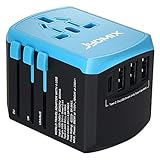
Overview: This universal travel adapter positions itself as a comprehensive charging solution for globetrotters. With three standard USB ports and one USB-C port, it handles multiple devices simultaneously across more than 200 countries. The integrated AC socket accepts various plug types, making it a versatile companion for international journeys.
What Makes It Stand Out: The quad-port configuration is particularly impressive, allowing you to charge four USB devices concurrently while still providing an AC outlet for larger electronics. The extensive international compatibility covers virtually every destination, and comprehensive safety features including FCC/CE certification, surge protection, and multiple safeguards provide peace of mind for travelers concerned about protecting expensive electronics.
Value for Money: While pricing isn’t specified, adapters with this level of multi-port functionality and safety certification typically represent solid mid-range value. The ability to replace multiple chargers with one device justifies the investment, especially for frequent travelers who would otherwise need separate adapters and USB bricks.
Strengths and Weaknesses: Pros: Four simultaneous USB charging ports; AC socket for larger devices; extensive 200+ country compatibility; robust safety features with multiple protections; LED power indicator. Cons: No mention of fast charging protocols; relatively low 8A power rating may limit high-power device charging; bulkier than single-region adapters.
Bottom Line: A reliable workhorse for international travelers needing to charge multiple USB devices alongside traditional electronics. The safety certifications and broad compatibility make it a trustworthy choice, though power users might want faster charging speeds.
7. TESSAN Travel Adapter PD 20W, Universal Power Adapter 2 USB C 1 USB A, Ultra Thin International Plug Adaptor Worldwide Outlet for US to European UK Italy Spain New Zealand (Type C G A I), 1 Pack

Overview: The TESSAN Travel Adapter emphasizes portability and modern charging standards with its ultra-thin design and 20W Power Delivery via USB-C. Covering 150+ countries with four plug types, it transforms a single wall outlet into a four-device charging station. The compact form factor makes it ideal for minimalist travelers who prioritize space savings.
What Makes It Stand Out: The 20W PD charging capability through both USB-C ports is a significant advantage for newer devices, enabling faster charging for iPhones and other compatible gadgets. At just 3.65 ounces and with a ultra-thin profile, it’s one of the most portable universal adapters available. The cruise ship approval (no surge protection) is a thoughtful touch for cruise enthusiasts.
Value for Money: This adapter hits the sweet spot for budget-conscious travelers wanting modern features without premium pricing. The PD charging adds value typically found in more expensive units, while the ultra-thin design means you’re not paying for unnecessary bulk. It’s competitively priced against similar compact adapters.
Strengths and Weaknesses: Pros: 20W Power Delivery on dual USB-C ports; extremely lightweight and compact; cruise ship compliant; covers 150+ countries; can charge four devices simultaneously. Cons: Limited to 150 countries (vs 200+ for some competitors); no AC socket for larger appliances; 20W may be insufficient for laptop charging; not a voltage converter.
Bottom Line: Perfect for tech-savvy travelers prioritizing portability and fast charging for phones and tablets. The ultra-thin design is a major plus, though the lack of an AC socket limits its versatility for those traveling with larger electronics.
8. Kakyanill European Travel Plug Adapter, EU/UK/US Travel Plug Adapter Power Strip, 6 AC Outlets, 4 USB Ports (2 USB C), 3ft Wrapped Around Extension Cord, Universal Travel Adapter

Overview: The Kakyanill adapter diverges from typical travel adapters by offering a power strip configuration with six AC outlets and four USB ports. The clever 3-foot extension cord wraps around the base for compact storage. This 10-in-1 solution targets travelers who need to power multiple AC appliances alongside USB devices, making it ideal for groups or business travelers with extensive gear.
What Makes It Stand Out: The six AC outlets are a rarity in travel adapters, essentially bringing the functionality of a desktop power strip on the road. The wrap-around cord design solves the bulk problem of traditional extension cords. Dual USB-C ports (3A each) and dual USB-A ports (2.4A each) provide flexible charging options for a full suite of devices.
Value for Money: This adapter offers exceptional value for group travelers or families, effectively replacing multiple power strips and adapters. While likely priced higher than basic adapters, the 10-device capacity means one purchase eliminates several others, delivering strong ROI for those who need the capacity.
Strengths and Weaknesses: Pros: Six AC outlets for multiple appliances; four USB ports including dual USB-C; wrap-around cord for neat storage; charges up to 10 devices; compact for its capacity. Cons: Larger than pocket-sized adapters; no Power Delivery fast charging; not a voltage converter; may be overkill for solo minimalist travelers.
Bottom Line: An excellent choice for families, groups, or business travelers needing to power multiple AC devices. The power strip design is unique and practical, though solo travelers may find it unnecessarily bulky compared to simpler adapters.
9. Acer Universal Travel Plug Adapter - International Power Adapter with 5 USB Ports (3 USB C) 5.8A, Worldwide Outlet Charger for USA to European UK France Germany Spain, Type C/E/F/G/I/L/A, Black

Overview: Acer’s entry into travel adapters focuses on USB-dominant charging with five USB ports (three USB-C) and a single universal AC outlet. Covering 150+ countries, it’s designed for travelers whose primary needs are phones, tablets, cameras, and other USB-powered gear. The compact, cruise ship-compliant design emphasizes portability while maintaining multi-device capability.
What Makes It Stand Out: The three USB-C ports are a forward-looking feature, acknowledging the shift toward USB-C across devices. The cruise ship approval and compact dimensions (2.0×2.2×3.0 inches) make it exceptionally travel-friendly. Acer’s brand recognition adds trust, and the universal AC outlet accepts plugs from multiple regions without separate adapters.
Value for Money: Positioned in the mid-range, this adapter offers strong value for USB-heavy users. The three USB-C ports are typically a premium feature, and Acer’s warranty support adds peace of mind. It’s more cost-effective than buying separate regional adapters plus a multi-port USB charger.
Strengths and Weaknesses: Pros: Three USB-C ports for modern devices; cruise ship compliant; very compact; universal AC outlet; brand reliability. Cons: Only one AC outlet; no Power Delivery fast charging (3A max); 150+ country coverage less than some competitors; not a voltage converter.
Bottom Line: Ideal for travelers who primarily charge USB devices and want future-proof connectivity. The triple USB-C configuration is excellent, though those needing multiple AC outlets should look elsewhere. A solid, reliable choice for the modern digital nomad.
10. EPICKA Universal Travel Adapter, European Travel Plug Adapter - International Power Adapter Worldwide Charger with USB-C & 4 USB-A Ports, Travel Essentials for Italy, UK, Japan (TA-105, Space Grey)
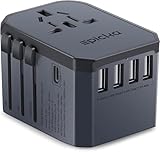
Overview: The EPICKA TA-105 is a sleek, space grey adapter that covers an impressive 200+ countries with four plug types. It transforms one outlet into a six-device charging hub with four USB-A ports, one USB-C port, and an AC socket. The emphasis on safety certifications and a generous warranty period suggests a focus on reliability and customer satisfaction.
What Makes It Stand Out: The 200+ country coverage is among the most comprehensive available. Safety features are robust with a built-in 10A fuse, safety shutters, and RoHS/CE/FCC certifications. The 30-day money-back guarantee and 2-year replacement warranty demonstrate exceptional confidence in product quality. The space grey finish adds a premium aesthetic touch.
Value for Money: EPICKA offers excellent value with premium safety features and warranty coverage typically found in higher-priced adapters. The six-device capacity maximizes utility per dollar spent. For safety-conscious travelers, the certifications and warranty alone justify the price point, which is competitive with mid-range adapters.
Strengths and Weaknesses: Pros: Extensive 200+ country coverage; six-device charging capacity; comprehensive safety certifications; excellent warranty; sleek design. Cons: Only one USB-C port; USB-A ports may become dated; no Power Delivery fast charging; not a voltage converter; 1100W limit at 110V may restrict some appliances.
Bottom Line: A top-tier choice for safety-conscious travelers wanting maximum compatibility. The warranty and certifications are standout features, though the single USB-C port is a minor limitation in an increasingly USB-C world. Highly recommended for worry-free international travel.
Why Modern Travelers Can’t Rely on Traditional Adapters Anymore
The Rise of Multi-Device Travel
Remember when traveling meant bringing just a phone charger? Those days are long gone. Today’s tech-savvy explorer arrives at their destination with a smartphone, wireless earbuds, smartwatch, tablet for entertainment, laptop for work, portable battery bank, and perhaps a camera or e-reader. Each device demands power, often simultaneously. Traditional single-socket adapters force travelers into a nightly charging queue, prioritizing which devices get precious outlet time. This device proliferation has fundamentally changed what we need from an adapter—transforming it from a simple shape-changer into a mobile charging station that must intelligently distribute power across multiple gadgets.
USB Integration: More Than Just Convenience
The addition of USB ports to travel adapters represents a paradigm shift in how we approach powering devices abroad. These integrated ports eliminate the need to carry separate chargers for each device, reducing both weight and complexity in your luggage. More importantly, they free up the AC outlet for larger devices like laptops while simultaneously charging smaller gadgets directly. This dual-functionality means you can power your laptop through the main socket while charging your phone and headphones via USB—all from a single wall outlet. The convenience factor is undeniable, but the real value lies in the streamlined travel experience and reduced risk of forgetting critical chargers.
Decoding the Electrical Alphabet Soup: Volts, Watts, and Amps
Global Voltage Standards Explained Simply
Understanding voltage is crucial for protecting your expensive electronics. Most of the world operates on either 110-120V (North America, parts of Central America, Japan) or 220-240V (Europe, Asia, Africa, Australia). The good news? Nearly all modern USB-powered devices and laptop chargers are designed with universal voltage input (100-240V), meaning they’ll work anywhere with the right plug shape. The bad news? High-power appliances like hair dryers or curling irons often aren’t universal and can be destroyed by incorrect voltage. For tech travelers, this means your adapter primarily needs to convert plug shapes, not voltage—though having a model that clearly indicates voltage compatibility prevents costly mistakes.
Understanding Plug Types Without a Geography Degree
The International Electrotechnical Commission identifies 15 different plug types globally, but most travelers encounter just five or six regularly. Type A (two flat pins) dominates North America and Japan. Type C (two round pins) is the European standard found in most continental European countries. Type G (three rectangular pins) appears throughout the UK, Ireland, and many former British colonies. Type I (two flat pins in a V-shape plus optional earth pin) serves Australia, New Zealand, and China. Rather than memorizing this geography lesson, universal adapters incorporate sliding mechanisms that accommodate these common configurations. The key is ensuring any adapter you consider explicitly covers the regions you frequent most.
Why Your Hair Dryer Isn’t the Same as Your Phone
This distinction saves travelers hundreds in replacement costs. USB-powered devices use switched-mode power supplies that automatically adjust to different voltages. Your phone charger essentially contains a tiny transformer that steps down voltage safely. Hair dryers and other heating appliances use resistive heating elements that draw massive power and lack this adaptability. Plugging a 110V-only hair dryer into a 220V European outlet without proper voltage conversion creates an immediate fire hazard. For tech travelers, the solution is simple: leave high-power appliances at home and focus on adapters designed specifically for low-power electronics with USB capability.
The Anatomy of a High-Quality Travel Adapter
USB-A vs USB-C: Ports That Matter in 2024
The USB landscape has evolved dramatically, and your adapter’s port selection reveals its modernity. USB-A, the familiar rectangular connector, remains common but delivers slower charging speeds and lacks the intelligence of newer standards. USB-C represents the future—reversible, more powerful, and capable of negotiating optimal charging rates with devices. Premium adapters now feature multiple USB-C ports with Power Delivery (PD) support, enabling them to fast-charge everything from smartphones to laptops. When evaluating options, look for at least one USB-C PD port rated at 30W or higher, plus a mix of USB-A ports for legacy devices. This combination ensures compatibility with both your newest laptop and that older pair of wireless headphones.
Power Delivery (PD) and Quick Charge Technologies
Not all USB ports charge at the same speed, and this difference matters when you’re rushing between flights. Power Delivery is a fast-charging standard that dynamically adjusts voltage and current, delivering up to 100W through USB-C. This means a single PD port can charge a laptop, tablet, or phone at maximum speed. Quick Charge, primarily used by certain Android manufacturers, offers similar benefits through USB-A ports. The wattage rating is critical—a 65W PD port can charge a MacBook Pro, while a 15W port can’t. For tech travelers, understanding these specifications ensures your adapter won’t just fit the plug shape but will actually power your devices efficiently.
AC Outlet Configuration: What to Look For
The integrated AC outlet might seem secondary to USB ports, but its design significantly impacts usability. Some adapters position the outlet perpendicular to the wall, causing the entire unit to hang awkwardly and potentially fall out. Others orient the socket parallel to the wall, allowing plugs to sit flush and stable. The outlet’s internal design matters too—loose connections create arcing and heat buildup. Quality adapters feature firm gripping mechanisms that hold plugs securely. Additionally, consider whether the outlet is universal (accepting all plug types) or region-specific, as this affects what you can plug in directly versus what needs its own adapter.
Safety Features That Should Be Non-Negotiable
Surge Protection and Circuit Breakers
Electrical systems vary in stability worldwide, and some destinations are notorious for power fluctuations that can fry sensitive electronics. Quality travel adapters incorporate surge protection that diverts excess voltage away from your devices, typically rated in joules—a higher number indicates better protection. Circuit breakers add another layer of defense, cutting power if the adapter overheats or draws too much current. For tech travelers carrying expensive laptops and phones, these aren’t optional luxuries but essential insurance policies. Look for adapters that explicitly state surge protection ratings and feature automatic reset functionality rather than disposable fuses.
Certifications That Actually Matter (FCC, CE, RoHS)
Certification marks aren’t just decorative stickers—they represent third-party verification of safety and quality. FCC (Federal Communications Commission) certification ensures the adapter won’t interfere with radio frequencies. CE marking indicates conformity with European health, safety, and environmental standards. RoHS compliance guarantees the product doesn’t contain hazardous materials. UL certification, while less common on travel adapters, represents the gold standard in electrical safety testing. These marks mean the adapter has undergone rigorous testing rather than just meeting self-declared specifications. Be wary of uncertified adapters, as they may lack basic protections and could pose fire risks.
Overheating Prevention and Fire Resistance
Compact electronics packed into small spaces generate significant heat, and cheap adapters often skimp on thermal management. Premium models incorporate temperature sensors that throttle charging speeds or shut down if components exceed safe thresholds. The housing material matters equally—polycarbonate with fire-retardant additives prevents catastrophic failure better than basic ABS plastic. Some advanced adapters even feature graphene thermal pads or copper heat spreaders. When evaluating options, consider that a slightly larger adapter with proper ventilation and quality materials is far safer than an ultra-compact model that runs hot to the touch.
Design Elements That Separate Good from Great
Size and Weight: The Pocketability Factor
Every ounce matters when you’re living out of a carry-on, but the smallest adapter isn’t always the best choice. There’s a sweet spot between portability and functionality. Credit card-sized adapters are convenient but often lack robust internal components and run dangerously hot. Larger models may include better surge protection and more ports but become burdensome. The ideal compromise typically measures around 3x3 inches and weighs under 8 ounces—small enough for any pocket but large enough for proper heat dissipation and durable construction. Consider whether the adapter will live in your daypack for daily excursions or only emerge at hotels.
Build Quality and Material Choices
The tactile experience of an adapter reveals its quality. Premium models use durable polycarbonate or aluminum alloys that withstand drops and crushing forces in packed luggage. Internal components should be soldered, not just press-fitted, and circuit boards coated for moisture resistance. The sliding mechanisms for different plug types should click firmly into place without wobbling—loose mechanisms indicate poor tolerances that could expose live contacts or fail mechanically. The difference between a $15 adapter and a $45 one often lies in these unseen details that determine whether it survives a two-week trip or two years of constant travel.
LED Indicators and User-Friendly Features
Subtle design touches dramatically improve usability. LED power indicators confirm the adapter is receiving electricity—crucial when dealing with unfamiliar outlets where you can’t tell if they’re live. Some advanced models feature individual port indicators showing which devices are charging, or color-changing LEDs that signal fast-charging activation. Side-mounted USB ports prevent cable clutter from blocking adjacent outlets. Retractable plugs eliminate snagging in bags. These thoughtful details transform a basic adapter into a refined travel tool that anticipates real-world frustrations.
Universal vs. Single-Region Adapters: Strategic Selection
When a Universal Adapter Makes Sense
Universal adapters appeal to travelers visiting multiple countries in one trip or those who travel globally without set itineraries. They eliminate guesswork and reduce the number of adapters you must own. However, their versatility comes with compromises—jack-of-all-trades designs often feel less stable in certain outlets, and the sliding mechanisms add mechanical complexity that can fail. They also tend to be bulkier than dedicated single-country adapters. For business travelers on multi-country tours or digital nomads with fluid plans, the convenience outweighs these drawbacks. The key is selecting a universal model with robust construction that doesn’t feel like a flimsy toy.
Single-Country Adapters: The Overlooked Alternative
Dedicated adapters for specific regions offer superior stability and often cost less than universal models. They plug directly into the wall without moving parts, creating a secure connection that won’t sag or fall out. Their compact, fixed design makes them ideal for extended stays in one country. Many tech travelers maintain a small collection of single-country adapters for their most frequent destinations while keeping one universal adapter as backup for unexpected destinations. This hybrid approach optimizes both reliability and preparedness without significant cost or weight penalties.
Modular Systems: The Best of Both Worlds
An emerging category offers detachable plug heads that connect to a central USB hub. These systems allow you to carry only the specific plugs needed for your itinerary while maintaining a consistent charging interface. The modular approach reduces bulk compared to universal sliders while providing more flexibility than fixed single-country adapters. Some systems even allow you to add plug types as you expand your travel horizons. For minimalists who refuse to compromise on functionality, these represent the current pinnacle of adapter design philosophy.
Gallium Nitride (GaN) Technology Explained
How GaN Makes Adapters Smaller and More Efficient
Gallium Nitride is revolutionizing power electronics by replacing traditional silicon transistors. GaN components switch faster, waste less energy as heat, and can operate at higher temperatures. This allows manufacturers to shrink adapter size by up to 50% while increasing power output. A GaN-based adapter delivering 65W might be smaller than a traditional 30W adapter. For travelers, this means more charging capacity in less space—critical when every cubic inch of your tech pouch counts. The technology also enables higher efficiency, so less electricity is wasted as heat, keeping the adapter cooler during intensive charging sessions.
Is the Premium Worth It for Your Travel Style?
GaN adapters command higher prices—typically 30-50% more than silicon equivalents. For ultra-light travelers or those charging power-hungry devices like laptops, the size and weight reduction justify the cost. However, if you primarily charge phones and tablets, a quality traditional adapter may serve you equally well at lower cost. Consider your device ecosystem: if you’ve invested in USB-C laptops and fast-charging phones, GaN’s benefits multiply. For occasional travelers with modest charging needs, the premium may not be necessary. The technology will eventually become standard, but early adoption offers immediate tangible benefits for serious tech travelers.
Smart Features for the Connected Traveler
Auto-Resetting Fuses vs Traditional Fuses
Older adapters use replaceable fuses that blow when overloaded, leaving you powerless until you find a replacement. Modern premium adapters feature auto-resetting polyfuse technology that trips when overloaded but automatically restores power after cooling down. This self-healing capability means temporary power surges won’t leave you scrambling for spare fuses in foreign countries. Some advanced models even have indicator lights that flash specific patterns to diagnose issues—like distinguishing between overloads and short circuits. For travelers in regions with unstable power grids, this feature alone can be worth the upgrade.
Sliding Mechanisms and Locking Systems
Universal adapters live and die by their mechanical reliability. Quality models feature sliding plugs that lock firmly into position with audible clicks, preventing accidental retraction while plugged in. The best designs include release buttons that must be deliberately pressed to change configurations, eliminating the frustration of plugs collapsing when you try to insert them. Look for metal reinforcement in high-stress areas and springs that maintain tension over thousands of cycles. Test the mechanism before purchase—it should feel precise and durable, not loose and flimsy.
USB Power Management and Intelligent Distribution
Advanced adapters don’t just split power equally—they intelligently allocate it based on each device’s needs and capabilities. When you plug in a laptop requiring 45W and a phone needing 18W, smart adapters direct power appropriately rather than throttling both devices. Some models feature dedicated low-power ports for wearables like smartwatches that can’t handle high amperage. This dynamic allocation prevents device damage and ensures optimal charging speeds across all connected gadgets. The technology requires sophisticated chipsets that monitor each port continuously, representing a significant leap from basic adapters that simply share a fixed power pool.
Power Budgeting for Your Device Arsenal
Calculating Wattage Requirements
Before choosing an adapter, total the power needs of devices you’ll charge simultaneously. A MacBook Pro might need 61W, an iPhone fast-charges at 20W, wireless earbuds at 5W, and a smartwatch at 2.5W—totaling nearly 90W if all charge at once. However, devices rarely charge at maximum rates simultaneously. A good rule of thumb is selecting an adapter rated for 70-80% of your theoretical maximum, as this covers realistic usage while keeping size manageable. Always check your device chargers’ output ratings and add a 20% safety margin to prevent overloading.
Charging Strategies for Multiple Devices
Smart travelers develop charging hierarchies. Charge laptops and power banks overnight when time is abundant, then top off phones and wearables during quick morning sessions. Some adapters feature timed charging that prioritizes one port for a set period before shifting power to another. Consider carrying a small USB-C hub that connects to the adapter’s AC outlet, expanding your charging options further. The goal is maximizing outlet availability in hotel rooms where outlets are often scarce and inconveniently located behind furniture.
Avoiding the “Power Struggle” at the Outlet
Hotel rooms notoriously offer limited outlets, often just one or two accessible sockets. A multi-port adapter becomes your power distribution center, but you must manage total load carefully. Most wall outlets are rated for 10-15 amps—exceed this and you’ll trip the room’s circuit breaker, potentially plunging yourself into darkness. High-wattage devices like hair tools should use the AC outlet exclusively, while USB ports handle smaller electronics. Some premium adapters include load meters that display real-time power draw, helping you stay within safe limits without guesswork.
Common Mistakes Travelers Make When Choosing Adapters
The “All-in-One” Illusion
Many travelers gravitate toward adapters claiming to work in 150+ countries, but this marketing claim often masks critical compromises. These ultra-universal models frequently achieve such broad compatibility by using loose-fitting, unstable connections that can damage both the adapter and the wall outlet. They may also lack proper grounding for three-prong devices, creating shock hazards. A more realistic approach focuses on adapters covering the 4-5 regions you actually visit, ensuring each connection is secure and properly engineered rather than maximally versatile but minimally reliable.
Ignoring Amperage Requirements
Voltage gets all the attention, but amperage determines whether devices actually charge. A USB port might provide 5 volts, but if it only delivers 0.5 amps, your tablet will take ages to charge—or may not charge at all while you’re using it. Modern phones require at least 2 amps for reasonable charging speeds; laptops need even more. Always check the amperage (or wattage, which combines volts and amps) ratings for each port. An adapter with four ports sharing 2 amps total is far less useful than one with four ports each providing 2 amps individually.
Overlooking Hotel Room Outlet Placement
That sleek, compact adapter seems perfect until you realize the hotel outlet is recessed in a baseboard, and your adapter plus cable won’t fit. Or the outlet is behind a nightstand, requiring a 90-degree plug orientation. Some adapters position USB ports on the side, making them inaccessible when the AC outlet is in use. Before purchasing, consider where you’ll actually use it. Models with side-mounted ports and slim profiles work better in tight spaces. Some travelers carry a short extension cord to bring power out from awkward locations, but this defeats the adapter’s compactness advantage.
Environmental and Practical Considerations
Eco-Friendly Materials and Packaging
Sustainable travel extends to your accessories. Some manufacturers now use recycled plastics, biodegradable packaging, and modular designs that allow component replacement rather than complete disposal. Aluminum housings, while heavier, are infinitely recyclable and more durable than plastic. Look for brands with take-back programs that responsibly recycle old electronics. While these eco-conscious options may cost slightly more, they align with values of travelers who want to minimize their environmental impact while exploring the world.
Warranty and Customer Support Evaluation
A travel adapter is a critical piece of infrastructure—failure can derail your entire trip. Reputable manufacturers back their products with at least a two-year warranty and offer responsive customer support across time zones. Some even provide advance replacement programs, shipping a new adapter overnight to your hotel if yours fails. Check warranty terms carefully: does it cover mechanical failure, electrical damage to connected devices, and international shipping? The best warranties reflect confidence in engineering quality and provide peace of mind that extends far beyond the purchase price.
Disposal and Recycling of Old Adapters
Electronics contain valuable metals and hazardous materials that shouldn’t enter landfills. When upgrading, research proper disposal methods. Many electronics retailers offer free recycling programs. Some manufacturers provide prepaid shipping labels for returning old products. Before disposal, check if the adapter could serve as a backup or be donated to a traveler on a tight budget. The most sustainable adapter is the one you use longest, so investing in quality initially reduces replacement frequency and environmental impact.
Future-Proofing Your Travel Adapter Investment
Emerging USB Standards on the Horizon
USB technology evolves rapidly. USB4, already appearing in new devices, doubles maximum data and power transfer rates compared to USB 3.2. The USB PD 3.1 specification can deliver up to 240W, enough for power-hungry devices like gaming laptops. While current adapters top out at 100W, forward-thinking travelers should consider models with firmware-upgradeable chipsets that can adapt to new standards. Some premium adapters already feature modular USB boards that can be swapped for newer versions, extending the product’s lifespan significantly.
Adapting to Changing Device Ecosystems
Your adapter should outlast your current device collection. As manufacturers abandon USB-A entirely, adapters heavy on USB-C ports will age more gracefully. Consider models with higher power ratings than your current devices require, anticipating that tomorrow’s laptop may need more wattage. Some adapters include empty port slots designed for future expansion modules. The most future-proof approach may be investing in a high-quality AC outlet adapter and pairing it with a separate, upgradeable USB charging hub that can evolve independently.
Investment vs. Disposable Mentality
The $12 adapter at the airport kiosk might get you through one trip, but its likely failure will cost far more in stress and potential device damage. Premium adapters ($40-80) incorporate better components, rigorous testing, and thoughtful design that pays dividends over years of travel. Calculate cost-per-trip over a five-year lifespan: a quality adapter used on 50 trips costs less than $1 per journey. This investment mindset applies to all travel gear—buying once for quality often costs less than repeatedly replacing inadequate equipment.
Frequently Asked Questions
Can I use a travel adapter to charge my laptop and phone simultaneously?
Yes, but only if the adapter’s total wattage rating exceeds the combined requirements of both devices. Most laptops need 45-65W, while phones use 15-20W. Choose an adapter rated for at least 80-100W total output with dedicated USB-C Power Delivery ports to ensure both devices charge at optimal speeds without overloading the unit.
What’s the difference between a travel adapter and a voltage converter?
A travel adapter simply changes plug shapes to fit foreign outlets, assuming your device can handle the local voltage (most USB chargers can). A voltage converter actively transforms electrical voltage (e.g., 220V to 110V) for devices that aren’t dual-voltage. For tech travelers with modern electronics, you almost always need only an adapter, not a converter.
How many USB ports should my travel adapter have?
Most tech travelers need at least three ports: two USB-C and one USB-A. This covers a laptop, phone, and one accessory simultaneously. Four ports provide comfortable headroom, while more than five often indicate shared power that diminishes individual port performance. Prioritize quality over quantity—three high-power ports beat five low-power ones.
Will my travel adapter work on a cruise ship?
Cruise ship cabins often have limited outlets and sometimes use non-standard configurations. Most adapters work fine, but some ships prohibit high-wattage devices. Check your cruise line’s policies. Consider an adapter with a built-in nightlight to avoid fumbling in dark cabins, and bring a short extension cord since outlet placement is often inconvenient.
Is it safe to leave my adapter plugged in overnight?
Quality adapters with overcurrent protection and thermal management are designed for continuous use. However, cheaper models without certifications can overheat. Only use adapters with recognized safety marks (FCC, CE, UL) and ensure adequate ventilation. Never cover an adapter with clothing or bedding, and avoid plugging high-wattage appliances alongside multiple USB devices overnight.
Can I plug one travel adapter into another to extend compatibility?
Daisy-chaining adapters is dangerous and should be avoided. Each connection adds resistance, increases fire risk, and can create grounding issues. If you need to adapt a plug shape not covered by your universal adapter, purchase the correct single-country adapter rather than improvising with multiple units.
Why does my adapter get hot during use?
Some warmth is normal—converting power generates heat. However, excessive heat indicates poor efficiency or overloading. GaN adapters run cooler than traditional silicon models. If your adapter becomes too hot to touch, unplug it immediately and reduce the load. Ensure you’re not exceeding the total wattage rating, and verify that ventilation isn’t blocked by dust or debris.
Do I need different adapters for different USB devices?
No, modern USB standards are backward-compatible. A USB-C PD port will safely charge a device that only needs 5W, automatically adjusting output. The reverse isn’t true—older USB-A ports can’t deliver the high wattage newer devices might want. Focus on having modern ports that can scale down rather than outdated ports that can’t scale up.
How do I know if a hotel outlet is safe to use with my adapter?
Inspect outlets for damage, burn marks, or looseness before use. If the outlet feels warm or shows discoloration, avoid it. Quality adapters include surge protection that provides some defense against faulty wiring. In regions with known electrical instability, consider plugging your adapter into a portable surge protector first for an additional layer of safety.
What’s the lifespan of a quality travel adapter?
With proper care, a premium adapter should last 5-7 years of regular travel. The weakest points are mechanical: sliding mechanisms and USB ports that wear from repeated use. Adapters with solid-state designs (no moving parts) last longest. Signs it’s time to replace include intermittent charging, excessive heat, loose connections, or visible damage to the housing or prongs.