Navigating airports, train stations, and hotel lobbies with heavy bags can transform an exciting journey into a stressful ordeal. Telescoping luggage carts have emerged as indispensable travel companions, offering a simple yet brilliant solution to mobility challenges. These versatile tools collapse down to fit in overhead compartments or car trunks, then extend to shoulder height, allowing you to effortlessly wheel multiple pieces of luggage with minimal strain. Whether you’re a frequent business traveler rushing between terminals or a family managing kids’ gear plus your own, understanding what makes these carts effective can revolutionize how you move through the world.
The market offers countless variations, from bare-bones models to sophisticated systems with advanced features, making the selection process potentially overwhelming. This comprehensive guide cuts through the confusion by examining the critical elements that separate exceptional telescoping luggage carts from disappointing ones. We’ll explore engineering considerations, material choices, ergonomic designs, and practical features that directly impact your travel experience. By focusing on functionality rather than brand names, you’ll develop the expertise to identify the perfect cart that matches your specific travel style, physical needs, and budget constraints.
Top 10 Telescoping Luggage Carts for Travelers
Detailed Product Reviews
1. Samsonite Compact Folding Luggage Cart, Black, One Size

Overview: The Samsonite Compact Folding Luggage Cart is a streamlined transport solution designed for travelers and professionals who need reliable gear without bulk. Weighing considerably less than traditional dollies, this cart opens and closes in seconds, supporting up to 70 pounds of luggage, boxes, or parcels. The platform measures 10 5/8 inches by 8 3/8 inches, making it ideal for standard suitcases and packages.
What Makes It Stand Out: Samsonite’s reputation for quality shines through in the oversized rugged wheels that handle uneven surfaces better than competitors. The adjustable support strap is a thoughtful addition that prevents load shifting during transit—a feature often missing in basic models. Its intuitive folding mechanism requires no learning curve, collapsing flat for easy storage in car trunks or closets.
Value for Money: Priced in the mid-range for branded luggage carts, this Samsonite model justifies its cost through durability and brand-backed reliability. While generic alternatives may save $10-15, they rarely match the wheel quality and smooth maneuverability. For occasional travelers, the investment pays off in years of dependable service.
Strengths and Weaknesses: Strengths include the trusted brand name, superior wheel performance, lightweight yet sturdy construction, and the secure strap system. The compact fold is excellent for tight spaces. Weaknesses are the fixed-height handle, which may be uncomfortable for taller users, and the relatively small base plate that struggles with oversized boxes. The 70-pound capacity, while adequate for luggage, falls short for heavy-duty moving tasks.
Bottom Line: This cart excels for frequent flyers needing a reliable, compact solution for airport navigation and light hauling. It’s not built for industrial use, but perfectly matches its intended purpose of convenient luggage transport.
2. Mount-It! Folding Luggage Cart and Dolly | 77 Lb Capacity | Portable Lightweight Luggage Trolley Cart with Telescoping Handle and 4 Rubber Wheels | Steel Frame
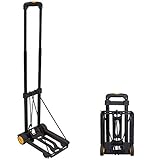
Overview: The Mount-It! Folding Luggage Cart delivers impressive versatility in a featherlight 4-pound package. With a 77-pound capacity and telescoping handle offering three heights (17", 27", 38"), this steel-framed dolly adapts to users of all statures. It folds to a compact 17.5" x 9", making it ideal for trunk storage or office closets.
What Makes It Stand Out: The standout feature is the comprehensive 5-year warranty, demonstrating manufacturer confidence rare in this category. The integrated bungee cord eliminates the need for separate tie-downs, while the four rubber wheels provide smooth, quiet operation across various surfaces. The three-stage height adjustment is precisely engineered to prevent heel-kicking.
Value for Money: This cart offers exceptional value, combining professional-grade features with consumer-friendly pricing. The warranty alone adds significant value, potentially saving replacement costs. Compared to similar capacity carts, it matches or beats competitors while including premium touches like the bungee cord and superior wheel quality.
Strengths and Weaknesses: Major strengths include the adjustable height, lightweight portability, robust warranty, and included bungee cord. The steel frame provides durability, though scratches could lead to rust. The base plate securely holds items but lacks the extendability of premium models. Some users may find the 77-pound limit restrictive for heavy moving tasks, and the folding mechanism, while reliable, requires deliberate operation.
Bottom Line: An excellent all-purpose cart backed by an industry-leading warranty. Perfect for professionals, teachers, and travelers who prioritize adjustability and peace of mind over extreme weight capacity.
3. Folding Hand Truck, 500 LBS Heavy Duty Foldable Dolly Cart with Wheels, Telescoping Handle & 2 Elastic Ropes, Portable Luggage Cart for Moving, Travel, Home, Black Red

Overview: This heavy-duty folding hand truck redefines portable capacity, supporting a remarkable 500 pounds while maintaining a manageable 6.5-pound frame. The six-wheel design with 360° swivel capability provides industrial-level stability. It extends to 22.2" x 12.2" x 36" and folds flat to 17.3" x 12.2" x 4.5", offering professional performance in a storage-friendly package.
What Makes It Stand Out: The six-wheel configuration is revolutionary for this class, distributing weight evenly and eliminating tipping risks. The telescoping base plate accommodates oversized loads that defeat standard carts, while the 180° tilting handle allows unique maneuvering angles. Two steel bearings per wheel deliver buttery-smooth rolling even at maximum capacity.
Value for Money: While priced higher than basic luggage carts, the cost-per-pound capacity is unmatched. This replaces multiple specialized carts, making it economical for serious movers. For home renovators, small business owners, or frequent movers, the investment quickly pays for itself in saved rental fees and back injuries.
Strengths and Weaknesses: Strengths include the extraordinary weight capacity, stable six-wheel base, extendable platform, and versatile handle positioning. The lightweight construction relative to capacity is engineering excellence. Weaknesses include the larger folded footprint, which may not fit smaller car trunks, and the complexity that could intimidate casual users. At 6.5 pounds, it’s heavier than travel-specific models.
Bottom Line: A professional-grade solution masquerading as a portable cart. Ideal for heavy-duty applications, but overkill for occasional airport runs. Choose this when capacity and stability trump ultra-portability.
4. Mount Plus A6 Folding Luggage Cart and Dolly | 77 Lb Capacity | Portable Lightweight Luggage Trolley Cart with Telescoping Handle and 4 Rubber Wheels | Steel Frame

Overview: The Mount Plus A6 prioritizes minimal weight without sacrificing functionality, tipping scales at just 2.5 pounds—lighter than most laptops. Despite its feathery build, it maintains a 77-pound capacity with a steel and aluminum frame that resists corrosion. Folding to 15.5" x 9", it’s the most compact option in its class.
What Makes It Stand Out: The extraordinary 2.5-pound weight makes this the ultimate travel companion for weight-restricted airlines and minimalist packers. The aluminum-steel hybrid construction prevents rust while maintaining rigidity. Its three-height telescoping handle (17", 27", 38") offers customization typically found in heavier models, and the integrated bungee cord provides immediate load security.
Value for Money: This cart delivers premium portability at a competitive price point. For travelers who pay baggage fees by the pound, the weight savings alone justify the cost. It matches heavier competitors’ functionality while offering superior corrosion resistance, making it a smart long-term investment for frequent flyers.
Strengths and Weaknesses: Key strengths are the ultra-lightweight design, rust-resistant materials, compact fold, and height adjustability. The bungee cord inclusion adds convenience. However, the extreme lightness may compromise stability with top-heavy loads, and the base plate, while sturdy, is smaller than professional models. The weight capacity, though adequate for luggage, limits utility for moving heavy boxes.
Bottom Line: The perfect choice for travelers obsessed with weight and space savings. It sacrifices some brute strength for portability, but delivers exactly what frequent flyers need: reliable, featherlight luggage transport.
5. AOKWAWALIY Travel Suitcase Telescopic Handle Luggage Replacement Single Rod Replacement Telescopic Handle Aluminum Luggage Telescoping for Most

Overview: This telescopic handle replacement offers a cost-effective solution for repairing damaged luggage rather than replacing entire suitcases. Measuring 5.1 x 30.7 inches, the aluminum construction fits most standard trolley cases and cosmetic luggage. It provides a direct replacement for broken single-rod handles, extending the life of otherwise functional baggage.
What Makes It Stand Out: The ergonomic grip design prioritizes comfort during extended pulling, a noticeable upgrade over many factory handles. The aluminum build ensures durability without adding significant weight, while the smooth telescoping mechanism restores original functionality. This niche product addresses a specific pain point: the high cost of luggage replacement vs. affordable repair.
Value for Money: At a fraction of new luggage cost, this handle delivers exceptional value for quality suitcases with failed handles. It prevents waste and preserves investments in premium baggage. While professional installation adds cost, DIY-savvy users save substantially. The durability ensures the repair lasts as long as the original component.
Strengths and Weaknesses: Strengths include sturdy aluminum construction, ergonomic comfort, easy installation for handy users, and significant cost savings. It’s a sustainable choice reducing luggage waste. Weaknesses involve compatibility uncertainties—“fits most” isn’t universal—and the need for technical skill or professional help. It lacks instructions in some packages, and the single-rod design won’t suit dual-handle suitcases.
Bottom Line: An essential spare part for luggage repair enthusiasts and budget-conscious travelers. Verify compatibility carefully, but if it matches your case, it’s a brilliant alternative to costly replacement.
6. Folding Hand Truck Dolly Cart,Collapsible Shopping Trolley,Mini Lightweight Hand Dolly,Backpack Trolley,Luggage Cart,Aluminum Telescopic Rod,2 Wheel Trolley Expandable Large Chassis,Mint Green

Overview: This mint-green folding hand truck is an ultra-portable solution for light-duty hauling. Weighing just 2.7 pounds yet supporting 70 pounds, it’s designed for shoppers, travelers, and anyone needing occasional assistance with boxes or luggage. The compact design folds to briefcase size (17.3×9.1×3.15 inches), making it backpack-friendly and ideal for car trunks.
What Makes It Stand Out: The standout feature is its incredible portability-to-capacity ratio. The expandable base plate increases from standard to 13.8×12.6 inches, accommodating awkwardly sized boxes. Two adjustable bungee cords with hooks secure various loads. The vibrant mint green color distinguishes it from generic black dollies, while the aluminum telescopic rod adds durability without significant weight.
Value for Money: Priced for budget-conscious buyers, this dolly offers excellent value for occasional use. While it can’t match heavy-duty models, it costs significantly less than aluminum alternatives. For light tasks like grocery runs, trade shows, or airport navigation, it eliminates the need for pricier options.
Strengths and Weaknesses: Strengths include featherlight weight, exceptional compactness, expandable base, and eye-catching design. Weaknesses are the 70-pound capacity limiting heavier tasks, PVC wheels that wear faster than rubber, and a plastic base that may flex under maximum load. It’s not suitable for daily commercial use.
Bottom Line: Perfect for light, infrequent hauling where portability is paramount. Ideal for seniors, students, or travelers needing occasional help. Don’t expect industrial performance, but for its intended purpose, it’s a convenient, space-saving companion.
7. Folding Hand Truck Dolly Aluminum Folding Hand Cart Luggage Trolley Cart Max 175lbs Capacity Dolly Cart, with Telescoping Handle and Rubber Wheels, Double Bearings

Overview: This aluminum folding hand truck strikes a practical balance between capacity and portability. Supporting 175 pounds, it handles most household moving tasks, luggage transport, and office deliveries. The rustproof aluminum construction ensures durability without excessive weight, while the telescoping handle adapts to users from 24 to 39.4 inches tall.
What Makes It Stand Out: The upgraded rubber wheels with double bearings deliver noticeably smoother, quieter rolling compared to standard PVC wheels. This engineering reduces vibration and increases longevity. The solid aluminum wheel suspensions provide extra stability and ride comfort, making it feel more premium than basic models. Its foldable design collapses effortlessly for trunk or closet storage.
Value for Money: Positioned in the mid-range price bracket, this dolly justifies its cost through durable materials and superior wheel construction. It bridges the gap between flimsy plastic models and expensive heavy-duty carts, offering reliable performance for regular users without breaking the bank.
Strengths and Weaknesses: Strengths include durable rubber wheels, rustproof aluminum frame, decent capacity, and smooth maneuverability. The telescoping handle accommodates various heights comfortably. Weaknesses are the two-wheel design’s inherent stability limitations versus four-wheel carts, and the 175-pound capacity may still fall short for some appliances or bulk items.
Bottom Line: A solid workhorse for regular home, office, or travel use. The quality wheel construction and aluminum frame make it a dependable choice that will outlast cheaper plastic alternatives. Best for users needing reliable performance several times per month.
8. Leeyoung Folding Hand Truck and Dolly, 264 Lb Capacity Heavy-Duty Luggage Trolley Cart with Telescoping Handle and PP+EVA Wheels

Overview: Leeyoung’s heavy-duty offering supports an impressive 264 pounds while maintaining surprising portability. Constructed from steel and reinforced plastic, it targets frequent movers needing more capacity than standard dollies. The telescoping handle extends to 44 inches and features soft rubber foam for comfortable grip during extended use.
What Makes It Stand Out: The ultra-slim 2-inch folded profile is exceptional, sliding under beds or between cabinet gaps where others won’t fit. The 7-inch PP+EVA wheels operate silently while providing smooth rolling. A 365-day warranty demonstrates manufacturer confidence. The included latex rope and clear usage instructions show attention to user experience.
Value for Money: Competitively priced for its capacity class, this dolly offers strong value. The warranty and robust construction suggest long-term reliability, reducing replacement costs. For users regularly moving 150-200 pounds, it pays for itself quickly in saved effort and potential injury prevention.
Strengths and Weaknesses: Strengths include high weight capacity, whisper-quiet wheels, ergonomic handle, incredibly compact storage, and comprehensive warranty. The steel construction adds durability but also weight. The required tilt technique may confuse first-time users, and the handle’s maximum height could be limiting for very tall individuals.
Bottom Line: Excellent choice for frequent movers needing substantial capacity without sacrificing storage space. The warranty and build quality provide peace of mind. Ideal for apartment dwellers, vendors at markets, or anyone moving heavy items weekly.
9. Folding Hand Truck, 500 LBS Heavy Duty Foldable Dolly Cart with Wheels, Telescoping Handle & 2 Elastic Ropes, Portable Luggage Cart for Moving, Travel, Home, Black Red
Overview: This professional-grade folding hand truck dominates with a 500-pound capacity and innovative 6-wheel design. Built for serious moving tasks, it features a telescoping handle that adjusts from 16 to 36 inches and tilts 180 degrees for optimal leverage. The black and red color scheme gives it a rugged, industrial aesthetic.
What Makes It Stand Out: The six swivel wheels with steel bearings enable true 360-degree rotation, delivering unmatched stability and maneuverability on any surface. The extendable base plate accommodates oversized boxes that standard dollies can’t handle. Weighing just 6.5 pounds despite its capacity, it folds to a slim 4.53-inch profile for storage.
Value for Money: While priced at the premium end, the 500-pound capacity justifies the investment for those needing serious hauling power. It replaces the need for multiple trips or larger, non-portable equipment. For small business owners, frequent movers, or anyone handling heavy appliances, the efficiency gains offset the higher upfront cost.
Strengths and Weaknesses: Strengths include massive weight capacity, superior 6-wheel stability, extendable base, and lightweight relative to capability. The tilting handle provides ergonomic advantages. Weaknesses are the higher price point, potential overkill for casual users, and the 6.5-pound weight being heavier than travel-focused models.
Bottom Line: Best-in-class for heavy-duty portable hauling. Essential for movers, delivery personnel, or anyone regularly transporting items over 200 pounds. Overkill for light luggage, but indispensable when maximum capacity and stability are non-negotiable.
10. VEVOR Folding Hand Truck and Dolly, 275 Lbs Capacity, Aluminum Foldable Cart, Heavy-Duty Luggage Trolley Cart with Telescoping Handle and PP+TPR Wheels for Home, Office, Shopping, Travel

Overview: VEVOR’s aluminum folding hand truck arrives fully assembled and ready for immediate use. With a 275-pound capacity, it targets everyday users wanting convenience without compromising quality. The corrosion-resistant aluminum alloy construction keeps weight manageable while ensuring durability for home, office, and shopping applications.
What Makes It Stand Out: The hassle-free, no-assembly-required design sets it apart—simply unfold and extend the handle. The PP+TPR wheels are specifically engineered to be floor-friendly, preventing scratches on hardwood or tile while rolling smoothly and quietly. VEVOR’s reputation for industrial-grade equipment inspires confidence in its reliability.
Value for Money: Priced competitively for its feature set, the ready-to-use convenience adds immediate value. The quality materials and floor-protecting wheels justify the modest premium over basic models. For users prioritizing convenience and floor protection, it delivers strong ROI.
Strengths and Weaknesses: Strengths include immediate usability, quiet floor-friendly wheels, lightweight aluminum construction, and adjustable handle. The foldable design stores easily. Weaknesses are the 275-pound capacity limiting heavier tasks, and the two-wheel design requiring more balance than four-wheel alternatives. Some users may prefer rubber over PP+TPR wheels.
Bottom Line: Ideal for those wanting a premium, ready-to-use solution without assembly frustration. Perfect for homeowners, office workers, and shoppers who need reliable performance with floor protection. A convenient, well-built cart that hits the sweet spot for most everyday tasks.
Understanding Telescoping Luggage Cart Fundamentals
What Makes a Telescoping Luggage Cart Essential
Telescoping luggage carts solve a fundamental travel problem: moving heavy loads across unpredictable surfaces while maintaining personal mobility. Unlike stationary carts, these tools feature collapsible handles that adjust to your height, reducing back strain and improving posture. The telescoping mechanism typically uses nested tubes that lock at various lengths, creating a customized fit for users from 5 feet to over 6 feet tall. This adaptability ensures the cart works as effectively for a petite traveler as it does for someone taller, preventing the hunching and awkward angles that cause fatigue.
The real magic lies in the mechanical advantage these carts provide. By elevating the load and transferring weight to wheels, they reduce the effective weight you’re carrying by up to 90%. This means a 50-pound suitcase feels like you’re pushing only 5 pounds of resistance. For travelers with physical limitations, aging joints, or those simply wanting to conserve energy for their actual destination, this reduction in physical exertion can be game-changing. The telescoping feature also enables compact storage in closet corners, under beds, or tucked into luggage when not in use.
Key Features to Evaluate Before Purchasing
When examining potential purchases, focus on the intersection of engineering and practical application. The handle extension mechanism should glide smoothly without catching or wobbling—test this by fully extending and collapsing it multiple times. Listen for grinding sounds that indicate poor-quality bushings or misaligned tubes. The locking mechanism must engage definitively; ambiguous clicks that leave the handle slightly loose will worsen over time and could collapse under load.
Platform dimensions directly impact functionality. A too-narrow base might support a single suitcase but fails when stacking multiple bags or oddly-shaped items like ski boots or car seats. Look for platforms at least 15 inches wide with some form of edge retention—either a lip, bungee cord anchors, or non-slip surface. The platform-to-ground clearance matters too; insufficient height means the bottom of your luggage drags on curbs or uneven pavement. Aim for at least 6 inches of clearance when the cart is fully loaded.
Weight Capacity and Load Management
Decoding Weight Ratings and Real-World Performance
Manufacturers advertise weight capacities ranging from 50 to 500 pounds, but these numbers require careful interpretation. The stated maximum represents a static load test performed under ideal laboratory conditions, not dynamic travel scenarios involving bumps, turns, and sudden stops. A cart rated for 150 pounds might technically support that weight on flat ground, but navigating airport carpet, cracked sidewalks, or elevator thresholds creates torque and stress that can overwhelm the mechanism.
Smart travelers select carts rated for at least 30% more than their typical load. If you regularly transport 80 pounds of gear, choose a cart rated for 110 pounds or higher. This buffer accounts for dynamic forces and extends the product’s lifespan. Pay attention to how the weight rating is distributed—some carts handle concentrated loads (single heavy suitcase) better than distributed ones (multiple smaller bags). The frame’s weakest point usually isn’t the platform but the connection between the handle and base, where leverage creates maximum stress.
Balancing Multiple Items Securely
The ability to stack and secure multiple pieces transforms a basic cart into a versatile transport system. Effective designs feature multiple anchor points—corner hooks, central bungee loops, and side rails—that let you create a stable pyramid of luggage. The key is vertical alignment; when bags sit directly above the wheels rather than hanging off the back, stability improves dramatically. Some advanced platforms include adjustable width features that expand to accommodate bulkier items like golf club bags or photography equipment cases.
Consider the center of gravity when loading. Place the heaviest item on the bottom platform, closest to the wheels. Stack lighter items on top, securing each layer before adding the next. This pyramid approach prevents the wobbling that occurs when weight sits too high. Bungee cords with adjustable hooks prove more versatile than fixed straps, allowing you to cinch down loads of varying shapes. Avoid over-stacking; if you can’t see over the top of your loaded cart, you’ve compromised both safety and maneuverability.
Wheel Systems and Terrain Navigation
Wheel Size, Material, and Configuration
Wheels determine where your cart can go and how smoothly it travels. Small, hard plastic wheels (under 4 inches diameter) excel on polished airport floors but stumble on cracks, gravel, or cobblestones. Larger wheels (6-8 inches) made from rubber or polyurethane roll over obstacles more easily and absorb vibration that would otherwise transfer to your luggage. For international travelers encountering varied European street surfaces, larger wheels aren’t a luxury—they’re a necessity.
The number of wheels affects stability and turning radius. Two-wheel designs are fundamentally hand trucks that require you to tilt the load back, making them efficient for heavy single items but awkward for stacked luggage. Four-wheel platforms offer true cart functionality, rolling alongside you like a stroller. Some hybrid designs feature two main wheels with small stabilizing casters that engage when the cart stands upright. Swivel casters on front wheels improve maneuverability in tight spaces like airplane aisles or crowded train cars, while fixed rear wheels provide directional stability.
Bearing Quality and Long-Term Performance
Inside those wheels, bearings determine rolling resistance and longevity. Sleeve bearings (simple metal sleeves) suffice for light use but develop flat spots and increased friction over time. Ball bearings, particularly sealed or shielded variants, maintain smooth rotation even after hundreds of miles. High-end carts might use roller bearings for main wheels, distributing load across a larger surface area and preventing the brinelling (denting) that can plague ball bearings under extreme weight.
Test bearing quality by spinning a wheel and listening. Silence indicates good bearings; clicking or grinding suggests poor manufacturing. The wheel should spin freely for several seconds from a single push. Over time, bearings can be cleaned and re-greased, but sealed units require less maintenance. For travelers in wet climates, rubber-sealed bearings prevent water intrusion that causes rust and premature failure. Some premium designs incorporate bearing spacers that prevent side-load crushing, a common failure mode when heavy bags create lateral forces during turns.
Handle Engineering and Ergonomic Design
Telescoping Mechanism Types and Durability
Handle mechanisms fall into three categories: friction-lock, button-release, and twist-lock. Friction locks rely on tension between nested tubes, creating infinite height adjustment but wearing down over time. Button-release systems use spring-loaded pins that click into pre-drilled holes, offering positive engagement at set intervals. Twist-lock handles rotate to cam against the inner tube, providing secure positioning but requiring two-handed operation.
The most reliable designs combine button-release main sections with a friction-lock fine adjustment on the final segment. This hybrid approach gives you both security and customization. Examine the pin diameter—thicker pins (over 3mm) resist shearing forces better. The pin should be made from hardened steel, not aluminum or plastic. Some designs feature backup locking systems where a secondary catch engages if the primary pin fails, preventing catastrophic collapse.
Grip Comfort and Control Features
Handle grips might seem minor, but after pulling a cart for 30 minutes through terminal connections, ergonomics become critical. Foam grips provide cushioning but absorb sweat and degrade quickly. Rubber grips offer better durability and grip security, especially in rain. The most comfortable designs use contoured shapes that match hand anatomy, with a slight bulge where your palm rests and a narrower neck for finger wrapping.
Width matters too. Grips narrower than 4 inches concentrate pressure and cause discomfort. Wider grips (5-6 inches) distribute load across your whole hand. Some advanced designs feature rotating grips that pivot as you change hand position, reducing wrist strain. For travelers with arthritis or grip strength issues, larger diameter grips (over 1.5 inches) require less squeezing force. Textured patterns should be pronounced enough to prevent slipping but not so aggressive they dig into your skin during extended use.
Platform Construction and Cargo Security
Platform Materials and Structural Integrity
Platforms typically use steel, aluminum, or high-impact plastic. Steel offers maximum strength and rigidity, supporting the heaviest loads without flexing, but adds significant weight to the cart itself—often 10-15 pounds. Aluminum provides an excellent strength-to-weight ratio, resisting corrosion while keeping cart weight under 8 pounds. Plastic platforms keep weight minimal (as light as 4 pounds) but may crack under extreme cold or heavy impact.
The platform’s underside structure reveals its true strength. Look for cross-bracing, reinforcement ribs, or tubular frames that prevent sagging. A flat platform might support 50 pounds in the center but fail when weight concentrates at the edge. The best designs use a slight upward curve at the platform edges, creating a natural retention lip without adding height. Some platforms feature replaceable wear strips on the bottom corners, protecting the main structure when dragging over curbs.
Securing Mechanisms and Adaptability
How your luggage attaches to the platform determines both security and convenience. Fixed bungee cords with metal hooks offer simplicity but lack adjustability. Anchor points spaced every few inches along the platform edge provide flexibility for different load sizes. Some designs incorporate retractable straps that wind into the frame when not needed, eliminating dangling cords that catch on obstacles.
For specialized cargo, look for accessory compatibility. Platforms with threaded inserts or clip points accept add-ons like cargo nets, cooler bags, or equipment brackets. This modularity transforms a standard luggage cart into a tool for trade shows, beach trips, or sporting events. The securing system should allow one-handed operation—if you need three hands to tighten straps while holding luggage, the design fails the real-world test. Quick-release buckles that operate with a single thumb press dramatically improve loading efficiency.
Portability and Storage Considerations
Collapsed Dimensions and Travel Integration
The primary advantage of telescoping designs is compact storage, but collapsed sizes vary dramatically. Some carts fold flat to under 3 inches thick, sliding easily into suitcase pockets or laptop bag compartments. Others collapse only to 6-8 inches, requiring dedicated storage space in your trunk or closet. Measure your intended storage location before purchasing—whether that’s a specific suitcase pocket, cruise cabin drawer, or aircraft overhead bin.
Weight affects portability as much as size. A 15-pound cart might support 300 pounds but becomes a burden when carrying it through stations or up stairs. Ultra-light models under 5 pounds sacrifice some durability but earn their keep when you must walk a mile with the cart strapped to your backpack. Some innovative designs feature backpack straps or shoulder slings that deploy when the cart is folded, freeing your hands for other luggage. Consider how often you’ll need to carry the cart itself versus rolling it.
Assembly and Deployment Speed
In travel scenarios, speed matters. A cart requiring five minutes of assembly with tools and small parts won’t see use during tight connections. The best designs deploy in under 30 seconds with a single motion—unfold the platform, extend the handle, and lock it. Look for automatic locking features where the handle clicks into place at full extension without requiring a separate locking action.
Some carts use a scissor-fold mechanism where the platform and handle collapse together, while others require you to fold the platform then nest the handle separately. Scissor designs are faster but may have more flex in the platform. Pay attention to pinch points during folding—exposed scissor joints can catch fingers or clothing. Protective covers over hinge areas prevent injuries and keep the mechanism clean. For frequent flyers, practice deploying and collapsing the cart blindfolded; if you can’t do it while half-asleep in a dimly lit hotel room, it won’t serve you well at 5 AM in an unfamiliar airport.
Price Ranges and Value Assessment
Budget Tiers and Feature Trade-offs
Telescoping luggage carts typically fall into three price categories: budget ($20-40), mid-range ($40-80), and premium ($80-200). Budget models use thinner aluminum tubes, plastic wheels, and simple friction locks. They work adequately for occasional travelers with light loads but expect a lifespan of 20-30 trips before mechanisms loosen or wheels degrade. These are disposable tools rather than long-term investments.
Mid-range carts balance cost with durability, featuring steel or thick-walled aluminum frames, rubber wheels with ball bearings, and reliable button-lock handles. This sweet spot serves most travelers well, offering 5-10 years of regular use with basic maintenance. Premium models justify their cost through advanced materials like carbon fiber components, sealed bearing systems, ergonomic engineering, and modular accessory ecosystems. For road warriors logging 100,000 miles annually, the ergonomic benefits and reliability of premium carts can prevent repetitive strain injuries and luggage disasters.
Total Cost of Ownership Calculations
Consider lifespan when evaluating price. A $30 cart replaced every two years costs more over a decade than an $80 cart lasting eight years. Factor in replacement parts availability—can you purchase new wheels or handle grips separately? Some manufacturers offer rebuild kits with new bearings, bushings, and straps for 20% of the cart’s original price, extending service life indefinitely.
Warranty terms reveal manufacturer confidence. One-year warranties cover manufacturing defects but not wear. Three to five-year warranties indicate robust engineering. Lifetime warranties, often limited to the frame, suggest exceptional durability but read the fine print—many exclude wheels and handles, which are the most failure-prone components. For business travelers who can expense the purchase, premium carts offer tax-deductible ergonomic benefits that cheap alternatives can’t match.
Specialized Designs for Different Travel Scenarios
Business Travel and Professional Use
Corporate travelers need carts that project professionalism while handling briefcases, garment bags, and presentation materials. Look for platforms with flat, non-marking surfaces that won’t scuff leather bags. Black or metallic finishes maintain a business-appropriate aesthetic. Quiet operation becomes important—squeaky wheels in hotel lobbies or conference centers create unprofessional impressions.
Some designs feature integrated document tubes or laptop compartments that attach to the handle, keeping valuable electronics within sight. For trade show veterans, carts with banner pole mounts transform the tool into a portable display stand. Weight becomes less critical since business trips rarely require mile-long walks, but one-handed operation matters immensely when you’re managing a phone call, coffee, and luggage simultaneously.
Family Travel and High-Capacity Needs
Parents managing strollers, car seats, diaper bags, and personal luggage need maximum capacity and stability. Wide platforms (over 18 inches) accommodate bulky items, while high weight ratings (150+ pounds) handle the cumulative load. Look for carts with horizontal handle extensions that let you push rather than pull—this prevents the cart from running into your heels when loaded with three suitcases.
Child safety features include rounded edges, non-toxic finishes, and stable standing positions that prevent tipping when you release the handle. Some family-oriented designs incorporate seat attachments that let a toddler ride on the cart, though this requires careful weight distribution and should never exceed manufacturer specifications. For cruise travel, compact storage trumps all other features since cabin space is severely limited.
Safety Features and Best Practices
Structural Safety and Load Stability
A collapsing cart under load can cause injuries and damage belongings. Quality designs incorporate redundant safety features: primary locks with secondary catches, reinforced stress points, and failure-resistant materials. The handle-to-platform connection should use multiple fasteners or a continuous weld, not a single bolt. Platforms with anti-tip geometry—wheels set wider than the platform or low center of gravity—prevent backward tipping when you stop suddenly.
Before each trip, perform a safety check: extend the handle fully and apply downward pressure to test lock engagement, wiggle the platform to check for looseness, and spin wheels listening for bearing issues. Replace bungee cords at the first sign of fraying—a snapped cord under tension can cause eye injuries. Never exceed the rated capacity by more than 10%, and reduce loads when navigating stairs or escalators where dynamic forces multiply.
Navigating Crowded Spaces and Public Transit
In dense crowds, cart control becomes a safety issue for both you and others. Shorter handle settings improve maneuverability in tight spaces, even if it means slightly more back bend. Some carts feature a “concertina” mode where the platform partially folds, reducing the footprint to sidewalk-width. Always keep the cart behind you in elevator queues, never beside, to avoid blocking doors.
On escalators, two-wheel designs tilt back naturally, but four-wheel carts require you to hold them at an angle, creating instability. Some airports prohibit carts on moving walkways—check signage and be prepared to carry the cart. When boarding buses or trains, collapse the cart completely to avoid tripping other passengers. Brightly colored flags or LED lights attached to the handle improve visibility in dim stations, preventing collisions.
Maintenance and Care Guidelines
Cleaning and Lubrication Schedules
Regular maintenance extends cart life dramatically. After each trip, wipe down the frame with a damp cloth to remove salt, grime, and airport chemical residues that cause corrosion. Pay special attention to telescoping tubes—grit inside the mechanism causes the scratches that lead to wobble. Use a soft brush to clean wheel treads, removing pebbles and debris that damage bearings.
Lubricate moving parts every 10-15 trips or quarterly for infrequent users. Silicone spray works best for telescoping tubes—it’s clean, doesn’t attract dust, and protects against moisture. Avoid WD-40 for long-term lubrication; it evaporates quickly and leaves a sticky residue. For wheel bearings, use light grease if they’re serviceable, or replace sealed units when they develop play. Store carts fully extended in dry conditions to prevent moisture trapping inside collapsed tubes.
Wear Item Replacement and Upgrades
Wheels, bungee cords, and handle grips constitute the “wear items” that need periodic replacement. Quality carts design these components for easy swapping—wheels that pop off with a cotter pin, grips that slide off after removing an end cap. Upgrade opportunities exist: replace standard solid wheels with pneumatic ones for beach travel, or add wider platform extensions for oversized loads.
Inspect the telescoping tubes for dents or bends monthly. Even small deformations cause binding and eventual failure. Some manufacturers offer tube replacement services, though this often costs nearly as much as a new cart. For DIY repairs, keep spare lock pins and springs—these tiny parts are often proprietary and difficult to source after a model is discontinued. Document your cart’s model number and purchase date; this information proves invaluable when ordering parts years later.
Practical Applications and Use Cases
Airport and Transit Hub Navigation
Airports present the ultimate test for luggage carts: miles of varied flooring, tight restroom stalls, and frantic connections. Effective airport carts feature quiet wheels that won’t annoy fellow travelers and compact footprints that fit down jet bridge aisles. The ability to stand upright unattended while you check departure boards or buy coffee is invaluable—look for stable kickstands or wheel locks.
Security checkpoints require special consideration. Carts that fold completely flat slide through X-ray machines easily, while bulkier designs must be checked separately. Some frequent flyers keep a dedicated “airport cart” that’s permanently packed with pre-screened accessories, ready to grab for any trip. For international connections, ensure the cart’s collapsed dimensions meet carry-on restrictions for your most common airlines.
Non-Travel Applications and Versatility
Beyond airports, these carts prove surprisingly useful for everyday tasks. They transport groceries from car to kitchen, move boxes during home organization, and haul sports equipment to fields. Some homeowners keep one in the car trunk for warehouse store runs, while others use them for festival camping gear. The same features that make them great for travel—compact storage, high capacity, smooth rolling—apply to countless domestic scenarios.
Creative users adapt carts for specific hobbies. Photographers mount tripod heads to the platform for mobile studio setups. Musicians strap amplifier heads to the cart while carrying speaker cabinets by hand. Pet owners attach custom cargo boxes for vet visits. This versatility justifies investing in higher-quality models that withstand varied use cases rather than treating the cart as a single-purpose travel gadget.
Troubleshooting Common Operational Issues
Diagnosing Handle and Platform Problems
When handles refuse to lock, the culprit is usually debris in the locking holes or a weakened spring. Clean the holes with a pipe cleaner and compressed air, then test the spring tension by pressing the release button—it should feel firm and snap back crisply. Persistent wobble in extended handles indicates worn bushings or dented tubes. While bushings can sometimes be replaced, dented tubes require professional repair or replacement.
Platforms that sag under load often suffer from cracked reinforcement ribs or loosened fasteners. Flip the cart over and inspect all connection points; tighten any loose bolts, but avoid overtightening which can strip threads. If the platform itself is cracked, some manufacturers offer replacement platforms at partial cost. For squeaking platforms, the hinge points need lubrication—apply silicone spray, work the joint through its range of motion, then wipe excess to prevent dirt accumulation.
Wheel and Mobility Solutions
Wheels that won’t spin freely usually have bearing issues. Remove the wheel and clean the axle thoroughly. If bearings are serviceable, flush them with solvent, dry completely, then repack with grease. For sealed bearings, replacement is the only option—source exact matches by measuring inner diameter, outer diameter, and thickness. Wobbling wheels indicate worn axles or deformed wheel hubs; replace both wheel and axle as a set to ensure proper fit.
Carts that pull to one side often suffer from uneven wheel wear or bent frames. Check that all wheels make contact with the ground simultaneously when the cart is unloaded and on a flat surface. If one wheel lifts off, the frame is twisted—this usually requires professional straightening. For uneven wear, rotate wheel positions if possible, or replace all wheels to maintain consistent rolling characteristics. Adding thread-locking compound to axle nuts prevents them from loosening during vibration-heavy travel.
Making Your Final Selection Decision
Creating a Personal Feature Priority Matrix
Start by listing your absolute requirements: maximum weight you’ll carry, storage space constraints, and physical limitations like back problems or grip strength. Assign point values to each feature based on importance. For example, a traveler with arthritis might assign 10 points to grip ergonomics but only 3 points to maximum capacity. Someone living in a tiny apartment might prioritize collapsed size above all else.
Test carts in person when possible. Bring your actual luggage to a store and load it onto display models. Roll them over door thresholds and turn in tight circles. The theoretical perfect cart might feel awkward in practice. If online purchasing is your only option, read reviews focusing on long-term durability rather than initial impressions. Look for reviewers who’ve used the cart for 50+ trips—they’ve exposed weaknesses that don’t appear in first-use reviews.
Understanding Warranty and Return Policies
Even well-researched purchases sometimes disappoint. Verify return policies allow at least 30 days of real-world testing. Some retailers restrict returns if the cart shows any use, making honest evaluation impossible. Look for “satisfaction guarantee” language rather than strict defect-only policies. For premium purchases, extended warranties through credit cards can provide additional protection.
Save all packaging until you’re certain the cart meets your needs. Many returns require original boxes and inserts. Document the purchase with photos showing the cart in both collapsed and extended states—this helps resolve warranty claims if issues develop later. Keep the receipt digitally and physically; luggage cart warranties often run 3-5 years, and you’ll need proof of purchase for service.
Frequently Asked Questions
How much weight can a typical telescoping luggage cart safely support?
Most quality carts support 75-150 pounds safely, though ratings range from 50 to over 300 pounds. Always choose a cart rated for at least 30% more than your typical load to account for dynamic forces during travel. Remember that concentrated weight (single heavy suitcase) stresses the cart differently than distributed loads (multiple smaller bags).
What’s the difference between two-wheel and four-wheel designs?
Two-wheel carts function as hand trucks requiring you to tilt and pull the load, offering excellent capacity for single heavy items but poor stability for stacked luggage. Four-wheel designs roll alongside you like a stroller, providing superior stability for multiple bags and better ergonomics for extended use, though they sacrifice some capacity and add weight.
How do I prevent my cart from tipping over when loaded?
Load heaviest items on the bottom platform closest to the wheels, stack lighter items on top, and keep the center of gravity low. Ensure the total height doesn’t block your forward vision. Look for carts with wide wheelbases or anti-tip designs. When stopped, engage wheel locks if available and never leave the cart unattended on slopes.
Can I bring a telescoping luggage cart as a carry-on item?
Most carts collapse small enough to meet carry-on size restrictions, but policies vary by airline. Carts under 24 inches long when collapsed typically fit in overhead bins. Some travelers pack them inside checked luggage. Always verify with your specific carrier, as some treat carts as personal items rather than carry-ons.
Why does my cart wobble when I extend the handle?
Wobble indicates worn bushings, dented telescoping tubes, or loose locking mechanisms. Clean the tubes thoroughly and check for damage. If the issue persists, the internal bushings may need replacement. This is a common wear issue that develops after extensive use, especially if the cart has been overloaded or dropped.
How long do telescoping luggage carts typically last?
With proper care, mid-range carts last 5-10 years of regular travel. Budget models may need replacement after 20-30 trips. Premium carts can last decades with occasional part replacements. Lifespan depends directly on load management, storage conditions, and maintenance frequency. Carts used occasionally and stored indoors outlast daily-use models exposed to weather.
Are pneumatic tires better than solid wheels for travel?
Pneumatic tires provide superior shock absorption and roll more easily over rough surfaces like cobblestones or gravel, making them ideal for international travel. However, they can puncture and require inflation maintenance. Solid wheels eliminate flat concerns and work perfectly for airport and hotel use. Hybrid foam-filled tires offer a compromise—some cushioning without puncture risk.
What’s the best way to secure oddly-shaped items to a luggage cart?
Use adjustable bungee cords with multiple anchor points rather than fixed straps. Create a criss-cross pattern over the load, hooking cords to different platform points. For very irregular items, add a cargo net or use ratchet straps if the cart has reinforced anchor points. Always test stability by gently shaking the loaded cart before moving.
How do I maintain the telescoping mechanism?
Clean the tubes monthly with a damp cloth to remove grit, then dry thoroughly. Apply silicone spray lubricant to the inner tubes, extending and collapsing the handle several times to distribute it evenly. Avoid oil-based lubricants that attract dust. Inspect locking holes for debris and ensure the spring-loaded pin moves freely. Store the cart fully extended in dry conditions.
Can children ride on luggage carts?
Manufacturers generally prohibit passengers on luggage carts due to stability and liability concerns. The high center of gravity created by a child increases tip-over risk dramatically. Some specialized family carts include approved seat attachments with safety harnesses, but these are distinct products from standard luggage carts. For safety, use strollers or approved child carriers instead of adapting luggage carts for passenger transport.