Travel vlogging has evolved from selfie sticks and handheld gimbals to a sophisticated aerial storytelling revolution. As we approach 2026, mini drones have become the ultimate force multiplier for content creators who want to capture breathtaking perspectives without being weighed down by bulky equipment. These pocket-sized powerhouses are transforming how we document our journeys, offering cinematic capabilities that were once exclusive to Hollywood productions.
The landscape of aerial content creation is shifting rapidly. Miniature flying cameras now pack advanced obstacle avoidance, AI-powered subject tracking, and professional-grade stabilization into packages lighter than your smartphone. For travel vloggers crisscrossing continents, the right mini drone isn’t just a gadget—it’s a creative partner that fits in your daypack and unlocks perspectives that make audiences hit that subscribe button. But with technology advancing at breakneck speed and regulations constantly evolving, choosing the perfect aerial companion requires more than just comparing spec sheets.
Top 10 Mini Drones for Travel Vloggers
Detailed Product Reviews
1. DJI Mini 4K, Drone with 4K UHD Camera for Adults, Under 249 g, 3-Axis Gimbal Stabilization, 10km Video Transmission, Auto Return, Wind Resistance, 1 Battery for 31-Min Max Flight Time, Intelligent

Overview: The DJI Mini 4K represents the entry point into DJI’s acclaimed Mini series, delivering professional-grade aerial imaging in a sub-250g package that requires no FAA registration. This featherweight drone combines a stabilized 4K camera with impressive wind resistance and extended transmission range, making it an attractive option for beginners and casual creators.
What Makes It Stand Out: Weighing under 249 grams, this drone sidesteps regulatory hurdles while packing a 3-axis mechanical gimbal and 4K UHD camera that captures cinematic footage in varied lighting conditions. Its Level 5 wind resistance and 10km video transmission range exceed expectations for this price class, while brushless motors enable high-altitude performance up to 4,000 meters. The intelligent flight modes and auto-return function provide safety nets for novice pilots.
Value for Money: At $299, this single-battery configuration offers the most affordable pathway to DJI’s reliable flight technology and quality optics. However, the 31-minute maximum flight time translates to roughly 25 minutes of real-world use, which may feel restrictive. You’re paying for DJI’s ecosystem and stabilization prowess rather than extended airtime.
Strengths and Weaknesses:
- Strengths: Exceptional portability; no registration required; professional-grade 3-axis stabilization; impressive wind resistance for size; reliable 10km transmission; trusted DJI brand support.
- Weaknesses: Single battery severely limits shooting sessions; requires manual DJI Fly app download due to Google Play removal; 31-minute rating is optimistic; lacks advanced tracking features.
Bottom Line: The DJI Mini 4K is an ideal starter drone for aspiring aerial photographers who prioritize image quality and flight stability over extended session time. Consider this if you’re testing the waters before committing to a larger investment, but plan to purchase spare batteries immediately.
2. DJI Mini 4K Camera Drone Combo, Drone with 4K UHD Camera for Adults, Under 249 g, 3-Axis Gimbal Stabilization, 10km Video Transmission, Auto Return, 2 Batteries for 62-Min Max Flight Time, QuickShots

Overview: This combo package elevates the base DJI Mini 4K experience by addressing the primary limitation of the entry model: flight time. With two batteries providing 62 minutes of maximum airtime and the addition of QuickShots automated flight patterns, this variant targets hobbyists ready for more serious content creation.
What Makes It Stand Out: Beyond doubling your flight time, the QuickShots feature enables cinematic maneuvers like Dronie, Circle, and Helix with a single tap, making complex shots accessible to beginners. You retain the same impressive 4K 3-axis gimbal camera, 10km transmission, and Level 5 wind resistance, but with significantly more flexibility for location shooting. The second battery eliminates the frustrating downtime that interrupts creative flow.
Value for Money: At $389, the $90 premium over the base model delivers exceptional value. An extra DJI battery alone typically costs $55-65, and you’re getting QuickShots functionality plus uninterrupted shooting capability. This middle-tier option hits the sweet spot for enthusiasts who’ve moved beyond casual flying but aren’t ready for professional-grade equipment.
Strengths and Weaknesses:
- Strengths: Double flight time enables longer sessions; QuickShots automate creative capture; same excellent stabilization and transmission; better value than buying battery separately; reduced battery anxiety.
- Weaknesses: Still requires manual app installation; camera specs identical to cheaper base model; 62 minutes requires battery swapping in field; no obstacle avoidance system.
Bottom Line: This combo represents the optimal balance of capability and cost for most recreational users. If you’re serious about capturing varied footage in a single outing, the extra battery and QuickShots justify the price jump, making this the most practical DJI Mini 4K configuration.
3. DJI Mini 4K Fly More Combo, Drone with 4K UHD Camera for Adults, Under 249 g, 3-Axis Gimbal Stabilization, 10km Video Transmission, Auto Return, 3 Batteries for 93-Min Max Flight Time, QuickShots

Overview: The Fly More Combo maximizes the DJI Mini 4K’s potential by bundling three batteries for a total of 93 minutes of flight time. Designed for content creators who demand extended shooting windows, this premium package eliminates battery management concerns during critical capture sessions like golden hour or event coverage.
What Makes It Stand Out: With nearly an hour and a half of cumulative airtime, you can execute complex multi-location shoots without returning to base. This configuration is ideal for travel vloggers and real estate photographers who need redundancy and endurance. The triple-battery setup, combined with the included charging hub, creates an efficient workflow that keeps you airborne while spare batteries cycle through charging.
Value for Money: At $449, you’re paying a $150 premium over the base model. While the per-battery cost is reasonable, the law of diminishing returns applies. Serious creators will appreciate the uninterrupted workflow, but casual users may find the two-battery combo sufficient. The value proposition depends entirely on your shooting style and need for continuous operation.
Strengths and Weaknesses:
- Strengths: Maximum flight time in series; ideal for professional use cases; charging hub efficiency; less gear to pack than buying batteries separately; complete ready-to-fly solution.
- Weaknesses: Highest cost in Mini 4K lineup; same camera limitations as cheaper versions; overkill for weekend hobbyists; requires significant investment in entry-level platform.
Bottom Line: Choose the Fly More Combo only if your work demands extended, uninterrupted flight sessions. For most enthusiasts, the two-battery option provides better value, but professionals needing reliability and endurance will find this configuration worth the premium.
4. DJI Mini 5 Pro, Ultra-Light & Foldable Drone with Camera, 1-Inch CMOS, Omnidirectional Obstacle Sensing, ActiveTrack 360°, 225° Gimbal Rotation, 20km Transmission, 4K Drone for Beginners

Overview: The DJI Mini 5 Pro redefines what’s possible in a sub-250g drone, packing professional-grade imaging and safety features into a pocket-sized aircraft. This flagship model targets serious content creators who refuse to compromise on image quality or flight safety, despite the ultralight form factor.
What Makes It Stand Out: The 1-inch CMOS sensor delivers dramatically superior low-light performance and dynamic range compared to the Mini 4K series. Omnidirectional obstacle sensing with forward-facing LiDAR enables safe flight in complex environments and reliable night operations. The innovative 225° gimbal rotation unlocks true vertical filming for social media content, while ActiveTrack 360° provides intelligent subject tracking with customizable paths. The 20km transmission range doubles its predecessor’s capability.
Value for Money: At $759, this is a significant investment, but you’re getting features previously reserved for drones twice the weight and price. For professional videographers and serious creators, the enhanced safety, superior sensor, and creative flexibility justify the premium. Casual users will find it over-specified for basic needs.
Strengths and Weaknesses:
- Strengths: Professional 1-inch sensor; comprehensive obstacle avoidance; unique gimbal rotation; extended 20km range; 42GB internal storage; nightscape safety features.
- Weaknesses: Premium pricing; may be complex for absolute beginners; battery life similar to Mini 4K despite higher cost; overkill for recreational use.
Bottom Line: The Mini 5 Pro is a legitimate professional tool that happens to weigh under 250 grams. If you earn income from aerial footage or demand the best image quality in the smallest package, this is your drone. Hobbyists should consider the Mini 4K series instead.
5. Drone with Camera 1080P HD FPV Foldable Drone for Adults and Beginners, RC Quadcopter with Gravity Control, One Key Take Off/Land, Optical Flow Positioning, 360° Flip, 3 Speed Mode, Waypoint Fly Grey
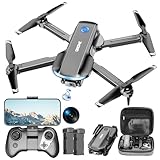
Overview: This budget-friendly quadcopter democratizes aerial photography, offering entry-level FPV flying for under $50. While it can’t match DJI’s imaging quality or flight stability, it provides a surprisingly feature-rich experience for beginners and kids to learn drone piloting fundamentals without financial risk.
What Makes It Stand Out: The gravity control and gesture photography features are impressive at this price point. Optical flow positioning provides basic stability, while multiple flight modes including waypoint flying and 360° flips offer creative options typically found in more expensive models. The foldable design and included carrying case enhance portability, and dual batteries extend flight sessions beyond many competitors in this class.
Value for Money: At $49.99, this drone delivers extraordinary value for first-time pilots. You’re getting a functional camera, stable flight assistance, and multiple intelligent features for a fraction of DJI’s entry price. The low cost eliminates anxiety about crashes, making it perfect for learning. However, the 1080p resolution lacks gimbal stabilization, resulting in footage that can’t compare to premium drones.
Strengths and Weaknesses:
- Strengths: Extremely affordable; good feature set for price; includes spare batteries and prop guards; gravity control is fun; low-risk learning platform; portable design.
- Weaknesses: No mechanical gimbal; basic 1080p quality; limited transmission range; optical flow less reliable than GPS; build quality concerns; not suitable for professional work.
Bottom Line: This drone excels as a training tool or gift for young enthusiasts. If you’re curious about drone flying but aren’t ready to invest hundreds, it’s an excellent starting point. Serious photographers should save for the DJI Mini 4K instead.
6. Holy Stone HS190 Foldable Mini Nano RC Drone for Kids Gift Portable Pocket Quadcopter with Altitude Hold 3D Flips and Headless Mode Easy to Fly for Beginners

Overview: The Holy Stone HS190 is a pocket-sized drone engineered specifically for young beginners. Its foldable design integrates directly into the controller, making it exceptionally portable for travel, parties, or outdoor adventures. With dimensions of just 2.44×2.44×0.94 inches, this nano quadcopter prioritizes safety and simplicity without sacrificing fun flight features that keep kids engaged.
What Makes It Stand Out: The HS190’s complete fold-into-controller design is genuinely innovative at this price point, eliminating bulky carrying cases. Three speed modes allow the drone to grow with a child’s skill level, while the altitude hold function creates stable hovering for easier control. The emergency stop feature provides immediate landing capability, and protective guards fully encircle the propellers—critical safety elements for indoor use and young pilots.
Value for Money: At $29.99, this drone sits in the sweet spot between cheap, unreliable toys and overcomplicated hobbyist equipment. You’re getting trusted Holy Stone engineering, multiple intelligent flight modes, and genuine portability. Comparable drones lack either the safety features or the foldable convenience, making this an exceptional value for a child’s first RC flying experience.
Strengths and Weaknesses: Strengths: Ultra-portable foldable design; comprehensive safety features including prop guards and emergency stop; altitude hold and headless mode simplify learning; three speed modes accommodate skill progression; one-click takeoff/landing. Weaknesses: No camera limits creative possibilities; flight time per battery is modest (spare batteries recommended); small size makes it vulnerable to wind outdoors; limited range compared to larger models.
Bottom Line: The HS190 is an ideal starter drone for kids ages 6-10. Its safety-first design, combined with genuinely useful features like altitude hold and emergency stop, gives parents peace of mind while delivering enough capability to keep children entertained as they develop piloting skills.
7. Drones for Kids, 2025 Mini RC Drone Quadcopter with 360 Degree Flip, 90 Degree Surround Flight, 8, 9, 10, 11, 12 Years Old Boys and Girls Ideal Gift Toys
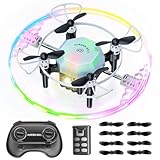
Overview: This 2025-model mini drone targets the 8-12 age bracket with a vibrant LED light show and robust construction. The quadcopter’s design emphasizes durability and visual appeal, featuring bright four-color neon strips that create spectacular flight patterns in low-light conditions. It’s positioned as a step-up from basic nano drones while remaining accessible to intermediate young pilots.
What Makes It Stand Out: The LED light strips are this drone’s signature feature, transforming evening flights into aerial light displays. The inclusion of eight spare propeller blades is remarkably generous, addressing the most common maintenance issue with kids’ drones. The 90-degree surround flight mode creates interesting orbital movements that add variety beyond standard flips, while high-quality ABS construction withstands repeated impacts.
Value for Money: Priced at $34.99, the value proposition hinges on durability and included accessories. The spare blade set alone would cost $8-12 separately, and the LED system adds entertainment value that basic drones lack. While slightly pricier than entry-level models, the enhanced durability and visual features justify the premium for kids who will fly frequently.
Strengths and Weaknesses: Strengths: Striking LED light effects; highly durable ABS frame; eight spare blades included; multiple flight modes including 360° flips and 90° surround; altitude hold and headless mode for easier control; three speed settings. Weaknesses: No camera for photo/video; LED lights drain battery faster; slightly larger size reduces portability compared to nano drones; instructions may be complex for younger children; no obstacle avoidance.
Bottom Line: An excellent choice for kids who prioritize visual flair and durability. The generous spare parts package and robust construction mean this drone will survive the learning curve while keeping children mesmerized by its light show. Perfect for indoor and calm outdoor use.
8. Mini Remote-Control Drone With Camera, A Quadcopter Featuring a Full-Guard Propeller Design to Reduce Collision Risks, With Cool LED “Eye” Lights and Flashing Tail Lights. Supports Obstacle Avoidance, Optical Flow Positioning, 90° Adjustable Camera, Altitude Hold, 360° Flips, One-Key Takeoff/Landing, and Headless Mode. Comes With 2 Batteries, Ideal for Beginners and Leisure Entertainment RC Small Airplane For Age 8-12
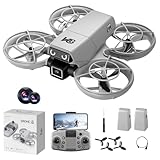
Overview: This feature-packed mini drone bridges the gap between toy and tool, offering a 720P HD camera and obstacle avoidance in a sub-$50 package. Designed for beginners aged 8-12, it combines creative capture capabilities with advanced flight stability features. The full-guard propeller design and optical flow positioning demonstrate thoughtful engineering for novice pilots.
What Makes It Stand Out: Obstacle avoidance at this price point is genuinely surprising, using sensors to prevent collisions during indoor flights. The triple-LED lighting system—front “eyes” and flashing tail—creates a futuristic appearance while improving orientation. Optical flow positioning provides GPS-like stability without the cost, and the 90° adjustable camera offers perspective flexibility rarely seen in mini drones.
Value for Money: At $41.99, this represents remarkable value. Comparable camera drones start at $60+ and rarely include obstacle avoidance. The inclusion of two batteries effectively doubles flight time, addressing a primary frustration with entry-level drones. You’re getting premium features—camera, avoidance sensors, optical flow—at a toy drone price point.
Strengths and Weaknesses: Strengths: 720P adjustable camera; obstacle avoidance system; optical flow positioning for stable hover; comprehensive LED lighting; two batteries included; full propeller guard; multiple flight modes; one-key functions. Weaknesses: 720P resolution is dated compared to 1080P/4K options; small size limits wind resistance; obstacle avoidance may not detect thin objects; camera quality degrades in low light; no SD card included.
Bottom Line: The best value camera drone for beginners under $45. Its combination of safety features, stable flight, and capture capability makes it perfect for kids ready to progress beyond basic flying. The obstacle avoidance provides crucial crash protection while they learn aerial photography basics.
9. Drone with Camera 4K for Kids Adults, Brushless Motor Mini Foldable RC Drones with Propeller Guards for Beginners, One Key Take Off/Land, Voice Control, Anti-Lost Alarm, Gift Toys for Men Boys

Overview: This PLEGBLE PL516 mini drone punches far above its weight class, packing a 4K camera and brushless motors into a sub-250g frame that requires no FAA registration. Designed for both kids and adults, it delivers professional-grade features—voice control, anti-lost alarm, and dual batteries—while maintaining beginner-friendly operation. The foldable design enhances portability for travel and outdoor adventures.
What Makes It Stand Out: Brushless motors in a $50 drone are exceptional, offering longer lifespan, better efficiency, and superior wind resistance than brushed counterparts. The 4K camera with 130° wide-angle lens captures genuinely high-quality footage, while the anti-lost alarm activates after 10 minutes idle—brilliant for preventing flyaways. Voice control adds futuristic interaction, and being under 250g eliminates regulatory hurdles.
Value for Money: At $49.99, this is arguably the best specification-to-price ratio in the mini drone market. Brushless motor upgrades typically cost $30+ alone, and 4K cameras are rare below $80. With 28 minutes of total flight time from dual batteries and comprehensive safety features, it’s priced like a toy but performs like a hobbyist drone.
Strengths and Weaknesses: Strengths: True 4K camera with wide-angle lens; powerful brushless motors; under 250g (no FAA registration); anti-lost alarm and child lock; dual batteries provide 28-minute flight time; voice control capability; propeller guards; emergency stop; low battery alerts. Weaknesses: 4K video may overwhelm younger kids; complexity requires adult supervision for children under 10; no obstacle avoidance; optical flow stabilization not mentioned; app interface could be more intuitive.
Bottom Line: A revolutionary mini drone that makes premium features accessible to beginners. Ideal for tech-savvy kids and adults wanting high-quality aerial photography without registration hassles. The brushless motors and 4K camera make this a legitimate creative tool, not just a toy.
10. Drones for Kids 8-12, Mini Indoor Drone with 24 Piece Track Set, 2 in 1 RC Quadcopter & Flying Car Toys for Age 10-14 Boys with Jump Fly, Land Mode, Railcar Race,360 Flips,2 Batteries,Altitude Hold
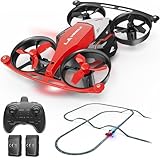
Overview: This innovative hybrid drone redefines indoor play by combining quadcopter flight with ground-based RC car functionality. The included 24-piece modular track system transforms any room into a custom aerial obstacle course or racing circuit. Designed for ages 8-14, it emphasizes creative STEM learning through configurable challenges and dual-mode operation that extends play value beyond traditional drones.
What Makes It Stand Out: The 2-in-1 drone-to-car transformation is genuinely unique, engaging kids in both aerial and ground RC hobbies. The “Smart Bounce Mode” allows precision jumps to clear track obstacles, while the 24-piece track system encourages engineering thinking as children design courses. This combination creates a self-contained play ecosystem that doesn’t require open spaces, making it perfect for year-round indoor entertainment.
Value for Money: At $26.99, this offers extraordinary value. The track set alone would typically cost $15-20 separately, and dual-mode functionality essentially provides two toys in one. Two batteries ensure continuous play while one charges, and the STEM development aspect adds educational justification. It’s the most affordable way to get a comprehensive RC experience.
Strengths and Weaknesses: Strengths: Innovative drone/car hybrid design; included 24-piece track system; Smart Bounce Mode for obstacle clearance; two batteries included; promotes STEM learning; 360° flips and circle fly capabilities; altitude hold and headless mode for easy control; indoor-focused design. Weaknesses: Ground mode performance limited on carpet; track requires significant floor space; outdoor use restricted by small size; no camera for recording courses; transformation mechanism may wear with rough use; limited flight range indoors.
Bottom Line: Perfect for creative kids who enjoy building and racing. The hybrid design and track system provide endless configuration possibilities, making it far more engaging than standard drones. An excellent value proposition that combines RC fun with hands-on STEM education in one affordable package.
Why Mini Drones Are Revolutionizing Travel Content
The democratization of aerial footage has fundamentally changed viewer expectations. Audiences now anticipate sweeping establishing shots, dynamic follow sequences, and unique bird’s-eye perspectives as standard elements of travel narratives. Mini drones deliver this cinematic vocabulary without the logistical nightmares that plagued earlier generations of aerial equipment.
What makes these devices truly revolutionary for travel vloggers is their disappearing footprint. We’re witnessing a paradigm shift where flight capabilities no longer require dedicated cases and complex assembly. Modern mini drones launch from your palm, shoot for 30+ minutes, and tuck into the same pocket as your passport. This frictionless workflow means you’ll actually use the drone multiple times per day rather than leaving it behind because setup feels overwhelming.
Understanding Mini Drone Categories for Vloggers
Before diving into specifications, it’s crucial to understand the distinct categories that define the mini drone ecosystem. Each category serves different travel styles and regulatory advantages.
Sub-250 Gram Drones: The Ultimate Freedom
The sub-250 gram category represents the sweet spot for international travel vloggers. In most jurisdictions, drones under this weight threshold bypass the most stringent registration requirements and operational restrictions. This regulatory advantage translates to spontaneous flying opportunities in urban environments where heavier drones face outright bans.
Beyond legal benefits, these featherweight flyers consume less power, generate less noise, and often qualify for reduced insurance premiums. For vloggers documenting city walks, indoor locations, or sensitive cultural sites, the unobtrusive nature of sub-250 gram drones opens doors that remain closed to larger platforms.
Foldable vs. Fixed-Frame Designs
Foldable designs have dominated the travel market for good reason—they collapse into compact forms that protect vulnerable components during transport. The engineering marvel of folding arms isn’t just about size reduction; it’s about creating a self-contained system that shields cameras and gimbals from the inevitable knocks of backpack travel.
Fixed-frame drones, while less common in the mini category, offer advantages in durability and flight consistency. Without moving joints, these frames can be more rigid and responsive, particularly in windy conditions. For adventure vloggers prioritizing performance over ultimate portability, fixed-frame mini drones present an interesting alternative worth considering.
Camera Specifications That Actually Matter
Marketing departments love to trumpet resolution numbers, but seasoned vloggers know that true image quality lives in subtler specifications. The difference between amateur and professional aerial footage isn’t just pixel count—it’s dynamic range, color science, and codec efficiency.
Sensor Size and Low-Light Performance
In 2026, 1-inch sensors have become the baseline for serious travel vlogging, with some mini drones pushing into Micro Four Thirds territory. Sensor size directly impacts your ability to shoot during golden hour, in overcast conditions, and during those magical blue hour moments that define travel cinematography.
Larger sensors capture more light, produce less noise at high ISOs, and deliver the shallow depth of field that separates cinematic footage from home video aesthetics. When evaluating options, prioritize sensor dimensions over megapixel counts—a 12MP 1-inch sensor will outperform a 48MP 1/2.3-inch sensor in every meaningful way for video work.
Video Resolution: Beyond Just 4K
While 4K remains the delivery standard, 2026 mini drones increasingly offer 5.4K and 6K recording capabilities. This oversampling provides crucial flexibility in post-production for cropping, stabilization, and creating multiple aspect ratios from a single shot. More importantly, look for drones offering high bitrates—100Mbps should be your minimum threshold for professional work.
Frame rate flexibility matters equally. Slow-motion capabilities at 120fps in 4K enable dramatic B-roll sequences, while 24fps recording with proper shutter angle control maintains that cinematic motion blur. The best mini drones for travel vlogging offer granular control over these parameters rather than locking you into consumer-friendly auto modes.
Stabilization Technology: Gimbals vs. Digital
Mechanical gimbals remain the gold standard for smooth footage, but computational stabilization has made quantum leaps. The most advanced mini drones now combine three-axis mechanical stabilization with AI-powered digital correction, effectively creating a hybrid system that compensates for wind gusts and sudden movements.
When evaluating stabilization, consider the drone’s performance during complex maneuvers like orbit shots and reveal sequences. Mechanical gimbals provide superior performance during aggressive flight, while digital stabilization can introduce subtle warping artifacts during rapid perspective changes. For travel vloggers, the hybrid approach offers the best of both worlds.
Flight Performance Metrics for Travel Scenarios
Camera specs mean nothing if your drone can’t reach the vantage point or survive the environmental challenges of real-world travel. Flight performance determines how often you’ll actually capture usable footage versus watching your drone struggle against the elements.
Battery Technology and Real-World Endurance
Advertised flight times are measured in laboratory conditions with zero wind and conservative flying. In practice, expect to achieve 60-70% of claimed endurance when shooting dynamic footage with active tracking and frequent direction changes. A drone rated for 40 minutes might deliver 25 minutes of actual shooting time.
Look beyond flight minutes to charging infrastructure. USB-C PD charging has become essential for travel vloggers, allowing you to recharge batteries from power banks, laptops, and vehicle outlets without proprietary chargers. Swappable batteries that charge independently of the drone body let you cycle through multiple packs while continuing to fly.
Wind Resistance and Altitude Capabilities
Travel rarely offers perfect flying conditions. Coastal shoots, mountain vlogging, and desert content creation subject drones to persistent winds. Modern mini drones advertise wind resistance up to 38-45 km/h, but these figures represent survival limits, not stable filming conditions.
For consistent results, plan to fly in winds below 60% of the maximum rating. Altitude performance matters equally when documenting mountain destinations. Drones lose power and stability in thin air; check the maximum service ceiling and understand that performance degrades significantly above 3,000 meters.
Intelligent Features That Transform Storytelling
The true differentiator in 2026 isn’t hardware—it’s the artificial intelligence that turns pilots into directors. Autonomous capabilities have evolved from gimmicky orbit modes to sophisticated cinematography tools that understand narrative structure.
Autonomous Tracking and Subject Recognition
Early tracking systems required subjects to remain within a clear visual field and moved robotically. Modern AI recognizes human silhouettes, vehicles, and even animals, predicting movement patterns to maintain smooth, cinematic framing. The best systems handle temporary occlusions—like passing through tree cover—without losing lock.
For solo travel vloggers, this technology is transformative. You can launch a drone, have it follow you through a bustling market or along a coastal trail, and receive footage that looks like you had a dedicated camera crew. Look for systems offering multiple tracking angles (side, front, rear, overhead) and the ability to adjust framing mid-flight via gesture controls.
Pre-Programmed Flight Paths for Cinematic Shots
Master shots that once required hours of practice now execute flawlessly through intelligent flight modes. Dronie, helix, boomerang, and reveal patterns have evolved into customizable cinematography tools where you define start and end points, altitude ranges, and speed curves.
The most advanced mini drones allow you to save and repeat complex flight paths with centimeter-level precision. This capability proves invaluable for capturing time-lapses, showing environmental changes, or creating match cuts between different times of day. For travel vloggers, this means establishing a signature visual style that viewers recognize across destinations.
Navigating the Legal Landscape in 2026
Regulatory compliance isn’t the most exciting topic, but ignorance can result in confiscated equipment, massive fines, or criminal charges. The global drone regulatory framework has matured significantly, creating both clarity and complexity for international travelers.
Remote ID Compliance and Registration
Remote ID—broadcasting your drone’s location and identification—has become mandatory in most developed nations. Mini drones either come with built-in Remote ID modules or require external transmitters. When purchasing, verify compliance with your home country’s regulations and understand that non-compliant drones may be grounded in foreign territories.
Registration requirements vary dramatically. Some countries require registration of any drone with a camera, regardless of weight. Others maintain the sub-250 gram exemption. Create a checklist of destinations and their specific requirements before departure. The International Civil Aviation Organization maintains an updated database, but always verify with local aviation authorities.
International Travel Considerations
Airline policies on lithium batteries remain strict and inconsistent. Most carriers limit spare batteries to 160Wh and require them in carry-on luggage. Mini drone batteries typically fall well below this threshold, but documentation matters—print manufacturer specifications showing watt-hour ratings.
Customs declarations present another hurdle. Some nations classify drones as restricted technology requiring import permits. Others impose temporary import bonds refundable upon departure. Research destination-specific rules weeks before travel, and consider carrying a letter of purpose explaining your vlogging activities.
Budget Planning for Your Aerial Setup
The sticker price on a mini drone represents merely the entry fee. A complete travel vlogging system requires careful financial planning that accounts for accessories, insurance, and potential regulatory costs.
Total Cost of Ownership
Beyond the drone itself, budget for at least three additional batteries, a multi-charging hub, ND filters, and a rugged case. These essentials typically add 40-60% to the base price. Factor in annual software subscriptions for advanced flight features, cloud storage for footage backup, and potential repair costs.
Travel-specific expenses include international drone insurance, which can run $300-800 annually depending on coverage territories. Some countries require local liability policies, adding $50-150 per destination. Budget for expedited shipping of replacement parts if you damage equipment mid-trip—waiting two weeks for a gimbal repair isn’t viable when you’re on a 30-day itinerary.
When to Invest in Premium Features
The law of diminishing returns hits hard in the drone market. A $1,000 mini drone might deliver 80% of the performance of a $2,000 model. The premium buys you incremental improvements in low-light performance, slightly better wind resistance, and more sophisticated AI features.
For full-time travel vloggers whose income depends on content quality, premium features justify their cost through reliability and creative possibilities. For hobbyists or part-time creators, mid-tier options offer better value. Consider your monetization model—if aerial footage directly drives sponsorship revenue, invest accordingly. If it’s occasional B-roll, allocate budget elsewhere.
Essential Accessories for Travel Vloggers
The right accessories transform a good drone into an indispensable travel tool. These additions solve real problems encountered in the field, from power management to protection against harsh environments.
Power Management Solutions
A portable charging station capable of handling multiple batteries simultaneously is non-negotiable. Look for hubs that function as power banks, allowing you to top off your smartphone or action camera between flights. Solar charging solutions have matured significantly, with foldable panels delivering practical charge rates even in partial shade.
Smart power management extends to battery care. Batteries stored at full charge degrade rapidly in hot climates. Premium chargers offer “storage mode” that maintains cells at 50-60% capacity during travel days. This feature alone can double battery lifespan when you’re constantly on the move.
Protection and Transport Systems
Your drone case must balance protection with portability. Hard-shell cases with custom foam inserts provide maximum safety but add bulk. Soft cases with reinforced compartments offer compromise solutions that fit inside camera backpacks. For extreme adventure vlogging, consider waterproof cases that float if dropped overboard.
Lens and gimbal protection deserves special attention. Gimbal clamps prevent damage during transport but must be removed before flight—easy to forget in exciting moments. Some 2026 models feature auto-locking gimbals that engage when powered down, eliminating this failure point. Always carry lens cleaning kits designed for drone cameras; fingerprints on tiny lenses ruin entire flights.
Maintenance in Harsh Travel Conditions
Travel vlogging subjects equipment to environmental stresses far beyond normal use. Salt spray, desert sand, jungle humidity, and temperature extremes demand proactive maintenance protocols.
Establish a daily cleaning ritual. Use compressed air to remove debris from motor housings and gimbal mechanisms. Wipe down the body with microfiber cloths slightly dampened with isopropyl alcohol. Inspect propellers for nicks and cracks—damaged props create vibration that destroys footage and strains motors.
Firmware management becomes critical when traveling through regions with limited connectivity. Download updates before departure and verify functionality in a controlled environment. Some updates reset calibration settings, requiring compass and IMU recalibration that you don’t want to perform on a cliff edge.
Emerging Technologies on the Horizon
The mini drone market evolves in six-month cycles. Understanding trajectory helps you invest in platforms with upgrade paths rather than dead-end systems. Several technologies reaching maturity in 2026 will define the next generation of travel vlogging tools.
AI-powered scene recognition now identifies not just subjects but optimal shooting parameters. Drones can detect golden hour lighting, approaching weather fronts, and even frame compositions according to established cinematography rules. This intelligence acts as a virtual director, suggesting shot types that match your location and narrative goals.
Connectivity advances enable real-time cloud backup of footage during flight. 5G and emerging satellite links allow live streaming in 4K from remote locations, opening possibilities for interactive travel experiences. While current implementations consume significant battery power, efficiency improvements make this practical for short-form content creation.
Integrating Drones Into Your Vlogging Workflow
A drone that disrupts your shooting rhythm becomes an expensive paperweight. Seamless integration with your existing vlogging workflow determines how frequently you’ll capture compelling aerial content.
File management presents the first integration challenge. Drones generate massive files that quickly fill memory cards. Establish a daily offload routine using portable SSDs with built-in SD card readers. Organize footage by location and date, embedding GPS metadata for future reference. Some creators use automated backup systems that upload footage to cloud storage overnight while charging batteries.
Editing efficiency matters equally. Learn keyboard shortcuts for your drone manufacturer’s app to accelerate clip selection. Create custom LUTs that match your ground camera’s color science, reducing grading time. The best travel vloggers develop signature aerial transitions—whip pans, altitude morphs, speed ramps—that become recognizable brand elements.
Insurance and Risk Management Strategies
Travel vlogging with drones introduces unique liability exposures that standard travel insurance excludes. A comprehensive risk management strategy protects both your equipment and your financial future.
Equipment insurance should cover “flyaway” incidents where the drone loses connection and cannot be recovered. Policies differ dramatically—some replace the drone regardless of circumstances, others require proof of malfunction. Read exclusions carefully; many policies void coverage if you fly beyond visual line of sight or in restricted airspace.
Liability coverage proves even more critical. Damaging property or injuring someone in a foreign country creates legal nightmares. Minimum recommended coverage is $1 million, though some European countries require €5 million for commercial operations. Verify that your policy covers legal defense costs internationally, not just damages.
Common Pitfalls and How to Avoid Them
Even experienced vloggers fall prey to predictable mistakes that compromise footage, equipment, or legal standing. Recognizing these patterns saves time, money, and frustration.
The most frequent error is inadequate location scouting via satellite imagery. What appears as open space on maps often contains invisible hazards like power lines, guy wires, or restricted zones. Always conduct virtual reconnaissance and identify multiple takeoff/landing spots before arrival.
Battery mismanagement destroys more travel shoots than any technical failure. Cold weather reduces capacity by 30-40%, high altitude further diminishes performance, and aggressive flying drains cells rapidly. Never plan missions requiring more than 70% of rated flight time, and always maintain a 25% emergency reserve for unexpected headwinds or navigational challenges.
Another critical mistake involves audio contamination. Drone propellers generate high-frequency noise that ruins ground audio recorded simultaneously. Use directional microphones, increase distance between drone and subject, or plan separate audio recording sessions. The best travel vloggers treat drone footage as B-roll, never relying on it for primary audio capture.
Frequently Asked Questions
What’s the realistic learning curve for a travel vlogger new to drones?
Expect 15-20 hours of practice flights before achieving consistently usable footage. Master basic flight controls in open areas, then progress to simple tracking shots. The real learning involves understanding cinematography principles—smooth movements, purposeful framing, and timing. Most creators need 3-4 weeks of regular practice to integrate drones naturally into their workflow.
How do I handle drone batteries when flying between countries with different voltage standards?
Modern USB-C PD chargers auto-switch between 110V and 240V, eliminating voltage concerns. The critical factor is plug adapters—carry a universal adapter with surge protection. Never check batteries; always carry them in fireproof bags in your cabin luggage. Some airlines restrict battery quantity, so verify policies before booking.
Can I legally fly my mini drone in national parks and protected areas?
Most national parks worldwide prohibit drone launches and landings within boundaries, regardless of weight. However, you can often fly over these areas if you take off from adjacent public land. Research specific park regulations weeks in advance—some require permits costing hundreds of dollars and applying months ahead. Always respect wildlife protection zones where drones cause nesting disruptions.
What’s the best strategy for backing up footage while traveling with limited internet?
Implement a 3-2-1 backup system: three copies of data, on two different media types, with one copy stored separately from your drone gear. Use dual SD cards recording simultaneously in the drone, offload to a portable SSD daily, and mail encrypted drives home periodically. Satellite hotspots offer emergency upload for critical clips but remain prohibitively expensive for full backups.
How do I minimize the “drone sound” in my travel videos?
Record audio separately whenever possible using lavalier mics or directional shotgun mics positioned away from flight paths. In post-production, apply high-pass filters to remove frequencies above 8kHz where propeller noise dominates. Some advanced editing suites offer AI-powered noise removal specifically trained on drone audio signatures. Consider composing music that masks residual noise rather than fighting it entirely.
What weather conditions are absolutely unsafe for mini drones?
Never fly in precipitation—modern mini drones lack weather sealing, and moisture destroys electronics instantly. Winds exceeding 50% of your drone’s maximum rating create unstable footage and risk flyaways. Temperatures below -10°C cause battery failure, while above 40°C risks overheating. Fog poses invisible hazards and can trigger emergency landings when sensors lose visual references.
Should I get a drone license or certification for travel vlogging?
Even where not legally required, certification demonstrates professionalism and can expedite permissions in restricted areas. Many countries recognize international certifications, simplifying multi-destination trips. The process typically involves online study and a practical flight test, costing $100-300. For commercial vloggers, certification often reduces insurance premiums by 15-25%.
How do I calibrate my drone when traveling between hemispheres or extreme latitudes?
Compass calibration is crucial when significant magnetic variation exists. Perform compass calibration at each new major destination, away from metal structures and vehicles. IMU calibration is less sensitive but should be done after rough transport. Some 2026 models auto-detect location changes and prompt recalibration—never ignore these warnings, as incorrect compass data causes erratic flight behavior.
What’s the etiquette for flying drones around other travelers and locals?
Always announce your intentions to people in the area. Most objections stem from surprise, not malice. Offer to share footage with interested locals—it builds goodwill and often leads to better shooting locations. Never fly over private property without permission. In crowded tourist areas, limit flights to 2-3 minutes to minimize disruption. If approached by authorities, remain calm and demonstrate knowledge of local regulations.
How often should I replace propellers and other consumable parts?
Inspect propellers before every flight session. Replace them at the first sign of nicks, cracks, or deformation—damaged props create vibration that degrades footage and strains motors. Most manufacturers recommend replacement every 200 flight hours regardless of condition. Gimbal dampers wear out every 6-12 months depending on flight intensity. Keep a log of flight hours and maintenance actions to predict replacement needs before they become emergencies during travel.'