Picture this: You’re navigating through a crowded international terminal, your luggage containing not just clothes but sensitive business documents, expensive equipment, or irreplaceable personal items. That flimsy combination lock you bought at the airport convenience store? It’s about as secure as a “Do Not Disturb” sign. Enter biometric luggage locks—the sophisticated marriage of convenience and serious security that’s transforming how discerning travelers protect their belongings. These aren’t gimmicky gadgets; they’re precision-engineered security devices that put military-grade authentication on your suitcase.
But here’s the reality: not all biometric locks are created equal. The market is flooded with options ranging from bulletproof to barely functional, and making the wrong choice could leave you locked out of your own bag—or worse, with a false sense of security. This comprehensive guide cuts through the marketing noise to arm you with the technical knowledge and practical insights needed to evaluate these devices like a security professional. Whether you’re a corporate road warrior, an adventure traveler, or simply someone who refuses to compromise on security, we’ll explore what truly matters when selecting a biometric lock that performs when it matters most.
Top 10 Biometric Locks for High-Security Luggage
Detailed Product Reviews
1. Bstsilver Fingerprint Padlock for Gym Locker w/USB Key, Biometric Lock 20 User for Luggage Backpack Case Toolbox Suitcase Zipper Handbag, Keyless Cable Latch for Travel Renter School Office Dorm
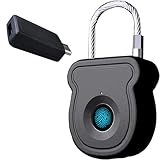
Overview: The Bstsilver Fingerprint Padlock offers keyless convenience for indoor security needs. This biometric lock stores up to 20 fingerprints and features a flexible steel cable design perfect for gym lockers, luggage, backpacks, and cabinets. The included USB key provides emergency access when needed.
What Makes It Stand Out: Its generous 20-fingerprint capacity makes it ideal for shared use among family or friends. The flexible PVC-wrapped cable navigates tight spaces better than rigid shackles, while the USB backup key eliminates the risk of being permanently locked out. The lock boasts impressive battery life—up to 3 months with daily use or 6 months standby.
Value for Money: At $18.69, this padlock sits in the budget-friendly range for biometric security. While cheaper combination locks exist, the fingerprint convenience justifies the modest premium. However, the ABS plastic construction and indoor-only limitation mean you’re sacrificing durability compared to metal alternatives costing only slightly more.
Strengths and Weaknesses: Strengths include easy fingerprint setup, multiple user support, emergency USB key, and excellent battery life. Weaknesses are the non-waterproof ABS body, cable diameter limitations (requires holes larger than 0.2 inches), and experience mode security risk that demands immediate fingerprint registration upon receipt.
Bottom Line: This lock excels for indoor applications like gym lockers, school lockers, and travel luggage where weather exposure isn’t a concern. The fingerprint convenience and USB backup make it reliable, but outdoor users should look elsewhere. For the price, it’s a solid entry-level biometric option.
2. Pothunder Fingerprint Padlock, Smart Padlock, Locker Lock, Biometric Metal Keyless Fingerprint Lock, USB Rechargeable, for Gym Locker, Locker, Luggage, Backpack(Silver)

Overview: The Pothunder Fingerprint Padlock delivers robust biometric security in a sleek metal package. This keyless lock recognizes fingerprints in 0.2 seconds with 99% accuracy, storing up to 15 fingerprints for family or personal use. Its zinc alloy body and stainless steel shackle provide durable protection for indoor and outdoor applications.
What Makes It Stand Out: The waterproof metal construction sets it apart from plastic alternatives, while the remarkable 12-month standby time and 2,000+ unlock cycles per charge ensure reliable long-term use. Weighing just 62g, it’s genuinely portable without sacrificing security. The straightforward operation requires no apps or Bluetooth, making it accessible for all ages.
Value for Money: Priced at $22.99, this lock offers exceptional value. You’re getting commercial-grade materials, waterproofing, and premium battery performance for only slightly more than basic plastic models. Traditional combination locks cost less but can’t match the convenience and speed of fingerprint access.
Strengths and Weaknesses: Strengths include the rugged zinc alloy construction, waterproof design, ultra-fast recognition, outstanding battery life, and lightweight portability. Weaknesses are the limited 15-fingerprint capacity (versus some competitors’ 20) and lack of smart features like app connectivity or remote access.
Bottom Line: This is the best all-around biometric padlock for most users. The waterproof metal build, year-long battery life, and instant unlocking make it perfect for gyms, schools, luggage, and outdoor storage. If you want reliable fingerprint security without smart-home complexity, this is your ideal choice.
3. eLinkSmart Fingerprint Gym Locker Lock, Keyless Biometric Padlock, Weatherproof Electronic Digital Bluetooth App Smart Combo Pad Lock for Outdoor Fence Gate School Locker Storage Pool Shed - Black

Overview: The eLinkSmart Fingerprint Gym Locker Lock represents the premium tier of biometric security with Bluetooth app integration. This smart padlock combines 0.2-second fingerprint recognition with smartphone control, allowing remote management of access permissions and unlock history tracking. Its alloy steel and zinc alloy construction handles outdoor conditions confidently.
What Makes It Stand Out: Bluetooth connectivity transforms this from a simple lock into a smart security device. The companion app enables fingerprint management, unlock record monitoring, and remote sharing with family or friends—features absent in basic biometric models. USB-C charging provides modern convenience, while the hardened steel shackle resists cutting attempts.
Value for Money: At $38.99, this lock commands a premium price but delivers proportional value for tech-savvy users. The app control and remote sharing justify the cost for those managing multiple users or locations. However, budget-conscious buyers may find basic fingerprint locks sufficient for simple needs.
Strengths and Weaknesses: Strengths include advanced app features, weatherproof construction, USB-C charging, unlock history, and remote access sharing. Weaknesses are the higher price point, dependency on smartphone compatibility, and potentially shorter 6-month standby time compared to some competitors.
Bottom Line: Ideal for users wanting smart home integration and remote management capabilities. Perfect for property managers, families needing shared access, or anyone who values monitoring entry logs. If you need basic keyless entry, cheaper options suffice, but for intelligent security control, this is worth the investment.
4. Puroma TSA Approved Luggage Travel Locks with Open Alert Indicator, 4 Digit Combination Resettable Code Zinc Alloy Lock for Suitcase, Backpack, Bag, Toolbox, Locker (2 Pack, Black)

Overview: The Puroma TSA Approved Luggage Travel Locks provide reliable, travel-friendly security without batteries or biometrics. This two-pack features resettable 4-digit combination locks with 10,000 possible codes, crafted from premium zinc alloy and reinforced steel. The TSA-approved design allows security inspections without damage.
What Makes It Stand Out: The red alert indicator is a traveler-focused innovation—when TSA opens your lock, a pop-up indicator warns you to inspect your luggage. The flexible steel cable easily threads through zipper pulls and lock holes, securing everything from suitcases to backpacks. At just $4 per lock, it’s disposable travel insurance.
Value for Money: At $7.99 for two locks, the value is exceptional. No batteries to replace, no electronics to fail, and TSA compliance prevents costly lock destruction during inspections. While lacking biometric convenience, the reliability and travel-specific features make this unbeatable for flyers.
Strengths and Weaknesses: Strengths include TSA approval with alert indicator, rock-bottom price, durable metal construction, flexible cable design, and zero maintenance. Weaknesses are the lack of fingerprint access, risk of forgetting combinations, and vulnerability to determined thieves with time and tools.
Bottom Line: This is the essential travel lock for frequent flyers. The TSA compliance and alert indicator provide peace of mind, while the price point makes it a no-brainer for luggage security. Don’t expect high-security protection, but for preventing opportunistic theft and meeting travel requirements, it’s perfect.
5. Pothunder Fingerprint Padlock, Smart Metal Keyless Fingerprint Lock, Waterproof, USB Rechargeable, for Gym, School, Luggage, Backpack, Suitcase, Red

Overview: The Pothunder Fingerprint Padlock in red offers the same robust biometric security as its silver sibling. This keyless metal lock provides 99% fingerprint recognition accuracy in 0.2 seconds, storing 15 fingerprints for convenient access. The waterproof zinc alloy construction and stainless steel shackle ensure durability for varied environments.
What Makes It Stand Out: Beyond the vibrant color option, this lock delivers identical premium features: 12-month standby time, 2,000+ unlocks per charge, and 62g lightweight portability. The waterproof rating allows confident outdoor use for bike sheds, gates, and lockers, while the straightforward operation needs no apps or connectivity.
Value for Money: At $20.69, this represents slightly better value than the silver version, offering the same metal construction and waterproofing for less. It bridges the gap between budget plastic models and high-end smart locks, delivering professional-grade security at a mid-range price.
Strengths and Weaknesses: Strengths mirror the silver model: rugged waterproof metal build, exceptional battery life, instant unlocking, and portable design. Weaknesses include the 15-fingerprint limit and absence of smart features like remote access or unlock history tracking.
Bottom Line: Choose this lock if you want the Pothunder’s excellent performance with a splash of color. Functionally identical to the silver version, it’s perfect for gyms, schools, luggage, and outdoor storage. The minor price savings and color variety make it ideal for those coordinating multiple locks or preferring red visibility. A solid, reliable biometric choice.
6. TSA Approved Cable Luggage Locks, Re-settable Combination with Alloy Body, Black 2 Locks.
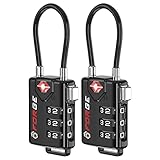
Overview: Forge’s TSA-approved cable locks deliver robust security for travelers seeking reliable luggage protection. These locks feature hardened alloy bodies and steel braided cables engineered to endure the rigors of modern travel. The 3-digit combination mechanism strikes a balance between security and quick access, while the compact 4-inch cable design threads through standard zippers and hard-case lock holes with ease. Weighing just ounces, they add minimal baggage weight.
What Makes It Stand Out: The mandatory relock mechanism is a game-changer—TSA agents cannot remove their master key without securing your lock first, eliminating the common problem of luggage left vulnerable after inspection. The flexible cable configuration handles scenarios rigid shackles cannot, securing everything from suitcases to gun cases. Forge backs this confidence with an unconditional lifetime guarantee, promising replacement if you manage to break them. The lever-based combination setting prevents accidental code changes during transit.
Value for Money: At $11.86 for two locks, this set significantly undercuts competitors while offering superior features. Most TSA locks lack the relock requirement and lifetime warranty. Their multi-purpose functionality—suitable for gym lockers, briefcases, and backpacks—effectively provides three security solutions for less than the price of a single premium lock. The cost per use becomes negligible over years of travel.
Strengths and Weaknesses: Strengths: Unconditional lifetime guarantee; mandatory TSA relock feature; versatile cable design; easy combination reset; multi-purpose utility; lightweight construction Weaknesses: 3-digit combination offers limited 1,000 possible codes; cable may be vulnerable to bolt cutters; no open-alert indicator; black finish shows wear over time
Bottom Line: Perfect for frequent travelers who value convenience and reliability. The relock feature and lifetime guarantee justify every penny, making these locks a smart investment for protecting your belongings without the premium price tag.
7. Forge TSA Approved Luggage Locks 4 Digit Combination TSA Travel Locks with TSA008, Open Alert Indicator, Zinc Alloy Body for Luggage, Suitcase, Backpack, and More. Black 2 Locks.

Overview: The Forge Optimus elevates TSA lock security with its premium zinc alloy construction and advanced TSA008 key system. This 4-digit combination lock offers 10,000 possible codes, dramatically improving protection over standard 3-digit models. Designed for discerning travelers, it incorporates an open-alert indicator that signals when TSA has inspected your luggage, providing crucial security feedback.
What Makes It Stand Out: The TSA008 system represents Travel Sentry’s newest standard, featuring a unique round key that cannot be duplicated, providing superior protection against unauthorized master key access. The built-in red indicator pops up after TSA inspection, offering immediate visual confirmation of tampering. Large, high-contrast white-on-black dials ensure easy operation even in dim airport lighting. The relock requirement forces agents to secure your luggage before removing their key.
Value for Money: At $13.75 for two ($6.88 each), you’re paying only slightly more than basic TSA locks while gaining military-grade features. The 4-digit security, TSA008 certification, and open-alert system typically appear in locks costing twice as much. For security-conscious travelers, this marginal price increase delivers exponential peace of mind and protection for high-value luggage.
Strengths and Weaknesses: Strengths: TSA008 highest security standard; 10,000 combination codes; open-alert indicator; mandatory relock mechanism; premium zinc alloy build; high-contrast dials Weaknesses: Slightly higher price than basic models; 4-digit codes take longer to dial; indicator mechanism adds minor complexity; limited color options
Bottom Line: An exceptional choice for travelers prioritizing maximum security. The TSA008 system and alert indicator provide protection that justifies the modest premium, making these locks essential for international travel and high-value luggage.
8. Pothunder Fingerprint Padlock, Smart Padlock, Locker Lock, Biometric Keyless Fingerprint Lock for Gym Locker, Toolbox, Locker, Door, Luggage, Backpack(Gray)

Overview: The Pothunder fingerprint padlock eliminates keys and combinations through advanced biometric technology. This keyless solution recognizes fingerprints in 0.2 seconds with 99% accuracy, storing up to 15 prints for family or team access. The zinc alloy body and stainless steel shackle provide robust protection in a lightweight 62g package perfect for active lifestyles and travel.
What Makes It Stand Out: Exceptional battery performance sets this lock apart—a single USB charge delivers 12 months standby and over 2,000 unlocks, far exceeding most smart locks. The standalone operation requires no app, Bluetooth, or connectivity, simplifying deployment while maintaining security. Its compact design and IP-rated water resistance enable indoor and outdoor use across diverse applications from gym lockers to bike sheds.
Value for Money: At $24.29, this lock competes favorably with traditional high-security padlocks while offering futuristic convenience. Comparable biometric locks cost $30-$40 and often require smartphone apps. The 15-fingerprint capacity and year-long battery life deliver premium features without recurring costs, paying for itself through convenience.
Strengths and Weaknesses: Strengths: 99% fingerprint recognition; 0.2-second unlock speed; 12-month battery life; 15 fingerprint capacity; no app required; lightweight portable design; USB rechargeable Weaknesses: Higher price than mechanical locks; fingerprint sensor may struggle with wet fingers; no backup key option; limited brand recognition
Bottom Line: Ideal for gym-goers, students, and travelers seeking keyless convenience. The remarkable battery life and app-free operation make it a reliable, modern security solution worth the investment for those tired of forgotten combinations.
9. Smart Fingerprint Padlock for Locker, Rechargeable Bluetooth Smart Locker Lock, Small Electronic Biometric Padlock for Gym Locker, Suitcase, Backpack, Use with APP

Overview: This smart padlock merges biometric convenience with Bluetooth connectivity, offering dual unlocking methods via fingerprint or smartphone app. Unlocking in just 0.1 seconds, it stores 10 fingerprints and provides detailed operation logs through its companion app. The zinc alloy construction ensures durability while maintaining a compact, travel-friendly profile for modern security needs. Its small form factor fits easily on suitcase zippers and gym locker hasps.
What Makes It Stand Out: The integrated app delivers features unavailable in standalone biometric locks—access logs show who opened the lock and when, adding accountability for shared use. Bluetooth connectivity enables remote management and battery monitoring, with the app displaying remaining power. This 2-in-1 functionality provides backup access if fingerprints fail, addressing a key biometric lock concern. The 0.1-second unlock speed is among the fastest available.
Value for Money: Priced at $24.99, this lock matches the cost of premium mechanical locks while adding smart capabilities. Comparable Bluetooth biometric locks retail for $35-$50. The six-month standby time and operation tracking deliver connected security without monthly fees, representing strong value for tech-savvy users wanting digital oversight.
Strengths and Weaknesses: Strengths: Dual fingerprint/app unlocking; operation event logs; 0.1-second recognition; battery level monitoring; compact design; easy app setup Weaknesses: Requires smartphone for full functionality; six-month battery shorter than competitors; only 10 fingerprints; app dependency risks
Bottom Line: Perfect for users wanting smart features and audit trails. The app integration and dual-access methods justify the price, making it excellent for shared lockers, luggage, and securing valuables with digital oversight.
10. Hutomwua Lock, Fingerprint Padlock, Household Anti-Theft Door Lock, Suitable for Luggage, Luggage, Door cabinets, Container Cars, Bicycles, Black, can Enter 10 Fingerprints

Overview: The Hutomwua fingerprint padlock delivers biometric security at a budget-friendly price point. This keyless lock opens in 0.5 seconds using 360-degree fingerprint recognition, storing up to 10 prints. The zinc alloy body provides basic anti-theft protection for luggage, cabinets, and bicycles, with IP62 water resistance and emergency password backup for critical situations where biometrics might fail.
What Makes It Stand Out: Remarkable affordability makes biometric access accessible to budget-conscious consumers. The emergency password feature provides crucial backup access when fingerprint recognition fails, addressing a common concern with biometric locks. Two-hour charging yields 180 days of operation with low-battery warnings, offering practical power management without premium cost. The IP62 rating ensures functionality in light rain and dusty conditions.
Value for Money: At $15.99, this is among the most affordable fingerprint locks available, undercutting competitors by $8-$15. While lacking advanced features like app connectivity, it provides core biometric functionality and emergency access. For users wanting keyless convenience without premium costs, it delivers exceptional bang for the buck and reasonable performance for everyday security needs.
Strengths and Weaknesses: Strengths: Extremely affordable; emergency password backup; IP62 waterproof rating; 360-degree fingerprint reading; low-battery indicator; quick two-hour charge Weaknesses: Slower 0.5-second recognition; limited 10-print capacity; no brand reputation; basic build quality; shorter 180-day battery life
Bottom Line: A solid entry-level biometric lock for casual users. The emergency password and low price make it worth trying for securing gym lockers or luggage, though frequent travelers may prefer more established brands with longer battery life.
Why Biometric Locks Represent the Future of Luggage Security
The shift toward biometric authentication in luggage security isn’t just a trend—it’s a response to fundamental vulnerabilities in traditional locking mechanisms. Combination locks can be decoded with simple tools in under 30 seconds, and keyed locks are susceptible to picking and key duplication. Biometric systems eliminate these weaknesses by tying access to something you are rather than something you know or carry.
Modern biometric luggage locks leverage capacitive fingerprint sensors—the same technology securing your smartphone—to create a unique cryptographic key from your fingerprint’s minutiae points. This isn’t just about convenience; it’s about creating a security perimeter that can’t be socially engineered, guessed, or easily bypassed. For high-security applications, this represents a paradigm shift from deterrent-based security to genuine access control.
The Evolution from Combination to Biometric Authentication
The journey from rotary dials to fingerprint scanners reflects broader changes in both threat landscapes and traveler expectations. Early combination locks offered minimal security—most could be shimmed or decoded through tactile feedback. The introduction of TSA-approved locks solved one problem (screening compliance) while creating another (standardized master keys that are widely available online).
Biometric systems circumvent this entire legacy infrastructure. They operate on a zero-trust model where every authentication request is verified against encrypted template data stored locally on the device. No master keys exist, no combinations can be shoulder-surfed, and the attack surface shrinks dramatically to the physical lock body itself and the sensor’s anti-spoofing capabilities.
How Fingerprint Recognition Works in Portable Devices
Understanding the underlying technology helps you separate marketing fluff from genuine security. When you enroll your fingerprint on a quality biometric luggage lock, the sensor captures a high-resolution image of your fingerprint’s ridges, valleys, and minutiae points. This data is then converted into a mathematical template using proprietary algorithms—not a photograph, but a cryptographic representation.
The critical security feature here is that this template is typically stored in a secure element within the lock, isolated from the main processor and encrypted with AES-256 standards. When you authenticate, the sensor captures a new image, creates a template, and compares it to the stored version. A match must exceed a specific threshold (usually 90%+ similarity) while passing liveness detection tests to prevent spoofing with latent prints or synthetic materials.
Key Security Features That Define Premium Biometric Luggage Locks
Not every lock sporting a fingerprint sensor deserves the “high-security” label. The difference between a toy and a tool lies in specific technical specifications that manufacturers of cheap knockoffs rarely disclose. Knowing what to look for transforms you from a passive consumer into an informed evaluator.
False Acceptance vs. False Rejection Rates
These two metrics—often expressed as FAR (False Acceptance Rate) and FRR (False Rejection Rate)—determine real-world usability. FAR measures how often the lock opens for an unauthorized fingerprint; FRR measures how often it denies you access. Premium locks achieve FAR of 0.001% (one in 100,000) and FRR below 1%.
Here’s the trade-off: aggressive security settings minimize false accepts but increase false rejects, potentially leaving you stranded at baggage claim with unresponsive fingers. The sweet spot involves adaptive algorithms that adjust sensitivity based on successful authentications and environmental conditions. Always prioritize locks that publish these rates rather than vague claims about “military-grade accuracy.”
AES Encryption and Data Protection Standards
Your fingerprint template is valuable data—treat it accordingly. High-security locks employ AES-256 encryption for stored templates, the same standard protecting classified government information. More importantly, the template should never leave the lock’s secure element. Be wary of devices that sync biometric data to cloud services or companion apps; this creates unnecessary attack vectors.
Look for locks with FIPS 140-2 Level 3 certification or similar independent validation. This ensures the cryptographic module has physical tamper-evident features and meets rigorous testing standards. If a manufacturer can’t articulate their encryption methodology, consider it a red flag.
Tamper-Proof Design Elements
A lock is only as secure as its physical housing. Premium biometric locks feature hardened steel shackles (minimum 7mm diameter) with anti-shim designs that prevent bypass tools from reaching the locking mechanism. The body should be constructed from zinc alloy or aircraft-grade aluminum, not plastic.
Internal components matter equally. Look for locks with pry-resistant casings, reinforced mounting points, and sensors recessed enough to prevent direct physical attacks. Some high-end models include accelerometers that trigger temporary lockdowns after detecting tampering attempts, requiring a cooldown period before further authentication attempts.
Types of Biometric Authentication for Travel Security
Fingerprint recognition dominates the luggage lock market, but not all fingerprint sensors are identical. Understanding the underlying technology helps you choose based on your specific travel environment and security requirements.
Capacitive Fingerprint Sensors
This is the gold standard for portable biometric devices. Capacitive sensors use electrical current to map the ridges and valleys of your fingerprint, creating a detailed 3D map that’s extremely difficult to spoof. They work by measuring capacitance differences between the sensor plates and your skin, requiring actual contact and electrical conductivity.
The advantages for travelers are significant: they reject latent prints left on the sensor surface, perform reliably in various lighting conditions, and consume minimal power. However, they can struggle with extremely dry or wet fingers, and gloves render them useless. For most users, this represents the best balance of security and practicality.
Optical Scanners: Pros and Cons
Optical sensors function like tiny digital cameras, capturing a 2D image of your fingerprint. While cheaper to manufacture, they come with notable security drawbacks. High-quality photographs of fingerprints can sometimes fool basic optical sensors, and they accumulate dirt and oils on the lens surface that degrade performance over time.
That said, advanced optical sensors with multispectral imaging offer superior performance through contaminants like water, lotion, or dust—conditions that challenge capacitive sensors. For adventure travelers or those visiting humid climates, a premium optical sensor might outperform a mid-tier capacitive one. The key is ensuring it includes liveness detection features like blood flow analysis or subsurface imaging.
Emerging Technologies: Facial Recognition and Beyond
While rare in luggage locks today, facial recognition and iris scanning represent the next frontier. These modalities offer contactless operation—valuable in post-pandemic travel—but introduce new challenges. Power consumption is higher, and the technology remains bulky and expensive for luggage applications.
Some experimental locks integrate multimodal biometrics, requiring both fingerprint and facial verification for maximum security. For now, these remain niche products, but forward-thinking travelers should consider lock ecosystems that support firmware updates, potentially adding new biometric modalities as the technology matures.
Power Management: What Travelers Need to Know
A biometric lock with a dead battery is just an expensive paperweight. Understanding power dynamics prevents lockouts and ensures your security investment remains functional throughout your journey.
Battery Life Expectations in Real-World Conditions
Manufacturer claims of “six-month battery life” are meaningless without context. Real-world usage varies dramatically based on authentication frequency, ambient temperature, and battery quality. A lock used 5-10 times daily in moderate temperatures should reliably last 3-4 months on a single charge. Extreme cold can reduce battery capacity by 50% or more.
Lithium polymer batteries outperform alkaline coin cells in longevity and cold-weather performance. Premium locks include battery management systems that put the device into deep sleep between uses, consuming microamps rather than milliamps. Look for locks that display battery percentage rather than vague low-battery warnings.
Emergency Power Options When You’re Stranded
Even the best batteries die unexpectedly. High-quality biometric locks include contingency access methods: concealed micro-USB ports for emergency power from any USB battery pack, or backup PIN codes entered via capacitive buttons. Some ultra-premium models feature kinetic charging—shake the lock vigorously for 30 seconds to generate enough power for one unlock cycle.
Never purchase a biometric lock without a documented emergency override procedure. The override should be secure (not a simple master key) but reliable enough to prevent a luggage lockout crisis in a foreign country.
Solar Charging vs. USB-C: Which Is More Reliable?
Solar-powered locks sound appealing but face practical challenges. The tiny solar panels on luggage locks generate minimal power—often requiring 6-8 hours of direct sunlight for a single charge cycle. Indirect light through airport windows or airplane cabins provides negligible charging. They’re best suited for expedition travelers who regularly expose luggage to direct sun.
USB-C rechargeable locks offer predictable, fast charging (typically 1-2 hours for full charge) and universal compatibility with modern travel gear. The downside: you must remember to charge them. The practical solution? Choose USB-C locks with aggressive low-battery alerts (at 20% and 10% capacity) and charge them during your weekly device charging routine.
Durability Standards for High-Security Travel Locks
Your lock must survive not just theft attempts but the brutal reality of baggage handling systems, weather exposure, and the general chaos of travel. Durability directly impacts long-term security.
IP Ratings and Weather Resistance
The Ingress Protection (IP) rating system defines a lock’s resistance to dust and water. For luggage locks, IP65 represents the practical minimum—dust-tight and protected against water jets from any direction. This handles rain, spills, and humidity without issue.
Adventure travelers should target IP67 or IP68 ratings, which guarantee protection against temporary immersion. Be skeptical of locks claiming “weatherproof” without an official IP rating—this is often marketing speak for “we sprayed it with a hose once.” The rating should be certified by an independent lab, not self-declared by the manufacturer.
Materials Matter: Zinc Alloy vs. Hardened Steel
Lock bodies require different materials than shackles. Zinc alloy die-casting creates complex, precise shapes ideal for housing electronics while providing decent impact resistance. However, the shackle—the actual locking component—must be hardened steel, ideally boron alloy steel with a minimum diameter of 7mm.
Premium locks undergo case-hardening processes that create a tough outer layer while maintaining a slightly softer core, preventing brittle fractures. Avoid locks with chrome-plated shackles; the plating can chip, revealing softer steel beneath. Look for shackles with black oxide or Cerakote finishes that provide corrosion resistance without compromising hardness.
Impact Testing and Drop Resistance
Baggage locks experience repeated impacts from drops, throws, and conveyor system jams. Quality locks are tested to survive drops from 2 meters onto concrete without functional impairment. This requires shock-absorbing internal mounting for the circuit board and battery, preventing solder joint fractures and connector failures.
Some manufacturers publish MIL-STD-810G compliance, indicating military-grade environmental testing. While impressive, focus on practical metrics: does the lock function after 50 consecutive drops? Does the sensor alignment remain precise? User reviews from frequent flyers often reveal real-world durability better than lab certifications.
Travel Compliance and TSA Regulations
Navigating the intersection of high-security biometrics and airport security protocols requires careful consideration. A non-compliant lock can result in damaged luggage or confiscated devices.
Understanding the TSA-Approved Biometric Lock Ecosystem
The Transportation Security Administration maintains a list of approved locks that agents can open using master keys during inspections. Traditional TSA locks use a standardized keyway, creating a known vulnerability. Biometric TSA-approved locks solve this through ingenious design: they include a concealed TSA-accessible cylinder that works in parallel with the biometric mechanism.
This means TSA agents use their master key without accessing your fingerprint data or compromising the electronic components. Your biometric security remains intact for all other access attempts. Verify TSA approval through the official Travel Sentry or Safe Skies certification marks—not just a vague “TSA-friendly” claim on the packaging.
Red Flags: When Biometric Locks Violate Airport Security
Some biometric locks lack TSA-approved overrides, making them candidates for destructive removal. This is particularly true for locks marketed as “unpickable” or boasting “no override capability.” While technically secure, they’re impractical for checked luggage on U.S. routes.
International travelers face additional complexity. Many countries lack TSA-equivalent programs, meaning any lock—biometric or otherwise—may be cut during inspection. For maximum compliance, choose locks with both biometric authentication and a travel mode that temporarily disables the lock for checked baggage, securing it only in your presence.
Capacity and User Management Essentials
High-security doesn’t mean high-frustration. Effective user management features distinguish professional-grade locks from consumer toys, especially for group travel or family use.
Multi-Fingerprint Storage for Family Travel
Premium locks store 10-20 fingerprint templates, allowing trusted family members or colleagues access without sharing PIN codes or keys. This isn’t just about convenience; it’s about maintaining security protocols. Each enrolled fingerprint should support unique permission levels—administrators who can add/delete users, and standard users with access-only rights.
The enrollment process should require multiple capture angles (tip, pad, side of finger) to maximize recognition reliability. Some advanced locks use “fingerprint learning” algorithms that improve template accuracy with each successful authentication, adapting to minor changes like small cuts or seasonal skin variations.
Admin vs. User Modes: Security Implications
Separate administrative and user modes prevent unauthorized configuration changes. In admin mode, you can enroll new fingerprints, adjust security sensitivity, and access audit logs. User mode restricts these functions, preventing a malicious actor with brief access from adding their own biometric data.
Look for locks requiring dual-factor authentication for admin access—perhaps a specific fingerprint plus a PIN sequence, or authentication via a paired smartphone app. This prevents a stolen lock from being reprogrammed by thieves attempting to gain permanent access.
Reset Protocols and Master Access
Every lock needs a factory reset capability for scenarios like forgotten admin credentials or selling the device. The reset procedure should be deliberate and time-consuming—requiring physical access, specific button sequences, and a waiting period—to prevent opportunistic attacks while allowing legitimate recovery.
Avoid locks with “backdoor” master codes that bypass biometric authentication entirely. True high-security devices make reset a destructive process that wipes all enrolled fingerprints, requiring complete re-enrollment. This ensures that a found or stolen lock cannot be easily compromised.
Integration with Smart Travel Ecosystems
Standalone security is valuable, but integration with broader travel technology creates a cohesive security posture that adapts to your journey.
Bluetooth Connectivity and App Pairing
Bluetooth-enabled locks offer remote monitoring and configuration via smartphone apps. The connection should use Bluetooth 5.0 or higher with encrypted pairing, preventing man-in-the-middle attacks. Practical features include battery status monitoring, access history logs, and temporary digital key sharing with travel companions.
Be cautious of locks requiring constant app connectivity for basic unlocking—this introduces unnecessary failure points. The biometric sensor should function independently, with the app serving as a value-add rather than a requirement.
Audit Trails: Tracking Access History
Professional-grade locks maintain timestamped logs of every unlock attempt, successful or failed. This forensic capability proves invaluable for business travelers transporting sensitive materials. Imagine discovering your luggage was accessed at 2:47 AM in your hotel—this data informs security responses and insurance claims.
The log should store at least 100 entries locally, with optional cloud backup for premium users. Ensure the log includes authentication method (fingerprint ID, emergency PIN, TSA override), timestamp, and whether the attempt succeeded. Review this data regularly to detect unauthorized access attempts that didn’t trigger alarms.
Geofencing and Proximity Alerts
Advanced locks with GPS or Bluetooth beacon capabilities can alert you when your luggage moves beyond a set distance—typically 30-50 feet. This functions as a digital leash in crowded airports or public transit, preventing opportunistic theft.
The technology isn’t foolproof: GPS drains batteries rapidly, and Bluetooth range varies with interference. Use geofencing as a supplementary alert system, not primary security. The real value lies in immediate notification, allowing rapid response before a thief disappears into a crowd.
Price vs. Performance: Finding Your Sweet Spot
Biometric lock pricing spans from $30 budget options to $300+ professional models. Understanding what each tier offers helps you invest wisely rather than overspend on unnecessary features or underspend on critical security.
Budget Tier: What to Expect Under $50
Sub-$50 locks typically use optical sensors with basic encryption and plastic-heavy construction. They’re suitable for low-risk scenarios—deterrent-level security for hostel lockers or gym bags—but shouldn’t protect high-value luggage. Battery life averages 2-3 months, and warranty support is minimal.
The primary compromise is sensor quality: expect higher false rejection rates, especially with wet or dirty fingers. These locks often lack TSA approval and may not survive rough baggage handling. Consider them entry-level introductions to biometric security, not long-term investments.
Mid-Range Excellence: $50-$150 Segment
This is the sweet spot for most travelers. Locks in this range feature capacitive sensors, zinc alloy bodies, hardened steel shackles, and proper IP65+ ratings. Battery life extends to 4-6 months, and manufacturers offer 1-2 year warranties with responsive support.
You’ll find TSA-approved models with reliable emergency overrides, multi-fingerprint storage (10-15 prints), and companion apps with basic functionality. The security level is sufficient for most business and leisure travel, protecting against casual theft while complying with airport regulations.
Premium Features Above $150
Premium locks justify their cost through advanced materials (titanium shackles), superior sensors (multispectral imaging), and enterprise features like detailed audit trails, enterprise fleet management, and extended battery life (6-12 months). They often include insurance partnerships—register your lock and receive coverage for luggage contents.
These locks target security professionals, C-suite executives, and travelers to high-risk regions. The build quality ensures multi-year durability, and firmware support continues long after purchase. If your luggage contents routinely exceed $5,000 in value, this investment pays for itself in peace of mind.
Common Vulnerabilities and How to Mitigate Them
No security device is invincible. Understanding potential attack vectors allows you to implement compensating controls and realistic threat modeling.
Spoofing Attacks: Should You Worry?
Latent fingerprint lifting from surfaces remains a theoretical threat, but practical luggage lock attacks rarely involve Hollywood-style biometric spoofing. Quality capacitive sensors with liveness detection reject 99% of spoofing attempts using gelatin molds, conductive ink prints, or latent lifts.
The real vulnerability lies in poor sensor quality. Budget optical sensors can be fooled by high-resolution photographs under certain conditions. Mitigate this by choosing locks with pulse oximetry or thermal sensing that verify blood flow. For extreme security, select locks requiring multiple authentication factors—fingerprint plus PIN, for example.
Physical Bypass Techniques
Biometric locks still have mechanical components vulnerable to traditional attacks. The shackle can be cut with bolt cutters, the lock body pried open, or the sensor physically destroyed to access internal mechanisms. Premium locks counter these threats through shrouded shackles that minimize exposed surface area and anti-drill plates protecting critical components.
Consider the lock’s placement on your luggage. Position it to minimize shackle exposure and prevent easy tool access. For soft-sided luggage, thread the shackle through multiple zipper pulls to distribute force. Hard-sided cases should utilize reinforced lock mounting points rather than plastic handles.
Firmware Update Importance
Like any smart device, biometric locks contain software that may harbor vulnerabilities. Manufacturers committed to security release quarterly firmware updates patching discovered flaws and improving sensor algorithms. The update process should be seamless via the companion app, but verify updates are cryptographically signed to prevent malicious firmware installation.
Avoid locks from companies with no documented update history or those requiring complex manual update procedures. A lock that can’t evolve its security posture becomes a liability as attack techniques advance. Check the manufacturer’s website for a security advisory page—its presence indicates proactive vulnerability management.
Installation and Setup Best Practices
Proper installation and enrollment dramatically impact reliability and security. Rushing these steps leads to frustration and weakened protection.
Initial Fingerprint Enrollment Strategies
Enroll each finger multiple times in different positions: tip, pad, and slight angles. This creates a robust template that recognizes your fingerprint regardless of how you naturally approach the sensor. Enroll at least two fingers per hand, ideally index and middle fingers, as backups.
Perform enrollment in the environment where you’ll most often use the lock. If you typically unlock luggage in cold, dry airport terminals, enrolling in your warm, humid home produces less reliable templates. Some locks support “template training,” where subsequent successful unlocks refine the stored data—enable this feature if available.
Positioning on Different Luggage Types
On hard-sided luggage, mount the lock on a reinforced corner or dedicated lock point, never on plastic handles. For soft-sided bags, position the lock where the shackle compresses the fabric slightly when closed, preventing slack that could be exploited for zipper separation attacks.
Ensure the sensor faces upward or outward, protected from direct impact but accessible without contorting your hand. Test the position with your luggage fully packed—overstuffed bags can shift lock alignment and make sensor access awkward.
Maintenance and Sensor Cleaning
Clean the sensor weekly with a microfiber cloth dampened with isopropyl alcohol. Avoid harsh chemicals that can degrade the sensor’s protective coating. For locks exposed to saltwater or beach sand, rinse with fresh water and dry thoroughly before storage.
Periodically check shackle alignment and lubricate the mechanism with dry graphite powder—never oil-based lubricants that attract dust. Store locks with a 50-80% battery charge during extended non-use; full charges stress lithium batteries, while deep discharges can cause permanent capacity loss.
Real-World Performance Factors
Laboratory specs mean little if the lock fails during a downpour or refuses to recognize your fingerprint after a long flight. Real-world testing reveals practical limitations.
Cold Weather Fingerprint Recognition
Cold fingers reduce blood flow, making capacitive sensors less reliable. Premium locks compensate by increasing sensor sensitivity in low temperatures, but performance still degrades below freezing. Keep the lock in an interior pocket during cold weather, warming it before use.
Optical sensors perform more consistently in cold but may fog when moving between temperature extremes. Carry backup authentication methods in winter: emergency PIN codes or a small USB battery pack for emergency power boosts that can improve sensor performance.
Humidity and Sweaty Finger Scenarios
Tropical climates and nervous sweat create challenging conditions. Capacitive sensors can misread wet fingers, while optical sensors may blur from moisture on the lens. Look for locks with hydrophobic sensor coatings that repel water and algorithms designed to filter out moisture artifacts.
Enroll fingerprints when your hands are slightly moist to create more robust templates. Some travelers apply antiperspirant to their fingertips before long travel days—a trick used by musicians and surgeons to maintain grip and sensor reliability.
Speed Tests: How Fast Is “Instant”?
Marketing materials promise “instant” unlocking, but actual times vary from 0.3 seconds to over 2 seconds. Sub-second performance requires powerful processors and optimized algorithms. Test this before relying on the lock—slow authentication becomes maddening when you’re rushing to catch a connection.
The entire process matters: sensor activation time, capture, processing, and shackle release. Premium locks complete this cycle in under 1.5 seconds consistently. Budget models may require multiple attempts, adding frustration and drawing unwanted attention during use.
Warranty and Support Considerations
A lock’s warranty reveals the manufacturer’s confidence in their product. Comprehensive coverage indicates build quality and company stability.
What a Strong Warranty Actually Covers
Seek warranties covering 2+ years that explicitly include electronic components, not just mechanical parts. The best policies cover water damage and battery degradation—common failure points. Read the fine print: some warranties become void if the lock shows signs of “excessive force,” a vague term that can deny legitimate claims.
Premium manufacturers offer advance replacement programs: they’ll ship a new lock immediately while you return the defective unit, minimizing your security gap. This level of service justifies higher upfront costs for travelers who can’t afford downtime.
Customer Support Response Time Benchmarks
Test customer support before purchase. Send a pre-sales question and measure response time. Quality companies reply within 24 hours with detailed, knowledgeable answers. Slow or generic responses predict frustrating experiences if you need warranty service.
Check for multiple support channels: phone, email, and live chat. Companies with active user forums or Reddit presence often provide better community-driven troubleshooting. Support should be based in your region or offer 24/7 global coverage for travelers crossing time zones.
Return Policies and Money-Back Guarantees
A 30-day money-back guarantee allows real-world testing. Use this period to enroll fingerprints, test battery life, and verify TSA compliance. If the lock doesn’t meet expectations, return it without penalty. Avoid brands with restocking fees or complex return procedures—this indicates low customer confidence.
Future-Proofing Your Investment
Technology evolves rapidly. A lock that seems advanced today may become obsolete tomorrow. Future-proofing ensures your investment retains value and security relevance.
Firmware Update Frequency and Support Lifecycle
Research the manufacturer’s update history before purchasing. Companies releasing updates every 2-3 months demonstrate active development and security responsiveness. Check if they commit to supporting devices for a minimum period—3 years of firmware updates should be the baseline.
The update mechanism matters. Over-the-air (OTA) updates via Bluetooth are convenient but must be cryptographically signed. Some security-conscious users prefer manual updates requiring physical connection, preventing remote attacks. Choose based on your threat model and technical comfort.
Compatibility with Upcoming Travel Standards
The travel industry is standardizing digital identity verification through initiatives like IATA’s One ID. Future locks may integrate with these systems, allowing seamless verification across airports, hotels, and rental facilities. While speculative, choosing locks from manufacturers participating in these standards bodies positions you for future integration.
Bluetooth Low Energy (BLE) 5.2 and upcoming 5.3 standards improve security and power efficiency. Locks with upgradable radio firmware can adopt these improvements without hardware replacement. Ask manufacturers about their roadmap for supporting emerging standards.
Modular Design and Upgrade Paths
Some premium locks feature modular designs allowing sensor or battery replacement. This extends lifespan beyond the typical 3-5 year electronics lifecycle. A lock where you can swap a degraded battery or upgrade to a newer sensor type represents better long-term value than a sealed unit requiring complete replacement.
Consider the availability of replacement parts and the complexity of self-service repairs. User-replaceable modules should require only basic tools and come with clear instructions. This approach also reduces electronic waste—a consideration for environmentally conscious travelers.
Frequently Asked Questions
1. Can TSA agents really open biometric locks without damaging them?
Yes, if the lock is Travel Sentry or Safe Skies certified. These models include a concealed mechanical cylinder that TSA master keys can open independently of the biometric system. Your fingerprint data remains secure, and the lock indicates when TSA has accessed it. Always verify certification marks; uncertified biometric locks may be cut during inspection.
2. What happens if the battery dies while my luggage is locked?
Premium locks include emergency power options: micro-USB ports that accept power from any USB battery pack, or backup PIN codes entered via hidden buttons. Some models store enough residual charge for 2-3 unlocks even when reporting “dead.” Always carry a small power bank when traveling, and test the emergency override before each trip.
3. How accurate are biometric locks in cold weather or with wet fingers?
Capacitive sensors struggle below freezing and with moisture, achieving 70-80% success rates in adverse conditions. Optical sensors perform better in cold but fog with temperature changes. The best solution is enrolling fingerprints in various states (dry, slightly moist) and carrying a microfiber cloth to dry the sensor. For extreme conditions, consider locks with multispectral sensors that penetrate surface contaminants.
4. Are my fingerprints stored securely inside the lock?
In quality locks, yes. Your fingerprint converts to an encrypted mathematical template stored in an isolated secure element, never as an image. This template cannot be reverse-engineered into your actual fingerprint. Ensure the lock uses AES-256 encryption and stores data locally without cloud syncing. Avoid devices that don’t clearly specify their encryption standards.
5. Can someone cut through a biometric lock easily?
The biometric component doesn’t affect shackle strength. High-security locks use hardened boron steel shackles (7mm+) that resist bolt cutters. However, no portable lock is truly cut-proof; angle grinders will defeat any shackle given time. Biometric locks deter opportunistic theft and slow down determined attackers, but for maximum security, combine them with tamper-evident luggage seals and insurance.
6. How many fingerprints can I store on a typical biometric luggage lock?
Most mid-range to premium locks store 10-20 fingerprint templates. This accommodates multiple fingers per user (index, middle, thumbs) and trusted travel companions. Admin users can add or delete fingerprints as needed. For family travel, ensure the lock supports at least 8-10 unique prints to cover parents and children with backup fingers.
7. Do biometric locks work with all types of luggage?
They work with any luggage featuring lockable zippers or hasps, but installation varies. Hard-sided cases with integrated lock points provide the most secure mounting. Soft-sided luggage requires careful positioning to prevent fabric slippage. Some high-end luggage includes dedicated biometric lock mounts. Always test the lock’s fit with your specific luggage model before traveling.
8. How long do biometric locks typically last before needing replacement?
With proper care, the mechanical components last 10+ years. Electronic components—sensors, batteries, processors—typically function reliably for 3-5 years before degradation. Premium locks with replaceable batteries and firmware support can extend this to 7+ years. Budget locks often fail within 1-2 years due to sensor wear or battery issues. Warranty length often indicates expected lifespan.
9. Are there any travel destinations where biometric locks are prohibited?
No countries explicitly ban biometric locks, but some regions with strict import controls on encryption devices may question them. China and Russia occasionally inspect electronic devices. Carry documentation explaining the lock’s function and certification. For travel to these regions, consider locks with travel mode that disables electronics, converting them to standard combination locks for the duration of your trip.
10. Can I use a biometric lock on carry-on luggage, or is it only for checked bags?
Biometric locks excel on carry-on luggage, providing quick access to your belongings during travel without fumbling for keys or remembering combinations. They’re ideal for securing bags in overhead bins during long-haul flights or in airport lounges. Since you retain possession, TSA access isn’t a concern. The quick unlock speed is particularly valuable when accessing electronics or documents during security screenings.'