Whether you’re hauling soccer cleats across state lines or transporting basketball uniforms to a national tournament, the right luggage can make or break your team’s travel experience. Sports team travel demands gear that can survive being tossed in bus cargo holds, dragged through airport terminals, and stuffed with everything from muddy cleats to bulky padding. Rolling duffels have emerged as the undisputed champion for athletic teams, combining the spacious flexibility of traditional duffels with the mobility that saves shoulders and backs from season-ending strain.
But not all rolling duffels are created equal. The difference between a bag that lasts one season and one that becomes part of your team’s legacy comes down to understanding the nuanced features that matter most in high-intensity travel scenarios. This comprehensive guide dives deep into the critical factors that coaches, equipment managers, and athletic directors must evaluate when building their team’s travel arsenal.
Top 10 Rolling Duffels for Sports Team Travel
Detailed Product Reviews
1. Pacific Gear Duffel Bag with Rolling Wheels

Overview: The Pacific Gear Duffel Bag positions itself as a versatile travel companion for weekend warriors and frequent flyers alike. Constructed from durable polyester with breathable mesh lining, this bag features a clever U-shaped zipper for quick main compartment access alongside two spacious storage areas. The in-line skate wheels promise smooth navigation through crowded terminals, while the telescoping handle and supplementary top and bottom handles provide versatile carrying options.
What Makes It Stand Out: The dual-compartment design distinguishes this bag from single-cavity competitors, allowing you to separate clean clothes from dirty laundry or shoes from garments. The U-shaped opening is genuinely practical, eliminating the frustrating excavation process common with standard duffels. Multiple exterior pockets keep travel documents and essentials within arm’s reach, while the mesh lining enhances durability and prevents moisture buildup.
Value for Money: At $53.50, this bag sits in the sweet spot between budget disposable luggage and premium $100+ alternatives. You’re getting legitimate organizational features and smooth-rolling wheels without the brand-name markup. Comparable bags from travel-specialty brands typically cost 30-40% more for similar functionality, making this a smart mid-range investment for semi-regular travelers.
Strengths and Weaknesses: Strengths include excellent accessibility via the U-zipper design, smooth in-line skate wheels that handle airport terrain well, and versatile carry options for different situations. The multiple compartments promote organization, and exterior pockets add convenience. Weaknesses involve the polyester construction, which may not match ripstop nylon’s long-term durability, and the lack of specified capacity makes it hard to gauge true size. The telescoping handle might also feel less robust than premium alternatives.
Bottom Line: A solid choice for travelers prioritizing organization and accessibility over ultra-rugged construction. Best suited for weekend trips and occasional vacationers rather than heavy-duty road warriors.
2. Champion Sports Wheeled Equipment Bag – Large Nylon Athletic Travel Bag with Wheels for Baseball, Football, Basketball, Soccer, Hockey & Training Gear
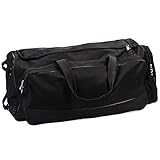
Overview: Designed explicitly for athletes and coaches, this heavy-duty hauler tackles the challenge of transporting bulky sports equipment across fields, airports, and bus terminals. The ripstop nylon construction signals serious durability intentions, while the extra-large capacity swallows everything from football pads to hockey sticks. This is purpose-built gear, not repurposed luggage.
What Makes It Stand Out: The multi-sport versatility shines—this bag doesn’t discriminate between baseball cleats and soccer balls. The ripstop nylon fabric resists tears and abrasions from cleats, helmets, and rough handling that would destroy standard duffels. Wrapped comfort handles demonstrate thoughtful design for actual use cases, preventing shoulder digging when lugging 50+ pounds of gear. The wheeled design transforms what would be back-breaking loads into manageable transport.
Value for Money: At $88.99, it’s the priciest option here, but the cost justification is clear for its target audience. Team equipment managers and serious athletes would otherwise need multiple bags or replace cheaper alternatives annually. Compared to athletic brand equipment bags pushing $150+, Champion Sports delivers professional-grade durability at a mid-tier price point.
Strengths and Weaknesses: Strengths include bomb-proof ripstop nylon construction, genuinely cavernous capacity for team gear, smooth-rolling wheels that handle grass and pavement, and ergonomically designed handles for heavy loads. The multi-sport design maximizes utility. Weaknesses center on the price being overkill for casual gym-goers, the bag’s weight when fully loaded (though wheels help), and its utilitarian aesthetic unsuitable for business travel. It may also be too large for airline carry-on restrictions.
Bottom Line: An exceptional value for coaches, team managers, and serious athletes who regularly transport heavy equipment. Casual travelers should look elsewhere—this is professional-grade gear for specific needs.
3. Travelers Club Xpedition 30 Inch Rolling Multi-Pocket Upright Duffel, Black, 30" Suitcase
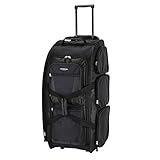
Overview: The Travelers Club Xpedition targets adventure-seekers and vacationers needing maximum storage without maximum weight. At 77 liters and just 6.6 pounds, this 30-inch duffel prioritizes capacity-to-weight ratio. Six strategically placed pockets transform it from a simple sack into an organized travel system, while the upright design improves maneuverability compared to traditional horizontal duffels.
What Makes It Stand Out: The pocket configuration is the real story here—six compartments allow true organization rarely seen in duffels under $50. The lightweight construction means you can pack more while staying under airline weight limits. Built for “outdoor adventure,” it bridges the gap between unstructured duffels and rigid suitcases, offering flexibility without complete shapelessness.
Value for Money: At $48.59, this represents exceptional bang-for-buck. You’re getting a 77-liter capacity, multiple pockets, and rolling convenience for less than most non-wheeled duffels. The price point makes it accessible for students, occasional travelers, and budget-conscious adventurers who need functionality without premium brand costs. It undercuts competitors by $20-40 while delivering comparable capacity.
Strengths and Weaknesses: Strengths include outstanding capacity-to-weight ratio, excellent pocket organization, budget-friendly pricing, and lightweight construction that helps avoid overweight fees. The upright design improves handling. Weaknesses involve unspecified material quality that may sacrifice long-term durability, basic wheel construction that might struggle on rough terrain, and potential lack of reinforced stress points. The brand lacks the recognition of premium luggage makers, which could indicate quality control inconsistencies.
Bottom Line: A fantastic budget option for occasional travelers and adventure-seekers who prioritize capacity and organization over premium materials. Perfect for road trips and budget airlines where durability demands are moderate.
4. Finnhomy 120L Foldable Rolling Duffel Bag with 3 Wheels, Light Weight Travel Duffel bag with Large Loading Capacity, 32 inch Rolling Duffel bag with Shoulder Strap for Travel Camping Sports, Grey

Overview: The Finnhomy duffel redefines capacity economics, offering a massive 120 liters for an astonishing $26.99. This bag’s superpower is its transformative nature—folding down to briefcase size when empty yet expanding to swallow gear for extended trips. At just 3 pounds, it’s lighter than most empty carry-ons, while the three-wheel design and reinforced PVC bottom suggest surprising engineering consideration for the price.
What Makes It Stand Out: The foldable design is genuinely innovative, solving the “where do I store my luggage” problem that plagues apartment dwellers. The 120-liter capacity exceeds even premium expedition duffels at a fraction of the cost. Three wheels in protective housing offer stability on uneven surfaces where two-wheeled bags tip over. The reinforced PVC bottom addresses the Achilles’ heel of cheap duffels—floor durability.
Value for Money: This is arguably the best capacity-per-dollar ratio on the market. At under $27, it’s disposable-price yet offers features (foldability, reinforced bottom, triple wheels) found on bags costing 3-4x more. It’s perfect as a secondary “just in case” bag for travelers who return with more than they departed with. The value proposition is so strong it almost defies skepticism.
Strengths and Weaknesses: Strengths include unprecedented capacity for the price, ultra-lightweight construction, brilliant foldability for storage, reinforced bottom durability, and versatile carry options. The three-wheel design adds stability. Weaknesses center on unknown long-term durability, potential zipper and seam failures under heavy loads, lack of brand reputation for warranty support, and the lightweight material possibly tearing when overstuffed. The aesthetic is purely functional.
Bottom Line: An unbeatable value for specific scenarios—camping gear, sports equipment, or overflow luggage. Treat it as a high-capacity disposable bag that might surprise you with longevity, but don’t rely on it as primary luggage for important trips.
5. Wrangler Wesley Rolling Duffel Bag, Seaform, Large 30-Inch

Overview: Leveraging the trusted Wrangler brand name, the Wesley Rolling Duffel delivers reliable travel performance with a dash of style. The 30-inch check-in size meets airline requirements while avoiding oversized fees, and the durable nylon construction balances weight and resilience. Heavy-duty blade wheels and multiple handles provide the functional foundation, while the seafoam colorway offers a refreshing alternative to basic black.
What Makes It Stand Out: The Wrangler brand equity provides confidence in quality control and warranty support that obscure brands can’t match. The heavy-duty blade wheels suggest better durability than standard skate wheels, particularly on rough sidewalks and cobblestones. The check-in optimized dimensions demonstrate thoughtful design—maximizing packing space while staying within airline restrictions. Multiple zip pockets add organizational capability without overcomplicating the design.
Value for Money: At $48.00, you’re paying a modest premium for brand assurance while still undercutting most name-brand competitors by $30-50. The durable nylon construction and reinforced wheels justify the price over budget options that skimp on hardware. For brand-conscious buyers who want reliability without paying Samsonite prices, this hits the sweet spot.
Strengths and Weaknesses: Strengths include trusted brand reputation, durable nylon material, airline-friendly dimensions, smooth heavy-duty wheels, and versatile carrying options. The design balances style with function. Weaknesses include unspecified capacity that makes comparison difficult, fewer pockets than some competitors (like the Travelers Club), and the seafoam color showing dirt more readily than darker options. It lacks the ultra-rugged build of sports-specific bags and the extreme value of budget alternatives.
Bottom Line: A safe, reliable choice for travelers who value brand trust and proven durability over cutting-edge features or maximum capacity. Ideal for family vacations and regular travelers who want hassle-free check-in luggage.
6. 170L Extra Large Baseball Bag with Wheels Gym Duffle Softball Catchers Coach Team Equipment Bags Collapsible Rolling Travel Duffel Bat Gear Bag for Hockey Basketball Football Volleyball Soccer, Black

Overview: The 170L Extra Large Baseball Bag delivers massive storage for serious athletes and coaches. This expandable rolling duffel transforms from 130L to 170L, accommodating complete baseball kits including bats, helmets, chest protectors, and cleats. The 35.4x15x15 inch frame extends to 19.3 inches deep when expanded, while folding down to just 17.25x7.84x7.45 inches for compact storage during off-season months.
What Makes It Stand Out: The expandable design sets this apart from standard gear bags, offering flexibility for tournament weekends or seasonal equipment changes. The foldable construction with included storage pouch solves the perennial problem of where to keep bulky bags when not in use. Two dedicated side pockets separate footwear from clean gear, while the Velcro front panel allows personalization with nameplates or team flags. The 900D fabric and reinforced stress points promise durability across multiple sports.
Value for Money: At $73.99, this bag undercuts specialized sports equipment bags while offering superior versatility. Comparable team bags often exceed $100 without the expandable feature or foldability. The multi-sport design eliminates need for separate sport-specific bags, delivering excellent ROI for families with diverse athletic interests.
Strengths and Weaknesses: Strengths include massive expandable capacity, foldable storage, durable 900D construction, smooth No.10 zippers, and true multi-sport versatility. Weaknesses involve potential wheel limitations on rough terrain, unwieldy size when fully packed, and basic aesthetic design that prioritizes function over style.
Bottom Line: Perfect for coaches, catchers, and multi-sport families needing serious gear capacity. The expandable design and foldable storage make it a practical long-term investment for active lifestyles.
7. Travelers Club 32" Expandable Rolling Travel Duffel Bag, Red Option

Overview: The Travelers Club 32" Rolling Duffel offers no-frills portability for budget-conscious travelers. This straightforward bag features heavy-duty webbing and in-line blade wheels in a compact package designed for occasional use. The 32-inch frame provides adequate space for weekend trips or light gear transport without overwhelming storage requirements.
What Makes It Stand Out: Simplicity defines this bag’s appeal. The padded grip handle and adjustable shoulder strap provide multiple carrying options, while the front accessory pocket keeps essentials accessible. The in-line blade wheel system delivers basic mobility without complex mechanisms that could fail. Its lightweight construction makes it easy to maneuver and store in tight spaces.
Value for Money: At $27.90, this represents exceptional affordability in the wheeled duffel category. While lacking premium features, it delivers core functionality at a fraction of competitor prices. Ideal for students, infrequent travelers, or as a backup bag when primary luggage fails. The cost-per-use ratio works favorably for those traveling a few times annually.
Strengths and Weaknesses: Strengths include ultra-low price, lightweight design, multiple carrying options, and simple maintenance. Weaknesses involve limited durability for heavy use, basic wheel performance on uneven surfaces, absence of expansion capability, and minimal weather resistance. The materials won’t withstand aggressive handling or substantial weight.
Bottom Line: A sensible choice for light-duty travel needs where budget trumps features. Don’t expect premium performance, but it reliably serves occasional travelers seeking basic wheeled convenience.
8. TENFLY Rolling Duffle Bag with Wheels, 120L Military Luggage Bag for Travel,Large Tactical Heavy Duty Duffel Bags for Deployment Camping Sporting & Outdoor Adventures

Overview: The TENFLY Rolling Duffle Bag brings tactical durability to serious travelers. This 120L military-inspired bag features a unique three-wheel parallel system and water-repellent 900D polyester construction. The 2cm ABS hard shell base protects against impact and abrasion during baggage handling, making it ideal for deployment, camping, or extended adventures where gear protection is paramount.
What Makes It Stand Out: The innovative three-wheel configuration provides superior stability compared to traditional two-wheel designs, preventing side-to-side shifting when fully loaded. The parallel wheel distribution handles uneven surfaces and heavy weights with remarkable control. Professional water-repellent treatment and the reinforced hard shell base create a protective fortress for gear, while interior Velcro dividers and mesh pockets maintain organization during transit.
Value for Money: At $119.99, this sits in the premium tier but justifies its price through engineering excellence. The wheel system alone distinguishes it from $80-$100 competitors, while military-grade materials ensure longevity that cheaper alternatives can’t match. For professionals requiring reliable gear transport, the investment pays dividends through years of dependable service.
Strengths and Weaknesses: Strengths include revolutionary wheel stability, water-repellent fabric, ABS hard shell base, excellent internal organization, and versatile tactical aesthetics. Weaknesses involve higher cost, 120L capacity being slightly less than some competitors, and weight from robust construction. The tactical design may not suit formal travel contexts.
Bottom Line: An outstanding choice for adventurers, military personnel, and serious travelers prioritizing durability and stability. The three-wheel system and protective features make it worth every penny for demanding applications.
9. Rockland Rolling Duffel Bag, Navy, 30"

Overview: The Rockland Rolling Duffel Bag provides basic wheeled storage in a compact 30-inch frame. This navy duffel features extra-large wheels and a heavy-duty zipper across its large U-shaped top opening. Four front pockets offer external organization for travel essentials or small gear items in a lightweight package that won’t add significant weight to your load.
What Makes It Stand Out: The U-shaped top pocket design allows easy access to main compartment contents without fully opening the bag. The extra-large wheels relative to bag size improve mobility over curbs and uneven pavement. Multiple front pockets provide convenient storage for documents, snacks, or accessories that need quick retrieval during travel. The simple design keeps weight minimal for airlines with strict restrictions.
Value for Money: At $28.85, this competes directly with budget rolling duffels. It offers slightly better wheel size than ultra-cheap alternatives while maintaining affordability. The four-pocket configuration adds utility rarely seen at this price point. Suitable for occasional travelers or as secondary luggage for specific purposes where cost is primary concern and durability is secondary.
Strengths and Weaknesses: Strengths include extremely low price, oversized wheels for the class, multiple front pockets, and simple U-shaped access. Weaknesses encompass questionable long-term durability, lack of expansion, minimal weather protection, basic construction materials, and no reinforced stress points. Performance under heavy loads remains uncertain for rigorous travel.
Bottom Line: A functional ultra-budget option for light travel needs. While not built for heavy-duty use, its wheel design and pocket layout provide unexpected value at this price tier.
10. 170L Extra Large Baseball Bag with Wheels Gym Duffle Softball Catchers Coach Team Equipment Bags Collapsible Rolling Travel Duffel Bat Gear Bag for Hockey Basketball Football Volleyball Soccer, Brown

Overview: The 170L Extra Large Baseball Bag in brown offers identical functionality to its black counterpart at a slightly lower price point. This expandable rolling duffel serves baseball, softball, and multi-sport athletes with capacity that grows from 130L to 170L. The 35.4x15x15 inch frame extends to 19.3 inches deep, handling complete equipment sets for teams or families with diverse sporting needs.
What Makes It Stand Out: Like the black version, the expandable design and foldable storage capability distinguish this from standard gear bags. The brown colorway provides an earthy alternative to traditional black sports equipment. Two ventilated side pockets isolate footwear, while the Velcro front panel accommodates team customization. The 900D fabric withstands rigorous use across baseball, hockey, basketball, and soccer applications without showing wear prematurely.
Value for Money: At $69.99, this undercuts the black variant by $4 while delivering identical features. The expandable design, foldable storage, and multi-sport versatility make it a smarter value than single-purpose bags costing $80-$120. For budget-conscious teams purchasing multiple bags, the savings multiply significantly while maintaining professional-grade functionality.
Strengths and Weaknesses: Strengths mirror the black model: massive expandable capacity, compact foldability, durable 900D construction, smooth No.10 zippers, and true cross-sport functionality. Weaknesses include potential wheel limitations on rough terrain, unwieldiness when fully loaded, and basic utilitarian aesthetics. The brown color may show dirt differently than black but hides scuffs comparably well.
Bottom Line: Choose the brown version for identical performance with marginally better value. Perfect for coaches, catchers, and multi-sport families prioritizing function over fashion and appreciating subtle cost savings.
Why Rolling Duffels Dominate Sports Team Travel
From Locker Rooms to Airport Terminals
The modern sports team operates in a multi-modal transportation world. Your gear needs to transition seamlessly from bus cargo compartments to hotel bell carts to airplane overhead bins. Rolling duffels bridge this gap with a design philosophy that prioritizes adaptability. Unlike rigid suitcases that waste space in irregular storage areas, these bags conform to available nooks while maintaining structure where it counts. The soft-sided construction allows for compression when space is tight but expands to accommodate last-minute equipment additions.
The Physics of Weight Distribution
Here’s what most equipment managers learn the hard way: a 50-pound duffel on your shoulder creates a lever arm that amplifies strain exponentially. The same weight on wheels converts that burden into a rolling friction coefficient that’s roughly 1% of the lifting force required. This isn’t just about comfort—it’s about injury prevention. When your star point guard isn’t nursing a strained shoulder from carrying gear, they’re performing at peak capacity. Rolling duffels transform the energy equation of team travel, allowing athletes to conserve their physical resources for competition, not logistics.
Decoding Capacity: How Much Space Your Team Actually Needs
Volume Metrics Explained
Bag capacity is measured in liters or cubic inches, but these numbers tell only part of the story. A 120-liter rolling duffel might sound massive, but its usability depends on dimensional ratios. For team sports, look for bags that offer at least 100 liters of space with a length dimension exceeding 30 inches. This accommodates hockey sticks, baseball bats, or folded warm-up gear without forcing awkward angles. The key is understanding “usable space” versus “total volume”—bags with excessive pockets and dividers can reduce main compartment efficiency by up to 25%.
Position-Specific Packing Requirements
Quarterbacks and linemen have fundamentally different gear footprints. Your travel system should account for this variability. Catchers need bags that can handle chest protectors and leg guards, while swimmers require waterproof compartments for suits and goggles. Consider creating a matrix of your team’s position groups and their average equipment cubic footage. This data-driven approach prevents the common mistake of buying one-size-fits-all bags that leave some athletes struggling while others have wasted space.
The Durability Pyramid: What Lasts Beyond the Season
Fabric Denier and Weave Technology
The term “denier” measures fiber thickness, but the real story lies in the weave density and coating technology. A 1680D ballistic nylon with polyurethane backing outperforms a 2000D polyester in tear resistance because of its basketweave structure that distributes stress. For team applications, prioritize materials with a minimum of 1000D rating in high-abrasion zones. More importantly, examine the fabric’s hydrostatic head rating—a measurement of water resistance. Anything below 1500mm will soak through during a rainy field unloading, risking mildew on jerseys and equipment.
Reinforced Bottom Panels
The bottom of a rolling duffel experiences forces equivalent to a stomp test every time it’s dropped onto concrete. Look for reinforced panels using either doubled fabric layers, TPU-coated sections, or replaceable skid plates. The best designs incorporate a “bathtub” bottom where the reinforced material extends 3-4 inches up the sides, creating a waterproof pan that contains spills and protects against ground moisture. This feature alone can extend bag life by 40% in field sports applications.
Weatherproofing for Outdoor Sports
Soccer, baseball, and lacrosse teams battle elements that indoor sports never face. Water-resistant zippers with polyurethane-coated tape prevent rain intrusion, but they must be paired with storm flaps that shield the zipper track. Sealed seams are non-negotiable—unsealed stitching creates wicking channels that draw moisture into the bag’s interior. For extreme conditions, consider bags with roll-top closures or compression straps that create a mechanical seal, though these add packing complexity.
Wheel Systems: Your Most Critical Decision
Inline Skate Wheels vs. Spinner Configurations
Inline skate wheels, typically 80mm-100mm in diameter, dominate team sports applications for good reason. Their larger size rolls over cracks and curbs smoothly, and the fixed axle alignment handles heavy loads without the wobble that plagues spinner wheels. Spinners excel in airport terminals but fail catastrophically on gravel parking lots and uneven sidewalks—a common scenario in youth sports venues. The trade-off? Inline wheels require tilting the bag, engaging your arm for steering, while spinners push upright. For pure durability, inline wheels win 9 times out of 10 in field testing.
Wheel Housing and Protection
The Achilles heel of any rolling duffel is the wheel assembly. Impact-resistant housings made from ABS plastic or reinforced nylon protect against side collisions. The best designs recess wheels slightly into the bag’s body, preventing them from being the first point of contact when the bag is dropped. Look for bolt-through axles rather than riveted attachments—bolts can be tightened or replaced, while rivets create a single failure point that ends the bag’s career. Some premium models feature replaceable wheel cartridges, allowing you to swap damaged wheels without replacing the entire bag.
Maintenance and Replacement
Wheels accumulate hair, mud, and debris in their bearings. Sealed bearings require zero maintenance but can’t be serviced when they fail. Open bearings need annual cleaning but last indefinitely with proper care. For team fleets, standardize on a model with readily available replacement wheels. Nothing derails tournament travel like a bag with a frozen wheel and no replacement parts available. Pro tip: purchase 10% extra wheel sets when you buy your fleet.
Handle Engineering: Ergonomics and Functionality
Telescoping Handle Mechanics
Handle failure typically occurs at the extension mechanism or the mounting points. Dual-pole aluminum handles with rectangular cross-sections resist twisting forces better than single-pole or round designs. The release button should be positioned for thumb activation while gripping, not requiring a second hand. Test the handle at full extension with a loaded bag—any wobble now will become a break later. The best systems use aircraft-grade 6061-T6 aluminum and Delrin bushings at wear points.
Secondary Carry Options
Your rolling duffel will inevitably face stairs, muddy fields, and situations where wheels are useless. Multiple grab handles aren’t a luxury—they’re essential. Look for reinforced handles on the top, both ends, and one side minimum. These should be padded and bar-tacked with box stitching that creates a load distribution pattern. Some designs include hidden backpack straps that deploy for long carries. While rarely used, these straps can be lifesavers when navigating a tournament complex with non-continuous pavement.
Compartmentalization: Organization as a Competitive Advantage
Main Compartment Access Styles
U-shaped openings provide the best access for bulk loading but expose contents to weather. D-shaped openings with weather flaps offer better protection but reduce packing speed. Top-load designs with wide mouths work well for soft gear but frustrate when searching for specific items. For team use, consider hybrid designs: a main U-zip for general packing plus a separate zippered opening at one end for quick access to uniforms or game-day shoes. This prevents the “duffel explosion” that occurs when 15 players dig through bags simultaneously.
Ventilated Zones for Wet Gear
Post-game cleats and sweaty practice jerseys create a humidity nightmare. Dedicated wet/dry compartments with mesh panels and antimicrobial treatment prevent cross-contamination. The best implementations use waterproof dividers that contain moisture while allowing air circulation. Some bags include removable wet bags that can be washed separately—a hygiene feature that should be mandatory for any team sport involving significant perspiration or outdoor mud exposure.
External Quick-Stash Pockets
External pockets should serve specific functions: a fleece-lined pocket for electronics, a stretch-mesh pocket for water bottles, and a document sleeve for itineraries or medical forms. Avoid excessive external pocketry—each zipper is a failure point and each pocket adds weight. The most functional designs limit external storage to 15% of total capacity, forcing gear into the protected main compartment while providing strategic access to essentials.
Weight Management: The Hidden Cost Factor
Empty Weight vs. Packed Weight
A 10-pound bag might seem insignificant until you’re facing a 50-pound airline weight limit. That bag leaves only 40 pounds for gear—a 20% reduction in capacity. Modern materials like ripstop nylon and carbon-fiber handles can reduce empty weight to 6-7 pounds without sacrificing durability. For air travel-heavy programs, every pound saved on the bag is a pound of gear you can bring. Calculate your team’s average trip weight and subtract bag tare weight to determine true packing capacity.
Airline Weight Restrictions
Most domestic carriers enforce 50-pound limits for checked bags, with fees exceeding $100 for overweight items. International limits are often stricter. Some teams attempt to circumvent this by distributing weight across multiple smaller bags, but this increases total bag count and handling complexity. The strategic approach is selecting bags that maximize the weight-to-capacity ratio while building a 5-pound buffer into your packing protocols. This accounts for scale variations and last-minute additions like tournament memorabilia.
Security in Transit: Protecting Team Assets
Lockable Zipper Configurations
TSA-approved locks are mandatory for air travel, but not all lockable zippers are equal. Double-zipper pulls that meet at a central point allow for single-lock security. Better yet, some designs integrate combination locks directly into the zipper housing, eliminating the dangling lock that catches on conveyor belts. For bus travel, consider bags with locking cable loops that allow you to chain multiple bags together in the cargo hold, deterring opportunistic theft during rest stops.
Identification Solutions
In a sea of identical black bags, identification is crucial. Built-in clear ID windows with replaceable cards prevent the tape-and-marker method that fails after one rainstorm. Some manufacturers embed RFID pockets for tracking chips—a feature worth considering for expensive equipment bags. Color-coded zipper pulls or handle wraps provide at-a-glance identification without the permanent commitment of embroidery. For elite programs, QR code patches that link to contact information offer a modern solution to lost luggage recovery.
Team Identity: Customization Without Compromise
Color Psychology for Position Groups
Color-coding by position group—say, red for offense, blue for defense—speeds loading and reduces confusion. But color selection impacts more than organization. Dark colors hide dirt but absorb heat, potentially damaging equipment in sunny parking lots. Light colors stay cooler but show every scuff. Metallic colors offer visibility but may fade. The sweet spot? Dark body fabric with high-visibility color accents on handles and zipper pulls. This provides the best of both worlds while maintaining team branding opportunities.
Branding Real Estate
Embroidery areas need to accommodate your team’s logo without compromising bag integrity. Reinforced patches at least 6"x6" with a stabilizing backing prevent puckering and thread pull-through. Some bags feature removable hook-and-loop panels that allow for seasonal logo updates or sponsor changes without replacing the entire bag. For tournament travel, consider bags with clear vinyl windows for inserting temporary event badges—this satisfies identification requirements without permanent alterations.
Budget Strategy: ROI for Team Equipment
Price Tiers and Expected Lifespan
Budget rolling duffels ($50-80) typically last one season under team conditions. Mid-range options ($100-150) offer 2-3 year lifespans with decent warranties. Premium bags ($200+) can survive 5+ seasons but require justification. Calculate cost-per-season: a $180 bag lasting four seasons costs $45/year, while replacing a $60 bag annually costs more over time. Factor in replacement costs for failed zippers, broken wheels, and handles when evaluating true value.
Warranty Value Proposition
A lifetime warranty is meaningless if it doesn’t cover commercial use—most team applications qualify as commercial. Read the fine print for exclusions on “normal wear and tear,” which is exactly what team travel inflicts. Brands offering “no questions asked” replacement policies for team purchases deserve premium consideration. Some manufacturers provide team accounts with discounted replacement programs, recognizing that volume purchases merit special service terms.
Care and Maintenance: Extending Your Investment
Post-Tournament Cleaning Protocols
Mud-caked bags need more than a hose-down. Salt from turf fields corrodes zippers; organic matter breeds bacteria in seams. Establish a three-step process: dry brushing to remove solids, mild soap solution cleaning with a soft brush, and thorough air drying. Never store bags zipped closed—this traps moisture and creates mildew. For synthetic turf fragments that embed in fabric, use a rubber grooming brush designed for artificial grass. This simple tool can extend bag life by removing abrasive particles that slowly destroy fabric fibers.
Off-Season Storage Best Practices
Bags stored compressed lose structural integrity. Store them fully opened with handles extended to prevent memory creasing in the fabric. Insert pool noodles or cardboard tubes to maintain shape. Store in a climate-controlled environment—garage heat cycles degrade polyurethane coatings. For long-term storage, place silica gel packs inside to absorb ambient moisture. Rotate stored bags quarterly to prevent permanent compression of padding or insulation layers.
Pro Packing Methodologies
The Layering System
Professional equipment managers pack in three layers: base (heavy, durable items like shoes and balls), core (uniforms and pads in compression cubes), and top (immediate-need items like pre-game jerseys). This system distributes weight low for stability while keeping essentials accessible. Use the “two-second rule”—if an item isn’t accessible within two seconds of opening, it’s in the wrong layer. This methodology reduces bag opening frequency, which is when gear gets lost and bags get damaged.
Equipment-Specific Techniques
Helmets should be packed upside-down and stuffed with socks or gloves to maintain shape. Shoulder pads travel best in a “clamshell” configuration with the bag’s walls providing external pressure. For water sports, store wet suits in perforated compression sacks that allow drainage while containing moisture. Baseball bats require end-cap protection to prevent fabric puncture—use pool noodles cut to size. These sport-specific hacks prevent the damage that occurs when gear shifts during transit.
Multi-Modal Transport Considerations
Bus Storage Optimization
Bus cargo holds have irregular shapes and limited access. Bags that stack stably without slipping maximize capacity. Look for models with flat tops and minimal external hardware that creates stacking gaps. Some teams use color-coded ratchet straps to create secure bag modules that can be loaded as single units. This reduces loading time from 30 minutes to under 10 and prevents the domino effect of shifting bags during transit.
Airline Compliance Strategies
Oversized rolling duffels trigger additional fees even if under weight limits. The magic number is 62 linear inches (length + width + height). Design your packing system around bags that measure 60 linear inches, providing a buffer for bulging. For carry-on duffels, stay under 45 linear inches. Some teams deploy a “two-bag system”: a large checked bag for equipment and a smaller carry-on for uniforms and essentials. This redundancy ensures that if checked bags are delayed, the team can still compete.
Environmental Impact: Sustainable Choices
Recycled Material Innovations
Recycled PET fabric from plastic bottles now matches virgin nylon in durability while reducing carbon footprint by 50%. Some manufacturers incorporate recycled rubber from tires into wheel construction. These eco-options cost 10-15% more but align with institutional sustainability goals. The key is verifying certifications like Global Recycled Standard (GRS) to avoid greenwashing. For youth programs, the environmental message itself has value—teaching young athletes about responsible consumption.
Repair-First Philosophy
Modular bag design allows for field-replaceable wheels, handles, and zipper pulls. This repairability extends lifespan dramatically. Some brands offer repair kits with common wear parts and video tutorials. For team fleets, train a parent volunteer in basic bag repair—this simple step can save thousands over a season. Consider the total lifecycle cost: a $200 repairable bag that lasts eight seasons is cheaper and greener than four $60 disposable bags.
Final Thoughts: Building Your Team’s Travel System
Selecting rolling duffels for sports team travel transcends individual bag features—it’s about architecting a system that amplifies your team’s operational efficiency. The ideal fleet balances durability, weight, and cost while providing the organizational structure that keeps athletes focused on performance rather than logistics. Remember that every minute saved in loading, every instance of gear protected from weather, and every back saved from strain contributes to a culture of professionalism and care.
Invest time in researching not just the bags, but the manufacturer support systems, warranty terms, and replacement part availability. The best bag is the one that disappears into the background of your travel routine, reliably performing its job without demanding attention. Build your system with redundancy, standardize across your program, and maintain rigorously. Your rolling duffels should be the least of your worries on game day.
Frequently Asked Questions
How do I determine the right size rolling duffel for my team’s sport?
Calculate your gear’s total volume by measuring your largest items and adding 20% for packing inefficiency. Most team sports require 100-120 liters for individual players, while equipment managers need 150+ liters. Consider creating a mock packing test with current gear before purchasing to verify real-world capacity.
What’s the most durable wheel type for mixed terrain travel?
Inline skate wheels with sealed bearings and bolt-through axles provide the best durability for varied surfaces from airport terminals to grass parking lots. Avoid spinner wheels for outdoor sports—they fail quickly on uneven terrain and are difficult to repair. Look for 80mm+ diameter wheels with rubber tread, not plastic.
How can I prevent my team’s bags from being mixed up with other teams’ luggage?
Implement a multi-layer identification system: unique base colors for your program, embroidered logos on reinforced patches, and removable handle wraps in your team colors. Add personalized luggage tags with QR codes linking to contact information. For tournament travel, use color-coded ribbon or tape on handles for immediate visual identification.
Are premium-priced rolling duffels actually worth the investment for youth sports?
Calculate cost-per-season rather than upfront price. A $180 bag lasting five seasons costs $36/year, while a $60 bag replaced annually costs more over time. Premium bags also reduce injury risk from handle failure and protect expensive equipment better. For travel teams playing 20+ games annually, premium options typically deliver positive ROI.
What’s the best way to clean rolling duffels after muddy tournaments?
Use a three-step process: dry brush to remove dried mud, clean with mild soap and soft brush focusing on zippers and seams, then air dry completely unzipped. Never use pressure washers or harsh chemicals—they damage waterproof coatings. For synthetic turf beads, use a rubber grooming brush. Always store bags fully dry to prevent mildew.
How do I handle airline weight limits with heavy sports equipment?
Standardize on bags that weigh under 8 pounds empty, leaving 42 pounds for gear. Use compression sacks to reduce volume without increasing weight. Consider a two-bag system: a lighter carry-on for essentials and a checked bag for equipment. Build a 5-pound buffer into your packing to account for scale variations.
Can rolling duffels be repaired, or should I plan for replacement?
Prioritize brands offering replaceable wheels, handles, and zipper pulls. Many quality bags can be field-repaired with basic tools. Train a team parent in simple repairs—this extends bag life by years. Keep a repair kit with spare parts. Replacement should only be necessary for fabric tears or structural frame damage.
What security features are essential for team travel?
Lockable zippers with TSA-approved locks are mandatory for air travel. Look for bags with locking cable loops to chain bags together in bus cargo holds. RFID-blocking pockets protect electronic key cards and devices. Clear ID windows with replaceable cards ensure identification survives weather. For expensive equipment, consider bags with built-in tracking device pockets.
How many seasons should a quality rolling duffel last for a competitive travel team?
With proper care, premium rolling duffels (1680D ballistic nylon, reinforced seams) should survive 5-7 seasons of 20+ tournament travel. Mid-range options typically last 2-3 seasons. Budget bags rarely survive one full season. Durability depends on sport (outdoor vs. indoor), travel frequency, and maintenance rigor. Always check warranty terms for commercial use coverage.
What’s the optimal packing method to maximize space and protect equipment?
Use the three-layer system: base layer for heavy durable items (shoes, balls), core layer for uniforms in compression cubes, and top layer for immediate-need items. Pack helmets upside-down stuffed with small items. Use the bag’s walls to create pressure on pads. Store equipment in sport-specific configurations to prevent shifting. The “two-second rule” ensures essentials remain accessible without unpacking everything.'