Packing your camera gear for air travel in 2026 feels like solving a three-dimensional puzzle where the pieces keep changing shape. Between evolving airline dimension restrictions, increasingly sophisticated mirrorless systems, and the modern photographer’s need to blend work with minimalist travel, the humble camera insert has emerged as the unsung hero of carry-on strategy. No longer relegated to afterthought status, today’s inserts are precision-engineered protective systems that transform ordinary backpacks into professional-grade camera haulers.
The shift away from dedicated camera bags isn’t just about aesthetics—it’s a calculated response to how we travel now. Why juggle a roller bag, personal item, and a conspicuous camera bag when a single, intelligently organized carry-on can house your wardrobe, laptop, and $15,000 worth of glass? The right camera insert doesn’t just protect your investment; it fundamentally changes your airport experience, your shooting workflow, and your relationship with the gear you carry.
Top 10 Camera Insert Organizers for Carry-On Backpacks
Detailed Product Reviews
1. S-ZONE Water Resistant DSLR SLR Camera Insert Bag Inner Case Bag(Medium)
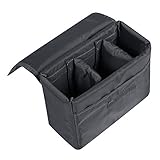
Overview: The S-ZONE Water Resistant Insert transforms any backpack into a functional camera bag for just $17.99. This medium-sized case (9 x 4 x 7 inches) houses a DSLR with one lens, crafted from high-density nylon that repels raindrops. Its lightweight, foldable design appeals to traveling photographers seeking portable protection without committing to a dedicated camera bag. The insert slides into existing luggage, making it ideal for vacationers who occasionally need camera gear but prefer multi-purpose luggage.
What Makes It Stand Out: Genuine water resistance at this price point is virtually unmatched. Unlike most budget inserts that offer only basic padding, S-ZONE includes raindrop-proof nylon that protects against unexpected showers. The DIY camera bag concept provides maximum flexibility—insert it into any S-ZONE backpack or messenger bag you already own. The detachable divider allows customization for different camera bodies, while the foldable feature means it packs flat when empty, saving precious suitcase space during travel.
Value for Money: This is the most affordable option in its class, costing less than a replacement lens cap. For under $18, you get fundamental weather protection and shock absorption that exceeds wrapping gear in clothing. While it lacks premium features like velvet lining or magnetic closures, the price-to-protection ratio is outstanding for hobbyists, students, or backup gear storage. It competes with products twice its price on basic functionality.
Strengths and Weaknesses: Strengths include water-resistant material, ultra-lightweight portability, foldable design, adjustable divider, and universal bag compatibility. Weaknesses involve limited capacity (single lens only), basic shock absorption compared to thicker padded alternatives, no top cover for complete enclosure, and nylon construction that may wear faster than premium materials. The medium size may prove restrictive for vertical grip bodies or longer lenses.
Bottom Line: Perfect for entry-level photographers or travelers needing occasional water-resistant protection on a strict budget. Choose this if you prioritize weather protection and portability over maximum gear capacity, but upgrade if you regularly carry multiple lenses or require professional-grade impact resistance.
2. Koolertron Shockproof Camera Photo Bag for SLR TLR Camera Insert Partition Padded Case,Can be Put Directly Into the SLR Camera Bag With Freely Adjustable Compartment

Overview: The Koolertron Shockproof Insert delivers serious protection for $24.86, wrapping your DSLR and two lenses in velvet-lined security. Measuring 10.2 x 5.1 x 6.1 inches, it fits discreetly inside most backpacks while creating a dedicated camera compartment. The design addresses a common frustration: cameras jostling against other bag contents. By placing gear inside this padded box, you eliminate collision risks from everyday movement, accidental drops, or bag impacts that could damage sensitive equipment.
What Makes It Stand Out: The velvet interior provides luxurious shock resistance that exceeds standard foam padding, cradling equipment against vibrations. Its revolutionary leak-proof design abandons traditional velcro ceiling closures—which degrade over time—for a twist mechanism that maintains secure closure indefinitely. The package includes two complimentary partitions, allowing photographers to create custom layouts beyond the standard configuration. Even with a lens attached, cameras fit comfortably, enabling quick deployment without reassembly.
Value for Money: Positioned in the mid-range, this insert justifies its price through premium materials and intelligent engineering. The velvet lining and twist-lock closure system appear in products costing significantly more. For photographers who’ve invested hundreds or thousands in gear, spending $25 for velvet-grade protection represents cheap insurance. It eliminates the need for a separate camera bag while providing comparable safety.
Strengths and Weaknesses: Strengths include superior velvet shock absorption, customizable velcro partitions, innovative twist closure preventing leaks, included extra dividers, and optimal size for standard gear. Weaknesses involve velvet’s tendency to attract dust and lint, lack of water resistance, slightly higher price than basic nylon models, and potential bulkiness in slim backpacks. The twist closure may require practice for one-handed operation.
Bottom Line: An excellent choice for photographers prioritizing impact protection and organizational flexibility. Ideal for urban commuters and travelers who want to use their favorite backpack while ensuring gear safety. The velvet lining and leak-proof design make it worth the modest premium over budget options.
3. Jippedea Camera Insert Bag,Backpack Inner Camera Padded Organizer Case Suit for Sony,Canon,Nikon

Overview: The Jippedea Camera Insert Bag balances protection and versatility at $22.99, offering a middle-ground solution for Sony, Canon, Nikon, and Pentax users. With external dimensions of 9.8 x 4.3 x 7.1 inches, it accommodates a DSLR body with detached lens and accessories. The nylon and pearl cotton construction provides soft, shockproof cushioning without excessive weight. A detachable cover sets it apart from open-top competitors, delivering complete enclosure that shields gear from all angles including overhead threats.
What Makes It Stand Out: The detachable cover provides full protection that many inserts lack, shielding equipment from rain, dust, and accidental spills from above. Pearl cotton shockproofing offers excellent impact absorption while remaining lightweight. The adjustable inner bladder partition attaches to lining boards rather than just velcro strips, creating a more stable configuration that won’t shift during movement. Explicit compatibility with major camera brands demonstrates thoughtful design for specific equipment dimensions.
Value for Money: At $23, this insert delivers premium features—particularly the protective cover—at a price point only slightly above basic models. The cover alone justifies the cost difference, eliminating the need for a separate rain flap or worrying about gear exposure. For photographers seeking comprehensive protection without the $40+ premium of high-end inserts, this represents smart economics.
Strengths and Weaknesses: Strengths include protective cover, pearl cotton shockproofing, stable partition system, brand-specific sizing, lightweight construction, and full top closure. Weaknesses involve limited width (4.3 inches) restricting larger lenses, no water resistance rating for the material itself, potential difficulty accessing gear quickly with the cover attached, and fewer included dividers than some competitors.
Bottom Line: A well-rounded option for photographers wanting complete coverage protection without premium pricing. The detachable cover makes it superior to open-top designs for travel and outdoor use. Recommended for enthusiasts who prioritize all-around security over lightning-fast access.
4. Koolertron Shockproof Camera Photo Bag for SLR TLR Camera Insert Partition Padded Case,Can be Put Directly Into the SLR Camera Bag With Freely Adjustable Compartment

Overview: This Koolertron variant ($23.62) shares DNA with its sibling model but introduces anti-static protection for sensitive electronics. The 10.2 x 5.1 x 6.1-inch insert houses one DSLR and two lenses, featuring a composite material liner that’s soft, elastic, and static-resistant. Like its counterpart, it uses a twist closure instead of velcro to prevent aging and leakage issues. The design targets photographers who store memory cards, filters, and other static-sensitive accessories alongside their camera body.
What Makes It Stand Out: The anti-static composite liner is a standout feature rarely found in budget inserts, protecting sensitive electronics from static discharge that could corrupt data or damage components. This technical enhancement addresses a real but often overlooked risk. The familiar twist-lock closure eliminates velcro degradation, while the inclusion of two customizable partitions provides layout flexibility. The sizing remains optimized for standard backpacks, making it a versatile choice.
Value for Money: At $23.62, it’s slightly cheaper than the velvet Koolertron model while offering a different protection profile. The anti-static feature adds value for photographers carrying multiple electronic accessories. You’re getting engineered protection for the price of a basic insert, making it an excellent value for tech-conscious users who understand static risks.
Strengths and Weaknesses: Strengths include anti-static protection, reliable twist closure, customizable partitions, included extra dividers, optimal dimensions, and soft elastic liner. Weaknesses involve no explicit water resistance, composite material may not feel as luxurious as velvet, similar bulk to other padded inserts, and limited aesthetic options. The anti-static benefit is invisible but crucial for some users.
Bottom Line: Choose this over other Koolertron models if you carry memory cards, filters, or other electronics vulnerable to static. It offers the same solid construction with added tech protection at a slightly lower price. Perfect for detail-oriented photographers who appreciate subtle engineering improvements.
5. TACTICAL_GEEK TCM9 Backpack Insert Camera Organizer, Flexible Modular Storage for Photography Gear with Magnetic Flap, Foldable Hook Panel for Backpack Accessories Storage(Grey)

Overview: The TACTICAL_GEEK TCM9 ($39.99) redefines camera inserts with military-inspired modularity and magnetic convenience. This premium organizer features compression-resistant panels that protect drones, cameras, and electronics while folding flat for compact storage. Unlike rigid foam inserts, it collapses when empty, saving space during travel. The magnetic flap enables one-handed access—a game-changer for active photographers—while hook panels securely anchor it to compatible backpack interiors, preventing shifting during cycling or running.
What Makes It Stand Out: The magnetic flap delivers instant access without fumbling with zippers or velcro, functioning as both closure and divider. Hook panel mounting is revolutionary, creating a stable platform that stays put during vigorous activity—something traditional inserts can’t match. The foldable design addresses a major pain point: bulky inserts consuming luggage space when gear is in use. Modular compression-resistant panels provide professional-grade protection without permanent rigidity.
Value for Money: As the most expensive option, it targets serious enthusiasts and professionals. The magnetic system, foldability, and secure mounting justify the premium for active users. For urban commuters, adventure photographers, and drone operators, these features translate to real-world convenience and safety that cheaper alternatives can’t replicate. It’s an investment in workflow efficiency.
Strengths and Weaknesses: Strengths include magnetic quick-access flap, secure hook mounting, foldable compact storage, modular layout options, compression-resistant panels, and active-use stability. Weaknesses involve highest price point, requires backpacks with loop interior panels, may be over-engineered for casual users, and magnetic closure could potentially interfere with older electronic equipment.
Bottom Line: The ultimate choice for action-oriented photographers and commuters who demand rapid access and rock-solid stability. If you bike to shoots or frequently switch between gear sets, the premium is justified. For studio or occasional use, more basic inserts offer better value.
6. svatin Camera Insert Bag,Shockproof &Pressure-proof Dual Opening Camera Lens Cube Case Bag,Digital DSLR SLR Mirrorless Cameras Accessories Storage Pouch Compatible for Canon,Nikon,Sony,Panasonic(S)

Overview: The svatin Camera Insert Bag is a premium protective cube for DSLR and mirrorless systems. Built from high-density polyester with ABS reinforcement and dual-layer PE foam, it withstands 6.6 pounds of pressure. Its dual-opening design offers top and side access, while accommodating one camera body and lens. The classic gray aesthetic and compact form factor make it ideal for minimalist photographers prioritizing protection.
What Makes It Stand Out: This insert’s multi-layer ABS and PE foam construction delivers superior shock absorption beyond standard padded models. Dual zipper openings maximize accessibility and backpack space utilization. Unique among inserts, it includes an adjustable shoulder strap for standalone crossbody use. The 0.5-inch removable dividers feature seven layers of PE foam and PP board, providing professional-grade customization that rivals dedicated camera bags.
Value for Money: At $39.99, this mid-range insert justifies its price through ABS-reinforced structure, dual-access design, and included carrying strap—features typically costing more. While basic nylon inserts are cheaper, none match its pressure-proof rating and versatility. For photographers wanting a dual-function solution, it offers solid value.
Strengths and Weaknesses: Strengths include exceptional impact protection, versatile dual-access, standalone functionality, and premium materials. Weaknesses include limited capacity (one lens only), relatively bulky dimensions that may not fit all backpacks, and higher cost than basic inserts. It also excludes professional bodies like the 1DX series.
Bottom Line: The svatin insert excels for minimal-gear photographers demanding maximum protection. Its dual-functionality justifies the investment. Recommended for mirrorless users and DSLR owners with single-lens kits seeking premium protection without a dedicated camera bag.
7. S-ZONE Waterproof Shockproof Practical Foldable Padded DSLR SLR TLR Camera Protection Insert Bag Lens Camera Grey, 12,6" X 8,3" X 5,1", L, Bag Organiser
Overview: The S-ZONE Waterproof Shockproof Insert offers practical protection at a budget-friendly price. Made from waterproof nylon fabric, this foldable padded organizer comes in two sizes, with the large measuring 12.6" x 8.3" x 5.1". Designed to hold a DSLR/SLR camera plus one lens, it provides essential shock and scratch protection for photographers seeking a simple, no-frills solution for their existing bags.
What Makes It Stand Out: Its foldable design sets it apart, allowing the insert to collapse flat when not in use—perfect for travel and storage. The waterproof nylon exterior provides weather resistance rarely found at this price level. Available in multiple sizes, it adapts to various backpack and messenger bag configurations. Its straightforward, uncomplicated approach appeals to those overwhelmed by overly complex camera organization systems.
Value for Money: At $18.99, this represents exceptional value. Comparable waterproof inserts typically cost $10-15 more. While it lacks premium features like rigid walls or multiple dividers, its core protection and weather resistance deliver more than expected for the price. For budget-conscious photographers or beginners, it’s hard to beat.
Strengths and Weaknesses: Strengths include affordability, waterproof fabric, foldable portability, and simple functionality. The large size accommodates most standard DSLRs. Weaknesses include basic padding without rigid reinforcement, limited organizational features, capacity for only one lens, and no included dividers or straps. Protection is adequate but not professional-grade.
Bottom Line: The S-ZONE insert is ideal for photographers prioritizing affordability and weather resistance over advanced features. Perfect as a first insert or for occasional use. Recommended for hobbyists and travelers wanting basic protection without investment in premium gear. Don’t expect pro-level durability, but it reliably covers the essentials.
8. G-raphy Camera Insert Bag Case Camera Divider Inserts for Backpack DSLR Organizer Portable for DSLR SLR Cameras, Lenses, Flashes- Make Your Own Camera Bag
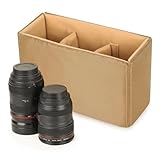
Overview: The G-raphy Camera Insert Bag is a versatile mid-range organizer designed to convert any backpack into a camera bag. Constructed from high-density nylon, it features detachable dividers and accommodates one DSLR/SLR camera plus one to two lenses. With external dimensions of 11.8" x 7" x 4.3", it balances capacity with portability for everyday carry and travel photography.
What Makes It Stand Out: The detachable divider system allows infinite customization, letting users reconfigure the interior layout based on their specific gear collection. Unlike rigid cube inserts, this model prioritizes flexibility, easily fitting into various daily bags alongside personal items. Its universal compatibility with all DSLR systems makes it a future-proof choice for photographers who upgrade equipment. The anti-wrinkle, anti-scratch nylon maintains a clean appearance.
Value for Money: Priced at $29.99, this insert occupies the sweet spot between budget basic models and premium rigid cubes. The customizable divider system adds significant value, essentially offering a tailored fit without the custom price tag. While it lacks water resistance claims, the capacity and flexibility justify the cost for photographers needing adaptable organization.
Strengths and Weaknesses: Strengths include excellent customization, good capacity for multiple lenses, lightweight construction, and universal compatibility. The flexible design fits various bag shapes. Weaknesses include no specified water resistance, less rigid protection than ABS-reinforced models, and dividers that may shift during vigorous movement. No shoulder strap limits standalone use.
Bottom Line: The G-raphy insert suits photographers wanting maximum interior flexibility without premium pricing. Perfect for those who frequently reconfigure gear or use multiple bags. Recommended for enthusiasts who prioritize adaptability over bomb-proof protection. Pair with a weatherproof backpack for the best results.
9. BAIGIO Camera Insert Bag Camera Cube Foldable Camera Bag Insert with Handle DSLR SLR Camera Insert for Backpack Shockproof and Water-resistant Protective Camera Inner Organizer

Overview: The BAIGIO Camera Insert Bag is an affordable, collapsible organizer offering surprising capacity. Made from water-resistant nylon with soft cotton lining, it accommodates one camera and up to three lenses. Its novel stiffness design maintains shape under weight while remaining foldable for easy storage. The included handle and adjustable dividers make it a versatile travel companion for major camera brands.
What Makes It Stand Out: The collapsible design is a major advantage, reducing volume by nearly half when empty—ideal for travelers with limited space. Despite its budget price, it includes water resistance and a carrying handle, features often omitted in this class. The capacity for three lenses exceeds most competitors at this price point. Its stiffness design prevents crushing without adding significant weight.
Value for Money: At $18.99, this represents outstanding value. The combination of three-lens capacity, water resistance, foldability, and included handle is unmatched under $20. While materials aren’t premium, the feature set competes with inserts costing twice as much. For photographers needing maximum storage flexibility on a budget, it’s a clear winner.
Strengths and Weaknesses: Strengths include exceptional capacity-to-price ratio, foldable design, water resistance, included handle, and adjustable dividers. It fits most standard camera kits. Weaknesses include less durable materials than premium options, potentially less structured protection when heavily loaded, and limited brand recognition. The water-resistance is light-duty only.
Bottom Line: The BAIGIO insert is the budget champion for photographers with multiple lenses. Its collapsible design and three-lens capacity make it perfect for travel. Recommended for enthusiasts and hobbyists wanting maximum versatility without spending more. Just don’t expect it to survive heavy downpours or serious impacts.
10. ARTIBETTER 2pcs Divider plug-in Accessories camera bag attachment padded camera bag inserts padded dividers bag divider organizer insert set glossy bag Compartment reel cut off

Overview: The ARTIBETTER 2pcs Divider set is a minimalist solution for photographers needing basic organization. Unlike full insert bags, this $13.99 set provides two padded dividers that can be placed in any existing backpack or bag. Designed with shock-absorbing padding, these lightweight accessories create separate compartments for cameras, lenses, and accessories without requiring a dedicated camera bag.
What Makes It Stand Out: This is pure simplicity—no bag, no zippers, just protective dividers. The shock-absorbing padding provides decent protection against bumps and drops while weighing virtually nothing. Perfect for photographers who love their current bag but need to add camera organization. The two-piece design allows basic separation of body and lens, or lens and accessories, offering just enough structure without bulk.
Value for Money: At $13.99 for two dividers, the value is moderate. While cheapest overall, it requires an existing bag with adequate protection. Comparable to buying individual dividers from camera bag manufacturers, which often charge $10-15 per divider. It’s economical if you already own a suitable backpack, but incomplete as a standalone solution.
Strengths and Weaknesses: Strengths include ultra-lightweight design, ultimate flexibility for any bag, shock-absorbing padding, and unbeatable portability. At just two pieces, setup takes seconds. Weaknesses include lack of exterior protection, no water resistance, limited organizational capacity, and requirement for a host bag. Protection is minimal compared to full inserts.
Bottom Line: The ARTIBETTER dividers suit photographers who need the absolute minimum camera organization. Ideal for occasional shooters using existing backpacks. Only recommended if your bag already provides decent exterior protection. For serious gear protection, invest in a full insert instead. This is a niche product for specific needs.
Why Camera Inserts Are Non-Negotiable for Modern Travel Photographers
The Shift from Dedicated Camera Bags to Hybrid Systems
The photography community’s migration toward hybrid travel systems reflects a deeper truth: dedicated camera bags broadcast their contents to thieves and often violate airline personal item dimensions. Modern inserts operate as stealthy internal frameworks, letting you use inconspicuous, comfortable travel backpacks while maintaining military-grade organization. This approach also eliminates the dreaded “camera bag sweat” during multi-mile airport treks and provides flexibility to leave gear at your accommodation without carrying an empty shell.
The True Cost of Improvised Protection
Wrapping bodies in t-shirts and padding lenses with socks might work for a single trip, but repetitive stress and micro-vibrations from overhead bin turbulence cause cumulative damage. Professional repairs aside, the real cost emerges in missed shots—fumbling through disorganized gear means you’re always five seconds behind decisive moments. In 2026’s competitive content landscape, that delay translates directly to lost revenue and opportunities.
Anatomy of a 2026-Ready Camera Insert
Modular Partition Systems: Beyond Velcro
Traditional Velcro dividers are giving way to magnetic attachment points and dovetail-slot systems that allow three-dimensional customization. The latest designs feature hinged dividers that create cradle-like structures, distributing impact forces across multiple planes rather than relying on simple compression. Look for inserts with graduated divider heights—this lets you nest smaller lenses below larger ones, maximizing vertical space in ways older flat systems never could.
Impact Protection Standards Explained
The 2026 standard moves beyond vague “padding thickness” claims to measurable impact dissipation ratings. Quality inserts now specify G-force reduction percentages and crush-resistance PSI. Closed-cell EVA foam densities of 3-5 lbs/ft³ offer optimal protection-to-weight ratios, while strategic reinforcement zones around corners and bases use multi-layer laminates. Understanding these specs helps you match protection levels to your specific gear—your 50mm f/1.8 needs far less cushioning than a 400mm f/2.8.
Material Innovations: From Recycled Plastics to Bio-Foams
Sustainability isn’t just marketing fluff anymore. Leading manufacturers now use recycled ocean plastics for exterior shells and mycelium-based foams for internal padding. These bio-foams offer identical impact absorption to petroleum-based alternatives while being fully compostable at end-of-life. For 2026, also expect widespread adoption of graphene-enhanced fabrics that add slash-resistance without weight penalty—a critical feature for travelers navigating crowded markets and public transit.
Size Matters: Matching Inserts to Your Carry-On
Understanding Carry-On Dimensions for 2026
Airline dimension enforcement has tightened significantly, with automated sizers now common at boarding gates. The 22" x 14" x 9" standard remains theoretical; real-world success demands planning for 21" x 13" x 8" to account for insert thickness and backpack structure. Your insert should occupy no more than 60% of your pack’s internal volume, leaving room for compression and personal items during random gate checks.
The 70% Rule: Maximizing Space Without Overpacking
Professional travel photographers swear by the 70% rule: fill your insert to only 70% capacity during initial packing. This预留空间 accommodates the inevitable souvenir, extra batteries, or lens rental you’ll acquire mid-trip. Overstuffed inserts stress zippers, compromise protection, and make gear extraction clumsy. The best 2026 designs include expandable gussets that add 2-3 inches of depth when needed, offering flexibility without permanent bulk.
Tapered vs. Rectangular Designs
Rectangular inserts maximize volume but waste the tapered space found in modern travel backpacks. Tapered designs, contoured to match pack geometry, reclaim this dead space for accessories like filters, cables, and memory card wallets. The trade-off? Tapered units offer less reconfigurability. For 2026, hybrid designs featuring rectangular main compartments with tapered accessory wings represent the sweet spot for most travelers.
Weight Optimization Strategies
The Ultralight Revolution in Insert Materials
Every ounce matters when airlines enforce 15-22 lb carry-on weight limits. New honeycomb-structure polycarbonate panels deliver rigidity at half the weight of traditional plastic inserts. High-density polyethylene frames provide structure without the bulk of metal stays. The most advanced 2026 models use Dyneema composite panels that are 15x stronger than steel yet float on water—perfect for adventure photographers counting grams.
Balancing Protection with Airline Weight Restrictions
The paradox: better protection typically means more weight. Smart travelers solve this by tiering protection—place your most fragile items (bodies, long glass) in the insert’s reinforced core zone, while using lighter, removable pods for primes and accessories. This modular approach lets you strip weight for short trips while maintaining fortress-level protection for checked gear. Some 2026 inserts even feature detachable hip belts that redistribute weight during long walks but remove easily for weigh-ins.
Distributed Weight Techniques
How you load your insert affects both comfort and airline scrutiny. Place heaviest items (camera bodies) closest to your back, creating a center of gravity that makes the pack feel lighter. Distribute lens weight symmetrically to prevent the insert from shifting and creating unnatural bulges that attract gate agent attention. Advanced inserts include color-coded weight zones printed on dividers, guiding optimal placement for both ergonomics and discretion.
Accessibility and Workflow Efficiency
Side-Access vs. Top-Access Configurations
Side-access openings revolutionize street and travel photography, letting you retrieve gear without removing the pack. However, they compromise weather sealing and can spill contents if improperly closed. Top-access designs offer better protection and organization visibility but require full pack removal. The 2026 compromise: dual-access inserts with reinforced side hatches for bodies and top openings for lenses, each with independent security closures.
Quick-Draw Setups for Different Photography Genres
Wildlife shooters need long lenses pre-mounted on bodies; street photographers require one body with a fast prime ready. Modern inserts accommodate both through adjustable suspension straps that secure mounted setups without stress on lens mounts. Look for “ready position” compartments with magnetic closures that open silently but secure automatically—crucial for wedding photographers moving between ceremony and reception.
Color-Coding and Labeling Systems
Memory fails during 14-hour travel days. Premium inserts now feature reversible divider panels in contrasting colors (bright orange for charged batteries, gray for depleted) and transparent label pockets for inventory lists. Some include QR code windows that link to cloud-based gear insurance documents—scan at customs without unpacking. This level of organization transforms frantic searches into surgical extractions.
Weather Protection and Climate Adaptability
Water-Resistant vs. Waterproof Ratings
Understanding IP ratings is crucial for 2026 travel. IPX4 handles rain showers; IPX7 survives submersion. Most inserts achieve IPX6, protecting against powerful water jets—sufficient for torrential downpours but not boat accidents. More important is hydrostatic head rating: 10,000mm prevents soak-through during extended exposure. For true waterproofing, look for welded seams and YKK Aquaguard zippers, but remember these add stiffness and weight.
Humidity Control Features for Tropical Travel
Silica gel packets are amateur hour. Advanced inserts now integrate passive dehumidifying panels made of zeolite minerals that absorb moisture without electricity, regenerating during dry conditions. Mold-resistant interior treatments using silver ion technology prevent fungal growth on lens coatings—a common issue in Southeast Asia and the Amazon. For extreme conditions, modular dry-bag pods that seal individual lenses offer redundancy against insert failure.
Dust and Sand Protection for Adventure Photography
Desert and beach photography demands more than water resistance. Look for inserts with gasket-sealed zippers and fabric weaves so tight they block fine silt. Removable, washable interior liners are non-negotiable—sand trapped in seams will eventually work into your gear. Some 2026 models feature electrostatic discharge strips that prevent dust attraction, a game-changer for sensor health in arid environments.
Smart Features and Tech Integration
RFID Blocking and Anti-Theft Considerations
Modern passports and credit cards contain RFID chips vulnerable to skimming. Leading inserts now weave copper and nickel into fabric layers, creating Faraday cages around dedicated pockets. More importantly, slash-proof panels and lockable zippers (with TSA-compatible mechanisms) deter physical theft. For 2026, expect biometric lock options—fingerprint-secured compartments that open in under a second while keeping contents safe from opportunistic theft in hostels.
IoT-Enabled Tracking for 2026
Bluetooth trackers are old news. New inserts feature ultra-low-power GPS modules with eSIM connectivity, pinging location every 30 minutes for 30 days on a single charge. Geofencing alerts notify your phone if your pack moves beyond 100 feet—priceless in busy train stations. Some systems now integrate with airline baggage APIs, automatically updating your insert’s location if gate-checked, eliminating the anxiety of separated gear.
Built-In Charging Infrastructure
USB-C PD power passthroughs let you charge cameras inside the insert without exposing ports to elements. The best designs position power banks in dedicated, ventilated compartments with cable routing that prevents stress on connectors. For 2026, wireless charging zones for batteries and phones are emerging, though they add weight. More practical: solar-ready panels with MPPT controllers that trickle-charge power banks during long treks.
Sustainability and Ethical Manufacturing
Recycled Materials and Circular Design Principles
The industry is shifting from “recycled content” claims to full lifecycle responsibility. Cradle-to-Cradle Certified inserts ensure every component can be reclaimed or composted. Look for take-back programs where manufacturers disassemble and recycle old inserts into new ones, often offering 20% discounts on replacements. This circular approach reduces environmental impact by 70% compared to virgin material production.
Carbon-Neutral Production in the Camera Insert Industry
Leading brands now offset manufacturing emissions through verified reforestation projects, but the real innovation is in process reduction. Solar-powered factories, waterless dyeing techniques, and regional production hubs slash carbon footprints. For 2026, blockchain-tracked carbon credits provide transparent proof of neutrality—scan a QR code on your insert to see its exact environmental cost and offset details.
Repairability and End-of-Life Programs
Planned obsolescence is dying. Modern inserts feature field-replaceable zippers, swappable foam panels, and modular hardware that extends lifespan beyond a decade. Brands offering free repair kits and video tutorials score higher on sustainability indices. At end-of-life, deconstruct the insert: recycle the plastic shell, compost bio-foam, and return metal hardware for melting—true zero-waste travel gear.
Budget Considerations and Value Proposition
The Total Cost of Ownership Framework
A $300 insert that lasts 10 years costs $30 annually—cheaper than replacing a $50 insert every 18 months when zippers fail. Factor in gear protection: a single prevented lens repair justifies premium pricing. Include resale value; quality inserts retain 60% of their value after three years. The math overwhelmingly favors buying once, crying once.
When to Invest in Premium vs. Mid-Range Options
Premium inserts justify their cost if you fly monthly, shoot in extreme conditions, or carry gear worth over $10,000. The precision engineering and warranty support pay dividends. For occasional travelers, mid-range options offering 80% of premium features at 50% of cost make sense. Avoid budget inserts lacking reinforced corners or using low-density foam—they’re false economy that risks real damage.
Hidden Costs of Budget Inserts
Cheap inserts often skip DWR (durable water repellent) treatments, forcing you to buy rain covers separately. Non-standard divider spacing may require purchasing additional partitions. Flimsy stitching fails under load, leading to emergency duct tape repairs in foreign cities. Weight penalties from overbuilt frames can trigger airline fees, turning apparent savings into unexpected costs.
Packing Strategies for Different Travel Scenarios
The Minimalist Street Photographer’s Setup
One body, two primes, and a 6-liter insert is your baseline. Pack the 35mm mounted, 85mm below, batteries in side pockets, and cards in a detachable pouch you keep on-person. Use the insert’s compression straps to flatten it when gear is out, reclaiming pack space for daily essentials. This setup fits under every airline seat and weighs under 8 lbs fully loaded.
The Landscape Photographer’s Two-Bag Strategy
For serious landscape work, split gear: carry a 20-liter insert with bodies and critical lenses in your main pack, and a 5-liter pod with filters, remote triggers, and accessories in your personal item. If forced to gate-check the main bag, the pod ensures you retain core capability. This redundancy saved countless photographers when airlines suddenly enforced size limits during the 2025 holiday chaos.
The Hybrid Work-Leisure Travel Configuration
Business trips requiring both meetings and photography demand clever partitioning. Use a split-level insert: top tier holds camera gear, bottom tier stores dress shoes or clothes, separated by a rigid panel. When you reach the hotel, remove the camera tier entirely, leaving a conventional pack for client dinners. This dual-personality approach eliminates the need for two bags on short trips.
Maintenance and Longevity
Cleaning Protocols for Different Materials
Nylon shells clean with mild soap and water; never machine wash as agitation breaks down DWR coatings. For bio-foam interiors, use enzyme cleaners that digest organic matter without degrading foam structure. Monthly vacuuming of divider Velcro prevents grit accumulation that abrades gear. After saltwater exposure, rinse zippers with fresh water and lubricate with silicone spray to prevent corrosion.
When to Replace Your Insert
Replace when corner foam compresses permanently (test by pressing with a pen; if it doesn’t rebound, protection is compromised). Failing zippers that catch despite cleaning indicate worn teeth. Visible delamination of fabric layers means water resistance is gone. Most pros replace inserts every 5-7 years, though premium models last a decade with proper care.
Warranty and Support Expectations for 2026
Leading brands now offer lifetime warranties covering manufacturing defects plus a 2-year “no questions asked” damage replacement policy. Expect 48-hour customer service response and video chat support for fitting issues. Some companies provide temporary replacement inserts while yours is under repair—a crucial service for working photographers who can’t wait weeks for warranty processing.
Common Pitfalls and How to Avoid Them
The Over-Engineering Trap
More features don’t equal better performance. Photographers often buy inserts with 20 dividers and smart tracking, then never reconfigure or activate the tech. Assess your actual needs: if you shoot with a consistent kit, choose simplicity over modularity. Over-engineered inserts weigh more, cost more, and create decision fatigue when packing.
Ignoring Airline Policy Updates
Airline rules change quarterly. In 2025, several carriers began counting insert weight separately from personal item allowances. Subscribe to airline notification services and check photography forums before each trip. Some inserts now include QR codes linking to live policy databases, automatically updating you when rules shift for your specific route.
Compatibility Issues with Non-Standard Backpacks
That slick hiking pack with curved back panels and angular internal geometry might look great, but standard rectangular inserts won’t maximize its space. Always measure your pack’s internal dimensions at multiple points, accounting for taper. Many 2026 inserts come with adjustable corner spacers that adapt to irregular pack shapes—don’t buy without confirming this feature exists.
Future-Proofing Your Investment
Adapting to Evolving Camera Form Factors
With modular camera systems and medium format mirrorless gaining traction, your insert must adapt. Look for divider slots spaced in 0.5-inch increments rather than fixed 1-inch gaps—this accommodates everything from a compact GFX body to a rigged-out cine camera. Some inserts now include “expansion zones” with stretch panels that morph to fit unusually tall or wide gear configurations.
Modular Expansion Systems
The best 2026 platforms function as ecosystems rather than standalone products. Check if the brand offers lens cases, drone pods, and laptop sleeves that dock seamlessly with the main insert. This modularity lets you scale from a single body to a full production kit using compatible components, protecting your investment as your needs evolve.
Trade-In and Upgrade Programs
Technology advances rapidly. Brands offering trade-in credits for older inserts toward newer models demonstrate confidence in their product lifecycle. These programs typically value your used insert at 30-40% of original price, making it economically viable to upgrade when revolutionary features emerge rather than being stuck with outdated gear.
Frequently Asked Questions
Will TSA require me to remove my camera insert from my backpack during screening in 2026?
TSA’s 2026 guidelines treat camera inserts similarly to laptop bags. If your insert lies flat and doesn’t obstruct the X-ray view, it can typically remain in your pack. However, inserts exceeding 16" x 10" x 5" or containing dense metal frames may trigger secondary screening. Pro tip: use inserts with TSA-friendly clamshell openings that let you unzip the entire compartment for clear imaging without removal.
How do I handle lithium battery restrictions with camera inserts?
Current FAA rules require spare lithium batteries in carry-on only, with terminals protected. Modern inserts include dedicated battery caddies with individual terminal covers and fire-resistant linings rated to 1,100°F. For 2026 compliance, ensure your insert’s battery compartment is externally accessible—airlines increasingly require demonstration that batteries can be quickly removed in emergencies.
Can camera inserts protect gear from airport scanner radiation?
X-ray scanners emit non-ionizing radiation that doesn’t damage digital sensors or memory cards. However, CT scanners (now standard in many EU airports) use higher-energy radiation that can theoretically affect image sensors over hundreds of exposures. While no insert blocks CT scans, lead-lined pouches for memory cards provide peace of mind. The real protection is requesting hand inspection of film and rare earth element-coated sensors.
What’s the best way to pack a camera insert for overhead bin turbulence?
Place the insert with the most robust side (usually the back panel) facing the bin door, creating a barrier against shifting luggage. Use the insert’s external compression straps to lock it into your pack’s frame, preventing internal movement. Pack bodies with lens mounts facing downward to protect mounting flanges from vertical impacts, and wedge memory card wallets in center zones, cushioned on all sides.
Are there inserts designed specifically for mirrorless vs. DSLR systems?
The distinction is becoming obsolete as gear converges, but mirrorless-optimized inserts typically feature shallower depth (since bodies are thinner) and more vertical lens slots to accommodate the system’s compact nature. Some include dedicated slots for EVF accessories and battery grips. If you shoot hybrid (photo/video), look for inserts with removable video mic compartments and cable management features.
How do I prevent moisture buildup inside my insert during climate changes?
The 2026 solution is two-fold: first, use inserts with phase-change material (PCM) liners that regulate internal temperature, reducing condensation when moving from air-conditioned airports to humid tarmacs. Second, employ breathable mesh panels on non-weather-facing sides to allow micro-ventilation. Never store gear in the insert immediately after shooting in rain; let it acclimate in a sealed plastic bag first.
What’s the realistic lifespan of a premium camera insert with heavy use?
With monthly travel and daily field use, expect 5-7 years before performance degradation. The failure cascade typically starts with zipper coil wear (year 4), followed by foam compression in high-stress zones (year 5), and eventual fabric delamination at stress points (year 6). Premium brands offering refurbishment services can extend this to 10+ years by replacing worn components, making the lifetime cost comparable to budget options that need annual replacement.
Can I use a camera insert as my personal item on budget airlines?
Most budget carriers’ personal item sizers (typically 18" x 14" x 8") can accommodate a 15-liter insert if it’s your only bag. However, this is risky—staff may deem it non-compliant if it appears rigid or overstuffed. The smarter play: use a flexible, compressible insert inside a packable tote that meets personal item dimensions. When boarding, the tote compresses around the insert, appearing soft and compliant while still protecting gear.
How do I clean my insert after a saltwater spray incident?
Immediate action is critical. Rinse the entire insert with fresh water within two hours, focusing on zippers and seams. Dissolve two tablespoons of baking soda in a gallon of water and sponge down all surfaces to neutralize salt residue. Dry completely in shade—UV degrades nylon. Then lubricate zippers with marine-grade silicone spray and treat fabric with DWR replenisher. Inspect foam integrity; if it feels crunchy, replacement is necessary as salt crystals have compromised its structure.
Will AI-powered gear recognition in 2026 airport scanners affect how I pack?
Emerging AI scanners can identify camera models and flag high-value gear for enhanced screening or duty assessment in some countries. To minimize delays, pack gear in a single layer when possible—cluttered arrangements trigger manual inspections. Consider using generic, non-branded inserts rather than ones with prominent manufacturer logos that might attract attention. Some travelers report smoother screening when lenses are capped and bodies have body caps installed, presenting as “packed” rather than “ready for use” to avoid questions about commercial intent.'