The sickening “whumpf” under your skis. The spiderweb of cracks racing across the snowpack. In that heart-stopping moment, your avalanche airbag pack transforms from another piece of gear into your last line of defense. But here’s the truth most skiers don’t want to face: simply owning an airbag doesn’t guarantee survival. The difference between life and death lies in understanding the nuanced technology, selecting the right system for your specific terrain and travel style, and—most critically—knowing how to use it instinctively when panic sets in.
Backcountry skiing has evolved from fringe pursuit to mainstream passion, but our respect for avalanche terrain hasn’t always kept pace with our appetite for fresh tracks. Modern airbag packs represent a quantum leap in survivor technology, yet they’re shrouded in marketing hype and dangerous misconceptions. This guide cuts through the noise, delivering the technical depth and practical wisdom you need to make an informed decision about the most important piece of safety equipment you’ll hopefully never use.
Top 10 Avalanche Airbag Packs for Backcountry Skiers
Detailed Product Reviews
1. BCA Backcountry Access Float E2 Turbo Avalanche Airbag Pack (Black, Large/X-Large)

Overview: The BCA Float E2 Turbo represents the cutting edge of avalanche safety technology, designed for serious backcountry enthusiasts who demand reliability without the hassle of compressed air canisters. This Large/X-Large variant accommodates bigger frames while delivering the innovative Alpride E2 supercapacitor system powered by AA batteries, offering multiple deployments on a single charge.
What Makes It Stand Out: The electronic deployment system is the star feature—airline travel-friendly and capable of multiple practice runs without expensive refills. The BC Link Radio compatibility integrates seamlessly with BCA’s communication ecosystem, while the external shovel carry keeps rescue tools instantly accessible. A thoughtful side stash pocket provides quick access to essentials, and the removable internal divider lets you customize storage for technical gear or bulkier items.
Value for Money: At $1,199, this is a premium investment, but it eliminates recurring canister costs and travel restrictions. For frequent backcountry travelers, the ability to practice deployments and fly internationally without headaches justifies the upfront cost over traditional systems. The durability and BCA’s reputation for rescue equipment further strengthen its long-term value proposition.
Strengths and Weaknesses: Strengths include the travel-friendly electronic system, multiple deployment capability, integrated radio compatibility, and robust construction. The external shovel carry is practical and efficient. Weaknesses are the substantial price tag, heavier weight compared to compressed-air alternatives, and reliance on battery management—you must keep those AA batteries fresh and the supercapacitor charged.
Bottom Line: Ideal for dedicated backcountry skiers and riders who travel frequently and prioritize practice and reliability. The electronic system and premium features justify the investment for serious users, though casual tourers might find the cost prohibitive.
2. Backcountry Access Float E2 Avalanche Airbag Pack (Black, 35 Liter MD/LG)

Overview: BCA’s Float E2 35L pack delivers electronic avalanche protection in a versatile midsize package for medium and large frames. Utilizing the Alpride E2 supercapacitor system, this pack eliminates compressed air canisters while providing reliable deployment. The 35-liter capacity strikes an excellent balance between day-tour essentials and technical gear, weighing just 6.1 pounds.
What Makes It Stand Out: The modular sizing sets this apart—available in both 25L and 35L configurations to match trip length and gear requirements. The electronic system allows for multiple deployments and unrestricted airline travel, a game-changer for destination skiers. The side stash pocket offers convenient access to gloves and goggles, while the precise capacity specifications (1,891 cubic inches) help users pack strategically for technical missions.
Value for Money: Priced at $1,176.80, this sits slightly below the Turbo variant while delivering identical core technology. The choice between capacities prevents overpacking or underpacking, effectively giving you two products in one ecosystem. For regular backcountry users, the elimination of canister refills and travel fees quickly offsets the initial investment.
Strengths and Weaknesses: Strengths include the flexible sizing options, travel-friendly electronic deployment, and practical side pocket access. The supercapacitor system is reliable and eco-friendly. Weaknesses include the premium price point, weight penalty over minimalist packs, and slightly confusing capacity labeling (the 25L model lists 21 liters of storage). Battery maintenance requires diligence before each tour.
Bottom Line: Perfect for backcountry enthusiasts who want electronic deployment flexibility with size options tailored to their typical missions. The 35L version excels for full-day tours, making it a smart choice for serious riders who prioritize safety and versatility.
3. BCA Backcountry Access Float E2 Turbo Avalanche Airbag Pack (Black, Small/Medium)
Overview: The Small/Medium version of BCA’s flagship Float E2 Turbo brings premium electronic avalanche protection to smaller-framed backcountry enthusiasts. Featuring the same Alpride supercapacitor engine and AA battery power system as its larger sibling, this pack delivers identical performance in a properly fitting package. The streamlined design ensures technical features don’t compromise comfort for petite or medium builds.
What Makes It Stand Out: This Turbo variant maintains all premium features—BC Link Radio compatibility, external shovel carry, and a convenient side stash pocket—while scaling the chassis for smaller torsos. The removable internal divider adds packing versatility, letting users separate safety gear from personal items. The electronic deployment system remains the headline act, offering unlimited practice runs and hassle-free travel.
Value for Money: At $1,189.90, it commands a premium nearly identical to the L/XL version. For smaller riders, the value lies in proper fit, which directly impacts safety and comfort during long tours. The elimination of compressed air canisters saves money over time, while the ability to practice deployments builds crucial muscle memory. BCA’s reputation for reliable rescue gear adds confidence to this investment.
Strengths and Weaknesses: Strengths include the tailored fit for smaller users, travel-friendly electronic system, integrated radio compatibility, and intuitive external shovel access. The removable divider enhances organization. Weaknesses mirror the larger version: high cost, substantial weight for its size, and the need for diligent battery management. The price may stretch budgets for casual users.
Bottom Line: A top-tier choice for smaller backcountry adventurers who refuse to compromise on fit or technology. The electronic system and premium features justify the cost for serious users who travel and practice regularly, though budget-conscious skiers might consider compressed-air alternatives.
4. BCA Backcountry Access Float 32 Avalanche Airbag Backpack (Orange)

Overview: The BCA Float 32 offers reliable avalanche protection using the proven Float 2.0 compressed air system, packaged in a durable 32-liter design. Built with rugged 330D nylon mini ripstop and reinforced 420D oxford nylon panels, this pack withstands harsh backcountry abuse while providing 1,953 cubic inches of storage. The mechanical deployment system prioritizes simplicity and field-proven reliability.
What Makes It Stand Out: The compressed air system delivers instant, powerful deployment without electronics or batteries—just a reliable mechanical trigger and canister. The PU-coated fabrics provide excellent weather resistance, while the bright orange color enhances visibility in rescue scenarios. The 32-liter capacity hits the sweet spot for day tours, accommodating safety gear, layers, and essentials without bulk.
Value for Money: At $639.95, this represents significant savings over electronic models, but the canister must be purchased separately (typically $175-200). For local riders who don’t travel frequently, the lower upfront cost is appealing. However, each deployment requires canister refills, and airline travel demands empty canisters and paperwork, adding hidden long-term costs.
Strengths and Weaknesses: Strengths include the lower initial price, simple mechanical reliability, durable construction, and excellent visibility. The system works in extreme cold where batteries might fail. Weaknesses are the missing canister, single-use deployment, travel complications, and ongoing refill expenses. The mechanical system lacks practice deployment capability without cost.
Bottom Line: An excellent entry-level option for budget-conscious backcountry users or those who primarily tour locally. The proven compressed-air technology is trustworthy, but frequent travelers and practice-minded riders should consider electronic alternatives despite the higher price.
5. BCA Backcountry Access Float 32 Avalanche Airbag Backpack - Black/Orange

Overview: The Black/Orange variant of BCA’s Float 32 delivers identical performance to its all-orange sibling, combining the reliable Float 2.0 compressed air system with a more subdued color scheme. The 32-liter capacity and rugged construction using 330D nylon mini ripstop and 420D oxford nylon panels remain unchanged, offering 1,953 cubic inches of weather-resistant storage for serious day-trippers.
What Makes It Stand Out: This model offers the same proven mechanical deployment system and durable PU-coated fabrics but in a stealthier black/orange aesthetic that appeals to riders preferring less visibility. The compressed air mechanism provides instant inflation without electronic dependencies, making it ideal for cold-weather reliability. The mechanical trigger system is straightforward and field-serviceable.
Value for Money: At $599.95, it’s slightly cheaper than the all-orange version, though the canister remains a separate purchase. The price difference is negligible, so choose based on color preference. For riders staying within driving distance of their home terrain, this represents the most affordable path to BCA’s reputable airbag protection. Budget for a canister and future refills when calculating total ownership cost.
Strengths and Weaknesses: Strengths include the lowest price point in the BCA lineup, mechanical simplicity, bombproof fabric construction, and cold-weather reliability. The two-tone design is stylish yet functional. Weaknesses mirror the orange version: no included canister, single-use deployments, travel restrictions, and ongoing refill expenses. The lack of practice capability without financial penalty limits muscle memory development.
Bottom Line: Choose this pack if you prefer the black/orange aesthetic and want reliable compressed-air protection on a budget. It’s perfect for local tours and riders who prioritize mechanical simplicity, but frequent flyers and practice-oriented users should invest in electronic models for greater flexibility.
6. BCA Float 22 Avalanche Airbag Pack - Black

Overview: The BCA Float 22 offers a streamlined entry point into avalanche airbag technology, delivering essential safety in a compact 22-liter package. Built for quick dawn patrols and minimalist backcountry tours, this pack prioritizes simplicity and reliability over bells and whistles. The compressed air deployment system represents a proven mechanical approach that’s been saving lives for over a decade.
What Makes It Stand Out: This pack distinguishes itself through mechanical simplicity. The compressed air Float system activates without batteries or electronics, functioning reliably in sub-zero temperatures. The 330D nylon ripstop construction with PU coating provides exceptional durability without excessive weight, while reinforced 420D panels protect high-wear areas. At 22 liters, it hits the sweet spot for day trips where speed and agility matter.
Value for Money: At $551.45 (plus $150-200 for the required canister), the total investment approaches $700-750. While cheaper than electronic systems, the ongoing refill costs and travel hassles add up. However, for riders who prioritize mechanical reliability and don’t need multiple deployments per day, it offers solid value compared to $1,100+ electronic alternatives.
Strengths and Weaknesses:
- Pros: Proven mechanical reliability, lightweight design (under 6 lbs with canister), no battery concerns, airline travel possible with empty canister, durable construction
- Cons: Canister not included, single-use deployment requires refill, TSA hassles, no practice mode, limited 22L capacity for long tours
Bottom Line: Ideal for backcountry newcomers or as a lightweight secondary pack. Factor in the hidden canister cost and refill logistics before purchasing. For those wanting mechanical simplicity over electronic convenience, it’s a trustworthy choice.
7. BCA Backcountry Access Float E2 Turbo Avalanche Airbag Pack (Tan, Large/X-Large)

Overview: The Float E2 Turbo represents BCA’s premium electronic airbag offering, powered by the innovative Alpride supercapacitor system. This large/x-large pack caters to serious backcountry enthusiasts who demand multiple deployments and modern convenience. The hybrid power system combines rapid capacitor charging with backup AA battery power, ensuring readiness in remote locations.
What Makes It Stand Out: The supercapacitor engine sets this apart from traditional compressed air systems, allowing unlimited practice pulls and multiple deployments on a single charge. The BC Link Radio compatibility integrates communications directly into the pack design, while the external shovel carry and removable internal divider demonstrate thoughtful organization. This is a purpose-built tool for professional guides and dedicated riders.
Value for Money: At $1,191.40, this is a significant investment, but eliminates the $150-200 canister cost and ongoing refill expenses. The ability to practice deployments and deploy multiple times per day offers value that compressed air simply cannot match. Compared to competitors’ electronic systems at $1,300+, BCA delivers competitive pricing for cutting-edge technology.
Strengths and Weaknesses:
- Pros: Multiple deployments per charge, unlimited practice mode, no refill logistics, TSA-friendly for travel, organized storage, radio integration
- Cons: High upfront cost, requires battery management, heavier than compressed air (6+ lbs), complexity may deter some users, supercapacitor lifespan concerns
Bottom Line: A top-tier choice for frequent backcountry travelers and professionals. The electronic convenience justifies the premium for those who ride 50+ days annually. For occasional users, the cost may be harder to justify over simpler systems.
8. BCA BACKCOUNTRY ACCESS Float E2 15 Avalanche Airbag Backpack

Overview: The Float E2 15 is BCA’s most compact electronic airbag, packing the Alpride E2 supercapacitor system into a minimalist 15-liter frame. Designed for weight-conscious skiers and riders on short, fast missions, this pack sacrifices capacity for agility. It’s the lightest E2 option, targeting those who prioritize speed and efficiency over storage space and extra features.
What Makes It Stand Out: This pack stands alone as the smallest E2-powered option on the market, offering electronic airbag benefits in an ultralight package. The supercapacitor system provides multiple deployments and practice capability in a pack that weighs significantly less than its larger siblings. The side stash pocket maintains quick access to essentials despite the stripped-down design.
Value for Money: At $1,299.95 for just 15 liters, this commands a premium price-per-liter ratio. You’re paying top dollar for miniaturization and weight savings. For comparison, the Float 22 costs less than half but holds 50% more gear. The value proposition only works for dedicated fast-and-light enthusiasts who’ll utilize the electronic benefits on nearly every backcountry outing.
Strengths and Weaknesses:
- Pros: Ultralight electronic system, multiple deployments, compact for tight terrain, no canister needed, travel-friendly
- Cons: Extremely limited 15L capacity, highest price in lineup, minimal organization, no radio compatibility mentioned, tight fit for safety gear
Bottom Line: A specialized tool for weight weenies and fitness tourers. Most riders should opt for the 22L or 25L versions for practical gear capacity. Only choose this if every ounce matters and you’re willing to pack ultralight.
9. BCA Backcountry Access Float E2 Avalanche Airbag Pack (Moss Green, 35 Liter MD/LG)

Overview: The Float E2 35-liter pack balances substantial carrying capacity with modern electronic airbag technology. Powered by the Alpride E2 supercapacitor system, this moss green workhorse accommodates multi-day tours and gear-intensive missions. The medium/large sizing suits average to taller riders needing serious storage without the bulk of expedition packs.
What Makes It Stand Out: This pack’s 35-liter capacity stands out in the electronic airbag category, where most options top out at 25-30 liters. The side stash pocket provides quick access to essentials without unpacking, while the supercapacitor system enables multiple deployments—crucial for guides or those traveling in large groups. At 6.1 pounds, it remains reasonably light for its class.
Value for Money: At $1,148.17, it undercuts many competitors’ 35L electronic packs by $200-300. The supercapacitor eliminates ongoing canister costs while offering unlimited practice deployments. For serious backcountry enthusiasts who need volume and want electronic convenience, this represents strong value compared to buying a smaller pack plus additional storage.
Strengths and Weaknesses:
- Pros: Generous 35L capacity, multiple electronic deployments, travel-friendly, adequate weight for size, durable construction
- Cons: Expensive for casual users, may be unnecessarily large for resort-accessed backcountry, supercapacitor requires power management, bulkier than day packs
Bottom Line: Perfect for guides, multi-day adventurers, and riders who carry extensive safety and camera gear. The capacity and electronic reliability make it a versatile workhorse. Day-trippers should consider the 25L version instead.
10. BCA Float 25 Turbo Avalanche Airbag Pack - Green
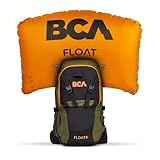
Overview: The Float 25 Turbo expands on the compact 22 with additional capacity and an improved ergonomic trigger system. This green mid-size pack serves as the sweet spot for day-trippers needing extra space for layers, food, and emergency gear. The proven compressed air Float system maintains mechanical simplicity while the 25-liter volume accommodates longer tours or variable conditions.
What Makes It Stand Out: The ergo trigger redesign provides more intuitive activation compared to older models, crucial in high-stress avalanche situations. The 25-liter capacity hits the practical minimum for carrying full safety kit plus essentials, while the same durable 330D ripstop construction ensures longevity. This pack bridges the gap between ultralight minimalism and bulky multi-day packs.
Value for Money: At $639.95 plus $150-200 for the canister, total cost lands around $790-840. This positions it as a mid-range option—more expensive than the 22 but offering 13% more capacity and better ergonomics. For riders who find the 22 too small but don’t need electronic features, this delivers solid value. Refill costs remain the primary long-term expense consideration.
Strengths and Weaknesses:
- Pros: Practical 25L day-pack size, improved ergo trigger, proven mechanical reliability, lighter than electronic systems (5.5 lbs with canister), durable materials
- Cons: Canister sold separately, single-use deployment, TSA travel complications, no practice mode, requires refill planning
Bottom Line: The most versatile compressed-air option for typical backcountry days. Choose this over the 22 if you carry extra gear or tour in variable weather. For frequent flyers or those wanting practice capability, upgrade to the E2 system.
How Avalanche Airbag Packs Work: The Science of Staying on Top
The principle behind avalanche airbag technology is deceptively simple: inverse segregation, commonly known as the “Brazil nut effect.” When granular materials are shaken or fluidized, larger particles rise to the surface while smaller particles sink. In an avalanche, the snowpack becomes a violent, churning fluid. Your deployed airbag dramatically increases your volume and decreases your density, making you the “Brazil nut” that stays near the surface rather than the “peanut” that gets buried.
Research from the Swiss Federal Institute for Snow and Avalanche Research (SLF) demonstrates that airbag packs reduce mortality by approximately 50% when properly deployed. However—and this is crucial—that statistic only applies to victims who survive the traumatic injuries often sustained during avalanche flow. The airbag doesn’t prevent trauma from trees, rocks, or the sheer force of snow moving at 80 mph. It simply increases your odds of having a survivable burial depth, ideally keeping your head and chest near the surface where you can breathe.
The mechanism works by deploying one or two large bags—typically 150-200 liters total volume—in under three seconds. This rapid inflation must overcome the immediate violence of the avalanche while you’re still moving. The system needs to be absolutely reliable, which is why understanding the underlying deployment technology matters more than any brand loyalty.
Canister vs. Electric Fan Systems: Choosing Your Deployment Method
Your first major decision splits the market into two fundamentally different philosophies: compressed gas canisters and battery-powered electric fans. Neither is universally superior; each carries distinct advantages that align with different skier profiles and expedition requirements.
Compressed Gas Canister Systems
These traditional systems use either compressed air or, more commonly, argon or nitrogen. A mechanical trigger punctures the canister, releasing gas that inflates the bag through a venturi system that also draws in ambient air. The primary advantage? Proven reliability in extreme cold and simplicity of design. No batteries to manage, no electronics to fail at -20°F.
However, canisters require refilling after each deployment. You’ll need access to specialized refill stations—typically dive shops for air or authorized dealers for argon. International travel becomes complicated, as pressurized canisters face airline restrictions. Some skiers carry a spare canister for multi-day trips, adding weight and cost. The mechanical trigger, while reliable, lacks the diagnostic capabilities of electronic systems.
Electric Fan Systems
Electric fan systems represent the cutting edge, using high-speed centrifugal fans powered by rechargeable lithium batteries. Pull the trigger, and the fan spins up to 60,000 RPM, inflating the bag in about 3.5 seconds. The game-changing advantage? Multiple deployments on a single charge—typically 4-6 deployments—and simple USB-C recharging in the field with a power bank.
The trade-offs include battery management in extreme cold (though modern systems use heating elements and insulation), slightly heavier base weight, and dependence on electronic components. Battery life degrades over time, requiring eventual replacement. For remote expeditions where charging is impossible, this dependency becomes a calculated risk.
Hybrid Systems: The New Frontier
Emerging hybrid systems combine mechanical triggers with electric deployment, offering redundancy. These represent the most sophisticated (and expensive) options, providing backup deployment methods if primary systems fail. For guides and professionals who can’t accept single points of failure, hybrids offer peace of mind despite increased complexity and weight.
Key Features That Define Performance
Beyond the core deployment method, several design elements critically impact real-world performance. These details separate effective systems from marketing exercises.
Airbag Volume and Design
Total inflated volume typically ranges from 150 to 200 liters, but shape matters as much as size. Dual-bag systems position one bag on each side of your head, providing redundancy and potentially better keeping your head oriented upward. Single-chamber systems often inflate behind your head and shoulders, creating a larger protective volume but risking inversion if you tumble.
The deflation strategy is equally important. Some systems automatically deflate after 3-5 minutes, theoretically creating an air pocket if buried. Others remain inflated, potentially making you a larger target for secondary slides. There’s no consensus on which is superior—each approach carries theoretical advantages that depend on specific avalanche dynamics.
Mechanical vs. Electronic Triggers
Mechanical triggers use a physical cable and spring-loaded mechanism to puncture the canister. They’re simple, cold-resistant, and intuitive. Electronic triggers offer pre-deployment diagnostics, LED status indicators, and automatic activation if you’re separated from your pack. Some advanced systems detect avalanche motion and deploy automatically, though this raises concerns about false deployments during aggressive skiing.
Multi-Bag Systems vs. Single Chamber
Multi-bag systems provide redundancy—if one bag fails, you still have partial inflation. They also allow for more ergonomic pack design. Single-chamber systems can offer larger total volume and simpler construction. Your choice depends on your risk tolerance and whether you prioritize redundancy or maximum volume.
Sizing and Fit: The Non-Negotiable Foundation
An airbag pack that doesn’t fit perfectly is a liability. Poor fit affects weight distribution, makes the pack uncomfortable on long tours, and—most critically—can prevent proper deployment if the trigger handle isn’t positioned correctly relative to your shoulder.
Torso Length and Hip Belt Positioning
Measure your torso length from C7 vertebrae to iliac crest. Most packs come in 2-3 sizes. The hip belt must sit directly on your iliac crest, transferring 70-80% of the weight to your legs. If the belt rides too high or low, you’ll suffer on approaches and potentially interfere with the airbag deployment path.
The trigger handle should sit 2-3 inches below your collarbone, easily reachable with either hand without looking. Practice the motion until it’s muscle memory. Some packs offer adjustable-height triggers—worth the weight penalty if you’re between sizes.
Women’s-Specific and Unisex Designs
Women’s-specific models feature narrower shoulder straps, conical hip belts accommodating different pelvis shapes, and shorter torso lengths. However, many female skiers prefer unisex models for their broader size range and simpler construction. Try both, focusing on hip belt contact and strap pressure points. The best pack is the one that disappears on your back until you need it.
Pack Capacity: Matching Your Mission Profile
Airbag packs sacrifice 3-5 liters of usable space to the airbag system itself, making capacity selection more critical than with standard packs.
Day-Trip Essentials (20-30L)
For dawn patrols and single-day tours, 20-30 liters accommodates safety gear, extra layers, food, water, and minimal emergency equipment. These packs prioritize lightweight construction and streamlined profiles for aggressive skiing. The trade-off? Limited space for technical gear or extended emergencies.
Multi-Day Capabilities (30-45L)
For hut trips or long missions requiring bivy gear, 30-45 liters becomes necessary. These packs feature more sophisticated suspension systems to handle heavier loads but weigh more empty. The airbag system adds less percentage weight penalty to larger packs, making them relatively more efficient for extended trips.
Minimalist Speed Touring (Under 20L)
Ultralight airbag packs under 20 liters appeal to fitness-oriented skiers and skimo racers. They carry essentials only: shovel, probe, water, and minimal insulation. The extreme weight savings matter on long, fast days, but you’re making serious compromises in emergency preparedness. These packs suit experienced skiers with deep terrain knowledge and dialed local conditions.
Weight Considerations: The Performance Balance
Every pound on your back affects the thousands of vertical feet you’ll climb. Modern airbag systems add 3-6 pounds to a comparable non-airbag pack. Electric systems typically weigh 1-2 pounds more than canister systems due to batteries and fans, but this is partially offset by not carrying a spare canister.
Consider the “weight penalty per deployment”—electric systems allow multiple deployments per charge, effectively distributing their weight across potential uses. For canister systems, each deployment requires carrying a heavy spare canister. On long expeditions, the cumulative weight difference can be significant.
Don’t forget the psychological weight: knowing you have an airbag might enable riskier behavior. The heaviest burden is poor decision-making, regardless of your pack’s weight.
Deployment Mechanisms: Pull Cord Placement and Ergonomics
The trigger handle design and placement separate seamless deployment from fumbling failure. Handles typically attach via a coiled cable to the shoulder strap, secured by a breakaway magnet or clip.
Left vs. right-hand placement is personal, but consider which hand you use for pole straps and ice axes. Some skiers mount triggers on both sides for redundancy. The pull force should be 5-8 pounds—enough to prevent accidental deployment but light enough for a panicked, gloved hand.
Practice deployments must be part of your pre-season routine. Deploy in your living room, in your car (with windows open), and on-snow at the start of each season. The motion must bypass your conscious mind and become pure reflex.
Refill and Recharge Logistics in the Field
Your airbag is useless after deployment unless you can recharge it. Field logistics vary dramatically between systems.
Canister Refill Options
Compressed air canisters can be refilled with a high-pressure hand pump (50+ strokes) or portable compressor. Argon/nitrogen canisters require proprietary refill adapters and pure gas sources—essentially impossible in remote locations. For multi-day trips, carrying a spare canister is mandatory, adding 1.5-2 pounds.
Battery Management for Electric Systems
Modern lithium batteries perform admirably in cold, but require management. Keep the battery inside your jacket on frigid days. Carry a compact USB-C power bank (10,000mAh provides 2-3 full charges) for extended trips. Charging from solar panels is viable in spring conditions but impractical in deep winter. Battery life degrades 10-20% after 500+ charge cycles—factor replacement costs into long-term ownership.
Maintenance and Long-Term Care
Your airbag pack demands more maintenance than any other ski gear. Annual professional inspection is mandatory—most manufacturers require this to maintain warranty coverage. Inspect the airbag fabric for UV degradation, pack fabric for abrasion, and all buckles for cracks.
Practice deployments stress the system, so limit them to 2-3 times per season. After each deployment, check for fabric tears, venturi clogs, and trigger mechanism wear. Store the pack unpacked with the airbag loosely stuffed—compression damages the fabric and venturi system.
For electric systems, periodically update firmware if available. For canister systems, check canister pressure annually and replace according to manufacturer timelines (typically 5-10 years). The cost of ownership extends far beyond the initial purchase.
The Critical Importance of Practice Deployments
Reading about deployment is like reading about swimming—you learn nothing until you’re in the water. Practice deployments reveal critical details: how the pack shifts when inflated, whether straps loosen, and how the inflated bag affects your mobility.
Practice in controlled environments first: your yard, an open field. Then progress to on-snow practice in safe terrain. Deploy while stationary, while moving slowly, and (with caution) while making a controlled ski cut. Feel how the inflated bag changes your center of gravity and restricts movement.
Most importantly, practice your partner rescue drill. Can you dig with the inflated bag? Can you fit through a probe line? Can you assist an injured skier? The inflated pack changes everything about post-avalanche response. Your training must evolve accordingly.
Understanding Limitations and Common Misconceptions
Airbags don’t make you invincible. They don’t prevent trauma, don’t work if you can’t deploy them, and don’t help if you’re caught in terrain traps where burial depth is irrelevant. They also don’t deploy in tree-well accidents or non-avalanche snow immersion deaths.
The “false sense of security” is real and deadly. Studies show skiers with airbags take 20-30% more risks. Your brain is your primary safety tool; the airbag is a backup. Never let the presence of an airbag influence terrain choices.
Airbags can also hinder rescue. An inflated bag can make extrication more difficult in tight trees or confined terrain. Some victims have been found with deployed airbags but fatal trauma—deployment doesn’t guarantee survival. Understand these limitations deeply, or the technology becomes a liability.
Integration with Your Complete Avalanche Safety System
Your airbag is one component of a system, not a standalone solution. It must integrate seamlessly with your beacon, shovel, probe, helmet, and communication devices.
Beacon compatibility is crucial—some airbag electronics have caused interference. Test your beacon search function with the airbag armed (but not deployed). Keep the battery-powered components at least 12 inches apart during searches.
Shovel and probe must be accessible without removing the pack. Most airbag packs have dedicated external sleeves, but verify you can extract them one-handed while wearing gloves. Your helmet should fit comfortably with the pack’s head cavity—some packs push helmets forward, reducing visibility.
Consider two-way radios or satellite communicators. In a burial scenario, communication with your partner is paramount. The airbag buys time; rapid rescue saves lives. The two technologies must work in concert.
Cost Analysis and Value Proposition
Quality airbag packs range from $600 to $1,400, plus ongoing costs. Canister refills run $40-60 each deployment. Spare canisters cost $150-200. Electric system batteries need $200-300 replacement every 3-5 years. Annual professional inspections add $50-100.
Spread over a 10-year lifespan with 2-3 deployments for practice, total cost of ownership easily reaches $2,000-3,000. Compare this to avalanche course costs ($500-800) and the value of conservative decision-making (priceless).
The value proposition isn’t financial—it’s existential. If used once successfully, the pack pays for itself infinitely. But consider opportunity cost: that money could fund multiple avalanche courses, better beacon technology, or trips to safer terrain. Balance your investment across your entire safety ecosystem.
Certification Standards and What They Mean
Look for EN 16716:2017 certification—the European standard for avalanche airbag systems. This ensures the pack meets minimum inflation time (under 3 seconds for canister, under 3.5 for electric), volume requirements, and structural integrity tests.
The North American ASTM F3357 standard is newer and less widely adopted but provides similar assurances. Some packs carry UIAA certification, which adds additional testing for durability and environmental conditions.
Certification doesn’t guarantee performance in all scenarios—it ensures the system meets baseline engineering standards. Read the test reports if available; they reveal how the pack performs in different snow densities and temperatures. A certified pack that fails in wet, heavy snow may not suit maritime snowpacks.
Frequently Asked Questions
1. How effective are avalanche airbag packs really?
Studies show approximately 50% reduction in mortality when properly deployed, but this assumes you survive the initial avalanche trauma. Airbags keep you closer to the surface, reducing burial depth and asphyxiation risk, but they don’t prevent traumatic injuries from terrain features or the avalanche’s sheer force. They’re a critical backup, not primary protection.
2. Can I fly with my avalanche airbag pack?
Canister systems face strict regulations. Empty canisters are generally allowed in checked baggage, but pressurized canisters are prohibited on most airlines. Electric systems fly without issues—just pack batteries in carry-on per standard lithium battery rules. Always check current TSA and airline policies, and arrive early for inspection. Carry manufacturer documentation explaining the device.
3. How often should I practice deploying my airbag?
Practice 2-3 times per season in controlled conditions. More frequent practice risks unnecessary wear and costs for canister systems. Make each practice session deliberate: practice while stationary, moving, and in different body positions. The goal is muscle memory, not rote repetition. Always inspect the system thoroughly after practice deployments.
4. What’s the lifespan of an avalanche airbag pack?
With proper maintenance, 10-15 years is realistic for the pack itself. Canisters typically need replacement every 5-10 years regardless of use. Electric system batteries last 3-5 years before capacity degrades significantly. Airbag fabric can UV-degrade if stored improperly. Annual professional inspection is mandatory to catch issues before they become critical failures.
5. Can I wear my airbag pack with a climbing harness?
Yes, but with critical considerations. The hip belt must thread through or integrate with your harness without interfering with airbag deployment. Some packs have removable hip belts for climbing. Never wear the pack over a loaded harness—this can prevent airbag inflation or trap you in the harness post-deployment. Test your specific combination extensively before committing to it in technical terrain.
6. Do airbag packs work in all types of avalanches?
Effectiveness varies by avalanche type. They work best in dry, flowing slides where inverse segregation functions optimally. In wet, heavy avalanches or debris flows, the physics are less reliable. In terrain traps like gullies or creek beds, burial depth becomes irrelevant. Airbags offer minimal benefit in tree-well suffocation scenarios. They’re optimized for a specific subset of avalanche accidents.
7. How do I know if my airbag deployed correctly?
A proper deployment fully inflates both bags (if dual-system) within 3 seconds, with no fabric twists or venturi blockages. The pack should shift minimally on your body. Post-deployment, check that all straps remain secure and the trigger mechanism fully separated. If practicing, immediately repack carefully following manufacturer instructions—improper repacking is the most common cause of deployment failures.
8. Are electric airbag packs worth the extra weight and cost?
For most recreational skiers, yes. The ability to practice deploy without cost, multiple deployments per charge, and easier travel make electric systems more user-friendly. The weight penalty (1-2 lbs) matters less than the psychological barrier to practice with canister systems. For remote expeditions without charging access, canisters remain viable. Evaluate based on your trip profile and practice discipline.
9. Can I use someone else’s deployed airbag pack in an emergency?
Technically possible but extremely risky. The pack is sized to the original user; poor fit could cause the trigger handle to sit incorrectly. You wouldn’t know its maintenance history or if it’s been properly repacked. In a true emergency, it’s better than nothing, but never plan on sharing packs within a group. Each skier needs their own properly fitted system.
10. What’s the biggest mistake skiers make with airbag packs?
Buying the pack and never practicing deployment. The second biggest mistake is letting the pack influence terrain choices—skiing slopes you wouldn’t otherwise because you feel “safer.” An airbag is a passive safety device; your brain is active safety. Never let gear replace education, conservative decision-making, and respect for avalanche terrain. The pack is your backup plan, not your primary strategy.'