The golden hour is fading fast, and a silhouette emerges at the forest’s edge—a moment you’ve waited three days to capture. Your heart races, but your hands move with practiced precision. In that critical second, the last thing you need is to wrestle with inadequate gear protection or fumble through a poorly designed backpack. Wildlife photography demands patience, skill, and equipment that performs flawlessly under nature’s most unforgiving conditions. Yet many photographers invest tens of thousands in cameras and lenses, only to entrust them to backpacks that treat their kit like yesterday’s laundry.
The difference between returning with a memory card full of keepers and a horror story about shattered glass often comes down to the humble camera backpack. It’s your mobile command center, your gear’s first line of defense against rain, dust, impacts, and the sheer physical toll of trekking through wilderness. This guide dives deep into what separates exceptional wildlife photography backpacks from mere bags with straps, ensuring your next investment protects both your equipment and your creative vision.
Top 10 Camera Backpacks for Wildlife Photographers
Detailed Product Reviews
1. K&F CONCEPT Camera Backpack, Camera Bags for Photographers Large Capacity Camera Case with Raincover,15-15.6 Inch Laptop Compartment Compatible for Canon/Nikon/Sony/DJI Mavic Drone(Backpack 20L)

Overview: The K&F CONCEPT 20L Camera Backpack delivers a compelling blend of functionality and modern aesthetics for photography enthusiasts. Designed to accommodate one camera body with four lenses, a tripod, and a 15.6-inch laptop, this versatile bag suits both urban shoots and wildlife expeditions. Its 17.32 x 11.81 x 6.69-inch frame strikes an optimal balance between capacity and portability, while the exclusive color matching adds a distinctive visual appeal that sets it apart from generic black alternatives.
What Makes It Stand Out: This backpack’s dual-access system is its defining feature. The quick side access allows photographers to retrieve equipment without removing the bag—crucial for capturing fleeting moments. Meanwhile, the full back opening provides complete organizational control and superior protection when setting up gear. The inclusion of anti-theft zippers and reinforced stitching demonstrates thoughtful security considerations, while the EPE foam padding offers exceptional shock absorption against accidental drops.
Value for Money: At $69.59, this backpack sits in the competitive mid-range segment. It punches above its weight with premium features like a rain cover, ergonomic ventilated back panel, and adjustable chest strap typically found in more expensive models. The build quality rivals bags costing $100+, making it an intelligent investment for serious hobbyists and semi-professionals who prioritize equipment safety without breaking the bank.
Strengths and Weaknesses: Strengths include excellent protection, rapid side access, comfortable weight distribution, and comprehensive weather resistance. The 20L capacity adequately serves most mirrorless and DSLR setups. Weaknesses are minimal: the bag may feel snug for photographers with extensive lens collections, and the tripod front mount can shift balance when carrying heavy supports.
Bottom Line: This K&F CONCEPT backpack is a robust, feature-rich solution that delivers professional-grade functionality at an enthusiast-friendly price. Highly recommended for photographers seeking reliable protection and quick access in a stylish package.
2. K&F CONCEPT Camera Backpack, Camera Bags for Photographers Large Capacity Camera Case with Raincover,15-15.6 Inch Laptop Compartment Compatible for Canon/Nikon/Sony/DJI Mavic Drone(Backpack 20L)

Overview: K&F CONCEPT’s 20L Camera Backpack targets discerning photographers who demand practical design without sacrificing style. Measuring 17.32 x 11.81 x 6.69 inches, this bag comfortably houses a camera body, four lenses, tripod, and up to 15.6-inch laptop. The contemporary color scheme distinguishes it from conventional options, appealing to both male and female photographers across various shooting environments, from city streets to nature trails.
What Makes It Stand Out: The innovative access system distinguishes this model. Side entry enables rapid gear retrieval while the pack remains shouldered—ideal for spontaneous shooting scenarios. The complete rear-opening design facilitates effortless organization and enhanced equipment security. Cutting-edge reinforcement technology throughout the stitching, combined with waterproof high-density nylon and anti-theft zippers, provides peace of mind in crowded or challenging conditions.
Value for Money: Priced at $69.59, this backpack offers remarkable value. Features like the ventilated back panel, adjustable chest belt, and included rain cover match those of premium competitors. The EPE foam protection system and durable construction ensure longevity, representing significant savings over time compared to replacing cheaper, less durable alternatives.
Strengths and Weaknesses: Key strengths encompass superior shock protection, dual-access convenience, ergonomic comfort for extended wear, and all-weather readiness. The 20L configuration suits most standard kits perfectly. Potential drawbacks include limited expansion room for growing gear collections and occasional balance issues when front-mounted tripod is heavy.
Bottom Line: An exceptional all-rounder that combines protection, accessibility, and comfort at a competitive price point. This K&F CONCEPT backpack deserves serious consideration from photographers upgrading their carry solution.
3. RAINSMORE Camera Bag Backpack for DSLR/SLR/Mirrorless Camera Bags for Photographers 15.6 Inch Waterproof Tactical Photography Backpack Case with Rain Cover & Tripod Holder, Black

Overview: The RAINSMORE tactical camera backpack presents a budget-conscious yet feature-packed solution for photographers prioritizing organization and protection. Sized at 17.7 x 7.87 x 12.79 inches, this black tactical-style bag accommodates DSLR, mirrorless, or drone setups alongside a 15.6-inch laptop. Its waterproof construction and comprehensive rain cover make it particularly suited for outdoor adventurers and travel photographers facing unpredictable weather.
What Makes It Stand Out: This backpack excels through its ultra-organized interior featuring six adjustable dividers—including a vibrant orange quick-grab panel—and three elastic security straps for customized, shock-absorbing configurations. The MOLLE expansion system adds versatility for attaching additional gear externally. The anti-theft zipper design on quick-access points provides security without compromising the ability to retrieve equipment swiftly in dynamic shooting situations.
Value for Money: At $49.99, this bag delivers outstanding bang-for-buck. Tactical features, extensive padding, and multiple pocket configurations typically command $80+ in competitor products. The inclusion of a dedicated rain cover and anti-theft measures at this price point makes it an unbeatable value for entry-level to intermediate photographers.
Strengths and Weaknesses: Strengths include exceptional internal customization, comprehensive weather protection, tactical expandability, and thoughtful pocket placement including a hidden back pocket for valuables. The breathable back panel ensures comfort during long shoots. Weaknesses may include a less refined aesthetic than premium brands and potentially bulkier feel in urban settings due to its tactical design.
Bottom Line: For photographers seeking maximum versatility and protection without premium pricing, the RAINSMORE backpack is a standout choice. It’s an ideal starter pack that doesn’t compromise on professional features.
4. MOSISO Camera Backpack, DSLR/SLR/Mirrorless Photography Camera Bag 15-16 inch Waterproof Hardshell Case with Tripod Holder&Laptop Compartment Compatible with Canon/Nikon/Sony, Black
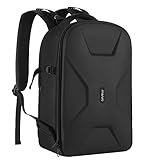
Overview: MOSISO’s camera backpack combines hardshell protection with customizable storage for photographers seeking robust equipment defense. Measuring 17.32 x 11.8 x 7.5 inches, this black bag features dual compartments: an upper section with padded removable inserts for cameras, lenses, and drones, plus a dedicated lower compartment for laptops up to 16 inches. The waterproof PU leather hardshell front provides impact resistance for urban and travel photography.
What Makes It Stand Out: The hardshell front panel offers superior impact protection rarely found at this price point, safeguarding gear against bumps and crushing forces. The fully open design with two rear accessory pockets enables efficient organization of cables, SD cards, and power banks. A unique clip strap on the adjustable shoulder harness provides convenient attachment points for sunglasses or towels, while the back trolley belt integrates seamlessly with luggage during travel.
Value for Money: At $63.99, this backpack positions itself as an affordable hardshell alternative. Competing hardshell models often exceed $90, making this an attractive option for photographers wanting premium protection features without the associated cost. The 16-inch laptop compatibility adds future-proofing value.
Strengths and Weaknesses: Major strengths include excellent frontal impact protection, highly customizable interior, generous laptop capacity, and travel-friendly features like the trolley belt. The side pocket accommodates water bottles or tripods up to 2.5 inches diameter. Potential weaknesses include slightly reduced flexibility compared to all-soft bags and the hardshell adding minimal weight and bulk.
Bottom Line: MOSISO delivers impressive hardshell protection and versatility at a mid-range price. Recommended for photographers who prioritize equipment safety during travel and urban commutes.
5. K&F CONCEPT Camera Backpack,Hardshell Photography DSLR Camera Bag with 15-15.6 Inch Laptop Compartment Hard Shell Camera Case Compatible with Canon/Nikon/Sony/DJI Mavic Drone
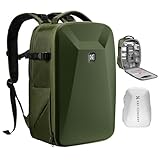
Overview: K&F CONCEPT’s hardshell variant offers enhanced protection in a slightly larger 22L package, measuring 17.3 x 11 x 7 inches. This backpack targets photographers requiring maximum equipment security without sacrificing carrying comfort. Designed for DSLR, mirrorless, and DJI Mavic drones, it includes a dedicated 15.6-inch laptop compartment and removable modular inserts for customized gear configurations, making it ideal for rigorous travel and fieldwork.
What Makes It Stand Out: The one-piece EVA hard shell construction provides comprehensive impact resistance across the entire front panel, offering superior protection against crushing forces and accidental drops compared to standard padded bags. The fully opened flap design prevents strike and scratch damage during access. Ergonomic breathable mesh padding on the back panel and adjustable shoulder straps (20-38.9 inches) ensure comfortable weight distribution during extended use, while the back trolley belt adds travel convenience.
Value for Money: Priced at $66.99, this hardshell backpack undercuts most competitors with similar protection levels by $20-30. The 22L capacity offers more storage than its 20L sibling at nearly the same price, representing excellent value for photographers needing extra space and enhanced durability.
Strengths and Weaknesses: Strengths include exceptional frontal protection, increased 22L capacity, comfortable ergonomic design, and versatile storage options including hidden back pockets and side pockets for tripods or water bottles. The hardshell design may slightly limit interior flexibility compared to fully soft bags, and the aesthetic is more utilitarian than fashionable.
Bottom Line: A top-tier choice for protection-focused photographers. The K&F CONCEPT hardshell backpack delivers premium durability and capacity at a competitive price, making it perfect for adventure and travel photography.
6. K&F CONCEPT 20L Camera Case for Photographers Large Capacity PU Leather Camera Bags with Raincover, 15.6 Inch Laptop Compartment for Camera Drone Bags

Overview: The K&F CONCEPT 20L Camera Case blends modern aesthetics with functional design, targeting photographers who value both style and substance. This PU leather bag accommodates a camera, four lenses, tripod, and 15.6-inch laptop, making it suitable for urban shoots, wildlife photography, and travel. Its unisex design appeals to enthusiasts seeking professional organization without sacrificing visual appeal.
What Makes It Stand Out: The exclusive color-matched PU leather exterior distinguishes this from typical nylon bags, offering sophisticated looks for professional settings. The dual-access system—quick side opening for grab-and-go shooting and full back unzip for complete organization—provides exceptional workflow flexibility. Anti-theft zippers and reinforced stitching demonstrate thoughtful security engineering rarely seen at this price tier.
Value for Money: At $89.98, this bag sits in the mid-range category but delivers premium features like PU leather construction and dual-access design that competitors often price $30-40 higher. The included raincover and reinforced protection add significant value, making it more cost-effective than buying separate accessories for basic backpacks.
Strengths and Weaknesses: Strengths include premium aesthetic materials, versatile access points, robust protection with EPE foam padding, and ergonomic comfort features. Weaknesses involve PU leather requiring more maintenance than nylon, potentially limited 20L capacity for extensive kits, and the tripod front-mounting system may feel unbalanced when fully loaded.
Bottom Line: This bag excels for style-conscious photographers needing reliable protection and quick access. While capacity limits heavy kit carriers, its build quality and features make it a strong recommendation for enthusiasts and semi-pros prioritizing aesthetics and functionality in urban or travel scenarios.
7. K&F CONCEPT Camera Backpack,Camera Bags for Photographers 30L Large Capacity with Raincover and 16 Inch Laptop Compartment Compatible for Canon/Nikon/Sony/DJI Mavic Drone Travel

Overview: The K&F CONCEPT 30L Camera Backpack prioritizes capacity and accessibility for active photographers. With three-tiered compartmentalization and 30 liters of space, it accommodates extensive gear including drones and multiple lenses. The side-access design enables rapid deployment, while the front-opening configuration simplifies organization. This bag targets outdoor photographers and wedding shooters requiring substantial, flexible storage.
What Makes It Stand Out: The impressive 30L capacity at a sub-$75 price point represents exceptional value. Its three-tiered customizable system allows unprecedented interior configuration flexibility compared to fixed-compartment designs. The quick side access combined with full front opening creates a dual-access workflow that adapts to both spontaneous shooting and methodical gear management.
Value for Money: At $72.99, this backpack undercuts many 30L competitors by $20-50 while including essential features like a raincover and 16-inch laptop compartment. The customizable dividers eliminate need for aftermarket organization systems, delivering professional-grade functionality at enthusiast pricing. It’s arguably the best capacity-to-cost ratio in its class.
Strengths and Weaknesses: Strengths include massive 30L capacity, excellent customization, dual-access convenience, included rain protection, and comfortable padding. Weaknesses may involve bulkiness for daily carry, less premium materials than higher-priced alternatives, and potential over-engineering for minimal kit users who don’t need full capacity.
Bottom Line: For photographers needing maximum storage without breaking budget, this backpack delivers outstanding value. Its thoughtful design suits travel, wedding, and outdoor photography. While not the most compact option, the capacity and features make it highly recommended for gear-heavy shooters seeking affordable, functional protection.
8. RAINSMORE Camera Bag Backpack for DSLR/SLR Mirrorless 15.6 Inch Laptop Camera Back Pack for Photographers Anti-Theft Photography Bags Case with Tripod Holder & Rain Cover, Black

Overview: The RAINSMORE Camera Bag Backpack offers budget-conscious photographers a feature-rich solution with vintage aesthetics. This canvas backpack provides customizable storage for DSLR kits, laptops up to 15.6 inches, and personal items. Its anti-theft design and included rain cover address common concerns for travel and street photographers, positioning it as an entry-level workhorse with surprising sophistication.
What Makes It Stand Out: The anti-theft zipper design on both front and side pockets provides security typically absent in sub-$50 bags. Six removable dividers offer exceptional customization flexibility, while the magnetic clasp pockets enable quick access to essentials without compromising security. The vintage canvas aesthetic distinguishes it from utilitarian nylon competitors, appealing to style-aware beginners.
Value for Money: At $40.68, this represents remarkable value—most bags with similar features cost $60-80. The inclusion of anti-theft zippers, rain cover, and extensive dividers eliminates additional purchases. While canvas may not match ballistic nylon’s durability, the feature set and build quality exceed expectations for this price point, making it ideal for budget-conscious enthusiasts.
Strengths and Weaknesses: Strengths include unbeatable price, anti-theft security features, excellent customization, vintage style, and dual protection (canvas + rain cover). Weaknesses involve canvas being less weather-resistant than synthetic materials without the cover, potentially less durable hardware over time, and the 15.6" laptop compartment may be snug for some models.
Bottom Line: This backpack punches far above its weight class, delivering premium features at an entry-level price. Perfect for beginners, students, or backup bag needs. While professionals may desire more robust materials, the value proposition is undeniable for anyone seeking secure, customizable camera protection on a tight budget.
9. BAGSMART Camera Backpack, DSLR SLR Small Camera Bags for Photographers Compatible for Sony Canon Nikon, Shoulder Strap 2-in-1 Travel Backpack Fits 12.9" iPad, Beige

Overview: The BAGSMART Camera Backpack targets versatile photographers needing a compact, travel-friendly solution. This 2-in-1 bag converts between backpack and crossbody configurations, accommodating mirrorless or DSLR kits with tablets up to 12.9 inches. Its airline-compliant dimensions and luggage sleeve make it ideal for frequent flyers, while the waterproof polyester construction ensures gear protection in varied conditions.
What Makes It Stand Out: The convertible carrying system is the headline feature—switching between backpack and shoulder bag modes in seconds provides unmatched versatility for urban explorers and travelers. The L-shaped front pockets offer intuitive organization for daily essentials, while the airline-friendly sizing ensures hassle-free flying. This adaptability distinguishes it from single-mode competitors.
Value for Money: At $44.99, this bag competes directly with entry-level options but offers unique versatility. The 2-in-1 design essentially provides two bags for one price, while travel features like the luggage sleeve add convenience value. Though limited to tablet-sized devices, the build quality and adaptability justify the cost for mobile photographers prioritizing flexibility over maximum capacity.
Strengths and Weaknesses: Strengths include innovative 2-in-1 design, travel-friendly dimensions, waterproof materials, quick side access, and lightweight portability. Weaknesses involve limited 12.9" tablet capacity (no laptop), smaller overall volume restricting extensive kits, and the beige color may show dirt more readily than darker options.
Bottom Line: Perfect for travel photographers and minimalists who value versatility over volume. The convertible design solves real carrying challenges, making it highly recommended for urban shooting and air travel. Those needing laptop storage or extensive gear should look elsewhere, but for agile creators, this is an excellent value.
10. MOSISO Camera Backpack, DSLR/SLR/Mirrorless Tactical Camera Bag Case with Laptop Compartment Compatible with Canon/Nikon/Sony, Black

Overview: The MOSISO Camera Backpack adopts a tactical approach to camera protection, appealing to outdoor enthusiasts and photographers needing rugged versatility. With three distinct compartments separating daily items, camera gear, and laptops up to 16 inches, this bag offers systematic organization. The MOLLE webbing system and tactical aesthetics target users wanting military-inspired functionality for wilderness and urban adventures alike.
What Makes It Stand Out: The tactical design language with MOLLE webbing and removable USA flag patch creates a unique niche aesthetic. Its three-compartment system provides better gear segregation than typical two-zone bags. The side load compression system and reinforced edges demonstrate outdoor-ready engineering, while compatibility with multiple camera brands shows broad design consideration.
Value for Money: At $63.99, this tactical bag sits competitively between budget and premium options. The MOLLE system adds expansion capability without extra cost, while the three-compartment layout rivals $80-90 bags. For photographers wanting tactical styling and outdoor durability, it offers better value than specialized tactical brands charging $100+ for similar functionality.
Strengths and Weaknesses: Strengths include rugged tactical construction, excellent compartmentalization, MOLLE expansion capability, wide laptop compatibility (up to 16"), and outdoor-focused features like compression straps. Weaknesses involve tactical styling not suiting all professional environments, polyester may lack premium feel of canvas or leather, and the design may be overbuilt for casual users.
Bottom Line: Ideal for adventure photographers and tactical gear enthusiasts needing robust organization. The military-inspired features deliver genuine utility beyond aesthetics. While the design narrows its audience, those embracing the tactical approach will find excellent value and functionality for outdoor and travel photography.
Understanding the Unique Demands of Wildlife Photography
Wildlife photography exists in a realm where your subjects don’t wait for perfect conditions and your shooting environment actively works against your gear. Unlike studio or urban street photography, you’re battling unpredictable weather, abrasive vegetation, river crossings, and the need for absolute silence. Your backpack must serve as a protective cocoon, a silent partner, and an ergonomic lifeline during 12-hour treks.
The ideal wildlife photography backpack acknowledges that you’ll sometimes crawl through mud to get eye-level with a frog, or wedge yourself between boulders waiting for a peregrine’s return. It anticipates sudden downpours in the Amazon, blinding dust in the Serengeti, and the corrosive salt spray of coastal bird colonies. This isn’t just about padding—it’s about creating a mobile, micro-environment that shields sensitive electronics from macro-level abuse while keeping you agile enough to respond when a leopard decides your presence is suddenly interesting.
Why a Standard Backpack Won’t Cut It
That hiking pack from your favorite outdoor retailer might excel at carrying camping gear, but it’s designed for sleeping bags and freeze-dried meals—not precision optical instruments worth more than a compact car. Standard backpacks lack the critical structural rigidity to prevent lens creep, the customizable compartmentalization to stop gear from colliding, and the rapid access systems that wildlife moments demand.
More importantly, conventional packs treat weather resistance as an afterthought. A light rain cover might protect your lunch, but it won’t stop moisture from wicking through seams and zippers to condense on your camera sensor. The harness systems distribute weight for general loads but fail to account for the dense, front-heavy weight distribution of pro camera bodies and telephoto lenses. You’re not just carrying gear—you’re balancing a delicate ecosystem of glass, metal, and electronics that demands specialized architecture.
Capacity Considerations: How Much Gear Do You Really Need?
Capacity delusions plague wildlife photographers. The temptation to carry every lens you own “just in case” leads to packs so heavy they become counterproductive, slowing you down and increasing injury risk. Smart capacity planning starts with honest assessment of your shooting style and target species.
The Minimalist Approach
For bird-in-flight specialists or those stalking small mammals in dense forest, a 20-30 liter pack might suffice. This forces discipline: one body, a versatile zoom (like 100-400mm), a macro lens for detail work, and essential accessories. The payoff is mobility. You can scramble up scree fields, squeeze through thorny thickets, and maintain the energy to shoot all day. Minimalist packs also reduce your silhouette, making you less intimidating to skittish prey.
The Gear-Heavy Expedition Setup
Serious wildlife cinematographers or those documenting rare species may need 40-50+ liters. This accommodates multiple bodies (for redundancy and different focal lengths), super-telephoto primes (500mm f/4 and larger), teleconverters, hides, and support systems. The key is choosing a pack that expands intelligently—compressing down when partially loaded to maintain stability, rather than becoming a floppy cavern of shifting gear. Look for packs that can carry 30 pounds comfortably but don’t force you to fill every cubic inch.
Ergonomics and Comfort: Your Back Will Thank You
After your third consecutive 10-mile day with a 600mm lens on your back, you’ll understand why ergonomics trump almost every other feature. A wildlife photography backpack is essentially a wearable tripod—you’re supporting its weight for hours while needing freedom of movement for climbing, crouching, and quick repositioning.
Harness Systems Explained
The shoulder harness should feature S-curved straps that wrap around your chest without compressing your pectoral muscles, allowing full lung expansion during strenuous climbs. Look for dual-density foam: firm base layer for structure, softer top layer for comfort. Load lifters—those small straps connecting the pack’s top to the shoulder straps—are non-negotiable. They angle the pack forward, pulling weight off your shoulders and onto your hips. Without them, even 20 pounds feels like 40 after four hours.
Hip Belt Importance
A proper hip belt transfers 70-80% of your pack’s weight to your pelvis, sparing your spine and shoulders. For wildlife photography, the belt must be padded but not bulky, allowing you to belly-crawl without digging into your hips. Many premium packs feature removable or stowable belts that pivot with your body’s movement—critical when you’re twisting to track a bird in flight. The belt should also include pockets for quick access to lens caps, memory cards, and energy bars, keeping essentials within reach without removing the pack.
Weather Resistance vs. Weatherproofing: Know the Difference
Marketing departments love to blur these terms, but the distinction is life-or-death for your gear. Weather-resistant means the pack will shed light rain and resist moisture wicking. Weatherproofing means your equipment survives submersion in a river crossing or hours in a monsoon.
True weatherproofing requires YKK AquaGuard zippers (or equivalent), taped seams, waterproof fabric with a hydrostatic head rating above 10,000mm, and a design that eliminates water collection points. The pack’s base should be reinforced with abrasion-resistant, waterproof material since you’ll set it down in dew-soaked grass and mud. Some packs feature a “dry bag” style roll-top closure for the main compartment—overkill for most, but essential for swamp or marine environments where you might wade chest-deep.
Understanding IP Ratings and Fabric Technologies
While backpacks rarely carry IP ratings, understanding the concept helps evaluate claims. Look for fabrics with PU (polyurethane) or TPU (thermoplastic polyurethane) coatings. DWR (durable water repellent) treatments are temporary—they wear off and need reapplication. For the outer shell, ballistic nylon (1680D or higher) offers tear resistance against thorns. For the interior, lighter 420D nylon reduces weight while maintaining structure. Some packs use X-Pac or Dyneema composite fabrics, offering exceptional strength-to-weight ratios and inherent waterproofing, though at premium prices.
Access Methods: The Speed vs. Security Equation
Wildlife moments evaporate in seconds. Your access method determines whether you capture the shot or watch it disappear while wrestling with buckles. Each system presents trade-offs between security, weather protection, and speed.
Rear Access Designs
Rear-access packs open away from your back, creating a workstation that keeps the harness clean and dry. This is brilliant for mud and dust, as the back panel never touches the ground. However, it requires removing the pack completely, which can be problematic when you’re shoulder-deep in a marsh. The best designs allow you to swing the pack around on one shoulder strap while it still hangs on your hip, creating a stable platform for lens changes.
Side Access Solutions
Side access lets you grab your camera without fully removing the pack—ideal for sudden opportunities. You swing the pack to your front, unzip the side, and extract your rig. The downside: side openings are inherently less weatherproof and can be security risks in crowded areas. They also limit organizational flexibility, as that side panel becomes a dedicated camera chamber. For wildlife work, look for side access with storm flaps covering the zipper and a locking mechanism to prevent accidental opening when brushing past branches.
Top Access and Hybrid Systems
Top access works like a traditional hiking pack—great for bulk storage but poor for organized gear retrieval. Hybrid systems combine rear access for your main kit with a top compartment for personal items and quick-access side pockets for a compact camera. Some innovative designs feature a “sling” configuration where the entire camera compartment rotates from back to front while still attached. These are excellent for mobile shooters but sacrifice total capacity.
Material Matters: Surviving the Wild
Your backpack’s fabric is its skin—constantly scraped, abraded, and exposed to UV radiation, salt, and chemicals. Cordura nylon (500D to 1000D) remains the gold standard for durability, offering excellent tear and abrasion resistance. However, it’s heavy and absorbs water. Modern alternatives like X-Pac (laminated sailcloth) provide waterproofing and lighter weight but can be noisy—crinkling like a potato chip bag, which might spook wildlife.
For the interior, soft-touch materials prevent lens scratches but shouldn’t shed fibers that stick to lens elements. Avoid packs with loose felt-like linings; they trap dust and moisture. The bottom panel deserves special attention—look for hypalon or TPU-coated fabric that can withstand being dragged across rocks. Zippers are failure points: YKK #10 or larger with metal sliders last years, while plastic sliders degrade in UV light and cold temperatures.
Organizational Excellence: Beyond Just Padded Dividers
Padded dividers are table stakes. Advanced wildlife packs feature modular systems that adapt to different kit configurations. Look for hinged dividers that create shelves, preventing lenses from stacking on top of each other. Some packs include removable camera pods—essentially a separate, fully padded cube that can be pulled out and used as a blind bag or carried alone for short walks from base camp.
Dedicated Spaces for Essential Accessories
Wildlife photography requires accessories standard packs ignore: lens rain covers, flash extenders, remote triggers, and camouflage netting. Premium packs include stretch-mesh pockets sized for these items, internal straps for securing tripod plates, and fleece-lined pockets for filters. A designated, rigid memory card wallet prevents crushing, while a separate, sealed pocket for used cards avoids confusion. Some packs feature a “wet/dry” divider—perfect for storing rain-soaked clothing away from electronics.
Stealth and Camouflage: Becoming Invisible
Bright red or blue packs might look stylish in the store, but in the field, they signal “predator” to every creature within sight. Neutral earth tones (sage, tan, dark green) blend into most environments. Some packs offer removable camouflage covers with different patterns for forest, desert, and snow. Beyond color, consider noise: velcro is the enemy. Look for magnetic or silent zipper pulls. The pack’s shape matters too—angular, tactical-looking designs can spook animals. Rounded, organic silhouettes appear less threatening. Some photographers wrap their packs in natural burlap or local vegetation, so ensure your pack has external attachment points for this.
Airline Travel Considerations: Taking Your Gear Global
Your dream shot might require flights to Kenya or the Galapagos. Airline carry-on restrictions (typically 22 x 14 x 9 inches) must be considered. Many 40-liter packs exceed these dimensions when fully loaded. Look for packs with concealable harness systems and a simple rectangular profile that slides easily into overhead bins. Some packs feature a removable camera compartment that fits under the seat as a “personal item” while the empty shell goes overhead—brilliant for avoiding gate-check disasters. Weight matters too: every pound your pack weighs empty is a pound less gear you can bring. Premium packs hover around 3-4 pounds; anything over 5 pounds is a liability.
Budget vs. Investment: Understanding True Value Over Time
A $500 camera backpack seems extravagant until you calculate cost-per-use. If you shoot 100 days a year for five years, that’s 500 uses—$1 per use to protect $15,000 in gear. Cheap packs fail at stress points: zipper sliders snap, stitching unravels at strap attachments, and waterproof coatings delaminate. They also lack resale value; premium packs retain 60-70% of their value on the used market.
Consider warranty policies. Lifetime warranties from reputable manufacturers often cover airline damage and normal wear. Some offer repair programs, fixing zippers or replacing buckles for a nominal fee. This sustainability extends the pack’s life indefinitely. The true cost includes your health: a $200 pack that ruins your back costs far more in physiotherapy than a $600 ergo-designed pack. Think of it as insurance for both your gear and your body.
Care and Maintenance: Extending Your Backpack’s Lifespan
Even the toughest pack needs maintenance. After saltwater exposure, rinse with fresh water and dry thoroughly. Never machine wash—detergents strip waterproof coatings. Instead, use a soft brush and mild soap on stubborn stains. Store unzipped in a dry place to prevent mildew; trapped moisture destroys interior padding.
Monthly, check stress points: bartack stitching on straps, zipper teeth alignment, and coating integrity on fabric. Apply DWR reproofing spray annually, focusing on high-wear areas. Lubricate zippers with beeswax or specialized zipper wax—never oil, which attracts dirt. For packs with aluminum stays, remove them periodically and check for stress cracks. Replace buckles and zipper pulls before they fail; most manufacturers sell replacement parts. A well-maintained pack lasts decades, becoming a trusted companion that molds to your body and shooting style.
Frequently Asked Questions
How do I know if a camera backpack is truly waterproof?
Look for specific hydrostatic head ratings (10,000mm or higher), taped seams, and YKK AquaGuard or similar water-resistant zippers. Submerging the empty pack in a bathtub for 30 seconds reveals the truth—if the interior stays dry, it’s genuinely waterproof. Remember, “water-resistant” means light rain protection; “waterproof” means survival in heavy downpours or brief submersion.
What’s the ideal weight for a fully loaded wildlife photography backpack?
Most photographers can comfortably carry 20-25% of their body weight for full days. For a 160-pound photographer, that’s 32-40 pounds. However, the pack’s empty weight should never exceed 4 pounds—every pound of pack weight is stolen capacity for gear, water, and safety equipment. Ultralight designs under 3 pounds often sacrifice durability.
Can I use a regular hiking backpack with camera inserts?
This hybrid approach works for short hikes but fails for serious wildlife work. Hiking packs lack the structural rigidity to prevent gear from shifting, and their access systems are too slow. The weight distribution is optimized for bulky, lightweight gear, not dense camera equipment. You’ll also miss critical features like tripod carrying systems and silent operation.
How many lenses should I realistically carry?
Most successful wildlife photographers carry 2-3 lenses maximum: a telephoto zoom (100-400mm or 150-600mm), a wide-angle for environmental shots, and possibly a macro. Carrying more leads to decision paralysis and unnecessary weight. A 500mm f/4 prime plus a 70-200mm covers 90% of situations. The key is choosing versatile focal lengths over specialized options.
What’s the best way to carry a heavy telephoto lens?
Always position the heaviest lens closest to your back, oriented vertically with the hood reversed. This centers the weight over your spine and prevents the pack from pulling backward. Use a lens foot that attaches to the pack’s internal frame or a dedicated cradle system. Never let a heavy lens bounce freely—it will destroy both the lens and the pack’s interior.
Should I choose a backpack with a built-in camera core or a modular system?
Built-in cores offer better integration and weather sealing but less flexibility. Modular systems let you reconfigure for different trips or use the pack for non-photography adventures. For dedicated wildlife work, built-in cores provide superior protection. If you need one pack for multiple purposes, modular is more versatile.
How important is a tripod carrying system?
Critical. A tripod is dead weight that unbalances a pack if attached poorly. Look for a system that secures the tripod at three points: two on the side and one near the base. The tripod should sit flush against the pack, not wobble, and be accessible without removing the pack. Some packs feature a center column slot that positions the tripod between the shoulder straps, maintaining perfect balance.
Can I fit a 600mm f/4 lens in a carry-on backpack?
Most 600mm f/4 lenses exceed carry-on dimensions when attached to a body. The lens alone is typically 17-18 inches long. Some packs allow diagonal placement, but you’ll likely need to remove the lens hood. Check your specific airline’s rules—some prohibit “professional camera equipment” in carry-on. Consider shipping the lens separately or using a hard case for checked baggage with proper insurance.
How do I clean my camera backpack after a muddy shoot?
First, empty everything and shake out debris. Use a garden hose on low pressure to rinse mud from the exterior. For stubborn dirt, use a soft brush and mild soap. Never submerge the pack or use harsh detergents. Air dry completely in shade—UV damages fabrics. For interiors, use a vacuum with a brush attachment. Clean zippers with a toothbrush to remove grit, then apply zipper wax.
What’s the lifespan of a premium camera backpack?
With proper care, 10-15 years is realistic. The pack may outlast several camera bodies. Premium materials like ballistic nylon and metal hardware age gracefully. The first failures are usually zipper pulls and coating delamination—both repairable. Replace wear items proactively, and the pack becomes a lifetime tool. Many professionals still use packs from the early 2000s with refreshed straps and zippers.'