Picture this: You’ve been planning your dream vacation for months, meticulously researching destinations and booking the perfect accommodations. But within hours of arriving at your hotel, the telltale signs begin—itchy eyes, a runny nose, that familiar tightness in your chest. Your allergies have followed you, and they’re thriving in this new environment. For the 50 million Americans who suffer from allergies, travel isn’t just about packing clothes and passports—it’s about managing invisible threats that can turn a relaxing getaway into a miserable ordeal. The good news? Portable air purification technology has evolved from bulky, noisy machines into sophisticated travel companions that can create a clean air sanctuary wherever you roam.
This comprehensive guide cuts through the marketing jargon and technical specifications to give you the expert knowledge you need to choose the right portable air purifier for your specific travel style. Whether you’re a business traveler bouncing between conference rooms, a family vacationer navigating unfamiliar hotel chains, or an adventurer exploring remote destinations, understanding the nuances of travel-sized air purification will transform how you experience the world.
Top 10 Portable Air Purifiers for Allergy Travelers
Detailed Product Reviews
1. Pure Enrichment® PureZone™ Mini Portable Air Purifier - Cordless True HEPA Filter Cleans Air & Eliminates 99.97% of Dust, Odors, & Allergens Close to You - Cars, School, & Office (Starlight Blue)

Overview: The Pure Enrichment PureZone Mini in Starlight Blue is a compact personal air purifier designed for on-the-go air quality control. This cordless unit targets small spaces within 6 square feet, making it ideal for cars, desks, or bedside tables. Its lightweight build and rechargeable battery offer genuine portability for travelers and commuters seeking cleaner personal breathing zones.
What Makes It Stand Out: The 12-hour rechargeable lithium-ion battery provides exceptional cordless freedom, while the adjustable handle allows versatile positioning upright, sideways, or handle-free. The three-speed fan control offers customization, and at high speed, it doubles as a personal cooling fan. The 2-stage True HEPA filtration captures 99.97% of particles, and the 5-year manufacturer’s warranty demonstrates exceptional confidence in product longevity.
Value for Money: At $33.99, this mini purifier delivers specialized value for personal space purification rather than whole-room coverage. While limited in scope, its portability features and extended warranty outpace many competitors in the personal purifier category. Alternatives with similar cordless functionality typically cost $40-50, making this a budget-friendly choice for targeted air cleaning.
Strengths and Weaknesses: Strengths include outstanding portability, long battery life, versatile positioning, dual-function fan capability, and industry-leading warranty. Weaknesses are its extremely limited 6-square-foot coverage area and lack of smart features like timers or air quality indicators. It’s designed for personal bubbles, not room purification.
Bottom Line: Perfect for travelers, students, and office workers needing clean air in their immediate vicinity. The PureZone Mini excels as a personal air purifier with unmatched portability and warranty support, though it’s unsuitable for larger spaces.
2. TDBYWAE Air Purifier for Home – True HEPA Filter for Pets, Smoke & Allergies | 600 Sq Ft Coverage | Ultra-Quiet & Portable for Bedroom/Travel
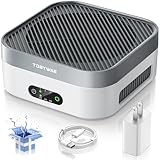
Overview: The TDBYWAE Air Purifier bridges the gap between compact portability and room-scale purification, covering up to 600 square feet. This makes it suitable for bedrooms, offices, and small apartments. Its 3-stage filtration system tackles pollutants comprehensively, while the modern design maintains a small footprint at just 8.4 inches square.
What Makes It Stand Out: The upgraded circulatory system achieves four air changes per hour in 230-square-foot rooms, with whisper-quiet 16-decibel sleep mode operation. Type-C charging universalizes power options, allowing use of phone chargers. The magnetic top cover simplifies filter replacement, while the smart touch panel offers timer settings (2/4/8 hours) and three speed modes for tailored operation.
Value for Money: At $49.98, this unit delivers impressive coverage per dollar. While pricier than personal purifiers, its 600-square-foot capacity rivals units costing $70-100. The Type-C compatibility eliminates proprietary charger costs, and the upgraded filter materials promise longer lifespan. For those needing real room purification without premium pricing, it represents strong mid-range value.
Strengths and Weaknesses: Strengths include extensive coverage, ultra-quiet operation, versatile Type-C charging, convenient timer function, and rapid air circulation. Weaknesses include reduced portability compared to mini units and unspecified battery operation, limiting true cordless mobility. The square design, while neat, may not fit all aesthetic preferences.
Bottom Line: An excellent choice for apartment dwellers and homeowners seeking quiet, effective room purification. The TDBYWAE combines modern charging convenience with substantial coverage, making it ideal for bedrooms and small living spaces where performance matters more than extreme portability.
3. LEVOIT Air Purifiers for Bedroom Home Dorm, AHAM VERIFIED, 3-in-1 Filter Claener with Fragrance Sponge, Portable Filters Smoke, Allergens, Pet Dander, Odor, Dust, Office, Desktop, Core Mini-P, White

Overview: The LEVOIT Core Mini-P in white brings AHAM-certified performance to the portable air purifier market. As the self-proclaimed #1 air purifier brand with 6.5 million units sold globally, LEVOIT positions this as a versatile solution for bedrooms, dorms, and offices. The unit emphasizes reliable filtration with the added benefit of aromatherapy functionality.
What Makes It Stand Out: AHAM verification ensures independently tested performance, safety, and energy efficiency—rare in the compact purifier segment. The integrated fragrance sponge allows users to add essential oils for customized scent delivery. The auto-off display eliminates sleep-disrupting lights, while the genuine filter requirement maintains consistent performance standards. Brand reputation and six-year market leadership provide purchase confidence.
Value for Money: Priced at $39.99, the Core Mini-P commands a modest brand premium over generic alternatives. The AHAM certification and required genuine filters ensure long-term reliability, potentially reducing replacement frequency. While coverage specifications are less detailed than competitors, the brand’s track record justifies the investment for quality-focused buyers seeking proven technology.
Strengths and Weaknesses: Strengths include trusted brand reputation, rigorous AHAM certification, aromatherapy integration, sleep-friendly auto-off display, and global support network. Weaknesses include unspecified coverage area and CADR ratings, proprietary filter dependency increasing long-term costs, and lack of battery power for true portability.
Bottom Line: Ideal for brand-conscious consumers prioritizing certified performance over raw specifications. The LEVOIT Core Mini-P excels in bedroom environments where quiet, verified operation and aromatherapy enhance the user experience, though it’s best suited for smaller rooms despite its brand power.
4. Pure Enrichment PureZone Mini Portable Air Purifier - Cordless True HEPA Filter Cleans Air & Eliminates 99.97% of Dust, Odors, & Allergens Close to You - Cars, School, & Office (White)
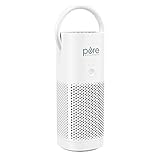
Overview: The Pure Enrichment PureZone Mini in white offers identical functionality to its Starlight Blue counterpart, delivering personal-scale air purification in a neutral colorway. This cordless purifier targets immediate breathing zones within 6 square feet, making it perfect for car commutes, office desks, or bedside personal space. The USB-C charging ensures modern power compatibility.
What Makes It Stand Out: The 12-hour battery life provides exceptional cordless autonomy for all-day use. Its adjustable handle system enables vertical, horizontal, or handle-free placement, adapting to any space constraint. The three-speed fan offers purification flexibility, doubling as a personal cooling fan on high. The 2-stage True HEPA filtration captures 99.97% of airborne particles, while the twist-off base simplifies filter changes. The 5-year warranty remains unmatched in the portable category.
Value for Money: At $33.99, this color variant maintains the same excellent value proposition. The USB-C charging adds modern convenience over older micro-USB alternatives. Personal purifiers with similar battery life and HEPA filtration typically retail for $45-55, making this a cost-effective solution for targeted air cleaning needs without paying for unnecessary coverage.
Strengths and Weaknesses: Strengths include outstanding cordless freedom, versatile positioning, dual fan function, lightweight portability, and industry-leading warranty coverage. Weaknesses are the extremely limited 6-square-foot range and absence of advanced features like timers or air quality sensors. It’s purpose-built for personal use, not environmental purification.
Bottom Line: Highly recommended for mobile professionals, students, and travelers prioritizing clean personal air. The white finish offers universal aesthetic appeal while delivering the same exceptional portability and warranty support. Choose this for immediate vicinity purification rather than whole-room solutions.
5. LEVOIT Air Purifiers for Bedroom Home, AHAM VERIFIDE, 3-in-1 Filter with Fragrance Sponge for Better Sleep, Filters Smoke, Allergies, Pet Dander, Odor, Dust, Office, Portable, Core Mini-P, Black

Overview: The LEVOIT Core Mini-P in black provides the same AHAM-certified performance as its white sibling at a more attractive $35 price point. This portable unit targets bedrooms, offices, and dorms with 3-in-1 filtration and aromatherapy capabilities. As part of the brand claiming 6.5 million units sold, it combines verified performance with budget-friendly positioning.
What Makes It Stand Out: AHAM verification guarantees independent testing for performance and safety—critical differentiators in a crowded market. The fragrance sponge integration allows personalized aromatherapy, while the auto-off display ensures undisturbed sleep. The requirement for genuine LEVOIT filters maintains performance integrity. The black finish offers superior smudge resistance and modern aesthetic appeal compared to lighter colors.
Value for Money: At $35, this represents exceptional value for an AHAM-certified purifier from a leading brand. The $5 savings over the white version doesn’t compromise features. Comparable certified units typically start at $50, making this a smart budget choice. The genuine filter requirement ensures reliability, though it increases long-term operational costs compared to generic alternatives.
Strengths and Weaknesses: Strengths include trusted brand reputation, rigorous independent certification, sleep-friendly operation, aromatherapy feature, and attractive pricing. Weaknesses remain unspecified coverage metrics, proprietary filter dependency, and lack of battery power limiting placement flexibility. The black colorway better conceals dust and wear.
Bottom Line: An outstanding value for quality-conscious buyers seeking certified performance without premium pricing. The black Core Mini-P excels in bedroom and office settings where verified filtration and aromatherapy matter. This color variant offers identical performance with better aesthetics and value, making it the smarter LEVOIT choice.
6. GermGuardian Portable Allergen Air Purifier for Small Spaces with USB Cable, Captures Dust, Pollens, Mold Spores, UV-C Light Helps Reduce Germs, 7” White, AC085

Overview: The GermGuardian AC085 is a USB-powered portable air purifier designed for ultra-small spaces like cars, desks, and bathrooms. This 7-inch white unit combines mechanical filtration with optional UV-C light technology and an aromatherapy feature, making it a versatile travel companion for those seeking basic air cleaning on a budget.
What Makes It Stand Out: The UV-C light technology sets it apart from basic portable filters, offering an extra layer of germ reduction. The integrated aroma pad allows users to add essential oils for customized scent delivery. Its USB compatibility means you can power it from laptops, power banks, or car chargers, eliminating the need for proprietary adapters. The compact, lightweight design truly prioritizes portability without sacrificing core functionality.
Value for Money: At $19.99, this is one of the most affordable air purifiers with UV-C technology available. While it lacks True HEPA certification, the price point makes it an excellent entry-level option for supplemental purification. Comparable portable units without UV-C typically cost $25-30, giving this genuine value for occasional use scenarios.
Strengths and Weaknesses: Pros include exceptional portability, USB versatility, UV-C sanitization, aromatherapy capability, and whisper-quiet operation. Cons are limited filtration efficiency (no True HEPA), small coverage area unspecified but clearly minimal, and basic allergen capture compared to more robust units. The filter type isn’t explicitly stated as HEPA, which may concern allergy sufferers.
Bottom Line: Perfect for travel, cars, or small office spaces where you need supplemental air cleaning. It’s a budget-friendly option that delivers basic purification with bonus features. Don’t expect whole-room performance, but for personal bubble purification, it’s a solid value.
7. ATUL WELLNESS Personal Wearable Air Purifier, Pocket Portable Air Cleaner for Car, Home & Travel, 3rd Gen 50 Million Anions/cm³, Rechargeable PM2.5 Smog & Odor Protection

Overview: The ATUL WELLNESS wearable air purifier takes a radically different approach, creating a personal 3-foot clean-air zone through negative ion emission. This third-generation device generates 50 million anions per cubic centimeter, forming an invisible shield around the wearer without requiring traditional filtration. It’s designed for commuters, travelers, and office workers who want protection in unpredictable environments.
What Makes It Stand Out: The 150-hour battery life is industry-leading, providing nearly a week of continuous use per charge. Its completely filterless design eliminates maintenance costs and hassle forever. The break-away safety clasp on the lanyard shows thoughtful design for daily wear. Emitting 50 million anions/cm³ is notably higher than many competitors, theoretically creating a more effective personal barrier against pollutants.
Value for Money: At $38.99, it’s competitively priced for wearable ionizers. While more expensive than basic portable units, the elimination of filter replacement costs ($15-30 annually for HEPA models) makes it economical long-term. Comparable wearable purifiers with shorter battery life retail for $45-60, positioning this as a smart value proposition.
Strengths and Weaknesses: Pros include extreme portability, silence (no fan), zero maintenance, exceptional battery life, and lightweight comfort. Cons involve the debated effectiveness of ionization technology, lack of HEPA filtration, limited 3-foot coverage, and potential ozone concerns. It won’t clean a room, only your immediate breathing zone.
Bottom Line: Ideal for individuals constantly on the move who want personal protection. The long battery and filterless design are compelling, but understand its limitations. Best as a supplement to home HEPA filtration, not a replacement. A solid choice for targeted personal use.
8. Pure Enrichment PureZone Mini Portable Air Purifier - Cordless True HEPA Filter Cleans Air & Eliminates 99.97% of Dust, Odors, & Allergens Close to You - Cars, School, & Office (Black)
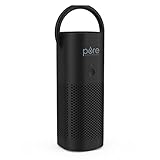
Overview: The Pure Enrichment PureZone Mini delivers True HEPA filtration in a palm-sized cordless package. This black portable unit eliminates 99.97% of particles as small as 0.3 microns through its two-stage filtration system, covering 6 square feet effectively. Weighing under one pound, it’s designed for personal spaces like cars, desks, and travel environments where genuine HEPA performance is non-negotiable.
What Makes It Stand Out: The 5-year manufacturer’s warranty is exceptional for a $34 device, demonstrating brand confidence. USB-C charging provides modern convenience and faster power delivery. The adjustable handle allows vertical, horizontal, or handle-free placement, adapting to any space constraint. Having three fan speeds in a mini purifier is rare, with high speed doubling as a personal cooling fan.
Value for Money: At $33.99 with True HEPA filtration and a 5-year warranty, this represents outstanding value. Most True HEPA purifiers start at $50+, and warranties typically span 1-2 years. The inclusion of a 2-in-1 filter and USB-C cable makes it ready-to-use. When factoring in the warranty and filtration quality, it’s arguably the best price-to-performance ratio in the portable category.
Strengths and Weaknesses: Pros include genuine True HEPA filtration, cordless convenience, versatile placement, modern USB-C charging, and industry-leading warranty. Cons are the 12-hour battery life (shorter than some competitors), limited 6ft² coverage, and filter replacement costs ($15-20 every 6 months). It’s louder than filterless options at higher speeds.
Bottom Line: The best choice for those prioritizing proven HEPA filtration in a portable form. The warranty mitigates risk, and performance justifies the price. Perfect for travel, work, or car use where you need real allergen removal, not just ionization. Highly recommended for allergy sufferers on a budget.
9. Air Purifiers for Bedroom, FULMINARE H13 True HEPA Air Filter, Quiet Air Cleaner With Night Light,Portable Small Air Purifier for Home, Office, Living Room
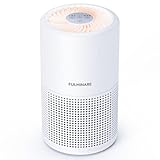
Overview: The FULMINARE H13 True HEPA Air Purifier defies expectations by offering medical-grade filtration for just $24.32. Designed for bedrooms and small rooms up to 215 square feet, this unit features dual-channel technology with 360° air output, refreshing air five times per hour. It doubles as a night light with five timer options, making it particularly suitable for children’s rooms and light sleepers.
What Makes It Stand Out: H13 True HEPA filtration at this price point is virtually unheard of, capturing 99.97% of particles down to 0.3 microns. The five timer settings (2, 4, 8, 10, 12 hours) provide unmatched flexibility for automated operation. Its 24-decibel sleep mode is genuinely whisper-quiet, while the independent night light offers soothing ambiance without forcing purification. The 360° air outlet ensures comprehensive room coverage without blind spots.
Value for Money: This is exceptional value—H13 HEPA purifiers typically cost $60-100. The feature set rivals premium models: timers, night light, high circulation rate, and quiet operation. Even with filter replacements every 3 months ($10-15), first-year costs remain under $80, competing with $150+ competitors. It’s arguably the budget market’s best-kept secret.
Strengths and Weaknesses: Pros include H13 True HEPA filtration, large coverage area, ultra-quiet operation, versatile timers, integrated night light, and 360° output. Cons require filter changes every 3 months (more frequent than average), initial setup requires removing packaging and finding the adapter, and build quality may not match premium brands. The 215 ft² claim may be optimistic for heavy pollution.
Bottom Line: An absolute steal for bedrooms and small rooms. The H13 filter and thoughtful features make it a standout budget option. Perfect for allergy sufferers, parents, and anyone wanting premium performance without the premium price. Just stock up on filters and enjoy remarkably clean air.
10. Conair Portable Small Air Purifier, Rechargeable Corded/Cordless, HEPA Air Filter, Allergy Relief, Dust, Pollen, Odor Control, Bedroom, Dorm Room, Small Room

Overview: The Conair Portable Small Air Purifier leverages the trusted brand’s reputation in a cordless HEPA package. Featuring HEPA 10 filtration combined with a plasma ion generator, this unit targets dust, pollen, and odors in spaces up to 15 square feet. The rechargeable battery provides 22 hours of runtime on low speed, while the slender profile integrates discreetly into any décor.
What Makes It Stand Out: Conair’s brand recognition inspires confidence in support and reliability. The hybrid filtration approach (HEPA 10 + plasma ions) offers dual-action cleaning uncommon in this size category. The whisper-quiet operation at low speed is ideal for bedrooms and offices. Its ultra-slim design is genuinely space-saving, fitting where bulkier units cannot. The option for corded or cordless use adds flexibility.
Value for Money: At $39.22, you’re paying a premium for the Conair name. While HEPA 10 captures 85% of particles (versus True HEPA’s 99.97%), the price exceeds True HEPA alternatives like the PureZone Mini. The plasma ion feature adds value, but not enough to justify the cost gap. Comparable performance can be found for $25-30 from lesser-known brands.
Strengths and Weaknesses: Pros include trusted brand name, excellent 22-hour battery life, hybrid filtration, ultra-quiet operation, and attractive slim design. Cons are HEPA 10 (not True HEPA), very limited 15 sq ft coverage, highest price in category, and lack of advanced features like timers or multiple speeds. Performance doesn’t match the premium cost.
Bottom Line: You’re buying brand assurance more than cutting-edge performance. It’s a decent purifier with great battery life, but overpriced compared to competitors offering True HEPA at lower cost. Best for loyal Conair customers or those prioritizing brand reputation over raw specifications. For value seekers, look elsewhere.
Why Portable Air Purifiers Are Essential for Allergy Travelers
Travel inherently disrupts your controlled home environment, exposing you to a cocktail of allergens your immune system isn’t prepared to handle. Hotel HVAC systems circulate dust mites, pet dander from previous guests, mold spores from humid climates, and pollen that drifts in from local flora. Rental cars harbor years of accumulated particles in their ventilation systems. Even that charming bed and breakfast carries decades of dust in its antique furnishings. A portable air purifier acts as your personal environmental control system, creating a consistent bubble of clean air regardless of your location.
The Hidden Allergens Lurking in Hotel Rooms
Hotel rooms present a unique allergen ecosystem that differs dramatically from your home. The mattress and pillows—despite fresh linens—contain dust mite colonies that thrive in the humid microclimate created by nightly body heat. Carpets trap decades of particles, including pet dander from previous guests, even in “pet-free” rooms. Window air conditioning units often harbor black mold in their condensation trays, actively spraying spores into your breathing zone. The cleaning products housekeeping uses leave behind chemical residues that can irritate sensitive airways. A portable purifier positioned strategically near your sleeping area can reduce these airborne concentrations by up to 99.97%, giving your immune system the break it desperately needs.
How Air Quality Changes When You Travel
Your respiratory system faces a perfect storm when you travel. Airplane cabins recirculate dry, pressurized air with reduced oxygen levels, inflaming nasal passages before you even reach your destination. Climate changes—from humid coastal regions to arid deserts—shock your mucous membranes. Urban destinations expose you to traffic-related particulate matter and pollution your body isn’t accustomed to processing. Even elevation changes affect how allergens behave in the air. Portable purifiers with multi-stage filtration systems address this complexity by adapting to whatever environment you encounter, removing both biological allergens and chemical pollutants.
Understanding the Science Behind Portable Air Purification
Not all portable air purifiers work the same way, and understanding the underlying technology prevents costly mistakes. The most effective units combine multiple filtration methods, each targeting specific types of airborne contaminants. As an allergy traveler, you need to think beyond simple particle removal and consider the complete air quality picture.
HEPA Filtration: The Gold Standard Explained
True HEPA filters must meet strict Department of Energy standards, capturing 99.97% of particles as small as 0.3 microns. This size represents the Most Penetrating Particle Size (MPPS)—the hardest particle size to capture. For allergy travelers, this matters because pollen ranges from 10-100 microns, dust mite debris at 5 microns, and pet dander between 0.5-100 microns. The “True HEPA” designation is crucial; “HEPA-type” or “HEPA-like” filters lack certification and may capture as little as 85% of particles, letting the most irritating allergens slip through. Look for filters with an efficiency rating and serial number that verifies independent laboratory testing.
Activated Carbon: Beyond Particle Filtration
While HEPA captures solid particles, volatile organic compounds (VOCs) from cleaning products, new furniture off-gassing, and vehicle exhaust require different technology. Activated carbon filters use adsorption—not absorption—to trap gas molecules in a matrix of microscopic pores. The activation process creates millions of binding sites; just one gram of activated carbon has a surface area of 3,000 square meters. For travelers, this means protection from that “new car smell” in rentals, formaldehyde in hotel furnishings, and ozone in urban environments. The carbon’s weight matters; heavier carbon filters last longer and remove more pollutants than thin mesh layers.
Ionizers and UV-C: Weighing the Pros and Cons
Some portable units add ionization or UV-C light as supplementary technologies. Ionizers release charged particles that cause allergens to clump together and fall from the air. However, they produce trace amounts of ozone as a byproduct, which can worsen asthma symptoms. UV-C light sterilizes microorganisms but requires sufficient exposure time—often lacking in fast-moving portable units. For allergy travelers, these features should be secondary to robust mechanical filtration. If you choose a unit with ionization, ensure it can be disabled, and never rely on UV-C as your primary filtration method.
Key Features That Define Travel-Friendly Purifiers
The best portable air purifier for home use might be completely impractical for travel. Travel-specific design elements separate genuinely portable units from compact home models that manufacturers market as travel-friendly.
Size and Weight: The True Meaning of Portability
A truly portable purifier should weigh under 3 pounds and occupy less space than a pair of shoes in your luggage. But size isn’t just about packing convenience—smaller units have less filter area, which directly impacts performance and maintenance frequency. The sweet spot for allergy travelers is a unit approximately 8-12 inches tall with a cylindrical or rectangular footprint no larger than a standard travel coffee mug. This size typically provides adequate filter surface area while remaining TSA-friendly and fitting in cup holders, hotel nightstands, or cramped desk spaces.
Power Options: USB, Battery, and International Voltage
Travel power requirements are non-negotiable. The most versatile units operate via USB-C, allowing you to power them from laptop ports, portable battery packs, or international adapters. Battery-operated models offer cord-free convenience for cars, trains, or power-outage situations, but runtime varies dramatically—from 4 to 24 hours depending on fan speed. For international travelers, dual-voltage capability (100-240V) eliminates the need for voltage converters beyond a simple plug adapter. Some advanced models feature pass-through charging, letting you power the unit while simultaneously charging the internal battery.
Noise Levels: Balancing Clean Air and Peaceful Sleep
A purifier that sounds like a jet engine defeats its purpose in a hotel room. Noise is measured in decibels (dB), with whisper-quiet operation around 25 dB and normal conversation at 60 dB. For sleep, aim for units operating below 35 dB on low settings. The noise-to-CADR ratio is crucial—a unit that must run on high to be effective will disrupt sleep, while an efficient low-speed unit can run continuously without disturbance. Some models feature “sleep modes” that dim lights and reduce fan speed automatically, but verify that these modes still provide adequate filtration for your allergy severity.
Decoding CADR and ACH for Travel-Sized Units
Technical specifications can be misleading if you don’t understand what they mean in real-world travel scenarios. Clean Air Delivery Rate (CADR) and Air Changes Per Hour (ACH) are the two most important metrics, but they require context for portable units.
What Clean Air Delivery Rate Means for Small Spaces
CADR measures the volume of filtered air delivered per minute, with separate ratings for dust, pollen, and smoke. For travel, focus on the pollen CADR as it’s most relevant to seasonal allergies. A CADR of 50-100 cubic feet per minute (CFM) suffices for hotel rooms up to 200 square feet—the typical size of standard accommodations. However, manufacturers often test CADR in ideal conditions with new filters; real-world performance drops as filters load with particles. For severe allergies, choose a unit with a CADR rating at least 2/3 of your room’s square footage to maintain performance throughout your trip.
Air Changes Per Hour in Hotel Room and Rental Car Scenarios
ACH indicates how many times the purifier filters the entire room’s air volume in one hour. Allergy sufferers should aim for 4-5 ACH minimum. In a 150 square foot hotel room with 8-foot ceilings (1,200 cubic feet), a unit with 50 CFM delivers 4 ACH (50 × 60 minutes ÷ 1,200 = 2.5—wait, that’s not right. Let me recalculate: 50 CFM × 60 = 3,000 cubic feet per hour. 3,000 ÷ 1,200 = 2.5 ACH. So you’d need about 80 CFM for 4 ACH). This math matters because rental cars present an even smaller volume—typically 100-150 cubic feet—where a low-CADR unit can achieve 10+ ACH, making it highly effective for removing road pollutants and previous passengers’ allergens.
Filtration Deep Dive: What Allergy Travelers Must Know
The filter is the heart of your purifier, and not all filters are created equal. Understanding filter construction, maintenance, and lifecycle costs prevents unpleasant surprises mid-trip.
True HEPA vs. HEPA-Type: A Critical Distinction
The difference between True HEPA and HEPA-type filters isn’t just marketing semantics—it’s a matter of medical-grade protection versus basic dust removal. True HEPA filters use dense, pleated media with specific fiber diameters and spacing that create a tortuous path for particles. This design captures particles through diffusion, interception, and impaction. HEPA-type filters use less dense materials, often electrostatically charged to attract particles. That charge dissipates over weeks, causing efficiency to plummet. For travelers with severe pet allergies or asthma, only True HEPA provides the consistent, certified performance needed to prevent symptom triggers.
Pre-Filters and Their Role in Extending Filter Life
A washable pre-filter is your first line of defense and a traveler’s best friend. These mesh screens capture large particles like hair and dust, preventing them from clogging the expensive HEPA filter. In travel environments with high particle loads, a pre-filter can extend HEPA life by 3-6 months. Look for units with easily accessible pre-filters that you can rinse in a hotel sink and dry overnight. Some advanced models use electrostatic pre-filters that maintain effectiveness after washing, while basic foam versions degrade with each cleaning. This feature alone can save you $50-100 in premature filter replacements annually.
Replacement Filter Costs and Availability
That budget-friendly purifier becomes expensive if replacement filters cost half the unit’s price and are only available from obscure overseas suppliers. Before purchasing, verify filter availability from major retailers or the manufacturer’s domestic warehouse. Calculate the annual filter cost based on typical travel usage—about 8 hours daily in hotel rooms. Some units require filter replacement every 3 months with heavy use, while others last 12-18 months. Proprietary filter designs lock you into expensive replacements, whereas units using standard filter sizes offer third-party alternatives. For extended international trips, pack a spare filter; humidity and pollution in tropical or urban destinations can saturate filters faster than expected.
Design Considerations for Life on the Road
How a purifier is built determines how well it withstands the rigors of travel and integrates into various environments. Durability, stability, and versatility separate travel-worthy designs from stationary home units.
Car-Friendly Features for Road Trip Warriors
For road trips, your purifier must handle vibrations, temperature fluctuations, and limited power options. Look for units with non-slip bases that grip dashboard or console surfaces without scratching. Auto shut-off features prevent battery drain if you forget to unplug it. The power cord should be long enough to reach from the 12V outlet without creating a driving hazard. Some car-specific models include air quality sensors that automatically adjust fan speed when they detect exhaust fumes or pollen entering through ventilation systems. The ideal car purifier also functions as a white noise generator, masking traffic sounds for sleeping passengers.
Airplane and Public Transit Considerations
While you can’t purify an entire airplane cabin, personal zone purifiers can create a cleaner microenvironment around your seat. TSA allows most portable purifiers in carry-on luggage, but units with lithium batteries must stay in the cabin (not checked bags). Battery capacity matters—aircraft USB ports often provide limited power, so a unit that runs 8+ hours on battery is essential for long-haul flights. The design should be stable on tray tables and not obstruct the passenger behind you. Noise becomes critical in the confined cabin space; sub-30 dB operation ensures you won’t annoy seatmates while protecting yourself from recirculated germs and allergens.
Hotel Room Placement for Maximum Efficiency
Where you place your purifier dramatically affects performance. The unit should be 3-5 feet from your head while sleeping, positioned to create a clean air zone around the bed. Avoid placing it directly against walls or curtains, which restrict intake airflow. Elevate the unit on a nightstand or desk rather than the floor, where dust concentrations are highest. For maximum effectiveness, run the purifier on high for 30 minutes upon arrival to quickly reduce allergen levels, then switch to a quieter low setting for continuous overnight operation. In rooms with obvious mold or odor issues, position the unit near the source but not so close that it stirs up settled particles.
Smart Features: When Technology Helps vs. Hinders
Modern purifiers integrate app connectivity and sensors, but these features add complexity and cost. Determine which smart functions genuinely benefit travelers versus those that create unnecessary hassle.
App Connectivity and Real-Time Air Quality Monitoring
Bluetooth or Wi-Fi connectivity lets you monitor air quality from your phone, but consider the practical value. In a hotel room, you’re rarely far enough from the unit to need remote control. However, air quality history can reveal patterns—like how opening your hotel window at 7 AM spikes pollen counts, or how the in-room AC kicks up dust when it cycles on. Some apps provide local outdoor air quality data, helping you decide whether to keep windows open or sealed. The downside: apps require permissions and updates that may be problematic on limited travel Wi-Fi, and they consume phone battery. For most travelers, a simple color-coded LED air quality indicator provides sufficient information without digital overhead.
Automatic Sensors and Adjustable Fan Speeds
Particle sensors that auto-adjust fan speed sound ideal, but their sensitivity varies widely. Cheaper sensors may not detect smaller allergen particles, only responding to visible dust or smoke. High-quality laser sensors detect particles down to 0.3 microns, accurately responding to pollen and dander. The key is adjustable sensitivity—being able to set the unit to react aggressively to any particle increase ensures proactive allergen removal. However, overly sensitive sensors in auto mode can cause frequent speed changes that disturb sleep. The best implementation pairs a moderate auto mode with a quiet, consistent low-speed manual option for nighttime use.
Budgeting for Your Travel Air Purification System
Cost considerations extend beyond the initial purchase price. A comprehensive budget analysis prevents sticker shock and helps you invest wisely in your respiratory health.
Initial Investment vs. Long-Term Filter Costs
Entry-level portable purifiers start around $50, while premium models exceed $300. The price difference reflects filter quality, motor durability, and certification standards. However, a $100 unit requiring $40 filters every 3 months costs $260 in the first year, while a $200 unit with $30 annual filter costs totals $230. Over three years, the “expensive” unit becomes cheaper. Factor in your travel frequency—occasional vacationers can opt for longer-lasting filters, while weekly business travelers need durable motors and readily available replacements. Also consider the cost of allergy medications and doctor visits prevented by consistent clean air; a quality purifier often pays for itself within a single allergy season.
Warranty and Customer Support for Travelers
Standard warranties cover defects but often exclude damage from travel-related issues like power surges or physical impacts. Look for brands offering travel-specific warranties or accident protection plans. Customer support accessibility matters when you’re in a different time zone—24/7 chat support can be invaluable if your unit malfunctions mid-trip. Some manufacturers provide loaner programs, shipping a replacement unit to your hotel if yours fails under warranty. Read the fine print: warranties requiring you to ship the unit back at your expense may not be practical when you’re moving between locations weekly.
Common Mistakes Allergy Travelers Make
Even well-intentioned travelers sabotage their air quality efforts through avoidable errors. Recognizing these pitfalls saves money, frustration, and sleepless nights.
Overlooking Filter Replacement Indicators
That little filter change light isn’t a suggestion—it’s a critical warning. Running a clogged filter not only reduces efficiency but can become a breeding ground for mold and bacteria, actively making your air worse. Many travelers ignore indicators to save money, but a saturated filter can release trapped allergens back into the air when the unit is moved or jostled during travel. Set calendar reminders based on your usage pattern rather than waiting for the indicator. For a 2-week trip, replace the filter before departure if it’s more than 60% through its rated lifespan. The $20-40 filter cost is negligible compared to ruining a vacation.
Ignoring Room Size and CADR Mismatch
Bringing a purifier rated for 100 square feet into a 400-square-foot suite is like bringing a pocket umbrella to a monsoon. The unit will run constantly on high, never achieving meaningful allergen reduction, while burning through filter life and making excessive noise. Conversely, an oversized unit for a rental car creates unnecessary airflow that stirs up settled particles. Always match the purifier’s CADR to your typical accommodation size. If you stay in various room types, choose a unit with adjustable output or buy two different-sized models rather than compromising with one inadequate unit.
Integrating Portable Purifiers Into Your Travel Routine
Success with portable air purification comes from systematic integration into your travel habits, not just turning it on and hoping for the best.
Pre-Trip Preparation and Testing Protocol
Never travel with a new purifier straight from the box. Run it for 48 hours in your bedroom before your trip to ensure quiet operation and detect any manufacturing defects. Pack it in your carry-on with the filter removed to prevent damage, and place the filter in a sealed plastic bag. Download any necessary apps and register the warranty before departure. Create a packing checklist: unit, power cord, international adapter, spare filter, cleaning brush, and a small plastic bag for storing the unit during hotel housekeeping. Test all power sources—USB, battery, and wall adapter—to confirm they work with your travel gear.
On-the-Road Maintenance and Troubleshooting
Hotel environments are harsh on purifiers. Dust loads are often higher than at home, clogging pre-filters quickly. Rinse the pre-filter every 3-4 days during extended stays. If the unit develops an unusual odor, it may have absorbed moisture and grown mold—remove the filter and let everything dry completely in sunlight if possible. For unexpected power issues, carry a portable battery pack with USB output as backup. If the unit becomes unusually noisy, check for debris in the fan intake; a hotel’s vacuum cleaner hose can often dislodge obstructions. Keep the original packaging or a padded bag for transport between locations to protect internal components from vibration damage.
Frequently Asked Questions
Can I use a portable air purifier on an airplane?
Yes, most airlines permit personal air purifiers, but only battery-powered or USB-operated units are practical since most seats lack standard AC outlets. The unit must be small enough to fit on your tray table without obstructing other passengers, and noise levels below 30 dB are essential. Check with your specific airline before flying, as policies vary.
How long do filters typically last with travel use?
With average travel use of 8 hours daily in hotel rooms, True HEPA filters last 6-12 months, while activated carbon filters need replacement every 3-6 months. However, heavy pollution destinations or high pollen areas can reduce lifespan by 50%. Always pack a spare filter for trips longer than two weeks.
Will a portable unit work in a large hotel suite?
Standard portable purifiers are designed for rooms up to 200 square feet. For suites exceeding 300 square feet, you’ll need either a higher-CADR unit (80+ CFM) or multiple smaller units placed strategically. Running a small unit on high in a large space is ineffective and wastes filter life.
Are battery-powered models worth the extra cost?
Battery models offer crucial flexibility for airplanes, power outages, and locations without reliable electricity. For travelers visiting developing regions or taking long-haul flights, the 30-50% price premium is justified. For those staying exclusively in modern hotels, a USB-powered unit with a portable battery pack serves as a more economical alternative.
Do travel air purifiers help with cigarette smoke?
HEPA filters capture smoke particles but not the gaseous odor components. For smoke, you need substantial activated carbon—at least 0.5 pounds of carbon. Most compact travel purifiers lack sufficient carbon to handle heavy smoke, though they help with light exposure. For travelers sensitive to smoke, prioritize carbon weight over HEPA specifications.
Can I pack my purifier in checked luggage?
While allowed, it’s not recommended. The filter can become damaged under pressure changes and rough handling, and lithium battery models are prohibited in checked bags. Always carry your purifier in your cabin bag, remove the filter to prevent crushing, and protect the unit with clothing or bubble wrap.
What’s the minimum CADR needed for hotel rooms?
For standard 150-200 square foot hotel rooms, a pollen CADR of 50-70 CFM provides adequate 4-5 air changes per hour. Severe allergy sufferers should target 80+ CFM to maintain performance as filters load. Ignore manufacturer room-size claims and focus on the actual CADR numbers.
How do I clean my portable purifier while traveling?
Wipe the exterior daily with a damp cloth to remove settled dust. Rinse washable pre-filters every 3-4 days in hotel sinks and air-dry completely before reinstalling. Never use hotel cleaning products on filters, as residues can off-gas when heated. Use compressed air cans (available at office supply stores) to clean sensor ports and fan grilles weekly.
Will TSA allow my air purifier in carry-on?
Yes, TSA considers portable air purifiers electronic devices. Remove it from your bag for separate screening like a laptop. Units with lithium batteries under 100Wh are permitted without special documentation. Arrive early, as agents unfamiliar with the device may require additional inspection.
Are ozone-generating purifiers safe for allergy sufferers?
No. Ozone irritates respiratory passages and can trigger asthma attacks. While some units produce “safe” trace amounts, there’s no clinical benefit for allergies that outweighs the risks. Stick with mechanical filtration (HEPA + carbon) and avoid any unit that lists ozone as a feature or byproduct, regardless of marketing claims about its cleaning power.'