We’ve all felt that knot in our stomach when the baggage carousel stops spinning and our suitcase is nowhere to be found. In 2023, airlines mishandled over 26 million bags globally—and while most eventually find their way home, the stress and disruption can derail an entire trip. Enter portable Bluetooth trackers: the pocket-sized insurance policy that’s revolutionizing how savvy travelers protect their belongings.
These clever devices have evolved far beyond simple key finders. Today’s luggage-specific trackers leverage crowd-sourced networks, precision finding technologies, and robust international compatibility to create a safety net that works whether your bag is hiding in the overhead bin or taking an unscheduled detour to Dubai. But not all trackers are created equal, and choosing the right one requires understanding a complex web of technical specifications, privacy implications, and real-world performance factors. This guide cuts through the marketing hype to arm you with everything you need to make an informed decision.
Top 10 Portable Bluetooth Trackers for Luggage
Detailed Product Reviews
1. Air Tracker Tag for Android 4 Pack(NOT iOS or Huawei), Bluetooth Tracker Android Item Finder Smart Tracker Luggage Tags, GPS Locator Device for Keys, Wallet,Bike, No Monthly Fee Smart Tag
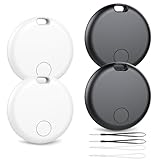
Overview: The Air Tracker Tag 4-pack delivers Android-exclusive item tracking through Google’s certified ecosystem. Designed specifically for Android devices (excluding Huawei), these trackers leverage the “Find My Device” app to help locate keys, wallets, bikes, and luggage within a 40-meter Bluetooth range. The system provides stable performance even in areas with weaker signals, making it suitable for varied environments.
What Makes It Stand Out: Google certification ensures encrypted, anonymized communication with no location history stored on the device itself. The IP67 rating offers superior water and dust protection compared to most competitors. The sharing mode allows family members to help locate items, and instant alerts notify you the moment an item disconnects. The 40-meter range exceeds standard Bluetooth tracker distances, providing more leeway for locating items in larger spaces.
Value for Money: At $39.99 for four trackers ($10 each), this sits in the mid-range. While pricier than budget alternatives, the Google certification, IP67 durability, and advanced sharing features justify the premium. Comparable certified trackers often cost 30-40% more individually. The removable CR2032 battery with one-year lifespan and advance low-battery alerts add to the long-term value proposition.
Strengths and Weaknesses: Strengths include robust privacy protection, excellent water resistance, extended range, and multi-user sharing capabilities. The replaceable battery lasts up to one year with low-battery alerts. Weaknesses: Android-only compatibility excludes iOS and Huawei users, and the one-year battery life falls short of some competitors offering two years. The initial setup requires specific app download and the product cannot use Apple’s network.
Bottom Line: A reliable, secure choice for Android users prioritizing privacy and durability. The four-pack covers multiple valuables, making it ideal for families or frequent travelers. Despite the Android exclusivity and average battery life, the certified ecosystem and IP67 rating make it a trustworthy investment for protecting everyday essentials.
2. Air Tags for Android,Air Tags-4 Pack Android,Android Tracker Tags,2 Year Battery Life,Google Find Trackers for Google’S Find Hub App,IP65 Waterproof Luggage Tracker Android for Keys,Wallets,Suitcases

Overview: This budget-friendly 4-pack brings Android tracking to the masses through Google’s Find Hub app. These trackers prioritize essential functionality—loud alerts and extended battery life—while maintaining compatibility with Android’s native finding network for keys, wallets, and luggage. The global cloud positioning leverages Google’s infrastructure for reliable location services.
What Makes It Stand Out: The standout feature is the exceptional two-year battery life, nearly doubling industry standards. The 85dB speaker delivers one of the loudest alerts available, cutting through ambient noise effectively. At IP65 waterproof rating, it handles splashes and rain adequately for daily use. Data encryption through Google’s technology ensures location information remains protected.
Value for Money: At $25.98 for four ($6.50 per tag), this represents exceptional value. It’s among the most affordable certified Android trackers available, undercutting premium brands by 50% or more while delivering core tracking capabilities and superior battery longevity. No monthly fees and the extended battery life reduce long-term ownership costs significantly.
Strengths and Weaknesses: Strengths include unbeatable price, two-year battery life, loud 85dB alert, and encrypted location data through Google. The trackers are lightweight and practical for everyday items. Weaknesses: IP65 offers less protection than IP67 competitors, and the “Find Hub” branding suggests possible third-party app dependency rather than direct Google integration. Feature set is more basic, lacking advanced sharing modes and detailed durability specs.
Bottom Line: Perfect for cost-conscious Android users wanting reliable tracking without frills. The two-year battery life minimizes maintenance, and the loud speaker aids retrieval. While not the most rugged or feature-rich option, the price-to-performance ratio is outstanding for basic item security across multiple belongings.
3. 2025 New Air Tracker Tag - 1 Pack, Compatible with Find My (iOS Only), Item Locator Worldwide Tracking for Keys, Wallet, Luggage, Pets (Pink), Portable Locator Device
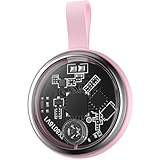
Overview: Marketed as a 2025 upgraded model, this single-pack tracker targets iOS users through Apple’s Find My network. The compact pink device offers basic Bluetooth tracking for keys, wallets, luggage, and pets within Apple’s encrypted ecosystem at an entry-level price point. The manual provides illustrated instructions for straightforward pairing.
What Makes It Stand Out: The aggressive $9.99 pricing makes this one of the cheapest iOS-compatible trackers available. The 2025 branding suggests newer chip technology, though specifics remain vague. Integration with Siri voice commands adds convenience, and the 80-100 decibel alert is sufficiently loud for indoor retrieval. Worldwide tracking works through Apple’s extensive device network when out of Bluetooth range.
Value for Money: At under $10 for a single tracker, the value proposition is strong for iOS users curious about item tracking without committing to premium $30+ Apple AirTags. It provides core Find My functionality at one-third the cost, making it accessible for protecting less expensive items. The low investment risk allows trying the ecosystem before upgrading.
Strengths and Weaknesses: Strengths include unbeatable price, Siri integration, loud alert, and seamless iOS compatibility. The minimalist design suits keychains without adding bulk. Weaknesses: Unknown brand reliability, lack of detailed specifications, no mention of water resistance rating, and limited to iOS only. No multi-pack options for broader coverage. Battery life details are absent from marketing materials.
Bottom Line: An affordable entry point into Apple’s Find My ecosystem. While it lacks the polish and proven track record of premium alternatives, the price makes it low-risk for tracking everyday items. Best suited for iOS users wanting basic functionality without financial commitment, though durability concerns warrant careful handling.
4. 2025 New Air Tracker Tag-1 Pack Compatible with Find My (iOS Only), Bluetooth Tracker (White), Portable Locator Device

Overview: Identical in function to its pink counterpart, this white 2025-model tracker provides iOS-exclusive tracking through Apple’s Find My network. The single-pack device targets users seeking a neutral color option for attaching to keys, wallets, or luggage while maintaining the same budget-friendly approach and advanced chip technology claims.
What Makes It Stand Out: Beyond color choice, this tracker shares the same ultra-low $9.99 price point and 2025 chip technology claims. The white finish offers better discretion on light-colored items and professional accessories. Siri voice activation and 80-100 decibel alerts remain key usability features, while the Bluetooth range covers typical indoor and outdoor scenarios.
Value for Money: The $9.99 price delivers identical value to the pink version—access to Apple’s encrypted tracking network at a fraction of AirTag cost. For users preferring white accessories, this eliminates the need for third-party covers while providing the same core functionality. The single-unit format allows testing before bulk purchases.
Strengths and Weaknesses: Strengths mirror the pink model: exceptional price, iOS integration, loud alerts, and compact design. The white colorway blends better with Apple aesthetics and business environments. Weaknesses include absent water resistance rating, unspecified battery life, unknown manufacturer credibility, and lack of premium features like Precision Finding. Single-unit packaging limits bulk savings and family sharing options.
Bottom Line: Choose based on color preference alone—functionality is identical to the pink variant. This remains an excellent low-cost introduction to Find My tracking for iOS users. The white finish offers subtle integration with Apple devices, making it ideal for professional settings where visual discretion matters alongside basic protection.
5. Air Tracker Tags.Smart Tag Item Finder Works with Apple Find My (iOS Only) App,Keys Finder and Item Locator for Luggage, Backpack, Suitcases, Replaceable Battery (Blue)

Overview: This ultra-budget tracker undercuts the market at $5.99 while maintaining iOS compatibility through Apple’s Find My app. The blue single-pack device focuses on core tracking fundamentals—Bluetooth positioning, replaceable battery, and privacy encryption—for keys, bags, and luggage. The setup process takes under 10 seconds after activation.
What Makes It Stand Out: The $5.99 price is the lowest among iOS-compatible trackers, making it nearly disposable. It still includes a replaceable CR2032 battery with one-year life, privacy-focused encryption, and a compact, stylish design. The setup process is straightforward with the native Find My app, and the blue color adds visual distinctiveness for quick identification.
Value for Money: Unbeatable value proposition—this costs 80% less than an Apple AirTag while providing fundamental tracking. It’s ideal for users wanting to test the ecosystem or protect low-value items where premium features aren’t justified. The replaceable battery eliminates subscription fees, and the low price enables buying multiple units for different items without significant investment.
Strengths and Weaknesses: Strengths: rock-bottom price, genuine iOS integration, replaceable battery, privacy encryption, and lightweight design. The anti-loss alarm triggers when items leave preset safe ranges. Weaknesses: Extremely limited specifications disclosed, unknown durability, no water resistance rating mentioned, potentially weaker Bluetooth range, and questionable long-term reliability from an unknown brand. The design prioritizes cost over premium materials.
Bottom Line: A no-brainer for ultra-budget iOS tracking. While you sacrifice premium build quality and advanced features, the price makes this accessible for everyone. Perfect for children’s backpacks, secondary keys, or as a trial before investing in higher-end trackers. Manage expectations around durability and performance, but the core functionality works as advertised.
6. ATUVOS Air Tracker Tags-4 Pack, Bluetooth Luggage Tracker Works with Apple Find My APP (iOS Only, Not for Android), Keys Finder and Item Locator for Luggage, Backpack, Suitcases, Replaceable Battery

Overview:
The ATUVOS Air Tracker Tags offer a four-pack solution for Apple users seeking to keep tabs on luggage, backpacks, and keys. These Bluetooth-enabled devices integrate seamlessly with Apple’s Find My ecosystem, providing both proximity tracking via a built-in speaker and broader location services through Apple’s vast device network. Each tag features a replaceable battery and operates exclusively with iOS devices, positioning itself as a direct alternative to Apple’s own AirTag at a more accessible price point.
What Makes It Stand Out:
The standout feature is the impressive 80-100 decibel speaker—louder than many competitors—ensuring you’ll hear it even buried in luggage. The real-time location tracking works intelligently: under 200 feet, you can trigger a sound; beyond that, the Find My network takes over with map navigation. Privacy-conscious users will appreciate the encrypted location data that remains accessible only to you, not even the manufacturer. The setup process is remarkably streamlined through the native Find My app, eliminating the need for third-party applications.
Value for Money:
At $25.49 for four units (roughly $6.37 each), these trackers significantly undercut Apple’s AirTag while delivering comparable core functionality. The lack of subscription fees enhances long-term value. However, the iOS-only limitation narrows its addressable market, making it a poor choice for mixed-device households.
Strengths and Weaknesses:
Strengths include the exceptionally loud speaker, robust privacy protections, seamless Apple integration, and zero ongoing costs. Weaknesses are the exclusive iOS compatibility (no Android support) and the inherent 200-foot Bluetooth limitation for direct ringing.
Bottom Line:
For dedicated Apple ecosystem users, the ATUVOS four-pack represents a cost-effective, privacy-focused tracking solution that excels at finding misplaced items both nearby and far away.
7. Tracker Tags-4 Pack, Bluetooth Tracker Works with Apple Find My APP (iOS Only), Keys Finder and Item Locator for Luggage, Backpack, Suitcases, Replaceable Battery, IP67 Waterproof weTag pro

Overview:
The weTag pro Tracker Tags deliver a four-pack of Bluetooth item locators designed exclusively for Apple’s Find My network. These compact discs help secure your valuables—keys, luggage, backpacks—through a global network of iOS devices. With IP67 waterproofing and a two-year battery life, they’re built for real-world durability. The tags work within a 200-foot Bluetooth range for direct location and leverage Apple’s ecosystem for broader tracking, all without subscription fees.
What Makes It Stand Out:
The IP67 water and dust resistance rating sets these apart, offering genuine protection against rain and splashes—ideal for travel and outdoor use. The two-year battery lifespan outlasts many competitors, reducing maintenance hassle. Unique “Left Behind Remind” and Lost Mode features provide proactive alerts when you stray from your items and enable Good Samaritan returns by sharing contact info with nearby Apple devices. At just 9 grams, the smooth-surfaced design won’t scratch belongings.
Value for Money:
Priced at $16.71 for four ($4.18 per tag), this is among the most affordable Find My-compatible options available. The extended battery life and waterproofing add significant value, though the iOS 18 requirement may exclude users with older devices.
Strengths and Weaknesses:
Strengths include impressive durability (IP67), exceptional battery longevity, lightweight design, and proactive left-behind notifications. Weaknesses are the iOS-only limitation and mandatory iOS 18 update for full functionality.
Bottom Line:
The weTag pro offers unbeatable durability and battery life for budget-conscious Apple users who need reliable tracking for travel and daily essentials.
8. Air Tracker Tag-6 Pack, Smart Bluetooth Tracker Work with Apple Find My(iOS Only), Luggage Tracker Tag for Key, Luggage, Backpack, Suitcase, Replaceable Battery, weTag, Black

Overview:
This six-pack of weTag Air Tracker Tags provides comprehensive coverage for Apple users looking to secure multiple items simultaneously. These black Bluetooth trackers integrate with the Find My app to locate keys, luggage, backpacks, and more. Each tag features a 100dB speaker for audible locating and weighs a mere 8 grams, making them unobtrusive attachments to any valuable.
What Makes It Stand Out:
The six-pack configuration delivers the best per-unit value in the category. The ultra-compact dimensions (3.7cm × 3.7cm × 0.85cm) make these trackers exceptionally discreet. The 100-decibel speaker ensures you’ll find items even when hidden deep in couch cushions. The left-behind notification system proactively alerts you when items are accidentally abandoned, preventing losses before they happen.
Value for Money:
At $21.99 for six ($3.67 per tag), this offers the lowest cost-per-tracker among Find My-compatible devices. While the one-year battery life is shorter than some competitors, the sheer quantity and quality make it an excellent bulk purchase.
Strengths and Weaknesses:
Strengths include outstanding bulk pricing, powerful speaker, featherlight weight, compact form factor, and proactive alerts. Weaknesses are the iOS exclusivity and shorter battery lifespan compared to premium alternatives.
Bottom Line:
For Apple users needing to track numerous items, this six-pack delivers unmatched value and performance, making it the smart choice for families or frequent travelers.
9. 4 Pack Key Finder Tracker Tag, Item Locator Works with Apple (iOS only) Finder for Bag Luggage Wallet (White)
Overview:
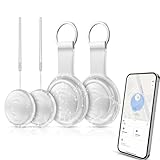
This four-pack of white Key Finder Tracker Tags targets bargain-hunting Apple users seeking basic tracking functionality for bags, luggage, and wallets. These Find My-compatible discs offer standard Bluetooth locating within 200 feet and map-based tracking beyond that through Apple’s network. The package includes practical accessories and features a miniaturized design with IP66 water resistance.
What Makes It Stand Out:
The inclusion of two silicone lanyards and two protective cases adds immediate utility without extra purchases—a rare value-add in this price bracket. The incredibly compact 32×5mm size makes these tags virtually invisible when attached to items. Battery life of 12-24 months matches premium competitors, while the IP66 rating provides adequate splash protection for everyday use.
Value for Money:
At $9.99 for four ($2.50 per tag), this is the most affordable Find My-compatible option available. The bundled accessories make the value proposition even more compelling, though build quality may reflect the budget pricing.
Strengths and Weaknesses:
Strengths include unbeatable price, included accessories, decent battery life, compact size, and water resistance. Weaknesses are the unknown brand reputation, basic feature set, and iOS-only compatibility.
Bottom Line:
If you’re an Apple user seeking the absolute cheapest entry into item tracking with useful accessories included, this four-pack is impossible to beat for basic location needs.
10. 6-Pack Bluetooth Tracker, Portable Location Tracker for Key,Luggage,Wallet,Car Keys,Remotes. Key Finder Locator with Sound. Compatible with Android and iOS

Overview:
This six-pack of Bluetooth trackers breaks the iOS-only mold by supporting both Android 10.0+ and iOS 12.0+, making it ideal for mixed-device households. These versatile discs locate keys, luggage, wallets, and remotes through a proprietary app, offering two-way alarms and even a remote selfie function. The system records the last known Bluetooth disconnection point to help narrow search areas.
What Makes It Stand Out:
Cross-platform compatibility is the headline feature—virtually no other budget tracker works seamlessly across Android and iOS. The two-way alarm system alerts both your phone and the tag when separated, providing double security. The selfie remote function is a quirky but useful bonus for group photos. Disconnect positioning automatically logs where you left items.
Value for Money:
At $15.99 for six ($2.67 per tag), this offers tremendous value for cross-platform users. While it lacks Apple’s Find My network reliability, the universal compatibility and unique features justify the price.
Strengths and Weaknesses:
Strengths include universal device support, innovative two-way alarms, selfie functionality, automatic disconnect logging, and exceptional affordability. Weaknesses are the reliance on a less robust proprietary app and absence of the vast Find My network.
Bottom Line:
For households with both Android and iOS devices, this six-pack provides unmatched versatility and value, delivering core tracking features without ecosystem lock-in.
What Are Portable Bluetooth Trackers and How Do They Work?
At their core, portable Bluetooth trackers are small, battery-powered devices that broadcast a secure signal detectable by nearby smartphones and tablets. They don’t actually connect to GPS satellites directly—instead, they rely on Bluetooth Low Energy (BLE) technology to ping their location to your phone when within range, typically 30-400 feet depending on the model and environment.
The real magic happens when your luggage leaves your immediate vicinity. Once out of range, the tracker enters a “lost” mode and anonymously communicates its location through a network of other users’ devices. If another person running the same tracking app passes within range of your bag, their phone securely relays that location to you without either party knowing the other’s identity. This crowd-sourced approach transforms every compatible smartphone in the world into a potential finder for your lost belongings.
Why Your Luggage Needs a Bluetooth Tracker in 2024
The travel landscape has fundamentally changed. With increased flight connections, tighter layover windows, and staffing challenges at airports worldwide, the margin for baggage handling errors has never been wider. A quality Bluetooth tracker transforms you from a passive victim into an active participant in locating your luggage.
Beyond airline mishaps, these devices solve everyday travel headaches. They’ll pinpoint which hotel room you left your suitcase in, confirm your bag made it into the taxi trunk, or help you identify your generic black roller bag among dozens on the luggage cart. The psychological benefit alone—knowing you can verify your bag’s location at any moment—reduces travel anxiety significantly. For families managing multiple bags or business travelers with irreplaceable materials, this layer of visibility isn’t just convenient; it’s essential risk management.
Key Features to Evaluate Before Buying
Range and Connectivity Standards
Bluetooth tracker specifications often boast impressive range figures, but these numbers require context. Manufacturers typically test range in open-field conditions with perfect line-of-sight. Reality inside an airport or urban environment looks dramatically different, with walls, metal structures, and human bodies all attenuating the signal.
Look for trackers supporting Bluetooth 5.0 or newer, which offers improved range and stability over older standards. Some advanced models incorporate Ultra-Wideband (UWB) technology for pinpoint directional finding when you’re very close to the item. For luggage specifically, prioritize trackers with demonstrated performance in high-interference environments—airports are essentially Faraday cages of metal and electronics.
Battery Life: What to Realistically Expect
Battery specifications range from 6 months to over 3 years, but these estimates assume specific usage patterns. A tracker pinging location every few minutes in a busy airport will drain faster than one sitting quietly in your closet. Temperature extremes in cargo holds can also impact battery performance.
Consider your travel frequency. If you’re a weekly road warrior, a rechargeable model with 6-month battery life might serve you better than a replaceable battery unit that dies unexpectedly. For occasional vacationers, a long-life replaceable battery tracker offers set-it-and-forget-it convenience. Always verify the battery type—standard coin cells are easier to replace in a pinch than proprietary batteries.
Precision Finding Technologies
Basic trackers tell you “you’re getting warmer.” Advanced models with UWB or augmented reality features can literally point you in the exact direction and display distance down to the inch. This matters immensely when your bag is buried in a pile at baggage claim or stashed in a crowded overhead bin.
The effectiveness of precision finding depends entirely on your smartphone’s compatibility. UWB requires specific hardware found only in newer flagship phones. Without a compatible device, you’ll pay for features you can’t use. Evaluate whether your current phone supports these advanced protocols before investing in premium tracking capabilities.
Water and Impact Resistance Ratings
Your luggage tracker will face temperature swings, rough handling, and potential moisture exposure. The IP (Ingress Protection) rating system provides objective standards. IP67 means dust-tight and waterproof against temporary immersion—sufficient for most luggage scenarios. IP68 offers protection against continuous immersion, overkill but welcome for peace of mind.
Drop ratings are less standardized but equally important. Look for trackers tested to withstand impacts from at least 1.5 meters—the height of a typical baggage handler drop. The device’s attachment mechanism must be equally robust; a durable tracker that breaks free from its mount helps no one.
Understanding Bluetooth Tracker Range Limitations
The theoretical 400-foot range of modern Bluetooth trackers collapses in real-world conditions. Inside an airport terminal, expect 30-100 feet of reliable connectivity. Metal airplane cargo holds effectively block Bluetooth signals entirely, which is why crowd-sourced networks become crucial.
Understanding these limitations shapes how you use your tracker. You won’t track your bag in real-time as it flies across the Atlantic. Instead, you’ll receive location updates when the plane lands and baggage handlers move your luggage within range of someone’s phone at the destination airport. This is still invaluable—it tells you your bag arrived in the correct city before you even reach baggage claim.
The Role of Crowd-Sourced Networks in Recovery
A tracker’s network size directly impacts its effectiveness for lost luggage recovery. A network with hundreds of millions of users dramatically outperforms one with a few million. Dense urban areas and major travel hubs typically have excellent network coverage, while remote destinations may offer sparse protection.
Research the user density in your frequent destinations. Some manufacturers publish network coverage maps showing approximate user density by region. For international travelers, verify the network operates globally without geographic restrictions. A brilliant tracker is useless if its app is banned or unsupported in your destination country.
Battery Considerations: Replaceable vs. Rechargeable
The replaceable versus rechargeable debate hinges on your travel patterns and technical comfort. Replaceable battery trackers, typically using CR2032 coin cells, offer 1-3 years of life and instant renewal with a simple swap. You can carry spare batteries and never face downtime. However, opening the device exposes it to potential water seal damage, and finding the correct battery while traveling internationally can prove challenging.
Rechargeable models eliminate battery hunting but introduce charging logistics. A dead tracker helps no one, and remembering to charge yet another device adds mental load. Some premium trackers offer wireless charging or extended battery life measured in years, not months. For luggage, prioritize models with low-battery notifications that give you weeks, not hours, of warning.
Design Factors That Matter for Luggage
Size and Weight Considerations
Every ounce counts with modern baggage weight restrictions. A tracker adding significant weight or bulk could cost you in overweight fees or limit packing space. Optimal luggage trackers are thin enough to slip into a side pocket and light enough that you’ll forget they’re there—typically under 10 grams and less than 5mm thick.
Shape matters too. Flat, credit-card-style trackers slide easily into luggage tags or interior pockets. Puck-shaped designs may roll around or create pressure points. Consider where you’ll place the tracker: inside a pocket offers protection but may reduce signal strength, while external mounting maximizes range but exposes the device to damage.
Attachment Mechanisms
Trackers attach via adhesive, keyring loops, or integrated clips. For luggage, adhesive mounting is risky—baggage handling vibrations and temperature changes can weaken bonds. Keyring loops offer versatility but add bulk. The most secure option is a tracker designed to slip into a dedicated pocket or sleeve integrated into modern luggage designs.
Some travelers hide trackers deep inside their bag for security, while others mount them externally for better signal. The best compromise is a semi-concealed location like an interior side pocket near the bag’s exterior shell. This protects the device while allowing adequate signal transmission.
Durability for Travel Conditions
Your luggage experiences forces no key finder was originally designed to handle. Compression from stacked bags, temperature swings from tarmac to cargo hold, and potential exposure to rain during loading all stress the tracker. Look for solid-state designs with no moving parts and robust seam sealing.
The device’s operating temperature range provides clues about its durability. A tracker rated from -20°C to 60°C (-4°F to 140°F) will survive cargo hold conditions. Check for certifications like MIL-STD-810G, which indicates military-grade testing for environmental stress, though few consumer trackers undergo this rigorous testing.
Privacy and Security Features You Shouldn’t Ignore
Bluetooth trackers can be misused for stalking, prompting manufacturers to implement anti-stalking protections. These features alert unknown iPhone or Android users if a tracker not registered to them travels with them for extended periods. While essential for safety, these protections can inadvertently reveal your tracker to thieves who receive alerts on their phones.
Evaluate the tracker’s privacy architecture. Does location data remain encrypted end-to-end? Can the manufacturer access your travel patterns? Some services anonymize all data, while others may share aggregated information. Read the privacy policy carefully—particularly regarding data retention and third-party sharing. For business travelers carrying sensitive materials, a tracker with a physical privacy mode that temporarily disables broadcasting might be worth seeking.
App Ecosystem and User Experience
Setup and Pairing Process
The best hardware falters with poor software. Initial setup should take under two minutes, with clear instructions and minimal account creation friction. Some apps require extensive personal information, while others allow anonymous usage. Consider whether you want your travel patterns tied to your identity.
Multi-device support matters if you travel with both phone and tablet. Can you track luggage from either device? Does the web interface offer full functionality if your phone dies? Test the app’s offline capabilities—can it display your tracker’s last known location without an internet connection? This proves crucial when landing in a foreign country without immediate data service.
Notification Customization
False positives can make you ignore real alerts. Granular notification controls separate premium experiences from frustrating ones. You should customize distance thresholds (alert me when bag moves more than 100 feet away), location-based silencing (don’t alert at home), and travel mode detection (automatically enable aggressive tracking during flights).
Look for smart notification features that distinguish between “left behind” and “moved unexpectedly.” The former reminds you to grab your bag from the coffee shop; the latter warns you of potential theft. Some apps integrate with calendar and travel apps to automatically adjust settings during trips, reducing manual configuration.
Sharing Features for Family Travel
Family trips involve multiple bags and multiple caregivers. The ability to share tracker access with family members ensures everyone can locate the shared stroller or kids’ luggage. Some platforms limit sharing to a few people, while others support larger travel groups.
Shared access should include permission levels. You might grant your spouse full control while giving your teenager only location-viewing rights. For group tours or business trips, temporary sharing links that expire after the journey protect long-term privacy. Verify whether shared users need the same brand of phone or if cross-platform sharing works seamlessly.
International Travel Considerations
Crossing borders introduces regulatory and connectivity challenges. Some countries restrict certain wireless frequencies or require device registration. While Bluetooth trackers generally fall under universal acceptance, verify compliance in destinations with strict electronics regulations like China or Saudi Arabia.
Roaming data costs can affect functionality. If your phone plan charges exorbitant international rates, you might disable data—and lose tracker connectivity. Some trackers offer offline modes that store location data locally, syncing when you reconnect to Wi-Fi. Consider purchasing a local SIM or international data plan specifically for tracker functionality.
Cost Analysis: One-Time Purchase vs. Subscription Models
The true cost of ownership extends beyond the initial purchase price. Many trackers require monthly or annual subscriptions for full functionality, particularly for international crowd-sourced location services or premium features. A $30 tracker with a $3/month subscription costs $66 over one year—more than a $50 tracker with no fees.
Evaluate what features sit behind the paywall. Basic location tracking should never require subscription. Premium services like extended location history, sharing with large groups, or insurance guarantees may justify ongoing costs. For occasional travelers, subscription-free models offer better value. Frequent flyers might benefit from premium networks with faster location updates.
Integration with Smart Home and Digital Ecosystems
Modern travel doesn’t end at your front door. Trackers that integrate with smart home platforms can automatically trigger “away” modes when you leave with your luggage, adjusting thermostats and security systems. Voice assistant integration lets you ask “Where’s my suitcase?” hands-free while loading the car.
Consider your existing tech ecosystem. Some trackers work seamlessly with built-in phone finders, appearing natively in your device’s location app. Others require separate apps that may not integrate with your smartwatch or tablet. The deepest integrations often come with ecosystem lock-in—your tracker may work flawlessly with iPhone but offer crippled functionality on Android, or vice versa.
Troubleshooting Common Bluetooth Tracker Issues
Signal interference tops the list of user complaints. Metal luggage frames, dense packing, and electronic devices inside your bag can all degrade performance. If your tracker struggles to connect, try repositioning it closer to the bag’s exterior or away from metal objects. Some users report better results placing the tracker in an exterior pocket or attached to the handle.
False separation alerts plague urban travelers. Your tracker may think you’ve left your bag behind when you’re simply in a large store separated by walls. Adjusting the alert distance threshold or using location-based geofences solves most issues. If your tracker shows incorrect locations, ensure location services are enabled for the app and that your phone’s Bluetooth isn’t being throttled by battery saver modes.
Maximizing Your Tracker’s Effectiveness
Strategic placement multiplies your tracker’s utility. Don’t bury it deep in clothing. Instead, position it near the bag’s structural perimeter, ideally in a pocket with a thin fabric barrier. For soft-sided luggage, consider sewing a small dedicated pouch into the lining. Hard-shell cases often have interior pockets perfectly sized for trackers.
Test your setup before traveling. Walk away from your bag and verify you receive separation alerts at the expected distance. Have a friend “find” your bag by walking past it with their phone to confirm crowd-sourced location updates work. Create a pre-flight checklist that includes verifying tracker battery levels and ensuring travel mode is activated to prevent in-flight alerts.
Frequently Asked Questions
How accurate are Bluetooth trackers for luggage in real-world conditions?
In optimal conditions with clear line-of-sight, modern Bluetooth trackers can pinpoint location within 10-30 feet. Inside airports and urban environments, accuracy typically drops to 30-100 feet due to signal reflection and interference. Ultra-Wideband-enabled trackers can achieve inch-level precision when you’re within 30 feet and have a compatible phone. For luggage recovery, this means you’ll know your bag is “at baggage claim carousel 3” rather than “in the exact middle of carousel 3”—still immensely useful information.
Will a Bluetooth tracker work inside a metal suitcase or aluminum-frame bag?
Metal acts as a Faraday cage, significantly attenuating Bluetooth signals. While trackers will function inside metal suitcases, their effective range may drop by 50-75%. You’ll still receive location updates when handlers move your bag near other phones, but separation alerts while you’re walking through the airport may not trigger until you’re much farther away. For metal luggage, position the tracker as close to the exterior as possible—inside a thin exterior pocket or even in a pouch attached to the handle.
Do I need a subscription for my Bluetooth tracker to work internationally?
It depends entirely on the manufacturer and model. Basic Bluetooth proximity finding works anywhere without subscription. However, crowd-sourced location services—the feature that helps recover lost luggage—may require a premium plan for international access. Some brands include global coverage in the purchase price, while others charge $3-10 monthly for international location updates. Always verify the subscription policy for your specific destinations before traveling.
Can airlines detect or confiscate my Bluetooth tracker?
Airlines cannot detect Bluetooth trackers through normal security screening, and they are legal to carry in both checked and carry-on luggage worldwide. The devices transmit at extremely low power (far below regulatory limits) and pose no safety risk. However, some low-cost carriers prohibit active electronic devices in checked baggage due to fire concerns. While no airline has been known to confiscate a tracker, budget airlines in Southeast Asia and Europe have occasionally asked passengers to disable them. Keep documentation of your tracker’s specifications handy if questioned.
What’s the difference between Bluetooth trackers and GPS trackers for luggage?
Bluetooth trackers rely on nearby phones for location and work globally through crowd-sourced networks, with 6 months to 3 years of battery life, and cost $25-50. GPS trackers contain actual GPS chips that connect directly to satellites, offering real-time tracking anywhere with sky visibility, but they require cellular data plans, need recharging every 1-7 days, and cost $50-150 plus monthly fees. For luggage, Bluetooth trackers are superior—GPS signals can’t penetrate cargo holds, and the battery life makes them impractical for checked bags.
How long do batteries typically last in luggage trackers?
Replaceable battery trackers using CR2032 cells last 12-18 months with moderate travel (2-3 trips monthly). Rechargeable models offer 6-12 months per charge under the same usage. Extreme temperatures in cargo holds can reduce life by 20-30%. Premium trackers with optimized power management and larger batteries claim 3+ years. Your actual mileage depends on alert frequency, network density (more pings drain faster), and whether you enable power-hungry features like constant location streaming.
Can I use one tracker for multiple pieces of luggage?
Technically yes, but practically no. A single tracker can only report one location at a time. Moving it between bags requires re-pairing and reconfiguring, negating the convenience factor. More importantly, you’ll have periods where neither bag is protected. For families, some apps allow multiple trackers under one account with group management features. The cost savings of one tracker isn’t worth the risk of leaving a bag untracked during critical travel moments like airport transfers.
What happens if I’m in a country with no crowd-sourced network coverage?
In countries with sparse network coverage (typically rural areas or regions with low smartphone penetration), your tracker functions as a simple Bluetooth beacon only. You’ll see its location when you’re within direct range, but won’t receive crowd-sourced updates from other users. Before traveling to remote destinations, check the manufacturer’s user density map. As a backup, enable “lost mode” which makes the tracker emit a sound when you’re nearby, and consider adding a low-tech luggage tag with local contact information.
Are Bluetooth trackers allowed in checked luggage on international flights?
Yes, Bluetooth trackers are permitted in checked luggage on virtually all international flights under ICAO and IATA regulations. They transmit at power levels far below thresholds considered hazardous. However, some airlines request you disable them during flight to prevent interference with aircraft systems—though modern aircraft are well-shielded against such low-power devices. The tracker will be out of range in the cargo hold anyway, so airplane mode has no practical impact on functionality. Always check your specific airline’s prohibited items list, as policies can vary.
How do I know if my phone is compatible with a Bluetooth tracker?
All modern smartphones (iPhone 6S and newer, Android 6.0+ with Bluetooth 4.0+) support basic Bluetooth tracker functionality. However, advanced features like precision finding require specific hardware: UWB needs iPhone 11+ or select Android flagships (Samsung Galaxy Note 20+, Google Pixel 6 Pro+). Check the tracker’s requirements for augmented reality features, which need recent OS versions and ARCore/ARKit support. The companion app should clearly list required OS versions and hardware features. When in doubt, download the app before purchasing to test compatibility—most allow setup without a physical tracker.'