There’s something deeply satisfying about hanging clothes to dry under the open sky, especially when you’re miles away from the nearest laundromat. Yet for many campers, the humble clothesline remains an afterthought—until you’re staring at a pile of damp hiking socks and rain-soaked jackets with no place to dry them. A quality portable clothesline transforms your campsite from a basic overnight stop into a fully functional basecamp, allowing you to wash and dry everything from kitchen towels to sleeping bag liners without relying on electricity or bulky equipment. Whether you’re planning a weekend getaway or a month-long expedition, understanding what makes a portable clothesline truly camp-worthy will save you frustration, space, and potentially ruined gear.
Top 10 Portable Clotheslines for Camping
Detailed Product Reviews
1. Retractable Portable Clothesline for Travel,Clothing line with 12 Clothes Clips, for Indoor Laundry Drying line,Outdoor Camping Accessories
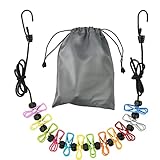
Overview: The Retractable Portable Clothesline is a versatile travel companion designed for drying clothes anywhere. Featuring 12 colorful clothespins and 13 anti-skid clips with positioning beads, this system prevents clothes from bunching up in wind. The stretchy black rope extends to 10-12 feet and secures with stainless steel hooks.
What Makes It Stand Out: The creative design with movable positioning beads is genuinely innovative. Unlike traditional clotheslines where items slide together, the 13 anti-skid clips maintain spacing even in windy conditions. The colorful clothespins add a cheerful touch while providing strong clamping force for everything from socks to blankets.
Value for Money: At $9.99, this clothesline sits in the mid-range price point. Considering its heavy-duty construction, windproof features, and versatility across indoor/outdoor settings, it offers solid value. It’s cheaper than many hotel laundry services after just one use and far more convenient than searching for laundromats while traveling.
Strengths and Weaknesses: Strengths include excellent wind resistance, durable stainless steel hooks, smooth-sliding positioning beads, and wide application from dorms to campsites. The stretchy rope accommodates various spaces. Weaknesses: The plastic components may wear over time with heavy use, and the 10-12 foot length might be insufficient for larger families’ laundry needs. Some users report the black rubber beads can be stiff initially.
Bottom Line: This is a reliable, well-designed portable clothesline perfect for solo travelers, campers, and apartment dwellers. The windproof features justify the price, making it a smart investment for frequent travelers who value convenience and durability.
2. Clothesline,Retractable Portable Clothesline for Travel,Clothing line with 12 Clothes Clips,for Indoor and Outdoor Laundry Drying line,Outdoor Camping Accessories

Overview: This Retractable Portable Clothesline delivers essential drying functionality at a budget-friendly price. With 12 colorful clothespins and 13 anti-skid clips featuring positioning beads, it offers the same core design as premium models. The stretchy rope extends 10-12 feet and attaches via stainless steel hooks to any suitable anchor point.
What Makes It Stand Out: The $6.29 price tag is this product’s most compelling feature—it’s the most affordable option without sacrificing key functionality. At just $0.52 per foot, it undercuts competitors while maintaining the same anti-slip creative design and strong clamping force that prevents clothes from bunching in windy conditions.
Value for Money: Exceptional value. This is the entry-level champion, offering 80% of premium features at 60% of the cost. For occasional travelers or those wanting to test the portable clothesline concept, the financial risk is minimal. It’s ideal for students, budget campers, or as a backup in your vehicle.
Strengths and Weaknesses: Strengths include unbeatable price, lightweight portability, easy setup, and adequate wind resistance. The anti-slip design works effectively for light to medium laundry loads. Weaknesses: The lower price may reflect thinner materials or less durable construction over time. The hooks, while stainless steel, might be smaller than premium versions. It lacks bonus accessories like storage bags.
Bottom Line: If cost is your primary concern, this clothesline is unbeatable. It performs admirably for occasional use, making it perfect for budget-conscious travelers, students, or anyone needing a simple, no-frills drying solution.
3. 2 Pack Camping Clothesline Portable 12 Clothespins, Camping Accessories Travel Clothesline for Outdoor Indoor, Retractable Clothes Line Elastic Clothesline for Camper Hotel Room

Overview: This 2-Pack Camping Clothesline system provides double the drying capacity with two complete units, each featuring 12 colorful clothespins and 13 windproof clips with positioning beads. The set includes waterproof storage bags, making it ideal for organized travelers. Each line stretches from 4.6 to 9 feet.
What Makes It Stand Out: The two-pack configuration with dedicated storage bags sets this apart. While competitors sell single units, this provides a primary and backup line, or allows drying twice the laundry simultaneously. The waterproof bags keep everything organized and dry in your backpack, a thoughtful touch for outdoor enthusiasts.
Value for Money: At $11.99 for two units ($6 each), the value is compelling. You’re getting essentially two Product 1 equivalents for slightly more than one. The included bags add convenience worth $2-3 separately. For families or couples traveling together, this eliminates the need to purchase two separate lines.
Strengths and Weaknesses: Strengths include the 2-pack value, waterproof bags, versatile application from RVs to hotel rooms, and effective positioning bead system. The shorter retracted length (4.6 feet) makes it more compact. Weaknesses: Maximum 9-foot stretch is shorter than competitors’ 10-12 feet, limiting span options. The higher upfront cost may deter solo travelers who only need one line.
Bottom Line: Perfect for pairs, families, or avid travelers wanting a backup. The two-pack with bags offers excellent value and organization. If you need multiple lines or want security against loss, this is your best choice despite the slightly shorter length.
4. Tri-Braided Cord Clothes Line, Clothes Drying Rope Portable Travel Clothesline for Indoor Outdoor Laundry , Windproof Clothes Line, Hanger for Camping Travel & Home Use - No hanger hook needed

Overview: The Tri-Braided Cord Clothes Line revolutionizes portable drying with its innovative pin-free design. Three braided elastic cords grip clothes directly without clothespins, eliminating marks and hassle. Weighing just 0.5 pounds, it includes suction cups and W connectors for versatile installation anywhere from hotel bathrooms to tree branches.
What Makes It Stand Out: The triple-cord system is genuinely unique—simply slide items between the braids and they stay secure, even in wind. This eliminates the need for separate clothespins that can break or get lost. The included suction cups enable instant setup on smooth surfaces like windows or tiles without any hardware.
Value for Money: At $8.30, it’s moderately priced for a specialized design. While you get fewer “parts” (no clothespins), the innovation justifies the cost. It’s particularly valuable for those who dislike clothespin marks on delicate items or want the absolute simplest setup possible.
Strengths and Weaknesses: Strengths include pin-free convenience, gentle on clothes, extremely lightweight, versatile mounting options, and no installation tools required. The tri-braid handles most clothing items securely. Weaknesses: May struggle with heavy wet items like jeans or towels, learning curve for proper insertion technique, and suction cups require smooth surfaces. The 5-10 foot range is adequate but not exceptional.
Bottom Line: Ideal for travelers prioritizing simplicity and clothing care. If you hate clothespins and want the lightest option, this innovative design delivers. Best for light to medium laundry loads in varied environments.
5. Newraturner 2 Pack Portable Clothesline with 12 Clothespins, Windproof Travel Stretchy Retractable Elastic Laundry Clothes Line for Backyard, Vacation Hotel, Balcony Drying
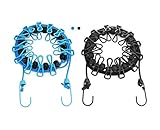
Overview: The Newraturner 2-Pack Portable Clothesline combines quantity and quality, offering two complete drying systems for $9.99. Each line features 12 clothespins separated by 13 adjustable black rubber beads, multi-strand elastic rubber bands that stretch 10-12 feet, and sturdy metal hooks. At just 7 ounces total, it’s exceptionally portable.
What Makes It Stand Out: This offers the best per-unit price in the 2-pack category—essentially two lines for the price of one premium single line. The metal hooks provide superior durability over stainless steel alternatives, and the multi-strand elastic band promises better tenacity. The 7-ounce weight is remarkable for a 2-pack system.
Value for Money: Outstanding value. At $9.99 for two ($5 each), it’s cheaper than most single units. The $0.42 per foot cost is the lowest among all reviewed products. For budget-minded buyers needing multiple lines, this is unbeatable. It delivers premium materials (metal hooks, multi-strand elastic) at an economy price.
Strengths and Weaknesses: Strengths include exceptional value, durable metal hooks, lightweight design, strong clamping force, and generous 10-12 foot stretch. The 2-pack provides backup or double capacity. Weaknesses: Product descriptions may overstate “metal” vs “stainless steel” quality, and the brand is less known. The clothespins may be standard quality rather than heavy-duty.
Bottom Line: The ultimate value choice for families, groups, or anyone wanting a spare. You get two durable, well-designed clotheslines for the price of one, making it the smartest financial decision for most buyers. Don’t let the low price fool you—this delivers genuine quality.
6. EXVITAL Portable Travel Clothesline Lightweight Camping Clothes Line with 24 Beads for Indoor Hotels Backyard, Outdoor Cruise Ships, RVs, Tents, 11.5 Feet

Overview: The EXVITAL travel clothesline delivers a compact 11.5-foot drying solution designed for mobility-conscious travelers. Constructed from weather-resistant polyester fiber with integrated reflective elements, this system replaces traditional clothespins with 24 sliding beads that grip garments securely. Weighing mere ounces and packing into minimal space, it targets campers, cruise passengers, and hotel guests needing reliable indoor/outdoor drying capability without bulk.
What Makes It Stand Out: The 24-bead system offers superior capacity compared to standard 12-pin models, allowing denser garment spacing. Its most distinctive feature is the storable plastic winding sheet that eliminates tangling—a common frustration with travel lines. The reflective threading enhances nighttime visibility for outdoor use, while dual metal hooks enable effortless length adjustment and secure mounting on varied anchor points from balcony rails to tree branches.
Value for Money: At $7.79 ($0.68 per foot), this mid-range option justifies its price through thoughtful engineering. The tangle-free storage alone saves valuable time and patience. While cheaper alternatives exist, none combine the bead capacity, reflective safety feature, and organized storage system at this price point, making it a smart investment for frequent travelers.
Strengths and Weaknesses: Strengths:
- 24 beads accommodate more items than competitors
- Innovative anti-tangle storage sheet
- Reflective design for low-light safety
- Simple length adjustment with sturdy metal hooks
- Weather-resistant polyester construction
Weaknesses:
- 11.5-foot length may prove limiting for families
- Bead system lacks traditional clamping force for heavy items
- Plastic storage sheet adds slight bulk compared to bag-only options
Bottom Line: The EXVITAL clothesline excels for solo travelers and couples prioritizing organization and compactness. Its unique storage solution and generous bead count make it a dependable choice for most travel scenarios, though those needing maximum length should look elsewhere.
7. 2 Pack Camping Clothesline Portable 12 Clothespins, Black Camping Accessories Travel Clothesline for Outdoor Indoor, Retractable Clothes Line Elastic Clothesline for Camper Hotel Room

Overview: This two-pack offering provides exceptional value for travel groups or multi-location setups. Each 4.6-foot elastic cord extends to 9 feet, equipped with 12 clothespins and 13 windproof clamps featuring positioning beads. The black elastic rope delivers stretchable versatility while maintaining enough tension for lightweight to medium garments. Designed for universal deployment, these lines adapt to RVs, hotel bathrooms, campsites, and dorm rooms.
What Makes It Stand Out: The dual-package configuration immediately distinguishes this product—perfect for couples traveling together or keeping one line at home and another in luggage. The hybrid fastening system combines traditional clothespins with windproof clamps, offering flexibility for different garment types. The included waterproof storage bag ensures protection against moisture during backpacking or water-based activities.
Value for Money: At $11.99 for two units ($6.00 per clothesline), this represents the best per-unit value in the category. Competitors charge similar prices for single lines. The two-pack approach effectively halves your cost while providing backup capability or dual-location convenience, making it ideal for budget-conscious adventurers.
Strengths and Weaknesses: Strengths:
- Exceptional two-pack value proposition
- Hybrid pin-and-clamp system for versatility
- Waterproof storage bag included
- Compact pocket-sized portability
- Elastic design adapts to various spaces
Weaknesses:
- 9-foot maximum length restricts drying capacity
- Elastic rope may sag with wet jeans or heavy towels
- Black color absorbs heat, potentially affecting delicate fabrics
- Limited to 12 pins per line for larger families
Bottom Line: For travelers wanting maximum versatility at minimal cost, this two-pack delivers unmatched value. While not ideal for heavy-duty drying, it’s perfect for underwear, socks, swimwear, and lightweight layers across multiple locations.
8. Portable Travel Clothesline Cord, Caudblor Adjustable 33ft Camping Clothes line, Laundry Drying Rope for Hotel Trip, Cruise, Outdoor/Indoor, with 12Pcs Stoppers, Windproof Clothespins

Overview: The Caudblor clothesline breaks length barriers with an impressive 33-foot adjustable nylon cord, making it the longest option in this comparison. Designed for serious travelers and extended camping trips, this system prioritizes strength over elasticity, using low-stretch nylon that supports heavy, wet laundry without sagging. The 12 included stoppers and windproof clothespins provide secure grip for everything from washcloths to bulky towels.
What Makes It Stand Out: Sheer length versatility defines this product—33 feet accommodates family-sized loads or creative configurations across trees, RV awnings, and balcony railings. The nylon construction offers superior tensile strength compared to elastic alternatives, maintaining a taut line even under substantial weight. Its roll-up design allows custom length adjustment, preventing wasted rope and enabling precise space utilization.
Value for Money: Priced at $14.99 ($0.45 per foot), the Caudblor presents the lowest cost-per-foot ratio despite highest absolute price. For groups or long-term travelers, this translates to superior value. The durability of nylon ensures longevity that cheaper elastic lines cannot match, justifying the premium for frequent users.
Strengths and Weaknesses: Strengths:
- Unmatched 33-foot maximum length
- Low-stretch nylon supports heavy items
- Excellent cost-per-foot value
- Adjustable to any shorter length
- Rugged construction for extended outdoor use
Weaknesses:
- Higher upfront investment may deter occasional travelers
- Nylon’s lack of elasticity requires precise mounting points
- Bulkier than compact elastic models when packed
- Only 12 pins may be insufficient for full 33-foot capacity
Bottom Line: Choose the Caudblor for extended trips, family camping, or situations demanding maximum flexibility. Its length and strength justify the price for serious adventurers, though casual travelers may find it excessive.
9. Vigorport Portable Travel Clothesline, Windproof Clothes Line with Hang Hole, Indoor and Outdoor Laundry Line with Clothespins for Hotel, Camping, RV, Cruise Ship (Green, 13.8Ft)

Overview: Vigorport’s 13.8-foot green nylon clothesline introduces an innovative hanging hole system alongside traditional clothespins, creating a hybrid approach to garment spacing. The high-strength, stain-resistant nylon rope resists dirt and grime while providing reliable support for heavy items like jeans and towels. Metal carabiner hooks offer secure, rust-proof attachment to varied anchor points, making it suitable for balconies, campsites, and cruise ship cabins.
What Makes It Stand Out: The integrated hanging holes represent genuine innovation, allowing users to space clothes without clips or create additional hanging points for hangers. This design prevents garment bunching in windy conditions more effectively than pins alone. The vibrant green color isn’t merely aesthetic—it camouflages outdoor dirt while the stain-resistant coating maintains appearance after repeated use. Heavy-duty carabiners provide superior security compared to standard hooks.
Value for Money: At $7.94 ($0.58 per foot), this clothesline sits in the competitive mid-range. The unique hole system and premium carabiner hooks add value absent in similarly priced competitors. For travelers frustrated by tangled pins and bunched clothing, these features justify the modest premium over basic models.
Strengths and Weaknesses: Strengths:
- Innovative hanging hole system for optimal spacing
- Stain-resistant, easy-clean nylon construction
- Heavy-duty carabiner hooks for secure mounting
- 13.8-foot length suits most travel scenarios
- Windproof design prevents garment clustering
Weaknesses:
- Green color may not appeal to all aesthetic preferences
- Only 12 clothespins included
- Hole system has learning curve for new users
- Nylon’s stiffness can complicate compact storage
Bottom Line: The Vigorport clothesline suits detail-oriented travelers who value innovative design and clean aesthetics. Its hybrid hanging system solves common drying frustrations, making it a worthy upgrade from basic elastic models.
10. Travel Clothesline,Retractable Clothesline,Travel with Retractable Portable Clothesline (Including 2 Compressible Towels) 12 clothespins, Suitable for Indoor and Outdoor, Outdoor Camping use (Black)

Overview: This budget-friendly retractable clothesline combines essential drying functionality with bonus travel accessories, delivering a 5.9-foot elastic cord that extends to 10-12 feet. The package includes 12 colored clothespins, 13 windproof clips with positioning beads, and two compressed towels—an unexpected value addition. Designed for maximum portability, this all-in-one solution targets budget travelers, campers, and hostel-hoppers seeking basic functionality without financial commitment.
What Makes It Stand Out: The inclusion of two compressible towels immediately distinguishes this product from pure clothesline competitors, providing immediate utility for face and hand washing. The vibrant colored clothespins aid identification in shared laundry spaces, while the positioning bead system allows smooth left-right adjustment without unclipping. The elastic rope’s ability to stretch nearly double its retracted length offers surprising versatility for such a compact package.
Value for Money: At $6.99, this is the most affordable option reviewed, effectively costing nothing beyond the bonus towels’ value. Travelers receive a functional clothesline plus emergency towels for less than competitors charge for lines alone. While build quality reflects the price point, the overall package delivers unmatched budget utility.
Strengths and Weaknesses: Strengths:
- Lowest price point with bonus towels included
- Extends from 5.9 to 12 feet for adaptability
- Colored pins prevent loss in group settings
- Comprehensive windproof clip system
- Ultra-compact for minimalist packing
Weaknesses:
- Build quality inferior to premium nylon models
- Elastic rope prone to sagging and stretching over time
- Compressed towels are single-use/disposable quality
- Shorter retracted length limits heavy-load capacity
- Durability concerns for extended outdoor exposure
Bottom Line: Perfect for occasional travelers, festival-goers, or as a backup emergency line. While not built for years of heavy use, its price and included accessories make it an unbeatable entry-level choice for short trips and light drying needs.
Why a Portable Clothesline is Essential for Modern Camping
Gone are the days when camping meant packing enough clothes to last the entire trip. Today’s outdoor enthusiasts embrace lightweight, multi-day adventures where washing and reusing gear isn’t just convenient—it’s essential. A portable clothesline enables you to maintain hygiene standards without carrying excessive weight, extending the life of your clothing by preventing the mildew and odors that develop when damp items languish in stuff sacks. Beyond laundry, these versatile tools serve as gear organizers, food dehydrators, and emergency shelter supports, making them one of the most underappreciated multi-use items in your kit. The psychological benefits shouldn’t be overlooked either; there’s something grounding about maintaining simple domestic routines in the wilderness that connects us to generations of outdoor travelers.
Understanding Different Types of Portable Clotheslines
Retractable Clothesline Systems
Retractable models feature a housing unit that contains a spool of line, typically extending 30-50 feet with a locking mechanism. These systems shine in established campgrounds where you can anchor between two fixed points like trees or posts. The internal spring mechanism maintains tension automatically, preventing sagging even with heavy loads. Look for models with UV-resistant housing and a reliable brake system that won’t slip in wet conditions. The main trade-off is weight—the housing adds ounces that ultralight backpackers might balk at, but the convenience factor for family camping is undeniable.
Bungee-Style Cord Lines
Bungee-style clotheslines incorporate elastic cords with integrated clips or loops, offering incredible versatility for irregular anchor points. The inherent stretch accommodates trees at awkward distances and automatically adjusts for load weight. Most feature braided nylon sheaths over rubber cores, providing both strength and flexibility. These excel in backcountry scenarios where perfect anchor points are scarce, though they require careful loading to prevent over-stretching. The elasticity can be a double-edged sword; while it absorbs wind movement, it may cause lighter items to bunch together if not spaced properly.
Tripod and Freestanding Models
Freestanding clotheslines use a collapsible tripod base with extending arms, requiring no anchor points whatsoever. These independent systems are ideal for desert camping, beach trips, or alpine environments where vegetation is sparse. Modern designs pack down remarkably small, often fitting into a stuff sack the size of a water bottle. The key consideration is stability in wind—quality models feature ground stakes and guy-out points. While heavier than line-only options, their self-sufficiency makes them invaluable for certain environments. Capacity typically ranges from 20-40 feet of total drying space when arms are fully extended.
Tree-to-Tree Suspension Systems
These minimalist setups consist of a lightweight cord with integrated tensioners and hooks designed specifically for forestry environments. They often incorporate reflective tracers for nighttime visibility and flat, tree-friendly straps that prevent bark damage. The best models use a whoopie sling or trucker’s hitch system for infinite adjustability. Weight can be as little as 2-3 ounces, making them favorites among backpackers. The learning curve involves mastering tensioning knots, but the reward is an incredibly light and adaptable system that works virtually anywhere with trees.
Compact Travel Lines with Integrated Hooks
These pocket-sized solutions feature a braided cord with sliding beads or hooks that lock clothing in place without clothespins. The line itself becomes the fastening system, with silicone or rubber grippers spaced along its length. They’re perfect for drying socks, underwear, and other small items inside your tent or vehicle. While not suitable for heavy towels or wet jackets, their convenience for quick-drying essentials is unmatched. Most pack into a pouch smaller than a deck of cards and weigh under 2 ounces.
Key Features That Define a Quality Camping Clothesline
Weight and Packability Considerations
The difference between a clothesline you’ll actually bring and one that stays in the garage often comes down to grams and cubic inches. Ultralight models under 3 ounces appeal to ounce-counting backpackers, while car campers can justify 12-ounce systems with more features. Consider packed dimensions relative to your other gear—does it fit inside a cook pot, strap to the outside of a pack, or disappear into a pocket? The packed shape matters as much as weight; flat, flexible lines pack more efficiently than bulky housings. Think about your typical trip duration and group size to determine the right balance of capacity versus portability.
Material Durability and Weather Resistance
Your clothesline will face UV degradation, abrasion from bark and rocks, and constant moisture exposure. Look for braided nylon or polyester with a minimum 200-pound breaking strength. UV inhibitors extend lifespan significantly—quality lines specify “UV-stabilized” or “marine-grade” in their description. The hardware deserves equal scrutiny: aluminum tensioners resist corrosion better than steel, while plastic components should feel substantial, not brittle. Reflective threading woven into the line prevents nighttime collisions and helps locate your setup in low light. Avoid cotton or natural fibers that absorb water, stretch when wet, and rot over time.
Length Adjustability and Versatility
A line that only works at its maximum length severely limits campsite selection. Seek systems offering incremental adjustment from 5 feet to at least 30 feet. This range covers everything from tent-to-tree setups in dense forests to spanning wider gaps in open meadows. Some premium models feature modular design, allowing you to connect multiple lines for extended capacity or create parallel drying levels. The ability to create V-shaped or T-shaped configurations from a single kit adds tremendous versatility for separating different garment types or creating a drip-dry hierarchy.
Attachment Mechanisms and Hardware
The difference between a frustrating setup and a seamless one often lies in the hardware. Look for smooth-operating cam locks that grip without damaging the line, and hooks that close securely to prevent accidental release. Carabiner-style clips should have spring gates that open wide enough for thick branches yet lock positively. Tree straps deserve special attention—wide, flat designs distribute pressure to protect bark, while integrated loops eliminate the need for knots. Some innovative systems include suction cups for vehicle windows, ground stakes for soft earth, and magnetic anchors for metal surfaces like camper vans.
Tensioning Systems and Sag Prevention
Nothing defeats a clothesline faster than excessive sag that leaves your gear dragging on the ground. Quality systems employ mechanical advantage through pulleys, cam locks, or trucker’s hitch configurations. Look for integrated tensioners that maintain constant pressure as loads shift in the wind. Some advanced models use a ratcheting mechanism similar to tie-down straps, allowing precise tension adjustment with minimal effort. The line’s own stretch characteristics matter too—low-stretch polyester maintains tension better than nylon, which can elongate up to 30% when wet.
Weight Capacity: How Much Can Your Line Really Hold?
Manufacturers often list optimistic weight capacities based on static loads, but real-world camping involves dynamic forces. A line rated for 50 pounds might handle that weight perfectly still, but add wind movement and wet fabric weight gain, and you’re risking failure. As a rule of thumb, plan to load your line to only 40% of its stated capacity. Consider that a single wet bath towel can weigh 3-4 pounds, and a soaked sleeping bag might hit 8-10 pounds. For family camping, calculate total potential load and add a 50% safety margin. If you regularly dry heavy items like wetsuits or canvas tarps, prioritize lines with 100+ pound ratings and reinforced attachment points.
Installation Mastery: Setting Up Your Clothesline Anywhere
Finding Anchor Points in the Wild
The ideal anchor point combines strength, accessibility, and environmental responsibility. Living trees should be at least 6 inches in diameter with healthy bark—avoid dead snags that could snap under load. Look for branches at 6-8 feet high to keep clothing out of reach of curious wildlife and above ground splash. Rock formations can serve as bombproof anchors if you pad the line to prevent abrasion. In campgrounds, use designated posts or picnic table frames rather than damaging vegetation. When natural anchors are scarce, get creative: span between two vehicles, use your roof rack and a distant tree, or create a ground-to-tree diagonal setup with a tall trekking pole as a prop.
Knot Tying Essentials for Secure Setup
While many modern systems are knot-free, knowing three key knots expands your options exponentially. The trucker’s hitch creates a 2:1 mechanical advantage for tensioning—essential for long spans. A round turn and two half hitches provides a secure yet adjustable attachment to posts or rings. The alpine butterfly knot creates a fixed loop mid-line for hanging items at different heights. Practice these at home until they’re muscle memory; fumbling with wet, cold fingers at dusk is no time for a YouTube tutorial. Consider carrying a small card with knot diagrams in your repair kit as backup.
Adapting to Different Terrains and Environments
Desert camping demands extra-long lines to reach sparse vegetation and sand anchors for freestanding systems. Alpine environments require care not to damage fragile high-altitude trees—use wide straps and avoid thin bark species. Beach camping introduces salt corrosion and soft sand challenges; rinse hardware with fresh water and use buried sandbags as deadman anchors. In dense forests, you may need to create a clearing or accept shorter line lengths. Urban camping and van life open up opportunities for magnetic mounts and suction cup systems on metal surfaces.
Weather-Proofing Your Drying Strategy
Dealing with Rain and Humidity
A clothesline alone won’t dry clothes in persistent rain, but strategic setup helps. Create a rain fly using a tarp pitched in an A-frame over your line, ensuring adequate airflow underneath. In humid environments, maximize surface area by spreading items flat rather than bunching them. Morning dew can re-wet nearly-dry items; bring them under shelter overnight or use a packable clothesline indoors. Some campers carry a small battery-powered fan to create artificial airflow in stagnant conditions. Remember that synthetic fabrics dry significantly faster than cotton in damp environments—plan your wardrobe accordingly.
Maximizing Sun Exposure and Airflow
Orient your clothesline east-west to capture morning and afternoon sun equally. In wooded areas, seek gaps in the canopy rather than deep shade. Position the line perpendicular to prevailing winds, and elevate heavier items on the upwind side to create a drying funnel effect. Avoid hanging clothes too closely together—aim for 2-3 inches between items to allow air circulation. Dark-colored items absorb more heat and dry faster when placed in direct sun, while UV-sensitive gear should hang in dappled light. Consider creating a two-tier system: quick-dry items on the upper line, heavier items below.
Nighttime Drying Considerations
Night air is often more humid and still, slowing drying significantly. However, in arid environments, nighttime drying works surprisingly well due to temperature differentials creating gentle breezes. If leaving items out overnight, shake them vigorously first to remove surface moisture and maximize fabric separation. Use clothespins or line clips rather than draping over the line to prevent morning dew from soaking through at contact points. In bear country, never leave clothing with food odors outside overnight—this includes cooking splatters on shirts. Some campers create a clothesline inside their tent vestibule using lightweight cord and mini carabiners for secure overnight drying.
Multi-Functional Uses Beyond Drying Clothes
A versatile clothesline system becomes a camp utility player. String it between trees as a gear organizer for headlamps, water bottles, and cooking utensils. Use it with a mesh bag to create a food-drying station for fruit or jerky. In emergencies, it serves as a shelter ridge line for tarps or a gear hoist to keep items away from animals. Photographers use clotheslines to hang camouflage netting or reflectors. During hunting season, it can support game bags for cooling meat. The line itself, when not in use, becomes a guy line for tents or a makeshift belt in a pinch. Some creative campers even weave paracord clotheslines that can be unwound for emergency repairs.
Maintenance and Long-Term Care
Proper care extends a clothesline’s life from one season to a decade. After each trip, rinse the line with fresh water to remove salt, sap, and dirt that accelerate degradation. Allow it to dry completely before storage to prevent mildew and hardware corrosion. Periodically apply a UV-protectant spray to nylon lines, similar to what’s used for tent flies. Inspect attachment points for wear, especially where the line passes through metal hardware—this is where most failures occur. For retractable systems, occasionally extend the full length and wipe down the line to remove embedded grit that can damage the spool mechanism. Store all clotheslines loosely coiled in a breathable bag, never tightly wound or under compression.
Environmental Impact and Leave No Trace Principles
Your clothesline setup directly impacts the environment. Always use tree-friendly straps at least 1 inch wide to prevent girdling bark. Never hang lines on young, thin trees or in areas with sensitive vegetation. In popular campsites, vary your anchor points to avoid creating permanent wear patterns on tree bark. Consider the visual impact—bright orange lines may be practical but detract from the wilderness experience for others. Pack out any broken hardware; even small plastic pieces harm wildlife. Some manufacturers now use recycled ocean plastics in their lines, offering a more sustainable choice. Remember that improperly hung clotheslines can create hazards for wildlife; keep lines visible and remove them when not in use.
Troubleshooting Common Setup Challenges
Sagging despite maximum tension often indicates anchor points are too far apart—try a mid-line support using a trekking pole or branch. Lines that won’t stay attached usually point to incompatible hardware; carry a few extra carabiners as universal adapters. Persistent tangles in windy conditions suggest you need more clothespins or clips to prevent items from wrapping around the line. If your line keeps slipping on smooth bark, create friction by wrapping a bandana around the tree before applying the strap. Freestanding models that tip in wind need better staking or a weight bag hung from the center pole. When all else fails, the classic “two sticks and a crossbeam” improvised A-frame can support a short line in any environment.
Budget vs. Premium: Understanding Price Points
Entry-level clotheslines ($10-20) typically use thinner materials and basic hardware, suitable for occasional weekend campers who dry mostly lightweight items. Mid-range options ($25-40) offer significant durability improvements, better tensioning systems, and more versatile hardware—the sweet spot for most regular campers. Premium systems ($50-100) justify their cost through exceptional materials like Dyneema cordage, precision-engineered tensioners, and modular components that adapt to any scenario. Consider cost-per-use: a $60 clothesline used 50 days per year for five years costs just 24 cents per day. The hidden costs of cheap lines include premature failure, damaged clothing from sagging, and the frustration of difficult setups that waste precious camp time.
Safety Considerations and Best Practices
Never hang clotheslines across high-traffic areas where people walk, especially at night. Use reflective materials or hang solar-powered lanterns to illuminate the line after dark. Be aware of overhead hazards—dead branches (widowmakers) can be dislodged by wind movement on the line. In lightning-prone areas, avoid running lines between tall trees that could attract strikes. Keep lines away from fire pits and camp stoves; synthetic lines melt quickly and release toxic fumes. When drying heavy items like wetsuits, stand clear during tensioning—a snapping line can cause serious injury. Teach children to respect the clothesline as a boundary, not a play structure. Always have a quick-release method available in case you need to take the line down rapidly due to weather or wildlife.
Frequently Asked Questions
How much weight can I realistically hang on a portable camping clothesline?
For most quality portable lines, plan on 15-25 pounds total load as a safe working limit, even if the rated capacity is higher. This accounts for dynamic wind forces and uneven weight distribution. Spread heavy items like wet towels across multiple attachment points rather than concentrating weight in one spot.
What’s the best way to dry clothes quickly when camping in humid conditions?
Maximize airflow by spacing items 3-4 inches apart and hanging them during the warmest part of the day. Create artificial breeze by positioning your line perpendicular to any natural wind, and consider bringing a portable fan. Wring clothes extremely well before hanging, and choose quick-dry synthetic fabrics over cotton for your camping wardrobe.
Can I leave my portable clothesline set up overnight?
Yes, but with precautions. Bring lightweight items under shelter to protect from dew, and ensure your setup is secure against nocturnal wildlife. In bear country, never leave clothing with food odors outside. Use reflective markers to prevent collisions, and consider taking down the line if high winds are forecast.
How do I prevent my clothesline from damaging tree bark?
Always use wide, tree-friendly straps at least 1 inch across to distribute pressure. Avoid thin cords that dig into bark, and never leave lines up for extended periods. Move your anchor points slightly each day if camping long-term, and never use young or thin trees as anchors.
What’s the lightest portable clothesline option for backpacking?
The lightest functional options weigh under 2 ounces and consist of a thin cord with integrated gripping beads. While limited in capacity, they’re perfect for socks, underwear, and bandanas. Look for Dyneema or Spectra cordage for maximum strength-to-weight ratio, and pair with mini carabiners for versatile anchoring.
How do I keep my clothesline from sagging in the middle?
Use a mechanical tensioning system like a trucker’s hitch or ratcheting tensioner. For long spans, add a mid-line support using a trekking pole or sturdy branch propped underneath. Choose low-stretch materials like polyester rather than nylon, and avoid overloading beyond 40% of the line’s rated capacity.
Are retractable clotheslines worth the extra weight for camping?
For car camping and basecamp setups, absolutely. The convenience of instant tensioning and tidy storage outweighs the weight penalty. For backpacking, the extra ounces rarely justify the benefit unless you’re camping with a large group. Consider a hybrid approach: retractable for vehicle-based trips, minimalist cord for backcountry.
Can I use a portable clothesline inside my tent or vehicle?
Yes, and this is often the best solution for inclement weather. Use lightweight cord with micro carabiners attached to gear loops or door frames. Keep lines taut but not so tight they stress tent seams. Create a drying chamber in your vehicle by stringing line between headrest posts and cracking windows for ventilation.
How do I clean and maintain my clothesline between trips?
Rinse with fresh water to remove salt, sap, and dirt, then dry completely before storage. Inspect attachment points for wear, and apply UV protectant spray to synthetic lines seasonally. Store loosely coiled in a breathable bag, never tightly wound. For retractable models, occasionally run the full length out and wipe clean to prevent internal grit buildup.
What should I do if my clothesline breaks in the backcountry?
Carry 20 feet of utility cord as backup—paracord works but stretches, so polyester accessory cord is better. Learn to tie a makeshift line using a trucker’s hitch for tension. In a pinch, use bandanas, spare guy lines, or even boot laces for small items. Improvise anchors by wrapping cord around rocks or burying a stick as a deadman anchor in soft ground.'