When you’re miles from the nearest trailhead with a full pack and the next water source is a murky stream trickling through alpine meadows, your portable water purifier becomes the most critical piece of gear in your kit. It’s not just about convenience—it’s about survival. Every year, backpackers learn the hard way that giardia, cryptosporidium, and other waterborne pathogens don’t discriminate between novice and expert, turning dream trips into gastrointestinal nightmares.
Choosing the right water treatment system isn’t as simple as grabbing the lightest option on the shelf. The backcountry presents unique challenges: varying water quality, altitude effects on boiling points, freeze-thaw cycles that can destroy filters, and the constant weight-versus-safety calculation that defines ultralight philosophy. This guide cuts through the marketing noise to equip you with the knowledge to select a purification system that matches your specific adventure style, destination risks, and personal preferences—without relying on brand hype or sponsored recommendations.
Top 10 Portable Water Purifiers for Backpackers
Detailed Product Reviews
1. BKLES Water Filter Camping – Electric Portable Water Purifier Survival, 0.01 Micron, 6-Stage Water Filtration System Survival with Emergency Lighting for Hiking, Backpacking, Travel – BK-2000

Overview: The BKLES BK-2000 is an electric portable water filtration system engineered for outdoor enthusiasts who prioritize convenience. Weighing just 350g, this 6-stage purifier uses a 0.01-micron ultrafiltration membrane combined with PP cotton, KDF, activated carbon, and coconut carbon fiber to deliver clean water from natural sources.
What Makes It Stand Out: The integrated electric pump produces an impressive 700ml per minute flow rate, letting you multitask while it works. Its 168,000ml capacity per charge supports 10-15 day trips, while multiple charging options—power bank, solar panel, or vehicle—ensure reliability. The emergency lighting feature adds crucial utility for nighttime camp operations.
Value for Money: At $54.96, this filter sits in the mid-range category. It offers significantly more convenience than manual pump filters priced similarly, and the battery-powered operation justifies the premium over basic gravity systems. Replacement filters are necessary after 180 days or 1000L, representing ongoing costs.
Strengths and Weaknesses: Strengths include hands-free operation, fast flow rate, versatile charging, and integrated emergency light. The compact design with multifunctional storage bag enhances portability. Weaknesses involve battery dependence—if power depletes with no backup, you’re left without filtration. The 350g weight is heavier than chemical options, and filter replacement costs accumulate over time.
Bottom Line: This electric filter excels for group camping and extended backpacking where convenience trumps absolute minimalism. It’s a reliable workhorse for those who want clean water without the physical effort of pumping, making it ideal for base camps and multi-day excursions.
2. BKLES 3-in-1 Solar Electric Water Filter with Hand Pump - Camping Water Filtration System Survival, Portable Water Purifier with Emergency Light, Survival Kit for Backpacking, Birthday Gifts for Men

Overview: The BK-3000 elevates the electric filter concept with triple redundancy: electric pumping, manual hand pump, and solar charging. This 450g system uses dual 0.01-micron ultrafiltration membranes within a 6-stage filtration process, delivering 800-1000ml per minute and treating 240,000ml per charge.
What Makes It Stand Out: True versatility defines this unit. When batteries die, the upgraded hand pump provides manual filtration—a critical failsafe. The integrated solar panel enables off-grid recharging, while reverse charging capability lets it power your phone. Emergency features include LED lighting and an SOS signal mode, creating a comprehensive survival tool.
Value for Money: At $75.99, it’s $20 more than the BK-2000 but adds indispensable backup options. For serious survivalists and frequent backpackers, the multi-mode operation eliminates the single point of failure risk inherent in purely electric systems. The added functionality justifies the price increase.
Strengths and Weaknesses: Major strengths are the three power options, faster flow rate, and survival-focused features like device charging and SOS lighting. The robust filtration handles diverse water sources. Weaknesses include increased weight (450g) and bulk compared to minimalist options. Complexity means more potential failure points, and the higher initial investment may not suit casual users.
Bottom Line: This is the ultimate “prepare for anything” water purifier. Perfect for survival kits, extended expeditions, and emergency preparedness. The peace of mind from multiple power sources outweighs the extra cost and weight for serious adventurers who refuse to gamble on essential gear.
3. Aquatabs 49mg Water Purification Tablets (30 Pack). Portable Water Purifier for Camping Essentials, Lightweight Camping Gear or Survival Kit, EPA Registered & NSF/ANSI 60 Certified, Fast-Acting

Overview: Aquatabs offer chemical water purification in tablet form, treating 0.75-2 liters per tablet with a 30-minute wait time. This 30-pack provides EPA-registered protection against 99.9999% of bacteria, 99.99% of viruses, and 99.9% of Giardia cysts, backed by NSF/ANSI 60 certification.
What Makes It Stand Out: Unmatched portability and simplicity. At virtually no weight, these tablets fit anywhere—your pocket, first aid kit, or wallet. The July 2030 expiration date ensures long-term reliability. Unlike iodine treatments, Aquatabs leave no unpleasant taste, color, or odor, addressing a common chemical treatment complaint.
Value for Money: $10.99 for 30 tablets represents exceptional value. Treating up to 60 liters (at 2L per tablet) costs under 19 cents per liter—far cheaper than any mechanical filter’s per-liter cost. For budget-conscious adventurers and emergency preppers, it’s the most cost-effective purification method available.
Strengths and Weaknesses: Strengths are absolute minimalism, proven efficacy, global certification, negligible weight, and 30-minute treatment time. No moving parts means zero maintenance. Weaknesses include the inability to filter sediment or improve turbid water taste—pre-filtering may be necessary. The 30-minute wait requires planning, and chemical methods don’t remove chemical contaminants.
Bottom Line: These tablets are non-negotiable backup purification that every hiker should carry. Ideal as a primary method for ultralight backpackers or emergency reserve for those with primary filters. Pack them regardless of your main system—they’re cheap insurance against filtration failure.
4. SimPure Gravity Water Filter, Portable Gravity-Fed Water Purifier with 3L Bag, Tree Strap, BPA Free Survival Gear and Equipment for Camping Hiking Emergency Preparedness

Overview: The SimPure Gravity Filter employs a simple hang-and-filter approach, using a 3L bag and 0.1-micron ultrafiltration membrane to purify water without pumping. Weighing just 2.8 ounces, this system combines a hollow fiber membrane with coconut shell GAC and PP fiber filters.
What Makes It Stand Out: Remarkable lifespan and flow rate. The filter processes 5,000 liters—enough for a family of four for 3.5 years—and delivers 27 liters per hour. Its versatility shines: use it as a personal straw, attach extension tubing, or connect to water bottles. The hands-free operation lets you set it and forget it.
Value for Money: At $29.99, this represents outstanding long-term value. The 5,000L lifespan dwarfs most competitors, and the low price point makes it accessible for casual campers. No batteries or moving parts mean zero operating costs beyond the initial purchase.
Strengths and Weaknesses: Strengths include exceptional lifespan, rapid gravity flow, featherlight weight, multi-use versatility, and simple maintenance-free operation. The included 3L bag and tree strap create a complete system. Weaknesses: the 0.1-micron rating is slightly less fine than some 0.01-micron alternatives, and gravity systems require a hanging point. Bag durability could be a concern with heavy use, and it won’t work in shallow water sources without a collection cup.
Bottom Line: Perfect for base camps, group outings, and emergency preparedness kits. The SimPure excels when weight and simplicity matter but electric options are overkill. It’s not ideal for fast-paced solo hiking where stopping to hang a bag slows progress, but unbeatable for stationary water collection.
5. Katadyn Steripen Ultra Portable UV Water Purifier – Rechargeable 2200mAh Battery, Eliminates 99.99% Microorganisms, Fast Water Treatment for Hiking, Camping & Travel

Overview: The Steripen Ultra uses UV-C light to eliminate 99.99% of microorganisms in seconds. This rechargeable unit treats 16 ounces in under a minute and 32 ounces in 90 seconds, with a 2200mAh battery supporting up to 8,000 uses. USB charging enables power bank, solar, or vehicle recharging.
What Makes It Stand Out: Speed and simplicity. No pumping, squeezing, or waiting—just stir and drink. The 8,000-treatment capacity provides years of service without filter replacements. Watertight seals and rubber grips ensure reliable operation in wet conditions, while universal bottle compatibility adds convenience.
Value for Money: At $113.21, it’s a premium investment. However, eliminating recurring filter costs makes it economical for frequent users over time. Travelers and international backpackers benefit most, as it works with hotel tap water and natural sources alike.
Strengths and Weaknesses: Strengths include lightning-fast treatment, comprehensive microbe elimination (including viruses), compact size, and no filter changes. The rechargeable battery suits modern tech-forward adventurers. Weaknesses: UV doesn’t filter sediment or improve taste, requiring pre-filtering for murky water. Battery dependence poses a risk, though USB charging mitigates this. The high upfront cost and inability to treat large volumes simultaneously limit group utility.
Bottom Line: Ideal for solo travelers and hikers treating clear water sources. The Steripen Ultra shines in scenarios where speed and portability are paramount. It’s less suited for groups or sediment-heavy water but represents cutting-edge purification for the right user. Consider your water sources before investing.
6. Katadyn 8018270 Hiker Microfilter Water Purification Unit

Overview: The Katadyn Hiker Microfilter is a manual pump-style water purification system built for outdoor enthusiasts who demand reliable water treatment in remote wilderness settings. This field-proven unit delivers microbiologically safe drinking water for camping, backpacking, and backcountry adventures where natural water sources are the only option.
What Makes It Stand Out: The pump-action design distinguishes itself from passive filters, delivering approximately one liter per minute through 48 strokes. Its 0.2-micron pleated glass-fiber element eliminates bacteria, protozoa, and giardia, while integrated activated carbon significantly improves taste and reduces chemical contaminants. The included bottle adapter fits most standard water bottles, creating a seamless filling experience without spills or contamination risk.
Value for Money: At $66.35, this microfilter occupies the middle ground between disposable tablets and premium integrated systems. For frequent adventurers, the reusable design eliminates ongoing costs beyond occasional cartridge replacement, making it economical over time. The 30-day satisfaction guarantee and durable construction justify the investment for those who regularly venture into remote areas where water quality is unpredictable.
Strengths and Weaknesses: Strengths include fast filtration rate, excellent taste improvement, proven pathogen removal, and versatile compatibility with various bottles. The manual pump provides immediate water without chemical wait times. Weaknesses involve physical exertion required, periodic cleaning and maintenance needs, and relatively bulky design compared to straw filters. The 0.2-micron rating doesn’t remove viruses, limiting use in certain international regions.
Bottom Line: The Katadyn Hiker is ideal for backpackers and campers prioritizing speed and taste quality. While not the lightest option available, its reliable performance and cost-effective long-term operation make it a solid choice for regular outdoor use where bacteria and protozoa are primary concerns.
7. Potable Aqua Water Purification Tablets, Portable and Effective Water Purification Solution for Camping, Hiking, Emergencies, Natural Disasters and International Travel, Two 50ct Bottles, Blue

Overview: Potable Aqua Water Purification Tablets represent the classic chemical treatment solution for outdoor enthusiasts and emergency preparedness. This package includes two 50-count bottles of iodine-based tablets that effectively neutralize harmful microorganisms in questionable water sources from any container.
What Makes It Stand Out: These tablets require no equipment, pumping, or filtering—simply drop them in water and wait. Their extreme portability makes them virtually weightless in a pack, and the 100-tablet supply can treat up to 50 liters. The product is specifically effective against Giardia lamblia and other waterborne pathogens, providing reliable protection in challenging conditions where mechanical filters might clog.
Value for Money: At $12.99 for 100 tablets, this is the most economical purification option available. Each treatment costs mere cents, making it accessible for any budget. The long shelf life ensures they’ll be ready when emergencies strike, offering exceptional value for disaster preparedness kits and international travel where water safety is uncertain.
Strengths and Weaknesses: Strengths include ultimate portability, foolproof simplicity, proven effectiveness, long shelf life, and ability to treat any container of water. They work in freezing conditions where filters fail. Weaknesses include a 30-minute treatment wait time, unpleasant chemical taste without neutralizer tablets, inability to remove sediment or improve clarity, and potential iodine allergies. They don’t eliminate cryptosporidium effectively and offer no taste improvement.
Bottom Line: These tablets are essential backup protection that every outdoor traveler should carry. While not ideal as a primary daily water source due to taste and wait time, their reliability, cost-effectiveness, and foolproof operation make them indispensable for emergencies, international travel, and as a secondary purification method.
8. P&G Purifier of Water Portable Water Purifier Packets. Emergency Water Filter Purification Powder Packs for Camping, Hiking, Backpacking, Hunting, and Traveling. (12 Packets)
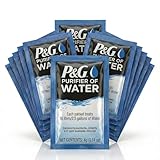
Overview: P&G Purifier of Water Packets offer a unique flocculation and disinfection approach to water treatment, using powder packs that clarify and purify simultaneously. Each packet treats 2.5 gallons, making this system ideal for group camping or emergency preparedness scenarios where large volumes require treatment.
What Makes It Stand Out: The powder formula acts as both a coagulant and disinfectant, causing sediment to clump and settle while eliminating pathogens. EPA registration ensures 99.9999% bacteria and 99.99% virus removal—superior to many filters. The visual transformation from cloudy to clear water provides tangible reassurance of effectiveness, and the August 2027 expiration date ensures long-term storage viability.
Value for Money: At $25.99 for 12 packets (treating 30 gallons total), this system costs approximately $0.87 per gallon. For families or basecamp situations, this represents solid value compared to individual filters. The single-use nature is offset by the ability to treat extremely turbid water that would destroy mechanical filters, making it cost-effective for specific challenging conditions.
Strengths and Weaknesses: Strengths include exceptional pathogen removal including viruses, large volume treatment capacity, effectiveness in extremely turbid water, and long shelf life. The lightweight packets store compactly for emergency preparedness. Weaknesses involve a 30-minute treatment time plus additional settling period, requirement for thorough mixing and clean decanting, single-use nature creating pack waste, and inability to treat small single-serving amounts efficiently for individual hikers.
Bottom Line: These packets excel for basecamps, family emergency kits, and international missions where large volumes of questionable water need treatment. While not practical for individual trail use, they’re unmatched for group scenarios and disaster preparedness where virus protection and sediment removal are critical requirements.
9. GRAYL GeoPress 24 oz Water Purifier Bottle - Filter for Hiking, Camping, Survival, Travel (Black Camo)

Overview: The GRAYL GeoPress redefines water purification with its innovative press-style bottle that transforms sketchy water into safe drinking water in seconds. This 24-ounce bottle integrates filtration and purification into a single, elegant solution for adventurers and travelers who refuse to compromise on safety or convenience.
What Makes It Stand Out: The one-handed press operation requires no pumping, batteries, or chemicals—simply fill, press down, and drink. It removes all pathogens including viruses, bacteria, and protozoa, plus particulates, heavy metals, PFAS, and chemicals. The speed is unmatched, purifying 24 ounces in roughly 8 seconds without any wait time, making it the fastest purification method available.
Value for Money: At $99.95, the GeoPress commands a premium price but delivers comprehensive protection and unmatched convenience. The replaceable cartridge treats 65 gallons, costing about $1.54 per gallon. For international travelers and those needing virus protection, this eliminates bottled water expenses, quickly offsetting the initial cost while reducing plastic waste and ensuring safety anywhere.
Strengths and Weaknesses: Strengths include instantaneous purification, complete virus removal, exceptional ease of use, durable construction, and ability to treat water from any source without setup. The integrated design means no separate containers or hoses. Weaknesses include higher upfront cost, limited capacity per pressing, cartridge replacement expense, and weight that’s heavier than minimalist options for ultralight backpackers.
Bottom Line: The GRAYL GeoPress is the premium choice for travelers to developing countries and adventurers needing maximum protection with minimum effort. While expensive, its convenience, speed, and comprehensive filtration justify the investment for those prioritizing safety, simplicity, and virus protection over ultralight weight considerations.
10. Membrane Solutions Personal Water Filter, Survival Filtration Straw Portable Gear, Emergency Preparedness, Supply for Drinking Hiking Camping Travel Hunting Fishing Team Family Outing (Blue, 4 Pack)
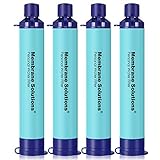
Overview: The Membrane Solutions Personal Water Filter 4-Pack provides individual straw-style filtration for groups or family outings. These lightweight devices offer immediate drinking water directly from sources through a 5-stage filtration system certified to rigorous NSF standards, ensuring reliable performance in emergencies.
What Makes It Stand Out: The ultra-fine 0.1-micron pore size exceeds typical straw filters, removing more contaminants while maintaining a 500ml/min flow rate. Triple NSF certification (42, 372, 401) validates claims for taste improvement, lead-free materials, and microplastic reduction. The four-pack configuration delivers exceptional group value, and each straw’s 1,320-gallon lifespan provides years of reliable service.
Value for Money: At $38.98 for four filters, each unit costs under $10—remarkably affordable for NSF-certified filtration. With a 1,320-gallon lifespan per straw, the long-term cost is negligible. This pack enables families or hiking groups to equip everyone without breaking the budget, making it one of the best value propositions in personal water filtration.
Strengths and Weaknesses: Strengths include extremely lightweight design (2 ounces), instant filtration with no wait time, impressive 0.1-micron accuracy, versatile 28mm threading for bottles, and long service life. The 5-stage filtration improves taste and removes sediment. Weaknesses include inability to remove viruses, requirement to drink directly from source or squeeze bottle, no capacity to treat water for storage, and increasing flow resistance as filters clog over time.
Bottom Line: This 4-pack offers outstanding value for hiking groups, families, and emergency kits. While not suitable for virus-contaminated water, these straws excel for wilderness travel in North America where bacteria and protozoa are primary concerns. The combination of certification, performance, and price is difficult to beat for personal and group use scenarios.
Why Clean Water Matters in the Backcountry
Waterborne illnesses represent one of the most preventable dangers in wilderness travel. Unlike wildlife encounters or weather events, contaminated water is invisible and often tastes perfectly fine. Pathogens like bacteria, protozoa, and viruses lurk in even the most pristine-looking high-altitude streams, deposited by wildlife, livestock runoff, or human waste from upstream. The consequences range from mild discomfort to severe dehydration that can compromise your ability to self-rescue. Understanding that “clear” doesn’t mean “clean” is the first step in developing a mature backcountry water strategy.
Understanding Water Contamination Risks
Backcountry water sources contain a cocktail of potential threats, each requiring different treatment approaches. Bacteria like E. coli and salmonella are common but relatively large and easy to filter. Protozoa such as giardia and cryptosporidium form hardy cysts resistant to chemical treatments, especially cryptosporidium’s impressive chlorine tolerance. Viruses, while less common in North American backcountry waters, are tiny enough to slip through most filters and require UV treatment, chemical disinfection, or boiling. Industrial pollutants and agricultural chemicals present a different challenge entirely, often requiring activated carbon rather than microbial filtration.
Types of Portable Water Purifiers
Pump Filters
Pump systems force water through a filter cartridge using a hand-operated mechanism. They excel at drawing water from shallow sources and provide immediate results, but require physical effort and have multiple moving parts that can fail. The pumping action becomes tedious when treating large volumes for groups, and the intake hose can clog in silty water. However, their versatility makes them reliable for solo hikers who encounter varied water sources.
Gravity Filters
These systems use elevation and physics to do the work for you, hanging a dirty water reservoir above a clean one. They’re group-friendly, treating large volumes with minimal effort while you set up camp or rest. The downside? They’re slower, require a decent water source depth to fill the reservoir, and the hanging system can be challenging in dense forest or exposed alpine zones where trees are scarce.
Squeeze Filters
Popular among ultralight enthusiasts, squeeze systems attach directly to soft bottles or reservoirs that you compress to force water through. They’re incredibly lightweight and simple but require manual pressure that can strain hands during high-volume filtering. The soft bottles wear out over time, and the filter elements are more vulnerable to freeze damage since they’re often integrated directly into the bottle system.
UV Purifiers
Battery-powered UV pens or lamps disrupt pathogen DNA, rendering them harmless. They’re fast, treating a liter in 90 seconds, and effective against viruses that filters miss. The Achilles’ heel is dependence on batteries and electronics—one dead battery or system failure leaves you without treatment. They also don’t work in murky water since particulates block UV penetration, and they don’t improve taste or remove chemicals.
Chemical Treatments
Iodine tablets, chlorine dioxide drops, or chlorine dioxide tablets offer the lightest possible solution and work against viruses. They’re cheap, simple, and never freeze. However, they require waiting 30 minutes to 4 hours depending on the pathogen and water temperature. Cold water dramatically extends treatment time, and they do nothing for sediment or chemical tastes. Some people dislike the flavor, though neutralizing tablets can help.
Boiling Methods
Boiling remains the OG water treatment method, killing everything including viruses. It requires no special equipment beyond your cookpot and stove. The major drawbacks are fuel consumption, time spent waiting for water to cool, and the inability to treat large quantities efficiently. At high altitudes, water boils at lower temperatures, requiring longer boil times to ensure safety.
Key Purification Technologies Explained
Microfiltration vs Ultrafiltration
Microfiltration membranes typically rate around 0.1-0.2 microns, capturing bacteria and protozoa but allowing viruses through. Ultrafiltration pushes tighter, down to 0.01 microns, theoretically catching some viruses but still not reliably enough to claim viral protection. The distinction matters less for North American wilderness but becomes critical for international travel. Both technologies rely on mechanical size exclusion, meaning damaged fibers or improper sealing creates a direct path for pathogens.
Activated Carbon
Carbon doesn’t filter microbes but adsorbs chemicals, improves taste, and removes odors. It’s often integrated as a secondary stage in filter cartridges. The carbon becomes saturated over time, losing effectiveness while the mechanical filter portion may still function. This creates a false sense of security if you’re relying on it for chemical removal. Carbon also provides a growth medium for bacteria if the filter stays wet between trips, requiring diligent drying.
UV Light Purification
UV-C light at 254 nanometers wavelength damages microbial DNA, preventing replication. It’s effective against all pathogens when properly applied, but doesn’t provide residual disinfection. The treated water can be recontaminated if stored improperly. UV systems require clear water and specific exposure times—rushing the process or using it in cloudy water dramatically reduces effectiveness.
Chemical Disinfection
Chlorine dioxide works by oxidizing cell walls and interfering with metabolic processes. It’s more effective than iodine against cryptosporidium and doesn’t have iodine’s thyroid concerns for long-term use. The key variable is contact time—cold, alkaline, or turbid water requires longer treatment. Chemical treatments work best as a backup or for clear water sources where filtration is impractical.
Flow Rate and Processing Speed
Flow rate, measured in liters per minute, directly impacts your daily routine. A fast filter (1+ L/min) means less time crouched by streams and more time hiking. However, advertised rates are typically for new filters with clean water—real-world performance drops with turbid water, clogged filters, and cold temperatures. Gravity systems might claim 2 liters in 4 minutes, but that’s with a full reservoir and clean filter. Plan for slower performance and consider whether you’d prefer many quick, small batches or fewer, larger volumes.
Weight and Packability Considerations
Every ounce matters when you’re carrying it over mountain passes, but water treatment is one area where ultralight obsession can backfire. A 2-ounce chemical treatment bottle seems ideal until you’re waiting four hours in cold weather. A 12-ounce pump filter provides security but adds weight. Consider not just the purifier’s weight but also required accessories: backflushing syringes, replacement parts, batteries, or chemical refills. Some systems pack smaller than a water bottle, while others require dedicated pockets.
Filter Lifespan and Maintenance
Cartridge lifespan, measured in liters or gallons, determines long-term cost and reliability. A 1,000-liter filter might last a season for a solo hiker but only a few trips for a group. More importantly, understand what clogs your filter: glacial silt, leaf tannins, algae. Some filters can be cleaned in the field through backflushing, while others require replacement. Consider availability and cost of replacement cartridges—obscure brands might leave you with a useless system if cartridges become unavailable.
Micron Ratings: What They Mean
The micron rating indicates pore size, but smaller isn’t always better. A 0.1-micron filter catches bacteria and protozoa while maintaining decent flow. A 0.02-micron filter might catch viruses but clogs rapidly and requires excessive pressure. Absolute versus nominal ratings matter too—“absolute 0.2 microns” means guaranteed filtration, while “nominal” means most particles are caught, creating a small but real risk. For backcountry use where viruses are rare, 0.1-0.2 microns absolute provides the sweet spot of protection versus practicality.
Battling Viruses: When You Need More Than a Filter
In North America, viruses are rarely a concern in remote wilderness water sources—they need human hosts to persist. However, heavily trafficked areas, poor sanitation practices, or international travel change the equation. If you’re trekking in developing countries or areas with questionable sanitation, you need viral protection: UV, chemical treatment, or boiling. Some filter manufacturers add iodine resin stages, but these have limited contact time and questionable effectiveness. Never assume your filter handles viruses unless explicitly rated and certified for viral removal.
Taste and Odor Improvement
Mechanical filtration doesn’t improve taste—in fact, some filters impart a plastic or chemical taste, especially when new. Activated carbon addresses taste and odor but has limitations. It removes chlorine, some pesticides, and improves palatability but won’t fix water that smells like sulfur or has strong chemical contamination. If you’re filtering stagnant pond water, expect earthy flavors regardless. For taste-sensitive hikers, combining filtration with chemical treatment and a neutralizing tablet offers the best results, though at the cost of simplicity.
Cold Weather Performance Challenges
Water filters face a critical vulnerability: freezing. Ice crystals rupture filter fibers, creating invisible cracks that allow pathogens through. Even a filter that appears to work post-freeze is compromised. In sub-freezing conditions, keep your filter in your sleeping bag at night and close to your body during the day. Chemical treatments slow dramatically in cold water—pre-warming water in your jacket or using warm water from your bottle can help. UV systems can fail when batteries die in the cold. Boiling becomes the most reliable winter method, despite fuel costs.
Pre-Filtering: Protecting Your Main Filter
Dunking your filter directly into muddy water is a recipe for rapid clogging. A simple pre-filter—a bandana, coffee filter, or specialized mesh—removes large particulates before they reach your main filter. This extends cartridge life and maintains flow rate. Some systems include pre-filters attached to intake hoses; others require improvisation. In glacial silt areas, letting water settle in a pot for 30 minutes before filtering can dramatically extend filter life. Think of pre-filtering as cheap insurance for your expensive cartridge.
Field Maintenance and Troubleshooting
Murphy’s Law applies doubly in the backcountry. Filters clog, O-rings fail, hoses crack. Know how to backflush your filter—most manufacturers include a syringe or specialized method. Carry spare O-rings and a small tube of food-safe lubricant. For squeeze filters, the bottle threads are a common failure point; a backup water container is essential. With UV pens, spare batteries are mandatory, not optional. Chemical treatments don’t fail mechanically, but tablets can get wet and dissolve. Always pack a backup method, even if it’s just boiling capability.
Budget Considerations
Water purification costs extend beyond the initial purchase. A $20 UV pen seems cheap until you factor in $10 battery replacements every 50 liters. A $100 filter with $40 replacement cartridges every 500 liters costs more long-term than a $80 filter with $25 cartridges lasting 1,000 liters. Chemical treatments appear economical but add up on long trips. Consider your usage pattern: occasional weekend warrior versus multi-month thru-hiker. Also factor in group size—buying one group system often beats individual solutions.
Matching Your Purifier to Your Adventure
Your ideal system depends on trip parameters more than personal preference. Solo ultralight backpackers in clear-water regions might choose a 2-ounce squeeze filter. Group basecamp scenarios favor gravity systems. International travel demands virus-capable methods. Desert hiking with scarce, silty water sources requires robust, cleanable filters. Winter camping needs freeze-proof strategies. Create a decision matrix based on your most common trip types rather than seeking one perfect solution—many experienced backpackers own multiple systems for different scenarios.
Frequently Asked Questions
How do I know if my filter has frozen and is now compromised?
You can’t tell by appearance. Ice ruptures fibers at a microscopic level. If your filter has been exposed to freezing temperatures while wet, assume it’s compromised. Some manufacturers offer freeze-test indicators, but these aren’t foolproof. The only safe approach is prevention: sleep with your filter and never let it freeze.
Can I use household bleach to purify backcountry water?
Technically yes, but it’s not recommended. Unscented household bleach (2 drops per liter) can disinfect clear water after 30 minutes, but it’s less effective against cryptosporidium than chlorine dioxide treatments. The concentration varies between brands, making dosing unreliable. Plus, bleach degrades plastic bottles over time. Purpose-made chemical treatments are safer and more reliable.
Why does my filtered water still taste bad?
Mechanical filters remove particles, not dissolved substances causing taste. Activated carbon helps with chlorine and some chemicals but won’t fix sulfur, mineral content, or organic compounds from decaying vegetation. Bad taste usually indicates the source, not filter failure. Consider using better water sources or combining filtration with chemical treatment and neutralizing tablets.
How often should I replace my filter cartridge?
Replace it when flow becomes unacceptably slow even after cleaning, or when you’ve reached the manufacturer’s rated capacity. A filter that still flows but has processed 1,200 liters on a 1,000-liter rating is gambling with your health. Cartridges also degrade over time—replace every 2-3 years even with light use, as bacteria can colonize the media.
Is it safe to drink directly from a mountain stream without treatment?
No. This “wildwater” myth persists but is dangerous. Giardia and cryptosporidium exist in remote, pristine-looking water. Wildlife feces contaminate even high-altitude sources. The risk might be low in specific areas, but it’s never zero. The weight of a purification system is negligible compared to the misery of waterborne illness miles from help.
Can I filter saltwater or chemically contaminated water?
Standard portable filters cannot desalinate seawater or remove most chemical pollutants. Reverse osmosis is required for salt removal, which isn’t practical for backpacking. Activated carbon helps with some chemicals but has limited capacity. In areas with known chemical contamination, carry in all your water—don’t trust filtration.
What’s the difference between a water filter and a water purifier?
Filters remove bacteria and protozoa mechanically. Purifiers meet EPA standards for removing viruses too, through technology like UV, chemical treatment, or specialized filtration. In North American wilderness, filters usually suffice. For international travel or virus-prone areas, you need a purifier. The terms are often misused in marketing.
How do I clean my filter in the field when it clogs?
Most filters include a backflushing method—usually a syringe to push clean water backwards through the cartridge. Do this immediately when you notice slowing, not when it’s completely clogged. For severe clogs, soak the filter in clean water for an hour, then backflush. Avoid using untreated water for backflushing, as it introduces contaminants to the clean side.
Are UV purifiers reliable enough as a primary treatment?
They can be, but require diligent battery management and pre-filtering for cloudy water. Many backpackers use UV as primary with chemical tablets as backup. The main vulnerability is electronics failure—a dead battery, cracked lamp, or water damage. If you choose UV, carry a backup method and always pre-filter sediment.
What’s the best way to store my water purifier between trips?
Dry it completely. For hollow fiber filters, backflush with clean water, then shake out excess and air dry for at least a week. Store in a freezer if possible—this prevents bacterial growth. For carbon-containing filters, drying is critical to prevent mold. UV pens need battery removal to prevent corrosion. Chemical tablets belong in a waterproof container away from moisture and heat.'