There’s a peculiar paradoxin modern off-grid adventures: the deeper you venture into the wilderness to escape civilization, the more you rely on electronic devices for safety, navigation, and capturing those epic moments. Your smartphone becomes your map, your camera, your emergency beacon, and your entertainment. This digital dependency creates a critical need for reliable power where wall outlets fear to tread. Solar-powered power banks have emerged as the go-to solution, promising endless energy from nothing but sunshine. Yet walk into any outdoor gear shop or scroll through online marketplaces, and you’re bombarded with conflicting specs, hyperbolic claims, and a dizzying array of features that blur the line between genuine utility and marketing gimmickry.
Choosing the right solar power bank isn’t just about picking the highest capacity or the most solar panels—it’s about understanding a complex ecosystem of battery chemistry, photovoltaic efficiency, durability standards, and real-world physics that manufacturers rarely explain in full. This guide cuts through the noise, giving you the expert knowledge to select a power solution that won’t leave you stranded with dead devices when you’re days from the nearest outlet. Whether you’re planning a weekend backpacking trip or a month-long expedition, these insights will help you make an informed decision based on science, not sales pitches.
Top 10 Solar-Powered Power Banks for Off-Grid Trips
Detailed Product Reviews
1. GRECELL Solar Generator with 40W Solar Panel Included,230Wh Portable Power Station 1.5hrs Fast Charging, (600W Surge) AC Outlets, LiFePO4 Battery Backup for Outdoor Camping, Trip, Power Outage

Overview: The GRECELL Solar Generator bundles a 230Wh LiFePO4 power station with a 40W foldable solar panel, creating an integrated portable energy solution for camping and emergencies. Weighing just 9.92 pounds, this compact unit delivers 300W continuous AC power (600W surge) to charge laptops, phones, lights, and small appliances. Its all-in-one design eliminates compatibility concerns for solar charging newcomers.
What Makes It Stand Out: This kit’s LiFePO4 battery chemistry provides exceptional longevity with over 3,000 charge cycles, potentially lasting a decade. The 1.5-hour wall charging is impressively fast for this capacity class. Seven diverse outputs—including two AC outlets, USB-A, USB-C, DC, and a car lighter socket—offer remarkable versatility. The included 40W panel, while modest, provides immediate off-grid capability without additional purchases.
Value for Money: At $259.99 with a solar panel, this represents strong entry-level value. Comparable power stations alone cost $180-220, with separate 40W panels adding $60-100. The LiFePO4 battery justifies the premium over cheaper lithium-ion units. While solar recharging takes 5 hours, it’s adequate for weekend trips and emergency backup, making this a cost-effective starter kit.
Strengths and Weaknesses: Strengths include durable battery chemistry, comprehensive outputs, lightweight portability, and included panel. Weaknesses are the limited 230Wh capacity restricting runtime for larger devices, slow solar charging with the 40W panel, and 300W output insufficient for high-draw appliances like coffee makers or heaters.
Bottom Line: The GRECELL kit excels as an entry-level solar generator for casual campers and emergency preparedness. Its battery longevity and integrated design make it a smart investment for portability and durability over raw power. Consider upgrading to a 100W panel for faster solar charging.
2. BLAVOR 120W Portable Solar Panel PD45W QC3.0 Fast Solar Charger DC18V 6.67A USB A&C Output Compatible with Power Stations, Solar Generators, Phones, Tablets, for RV Camping, Off-Grid Road Trips

Overview: The BLAVOR 120W Portable Solar Panel is a high-efficiency folding solar charger designed to power portable power stations, smartphones, and tablets during outdoor adventures. With 28% conversion efficiency from premium monocrystalline silicon cells, this panel delivers serious charging capability in a briefcase-style foldable design weighing just a few pounds.
What Makes It Stand Out: This panel’s standout feature is its integrated fast-charging technology, combining PD45W USB-C and dual QC3.0 USB-A ports alongside a DC18V output for direct power station connection. The five-layer construction with ETFE coating provides exceptional durability and scratch resistance, while the adjustable kickstand enables optimal sun angle positioning. Built-in hanging holes with included carabiners simplify mounting on RVs or tents.
Value for Money: At $159.99, this panel offers excellent value for its 120W output and feature set. Competing 100W panels typically range $120-180 without the same charging versatility. The high efficiency rating means more power generation in limited space, crucial for off-grid scenarios. While it lacks a built-in battery, its ability to directly charge devices and power stations makes it a flexible, cost-effective solar solution.
Strengths and Weaknesses: Strengths include high conversion efficiency, multiple fast-charging outputs, rugged ETFE construction, adjustable stand, and excellent portability. Weaknesses are no built-in power storage, dependence on sunny conditions, and 120W may be insufficient for larger power stations needing 200W+ input. The panel requires direct sunlight and performs poorly in shade.
Bottom Line: The BLAVOR 120W panel is an outstanding choice for outdoor enthusiasts needing reliable, fast solar charging for both direct device charging and power station replenishment. Its durability and versatile outputs make it worth every penny for RV camping and off-grid adventures.
3. BLUETTI AC70 Portable Power Station, 768Wh Solar Generator w/ 2 1000W AC Outlets (Power Lifting 2000W), 100W Type-C, LiFePO4 Battery Backup for Road Trip, Off-Grid, Power Outage (Solar Panel Optional)

Overview: The BLUETTI AC70 is a mid-capacity portable power station delivering 768Wh of LiFePO4 storage with a 1000W pure sine wave inverter. Designed for road trips, off-grid living, and emergency backup, this unit balances capacity and portability while offering modern features like app control and ultra-fast charging. It’s a scalable solution for powering essential devices and small appliances.
What Makes It Stand Out: The AC70’s 2000W power lifting mode handles surge loads beyond its rated capacity, enabling operation of compressors and motor-driven devices. Its 1.5-hour AC charging is remarkably fast for this capacity, while the 500W maximum solar input allows full recharging in under 2.5 hours. The BLUETTI app provides remote monitoring and mode customization, adding smart convenience. LiFePO4 chemistry ensures a 10+ year lifespan with 3,000+ cycles.
Value for Money: At $599, the AC70 sits in the competitive mid-range segment. While pricier than budget brands, it offers superior LiFePO4 longevity, faster charging, and app integration that cheaper lithium-ion models lack. The 768Wh capacity hits a sweet spot for weekend trips without excessive weight. Optional solar panels add cost, but the unit’s efficiency and build quality justify the premium over $400-500 alternatives.
Strengths and Weaknesses: Strengths include fast charging, high solar input capacity, power lifting mode, app control, durable battery, and excellent brand reputation. Weaknesses are higher price point, no solar panel included, and 1000W continuous output may limit some high-draw appliances. The 768Wh capacity might be insufficient for extended off-grid use without solar supplementation.
Bottom Line: The BLUETTI AC70 is a top-tier mid-capacity power station perfect for users prioritizing charging speed, battery longevity, and smart features. Its robust performance justifies the investment for serious outdoor enthusiasts and emergency preparedness.
4. Jackery Explorer 1000 v2 Portable Power Station,1070Wh LiFePO4 Battery,1500W AC/100W USB-C Output, 1 Hr Fast Charge, Solar Generator for Camping,Emergency, RV, Off-Grid Living(AC Cable Included)

Overview: The Jackery Explorer 1000 v2 represents the next generation of portable power, offering 1070Wh of LiFePO4 capacity in a compact 23.8-pound package. With 1500W continuous AC output and 3000W surge capability, this power station handles demanding appliances like air conditioners and electric kettles. Its 1-hour emergency charging and advanced app control make it a premium choice for camping, RVs, and home backup.
What Makes It Stand Out: The ultra-fast 1-hour full charge via emergency mode is industry-leading for this capacity, while ChargeShield 2.0 technology ensures battery health and safety. The LFP battery maintains over 70% capacity after 4,000 cycles—translating to more than a decade of regular use. Three AC outlets, dual 100W USB-C ports, and quiet 30dB overnight charging mode demonstrate thoughtful design. The foldable handle enhances portability despite the substantial capacity.
Value for Money: At $799, the Explorer 1000 v2 commands a premium price but delivers corresponding performance. Competing 1000Wh units typically cost $600-900, but few match Jackery’s charging speed, cycle life, and brand reliability. The LiFePO4 battery alone adds $100-150 value over lithium-ion alternatives. For users needing high output and rapid recharging, the price premium is justified.
Strengths and Weaknesses: Strengths include exceptional charging speed, high AC output, superior battery longevity, multiple ports, quiet operation, and trusted brand support. Weaknesses are the premium price, 23.8-pound weight may challenge some users, and solar panel not included. The 1-hour charge requires emergency mode that may impact long-term battery health if used excessively.
Bottom Line: The Jackery Explorer 1000 v2 sets the standard for premium portable power stations. Its combination of capacity, output power, and charging speed makes it ideal for serious campers, RV owners, and emergency preparedness where performance justifies the investment.
5. HEPWAY Portable Power Station Solar Generator 1300W 1154Wh,Battery Backup With 120V Pure Sine Wave AC Outlets,Car Port Lithium Battery Pack Power Supply for Camping,Off-Grid, Power Outage RV Van

Overview: The HEPWAY P1300 is a high-capacity portable power station delivering 1154Wh of storage with a robust 1300W continuous AC output. Designed for camping, RVs, and emergency backup, this unit features EV-grade battery design and a unique Refrigerator Mode for low-power devices. With nine total outputs and multiple charging methods, it offers comprehensive power solutions at a competitive price point.
What Makes It Stand Out: The innovative Refrigerator Mode prevents auto-shutdown during extended low-wattage operation, making it ideal for CPAP machines and mini-fridges. EV-grade LiFePO4 cells with 100-point quality testing ensure exceptional safety and reliability. Four AC outlets provide ample connection points for high-draw appliances, while the 1500W surge capacity handles startup loads effectively. The rugged BMS protection system offers comprehensive safety monitoring.
Value for Money: At $349.99, the P1300 delivers exceptional value—offering 1154Wh capacity at a price point where competitors typically provide 500-800Wh. The inclusion of EV-grade batteries and advanced features like Refrigerator Mode typically command $500+ price tags. While brand recognition is lower than Jackery or BLUETTI, the specifications and safety testing make this a budget-friendly powerhouse.
Strengths and Weaknesses: Strengths include outstanding capacity-to-price ratio, Refrigerator Mode for medical devices, four AC outlets, EV-grade battery safety, and comprehensive BMS protection. Weaknesses are lesser-known brand reputation, unspecified charge cycle rating, potentially slower customer support, and no solar panel included. The unit’s weight and dimensions aren’t specified, which may affect portability.
Bottom Line: The HEPWAY P1300 is an unbeatable value for users needing high capacity without the premium price tag. Its specialized low-power mode and safety features make it particularly attractive for medical device users and budget-conscious buyers seeking maximum watt-hours per dollar.
6. VTOMAN 2376Wh Portable Power Station with Extra Battery & 200W Solar Panel - 1500W Up to 3000W Solar Power Generator for Home Backup, Off-grid, Road Trip, RV, Camping, Fishing, Vehicle Emergency

Overview:
The VTOMAN Jump 1500X is a versatile portable power station that doubles as a car jump starter, offering 828Wh base capacity expandable to 2376Wh with an additional battery. It’s engineered for comprehensive off-grid power needs, from camping trips to emergency home backup situations.
What Makes It Stand Out:
The 2-in-1 jump starter capability is genuinely unique—most power stations require separate devices. The constant-power feature that maintains 1500W output for over-1500W appliances (instead of shutting down) provides emergency flexibility you won’t find elsewhere. Expandable capacity via extra battery and premium LiFePO4 chemistry with 3,000 cycles ensure exceptional longevity.
Value for Money:
At $1,079.99, it’s competitively priced for a 1500W LiFePO4 station with expansion capability. Similar capacity units without jump-start functionality cost $900-$1,200. The 2-in-1 design saves $100-$200 on a separate jump starter, making it excellent value for multi-use buyers who need both functions.
Strengths and Weaknesses:
Strengths: 2-in-1 jump starter, expandable capacity, constant-power mode, 12 simultaneous outputs, durable LiFePO4 battery, pass-through charging, 3000-cycle lifespan
Weaknesses: Jumper cables sold separately, ships in 3 packages with staggered delivery, heavier than non-expandable units, may be overkill for casual users
Bottom Line:
Ideal for RV owners, serious campers, and those prioritizing emergency preparedness. The jump-start feature and expandable capacity justify the premium, though separate package shipping requires patience and it’s not the most portable option.
7. BLUETTI AC70 Solar Generator with Charger 1 (Ships Separately), 768Wh LFP Backup, 560W Alternator, DC-DC Charger for Portable Power Station, 2H Full Charge via Car, for Road Trips, Off-grid Use
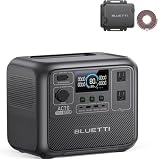
Overview:
The BLUETTI AC70 is a compact 768Wh portable power station featuring a 1000W inverter with 2000W power lifting capability, designed specifically for mobile living, road trips, and emergency backup scenarios where rapid recharging is critical.
What Makes It Stand Out:
The included Charger 1 enables six-times faster car charging than standard adapters, fully charging in just 2 hours via vehicle alternator—transforming road trips into charging opportunities. The 500W solar input capacity is impressive for this size class, and app-based remote monitoring adds modern convenience. The power lifting feature allows brief operation of appliances exceeding its 1000W rating, providing emergency flexibility.
Value for Money:
At $549, it’s priced competitively against similar 700-800Wh units. The fast car charging capability (usually a $100+ accessory) is included, and BLUETTI’s reputation for reliable LiFePO4 batteries adds significant value. Comparable units from EcoFlow or Jackery cost $100-$150 more for similar specs without the rapid vehicle charging advantage.
Strengths and Weaknesses:
Strengths: Ultra-fast car charging, robust 500W solar input, app control, 2000W power lifting, LiFePO4 battery, compact design, brand reliability
Weaknesses: Charger 1 ships separately causing potential delays, 768Wh limiting for extended off-grid use, power lifting is temporary, not expandable
Bottom Line:
Perfect for road trippers and van lifers who prioritize fast vehicle charging over massive capacity. The AC70 excels at mobile power delivery, though the separate shipment of key components is inconvenient and capacity may be insufficient for extended stays.
8. SUNER POWER 18W 12V Solar Battery Trickle Charger & Maintainer PRO, Built-in Intelligent MPPT Charge Controller, Waterproof 12 Volt Solar Panel Charging Kits for Car Auto Marine RV Trailer Boat Camper

Overview:
The SUNER POWER 18W solar trickle charger is a compact, intelligent maintenance solution for 12V batteries, featuring built-in MPPT technology and comprehensive safety protections for automotive, marine, and RV applications where batteries sit unused for extended periods.
What Makes It Stand Out:
The proprietary UltraSmart MPPT technology delivers 99% tracking efficiency and 98% conversion efficiency—significantly outperforming standard PWM controllers common in this price range. The improved 3-stage charging algorithm (Bulk, Absorption, Float) optimizes battery health and longevity, while the rugged construction withstands extreme weather conditions including 2400Pa wind pressure and 5400Pa snow load, making it truly maintenance-free.
Value for Money:
At $79.95, it’s premium-priced for an 18W panel but justified by the integrated MPPT controller and superior build quality. Competitors with basic PWM controllers cost $40-$60 but offer 20-30% less charging efficiency and lack advanced protections. For long-term battery maintenance, the efficiency gains and extended battery life pay for themselves within a year of use.
Strengths and Weaknesses:
Strengths: UltraSmart MPPT technology, intelligent 3-stage charging, comprehensive safety protections, wide battery compatibility (SLA, AGM, LiFePO4), rugged weatherproof design, Grade A+ cells with 21-30% efficiency
Weaknesses: 18W output limited to maintenance/trickle charging only, not suitable for rapid battery charging, premium price for wattage, requires direct sunlight for optimal performance
Bottom Line:
Excellent investment for seasonal vehicle storage, boats, and RVs where battery maintenance is critical. The advanced MPPT controller and robust construction justify the cost for those needing reliable, set-and-forget trickle charging in harsh environments.
9. Dumfume 12V 300Ah (314Ah) LiFePO4 Battery Built-in 200A BMS, 4.01kWh 4000+ Deep Cycles Lithium Battery Ideal for RV Campers, Solar Systems & Off-Grid Power(2 PACKS)
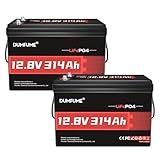
Overview:
The Dumfume battery kit includes two 12V 314Ah LiFePO4 batteries delivering 4.01kWh total capacity, featuring built-in 200A BMS and supporting parallel connections for expandable off-grid power systems in RVs, solar installations, and marine applications.
What Makes It Stand Out:
Delivering true 314Ah capacity per battery (exceeding the advertised 300Ah), this 2-pack provides exceptional value at under $610. The 200A BMS enables 2560W continuous output per battery, while the 4000+ cycle life at 100% DOD dramatically outperforms lead-acid alternatives. The compact form factor (15.16"x7.59"x9.84") and 57-pound weight make installation manageable compared to heavier competitors.
Value for Money:
At $608.87 for 4.01kWh, the cost is approximately $0.15/Wh—exceptionally competitive for LiFePO4 technology. Single 300Ah batteries from established competitors cost $700-$900 each. The 2-pack configuration allows immediate parallel setup for 628Ah total capacity, saving additional wiring complexity and cost while providing redundancy.
Strengths and Weaknesses:
Strengths: True 314Ah capacity, 4000+ cycles at 100% DOD, built-in 200A BMS, compact lightweight design, excellent price per kWh, parallel connection support, 2-pack convenience
Weaknesses: Not for engine starting, requires maintenance cycle every 6 months during storage, newer brand with limited long-term track record, terminals may need upgraded hardware for high-draw applications
Bottom Line:
Outstanding value for RV and solar installations needing serious capacity. The dual-battery kit eliminates guesswork for 24V or high-capacity 12V systems, though users must remember it’s for energy storage only—not starting engines—and maintain proper storage protocols.
10. 12V 660Ah LiFePO4 Lithium Battery with 250A BMS,NewtiPower 10000+ Deep Cycle Lithium Iron Phosphate Battery Great For Power Shortage/Storage, RV, Marine and Off Grid Applications
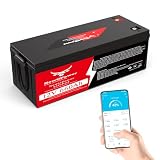
Overview:
The NewtiPower 660Ah LiFePO4 battery is a high-capacity single-unit solution delivering massive energy storage for serious off-grid applications, RVs, marine use, and home backup systems where simplicity and maximum capacity are prioritized over modularity.
What Makes It Stand Out:
This single-battery design eliminates complex wiring while delivering 660Ah capacity—equivalent to six 100Ah batteries in one enclosure. The built-in 250A BMS supports high continuous draws, and the claimed 10,000+ cycle life is among the highest specifications in the consumer market. Intelligent temperature protection cuts charging below 32°F and above 158°F, preventing damage in extreme climates without external controllers.
Value for Money:
At $1,169.99, the cost per Wh is approximately $0.15—competitive for high-capacity LiFePO4. While premium-priced upfront, it replaces multiple smaller batteries, saving $200-$400 in wiring, fuses, connectors, and installation hardware. The 10-year warranty and 10,000+ cycle rating suggest exceptional long-term value, potentially outlasting three generations of lead-acid alternatives.
Strengths and Weaknesses:
Strengths: Massive 660Ah single-unit capacity, 250A BMS, 10,000+ cycle life, 10-year warranty, compact for capacity, temperature protection, supports series/parallel connections
Weaknesses: Heavy at 104 lbs requiring two-person installation, single point of failure vs. multiple smaller batteries, premium upfront cost, brand claims need independent verification, may be overkill for casual users
Bottom Line:
Best for users wanting maximum capacity with minimal wiring complexity. The NewtiPower 660Ah is ideal for permanent installations where weight isn’t critical, though the heavy single-unit design requires planning for installation and handling. Serious off-grid enthusiasts will appreciate the capacity, but modular systems offer better redundancy.
Why Solar Power Banks Are Essential for Modern Off-Grid Adventures
Gone are the days when a paper map and compass were your only navigation tools. Today’s off-grid explorer juggles multiple power-hungry devices: GPS units, satellite communicators, headlamps, action cameras, smartphones, and even medical devices like CPAP machines. A dead battery isn’t just inconvenient—it can be dangerous. Solar power banks provide a self-sufficient energy loop, converting abundant solar radiation into stored electricity that keeps you connected and safe. Unlike traditional power banks that become dead weight once depleted, solar models offer a renewable lifeline, extending your trip indefinitely with proper sun exposure. They also eliminate the anxiety of rationing power, allowing you to use your devices naturally rather than obsessively checking battery percentages every hour.
Understanding the Basics: How Solar Power Banks Work
At its core, a solar power bank is a portable battery pack with integrated photovoltaic panels. When photons from sunlight strike the solar cells, they knock electrons loose, creating direct current (DC) electricity. This raw energy flows through a charge controller—a critical component that regulates voltage and prevents battery damage—before being stored in lithium cells. When you plug in your device, the bank’s internal circuitry converts the stored DC power back into the precise voltage and amperage your gadget requires. Think of it as a miniature electrical grid where you’re simultaneously the power plant operator and the consumer.
The Difference Between Solar Power Banks and Solar Chargers
This distinction trips up even seasoned outdoors enthusiasts. A solar charger consists only of solar panels and a charge controller—it generates power but cannot store it. You must plug your device directly into the charger during sunlight hours. A solar power bank, conversely, features built-in battery cells that store energy for later use. This fundamental difference makes power banks vastly superior for off-grid trips where sunlight is unpredictable. You can charge the bank all day, then top up your devices at night inside your tent. Solar chargers force you to leave devices exposed to the elements and theft, and they become useless during cloudy periods or after sunset.
Key Specifications Decoded: What the Numbers Really Mean
Manufacturers love throwing impressive-sounding numbers at consumers, but these figures often represent laboratory conditions that bear little resemblance to a dusty trail or humid rainforest. Understanding what these specifications actually mean in the field separates a wise investment from an expensive paperweight.
Battery Capacity Explained: mAh vs. Wh
You’ll typically see capacity listed in milliamp-hours (mAh), but this metric is misleading without voltage context. A 20,000mAh power bank might sound massive, but at the standard 3.7V battery voltage, that’s only 74 watt-hours (Wh). The Wh rating—calculated as (mAh × Voltage) ÷ 1000—tells you the actual energy stored. For off-grid planning, Wh is your best friend. An iPhone 14 Pro Max battery holds about 16.7Wh. A GoPro Hero 11 battery is roughly 4.4Wh. Do the math: that “huge” 20,000mAh bank can fully charge your phone about 4.4 times in perfect conditions, accounting for roughly 15% energy loss during transfer. Always calculate your needs in Wh, not mAh, to avoid shortchanging yourself.
Solar Panel Wattage and Efficiency Ratings
Solar panel wattage indicates maximum power generation under ideal conditions—direct noon sun, perfect 90-degree angle, 25°C temperature, no clouds. A 10-watt panel theoretically generates 10Wh per hour in this scenario. Reality? You’ll see 60-70% of that on a good day. Efficiency percentages (typically 15-24%) tell you how much sunlight the panel converts to electricity. Monocrystalline panels hitting 22-24% efficiency will outperform polycrystalline models at 15-18% in identical conditions. For off-grid reliability, prioritize higher efficiency over raw wattage; a smaller, more efficient panel often beats a larger, less efficient one when pack space is premium.
Input and Output Ports: USB-A, USB-C, and Beyond
The port landscape has evolved dramatically. USB-C Power Delivery (PD) is now the gold standard, supporting up to 100W bi-directional charging—meaning the same port can fast-charge your laptop and rapidly recharge the power bank from a wall outlet. Quick Charge (QC) 3.0 and 4.0 remain relevant for older Android devices. For solar input, most banks use micro-USB or USB-C, but the input wattage is throttled by the internal charge controller—often capped at 10-15W regardless of how much solar power is available. Multiple output ports are crucial for group trips, but check the total output: a bank might have three ports but only 18W total output, meaning charging three devices simultaneously will be painfully slow.
Solar Panel Technology: Monocrystalline vs. Polycrystalline
The silicon crystal structure inside solar panels dramatically impacts performance. Monocrystalline panels, made from single-crystal silicon, offer higher efficiency, better low-light performance, and longer lifespans—critical advantages when you’re trying to squeeze every electron from a cloudy dawn. Their uniform black appearance isn’t just aesthetic; it reflects their superior purity. Polycrystalline panels, forged from multiple silicon fragments, are cheaper to produce but sacrifice 3-5% efficiency and struggle more in partial shade or overcast conditions. For serious off-grid use, monocrystalline is non-negotiable. The price premium pays for itself in reliability and reduced panel surface area needed for the same power output.
Battery Chemistry: Li-ion vs. Li-Po vs. LiFePO4
Most power banks use lithium-ion (Li-ion) cylindrical cells (18650 format) due to their low cost and proven reliability. Lithium-polymer (Li-Po) batteries use a flexible pouch design, allowing slimmer, lighter form factors but degrading faster under heat and physical stress—common in backpack compartments. The dark horse is Lithium Iron Phosphate (LiFePO4). These batteries cost more and weigh about 25% more for the same capacity, but they deliver 2000-5000 charge cycles versus 300-500 for Li-ion, maintain stable performance in extreme temperatures, and won’t catch fire if punctured. For extended expeditions or desert/arctic environments, LiFePO4’s longevity and safety outweigh the weight penalty. Think of it as buying a decade of reliability versus a couple years of marginal performance.
Durability Features That Actually Matter in the Wild
A power bank that fails after one drop or a light drizzle isn’t an asset—it’s a liability. Outdoor gear must survive being crushed in a pack, dropped on rocks, soaked in rain, and caked in dust. Marketing departments throw around “rugged” and “durable” with abandon, but specific certifications and design choices separate legitimate tough gear from pretenders.
IP Ratings: Waterproofing and Dustproofing Explained
IP ratings use two digits: the first measures solid particle protection (0-6), the second liquid ingress (0-9). IP67 means complete dust tightness (6) and submersion up to 1 meter for 30 minutes (7). IPX7 skips dust testing but offers the same water protection—adequate for most trips but risky in desert environments. IP68 adds deeper, longer water resistance. For multi-day treks, IP67 is the practical minimum. Be wary of vague “water-resistant” claims without numbers—they’re meaningless. Also, these ratings apply to the bank itself; exposed USB ports must have rubber covers that actually seal, not flimsy plugs that fall out after a week.
Impact Resistance and Rugged Design Elements
True impact resistance goes beyond a rubber coating. Look for internal shock mounting where battery cells float in foam or silicone, absorbing drops rather than transferring force. Reinforced corner bumpers should extend beyond the panel surface to prevent direct impact. Polycarbonate housings outperform ABS plastic in cold weather, resisting cracks at -20°C. Some premium models meet MIL-STD-810G standards for drop testing, though this military specification is broad—specifically look for “drop test” mentions, not just the standard name. The solar panel itself is the Achilles’ heel; rigid panels crack, while laminated flexible panels can bend slightly without damage.
Charging Speeds: Quick Charge, Power Delivery, and Solar Input Rates
Fast charging is addictive—until you realize your solar bank’s input circuit is the bottleneck. While USB-C PD can output 45W to charge a laptop, the solar input side is often limited to 5V/2A (10W). This means even if you attach a 20W solar panel, the bank can only accept 10W, wasting potential energy. Some advanced models feature separate high-voltage solar inputs or MPPT (Maximum Power Point Tracking) controllers that optimize solar harvesting, but these are rare and expensive. Quick Charge and Power Delivery output speeds are meaningless if the solar panel can’t replenish the bank quickly enough. For off-grid trips, prioritize solar input speed over output speed—your devices can charge slowly overnight, but the bank must capture enough energy during limited daylight hours.
Portability vs. Power: Finding Your Perfect Balance
Here’s the immutable law of portable power: capacity and panel surface area are directly at odds with packability. A true 25,000mAh bank with effective solar panels weighs 1.5-2 pounds and occupies the space of a hardcover book. A featherweight 10,000mAh model might strap to your backpack unnoticed but provides barely two phone charges. The sweet spot for solo backpackers is 15,000-20,000mAh with a 3-5 watt panel, balancing 4-5 device charges with reasonable 12-16 oz weight. For basecamp or kayak/canoe trips where weight matters less, 30,000mAh+ banks with detachable 15W+ panels offer genuine energy independence. Ask yourself: am I constantly moving, or stationary during peak sun? Your answer determines which side of the tradeoff to favor.
Additional Features That Enhance Off-Grid Usability
Beyond core charging functions, manufacturers pack solar banks with extras that range from genuinely useful to pure gimmick. Discerning which features add real value requires thinking through actual field scenarios, not just spec sheet bullet points.
Built-in Flashlights and Emergency Features
Integrated LEDs seem like a bonus, but their usefulness depends entirely on execution. A 100-lumen flashlight with flood and spot modes can replace a small headlamp for camp chores, saving weight. Strobe and SOS modes provide legitimate emergency signaling. However, many banks include dim, useless LEDs that drain the battery without providing functional light. Check lumen ratings—anything under 50 lumens is a toy. More importantly, verify the light operates independently from the main battery circuit; you don’t want a dead bank because you left the flashlight on overnight. Some models include emergency whistles or compasses—these are universally gimmicks that add failure points. Focus on light quality and battery isolation.
Wireless Charging Capabilities
Qi wireless charging adds convenience but sacrifices 20-30% efficiency compared to wired charging. In an energy-scarce off-grid environment, this waste is hard to justify. Wireless pads also generate heat, which degrades the bank’s battery faster and reduces solar charging efficiency when stacked. The one scenario where wireless makes sense is nighttime charging inside your tent—placing your phone on the bank without fumbling for cables. However, alignment is finicky, and movement stops charging. For most trips, skip wireless and invest in a short, durable USB cable with a magnetic breakaway tip to prevent port damage.
Pass-Through Charging Explained
Pass-through charging lets you charge devices while the bank itself charges from solar panels. In theory, this creates an efficient energy flow-through. In practice, it splits the limited solar input between the bank’s battery and your device, dramatically slowing both charges. Worse, the constant charge/discharge cycle generates heat and stresses the battery cells, reducing lifespan. Modern banks handle this better with smarter controllers, but the fundamental physics remain. Best practice: let the bank charge fully during peak sun, then discharge to devices later. Reserve pass-through for emergencies when you absolutely need a few percent on your phone while the bank trickle-charges.
Realistic Solar Charging Expectations: Myths vs. Reality
Let’s crush a common misconception: you will not fully charge a 20,000mAh power bank in one sunny day. A typical 5-watt panel generates roughly 15-25Wh on a good day—enough for half a phone charge, not a full bank. Most banks need 40-60 hours of direct, optimal sun to charge from empty. Cloud cover slashes output by 70-90%. Panel angle matters enormously; a panel lying flat on your backpack captures 40% less energy than one angled perpendicular to the sun. Seasonal changes are drastic—a December day in Montana provides 30% of the solar irradiance of a June day in Arizona. Your location’s latitude, altitude, and even atmospheric dust affect performance. Treat solar charging as a supplement to pre-trip wall charging, not a primary source. Plan to start every trip with a full bank, using solar to extend capacity by 20-30% per day under realistic conditions.
Best Practices for Maximizing Solar Charging Efficiency
Treat your solar bank like a precision instrument, not a passive accessory. Position panels at a 30-45 degree angle facing the sun, adjusting every 2-3 hours as the sun moves. Morning and evening sun is weak; prioritize 10 AM to 4 PM charging. Keep panels clean—a thin layer of dust blocks 15-20% of light. Use a microfiber cloth and water; never scratch with abrasive materials. Heat is the enemy of efficiency; airflow behind the panel improves output by 5-10%. If possible, charge the bank itself in direct sun while keeping your devices in shade, then charge devices from the bank later. Avoid charging devices directly from solar during peak sun—the fluctuating voltage can confuse device charging circuits and cause incomplete charges. For backpack charging, attach panels to the outside of your pack facing outward, not flat on top where your body shade blocks light.
Off-Grid Trip Planning: Calculating Your Power Needs
Smart planning prevents power anxiety. List every device and its battery capacity in Wh. Multiply by how many charges you need per day. Example: smartphone (16Wh) × 0.5 charges/day = 8Wh; camera (4Wh) × 1 charge/day = 4Wh; GPS (10Wh) × 0.3 charges/day = 3Wh. Daily total: 15Wh. Multiply by trip length: a 7-day trip needs 105Wh. Add a 50% safety buffer for inefficiency and unexpected use: 158Wh minimum bank capacity. Now calculate solar generation: if you can realistically harvest 20Wh/day, your 7-day trip gains 140Wh from solar—almost enough to run indefinitely with careful usage. For trips longer than 3 days, plan a rest day at a sunny spot to “refuel” your bank completely. Always carry a compact wall charger for unexpected town stops; solar is unreliable enough that 100% reliance is foolhardy.
Maintenance and Care for Longevity
A quality solar power bank is an investment that should last years, but only with proper care. Lithium batteries hate two things: extreme temperatures and being stored at full charge. After each trip, discharge the bank to 50-70% before long-term storage—this reduces cell stress and extends lifespan. Never store in a hot car; temperatures above 45°C accelerate degradation. For winter storage, keep it at room temperature, not in a freezing garage. Clean the solar panel monthly with isopropyl alcohol to remove oils and grime that etch the protective coating. Inspect USB ports for corrosion, especially after coastal trips; a tiny brush and contact cleaner prevent connectivity issues. If the bank has firmware (yes, some smart models do), check for updates that improve charge algorithms. Every 3-6 months, run a full discharge and recharge cycle to calibrate the battery meter and keep cells active. With LiFePO4 banks, this maintenance is less critical, but still beneficial.
Frequently Asked Questions
How long does it really take to charge a power bank with solar alone?
Under optimal conditions—direct noon sun, panel angled correctly, no clouds—a 5-watt panel adds roughly 3-4Wh per hour. A 20,000mAh bank (74Wh) needs 18-25 hours of perfect sun, which translates to 3-4 good days. Real-world conditions stretch this to 5-7 days. Larger 15-watt panels can reduce this to 1-2 days, but only if the bank’s input circuit accepts that much power, which most don’t.
Can I rely solely on solar charging during a multi-day backpacking trip?
Only if you’re extremely disciplined with power usage and have ideal weather. For most trips, treat solar as a range extender, not a primary source. Start with a fully charged bank from a wall outlet. Use solar to add 15-25% capacity daily. For trips longer than 5 days, plan a rest day in a sunny location or carry a second pre-charged bank as backup. Weather is too unpredictable for 100% solar reliance.
What’s the best way to attach a solar power bank to my backpack?
Use the built-in carabiners or strap points to hang the bank on the outside of your pack, facing away from your body. Position it on the back panel where it won’t be shaded by your head or shoulders. Angle it slightly upward by stuffing a spare shirt behind it. Avoid laying it flat on top of the pack—that’s the least efficient orientation and gets blocked by your body. Some hikers prefer detachable panels they can set up during lunch breaks for optimal positioning.
Do solar power banks work in winter or cloudy conditions?
They work, but output drops dramatically. Heavy cloud cover reduces solar irradiance by 70-90%. Winter sun is weaker due to the sun’s lower angle and shorter days. In sub-freezing temperatures, battery charging efficiency also drops 20-30%. The panels will generate some power, but consider it a trickle. LiFePO4 batteries perform better in cold than Li-ion. Always insulate the bank from direct cold ground contact when charging.
How do I know if my device is compatible with a specific power bank?
Check the output specs. Most banks output 5V/2.4A (12W) standard, which works for any USB device. For fast charging, your device must support the same protocol: USB-C PD, QC 3.0, etc. Newer laptops need 30-45W minimum—verify the bank’s USB-C PD output matches. For small devices like GPS units or headlamps, ensure the bank has low-current mode (often activated by double-pressing the power button) to prevent auto-shutoff when drawing less than 50mA.
Is it safe to leave a solar power bank charging unattended in camp?
Generally yes, but with caveats. Quality banks have overcharge protection that prevents battery damage. However, leaving panels in direct sun all day can overheat the bank, reducing battery lifespan. Place it in a spot with good airflow, not inside a hot tent. Theft is a bigger concern in popular campsites. For security, clip it to your pack and leave that in a visible spot. The panels themselves are waterproof, but exposed USB ports aren’t—ensure port covers are sealed if rain is possible.
What’s the realistic lifespan of a solar power bank?
Li-ion banks last 300-500 full charge cycles before capacity drops to 80%. For weekend warriors, that’s 5-7 years. Heavy users might see degradation in 2-3 years. LiFePO4 banks last 2000-5000 cycles—potentially a decade of weekly use. The solar panels themselves degrade slowly, losing about 0.5% efficiency per year. A 10-year-old panel still works at 95% original capacity. The weakest link is the USB port, which can loosen after 2-3 years of heavy use. Physical damage from drops is the most common failure mode, not battery wear.
Can I take a solar power bank on an airplane?
Yes, but with strict capacity limits. The FAA allows batteries up to 100Wh in carry-on luggage without approval. Between 100-160Wh requires airline pre-approval (rarely granted for personal devices). Most 20,000mAh banks are 74Wh, well within limits. 25,000mAh is typically 92.5Wh, still safe. 30,000mAh often exceeds 100Wh—check the Wh rating, not mAh. Never pack them in checked baggage. The solar panels are fine; they’re just silicon and wiring. Always carry documentation showing the Wh rating printed on the device.
Why is my solar power bank charging so slowly even in bright sun?
Several culprits: 1) Panel angle—not perpendicular to sun, reducing output by 40-60%. 2) Heat—banks over 45°C throttle charging to protect batteries. 3) Input bottleneck—bank’s charge controller limits input to 10W even if panel generates 15W. 4) Partial shade—even 10% panel shade can cut output by 50%. 5) Dirty panel—dust film blocks significant light. 6) Clouds—thin cirrus clouds invisible to your eye still reduce solar intensity by 20%. Test with a USB power meter to isolate whether it’s the panel or the bank limiting speed.
Are more expensive solar power banks actually worth the premium?
For serious off-grid use, absolutely. Budget models cut corners on battery quality (shorter lifespan), solar efficiency (poly panels), durability (no real impact rating), and charge controllers (slow, inefficient). A $150 premium bank with LiFePO'