That first drive home from the hospital is etched in every parent’s memory—a fragile mix of joy and terror as you realize this tiny human is completely dependent on your every decision. Among the countless safety considerations swirling in your mind, here’s one that often gets overlooked until it’s too late: the silent, cumulative damage of ultraviolet radiation streaming through your car windows. While you’re focused on proper car seat installation and mirror positioning, UV rays are penetrating standard glass, reaching your newborn’s ultra-sensitive skin and eyes. This isn’t just about preventing sunburns—it’s about shielding developing cells from DNA damage that can have lifelong consequences.
The market has responded with car window shades claiming 99% UV protection, but not all solutions live up to this promise, and even fewer address the unique vulnerabilities of newborns. Unlike adult skin, your baby’s protective mechanisms are still under construction. Their paper-thin epidermis, low melanin production, and heightened surface-area-to-body-weight ratio create a perfect storm for UV penetration. This guide cuts through marketing jargon to equip you with evidence-based knowledge for making an informed decision—because when it comes to your newborn, “good enough” simply isn’t.
Top 10 Car Window Shades for Newborns
Detailed Product Reviews
1. Munchkin Brica Sun Safety Car Window Shade with Heat Alert, Helps Block UVA/UVB Rays, 2 Pack, Black

Overview: The Munchkin Brica Sun Safety Car Window Shade offers a sophisticated approach to in-vehicle sun protection for families. This two-pack system features 15 x 19-inch shades engineered with premium mesh that blocks harmful UVA/UVB rays while preserving driver visibility. Designed for parents who prioritize both safety and convenience, these shades incorporate a unique temperature monitoring system that elevates them beyond standard sun blockers.
What Makes It Stand Out: The patented White Hot Indicator is the star feature, turning white when cabin temperatures reach unsafe levels for children or pets—a critical safety innovation absent in competitors. The dual-mounting system provides exceptional versatility, offering both adjustable clips and suction cups to accommodate various window frames. The one-push retraction mechanism allows effortless rolling when shade isn’t needed, eliminating the frustration of manual rolling or removal.
Value for Money: At $15.41 for two ($7.70 per unit), this product sits in the mid-range price bracket. While more expensive than basic static-cling options, the retractable design, heat alert technology, and dual installation methods justify the premium. Comparable retractable systems without temperature monitoring cost $12-18 per unit, making this a smart investment for safety-conscious parents.
Strengths and Weaknesses: Strengths include the innovative heat warning system, versatile mounting options, excellent visibility through Safe-View mesh, and durable retraction mechanism. The semi-permanent installation provides stability at highway speeds. Weaknesses involve slightly smaller coverage area than some competitors and suction cups that may require occasional reattachment in extreme heat. The clip system might not fit all vehicle door frame designs.
Bottom Line: An excellent choice for parents seeking premium safety features and permanent-style installation. The heat alert alone warrants the modest price premium over basic alternatives.
2. Enovoe Car Window Shades for Baby (2 Pack) - 21x14 Inches Sun Shade Blocker, Cling - Glare Shield and UV Rays Protection for Your Child - Side Windows Screens for SUV- Mesh Window Shades for car Baby
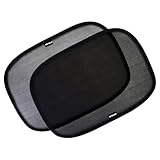
Overview: Enovoe’s two-pack static-cling sun shades deliver straightforward UV protection for budget-conscious families. Measuring 21 x 14 inches, these shades block 97% of UV rays using a dual-layer mesh design that prioritizes both protection and outward visibility. The lightweight construction and tool-free installation make them ideal for parents seeking a simple, portable solution for daily errands and road trips.
What Makes It Stand Out: The static cling technology eliminates hardware entirely, adhering directly to glass without adhesives or suction cups. This creates a clean, low-profile appearance while allowing infinite repositioning. The sturdy wire frame maintains shape without sagging, and the included storage pouch adds travel convenience. The 21-inch length provides generous coverage for most sedan and SUV rear windows.
Value for Money: At $9.99 for two shades, this represents exceptional value—just $5 per unit. The four-pack version offers even better economics, but this two-pack serves as an affordable entry point. Competing static-cling shades typically range from $8-15 per pair, making Enovoe competitively priced while delivering comparable UV protection and build quality.
Strengths and Weaknesses: Strengths include effortless installation, strong UV blockage, excellent outward visibility, compact storage, and reusability across multiple vehicles. The wire frame prevents flapping at moderate speeds. Weaknesses involve potential adhesion failure in very hot conditions or on imperfectly clean windows, and the lack of retraction means manual removal and storage when not needed. May leave slight residue over time.
Bottom Line: Perfect for parents wanting effective, affordable sun protection without permanent installation. The static cling design offers unmatched convenience for multi-vehicle families.
3. Enovoe Car Window Shades for Baby (4 Pack) - 21"x14" - Sun Shade Blocker, Cling - Glare Shield and UV Rays Protection for Your Child - Side Windows Screens for SUV- Mesh Window Shades for Car Baby
Overview: This four-pack variant of Enovoe’s popular static-cling shades delivers comprehensive window coverage for larger families or maximum protection. Each 21 x 14-inch shade employs the same dual-layer mesh technology blocking 97% of UV rays while maintaining clear outward visibility. The expanded quantity allows simultaneous protection of both rear and side windows, creating a cooler, more comfortable cabin environment.
What Makes It Stand Out: The value proposition dominates—four shades for just $2 more than the two-pack price. This enables full-coverage configurations impossible with standard two-packs, particularly beneficial for SUVs with three rows or families with multiple children. The identical performance to the two-pack version means no quality compromise, while the included storage pouch accommodates all four shades when not in use.
Value for Money: At $11.99 for four units ($3 each), this represents the best cost-per-shade ratio in the category. Purchasing two separate two-packs would cost nearly $20, making this bundle a 40% savings. For families needing more than two windows covered, the economics are compelling. Even households with smaller vehicles gain spare shades for replacement or sharing.
Strengths and Weaknesses: Strengths include unbeatable value, generous coverage area, tool-free static cling installation, durable wire-frame construction, and complete vehicle protection. The four-pack eliminates difficult decisions about which windows to prioritize. Weaknesses mirror the two-pack: potential adhesion issues on dirty windows or in extreme heat, manual storage requirement, and occasional edge curling over time. No size variety within the pack.
Bottom Line: The smartest choice for families wanting maximum coverage at minimum cost. Buying this four-pack over the two-pack is a no-brainer for nearly every use case.
4. EcoNour Car Side Window Sun Shade (2 Pack) | Retractable Roller Sunshade for Kids | Baby Car Window Shades for UV and Sun Glare Protection | Baby Travel Accessories (15"x17")

Overview: EcoNour’s retractable roller shades blend permanent-style convenience with premium materials for discerning parents. The 15 x 17-inch shades feature a smooth self-retracting mechanism and non-toxic PVC mesh that blocks UV rays while reducing interior temperatures. Designed for those preferring semi-permanent installation, these shades provide on-demand protection with a simple button press, eliminating storage concerns.
What Makes It Stand Out: The retractable system offers the cleanest aesthetic and most convenient operation in its class. Unlike static-cling shades requiring manual removal, these deploy and retract instantly. The non-toxic PVC construction ensures child safety, while the premium mesh provides privacy protection—blocking outside visibility into the cabin. The strong suction cup mounting creates a stable, semi-permanent fixture.
Value for Money: At $19.99 for two ($10 per unit), EcoNour commands a premium price. However, comparable retractable systems from automotive brands cost $25-35 per unit. The included features—privacy mesh, heat reduction, and durable retraction mechanism—justify the cost for parents valuing convenience. The long-term durability offsets the initial investment versus replacing cheaper shades annually.
Strengths and Weaknesses: Strengths include effortless one-handed operation, excellent privacy protection, durable construction, stable suction cup mounting, and superior heat reduction. The retractable design eliminates loose shade flapping and storage hassles. Weaknesses involve higher price point, smaller coverage dimensions than static alternatives, and suction cups requiring clean, flat window surfaces. Installation takes longer than static-cling options, and the mechanism adds slight bulk.
Bottom Line: Ideal for parents prioritizing convenience and privacy who don’t mind paying extra for retractable functionality. The premium build quality ensures years of reliable service.
5. Baby Uma Car Window Shades (2 Pack) - 14.2″ x 21.3″, UPF 50+ Car Window Covers, 99% UVB + 94% UVA Protection, Static Cling Sun Shade with Travel Bag (Medium)

Overview: Baby Uma’s UPF 50+ rated shades deliver dermatologist-level sun protection for young passengers. Measuring 14.2 x 21.3 inches, these static-cling covers block 99% UVB and 94% UVA rays—exceeding most competitors’ specifications. Available in three sizes, the medium version suits most sedans and crossovers, providing a tailored fit that maximizes coverage while maintaining driver visibility through premium mesh.
What Makes It Stand Out: The detailed UV protection metrics set Baby Uma apart, offering specific UVA/UVB blockage percentages rather than general claims. The triple-function design acts as UV shield, glare reducer, and privacy screen simultaneously. Three size options ensure optimal fitment, preventing gaps that compromise protection. The static cling application remains tool-free while the larger dimensions provide superior coverage compared to similarly priced alternatives.
Value for Money: At $16.99 for two shades, Baby Uma positions itself as a premium static-cling option. While pricier than Enovoe’s offerings, the enhanced UV specifications, size variety, and privacy feature justify the $7 premium. Comparable UPF 50+ shades typically cost $12-18 per unit, making this competitively priced for its performance tier. The included travel bag adds value for multi-vehicle families.
Strengths and Weaknesses: Strengths include superior UV protection ratings, multiple size options, privacy enhancement, generous coverage area, and easy static cling installation. The fold-flat storage design is more compact than wire-frame alternatives. Weaknesses involve higher cost than basic static shades, potential sizing confusion requiring pre-purchase measurement, and adhesion challenges on textured or tinted windows. The larger size may overwhelm smaller car windows.
Bottom Line: Excellent for parents wanting maximum UV protection with size-specific fitment. The premium specifications justify the modest price increase over budget alternatives.
6. Sfee Car Window Shade for Side Windows, 2 Pack Sun Shade Retractable for Car Blocks Heat and UV Rays Glare Protection Roller Sunshade Visor for Baby, Kids, Pets, Passengers

Overview:
The Sfee Car Window Shade delivers a retractable sun protection solution for side windows in a practical two-pack bundle. Engineered with premium higher-density fabric mesh, these roller shades block heat, UV rays, and glare while preserving outward visibility. Designed for families with infants, children, pets, or sun-sensitive passengers, the shades prioritize convenience and effective solar protection without the cheap plastic feel of budget alternatives.
What Makes It Stand Out:
The self-retracting one-button mechanism distinguishes this product from static cling or fixed shades, enabling effortless deployment and stowage within seconds. The dual-attachment system—featuring six rubber suction cups plus adjustable clips—offers installation versatility that single-method competitors lack. This adaptability ensures a secure fit across diverse window frames while the premium mesh construction maintains durability and clarity where plastic shades yellow and crack.
Value for Money:
Priced at $15.89 for two retractable shades, Sfee positions itself in the mid-range tier. The mechanical retracting feature and robust mesh justify the modest premium over basic static shades. While cheaper options exist, the daily convenience of one-button operation and dual-mounting flexibility delivers tangible long-term value, particularly for parents who frequently adjust shade positioning during variable light conditions.
Strengths and Weaknesses:
Strengths include the intuitive retractable design, high-quality mesh material, flexible installation options, and comprehensive UV protection. Six suction cups provide superior hold versus standard four-cup designs. Weaknesses involve potential suction cup deformation during shipping (requiring hot water treatment per manufacturer instructions) and the 15.7"×17.7" dimensions, which may prove insufficient for larger SUV or minivan windows. The two-pack quantity might leave some families needing additional coverage.
Bottom Line:
The Sfee retractable shades excel for users prioritizing convenience and adjustability. The smart retracting mechanism and dual-mount system make it ideal for daily drivers who frequently modify shade positioning. While not the cheapest option, the build quality and user-friendly design make it a worthwhile investment for most sedan and medium-sized vehicle owners seeking hassle-free sun protection.
7. Munchkin® Brica® Magnetic Stretch to Fit™ Sun Shade, Black, 1 Pack

Overview:
The Munchkin Brica Magnetic Stretch-to-Fit Sun Shade revolutionizes installation with an innovative magnetic attachment system in a single-pack configuration. This shade eliminates common suction-cup frustrations by using five powerful magnets that adhere directly to metal door frames, creating a secure fit for large windows up to 18x34 inches. The stretchable design accommodates various window shapes while maintaining full functionality.
What Makes It Stand Out:
Magnetic installation removes suction cups entirely, offering the unique advantage of rolling down windows with the shade still attached—a critical feature for ventilation. The stretch-to-fit mechanism with hoops-to-hooks customization ensures compatibility with irregular window geometries that rigid shades cannot match. This represents a fundamental engineering shift from traditional adhesive or static-cling designs, prioritizing permanence and flexibility simultaneously.
Value for Money:
At $13.70 for a single large shade, the value proposition depends entirely on vehicle compatibility. For steel-framed cars, the durability and convenience outweigh the cost, especially considering the window-down capability. However, the single-pack offering and metal-frame requirement limit universal appeal compared to multi-pack alternatives, making it a specialized rather than mass-market solution.
Strengths and Weaknesses:
Key strengths include the magnetic attachment’s reliability, stretchable coverage area, window-down functionality, and robust UV-A/UV-B blocking mesh. Installation is remarkably quick and tool-free. Critical weaknesses center on incompatibility with aluminum or composite car bodies—users must test door frames with a household magnet before purchase. The single-unit packaging provides incomplete coverage for families needing multiple windows shaded simultaneously.
Bottom Line:
This magnetic shade is a brilliant solution for compatible vehicles, particularly older steel-bodied cars. The ability to lower windows without removal is unparalleled in convenience. However, the metal-frame limitation is non-negotiable. Verify compatibility first; if your vehicle qualifies, this is among the most convenient options available. Otherwise, traditional suction-cup designs remain necessary.
8. kinder Fluff Car Window Shades (4Pack)-The Only Certified Car Window Sun Shade for Baby Proven to Block 99.95% UVR - Mom’s Choice Gold Award - car Window Shades for Side Windows - Standard
Overview:
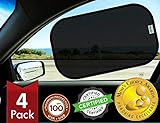
The kinder Fluff Car Window Shades establish the gold standard with certified UV protection in a comprehensive four-pack. As the only Mom’s Choice Gold Award recipient in this category, these shades deliver proven 99.95% UVB and 99.79% UVA blocking—equivalent to UPF 50+ or 100 SPF. The package includes two transparent and two semi-transparent shades for adaptable light control and privacy management.
What Makes It Stand Out:
Certification and independently verified performance differentiate this product dramatically. While competitors make unsubstantiated claims, kinder Fluff provides documented protection levels. The 120 GSM mesh with 15S film represents commercial-grade material thickness, and the unique clamp design ensures durability beyond typical wire-frame shades. The award recognition adds credibility that budget alternatives cannot match, making it the choice for evidence-based safety.
Value for Money:
Priced at $14.90 for four premium-certified shades, this package delivers exceptional value. The cost per shade undercuts many non-certified competitors while offering superior, verified protection. For safety-conscious parents, the independently tested UV blocking justifies every penny, making it a small investment for proven infant protection during daily commutes or extended road trips.
Strengths and Weaknesses:
Unmatched strengths include certified UV blocking, award-winning design, versatile transparency options, robust 120 GSM construction, and included storage pouch. The four-pack covers most family vehicles completely. Weaknesses include the static application—lacking retractable convenience—and the 20"x12" dimensions, which may prove small for oversized windows in large SUVs or trucks. The premium materials add slight bulk when folded for storage.
Bottom Line:
For parents prioritizing verified sun protection over marketing gimmicks, kinder Fluff is the undisputed champion. The certification and award pedigree provide peace of mind that unsubstantiated claims cannot. While static shades require manual removal, the proven UV blocking makes this the safest choice for infants and young children. Accept no substitutes when independent verification matters for your family’s safety.
9. EcoNour Car Window Shades for Baby (4 Pack) | Protects Baby from Window Sun & Heat | Sun Shade Side Windows for Kids | Automotive Sun Protection from UV | Child Safety Accessories | XXXX-Small-20 x12

Overview:
EcoNour’s four-pack window shades target budget-conscious families seeking versatile sun protection without sacrificing core functionality. This set includes two transparent and two semi-transparent shades, allowing customization based on lighting conditions and privacy needs. Designed for medium-sized windows at 20"x12", these shades emphasize portability and practical daily use for parents needing immediate, affordable coverage.
What Makes It Stand Out:
The sub-$10 price point for a four-pack makes this the most economical option in the category. The inclusion of both shade types provides flexibility typically reserved for premium sets. The tear-resistant construction and travel-ready design—lightweight, foldable, and compact—cater specifically to families on the go who need reliable protection without installation complexity or financial strain.
Value for Money:
At $9.99 for four shades, EcoNour delivers unbeatable cost-per-unit value. While lacking formal certification, the functional design and material durability exceed expectations for the price. This represents a pragmatic choice for secondary vehicles, grandparents’ cars, or families needing immediate coverage without premium investment. The value proposition prioritizes quantity and versatility over verified performance metrics.
Strengths and Weaknesses:
Primary strengths include exceptional affordability, versatile transparency options, portability, tear-resistant materials, and universal medium-window fit. The four-pack enables complete vehicle coverage. Notable weaknesses involve the absence of UV-blocking certification, reliance on static application (suction cups or cling not specified), and basic construction that may not match premium brand longevity. The “XXXX-Small” designation in the title contradicts the actual 20"x12" size, causing potential confusion.
Bottom Line:
EcoNour is the smart budget buy for families needing immediate, functional coverage across multiple windows. While certification-conscious parents should look elsewhere, these shades deliver practical sun reduction and privacy at a fraction of premium prices. Perfect for secondary vehicles or as a starter set before upgrading to certified options. The value is undeniable for cost-sensitive buyers prioritizing quantity over verified specifications.
10. DETAILSAVER 2026 New Upgrade Car Window Shades for Side Window 25"X15"(2 Pack),Car Window Shade for Baby Suction Cup,Sun Shade Side Window Can Blocks 99.98% UVR
Overview:
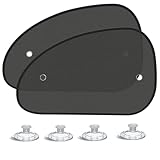
DETAILSAVER’s 2026 upgraded shades bring heavy-duty construction and impressive UV blocking to a two-pack configuration. Measuring 25"x15", these shades target larger windows in SUVs, minivans, and sedans. The manufacturer claims 99.98% UVR blocking—approaching medical-grade protection—while utilizing a steel wire frame reinforced with durable mesh for repeated installation cycles without deformation.
What Makes It Stand Out:
The steel wire frame provides structural integrity that flimsy wire alternatives lack, ensuring the shade maintains shape after countless removals. Four “super strong” suction cups directly address the most common failure point in car shades. The 99.98% UVR blocking claim rivals certified products at a non-premium price point, while the oversized dimensions cover windows that standard shades cannot match, eliminating coverage gaps.
Value for Money:
Priced at $9.99 for two large, robust shades, DETAILSAVER offers aggressive value. The steel frame and high UV blocking typically command $15-20 per pair from established competitors. For SUV and minivan owners needing larger coverage, this represents significant savings without sacrificing core protection. The included storage bag adds value uncommon in this aggressive price tier.
Strengths and Weaknesses:
Major strengths include the steel wire frame durability, 99.98% UVR blocking claim, extra-large size, strong suction cup mounting, and budget-friendly pricing. The mesh maintains visibility while providing substantial protection. Weaknesses include the static design lacking retractable convenience, potential over-sizing for compact cars, and unverified UV claims despite the impressive percentage. The two-pack count may insufficiently cover all family vehicle windows.
Bottom Line:
DETAILSAVER delivers exceptional value for large-vehicle owners needing robust, oversized shades. The steel frame and strong suction cups solve common durability complaints, while the UV protection claims—if accurate—match premium competitors at half the price. For SUVs and minivans, this is a top contender. Compact car owners should verify dimensions before purchasing to avoid over-coverage issues.
Why Newborn Skin Demands Superior UV Protection
Newborn skin is physiologically distinct from adult skin in ways that dramatically increase UV vulnerability. At birth, the stratum corneum—the outermost protective barrier—is approximately 30% thinner than adult skin and doesn’t reach full thickness until around 12 months of age. This means UV photons travel a shorter distance to reach living cells where they can wreak havoc on developing DNA.
The melanin factory in your baby’s skin is operating at minimal capacity. Melanocytes, the cells responsible for producing protective pigment, are present but underactive in newborns. This leaves them with an SPF that dermatologists estimate to be around 3-5, compared to an adult’s baseline of 10-15. Even more concerning is their elevated surface-area-to-body-weight ratio, which means any UV exposure results in a proportionally higher dose per kilogram of body weight.
Research from the Journal of the American Academy of Dermatology reveals that a significant portion of lifetime UV exposure occurs before age 18, with early childhood exposures being particularly damaging due to the immaturity of DNA repair mechanisms. For newborns riding in rear-facing car seats, the combination of direct side-window exposure and reflected UV from surrounding vehicles creates an environment where cumulative damage accumulates with every car ride, even on cloudy days.
Decoding the 99% UV Block Claim: What It Actually Means
When manufacturers boast “99% UV block,” they’re referring to a specific measurement that parents must understand to make informed comparisons. This claim typically indicates the material blocks 99% of UVB rays and a slightly lower percentage of UVA rays. The distinction matters enormously for newborn protection.
Understanding UVA vs UVB Rays
UVB rays are the primary cause of surface-level damage—sunburns and direct DNA mutations. These are largely blocked by standard automotive glass, which filters approximately 70-80% of UVB. UVA rays, however, are the silent infiltrators. They penetrate deeper into the skin, reaching the dermis where they generate free radicals that damage collagen, elastin, and cellular DNA. Standard car windows block only about 30-40% of UVA rays, leaving a massive protection gap.
A true 99% UV-blocking shade must address both spectrums effectively. Look for materials tested to the ANSI Z80.3 standard or equivalent, which measures UV transmittance across the entire 290-380nm range. Some premium materials achieve 99.9% blockage, reducing UV exposure to levels comparable to a moonlit night.
The Difference Between SPF and UPF Ratings
Parents familiar with sunscreen SPF ratings often confuse them with the UPF (Ultraviolet Protection Factor) used for fabrics. SPF measures how long skin takes to redden compared to unprotected skin—it’s a time-based metric. UPF measures the exact fraction of UV radiation that penetrates fabric. A UPF 50 rating blocks 98% of UV rays, while UPF 50+ indicates 98.3% or higher. For car shades, “99% UV block” translates roughly to UPF 100, offering double the protection of UPF 50. This matters because newborns should experience essentially zero UV exposure, making every percentage point critical.
The Science Behind Car Window UV Penetration
Automotive glass is not the impenetrable barrier many parents assume. Laminated windshield glass provides the best protection, blocking about 98-99% of UVB and 60-80% of UVA due to its plastic interlayer. Side and rear windows, however, are typically made from tempered glass, which lacks this interlayer and consequently offers far inferior protection.
The angle of incidence dramatically affects UV penetration. When the sun hits your window at a low morning or afternoon angle, the rays travel through more glass (a phenomenon called optical path length), paradoxically increasing filtering. However, during peak midday hours when the sun is more overhead, rays strike side windows more perpendicularly, reducing the glass’s filtering effect and increasing UV transmission.
Reflection compounds the problem. UV rays bounce off surrounding vehicles, concrete barriers, and even snow, creating diffuse radiation that enters from multiple angles. A shade that only blocks direct sunlight leaves your newborn vulnerable to this reflected assault. Premium shades use materials with 360-degree protection, blocking both direct and diffuse UV through high-density weaving and specialized coatings.
Types of Car Window Shades: Pros and Cons for Newborns
Not all shade designs offer equivalent protection, and each type presents unique tradeoffs between convenience, coverage, and safety.
Static Cling Shades
These adhesive-free films use static electricity to adhere directly to glass. They offer seamless coverage without gaps, making them excellent for UV protection. The absence of hardware eliminates projectile risks in a crash. However, they require meticulous installation to avoid air bubbles that can distort your view and reduce effectiveness. Quality varies dramatically—cheap clings may lose adhesion in temperature extremes, creating dangerous blind spots as they peel away. For newborns, look for optically clear static clings with at least 0.3mm thickness to ensure durability.
Suction Cup Shades
Traditional suction cup designs offer adjustability but introduce multiple failure points. Each cup creates a coverage gap, and UV exploits these gaps mercilessly. In crash testing, suction cups can become projectiles, though some models now feature breakaway designs. The primary advantage is removability for cleaning or transferring between vehicles. If you choose this type, ensure cups are made from UV-stabilized silicone that won’t become brittle, and position them to minimize coverage gaps—ideally overlapping multiple shades.
Roller/Retractable Shades
These built-in systems offer the most elegant solution, mounting permanently to the window frame and retracting with a spring mechanism. They provide consistent, gap-free coverage and eliminate loose parts. The downside? They require installation that may interfere with window operation and can be costly. For newborns, ensure the roller housing is securely mounted with automotive-grade adhesive rated for extreme temperatures, and verify the mesh doesn’t sag, creating dangerous blind spots.
Universal Fit vs Custom Fit
Universal shades promise convenience but inevitably leave gaps. Custom-fit shades, measured precisely for your vehicle’s window dimensions, eliminate these vulnerabilities. For newborns, the investment in custom-fit is non-negotiable. A 1cm gap along the edge can reduce overall protection by up to 15% as UV floods through the opening. Some premium manufacturers offer vehicle-specific templates that account for window curvature and mounting points.
Mesh Density: What Matters Most
Mesh density is measured in threads per inch (TPI). Effective UV blocking requires minimum 120 TPI, with premium shades reaching 200+ TPI. However, higher density reduces visibility. The sweet spot for newborn protection is 150-180 TPI with specialized UV-absorbing fibers. These materials incorporate titanium dioxide or zinc oxide into the polymer matrix—similar to mineral sunscreen—creating physical UV blockage rather than just filtering.
Key Features That Define Premium Protection
Material Composition and Safety Certifications
The safest materials for newborns are phthalate-free, BPA-free polyester or nylon with embedded UV inhibitors. Look for OEKO-TEX Standard 100 certification, which ensures no harmful chemicals were used in manufacturing. Some materials off-gas volatile organic compounds (VOCs) when heated by direct sunlight, creating a chemical exposure risk in the enclosed car environment. Premium shades undergo thermal testing to 180°F to ensure stability.
Optical Clarity and Driver Visibility
A shade that protects your baby but blinds you is no solution at all. Premium shades maintain optical clarity through precision weaving that blocks UV without scattering visible light. Test this by holding the shade at arm’s length—you should see minimal distortion when looking through it. Some manufacturers provide haze percentage ratings; aim for under 5% haze for driver-side windows and under 10% for passenger areas where your newborn sits.
Heat Rejection vs UV Blocking
These are separate metrics. A shade can block UV while transmitting infrared heat, or vice versa. For newborns, you need both. Infrared radiation raises cabin temperature, creating discomfort and dehydration risk. Premium shades specify both UV blockage (aim for 99%+) and total solar energy rejection (TSER, aim for 50%+). Materials with reflective metallic coatings achieve superior heat rejection but may interfere with electronic signals—look for ceramic-based coatings instead.
Durability and Temperature Resistance
Your car’s interior can reach 170°F on a summer day. Low-quality shades warp, discolor, or release adhesives at these temperatures. Premium shades use automotive-grade materials tested to -40°F to 200°F. Check for UV-stabilized polymers that won’t become brittle after months of sun exposure. The shade should maintain tension and adhesion across this entire range—sagging creates gaps, while brittleness leads to cracking and reduced protection.
Installation Strategies for Maximum Effectiveness
Front Seat vs Rear Seat Considerations
Rear-facing newborns in the back seat face unique UV exposure patterns. Side windows deliver direct radiation to the face and arms, while the windshield contributes reflected UV from the dashboard. For optimal protection, install shades on all windows except the driver’s immediate viewing area. The rear windshield deserves equal attention—UV reflects off vehicles behind you and enters from the back. Use a combination of side-window shades and a rear-window shade to create a protective cocoon.
Coverage Gaps: The Hidden Danger
UV behaves like water—it finds the smallest opening. Even a 5mm gap along a window edge allows substantial UV penetration due to the “edge effect,” where radiation diffracts around barriers. Use overlapping installation techniques: install side shades first, then position rear shades to overlap the edges by at least 2cm. For static clings, use a credit card to squeegee edges firmly, creating a complete seal. Check for gaps by turning off interior lights at night and having someone shine a flashlight from outside—any light leakage indicates a UV vulnerability.
Safety Considerations Beyond UV Protection
Crash Test Implications
Any accessory in your vehicle becomes a projectile in a collision. The 30mph crash test standard means a 1-pound shade becomes a 30-pound force missile. Choose shades that either mount securely with automotive-grade adhesive (static clings) or use breakaway attachments that release under force. Never use rigid frames or metal components. The safest designs are flexible and lightweight, weighing under 8 ounces per window.
Air Circulation and Overheating Prevention
Shades that block airflow can contribute to dangerous heat buildup. Newborns can’t regulate temperature effectively—their thermoregulatory system matures between 6-12 months. Ensure shades leave window operation possible for ventilation, or choose mesh designs that allow air passage. Some premium shades incorporate micro-perforations that maintain airflow while blocking UV. Monitor cabin temperature with a rear-seat thermometer; never exceed 80°F for extended periods.
Emergency Escape Accessibility
In an accident or vehicle fire, emergency responders may need to break windows or access your child quickly. Shades should not impede window-breaking tools or obscure your child’s location. Avoid opaque shades that completely block visibility. First responders recommend shades that cover no more than 70% of the window surface, leaving clear sightlines. Consider removable designs for the window nearest the car seat that can be quickly stripped away in emergencies.
The Hidden Dangers of Cheap Alternatives
Budget shades often achieve “99% UV block” through chemical coatings that wash off after a few cleanings. These coatings may contain benzophenones, which are endocrine disruptors—particularly concerning for newborns whose hormonal systems are developing. Independent testing of discount shades reveals many block less than 80% of UVA rays despite UVB claims, exploiting the fact that UVA is harder to measure without specialized equipment.
Cheap suction cups use PVC that off-gases phthalates when heated, creating a chemical soup in your car’s microenvironment. The adhesives in low-cost static clings often fail above 120°F, causing the shade to detach and potentially cover the driver’s face during operation. The mesh itself may be loose-weave polyester without UV inhibitors, providing merely psychological comfort rather than real protection.
Measuring Effectiveness: How to Verify Your Shade’s Claims
You don’t need a lab to perform basic verification. Purchase a UV-sensitive bead bracelet (available for under $10) that changes color when exposed to UV. Place it behind your installed shade in direct sunlight—if it remains white, you’re getting effective protection. For a more quantitative approach, smartphone UV sensors (paired with apps like “UV Meter”) can measure transmission differences, though they’re less accurate than professional photometers.
Professional verification involves spectrophotometer testing, which measures transmittance at each UV wavelength. Reputable manufacturers provide test reports from independent labs like SGS or Bureau Veritas. Request these reports and look for specific data across the UVA spectrum (320-400nm), not just a single average number. The report should show less than 1% transmittance across the entire range for true 99%+ protection.
Legal Regulations and Window Tinting Laws
Car window shades exist in a legal gray area. Most jurisdictions prohibit window tinting beyond a certain darkness on front side windows, but shades are typically exempt because they’re removable. However, some states restrict how much of the window can be covered. California, for instance, allows shades only on the top 4 inches of front side windows. Texas permits full coverage of rear windows but requires side mirrors if rear visibility is obstructed.
Check your state’s vehicle code section on “obstructions to driver’s view.” The key phrase is “removable,” which usually exempts shades from tinting laws. However, if you’re in an accident and the shade contributed to reduced visibility, you could face liability. The safest approach: use shades that maintain at least 70% visible light transmittance on front side windows and keep documentation of their removable nature in your glove compartment.
Seasonal and Geographic Factors Affecting UV Exposure
UV intensity varies more than most parents realize. At high altitudes, UV increases approximately 10-12% per 1,000 feet of elevation. Driving through mountain passes with your newborn requires extra vigilance. Snow reflection can increase UV exposure by up to 80%, making winter car rides potentially more damaging than summer ones. Clouds block visible light but only filter about 20% of UV—overcast days lull parents into complacency while UV penetrates unabated.
The UV Index, typically reported for midday conditions, can be misleading for car travel. Morning and afternoon sun strikes side windows more directly than overhead midday sun, creating peak exposure during your 9 AM pediatrician appointment or 4 PM grocery run. Equatorial regions and areas with high ozone depletion (like parts of Australia and New Zealand) require even more stringent protection—consider upgrading to 99.9% blocking materials if you live in these zones.
Maintenance and Longevity: Protecting Your Investment
Even premium shades degrade. UV inhibitors are sacrificial—they gradually break down while absorbing UV energy. Expect effective protection for 2-3 years with daily use, after which replacement is necessary. Clean shades monthly with mild soap and water—never ammonia-based cleaners, which degrade UV coatings. Static clings should be removed and reinstalled every two weeks to prevent permanent bonding to the glass, which can cause tearing during removal.
Store removable shades flat when not in use; folding creates creases that become permanent weak points. Inspect suction cups quarterly for cracks or hardening. If you notice yellowing of the material, the UV inhibitors are depleted and protection is compromised. Keep a maintenance log with installation dates to track replacement schedules—your newborn’s skin can’t afford expired protection.
Common Installation Mistakes That Compromise Protection
The most frequent error is installing shades on the interior glass surface only. UV penetrates the glass first, then hits the shade, meaning some scattering occurs before blockage. While you can’t install shades externally, premium static clings can be applied to the outer surface of the glass when the vehicle is stationary (remove before driving). This eliminates the glass-scattering effect but requires diligent removal.
Another mistake is assuming one shade fits all window types. Curved windows require flexible materials that conform without tension points. Installing a flat shade on a curved window creates micro-gaps along the edges where UV streams through. Always measure your window’s curvature—if the radius is less than 24 inches, you need a shade specifically designed for curved glass.
Parents often forget the sunroof. Even closed sunroofs transmit significant UV through the glass. If your vehicle has a sunroof positioned above or in front of your newborn’s seat, install a retractable internal shade or use UV-blocking film. The cumulative exposure from above can exceed side-window exposure during certain times of day.
Beyond UV: Additional Benefits for Newborn Comfort
Premium UV shades create a microclimate that benefits your newborn beyond radiation protection. By reducing solar heat gain, they decrease cabin temperature fluctuations that can disturb sleep. The diffused light creates a womb-like environment, reducing visual overstimulation that triggers fussiness. Many parents report longer, more peaceful car naps after installing quality shades.
The glare reduction protects developing eyes. Newborn pupils don’t constrict effectively until 2-3 months, making them vulnerable to bright light that can cause discomfort and potentially affect retinal development. Shades eliminate harsh contrasts and create even lighting that supports visual system maturation. Some materials even filter blue light wavelengths that can disrupt circadian rhythms, helping maintain your newborn’s sleep schedule during daytime travel.
Cost vs. Value: Investing in Premium Protection
Budget shades ($10-20) typically last one season and provide 80-90% UV blockage at best. Mid-range options ($30-50) offer 95-98% blockage with 2-year lifespans. Premium shades ($60-100+) deliver true 99%+ protection with 3-5 year durability and safety certifications. For newborns, the cost difference is negligible compared to a single dermatologist visit for sun damage.
Consider the lifetime cost: A $80 shade protecting your child for three years costs 7 cents per day. Compare that to the statistical cost of UV-related skin issues—melanoma treatment averages $50,000+ and incalculable emotional cost. The value proposition becomes clear. Premium shades also retain resale value; many parents sell vehicle-specific custom shades for 50-70% of retail when changing cars.
Frequently Asked Questions
How soon after birth should I install UV-blocking shades? Install them before your baby’s first car ride home from the hospital. Newborn skin is most vulnerable in the first weeks of life when melanin production is minimal and the skin barrier is thinnest. Don’t wait for sunny weather—UV penetrates clouds and causes damage regardless of temperature or perceived brightness.
Can I use regular window tint instead of removable shades for my newborn? Automotive window tinting provides permanent UV protection but raises legal and safety concerns. Most states restrict front window tinting, and professional tinting on side windows can interfere with emergency escape. Removable shades offer superior flexibility and can achieve higher UV blockage (99%+) than many tints (typically 95-98%). For newborns, the ability to remove shades for cleaning or adjust coverage is invaluable.
Do shades need to cover the entire window or just the area near my baby’s seat? UV reflects and scatters throughout the cabin, so partial coverage leaves your baby exposed. Cover the entire window surface for maximum protection. However, maintain at least 30% of the window as clear viewing area for the driver to ensure safety and legal compliance. Position your baby’s car seat on the passenger side and shade that window completely.
Will dark shades make my car too hot in summer? Quality UV-blocking shades actually reduce heat by blocking infrared radiation along with UV. The key is selecting shades with high Total Solar Energy Rejection (TSER above 50%). Dark color doesn’t necessarily mean more heat—optical quality matters more than shade. In fact, well-designed shades can lower cabin temperature by 15-20°F compared to unshaded windows.
How do I clean UV-blocking shades without damaging their protective coating? Use a microfiber cloth dampened with distilled water and mild, ammonia-free soap. Wipe gently in one direction—never scrub in circles, which can damage the UV coating. Rinse with clean water and air dry completely before reinstalling. Avoid glass cleaners, alcohol wipes, or paper towels, which contain abrasive fibers. Clean monthly to maintain optical clarity.
Can my baby get vitamin D deficiency from UV-blocking shades? This is a common concern, but unfounded for car travel. The minimal time spent in vehicles shouldn’t be a primary source of vitamin D synthesis. Newborns receive vitamin D through formula or breast milk supplementation (400 IU daily as recommended by pediatricians). Brief, deliberate sun exposure on arms and legs for 10-15 minutes a few times weekly provides adequate synthesis without risking facial UV exposure during car rides.
Are there any shades that work with power windows that go up and down? Yes, static cling shades work perfectly with operational windows since they adhere directly to glass. Retractable shades mounted in the window frame also accommodate window movement. Avoid suction cup shades on windows you plan to operate, as the cups can dislodge and interfere with window mechanisms. Always test window operation after installation to ensure smooth movement.
How can I tell if my shade is still providing 99% protection after a year of use? Perform the UV-sensitive bead test monthly. If beads change color behind the shade, protection has degraded. Also inspect for yellowing, brittleness, or loss of tension—these visual cues indicate UV inhibitor depletion. Most manufacturers rate their shades for 2-3 years of daily use. When in doubt, replace annually for newborns, as their skin can’t afford compromised protection.
Do I need shades if my car has factory UV-resistant glass? Factory UV-resistant glass typically blocks 95-98% of UVB but only 60-80% of UVA—the deep-penetrating rays most damaging to newborns. This is insufficient for newborn protection. Premium shades add the critical UVA blockage layer. Think of factory glass as a good baseline, but shades as the essential upgrade for your baby’s vulnerable skin.
Can I use the same shades when my newborn becomes a toddler? Physically, yes, but reconsider the coverage strategy. Toddlers move more and may peel off static clings. Transition to more durable retractable shades or professionally installed window film. The UV protection remains critical—skin cancer risk correlates with total lifetime exposure, so maintaining 99% blockage through early childhood provides cumulative protective benefits. Just ensure the installation method evolves with your child’s developmental stage.'