Between the tablets, phones, gaming devices, Bluetooth headphones, and portable DVD players, the average family of four travels with over a dozen gadgets. Keeping everything powered during a road trip or vacation can quickly devolve into a nightly ritual of hunting for wall outlets, untangling a spaghetti mess of cables, and negotiating whose device gets priority charging. Modular charging stations have emerged as the elegant solution to this modern family travel headache, offering scalable power that adapts to your crew’s unique needs rather than forcing you into a one-size-fits-all box.
Unlike traditional power banks or basic USB hubs, modular systems let you build, expand, and reconfigure your charging setup as your family grows and your device collection evolves. Think of them as the LEGO blocks of portable power—start with a base unit that handles your immediate needs, then snap on additional battery modules, extra ports, or specialized outputs for camping trips, international travel, or teenage device overload. This guide cuts through the technical jargon to help you understand what truly matters when investing in a system that will keep your family connected, entertained, and (most importantly) sane on the road.
Top 10 Modular Charging Stations for Family Trips
Detailed Product Reviews
1. MSTJRY Charging Station for Multiple Devices : 6 Port USB Charger Stations - Family Multi-Device Organizer Charging Dock - Designed for iPhone iPad Android Cell Phone Tablet and Electronic, Black

Overview: The MSTJRY 6-port charging station offers compact multi-device management. Delivering 2.4A per port through smart USB distribution, it handles six devices simultaneously. The package includes six short mixed cables (2 Lightning, 3 USB-C, 1 Micro-USB) and seven removable dividers—two extra-tall for cased tablets. With universal compatibility for phones, tablets, and e-readers, this black dock targets families seeking cable management.
What Makes It Stand Out: This station’s Smart-chip ensures consistent 2.4A output per port regardless of load, preventing power throttling common in budget hubs. Anti-slip silicone pads and flame-retardant ABS construction prioritize safety, while the dedicated power switch adds convenience. The divider system accommodates thick cases without removal, solving a frequent pain point for families using rugged protection.
Value for Money: At $34.99, this sits in the mid-range sweet spot. The inclusion of six quality short cables—often a $15-20 separate purchase—adds significant value. While it lacks USB-C PD for laptops, its stable 2.4A delivery matches many competitors, making it ideal for phone/tablet-centric households without paying for unnecessary laptop power.
Strengths and Weaknesses: Pros: Consistent full-speed charging across all ports; excellent cable variety; superior case-friendly divider design; robust safety protections; compact footprint.
Cons: No USB-C PD or Quick Charge support; 2.4A max insufficient for modern laptops; plastic construction feels less premium; limited total power (roughly 60W shared).
Bottom Line: The MSTJRY excels for families prioritizing organization and reliable phone/tablet charging over raw power. Its smart distribution and case-friendly design make it practical at a fair price, though power users needing laptop charging should look elsewhere.
2. 600w Charging Station for Multiple Devices, 15 in 1 Wireless Charging Station for Apple, Dual 100w USB C Tablet Charging Station for MacBook,iPhone,iPad,Tablet(Black)
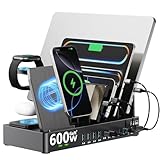
Overview: This 600W powerhouse combines a 12-port USB hub with a 3-in-1 wireless charger for Apple devices. Featuring dual 100W PD ports, two 65W ports, and four 60W USB-C connections alongside four QC 20W ports, it charges up to 15 devices simultaneously. GaN III technology enables compact laptop-level power delivery. The black station targets power users and multi-device households with two extra-wide slots for cased devices.
What Makes It Stand Out: The integration of wireless charging for iPhone, Apple Watch, and AirPods alongside massive USB power is unique at this price. Dual 100W ports allow simultaneous MacBook charging—a rarity in sub-$60 stations. Intelligent LED indicators turn off after five seconds to prevent sleep disruption. GaN III technology keeps temperatures low while delivering 600W total output, future-proofing for demanding devices.
Value for Money: At $59.48, this station offers exceptional value. Comparable GaN-based laptop chargers alone cost $40-50, yet this includes 12 USB ports and wireless charging. The 600W capacity exceeds most competitors under $100, making it cheaper than buying separate chargers. For Apple-centric households with laptops, tablets, and wearables, it’s a cost-effective all-in-one solution.
Strengths and Weaknesses: Pros: Unmatched 600W total output; dual 100W laptop charging; integrated wireless charging; GaN III efficiency; extra-wide device slots; comprehensive safety protections.
Cons: Wireless charger works only with Apple devices; non-charging USB-C port on watch stand is confusing; large footprint requires substantial desk space; may be overkill for users without laptops.
Bottom Line: This 15-in-1 station is a powerhouse bargain for Apple-heavy households needing laptop charging. Its GaN technology and wireless integration deliver premium features at a mid-range price, though Android-focused users should note the Apple-centric wireless limitations.
3. 100W Charging Station for Multiple Devices, 10-Port USB Fast Charging Station with Adjustable Dividers & 10 Cables- Multi Device Organizer Charging Dock for iPhone, iPad, Tablets & More

Overview: This 10-port charging station balances capacity and affordability with five USB-C and five USB-A ports sharing 100W total output. Intelligent Auto-Detect Technology optimizes charging current per device, delivering up to 3A via USB-C and 2.4A via USB-A. Eleven removable adjustable dividers accommodate everything from slim phones to bulky cased tablets. The package includes ten premium short cables, making it a complete out-of-box solution for home or office organization.
What Makes It Stand Out: The 1:1 USB-C to USB-A ratio is perfect for transitioning households with mixed device generations. The adjustable baffle system offers superior customization compared to fixed-slot designs, letting users create perfect spacing for any device thickness. Including ten cables—covering all major connector types—eliminates hidden costs and compatibility issues. The compact consolidated footprint maximizes desk space efficiency.
Value for Money: Priced at $39.99, this station hits the value sweet spot. Ten included cables (worth $20+ separately) and 100W total power deliver strong ROI. While not suitable for laptops beyond trickle charging, it outperforms cheaper 60W stations for phone/tablet-heavy households. The adjustable dividers add versatility that fixed-design competitors lack, making it more adaptable as device collections evolve.
Strengths and Weaknesses: Pros: Excellent cable variety included; highly adjustable dividers; balanced USB-C/USB-A port mix; fast phone charging (50% in 30 min); comprehensive safety certifications; compact design.
Cons: 100W shared power limits simultaneous fast charging; not designed for laptops; plastic construction; dividers may loosen over time with heavy use.
Bottom Line: This 10-port station is ideal for households prioritizing phone and tablet organization with maximum flexibility. The adjustable design and extensive cable pack make it a future-proof value choice, though laptop users need more powerful options.
4. 300W Charging Station for Multiple Devices, 8 Port Multi USB C Fast Charger Station Dock for MacBook iPhone 17/16/15/14/13/12 Samsung Pixel Series iPad, Black (6 Mixed Short Cables Included)

Overview: This 300W charging station focuses on USB-C power delivery with five USB-C ports and three USB-A ports, delivering enough juice for laptops and mobile devices. Dual 65W ports can charge MacBook Pro/Air models, while 30W and 20W ports handle phones and tablets. Unlike competitors with removable dividers, this station features a solid one-piece construction with two integrated wider slots for cased devices. The black finish and six included short cables create a sleek, ready-to-use docking solution.
What Makes It Stand Out: The fixed, sturdy housing eliminates the wobbling and lost-divider problems plaguing modular designs. Its USB-C-heavy port configuration reflects modern device trends better than legacy-focused hubs. The dual 65W laptop ports at $30.75 is aggressive pricing—most single 65W GaN chargers cost more alone. The integrated wider slots maintain clean aesthetics while accommodating bulkier devices.
Value for Money: At $30.75, this is the budget laptop-charging champion. Competing 300W stations typically start at $50+, making this a steal for users needing MacBook power. While it includes only six cables versus competitors’ ten, the quality USB-C selection covers modern needs. The trade-off of fixed dividers for lower price and sturdiness is smart for users who don’t reconfigure often.
Strengths and Weaknesses: Pros: Exceptional price for 300W output; dual 65W laptop charging; sturdy one-piece construction; USB-C focused; GaN technology; compact footprint.
Cons: Fixed dividers limit flexibility; only six included cables; fewer total ports (8 vs 10-15); may not fit very thick rugged cases; limited legacy USB-A ports.
Bottom Line: This station is a no-brainer for budget-conscious users needing reliable laptop charging alongside phones and tablets. The fixed design sacrifices some flexibility for sturdiness and value, making it perfect for stable setups where reconfiguration isn’t needed.
5. 510W Fast Charging Station for Multiple Devices, 10 Port USB C Charger Station with Flame-Retardant Material & 8 Cables for iPhone, Android, iPad, Tablets, Family Office Desk Charging Dock Organizer

Overview: This 510W charging station delivers massive power through five USB-C and five USB-A ports, positioning itself as a high-capacity organizer for demanding households. With individual port optimization—100W USB-C for laptops, 65W for tablets/phones, and 30W USB-A for wearables—it maintains fast charging across multiple devices simultaneously. The flame-retardant ABS solid one-piece design houses eight included short cables. Its 510W total output exceeds most competitors, making it suitable for power users with mixed device ecosystems.
What Makes It Stand Out: The intelligent power allocation system ensures each device receives optimal wattage without manual switching—unlike basic stations that split power evenly. This prevents the “slowdown cascade” when adding devices. The solid one-piece flame-retardant construction prioritizes safety over modular convenience, while the 510W capacity supports simultaneous laptop + multiple device charging that 300W stations struggle with. It’s a true “charge everything” hub.
Value for Money: At $49.98, the price-per-watt ratio is outstanding—roughly 10 cents per watt versus 15-20 cents for competitors. While it includes only eight cables (versus ten in some rivals), the 510W capacity justifies the trade-off. For households charging laptops alongside numerous mobile devices, it replaces $100+ worth of individual chargers, delivering premium power at mid-range pricing.
Strengths and Weaknesses: Pros: Massive 510W output; intelligent per-port power management; solid flame-retardant build; balanced port selection; excellent price-per-watt value; compact organizer design.
Cons: Only eight cables included; fixed dividers lack flexibility; may be overkill for non-laptop households; 510W shared power still limits simultaneous 100W charging on all ports.
Bottom Line: This 510W station is the power user’s value champion, offering best-in-class wattage and intelligent charging at an unbeatable price. It’s ideal for laptop-mobile hybrid households wanting one charger to rule them all, though modular-design fans should look elsewhere.
6. MSTJRY Charging Station for Multiple Devices : 5 Port Multi USB-A Charger Stations Multi-Device Organizer Charging Dock Designed for iPhone iPad Cell Phone Tablets (7 Short Cables Included)

Overview: The MSTJRY Charging Station offers a straightforward solution for households drowning in device cables. This 5-port USB-A hub includes seven short cables covering Lightning, Micro-USB, and USB-C connections, making it compatible with virtually any smartphone or tablet released in the past decade. Designed for countertop or desk organization, it consolidates multiple devices into a single charging location while eliminating cable clutter and freeing up wall outlets.
What Makes It Stand Out: Its universal approach shines through the generous cable bundle—three iOS cables, two Micro-USB, and two USB-C—ensuring you won’t need to hunt for spare cords. The smart detection system automatically adjusts voltage for each connected device, promising up to 80% faster charging than standard 2A chargers. Removable dividers accommodate tablets with protective cases, and the compact footprint works anywhere from kitchen counters to hotel nightstands. The power switch provides quick visual confirmation of operation.
Value for Money: At $28.48, this station sits in the budget-friendly sweet spot. You’re getting a complete package with cables included, eliminating additional purchases. While it lacks USB-C Power Delivery, the price reflects its USB-A limitations fairly. Comparable stations without cables often cost more, making this an economical choice for families prioritizing convenience over cutting-edge speed. It replaces multiple wall chargers while adding organization—a practical investment for cluttered spaces.
Strengths and Weaknesses: Pros include comprehensive cable variety, intelligent power distribution, family-friendly design, and excellent organization. Cons are the USB-A-only ports limiting future-proofing, modest power output insufficient for laptops, and plastic build quality that feels less premium than metal alternatives. The 5-port capacity may prove limiting for larger families.
Bottom Line: This charging station excels for families with basic charging needs. If your household primarily charges phones and tablets without requiring laptop power, the MSTJRY delivers exceptional value and organization in an affordable package that simply works.
7. 420W Charging Station for Multiple Devices, Zobirez 10-Port USB C Fast Charger Stations for MacBook, iPhone, Android Cell Phone, iPad, Tablet, Family Multi-Device Organizer Charging Dock, Black

Overview: The Zobirez 420W Charging Station represents a significant leap forward in multi-device power management. With ten ports—including five USB-C connections—this powerhouse delivers enough juice to charge an entire family’s devices simultaneously, including two laptops at full speed. The included eight mixed cables and sturdy one-piece design make it a comprehensive desktop charging command center that eliminates messy cables and multiple wall adapters.
What Makes It Stand Out: GaN technology enables the dual 65W fast-charging ports that can power MacBooks and other USB-C laptops, while three 45W and five 30W ports handle phones, tablets, and accessories. Unlike flimsy competitor models with removable dividers, Zobirez uses a durable, flame-retardant ABS structure with two extra-wide slots specifically designed for cased iPads or even small laptops. The 420W total output is among the highest in its class, and four non-slip rubber pads keep it firmly in place.
Value for Money: Priced at $41.87, this station offers remarkable power-per-dollar value. While more expensive than basic USB-A hubs, the ability to replace multiple laptop chargers and wall adapters justifies the cost. For households with mixed device ecosystems requiring serious power, it eliminates the need for separate high-wattage chargers, ultimately saving money and outlet space while providing professional-grade charging infrastructure.
Strengths and Weaknesses: Pros include exceptional power output, USB-C PD support, robust build quality, comprehensive cable pack, and laptop-charging capability. Cons are the larger footprint requiring more desk space, potential overkill for users with only phones, and the premium price point that may deter budget shoppers. The fixed slots offer less flexibility than adjustable models.
Bottom Line: For tech-heavy households juggling laptops, tablets, and phones, the Zobirez is a game-changer. Its combination of raw power, intelligent port distribution, and durable construction makes it the best mid-range choice for serious multi-device users who demand reliability and performance.
8. 415W Charging Station for Multiple Devices, 10-Port USB C Fast Charger Station, Dual PD 100W Charging Dock with Adjustable Dividers & 6 Cables-Device Organizer for Laptop MacBook, iPhone, iPad
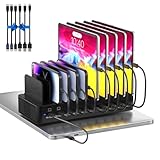
Overview: This 415W Charging Station targets power users who refuse to compromise on charging speed or flexibility. With ten ports split between five PD USB-C and five QC USB-A connections, it delivers laptop-level power alongside smartphone convenience. The dual 100W PD ports can simultaneously fast-charge two MacBook Pros, while adjustable dividers customize the layout for any device size, making it ideal for tech-heavy households or small offices.
What Makes It Stand Out: The dual 100W Power Delivery 3.0 ports represent flagship-level capability, achieving 50% charge in 30 minutes for compatible laptops. Eleven removable dividers create a truly customizable charging bay that adapts from slim phones to thick, rugged tablets. The smart IC automatically optimizes power distribution across all ports, ensuring no device waits for juice. Six premium cables, including two 100W USB-C to USB-C cords with E-Marker chips, complete the premium package without requiring additional purchases.
Value for Money: At $59.99, this is a premium investment that rewards serious users. The ability to replace two laptop chargers plus multiple phone chargers while adding organization justifies the cost for professionals and families. While expensive compared to basic hubs, the 415W output and adjustable design offer versatility that cheaper alternatives simply cannot match, ultimately saving money by consolidating all charging needs into one device.
Strengths and Weaknesses: Pros include unparalleled power output, dual laptop charging, adjustable dividers, premium cable inclusion, and intelligent power management. Cons are the highest price in this roundup, complexity that may overwhelm casual users, and substantial size requiring dedicated desk space. The learning curve for optimal port selection may confuse some users.
Bottom Line: If you need to charge multiple laptops alongside phones and tablets, this station is worth every penny. For households where power and adaptability trump budget concerns, it stands as the ultimate charging solution that grows with your device collection and eliminates clutter permanently.
9. Charging Station for Multiple Devices 68W 6 Port Phone Charger Dock with 6 Cables, 20W Black Fast Charging Station Compatible with Apple Cellphone iPad iPhone Tablet(Black)

Overview: The 68W 6-Port Charging Station prioritizes simplicity and bedside convenience over raw power. This compact organizer features a built-in night light and delivers 20W fast charging through its USB-C port, making it ideal for overnight phone and tablet charging. Six included cables and a small footprint let it disappear onto nightstands or cramped desks while keeping devices orderly and accessible without cable spaghetti.
What Makes It Stand Out: The integrated controllable night light sets this apart from utilitarian competitors, providing soft illumination that won’t disturb sleeping partners. The 20W PD port charges iPads to 50% in 30 minutes—respectable for a budget station—while the flame-retardant ABS construction and anti-slip rubber surface prioritize safety. Its minimalist design focuses on doing a few things well rather than overwhelming users with options, making it perfect for bedrooms and dorm rooms.
Value for Money: At just $23.99, this is the most affordable station reviewed. It sacrifices laptop charging and high wattage for accessibility, making it perfect for users who primarily charge phones and tablets overnight. The night light feature adds value typically found in more expensive smart home accessories, while the cable inclusion eliminates hidden costs. For basic charging needs, it delivers exceptional bang-for-buck without unnecessary complexity.
Strengths and Weaknesses: Pros include unbeatable price, night light functionality, compact size, safety features, and adequate phone charging speed. Cons are low total power output, inability to charge laptops, fewer ports than competitors, and basic USB-A dominance limits future-proofing. The 68W total capacity may struggle with multiple tablets simultaneously.
Bottom Line: Perfect for nightstands and minimal charging needs, this station excels where space and budget are constrained. If you don’t need laptop charging and value the night light feature, it’s an excellent, no-fuss choice that delivers exactly what it promises without unnecessary complexity or expense.
10. [2025 Upgrade] 190W Fast Charging Station for Multiple Devices【Certified Safer Charging】 6 Port USB Charger Station - Multi-Device Charging Dock with Phone/MacBook/iPad/Tablet (8 Mix Cables Included)
![[2025 Upgrade] 190W Fast Charging Station for Multiple Devices【Certified Safer Charging】 6 Port USB Charger Station - Multi-Device Charging Dock with Phone/MacBook/iPad/Tablet (8 Mix Cables Included)](https://m.media-amazon.com/images/I/51yLpzCwMEL._SL160_.jpg)
Overview: The 2025 Upgrade 190W Charging Station balances safety certifications with practical performance for discerning users. With four USB-A and two USB-C ports, it handles phones, tablets, and lighter laptop charging duties while meeting stringent FCC and UL safety standards. Eight mixed cables and a thoughtful design make it a trustworthy centerpiece for family charging needs, trusted by over 1,050,000 users according to the manufacturer.
What Makes It Stand Out: Having passed FCC and UL tests with flame-retardant materials, this station prioritizes safety—a rare claim in the budget-to-mid-range segment. The smart chip automatically adjusts voltage for optimal charging speeds, reportedly reaching 80% capacity in 30 minutes for compatible devices. Anti-slip rubber pads and sturdy PC dividers protect both devices and furniture, while the power switch provides visual confirmation of operation. The comprehensive cable pack eliminates guesswork.
Value for Money: At $33.97, this station occupies a sweet spot between budget hubs and premium powerhouses. The safety certifications justify a slight premium over uncertified competitors, while the 190W output handles most households effectively. Eight included cables eliminate additional expenses, making the total cost of ownership competitive with stations that appear cheaper initially but require separate cable purchases.
Strengths and Weaknesses: Pros include certified safety standards, intelligent power management, comprehensive cable pack, durable construction, and balanced port selection. Cons are moderate power limiting heavy laptop use, no adjustable dividers, and marketing claims that may be inflated. The fixed slot spacing may not accommodate all case sizes comfortably.
Bottom Line: For safety-conscious buyers seeking reliable multi-device charging without premium pricing, this is the ideal compromise. It delivers certified protection, adequate power, and thoughtful design—making it the smartest choice for families prioritizing peace of mind over maximum wattage and cutting-edge features.
Why Modular Charging Stations Are Game-Changers for Family Travel
The static power strip you toss in your suitcase represents the old guard—rigid, limited, and frustratingly inadequate for dynamic family needs. Modular charging stations fundamentally reimagine portable power as an adaptable ecosystem. When you’re traveling with toddlers, you might need quick-access ports for a white noise machine and baby monitor. A few years later, those same kids are teenagers with laptops, cameras, and power-hungry gaming handhelds. Modular systems grow with your family, eliminating the wasteful cycle of replacing entire units every couple of years.
This adaptability proves especially valuable for multi-destination trips. A weekend at grandma’s house requires different power distribution than a week-long national park camping adventure. With modular components, you can strip down to a lightweight base for simple overnights or stack up serious capacity for off-grid excursions—no need to own separate devices for every scenario.
Understanding the Basics: What Makes a Charging Station “Modular”?
True modularity extends beyond having multiple USB ports. At its core, a modular charging station features physically attachable components that expand functionality. The base unit typically contains the primary battery, main control circuitry, and essential outputs. Expansion modules then connect through proprietary docking systems, magnetic attachments, or stackable designs to add features like supplemental battery capacity, AC outlets, DC outputs, or even solar charging inputs.
Look for systems where modules communicate intelligently with the base unit. Cheaper “modular” products might simply daisy-chain batteries without optimizing charge distribution, while sophisticated systems balance loads across all connected cells, monitor temperature collectively, and route power through the most efficient pathways. The distinction matters when you’re relying on the setup to keep medical devices or navigation equipment running in remote locations.
Power Capacity: How Much Juice Does Your Family Actually Need?
Capacity, measured in watt-hours (Wh), determines how many charges you can deliver before the station itself needs refueling. A family of four with modern smartphones (each roughly 15Wh per full charge) might need 200Wh for a weekend trip if devices get topped off daily. Add tablets (40Wh each), a laptop (60Wh), and a portable gaming console (20Wh), and that same weekend could easily demand 400-500Wh.
The modular advantage shines in capacity planning. Rather than buying a massive 1000Wh unit that’s overkill for most trips, you could invest in a 300Wh base and add a 200Wh expansion module for longer journeys. This approach saves money, reduces weight for routine travel, and still provides heavy-duty power when needed. Calculate your family’s daily consumption, then add a 30% buffer for inefficiency and unexpected needs.
Port Diversity: Matching Outlets to Your Device Ecosystem
USB-A ports still matter for older devices, but USB-C Power Delivery (PD) has become the universal standard for modern electronics. A well-designed modular station prioritizes USB-C PD ports with variable wattage outputs—some delivering 18W for phones, others pushing 100W for laptops. Beyond USB, consider what else your family plugs in.
AC outlets become essential for camera battery chargers, CPAP machines, or that random device someone forgot uses a wall wart. DC carport outputs power 12V coolers and air pumps directly without inefficient conversion. Some modular systems offer wireless charging pads as snap-on modules, perfect for overnight phone charging without cable clutter. Map every device your family travels with, noting its plug type and power requirements, before evaluating port selection.
The Modularity Factor: Expandability and Customization Options
Not all modular systems are created equal. Some limit you to a single battery expansion, while others support daisy-chaining multiple units or adding functional modules like LED lanterns, fans, or even Bluetooth speakers. Investigate the expansion roadmap before purchasing: Does the manufacturer regularly release new modules? Are third-party accessories available? Is there an active community hacking together custom solutions?
The connection mechanism itself reveals much about system quality. Magnetic attachments offer convenience but can separate during bumpy car rides. Screw-lock or latch systems provide more secure connections for rugged use. Consider how easily modules can be hot-swapped—can you add a battery module while the base unit is actively charging devices, or must everything power down? The best systems allow dynamic reconfiguration without interrupting power flow.
Portability vs. Power: Finding the Sweet Spot
There’s no escaping the physics: more capacity means more weight. A 100Wh power bank weighs around 2 pounds, while a 1000Wh station can tip scales at 25+ pounds. Modular systems let you optimize this trade-off per trip. For air travel, FAA regulations limit carry-on batteries to 100Wh per unit, though you can bring multiple 100Wh modules with airline approval. This makes modular designs practically essential for flying families.
Consider the physical form factor beyond just weight. Does the unit slide easily into a car’s seat-back pocket? Can it sit stable on a hotel nightstand? Are handles ergonomically designed for carrying through airports? Some modular bases include built-in cable storage compartments, while others require separate cases for accessories. The difference between a sleek, integrated design and a Frankenstein’s monster of cables and modules determines whether you’ll actually use the system or leave it gathering dust at home.
Charging Speed Demystified: From Fast to Ultra-Fast
Charging speed depends on three factors: the station’s maximum output per port, the cable quality, and your device’s supported charging standard. USB-C PD 3.0 and 3.1 deliver up to 100W and 240W respectively, but only if your cable and device can handle it. Many families buy high-speed stations then sabotage performance with cheap cables.
Modular systems sometimes distribute total output capacity across ports dynamically. A 200W total output might deliver 100W to a laptop while splitting the remaining 100W across three phones, or it could send the full 200W to a single high-power device if others are idle. Understanding this allocation strategy prevents disappointment when trying to fast-charge multiple devices simultaneously. Look for systems with per-port wattage displays that show real-time power distribution rather than simple LED indicators.
Input Charging: How Quickly Can You Refill the Station Itself?
A massive battery you can’t quickly recharge becomes a liability. Input speed, measured in watts, determines downtime between uses. Basic stations accept 30-60W via USB-C, requiring 6-10 hours to refill a 500Wh unit. Premium modular systems support 100W+ USB-C input combined with dedicated DC barrel inputs for 200W+ total charging, slashing refill times to 2-3 hours.
Solar charging input represents the ultimate modularity for off-grid families. Look for stations with built-in MPPT charge controllers that maximize solar panel efficiency. The ability to connect multiple panels in series or parallel configurations provides flexibility for different camping setups. Some systems even let you charge via solar while simultaneously powering devices—a crucial feature for multi-day outdoor adventures where you need to top off daily without grid power.
Safety First: Non-Negotiable Protections for Family Use
When charging devices near sleeping children or in unattended hotel rooms, safety isn’t optional. Quality modular stations implement multiple redundant protection systems: over-current protection prevents cable meltdowns, over-voltage protection guards against power spikes, and temperature monitoring shuts down overheating modules. Short-circuit protection should be instantaneous and automatic.
For families, look for stations with child-safe features like recessed ports that resist prying fingers, non-slip bases that prevent tipping, and rugged enclosures that withstand drops. UL certification (or equivalent international standards) indicates third-party safety testing. Avoid no-name brands lacking certification, especially for modular systems where electrical connections between components could become failure points if poorly engineered.
Built to Last: Durability Features for Road Trip Abuse
Family travel subjects gear to unique stresses: spilled juice boxes, sand from beach trips, constant vibration from car rides, and occasional drops onto parking lot pavement. Modular stations designed for this reality feature IP-rated water and dust resistance—IP65 handles splashes and light rain, while IP67 survives brief submersion.
Internal construction matters as much as external ruggedness. Vibration-resistant battery mounting prevents cell damage on rough roads. Shock-absorbing corner bumpers protect impact points. Cable strain relief prevents ports from loosening over time. Some manufacturers publish drop-test ratings (measured in meters) and vibration test certifications. These details separate gear that lasts one season from investments that survive years of family abuse.
Smart Features: Displays, Apps, and Power Management
Basic LED battery indicators tell you little about real-world performance. Advanced modular stations feature LCD displays showing per-port wattage, time-to-empty estimates, and individual module charge levels. This granular data helps you make informed decisions about which devices to prioritize when power runs low.
Companion smartphone apps unlock deeper functionality: scheduling charge sessions during off-peak hours, setting maximum charge limits to extend battery lifespan, and remotely monitoring power draw from another room. Some systems even integrate with smart home platforms, letting you check station status from your car before arriving at your destination. While not essential, these features transform a dumb battery into an intelligent power management hub.
Cable Management: Keeping Chaos Organized on the Go
A modular station without cable organization creates more problems than it solves. Look for integrated cable storage solutions: built-in wraps for charging cables, dedicated compartments for adapters, and magnetic cable holders that keep cords from sliding off hotel desks. Some systems include color-coded or length-optimized cables specifically designed for the station’s port layout.
The modularity advantage extends to cable accessories. Snap-on cable management modules provide additional USB ports at desk level while keeping the main unit tucked away. Retractable cable modules prevent the dreaded tangled nest that forms in backpack pockets. Consider whether the station includes a travel pouch or if you’ll need to purchase separate organization accessories—hidden costs that quickly add up.
Price vs. Value: Making a Smart Investment
Entry-level modular stations start around $150 for basic 200Wh bases, while expandable systems with multiple modules can exceed $800. The key is calculating cost-per-watt-hour across your expected usage scenarios. A $400 modular system you use 50 times yearly for five years costs $1.60 per use—a bargain compared to replacing cheaper units that fail or become obsolete.
Watch for ecosystem lock-in. Some manufacturers price base units attractively but charge premium prices for expansion modules, making long-term expansion costly. Others use proprietary connectors that prevent mixing brands. Calculate the total cost of ownership for your projected 3-5 year needs, not just the initial purchase price. A slightly more expensive system with reasonably priced modules often delivers better long-term value.
Real-World Scenarios: Matching Stations to Trip Types
Weekend hotel stays demand different features than cross-country road trips or international flights. For car-centric travel, prioritize stations with 12V car charging input and rugged builds that handle cup holder placement. International travelers need universal voltage AC outputs and swappable plug adapters—some modular systems offer country-specific power modules.
Camping families should emphasize solar input, LED light modules, and AC outputs for portable fridges. Cruise ship travelers benefit from compact bases that fit in small cabins but expand with battery modules for shore excursions. Business trip families might want modules with wireless charging and laptop-focused USB-C outputs. Match the system’s strengths to your most common travel patterns rather than buying for edge cases you’ll rarely encounter.
Future-Proofing Your Purchase
Technology evolves rapidly—today’s 100W USB-C might be tomorrow’s baseline. Forward-thinking modular designs use firmware-upgradable control boards and over-specced internal components that can handle future protocol updates. Some manufacturers have track records of releasing firmware updates that unlock faster charging speeds or new device compatibility years after purchase.
Consider the connector standard between modules. Proprietary connections offer optimization but risk abandonment if the manufacturer pivots. Systems using semi-standard connections (modified XT60, Anderson Powerpole) allow DIY enthusiasts to create custom modules even if official support wanes. Check whether the manufacturer has publicly committed to backward compatibility for future modules—this promise indicates confidence in their ecosystem’s longevity.
Frequently Asked Questions
How many watt-hours do I need for a week-long family road trip?
For a family of four on a 7-day road trip, calculate 15Wh per smartphone charge, 40Wh per tablet, and 60Wh per laptop. Assuming one full charge daily for phones, every other day for tablets, and occasional laptop use, aim for 600-800Wh total capacity. A modular 300Wh base with two 200Wh expansion modules offers flexibility to scale down for shorter trips.
Can I bring modular charging stations on airplanes?
The FAA allows lithium batteries up to 100Wh in carry-on luggage without approval. Batteries between 100-160Wh require airline pre-approval, typically limited to two per passenger. Most modular bases fall under 100Wh, while expansion modules often sit in the 100-160Wh range. Always carry modules in your carry-on, never checked baggage, and inform security about removable batteries.
What’s the difference between modular and non-modular power stations?
Non-modular stations are single, sealed units with fixed capacity and ports. Modular systems feature physically attachable components that expand capacity, add port types, or introduce new functions like solar charging or LED lighting. While non-modular units cost less initially, modular designs adapt to changing family needs, potentially saving money long-term.
How long do modular charging stations typically last?
Quality lithium iron phosphate (LiFePO4) battery modules last 2,000-3,000 charge cycles (6-8 years of regular use), while standard lithium-ion cells last 500-800 cycles. The base unit’s electronics typically outlast the batteries. Many modular systems let you replace individual battery modules as they degrade, extending total system lifespan to 10+ years versus 2-3 years for disposable power banks.
Are solar panel modules worth the extra cost?
Solar modules pay for themselves on multi-day camping trips or during power outages at destinations. A 100W solar panel can refill a 500Wh station in 6-8 hours of good sun, making off-grid travel practical. For families that primarily stay in hotels or rental homes with reliable electricity, solar adds unnecessary cost and weight.
Can I charge the station while simultaneously powering devices?
Most premium modular stations support pass-through charging, allowing you to recharge the internal battery while delivering power to connected devices. This feature is crucial for overnight hotel use where you have limited wall outlets. Check specifications carefully—some budget systems disable outputs during input charging or severely limit output wattage during pass-through.
How do I prevent cables from getting lost or tangled?
Invest in stations with integrated cable management features like built-in wraps, magnetic holders, or dedicated storage compartments. Use color-coded cable ties to match ports, and store cables in a separate organizer pouch if the station lacks built-in storage. Some families attach Apple AirTags or Tile trackers to their charging station case to prevent leaving it behind in hotel rooms.
What safety certifications should I look for?
Prioritize UL 2743 certification for portable power stations, which covers electrical and fire safety. For international travel, also check CE marking (Europe) and FCC compliance (electromagnetic interference). Battery modules should carry UN 38.3 certification for safe transportation. Avoid products lacking these third-party validations, especially for family use around children.
Will a modular station charge my laptop as fast as its original wall charger?
It depends on wattage matching. If your laptop’s charger delivers 65W and the station’s USB-C PD port outputs 100W, it will charge equally fast or faster. If the station maxes out at 30W while your laptop expects 65W, charging will be slower or may not keep pace with active use. Always match the station’s per-port output to your highest-power device’s requirements.
How do I maintain battery health during months of storage?
Store lithium batteries at 50-60% charge in a cool, dry place. Avoid leaving them fully charged or completely empty for extended periods. Top off to 50% every 3-4 months. Some smart modular stations include storage modes that automatically maintain optimal charge levels. Never store batteries in hot cars or freezing garages, as temperature extremes accelerate capacity loss.'