There’s something magical about unzipping your tent to a crisp mountain morning, the air heavy with pine and possibility. For the camping barista, that moment isn’t complete without the rich, aromatic crema of a perfectly pulled espresso curling from a compact device perched on a camp stove. Gone are the days of settling for bitter instant coffee or hauling heavy, fragile equipment into the backcountry. Today’s portable espresso makers represent a fusion of engineering brilliance and caffeinated passion, designed to deliver café-quality shots whether you’re car camping at a established site or deep in the wilderness on a multi-day trek.
But not all portable espresso makers are created equal, and choosing the right one requires understanding a unique set of variables that don’t exist in your kitchen countertop. From pressure mechanics that rival home machines to materials that withstand bear canister packing, this guide will walk you through everything you need to become a true backcountry barista—without the trial-and-error that leaves you with weak shots and gear regret.
Top 10 Portable Espresso Makers for Camping
Detailed Product Reviews
1. Zcyge Portable Coffee Maker Espresso Machine, Travel Espresso Maker, Cafetera Portatil Expreso with Small Tea Cup, Compatible with Ground Coffee & NS Capsule for RV,Car, Hiking, Camping Office

Overview:
The Zcyge Portable Coffee Maker is a versatile 3-in-1 travel espresso machine designed for coffee enthusiasts on the move. Weighing just 700 grams, this compact unit works with ground coffee, NS capsules, and DG pods, making it adaptable to various preferences. Its built-in 7500mAh battery heats water in approximately five minutes, delivering up to five cups per charge with 20 bars of pressure for authentic crema.
What Makes It Stand Out:
This model distinguishes itself through triple compatibility, including rarer DG pod support—a feature many competitors lack. The inclusion of 12V/24V car charging capability ensures true off-grid functionality for RV travelers and road trippers. The one-click operation simplifies brewing in challenging environments, while the food-grade materials and easy disassembly address cleaning concerns common with portable devices.
Value for Money:
At $49.99, the Zcyge positions itself in the mid-range tier, offering electric heating and battery power at a price point between manual devices and premium brands. While cheaper than the OutIn Nano, it provides similar core specifications (20 bar pressure, 7500mAh battery) and superior capsule compatibility, making it a cost-effective choice for versatile brewing needs.
Strengths and Weaknesses:
Strengths:
- 3-in-1 compatibility (ground coffee, NS capsules, DG pods)
- Car charging capability for true portability
- One-touch operation simplifies use
- Competitive price for battery-powered heating
Weaknesses:
- Five-minute heating time is slower than premium alternatives
- Limited to 3-5 cups per charge with cold water
- Build quality may not match higher-priced competitors
- DG pod compatibility may be unnecessary for some users
Bottom Line:
The Zcyge Portable Coffee Maker is an excellent choice for budget-conscious travelers who refuse to compromise on brewing versatility. While it trades some speed and premium build quality for affordability, its triple-format compatibility and car charging make it particularly well-suited for RV enthusiasts and campers seeking convenience without the $150 price tag.
2. OutIn Nano Portable Electric Espresso Machine, Travel Coffee Maker for Camping, Car Coffee Maker Self-Heating with USB-C, With Ground Coffee & NS Capsule for RV, Hiking, Office

Overview:
The OutIn Nano represents the premium tier of portable espresso machines, engineered for discerning coffee lovers who prioritize speed and quality. At 670 grams, this sleek device heats 1.7 ounces of room-temperature water to 198°F in just 200 seconds using three 2500mAh batteries. The 20-bar pressure system extracts rich, crema-topped espresso comparable to desktop machines, while USB-C charging ensures modern convenience.
What Makes It Stand Out:
The Nano’s blistering 200-second self-heating is among the fastest in its class, significantly outpacing budget alternatives. Its sophisticated battery management supports up to 200+ shots when using pre-heated water, making it exceptionally efficient for multi-day trips. The combination of food-grade stainless steel construction, leak-proof design, and extensive design testing demonstrates OutIn’s commitment to premium engineering over cost-cutting.
Value for Money:
Priced at $149.99, the OutIn Nano commands a premium but delivers tangible performance gains. The rapid heating, superior materials, and exceptional battery efficiency justify the cost for serious enthusiasts. Compared to the similarly-priced manual Wacaco with separate kettle requirements, the Nano’s all-in-one convenience and genuine espresso quality make it a worthwhile investment for daily use.
Strengths and Weaknesses:
Strengths:
- Ultra-fast 200-second heating from cold
- Premium stainless steel construction
- Outstanding battery efficiency (200+ shots with hot water)
- Modern USB-C charging standard
- Professional-grade 20-bar extraction
Weaknesses:
- High price point limits casual buyer appeal
- Only 5 hot shots per charge when heating cold water
- Limited 1.7oz water capacity per brew
- 2-in-1 compatibility less versatile than some competitors
Bottom Line:
The OutIn Nano is the top-tier choice for coffee connoisseurs who demand café-quality results in the wilderness. Its rapid heating, robust build, and intelligent battery management set it apart from budget options. If you can justify the $150 investment, this is the portable espresso machine that most closely replicates home barista quality on the road.
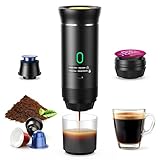
3. Portable Espresso Machine, Travel Coffee Machine for Camping, Car Self-Heating Coffee Maker with USB-C,Compatible With Ground Coffee & NS Capsules, Portable Espresso Maker for RV, Home, Hiking
Overview:
This generic-branded portable espresso machine targets the entry-level market with an impressive feature set for its price. The 3-in-1 design accommodates ground coffee, NS capsules, and DG capsules, powered by a 7500mAh rechargeable battery. It heats water in 300 seconds and produces 4-5 cups per charge using cold water, or over 150 cups with pre-heated water, all under 20 bars of pressure for proper extraction.
What Makes It Stand Out:
The sub-$40 price point combined with electric heating and triple-format compatibility creates exceptional value. USB-C charging brings modern convenience typically reserved for premium models. The 300-second heating time, while slower than the OutIn Nano, remains practical for most scenarios, and the generous battery capacity ensures adequate servings for solo travelers or couples on weekend trips.
Value for Money:
At $36.09, this is the most affordable battery-powered espresso maker in the comparison, undercutting even manual options when convenience is factored in. It democratizes self-heating portable espresso, making it accessible to casual campers and budget-minded office workers. While build quality and brand support may not match established names, the cost-to-feature ratio is unmatched for those willing to accept some risk.
Strengths and Weaknesses:
Strengths:
- Unbeatable price for electric heating capability
- 3-in-1 compatibility maximizes flexibility
- USB-C charging support
- Decent battery performance (4-5 cold water cups)
- Lightweight and compact design
Weaknesses:
- Unknown brand reliability and customer support
- Slower 300-second heating time
- Vague capacity specifications raise durability questions
- Likely inferior build quality versus premium competitors
- No mention of car charging beyond USB-C
Bottom Line:
This portable espresso machine is ideal for first-time buyers testing the category or occasional users prioritizing price over prestige. While it lacks the refinement and speed of premium models, its core functionality—self-heating, triple compatibility, and USB-C charging—delivers remarkable value at $36. Accept the trade-offs in build quality and brand reputation, and you get capable espresso anywhere for the cost of a few café drinks.
4. OutIn Nano Portable Electric Espresso Machine, Travel Coffee Maker for Camping, Car Coffee Maker Self-Heating with USB-C, With Ground Coffee & NS Capsule for RV, Hiking, Office

Overview:
The OutIn Nano is a premium portable espresso solution engineered for mobile professionals and outdoor enthusiasts who refuse to compromise on coffee quality. Weighing a mere 670 grams, this device features a sophisticated battery system that heats 1.7 ounces of water to 198°F in just 200 seconds. The 20-bar pump delivers authentic espresso with rich crema, while USB-C compatibility ensures charging versatility across modern devices and vehicles.
What Makes It Stand Out:
The Nano’s engineering excellence manifests in its rapid heating cycle and intelligent power management. Unlike competitors offering similar battery capacity, the Nano achieves 200+ extractions when using hot water, making it ideal for extended off-grid use. The extensive design testing and leak-proof insulated construction demonstrate OutIn’s focus on real-world reliability rather than specification racing, creating a refined user experience.
Value for Money:
At $149.99, this represents the premium segment’s benchmark. The price is justified through measurable performance advantages: 3x faster heating than budget alternatives, superior stainless steel construction, and exceptional battery efficiency. For daily commuters, frequent campers, or RV dwellers who value time and consistency, the Nano eliminates the frustration of slower devices and delivers genuine cost-per-use value despite higher upfront investment.
Strengths and Weaknesses:
Strengths:
- Industry-leading 200-second heating performance
- Premium food-grade stainless steel build
- Exceptional battery efficiency (200+ shots with hot water)
- Leak-proof and insulated design
- Comprehensive 12-month support
Weaknesses:
- Premium pricing excludes budget-conscious buyers
- Only 5 extractions per charge when heating cold water
- Smaller 1.7oz capacity limits serving size
- Limited to ground coffee and NS capsules only
Bottom Line:
The OutIn Nano sets the standard for premium portable espresso, balancing speed, quality, and efficiency in a travel-ready package. While the $149.99 price requires commitment, the performance gains over budget models are immediately apparent. For those who view coffee as essential rather than optional, this is the reliable, fast, and well-built solution that justifies its cost through daily satisfaction and durability.
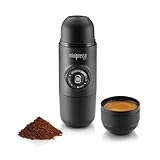
5. WACACO Minipresso GR, Portable Espresso Machine, Compatible Ground Coffee, Hand Coffee Make, Travel Gadgets, Manually Operated, Perfect for Camping
Overview:
The WACACO Minipresso GR takes a fundamentally different approach to portable espresso, eliminating batteries and electronics entirely. This manual device operates via hand-pump pressure, requiring users to add boiling water separately. Weighing significantly less than electric alternatives, it produces up to 50ml of authentic espresso using any coffee bean variety. The simplicity of its design makes it virtually indestructible and maintenance-free for true backcountry use.
What Makes It Stand Out:
The Minipresso’s complete independence from power sources makes it uniquely reliable for extended wilderness expeditions where charging is impossible. Its manual operation provides tactile control over extraction pressure, appealing to purists who appreciate the ritual. The ability to use any roast without capsule restrictions offers unmatched flavor exploration, while the absence of electronic components eliminates failure points that plague battery-powered competitors in harsh conditions.
Value for Money:
At $54.90, the Minipresso occupies a middle ground between budget electrics and premium models. The price is justified by its robust construction and lifetime durability—there are no batteries to replace or circuits to fail. However, the hidden cost of requiring a separate hot water source (camp stove, kettle) reduces its value for car-based travelers who might prefer integrated heating. For backpackers, the weight savings and reliability outweigh this limitation.
Strengths and Weaknesses:
Strengths:
- No batteries or charging required
- Lightest and most compact design
- Unlimited coffee variety compatibility
- Virtually indestructible manual mechanism
- Simple cleaning and maintenance
Weaknesses:
- Cannot heat water—requires separate boiling source
- Manual pumping requires physical effort
- Limited 50ml capacity per shot
- No crema control compared to electric pumps
- Accessories for larger servings cost extra
Bottom Line:
The WACACO Minipresso GR is the ultimate choice for ultralight backpackers and adventure purists who prioritize reliability above convenience. While it demands more effort and a separate hot water source, its simplicity, durability, and weight savings make it unbeatable for remote expeditions. If you already carry a camp stove and value gear that lasts forever, this manual espresso maker delivers authentic coffee without the charging anxiety of electric models.
6. Coffee Maker Gift Set for Travel, Battery Powered Portable Electric Espresso Machine for Camping, Rechargeable Coffee Maker Self Heating with Ground Coffee & Capsule for RV, Hiking (Red mix Black)

Overview: This battery-powered espresso machine targets budget-conscious travelers who refuse to sacrifice their morning ritual. Weighing just 1.3 pounds and constructed from 304 stainless steel with ABS components, it promises durability without bulk. The 7500mAh battery offers surprising longevity, while 3-minute heating and 3-5 minute brewing cycles deliver convenience when you’re off-grid.
What Makes It Stand Out: The dual compatibility with both ground coffee and capsules provides welcome versatility, and the leak-proof insulated design shows thoughtful engineering for mobile use. The ability to brew 200+ cups with hot water versus 5 cups with cold demonstrates efficient power management. The included reusable cup and easy-clean components add practical value for camping scenarios.
Value for Money: At $26.99, this sits at the entry-level price point, making it accessible for occasional campers and weekend travelers. It undercuts most competitors by 50-70% while retaining core functionality. For those testing the portable espresso waters, the financial risk is minimal.
Strengths and Weaknesses: Strengths include exceptional affordability, lightweight design, impressive battery life with hot water, and quick heating. Weaknesses involve the tiny 60ml capacity, reliance on ABS plastic that may compromise long-term durability, and an ambiguous brand reputation. The 5-cold-cup limitation suggests modest heating element power.
Bottom Line: An excellent starter option for casual outdoor enthusiasts who prioritize cost savings over premium build quality. Don’t expect café-perfect extraction, but it reliably delivers caffeine fixes on the go.
7. LumoShine Portable Electric Espresso Machine,Travel Coffee Maker for Camping,Car Coffee Maker Self-Heating with USB-DC, Compatible with Ground Coffee & Capsule for Hiking,Office,RV (Black)
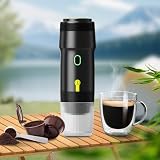
Overview: The LumoShine portable espresso machine positions itself as the ultimate budget champion for coffee-loving travelers. At just $22.99, it packs a 7500mAh battery and claims 20-bar pressure extraction—specs typically found in pricier models. The one-touch operation and 5-minute brew cycle target convenience-focused users.
What Makes It Stand Out: This unit’s triple compatibility with ground coffee, Nespresso, and Dolce Gusto capsules offers unmatched versatility at this price. The smart dry-burn protection and IPX6 waterproof rating demonstrate unexpected safety consciousness. Most impressively, it can brew while charging via car adapter—a game-changer for road trippers.
Value for Money: This is arguably the best value in the portable espresso category. No competitor under $30 offers 20-bar pressure, multiple capsule compatibility, and pass-through charging. It delivers premium features at a fraction of typical costs, making it ideal for students and budget travelers.
Strengths and Weaknesses: Strengths include unbeatable pricing, robust pressure system, comprehensive safety features, and brew-while-charging capability. Weaknesses involve slower 5-minute heating versus 3-minute alternatives, unknown brand longevity, and potential quality control issues common with ultra-budget electronics. The 25-cup hot water claim seems conservative compared to rivals.
Bottom Line: For price-sensitive buyers unwilling to compromise on features, this is a no-brainer. It sacrifices some speed and polish but delivers core functionality that rivals $70+ machines.
8. Sounir Portable Espresso Machine & Coffee Maker for Camping, Travel, Office - Self-Heating, USB-C Charger, Compatible NS Capsule & Ground Coffee (Coffee Brown)

Overview: The Sounir portable espresso machine commands a premium $73.99 price tag, targeting serious outdoor enthusiasts who demand reliability. Weighing 1.4 pounds with a water-bottle-like form factor, it emphasizes USB-C fast charging and safety-first design. The 2-in-1 brewing system handles both capsules and ground coffee.
What Makes It Stand Out: The 2.5-hour USB-C charging is significantly faster than micro-USB competitors, while the anti-scald insulation design prioritizes user safety—a rare feature. The brand appears more established, offering clearer support channels. Its heating system reaches 92°C in 3-4 minutes, with an alarm-triggered extraction process.
Value for Money: This sits at the high end of the portable spectrum, competing with Wacaco and Staresso models. The premium justifies itself through faster charging, apparent build quality, and safety features. For frequent travelers and daily commuters, the time savings and durability offset the cost. Casual users may find better value elsewhere.
Strengths and Weaknesses: Strengths include premium materials, modern USB-C connectivity, thoughtful safety design, and solid battery performance with hot water. Weaknesses center on the puzzling capacity claims—200+ hot cups but only 4-5 cold cups suggests limitations under heavy load. The price may deter occasional users.
Bottom Line: A worthwhile investment for daily users who value charging speed and safety. The premium delivers tangible benefits, but weekend warriors should consider budget alternatives.
9. Citrigrain Portable Espresso Maker, Hands-Free Travel Coffee Makers for Camping, Car Self-Heating Espresso Machine with USB-C, With Ground Coffee & NS Capsules for RV/Office/Hiking
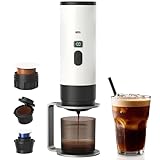
Overview: Citrigrain’s portable espresso maker focuses on hands-free convenience for multitasking travelers. At $36.09 and just 1.1 pounds, it’s the lightest option in its class. The 7800mAh battery claims an impressive 300+ cups with hot water, while digital displays and real-time monitoring add modern flair.
What Makes It Stand Out: The 80-second brew time with hot water is among the fastest available, and true hands-free operation eliminates manual pumping—a genuine differentiator. The digital display with battery monitoring provides transparency competitors lack. A 6-month replacement policy offers peace of mind rare in this category.
Value for Money: Positioned in the mid-range, it balances affordability with premium features. The combination of speed, digital interface, and warranty makes it stronger value than $50+ alternatives lacking these conveniences. It undercuts premium brands while offering comparable specs.
Strengths and Weaknesses: Strengths include ultra-lightweight design, rapid brewing, hands-free operation, digital feedback, and robust warranty support. Weaknesses involve brand obscurity and potentially optimistic performance claims—the 4-5 cold cup rating seems inconsistent with the 300+ hot cup promise. Build quality remains unproven.
Bottom Line: Perfect for busy professionals and hikers who prioritize speed and convenience. The hands-free operation and warranty justify the moderate price premium over budget options.
10. Narcissus Portable Electric Espresso Machine for Travel, 86.6 Watt 2-In-1 Travel Coffee Maker for Max 12g Coffee Powder or NS Capsules, 1.5 Pounds & 7800mAh Battery Capacity, Includes Quick Charger

Overview: The Narcissus portable espresso machine targets coffee purists with transparent engineering specs. At $54.98, it discloses precise 86.6-watt power and 195°F brewing temperature—details competitors hide. The 7800mAh battery and 1.5-pound build include a 15-watt fast charger, emphasizing performance over portability.
What Makes It Stand Out: Unlike rivals, Narcissus specifies exact coffee dosage (12g max) and provides lab-tested power ratings, appealing to enthusiasts who value precision. The included fast charger eliminates guesswork, and the high-precision temperature detector ensures consistent extraction. The 50-second brew with hot water is competitive.
Value for Money: The mid-high price reflects enthusiast-focused features rather than mass-market appeal. Including a $15-20 fast charger adds value, and transparent specs justify the premium for knowledgeable buyers. Casual users may not appreciate these details.
Strengths and Weaknesses: Strengths include precise engineering, fast charger inclusion, consistent temperature control, and honest specifications. Weaknesses involve the inability to operate while charging, mandatory pressure release after brewing (adding steps), and heavier weight. The 30-100 hot cup range is vague.
Bottom Line: Ideal for coffee aficionados who prioritize technical accuracy and don’t mind operational complexity. The transparency and included accessories make it a smart buy for serious users.
The Philosophy of Wilderness Espresso
Before diving into gear, it’s worth understanding why espresso has become the holy grail for outdoor coffee enthusiasts. Unlike drip coffee or French press, espresso concentrates flavor, requiring less water and producing less waste—critical considerations when packing out grounds and managing limited water supplies. The ritual itself becomes a meditative morning practice, a moment of civilization’s refinement in the raw outdoors. This philosophy drives every design decision in portable espresso makers, from weight-saving materials to manual operation methods that don’t rely on electricity.
Understanding Portable Espresso Maker Categories
The portable espresso market has exploded into several distinct categories, each with trade-offs between convenience, quality, and authenticity. Recognizing these differences is your first step toward making an informed decision.
Manual Pump Espresso Makers
These devices use a hand-operated pump mechanism to generate the 9+ bars of pressure required for true espresso. You typically add hot water to a reservoir, load your grounds into a portafilter, and pump a lever or handle to force water through the coffee bed. The best designs incorporate pressure gauges or tactile feedback to prevent over-extraction. While they require some elbow grease, they reward you with the most authentic espresso experience and operate completely off-grid without batteries or fuel beyond your water heating source.
Hand-Lever Presses
Operating like a miniature version of classic lever espresso machines, these units use a spring-loaded or direct-lever system. You pull down on a handle, which drives a piston through a cylinder of hot water and coffee. The mechanics provide exceptional control over pressure profiling—allowing you to vary pressure throughout the extraction—but demand practice and strength. They’re generally more compact than pump systems but require stable ground or a sturdy surface for operation, which can be challenging on uneven terrain.
Battery-Powered Espresso Machines
For those unwilling to compromise on push-button convenience, battery-powered units heat water and generate pressure automatically. Most feature rechargeable lithium-ion batteries that can produce 3-5 shots per charge. The key differentiator lies in heating time and pressure consistency. Premium models reach 9 bars and optimal temperature in under 5 minutes, while budget options may struggle with both. Consider these for car camping where you can recharge via solar or vehicle power, but think twice for extended backcountry trips.
Stovetop Moka Pot Variants
While technically producing moka (strong, pressurized coffee) rather than true espresso, modern ultralight moka pots deserve mention. Newer designs incorporate pressure regulators and finer filters to approximate espresso characteristics. They integrate directly with your camping stove system, eliminating separate water heating. The trade-off is less pressure (typically 1-2 bars) and no crema, but the simplicity and durability make them favorites for minimalist backpackers.
Hybrid Systems
The most innovative category combines multiple functions—think manual pump combined with an integrated heating element, or devices that convert between espresso and pour-over modes. These appeal to campers who want versatility but often carry weight and complexity penalties. Evaluate whether the hybrid functions genuinely enhance your experience or simply add failure points.
Pressure Performance: The Non-Negotiable Metric
True espresso requires a minimum of 9 bars (130 PSI) of pressure. Many portable makers claim “espresso-style” or “espresso-like” results while delivering far less. This isn’t just marketing semantics—pressure directly impacts extraction, crema formation, and flavor complexity. When evaluating any device, look for verifiable pressure specifications rather than vague claims. Manual pumps should offer pressure relief valves to prevent dangerous over-pressurization, while electric models need consistent pressure maintenance throughout the entire shot, not just initial spikes.
Water Capacity and Boiler Design Trade-offs
Portable espresso makers typically hold 50-100ml of water per shot—enough for a single or double espresso. However, boiler design dramatically affects performance. Single-wall aluminum boilers heat quickly but cool rapidly between shots, creating temperature inconsistency. Double-wall stainless steel boilers retain heat better but add weight. Some premium designs incorporate insulation or even vacuum walls, maintaining temperature stability for multiple consecutive shots—a crucial feature when brewing for a group. Consider your typical camping party size when evaluating capacity.
Portafilter Quality and Dose Size
A proper portafilter isn’t just a metal cup with holes—it’s an engineered component that affects extraction uniformity. Look for portafilters with precision-machined baskets, ideally with tapered walls that promote even water flow. Standard 58mm commercial baskets are rare in portable units due to size constraints, but 49-54mm versions offer acceptable performance. Avoid plastic portafilters entirely; they can’t maintain temperature stability and often produce channeling. The ability to dose 16-20 grams of coffee is essential for proper double shots—some ultralight models sacrifice dose size for packability, resulting in weaker, under-extracted espresso.
Power Sources for the Backcountry Barista
Your espresso maker is only as good as its power source, and camping presents unique challenges beyond wall outlets.
Manual Power: The Purist’s Choice
Manual devices require only your muscle and a heat source for water. This makes them infinitely reliable and weight-efficient. However, consider the physical demands—after a strenuous 15-mile hike, will you have the energy for 30+ pumps? Ergonomic design matters enormously here; look for wide, comfortable handles and smooth pump actions that don’t strain wrists. Some models incorporate gear ratios that multiply your force, reducing effort while maintaining pressure.
Battery Considerations: Capacity and Cold Weather Performance
If you choose battery power, scrutinize the battery’s milliamp-hour (mAh) rating and real-world shot capacity—not just manufacturer claims. Cold weather dramatically reduces lithium-ion performance; a battery that yields 5 shots at 70°F might manage only 2 at 35°F. Some units allow you to remove the battery for pocket-warming, a clever workaround. Solar charging compatibility is another key feature, but calculate realistic charging times—a 20W panel might need 4-6 hours of direct sun for a full charge.
Camp Stove Integration
Stovetop and some hybrid models integrate directly with your cooking system. This eliminates separate water heating but requires careful flame control. Look for wide, stable bases that won’t tip on canister stoves, and heat-resistant handles that stay cool. Wind resistance becomes critical—can the design maintain pressure and temperature in gusty conditions? Some models include wind screens or are designed to nest inside pots for protection.
Weight and Packability: The Ultralight Dilemma
Every ounce matters when you’re carrying everything on your back. Portable espresso makers range from 8 ounces for minimalist manual pumps to over 3 pounds for battery-powered units. The ultralight category (under 1 pound) typically sacrifices pressure consistency or shot volume. Consider your camping style: car campers can prioritize quality over weight, while backpackers must balance espresso authenticity against every other essential. Packability extends beyond weight—cylindrical designs that nest inside cookpots or store within sleeping bag stuff sacks maximize space efficiency. Some units disassemble completely, allowing you to distribute components throughout your pack.
Durability and Materials: Built for the Backcountry
Your espresso maker will experience impacts, temperature swings, and moisture that would destroy kitchen appliances. Material choice dictates longevity.
Stainless Steel vs Aluminum vs Titanium
Stainless steel offers the best durability and temperature stability but adds weight. Look for food-grade 304 or 316 stainless that resists corrosion from acidic coffee and mineral-heavy camp water. Aluminum is lighter and cheaper but dents easily and can impart metallic flavors if not anodized. Titanium represents the premium choice—lighter than aluminum, stronger than steel, and completely inert—but commands premium prices. For most campers, stainless steel provides the best value-weight-durability balance.
Plastic Components and BPA Concerns
Even metal units contain plastic seals, gaskets, and handles. Ensure all plastics are BPA-free and rated for high temperatures. Silicone seals should be replaceable—a critical feature since camp conditions accelerate degradation. Some manufacturers offer field repair kits with spare O-rings and seals, which can be the difference between a functioning device and a useless weight on day three of a trip.
Brewing Variables in the Wild: Mastering Field Conditions
Your kitchen offers controlled conditions; the wilderness does not. Mastering these variables separates camping coffee drinkers from true backcountry baristas.
Grind Size Adjustment
Portable grinders often lack the precision of electric burr grinders, making grind consistency challenging. In the field, you’ll need to adjust based on altitude—higher elevations require slightly coarser grinds due to lower boiling points and pressure differentials. The best portable espresso makers forgive minor grind inconsistencies through pressure regulation, but you should still aim for table-salt consistency. Test your grind at home at similar altitudes to your destination when possible.
Water Temperature Control
Water boils at lower temperatures at altitude, directly impacting extraction. At 10,000 feet, water boils at 194°F, below the ideal 200-205°F espresso range. Pre-heating your device helps, as does using a thermometer or temperature strips. Some manual pumps allow you to add slightly cooler water since the pumping action generates frictional heat. Battery models with heating elements should offer temperature adjustment for altitude compensation—automatic if possible, manual if not.
Tamping Technique Without a Counter
Tamping requires stable, level pressure—difficult on uneven ground. Develop a technique using your knee, a log, or your pack as a support surface. Some campers carry a small cutting board specifically for tamping and prep. The key is consistent, level pressure (about 30 pounds) regardless of surface. Practice at home on various surfaces to build muscle memory. Consider a calibrated tamper that clicks at the correct pressure, removing guesswork from the equation.
Water Sources and Filtration Considerations
Espresso is 98% water, making quality critical. Backcountry water sources vary dramatically in mineral content, affecting both flavor and equipment longevity. Hard water with high calcium/magnesium extracts differently than soft, acidic water. More importantly, mineral buildup can clog your device’s tiny orifices and valves. Always filter water through a 0.2-micron filter to remove sediment and microorganisms. Some experienced camping baristas bring small packets of Third Wave Water mineral supplements to standardize water chemistry, particularly on extended trips where water sources change daily.
The Grind Problem: Pre-ground vs Portable Grinding
The debate between carrying pre-ground coffee and a portable grinder is central to camping espresso. Pre-ground coffee stales rapidly, losing volatile aromatics within 24 hours of grinding. For trips under three days, vacuum-sealing individual doses can preserve acceptable quality. For longer trips, a portable grinder becomes essential. Look for hand grinders with steel burrs (not ceramic, which can chip) and stabilizing systems that prevent burr wobble. The grinder should fit inside your espresso maker for packing efficiency. Expect to spend 1-2 minutes grinding per shot—factor this into your morning routine.
Milk Frothing in the Wilderness
Lattes and cappuccinos aren’t off-limits just because you’re camping. Manual frothers—similar to French press plungers—can create microfoam by pumping a mesh screen through heated milk. Battery-powered frothers offer convenience but add another device to charge. The real challenge is heating milk without scorching it; a double-boiler setup using your cookpot works well. Consider shelf-stable ultra-high temperature (UHT) milk or powdered milk alternatives for backpacking. For car camping, a small insulated milk container keeps dairy fresh for days.
Maintenance and Cleaning in the Field
Espresso makers are precision instruments that require cleaning to function properly. Backcountry conditions make this challenging but not impossible.
Daily Field Cleaning
After each shot, purge the system with hot water to remove coffee oils and fines. Carry a small brush (an old toothbrush works) to clean the portafilter basket and shower screen. Never use soap in streams—pack out your rinse water along with coffee grounds. A small spray bottle helps direct water precisely for cleaning. Allow all components to dry completely before reassembly to prevent mold growth. Some campers bring a microfiber towel specifically for drying espresso components.
Deep Cleaning After Triits
Back home, disassemble completely and soak metal parts in a solution of hot water and espresso machine cleaner (not vinegar, which can damage seals). Use pipe cleaners to clear narrow passages. Inspect all O-rings and seals for nicks or compression—replace them proactively. Descale if you’ve used mineral-heavy water; citric acid works well and is environmentally benign. Store the device disassembled with all seals lightly coated in food-grade silicone grease to prevent cracking.
Essential Accessories for the Complete Setup
The espresso maker itself is just the centerpiece of a larger system. These accessories elevate your camp coffee game.
Protective Cases and Packing Solutions
Hard cases add weight but protect against crushing in a loaded pack. Soft cases with padded inserts offer reasonable protection for less weight. The best solution is often a stuff sack lined with your sleeping pad or spare clothing. Consider waterproof bags since moisture can cause corrosion and mold. Some manufacturers design their cases to double as tamping stations or water collection basins.
Temperature Monitoring Tools
Stick-on temperature strips (like those used for reptile enclosures) provide continuous boiler temperature readings without batteries. Digital thermometers with thin probes offer precision but require batteries. Infrared thermometers are useless for measuring water temperature—they only measure surface temperature of the container.
Compact Tampers and Distributors
Your home tamper won’t travel well. Look for collapsible or two-piece tampers that screw together. Some integrate with the device’s portafilter for storage. Distribution tools (levelers) that fit inside the portafilter basket help ensure even extraction when you’re rushing through morning camp chores. Magnetic tampers that stick to your cookpot prevent loss in the dirt.
Common Mistakes That Ruin Camp Espresso
Even experienced home baristas stumble when taking espresso outdoors. Avoid these pitfalls:
- Under-dosing to save coffee—this leads to fast, bitter extraction and weak flavor.
- Pumping too quickly—manual pumps need steady, controlled pressure. Rapid pumping creates channeling and uneven extraction.
- Ignoring altitude adjustments—failing to account for lower boiling points results in under-extracted, sour shots.
- Packing wet—storing your device with any moisture leads to mold, corrosion, and ruined seals.
- Using boiling water—water at a rolling boil scorches coffee. Let it cool 30 seconds off-boil before brewing.
- Skimping on the grinder—a poor grinder creates inconsistent particle sizes, making good extraction impossible regardless of your espresso maker’s quality.
Environmental Impact and Leave No Trace Principles
Portable espresso makers generate waste: coffee grounds, paper filters (if used), and eventually worn-out components. Practice Leave No Trace by packing out all grounds in a sealed bag—never bury them, as they don’t decompose quickly and can attract wildlife. If your device uses paper filters, consider reusable metal screens. When parts wear out, recycle metal components and properly dispose of batteries. Some manufacturers offer take-back programs for worn seals and filters. Choose durable, repairable designs over disposable units that become landfill after one season.
Budgeting for Your Mobile Coffee Command Center
Quality portable espresso makers range from $50 to $300+, with diminishing returns beyond the $200 mark for most users. Budget an additional $30-60 for a decent hand grinder, $20 for accessories, and $15 annually for replacement seals. Battery-powered units require factoring in charging solutions—solar panels or power banks add $50-150. Consider total cost of ownership: a $150 manual device that lasts 10 years is cheaper than replacing a $75 unit every two seasons. The most expensive mistake is buying a device that doesn’t suit your camping style, forcing a replacement.
Frequently Asked Questions
Can I really make authentic espresso while backpacking, or is it just strong coffee?
With a quality manual pump device generating true 9-bar pressure and proper technique, you can absolutely produce authentic espresso with crema in the backcountry. The key is selecting a device specifically engineered for pressure performance, not just marketing claims. Moka pots and some hybrid devices produce excellent strong coffee but lack the pressure for genuine espresso extraction.
How do I keep my portable espresso maker from freezing overnight in cold weather?
Store it in your sleeping bag or insulated jacket overnight. Disassemble it completely to remove all water, as expanding ice can crack boilers and damage seals. In sub-freezing conditions, keep seals warm in an interior pocket—they become brittle when cold. Some campers place a hand warmer in their coffee kit stuff sack for insurance.
What’s the minimum equipment I need for decent camp espresso beyond the maker itself?
At minimum: a reliable heat source, fresh coffee beans, a way to grind them (even pre-ground for short trips), a stable surface for tamping, and a method to measure water temperature. A small brush for cleaning and a microfiber towel complete the essentials. Everything beyond this improves consistency but isn’t mandatory.
How many espresso shots can I realistically make on a single battery charge?
Quality battery-powered units deliver 3-5 double shots per charge under ideal conditions. Cold weather can reduce this by 40-50%. Always test your specific device at home under similar temperature conditions before relying on it in the field. Carry a backup manual method for extended trips.
Is it better to grind coffee at home or bring a hand grinder?
For trips under 48 hours, vacuum-sealed pre-ground coffee at the correct espresso grind maintains acceptable quality. For longer trips or maximum flavor, a portable hand grinder is non-negotiable. The sweet spot is grinding within 15 minutes of brewing, which a hand grinder makes possible even deep in the wilderness.
Can I use my home espresso beans for camping, or do I need special coffee?
Your home beans work perfectly, but consider roast level. Darker roasts extract more easily and forgive temperature inconsistencies, making them ideal for camping. Light roasts require precise temperature and pressure control that’s harder to achieve outdoors. Many camping baristas save their best, most forgiving blends for trips.
How do I dispose of espresso grounds responsibly in areas with strict pack-out requirements?
Use a reusable coffee filter bag or fine-mesh sack to contain grounds during brewing. After extraction, squeeze out excess liquid and store the compacted puck in a dedicated, odor-proof bag. Coffee grounds are considered “gray water” in most wilderness areas and must be packed out just like food waste. Some baristas dry the grounds completely to reduce weight and odor.
What’s the learning curve like for manual pump espresso makers?
Expect a 5-10 shot learning curve to master pressure control and timing. The first few attempts often channel or under-extract. Practice at home using the same water source and altitude conditions if possible. Most quality manual devices are more forgiving than they appear, and the tactile feedback helps you learn quickly. Within a week, you’ll pull consistently good shots.
Do portable espresso makers work at high altitudes above 10,000 feet?
Yes, but with adjustments. Water boils at lower temperatures, so you can’t achieve optimal brewing temperature without a pressure cooker system. Compensate by using slightly finer grinds and longer pre-infusion times. Some manual pumps allow you to pre-pressurize the chamber before full extraction, which helps. Expect slightly less crema and a more delicate flavor profile, but still excellent coffee.
How do I prevent mineral buildup when using natural water sources?
Always filter water through a 0.2-micron filter first to remove sediment. For extended trips, bring small packets of citric acid or specialized espresso descaler. A pinch in your rinse water every few days prevents scale accumulation. After the trip, run a full descaling cycle. Some campers collect rainwater when possible, as it’s naturally soft and mineral-free, reducing buildup concerns.'