Nothing sabotages an off-grid adventure faster than a waterborne illness miles from medical help. Whether you’re planning a multi-day backcountry trek, overlanding through remote terrain, or simply want peace of mind for your next camping trip, understanding portable water purification isn’t just smart—it’s survival. The difference between a life-changing expedition and a miserable experience often comes down to what you can’t see: microscopic pathogens lurking in that crystal-clear mountain stream.
But here’s the reality: not all water purifiers are created equal, and the “best” choice depends on your specific adventure style, water sources, and risk tolerance. This guide cuts through marketing hype and dives deep into the science, practical considerations, and real-world applications of portable water purification systems. We’ll explore everything from micron ratings to maintenance schedules, helping you make an informed decision that keeps you hydrated and healthy when you’re far from the tap.
Top 10 Portable Water Purifiers for Off-Grid Adventures
Detailed Product Reviews
1. Travel Berkey Gravity-Fed Water Filter with 2 Black Berkey Elements–Enjoy Potable Water While Camping, RVing, Off-Grid, Emergencies, Every Day at Home

Overview: The Travel Berkey Gravity-Fed Water Filter is a premium stainless steel system designed for both outdoor adventures and daily home use. Standing 18 inches tall with a 1.5-gallon capacity, this portable unit transforms questionable freshwater sources into clean drinking water without requiring electricity, tools, or plumbing.
What Makes It Stand Out: The system’s Black Berkey Elements are the star feature, removing over 200 contaminants while lasting up to 6,000 gallons per pair—averaging just pennies per gallon. This exceptional longevity far surpasses most competitors. The gravity-fed design works anywhere, making it perfect for camping, RVing, off-grid living, and emergency preparedness. Independent third-party testing validates its filtration claims, providing confidence in water safety.
Value for Money: At $327, the initial investment is substantial, but the cost-per-gallon is remarkably low over the filter’s lifespan. Compared to continuously buying bottled water or cheaper filters requiring frequent replacements, the Travel Berkey proves economical for serious users. For families prioritizing long-term reliability, this price is justified.
Strengths and Weaknesses: Strengths include exceptional filtration capacity, long-lasting filters, proven independent testing, versatile portability, and sturdy construction. Weaknesses are the high upfront cost, relatively slow filtration rate, and limited 1.5-gallon capacity that may require frequent refilling for larger groups.
Bottom Line: The Travel Berkey is ideal for dedicated outdoor enthusiasts and preparedness-minded households seeking a reliable, long-term water purification solution that performs anywhere.
2. BKLES 3-in-1 Solar Electric Water Filter with Hand Pump - Camping Water Filtration System Survival, Portable Water Purifier with Emergency Light, Survival Kit for Backpacking, Birthday Gifts for Men

Overview: The BKLES 3-in-1 Solar Electric Water Filter is a versatile portable purification system combining electric, manual, and solar power options. Weighing just 450 grams, this compact unit delivers 800-1000 ml/min through its 6-stage filtration system, making it an excellent companion for solo adventurers and emergency kits.
What Makes It Stand Out: This filter’s triple power system sets it apart—electric pumping, manual hand pump backup, and solar charging capability ensure operation in any scenario. The 6-stage filtration with dual 0.01-micron ultrafiltration membranes exceeds many competitors. Bonus features include USB device charging, LED emergency lighting, and SOS signaling, creating a comprehensive survival tool beyond just water purification.
Value for Money: At $75.99, this system offers exceptional value, delivering electric convenience at a price comparable to many manual-only filters. The solar charging adds free energy independence, while the multi-functionality eliminates need for separate emergency lights or power banks.
Strengths and Weaknesses: Strengths include versatile power options, lightweight portability, fast flow rate, SGS/FCC/UL certifications, and integrated emergency features. Weaknesses include battery dependency, potentially slow solar charging in cloudy conditions, and lower durability than metal systems for extreme long-term use.
Bottom Line: Perfect for budget-conscious adventurers wanting electric convenience without sacrificing manual backup, the BKLES excels as an all-in-one survival solution.
3. Outback Emergency Drinking Water Filter System - Gravity Fed Bucket Water Filtration for Survival, Off-Grid, Disaster Preparedness, Survival Gear & Camping, Bug Out Kit, Up to 24 Gallons a Day
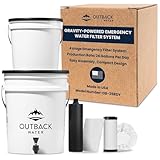
Overview: The Outback Emergency Drinking Water Filter is a high-capacity gravity-fed bucket system engineered for disaster preparedness and off-grid survival. Processing up to 24 gallons daily through its 4-stage filtration, this USA-made unit has served relief organizations worldwide, making it a trusted choice for serious emergency planning.
What Makes It Stand Out: Its impressive 24-gallon daily output dwarfs many portable systems, serving families or small groups efficiently. The system’s proven track record with FEMA, Red Cross, and global aid agencies demonstrates real-world reliability. The simple gravity design requires no power, while the rugged construction withstands harsh conditions, making it ideal for bug-out bags and long-term survival scenarios.
Value for Money: Priced at $199, the Outback sits between budget and premium options. For high-volume needs, it offers better value than smaller systems, providing professional-grade filtration without the Berkey price tag. Replacement filters are affordable and easy to source.
Strengths and Weaknesses: Strengths include massive daily capacity, trusted by humanitarian organizations, durable American-made construction, simple operation, and proven effectiveness against 99.999% of bacteria and protozoa. Weaknesses include bulkier design than sleek stainless units, less aesthetic appeal for daily kitchen use, and manual filling requirements.
Bottom Line: The Outback is the go-to choice for families prioritizing emergency preparedness and high-volume water production in any situation.
4. Portable Water Filter with Hybrid and RO Filter, Hiking Water Purifier System for Camping, Survival Gear Purification for Drinking

Overview: This Portable Water Filter combines hybrid and RO filtration technologies with battery-powered convenience for outdoor enthusiasts seeking maximum purification. The built-in 12000mAh battery delivers 27 liters per charge, while multiple international certifications ensure safety and reliability for camping, hiking, and survival scenarios where water quality is questionable.
What Makes It Stand Out: The hybrid-RO combination achieves 99.99% impurity removal, including viruses that many filters miss. The substantial battery capacity supports extended use without manual pumping, while reverse charging capabilities keep devices powered. Lifetime warranty and comprehensive certifications (FCC, FDA, CE, EMC, RoHS) demonstrate exceptional manufacturer confidence and product safety standards rarely seen in portable units.
Value for Money: At $249.99, this sits in the premium category, but the RO technology and battery convenience justify the cost for users demanding the purest water. It competes with manual RO systems while adding portability and power autonomy, making it worthwhile for serious adventurers and international travelers.
Strengths and Weaknesses: Strengths include superior virus-level filtration, long-lasting battery, multiple safety certifications, lifetime warranty, and device charging capability. Weaknesses include higher price point, battery maintenance requirements, potential RO water waste, and heavier weight than non-electric alternatives.
Bottom Line: For those prioritizing maximum purification and modern convenience, this battery-powered RO system delivers professional-grade water safety in a portable package.
5. Emergency Water Filter Large Water Filtration System Survival - Hand Pump Water Filter, High Volume Water Purifier Camping, 3 Stage Water Filtration System Outdoor Portable Group Military Grade

Overview: This Emergency Water Filter is a military-grade hand pump system designed for group use and budget-conscious adventurers. The 3-stage filtration delivers 99.999% purification purity with an impressive flow rate up to 3 liters per minute, making it highly practical for multiple users in camping, hiking, or emergency scenarios where volume matters.
What Makes It Stand Out: The unique ceramic core check valve provides excellent sealing and strong water absorption while preventing cross-contamination between raw and purified water. Its eco-friendly design features inexpensive replaceable components rather than requiring full unit replacement. The group-friendly high flow rate significantly reduces wait times compared to personal straw filters or slower gravity systems.
Value for Money: At just $59.99, this is the most budget-friendly option while maintaining high performance standards. The affordable replacement filters and durable BPA/BPS-free construction ensure long-term value. For group camping or emergency prep on a budget, it’s hard to beat this combination of price and capability.
Strengths and Weaknesses: Strengths include exceptional affordability, fast group flow rate, durable military-grade materials, eco-friendly replaceable parts, and proven 99.999% purification with official testing reports. Weaknesses include manual pumping effort, lack of electric convenience, no additional features like lighting or charging, and potential physical fatigue during extended use.
Bottom Line: An outstanding value for groups and budget-minded adventurers who prioritize function over frills and don’t mind manual operation.
6. Trailgo Pro Water Purifier Water Purification System for Survival - High-Volume Hand Pump Portable Water Filter for Camping, Hiking, Hunting, Emergency Preparedness - 3-Stage Water Filtration System
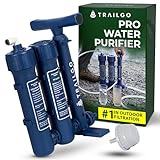
Overview: The Trailgo Pro Water Purifier is a robust hand-pump filtration system engineered for group adventures and emergency scenarios. This portable unit delivers an impressive 1.5 liters per minute through its three-stage filtration process, making it ideal for camping trips, hunting expeditions, and disaster preparedness where multiple people need clean water quickly from natural sources.
What Makes It Stand Out: This system distinguishes itself with exceptional throughput—producing enough water for entire groups rather than just individuals. The rapid flow rate minimizes pumping time, while the BPA/BPS-free heavy-duty construction ensures reliability in harsh conditions. Its integrated carry bag enhances portability despite its high-volume capabilities, and the 99.9% contaminant removal rate provides peace of mind.
Value for Money: At $79.99, the Trailgo Pro sits in the mid-to-premium range for manual pump filters. While pricier than personal straw filters, it replaces multiple individual units for group use, offering substantial savings for families or teams. The durable build quality suggests long-term durability, spreading the cost over years of reliable service and countless gallons.
Strengths and Weaknesses: Strengths include remarkable flow rate, group-oriented design, rugged construction, and chemical-free filtration. The manual pump operation works without batteries or electricity anywhere. Weaknesses involve the physical effort required for large volumes and bulkier size compared to personal filters. The plastic housing, while tough, may not match metal alternatives for extreme durability.
Bottom Line: The Trailgo Pro excels for group outdoor enthusiasts prioritizing speed and capacity. It’s a worthwhile investment for families, scout leaders, and emergency preppers needing reliable water for multiple people. For solo hikers, lighter options make more sense.
7. 【Outdoor Water Filter Multipurpose for Survival】- Portable Hiking Water Filtration System - Water Purifier for Hiking, Travel, and Emergency - Hand Pump Water Filter

Overview: This versatile hand-pump water filter targets survivalists and hikers seeking an all-in-one solution. The three-stage system combines KDF, activated carbon fiber, and medical-grade hollow fiber to deliver 1,600ml per minute with a substantial 2,000-liter filter lifespan. Weighing just 12.3 ounces, it balances performance with portability for multi-day adventures.
What Makes It Stand Out: The integrated survival tools—compass, whistle, mini knife, and fire flint—transform this from a simple filter into a multi-functional emergency kit. The lifetime warranty demonstrates manufacturer confidence, while the NSF/ANSI standard compliance ensures reliable heavy metal and odor reduction. Its replaceable filter cartridge extends utility beyond disposable units.
Value for Money: At $49.99, this filter offers exceptional value, undercutting many competitors while including survival accessories worth $15-20 separately. The 2,000-liter capacity provides approximately 2,000 bottles of water, costing just pennies per liter. Compared to single-use options or pricier electric models, it hits a sweet spot for budget-conscious adventurers.
Strengths and Weaknesses: Strengths include impressive flow rate, lightweight design, multi-tool integration, and lifetime warranty. The manual operation ensures reliability without power concerns. Weaknesses include potential durability questions from the multi-tool complexity and less brand recognition than established competitors. The plastic components may wear with heavy use, and the survival tools could compromise ergonomic pumping.
Bottom Line: This filter suits budget-minded hikers wanting more than just water purification. The survival tools add value for emergency preparedness, though purists may prefer dedicated tools. For the price, it’s a compelling package for casual to intermediate adventurers.
8. BKLES Water Filter Camping – Electric Portable Water Purifier Survival, 0.01 Micron, 6-Stage Water Filtration System Survival with Emergency Lighting for Hiking, Backpacking, Travel – BK-2000

Overview: The BKLES BK-2000 revolutionizes portable water filtration with electric operation and six-stage purification. This 350-gram unit uses ultrafiltration membrane, PP cotton, KDF, activated carbon, and coconut carbon fiber to achieve 0.01-micron filtration. The electric pump delivers 700ml per minute while freeing your hands for other camp tasks, making it a tech-forward solution for modern adventurers.
What Makes It Stand Out: Six-stage filtration exceeds most competitors, while the emergency LED light enables nighttime water collection. The versatile power options—battery, solar, vehicle, or power bank—ensure operation anywhere. One charge purifies an astounding 168 liters, supporting extended trips. The multi-functional storage bag organizes accessories while attaching to packs for easy access.
Value for Money: At $54.96, this electric filter competes directly with manual pumps while offering convenience and advanced filtration. The six-stage system and 0.01-micron rating typically command $80+ in other brands. When factoring the emergency light and multiple power options, it delivers premium features at a mid-range price, though replacement filter costs should be considered.
Strengths and Weaknesses: Strengths include hands-free operation, superior filtration stages, emergency lighting, and flexible charging. The lightweight design belies its capabilities. Weaknesses include dependency on battery power, slower flow rate than manual pumps, and electronic complexity that could fail in harsh conditions. The 700ml/min rate requires patience for large groups.
Bottom Line: The BK-2000 suits tech-savvy hikers prioritizing convenience and filtration quality over raw speed. It’s ideal for solo or duo backpackers who value multitasking capability. Traditionalists preferring mechanical simplicity should look elsewhere, but this represents excellent value for modern outdoor enthusiasts.
9. Bachgold Squeeze Water Filter Camping | Portable Water Filtration System for Hiking, Backpacking & Survival | Swiss Design 500 L Capacity Outdoor Water Filter Bottle (Gray, 33.8 Oz)

Overview: The Bachgold Squeeze Filter embodies Swiss precision in an ultralight package. Weighing a mere 100 grams, this dual-stage system combines electro-adsorptive and hollow fiber media to deliver clean water through simple squeezing. The 33.8-ounce bottle integrates filtration directly into a drinking vessel, eliminating separate pumps and hoses for minimalist adventures.
What Makes It Stand Out: Swiss engineering ensures reliable performance in a ridiculously compact form factor. The 100-gram weight is among the lightest available, while the dual-stage technology maintains consistent flow rates. Universal 28mm threading allows direct attachment to standard water bottles, creating a modular system. The squeeze design enables drinking directly from sources or filling other containers effortlessly.
Value for Money: At $39.99, this filter positions itself as a premium ultralight option. While pricier than basic straw filters, the Swiss manufacturing and dual-stage technology justify the cost for weight-conscious hikers. The 500-liter lifespan provides adequate capacity for seasonal use, though frequent adventurers may need replacements sooner than high-capacity alternatives.
Strengths and Weaknesses: Strengths include exceptional portability, simplicity, versatile compatibility, and quality construction. The squeeze method requires no pumping or batteries. Weaknesses include limited capacity compared to pump systems, potential bottle durability concerns, and lower flow rates under pressure. The 500-liter lifespan is modest for extended expeditions.
Bottom Line: The Bachgold Squeeze Filter is perfect for ultralight backpackers, trail runners, and minimalist campers where every gram matters. It sacrifices capacity and speed for unbeatable portability. For solo travelers prioritizing weight over volume, it’s an excellent choice, but groups should consider larger systems.
10. Potable Aqua Water Purification Tablets with PA Plus, Portable and Effective Solution for Camping, Hiking, Emergencies, Natural Disasters and International Travel, Two 50ct Bottles

Overview: Potable Aqua tablets provide chemical water purification in the most compact, foolproof format possible. This kit includes two 50-count bottles: standard iodine tablets and PA Plus neutralizer. Designed for emergencies, international travel, and backup purification, these tablets effectively eliminate bacteria and Giardia lamblia without mechanical complexity or filter maintenance.
What Makes It Stand Out: The two-stage system addresses iodine’s primary drawback—taste and color. The PA Plus tablets neutralize residual iodine after disinfection, producing palatable water. With no moving parts, batteries, or pumping required, this is the ultimate lightweight solution. The tablets work in any container, making them universally compatible and impossible to break in the field.
Value for Money: At $8.97, this represents the most affordable water treatment option available. Treating 50 liters for under nine cents per liter, it’s exponentially cheaper than filters for occasional use. As a backup or travel essential, the cost is negligible. However, frequent users will find filter systems more economical long-term than continually purchasing tablets.
Strengths and Weaknesses: Strengths include absolute reliability, minimal weight, zero maintenance, and proven effectiveness against pathogens. The neutralizer tablets improve taste significantly. Weaknesses include chemical taste even with neutralizer, no sediment filtration, wait time (35 minutes), and ineffectiveness against Cryptosporidium. The iodine may be unsuitable for pregnant women or those with thyroid conditions.
Bottom Line: Potable Aqua tablets are essential as a backup purification method for every outdoor kit. They’re ideal for travel, emergencies, and ultra-light missions where weight is paramount. Don’t rely on them as a primary solution for regular use, but every hiker should carry them as insurance against filter failure.
Understanding Water Contamination in the Wild
Before selecting any purification system, you need to understand what you’re up against. Backcountry water contaminants fall into three main categories: protozoa (like Giardia and Cryptosporidium), bacteria (including E. coli and Salmonella), and viruses (such as Hepatitis A and Norovirus). Each poses different risks and requires different removal methods. Protozoa are the largest pathogens, making them easiest to filter but toughest to kill with chemicals. Viruses are the smallest and most challenging to remove mechanically. Your region matters too—developed areas with poor sanitation increase viral risks, while pristine wilderness areas primarily harbor protozoa and bacteria.
The Critical Difference Between Filtration and Purification
This distinction could save your life. Filtration physically removes contaminants based on size, typically effective against protozoa and bacteria. Purification, however, eliminates or inactivates all pathogens including viruses. Many outdoor enthusiasts mistakenly believe filtering alone is sufficient everywhere. In reality, true purification combines methods or uses technology that addresses the full spectrum of threats. Understanding this difference helps you match your system to your destination’s specific risks rather than relying on a one-size-fits-all approach.
Mechanical Filtration: How It Works
Mechanical filters use microscopic pores to block pathogens. Think of them as extremely fine sieves. Hollow fiber membrane technology dominates the portable market, creating a matrix of tiny tubes that water passes through while contaminants get trapped. The key metric here is micron rating—a measurement of pore size. Quality backcountry filters typically range from 0.1 to 0.4 microns, effective against protozoa and most bacteria. However, viruses can slip through these pores, which is why filtration alone isn’t true purification for high-risk areas.
Chemical Purification: What You Need to Know
Chemical treatments use iodine, chlorine, or chlorine dioxide to kill pathogens. While effective against all microorganisms given enough contact time, they have limitations. Iodine leaves an unpleasant taste and isn’t recommended for pregnant women or long-term use. Chlorine dioxide tablets are more versatile but require a 4-hour wait for full viral protection in cold or murky water. Chemicals also don’t remove sediment or improve taste. They’re excellent as lightweight backups or for treating clear water where viruses are the primary concern.
UV Purification: Modern Light-Based Solutions
UV light pens disrupt pathogen DNA, rendering them harmless. They’re fast, treating a liter in about 90 seconds, and effective against all microorganisms when used correctly. However, they require batteries and clear water to work—sediment can shield pathogens from the light. In murky water, you must pre-filter or let sediment settle. They’re also fragile and can malfunction in extreme cold. UV devices shine as primary purifiers for international travel but demand careful battery management in extended backcountry scenarios.
Multi-Stage Systems: The Best of All Worlds
The most robust portable purifiers combine methods—typically a mechanical filter followed by chemical treatment or an activated carbon stage. This approach removes sediment and larger pathogens while neutralizing viruses and improving taste. Some advanced systems integrate hollow fiber filters with electrostatically charged media that captures viruses mechanically. These hybrid systems provide comprehensive protection without the wait times of chemical-only treatments, though they often come with higher price tags and more maintenance requirements.
Types of Portable Water Purifiers for Off-Grid Use
Your adventure style dictates the optimal format. Pump purifiers offer reliability and control but require physical effort. Gravity systems excel for basecamps and group use but are slower. Personal straw filters provide immediate drinking but limited volume. Squeeze bottles balance portability with moderate output. UV pens offer speed for solo travelers, while chemical treatments serve as universal backups. Each format has distinct advantages that become apparent when you’re cold, tired, and desperate for hydration.
Pump-Style Purifiers
These workhorses force water through a filter cartridge via manual pumping. They handle murky water better than most systems and allow you to fill multiple containers efficiently. The pumping action can be tiring, producing about 1 liter per minute of sustained effort. Look for models with comfortable handles and stable bases that don’t tip in shallow water sources. The main drawback is mechanical complexity—more moving parts mean more potential failure points. They’re ideal for small groups where reliability trumps convenience.
Gravity-Fed Systems
Gravity purifiers use elevation difference to push water through filters, requiring no physical effort beyond the initial setup. Hang the dirty reservoir from a tree branch and let physics do the work while you set up camp. They’re perfect for processing large volumes at basecamp, typically filtering 2-4 liters at a time. The trade-off is speed; a full reservoir can take 10-15 minutes to process. They’re also less practical for on-the-go hydration during active hiking. For family camping or group expeditions, however, they’re hard to beat for sheer convenience.
Squeeze Bottle Filters
These minimalist systems integrate a filter directly into a flexible bottle. You fill the bottle from a water source and squeeze to drink or decant into another container. They weigh mere ounces and pack down small, making them favorites among ultralight backpackers. The squeezing action requires some hand strength and becomes difficult as the filter clogs. Most filter 500-750ml before needing a backflush. They’re excellent for solo hikers prioritizing weight savings over high-volume water processing.
Straw-Style Personal Purifiers
Straw filters let you drink directly from water sources through a filter membrane. They’re the lightest option available and work instantly without setup. However, they only provide personal hydration—you can’t fill a bottle for later. They’re also ineffective for murky water and require you to lie prone at water’s edge, which isn’t always safe or practical. Think of them as emergency backups or for day hikes where you’ll encounter frequent water sources, not as primary purification for extended trips.
UV Pen Devices
These battery-powered wands emit UV-C light that sterilizes clear water in under two minutes. They’re exceptionally fast and leave no chemical taste. The technology is proven and used in municipal water treatment worldwide. For backcountry use, their Achilles’ heel is dependence on batteries and susceptibility to cold. Lithium batteries perform better than alkaline in freezing conditions. Always carry spare batteries and a backup purification method. They’re best suited for international travel and areas with clear but biologically questionable water.
Chemical Treatment Options
Tablets and drops using chlorine dioxide or iodine represent the lightest purification method. They fit anywhere, work in any temperature, and require no maintenance. Modern chlorine dioxide tablets are more effective than old-school iodine, killing all pathogens with a 30-minute to 4-hour contact time depending on water conditions. The waiting period is the main inconvenience, especially when you’re thirsty now. They’re invaluable as a backup that always works when your primary system fails or for treating water while you sleep.
Key Performance Metrics That Actually Matter
Marketing materials boast impressive numbers, but which specifications truly impact field performance? Understanding the technical details helps you separate genuine capability from advertising fluff. Focus on these metrics rather than brand claims or flashy features that look good online but matter little when you’re filtering silty water at dusk.
Flow Rate: Speed vs. Efficiency
Flow rate measures how quickly a system produces clean water, typically expressed in liters per minute. Fast flow rates (1+ L/min) reduce time spent stationary at water sources—a safety consideration in bear country or bad weather. However, high flow often means larger pores or less contact time with chemical treatments, potentially compromising thoroughness. Gravity systems prioritize volume over speed, while pump purifiers balance both. For solo hikers, 0.5 L/min is adequate; groups need 1 L/min or faster to keep everyone hydrated without long waits.
Micron Ratings: Understanding Filter Pore Size
The micron rating indicates the largest particle that can pass through a filter. A 0.1-micron filter blocks more than a 0.4-micron filter, but also clogs faster. For backcountry use where viruses are rare, 0.2 microns provides an excellent balance of protection and longevity. True virus removal requires pores smaller than 0.02 microns or additional purification stages. Don’t chase the smallest number—match the rating to your actual risk environment. Over-filtering for your needs just means more frequent cleaning and slower flow.
Filter Lifespan: Gallons and Longevity
Manufacturers rate filter cartridges by the number of gallons they can process before replacement—typically 250 to 10,000 gallons depending on technology and water quality. This number is highly variable; silty water can clog a filter in days while clear lake water extends life for months. Look for field-cleanable designs that allow backflushing without tools. Some advanced systems include transparent windows showing filter condition. Calculate your typical usage: a weekend warrior processing 3 gallons per trip needs different longevity than a thru-hiker treating 3 gallons daily for months.
Essential Features to Consider Before Buying
Beyond core technology, subtle design elements separate frustrating gear from reliable tools. These features often become apparent only after purchase, when you’re struggling with a poorly designed intake hose or a filter that can’t be cleaned in the field. Smart buyers evaluate these details before committing.
Weight and Packability for Different Adventure Types
Ultralight backpackers obsess over every ounce, while car campers can afford heavier, more robust systems. A 2-ounce straw filter serves a fastpacker perfectly but would frustrate a family of four. Consider not just the purifier’s weight but also necessary accessories: hoses, pre-filters, cleaning syringes, and spare parts. Some systems pack flat while others remain bulky cylinders. For air travel, compactness matters more than weight. Match your choice to your most demanding use case, not your average trip.
Ease of Use in Challenging Conditions
Cold fingers, fading light, and fatigue demand intuitive operation. Can you assemble and operate the system with gloves on? Are small parts easy to lose in leaf litter? Does it require precise technique or can a tired partner figure it out? Pump purifiers with ergonomic handles outperform those with tiny knobs. Gravity systems with quick-connect hoses save fumbling with threaded connections in the dark. Test your system at home when you’re fresh, then imagine using it when exhausted and hypothermic.
Maintenance Requirements in the Field
All purifiers need maintenance eventually. The question is whether you can perform it with minimal tools in remote locations. Hollow fiber filters require regular backflushing to maintain flow. Some designs include built-in cleaning mechanisms; others need separate syringes that can be lost or forgotten. UV pens need battery changes and occasional sensor cleaning. Chemical treatments need nothing but have ongoing costs. Consider your willingness to perform maintenance versus your desire for simplicity. A system you won’t maintain properly is worse than a simpler system used correctly.
Pre-Filter Options for Turbid Water
Murky water clogs filters faster than anything else. Quality systems include pre-filters—coarse screens that remove large sediment before it reaches the main filter. Some attach to intake hoses; others are built into the filter housing. The best pre-filters are field-cleanable without disassembly. For glacier-fed streams or desert potholes, pre-filters aren’t optional—they’re essential for maintaining any reasonable flow rate. If your chosen system lacks a pre-filter, consider adding an inexpensive coffee filter or bandana over the intake as a first line of defense.
Water Source Considerations by Terrain
Your typical water sources should heavily influence your purification choice. A system perfect for clear alpine lakes might fail miserably in muddy desert waterholes. Smart adventurers match their technology to the environments they frequent most often, not the idealized conditions shown in marketing photos.
Clear Mountain Streams vs. Muddy Backcountry Water
That pristine-looking Sierra Nevada stream still harbors Giardia from upstream wildlife, but at least it’s clear. Any filter works efficiently here. Contrast that with a muddy Montana creek after spring snowmelt, where sediment loads can clog a 0.1-micron filter in minutes. For consistently turbid water, prioritize systems with robust pre-filtration and easy field cleaning. Some adventurers carry both a coarse filter for sediment and a fine purifier for pathogens, processing water through both in sequence.
Dealing with Agricultural Runoff
Water near farms or ranches carries different risks: chemical contaminants like pesticides and nitrates, plus higher bacterial loads from livestock waste. Standard filters and UV don’t remove chemicals. Activated carbon stages help with some pesticides and improve taste, but no portable system fully addresses agricultural chemicals. In these areas, source selection becomes critical—choose springs over surface water when possible. Chemical treatments handle the increased biological load effectively. Consider your route’s proximity to agriculture when planning your water strategy.
Coastal and Desert Water Sources
Coastal hiking often means brackish water sources with high sediment and potential viral contamination from human activity. Desert water holes may be stagnant, breeding bacteria and protozoa. Both scenarios demand robust purification, not just filtration. UV pens struggle with the sediment common in these sources. Pump purifiers with ceramic pre-filters excel at handling the grit. In deserts, water volume is precious, so prioritize systems with minimal waste during backflushing. Coastal areas may require virus-capable purifiers due to higher human impact.
Certification Standards and What They Mean
Manufacturers love impressive claims, but independent certifications provide objective performance verification. Understanding these standards helps you identify legitimate protection versus marketing spin. Don’t rely on vague “removes 99.9%” claims without knowing the testing protocol.
EPA Guidelines for Microbiological Purifiers
The EPA established testing standards for microbiological purifiers requiring demonstrated removal of specific pathogen quantities. A legitimate purifier (not just filter) must remove 99.9999% of bacteria, 99.9% of protozoa, and 99.99% of viruses. Products meeting these standards undergo rigorous laboratory testing with live pathogens. Look for explicit statements of EPA compliance rather than general “purifier” terminology. This distinction is crucial for international travel or areas with questionable sanitation.
NSF/ANSI Standards Explained
NSF International sets industry standards for water treatment devices. NSF/ANSI 42 covers aesthetic effects (taste, odor). NSF/ANSI 53 addresses health effects like lead and parasites. NSF/ANSI P231 is the gold standard for microbiological purifiers, requiring testing against live pathogens in challenging water conditions. NSF/ANSI 372 certifies lead-free construction. A product certified to multiple standards demonstrates comprehensive testing. Always verify certifications through the NSF website—some manufacturers claim compliance without actual certification.
Common Mistakes That Can Compromise Your Safety
Even the best purifier fails when used incorrectly. Experienced adventurers know that technique matters as much as technology. These common errors stem from complacency, misunderstanding, or rushing in adverse conditions. Recognizing them is your first defense.
Cross-Contamination Prevention
The cleanest water becomes contaminated if you touch the output spout with dirty hands or let the intake hose touch your clean water bottle. Establish a strict “dirty side/clean side” protocol. Mark hoses clearly. Use different colored bottles for untreated and treated water. One mistake can undo all your careful purification. In group settings, designate one person as the water manager to maintain consistency. This discipline becomes second nature with practice but requires conscious effort initially.
Proper Storage Between Trips
Storing a damp filter breeds mold and bacteria that contaminate your first batch on the next trip. Always air-dry filters completely before storage. For long-term storage, some manufacturers recommend a weak bleach solution rinse to prevent biofilm formation. UV pens need battery removal to prevent corrosion. Chemical tablets degrade in heat—store them cool and dry. Inspect O-rings and seals before each trip; dried-out seals leak and allow bypass of untreated water. A post-trip maintenance routine extends equipment life and ensures reliability when you next need it.
Cost Analysis: Beyond the Initial Purchase Price
That $50 filter seems like a bargain until you’re buying $30 replacement cartridges every two weeks on a long trail. True cost includes replacement parts, maintenance supplies, and consumables. Ultralight systems often have expensive proprietary cartridges. UV pens seem cheap until you factor in battery costs. Chemical treatments appear economical but add up over hundreds of gallons.
Replacement Filter Economics
Calculate cost per gallon by dividing the replacement cartridge price by its rated lifespan. A $40 cartridge rated for 500 gallons costs $0.08 per gallon. A $25 cartridge lasting 100 gallons costs $0.25 per gallon. For a thru-hiker treating 3 gallons daily, that difference becomes significant over months. Also consider availability—proprietary filters may be hard to find in small trail towns. Standardized filter formats offer more options and often better prices. Some manufacturers offer recycling programs for used cartridges, adding environmental value.
Total Cost of Ownership
Factor in all associated expenses: pre-filters, cleaning syringes, replacement O-rings, batteries for UV devices, and chemical tablets for backup. A $100 pump purifier might need $30 in annual maintenance supplies. A $20 squeeze filter might require $25 cartridges twice a season. Over five years, the “cheaper” option often costs more. Durable systems with cleanable ceramic elements have higher upfront costs but minimal ongoing expenses. For occasional users, inexpensive replaceable cartridges make sense. For frequent adventurers, invest in longevity.
Integrating Purifiers Into Your Adventure System
Your purifier shouldn’t be an afterthought—it should integrate seamlessly with your existing gear. Consider how it works with your hydration reservoir, cooking system, and group dynamics. A purifier that fights your other equipment creates frustration and encourages risky shortcuts.
Pairing with Hydration Reservoirs
Many backpackers prefer drinking directly from a reservoir hose while hiking. Some purifiers attach inline between reservoir and hose, treating water as you drink. Others require filling a separate clean bottle then pouring into your reservoir. Inline systems offer convenience but can be hard to clean and may restrict flow. Consider whether you need to treat large batches for cooking and camp use or just personal drinking. Some pump purifiers include adapters that thread directly onto reservoir openings, eliminating pouring and reducing contamination risk.
Group vs. Solo Travel Considerations
Solo hikers can use any system that meets personal needs. Groups require higher capacity and often benefit from a two-tier approach: a fast group system for basecamp plus personal backups. A gravity system processing 4 liters while you set up camp keeps everyone hydrated efficiently. For dispersed hiking where people drink at different times, multiple small squeeze filters prevent bottlenecks. Consider the group’s experience level too—complicated systems frustrate novices and lead to mistakes. Simple, foolproof purifiers work best for mixed-experience groups.
Emergency Preparedness and Backup Methods
Your primary purifier will fail eventually—usually at the worst possible moment. Murphy’s Law thrives in the backcountry. Smart adventurers plan for failure with redundant systems and knowledge of alternative methods. This isn’t paranoia; it’s responsible preparation.
When Your Primary Purifier Fails
Filters clog irreparably. UV pens break or run out of batteries. Hoses crack. O-rings fail. Your response depends on location and water sources. In virus-low areas, you might boil water as a temporary solution. Near agricultural runoff, boiling doesn’t address chemical contaminants. Always carry chemical tablets as a universal backup—they’re light, cheap, and work when everything else fails. Know how to improvise a sediment filter with cloth and charcoal to extend your primary filter’s life in emergencies.
Redundancy Strategies
The rule of threes applies to water purification: one primary method, one backup, and one emergency option. A pump purifier (primary) plus chlorine dioxide tablets (backup) plus knowledge of boiling (emergency) covers virtually any scenario. For ultralight trips, a squeeze filter plus tablets meets this standard. On remote expeditions, carry two different primary systems—gravity and pump—so a failure of one doesn’t compromise your entire water plan. Redundancy adds minimal weight compared to the risk of waterborne illness far from help.
Frequently Asked Questions
How long do portable water purifiers actually last in real-world conditions?
Filter lifespan varies dramatically based on water turbidity and maintenance. A cartridge rated for 1,000 gallons might process only 200 gallons of silty glacier melt before clogging, while clear lake water could extend it to 1,500 gallons. Regular backflushing after each trip and using pre-filters significantly extends life. Most users replace cartridges annually for safety, regardless of rated capacity. Track your usage in a trail journal to predict replacement needs accurately.
Can I use a portable purifier to treat water at home during emergencies?
Yes, but with caveats. Portable purifiers excel at biological contamination but typically don’t remove chemical pollutants, heavy metals, or radioactive particles that might affect municipal supplies. For emergency home use, pair a portable purifier with activated carbon filtration to address broader contamination. Gravity-fed systems work well for household batch processing. Remember that most portable systems have limited capacity compared to household needs—plan accordingly for family water requirements.
Why does my filtered water still taste bad?
Filtration removes pathogens but not chemical tastes, odors, or dissolved minerals. Activated carbon stages address many taste issues by adsorbing organic compounds and chlorine. If water tastes metallic or chemically “off,” your source may have contamination that filtration can’t address. In these cases, source selection is critical. Boiling also doesn’t improve taste. For consistently bad-tasting water, consider adding a dedicated carbon filter stage or using flavoring tablets after purification.
Are there any water sources I should absolutely avoid regardless of purification?
Yes. Water downstream from mining operations can contain heavy metals that no portable system reliably removes. Water with visible chemical sheens or strong industrial odors should be avoided. Stagnant water with dead animals nearby poses extreme biological risks that stress even good purifiers. Radiologically contaminated water requires specialized equipment beyond portable purifiers. When in doubt, choose another source. Purification works best on naturally clean-looking water with biological contamination, not chemical or radiological hazards.
How do altitude and temperature affect purification effectiveness?
Altitude itself doesn’t impact filter performance, but cold temperatures slow chemical reactions—double contact time for chemical treatments below 40°F (4°C). Freezing temperatures can damage hollow fiber filters if water inside freezes; sleep with your filter in your sleeping bag. UV pens lose battery efficiency in cold and may not activate if too cold—warm them in your pocket first. Boiling point decreases with altitude, but water still pasteurizes at lower temperatures; you just need to maintain the temperature longer.
What’s the difference between “fast flow” and “effective purification”?
Fast flow rates often mean larger filter pores or less contact time with treatment media. This can compromise removal of smaller pathogens. The EPA requires specific contact times for chemical treatments that can’t be rushed. A system that processes 2 liters per minute but only removes 99% of bacteria is less safe than one processing 0.5 liters per minute but removing 99.9999%. Prioritize certified effectiveness over speed—except in emergency situations where some water now is better than perfect water later.
Can I filter saltwater or brackish water with a portable purifier?
No standard portable purifier removes salt. Desalination requires reverse osmosis or distillation—technologies too complex and energy-intensive for portable systems. Some coastal purifiers include pre-filters for sediment common in brackish water, but the salt remains. Never drink saltwater even after filtration; it accelerates dehydration. In coastal environments, prioritize finding fresh water sources like springs or collected rainwater. Some advanced survival stills can desalinate small amounts, but these are separate from typical backcountry purifiers.
How do I know when my filter needs replacement versus just cleaning?
Decreased flow rate despite backflushing indicates deep clogging or filter media degradation. If cleaning restores less than 70% of original flow, replacement is near. Visible damage to filter housing, tears in membrane filters, or cracked ceramic elements require immediate replacement. Some filters include visual indicators or pressure gauges. When in doubt, replace it—filters are cheaper than medical evacuation. Many experienced adventurers replace filters annually as preventive maintenance, regardless of apparent condition.
Is it safe to drink directly from a stream after heavy rain?
Heavy rain increases runoff, potentially washing more pathogens into water sources. It also stirs up sediment that can overwhelm filters and shield pathogens from UV treatment. Wait 30 minutes after rain stops for water to clear, then treat normally. In agricultural areas, rain increases chemical runoff risks—avoid these sources entirely after storms. Always treat backcountry water regardless of clarity; rain doesn’t create new pathogens but concentrates existing ones from surrounding land.
What’s the most common mistake people make with water purification?
Complacency after repeated safe use. People skip steps, rush contact times, or ignore maintenance because “it’s always been fine.” This normalization of deviation eventually leads to illness. Another critical error is trusting a single method completely—every system has failure modes. The most dangerous mistake is confusing filtration with purification, using a filter alone in areas where viruses are present. Always verify your system’s capabilities match your destination’s risks, and never let familiarity breed carelessness.'